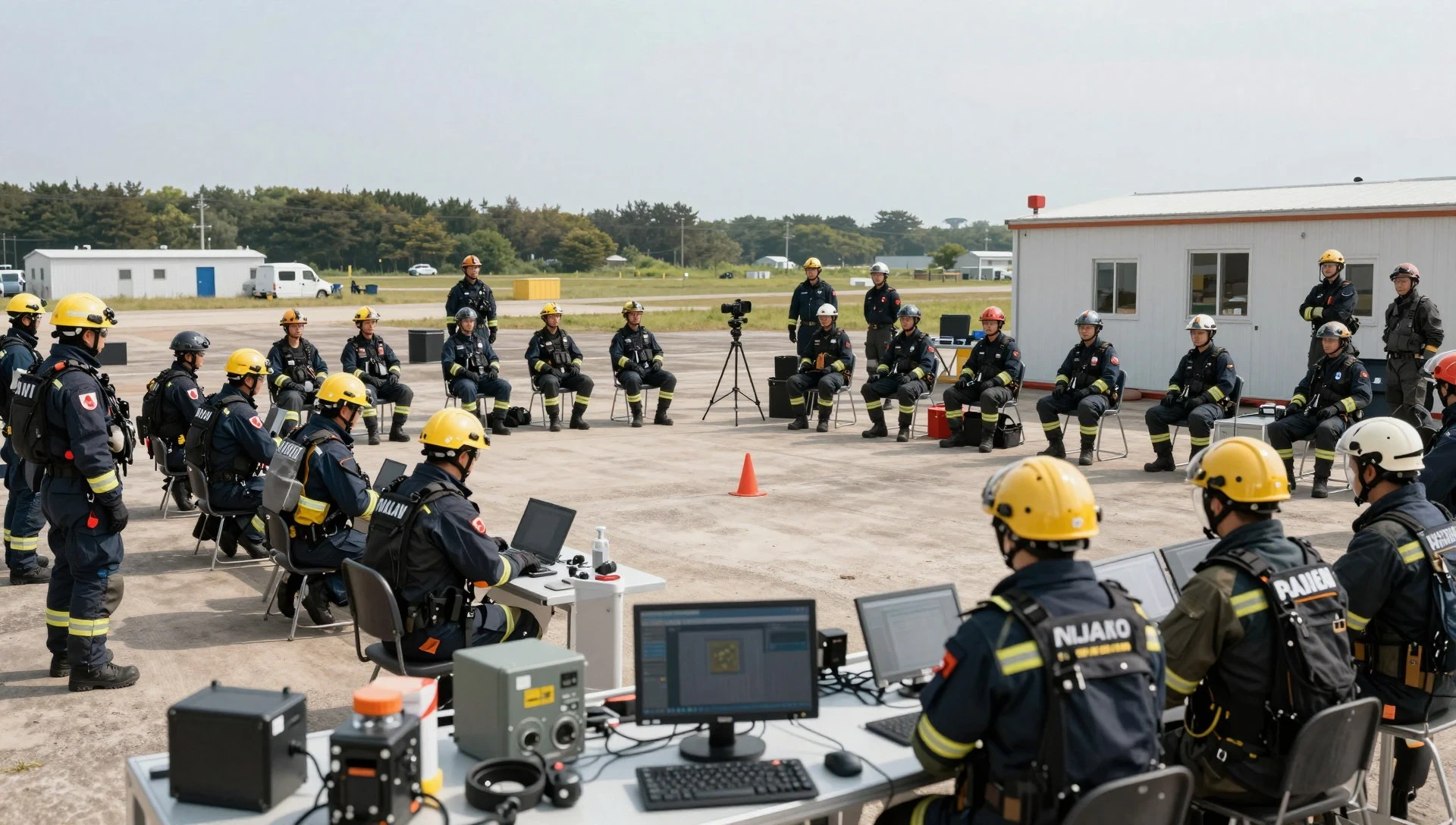
Japan's decision to establish a dedicated national agency for disaster response marks a significant institutional shift for a country whose relationship with catastrophe is both intimate and relentless. Positioned at the intersection of geography and governance, the archipelago sits atop four tectonic plates and endures a disproportionate share of the world's major earthquakes, tsunamis, and volcanic activity. The new agency, reported by the
, is intended to sharpen the nation's capacity to respond when emergencies strike, consolidating coordination that has historically been dispersed across multiple ministries and local authorities. While initial reporting offered limited detail on structure, leadership, or specific mandates, the very creation of such a body signals a strategic recognition that disaster management demands permanent, centralized institutional weight rather than ad hoc mobilization.
The timing of this development is far from incidental. Japan has spent the better part of two decades refining its disaster governance in the wake of the
, a catastrophe that exposed painful gaps in inter-agency communication and delayed relief delivery. Subsequent reviews repeatedly recommended stronger central coordination, clearer chains of command, and faster information sharing between national and municipal layers. The new agency appears to answer those recommendations directly, transforming lessons learned from tragedy into durable administrative architecture. For observers of Japanese public policy, the move represents a maturation of disaster preparedness from a reactive posture into a standing pillar of national security and social resilience.
Understanding this development requires more than a headline reading. It demands attention to how Japan funds disaster readiness, how its bureaucratic culture shapes emergency response, and how a new agency might interact with existing frameworks such as the
. It also invites comparison with disaster governance models elsewhere, from the United States
to smaller, agile systems in
and
. The analysis that follows examines the institutional logic behind the agency, the operational challenges it will face, and the broader implications for a nation that has learned, often painfully, that preparedness is not a cost but a covenant with its citizens.
TL;DR Japan has established a new national agency to coordinate disaster response, according to the Associated Press, though structural and leadership details remain undisclosed. The move reflects decades of institutional learning following the 2011 Tōhoku catastrophe and signals a shift toward permanent, centralized emergency governance. This analysis explores the agency's strategic rationale, the bureaucratic and fiscal realities it must navigate, comparative international models, and what centralized disaster coordination means for Japan's long-term resilience and regional leadership in disaster risk reduction.
On This Page
The Institutional Logic Behind Centralized Disaster Governance
Disaster response in Japan has long operated through a layered system in which prefectural governments, municipal authorities, self-defense forces, and national ministries each hold distinct responsibilities. That diffusion protects local autonomy but can slow decision-making during cascading emergencies, when minutes determine survival rates. A dedicated national agency promises to compress coordination timelines and impose unified command where fragmentation once prevailed.
Why Fragmentation Became a Liability
The 2011 triple disaster revealed how jurisdictional boundaries can impede relief. Evacuation orders, supply chains, and radiation information flowed through separate channels, producing confusion among citizens and delays in critical assistance. Post-crisis inquiries documented repeated failures of horizontal communication between agencies that had never trained together for compound catastrophes of that magnitude.
Centralization does not automatically solve such problems, but it creates a single accountable authority. When one agency owns the coordination mandate, responsibility becomes traceable and inter-agency protocols can be standardized, tested, and revised systematically rather than improvised under pressure during the chaotic opening hours of a major emergency.
The Political Economy of Preparedness
Creating a national agency requires sustained political commitment and budget allocation in a fiscal environment already strained by aging demographics and defense spending increases. Legislators must justify permanent administrative overhead against the episodic nature of disasters, a challenge familiar to every government that funds readiness for events that may not occur for years.
Japan's political culture, however, has gradually accepted that disaster spending is not discretionary. Public opinion consistently ranks disaster preparedness among top government priorities, and electoral accountability for perceived failures during emergencies is severe. This political reality gives the new agency a durable foundation that purely technocratic reforms often lack.
Operational Mandate and the Architecture of Response
Although the agency's precise responsibilities remain undisclosed, the functional contours of any national disaster body in Japan are reasonably predictable. It will likely assume coordination of cross-ministerial response, manage national stockpiles of emergency supplies, and serve as the primary interface between the central government and prefectural governors during declared emergencies. Each function carries distinct operational and political weight.
Coordination, Not Command
Japan's constitutional framework grants substantial autonomy to local governments, meaning a national agency cannot simply command prefectures. Its authority will instead rest on coordination, resource allocation, and the power to declare and manage emergency states. This distinction shapes everything from staffing to intergovernmental negotiation strategy.
Effective coordination requires standing relationships built during calm periods. The agency must therefore invest heavily in joint exercises, shared data platforms, and liaison officers embedded within prefectural offices. Without such connective tissue, a coordination mandate becomes a paper authority that collapses under the stress of an actual disaster.
Data, Early Warning, and Technological Leverage
Japan operates one of the world's most sophisticated earthquake early warning systems, capable of transmitting alerts seconds before destructive shaking arrives. A centralized agency could integrate these feeds with tsunami modeling, evacuation routing, and supply logistics into a unified operational picture for decision-makers at every level.
Technological integration also introduces risk. Overreliance on automated systems can breed complacency, and communication failures during disasters are common. The agency must therefore pair digital sophistication with redundant analog protocols, ensuring that response capacity survives the very infrastructure damage that disasters inevitably inflict on modern societies.
Fiscal Realities and the Cost of Readiness
Disaster preparedness carries a peculiar fiscal profile: costs are continuous and visible, while benefits are contingent and invisible until catastrophe strikes. Japan already allocates substantial resources to seismic retrofitting, coastal defenses, and emergency reserves, and a new agency adds administrative overhead atop these existing commitments. Justifying that expense requires a compelling narrative of avoided losses.
Budgeting for Events That May Never Happen
Economists describe preparedness spending as a form of insurance premium paid by the state on behalf of society. The return on investment materializes only through disasters averted or mitigated, making it difficult to demonstrate in conventional budget cycles. Agencies that cannot articulate this value face chronic underfunding.
Japan's advantage lies in its national memory. Each major disaster refreshes public understanding of what unpreparedness costs, creating political space for sustained investment. The new agency can leverage this collective memory to secure multi-year funding commitments that transcend annual budget negotiations and shifting ministerial priorities.
The Reconstruction Burden
Beyond immediate response, disaster agencies increasingly absorb reconstruction coordination, a task that can span a decade and consume budgets far exceeding initial relief costs. The 2011 reconstruction effort demonstrated how fragmented oversight prolongs recovery and inflates expenses through duplicated administration and delayed infrastructure delivery.
Centralizing reconstruction authority under one agency could accelerate rebuilding and reduce waste, but it also concentrates risk. If that single body underperforms, the consequences ripple across entire regions for years. Governance design must therefore include independent oversight, transparent reporting, and mechanisms for course correction.
- 01
- 02
- 03
- 04
Comparative Models: Learning From Other Nations
Japan is not the first nation to centralize disaster governance, and comparative experience offers valuable design lessons. The United States consolidated federal coordination through FEMA, while New Zealand and Chile developed leaner systems tailored to their specific hazard profiles. Each model reflects distinct constitutional arrangements, fiscal capacities, and cultural expectations about the state's protective role.
The American Federal Model
FEMA demonstrates both the strengths and vulnerabilities of centralized disaster authority. It coordinates federal resources effectively during major events but has faced criticism for bureaucratic delays, political appointee turnover, and uneven performance across administrations. Institutional independence and professional staffing prove essential to consistent effectiveness.
Japan's unitary system differs fundamentally from American federalism, granting the central government greater direct authority. This structural advantage could allow faster mobilization, though it also raises questions about local input and the risk of imposing uniform solutions on communities with distinct needs and capacities.
Smaller Systems, Sharper Focus
New Zealand's disaster agency operates with modest staffing but emphasizes community resilience and pre-agreed protocols. Chile, similarly exposed to seismic risk, invests heavily in building codes and engineering standards rather than large administrative structures. Both approaches suggest that institutional size matters less than clarity of mandate.
Japan can borrow selectively from these models, adopting their emphasis on prevention and community engagement while retaining its own strengths in technology and public education. The most effective design will likely blend centralized coordination with decentralized execution, allowing local knowledge to inform national strategy.
Regional Leadership and Global Disaster Diplomacy
Japan's new agency carries implications well beyond its borders. As one of the world's most experienced disaster-response nations, Japan has long exported expertise through training programs, technology partnerships, and humanitarian deployments.
A dedicated national body could formalize and expand this international role, positioning Japan as a convening power in global disaster risk reduction.
Soft Power Through Preparedness
Disaster assistance is a potent instrument of soft power, generating goodwill that outlasts political disputes. Japan's rapid deployments after earthquakes in Nepal, Turkey, and elsewhere have reinforced its reputation as a reliable partner. A centralized agency could professionalize these missions, improving speed and coordination.
Regional neighbors, particularly in Southeast Asia, stand to benefit from Japanese expertise in tsunami warning, seismic engineering, and community preparedness. By institutionalizing knowledge transfer, the agency could strengthen Japan's diplomatic influence across the Indo-Pacific, where disaster vulnerability is widespread and climate change intensifies risk.
Contributions to Global Frameworks
Japan actively participates in the Sendai Framework for Disaster Risk Reduction, the international blueprint adopted in 2015. A national agency with a clear mandate would give Japan stronger institutional footing in these negotiations, enabling more consistent contributions to standard-setting and monitoring.
Global disaster losses continue to rise as climate extremes compound seismic and hydrological hazards. Nations that invest in institutional capacity now will shape the international norms of the coming decades. Japan's move positions it favorably within that emerging governance landscape, reinforcing its standing as a leader in resilience policy.
Challenges Ahead and the Measure of Success
Institutional creation is the easy part; operational excellence is the enduring test. The new agency will face entrenched bureaucratic interests, coordination friction with powerful ministries, and the perennial difficulty of maintaining readiness during quiet periods. Its success will depend on leadership quality, statutory clarity, and sustained political backing across changing administrations.
Bureaucratic Resistance and Turf Protection
Ministries accustomed to controlling their own disaster portfolios may resist ceding authority to a new body. Turf battles can hollow out an agency's mandate before it matures, leaving it with responsibility but insufficient power. Legislative design must therefore specify authority precisely and protect the agency from incremental erosion.
Japan's administrative culture prizes consensus, which can smooth coordination but also dilute decisive action. The agency's leadership must balance consultative norms with the imperative for rapid decisions during emergencies, a tension that will define its institutional character in the crucial early years of operation.
Defining and Measuring Success
Success for a disaster agency is paradoxically invisible: the disasters that do not become catastrophes. Metrics must therefore combine process indicators, such as response times and coordination drills completed, with outcome measures like casualty reduction and recovery speed in actual events over time.
Public trust provides the ultimate benchmark. Citizens who receive timely warnings, find shelters stocked and staffed, and see reconstruction proceed without corruption will judge the agency favorably. That trust, once earned through performance, becomes the political capital sustaining the institution through the quiet decades when its value is hardest to demonstrate.
From our network :
- Mobile Learning and VR in English: What Global Evidence Reveals About Effective Language TechnologyA systematic review across 14 countries reveals which language-learning technologies genuinely work. Mobile learning, AI, and VR show measurable benefits when pedagogically integrated. This evidence-based guide helps educators and learners select technology that delivers real return on investment.
- The Final Descent: How ESA Retired the Legendary Cluster Constellation After 24 Years of Space Weather ScienceAfter 24 years mapping Earth’s magnetosphere, ESA’s Cluster mission concluded with a precisely controlled reentry over the South Pacific. This analysis explores the scientific legacy, engineering decisions, and debris mitigation principles behind one of space exploration’s most responsible retirements.
- University Language Proficiency Exams: Why Institutional Tests Demand Different Preparation Than IELTS and TOEFLDiscover why university-specific language proficiency examinations differ fundamentally from IELTS and TOEFL, and learn strategic preparation approaches for institutional assessment success.
- How AI Agents Will Change the Way We Manage Personal FinancesExplore how AI agents are transforming personal finance through automated budgeting, bill payment, and investment management, while examining the critical security protocols and governance frameworks required for safe deployment.
- Live Online English Classes for Kids: Do They Actually Reduce Anxiety?A ten-week study reveals that synchronous online English classes can significantly reduce child language anxiety while improving listening and reading skills. Discover what makes these programs effective and how parents can select the right one.
- CISA’s Ten-Advisory Wave: Why Generic Patching Fails in OT and How to Build Product-Specific PlaybooksCISA released ten ICS advisories in one week, exposing critical infrastructure risks. Generic patching fails in OT. Learn to build product-specific remediation playbooks.
- Forbidden Matrix Patterns and Visible Lattice Points: A Geometric DictionaryExplore how multidimensional 0–1 matrices encode geometric truths, linking forbidden patterns to visible lattice points and hypergraph theory, with applications in combinatorics and computational geometry.
- The Hidden Cost of AI Convenience: Why Over-Permissioned Agents Are a Security Time BombDiscover why AI agents with excessive permissions create dangerous single points of failure, and learn how implementing least privilege principles can protect your organization from exploitation.
- Committed Mediterranean Precipitation Decline: Why Emissions Cuts Alone Cannot Restore Winter RainsNew NOAA research reveals that Mediterranean winter rains may decline irreversibly even with emissions cuts. Explore the science of committed climate change and regional impacts.
RESOURCES
- Resources will be updated soon.
- 01
- 02
- 03
- 04
- 05
- 06
- 07
- 08
0 Comments