
Bihar's record on disciplining corrupt and abusive officials is not a story of insufficient laws or missing institutions. It is a story of a system that has learned to perform accountability without ever delivering it.
Files are opened, committees are constituted, recommendations are forwarded, and then years pass until the matter quietly dissolves into a withheld increment or a pending pension decision. The machinery moves, but it moves in slow motion, and the punishment it eventually produces is so slight that it functions as an invitation rather than a deterrent.
Consider what the pattern actually communicates to a serving officer. A registration scandal that drained public revenue ends with a single withheld salary increment, and the officer continues in a senior posting elsewhere. A proven assault on athletes yields two withheld increments.
On This Page
A toilet construction scandal takes a decade to investigate, by which time the accused has retired and the question becomes what to do about his pension. In each case the process is technically complete, and in each case the consequence is negligible.
This is the central failure of governance in Bihar, and it deserves to be named plainly. The problem is not that corruption allegations go unrecorded. The problem is that the recording has become a substitute for redress.
Long investigations, slow hearings, and token penalties form a closed loop that protects the system from the very accountability it claims to pursue. Until that loop is broken, every new committee is simply another delay dressed as diligence.
TL;DR Bihar's administrative accountability apparatus produces long investigations, slow proceedings, and disproportionately light punishments, and this combination has become a structural shield for corrupt officials rather than a deterrent. Cases documented in recent reporting show revenue fraud, assault, and municipal scandals ending in withheld increments or pension deliberations years after retirement, while investigation committees themselves take months or years to be constituted. The argument here is that token punishment is worse than no punishment, because it manufactures the appearance of accountability while guaranteeing impunity, and that only swift, proportionate, and career-ending consequences can restore public trust in the state's administrative machinery.
The Anatomy of a Token Punishment
A withheld increment is the administrative equivalent of a raised eyebrow. It is a penalty that registers disapproval while leaving rank, posting, pension, and future prospects essentially untouched. When a proven case of revenue loss or physical assault produces nothing more than a delay in a routine salary increase, the disciplinary system has effectively announced that serious misconduct carries no serious cost.
The mechanism matters because it is not accidental. Withholding an increment is procedurally convenient, difficult to challenge, and administratively tidy. It allows a department to close a file without confronting the harder questions of dismissal, demotion, or recovery of losses. Convenience, not justice, becomes the organizing principle of the entire exercise.
Why the Increment Became the Default Penalty
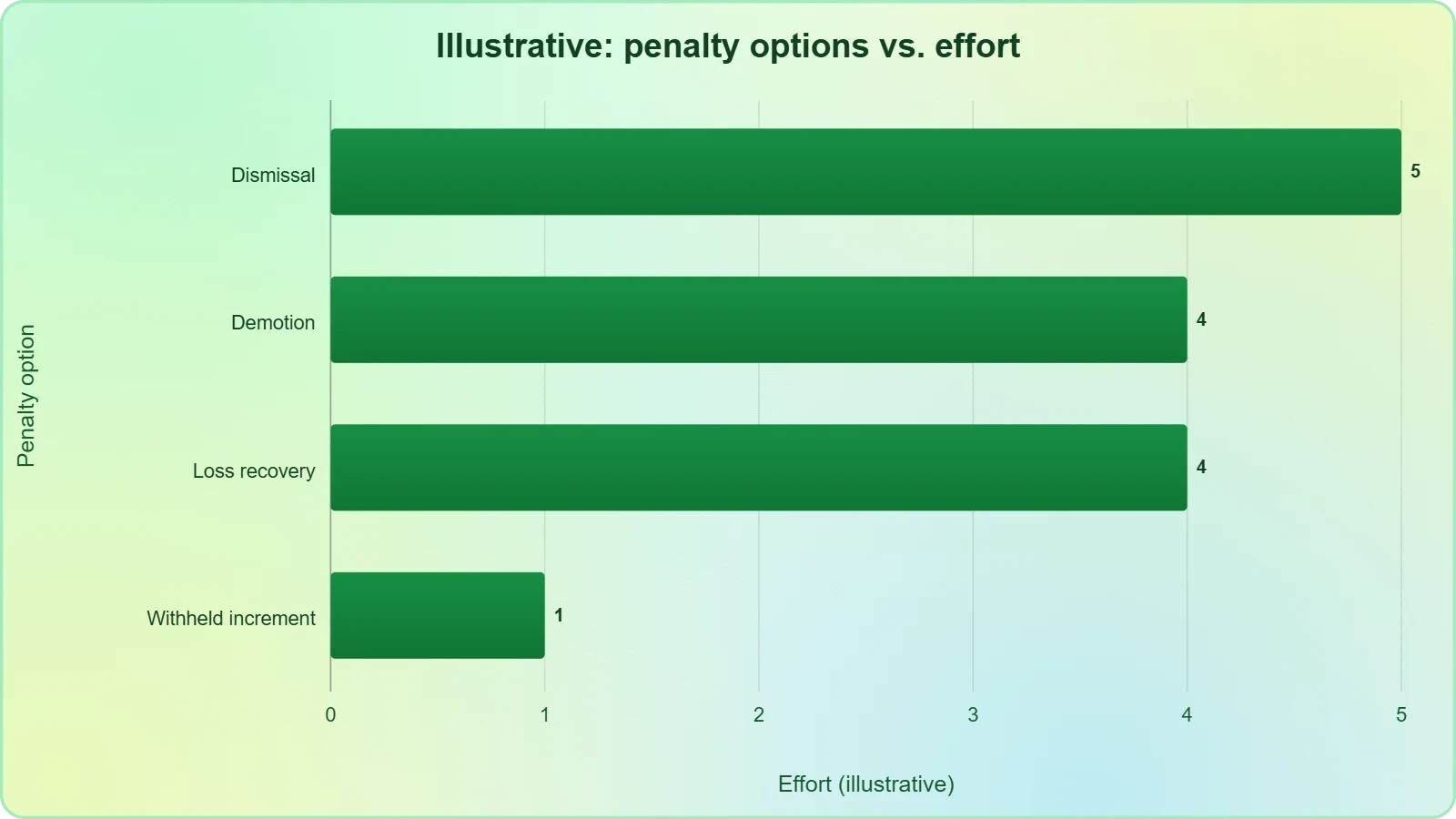
Departments reach for the increment because it is the path of least resistance. Dismissal requires evidence that survives appeal, demotion invites litigation, and recovery of financial losses demands follow-through across multiple agencies.
A withheld increment requires none of that, and it lets everyone sign off on a file marked "action taken" without further obligation.
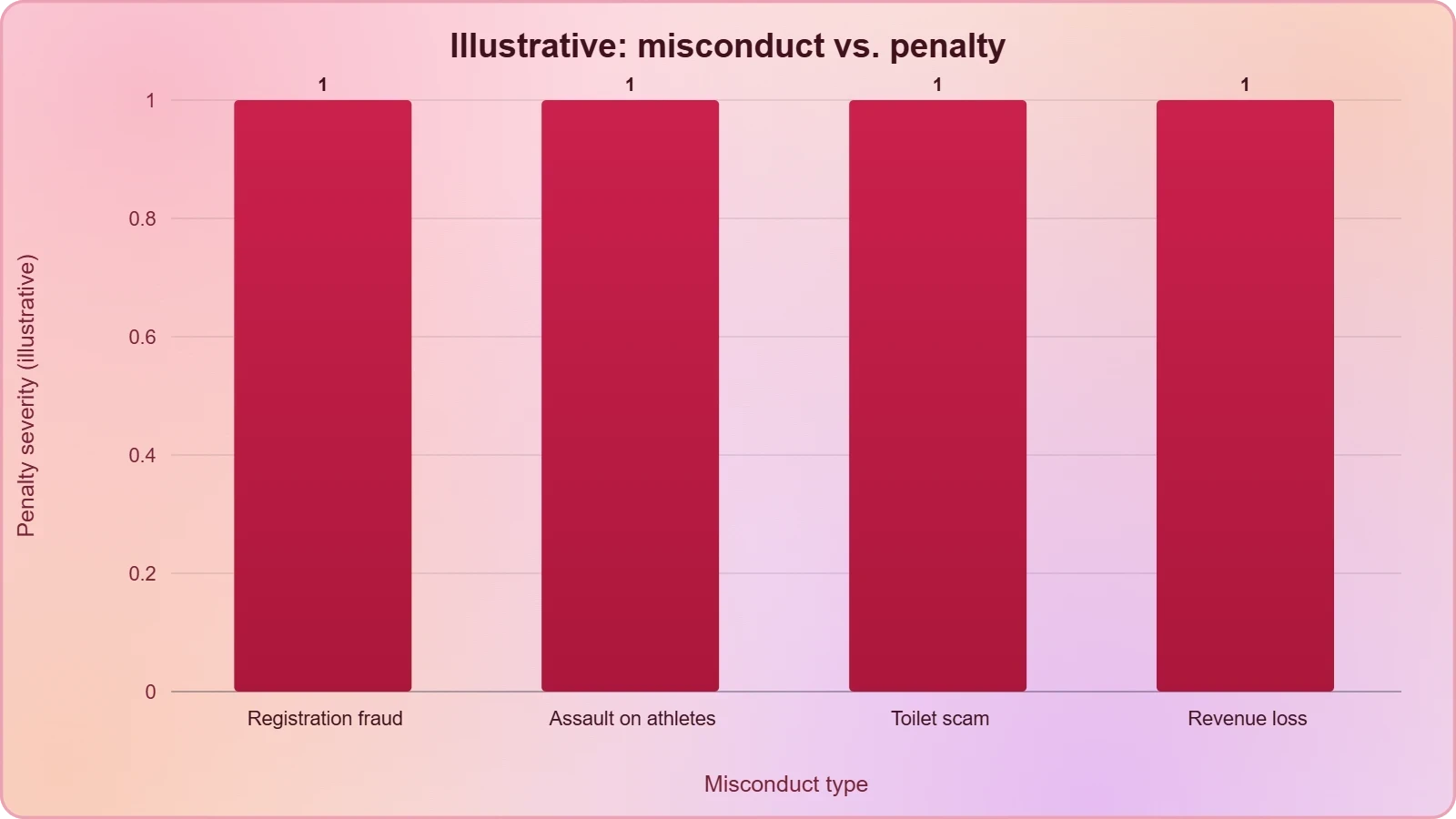
The result is a disciplinary vocabulary with only one word in it. Whether the misconduct is a registration fraud affecting hundreds of vehicles or a physical assault on athletes at a stadium, the response converges on the same mild instrument. That convergence is itself the evidence that the system is not calibrating punishment to wrongdoing at all.
The Career That Continues Regardless
Perhaps the most telling feature of these cases is what happens afterward. Officials penalized for serious misconduct continue to hold senior positions, sometimes as deputy secretaries or additional collectors in other departments. The penalty does not interrupt the career; it merely annotates it, and the annotation fades as the officer moves onward.
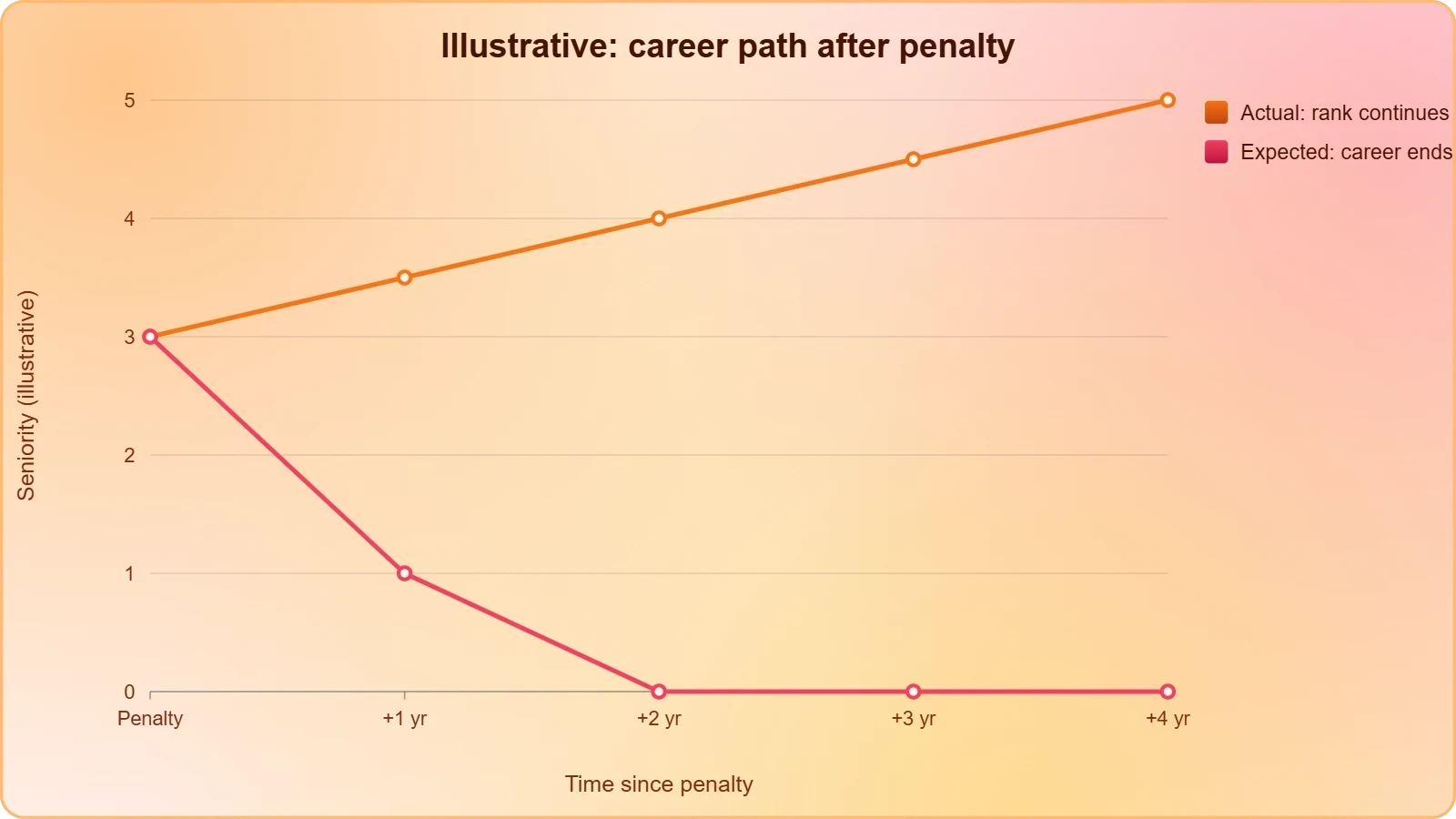
This continuity is the clearest proof that the punishment is symbolic rather than consequential. A system genuinely committed to accountability would ensure that a finding of corruption or violence ends a career trajectory rather than briefly delaying it. Instead, the file closes and the officer proceeds, carrying a minor blemish into the next posting.
The Slow Machinery of Investigation
Delay is not a neutral feature of bureaucratic process; it is a weapon. Every month that passes between allegation and inquiry erodes evidence, dulls public memory, and gives the accused time to build procedural defenses.
When a district magistrate recommends strong action in August and the inquiry team is constituted in October, the gap is not administrative friction but a decision about priorities.
The pattern repeats across departments with almost mechanical regularity. Files move in one year and committees form four years later. Officers retire while inquiries into their conduct are still being assembled.
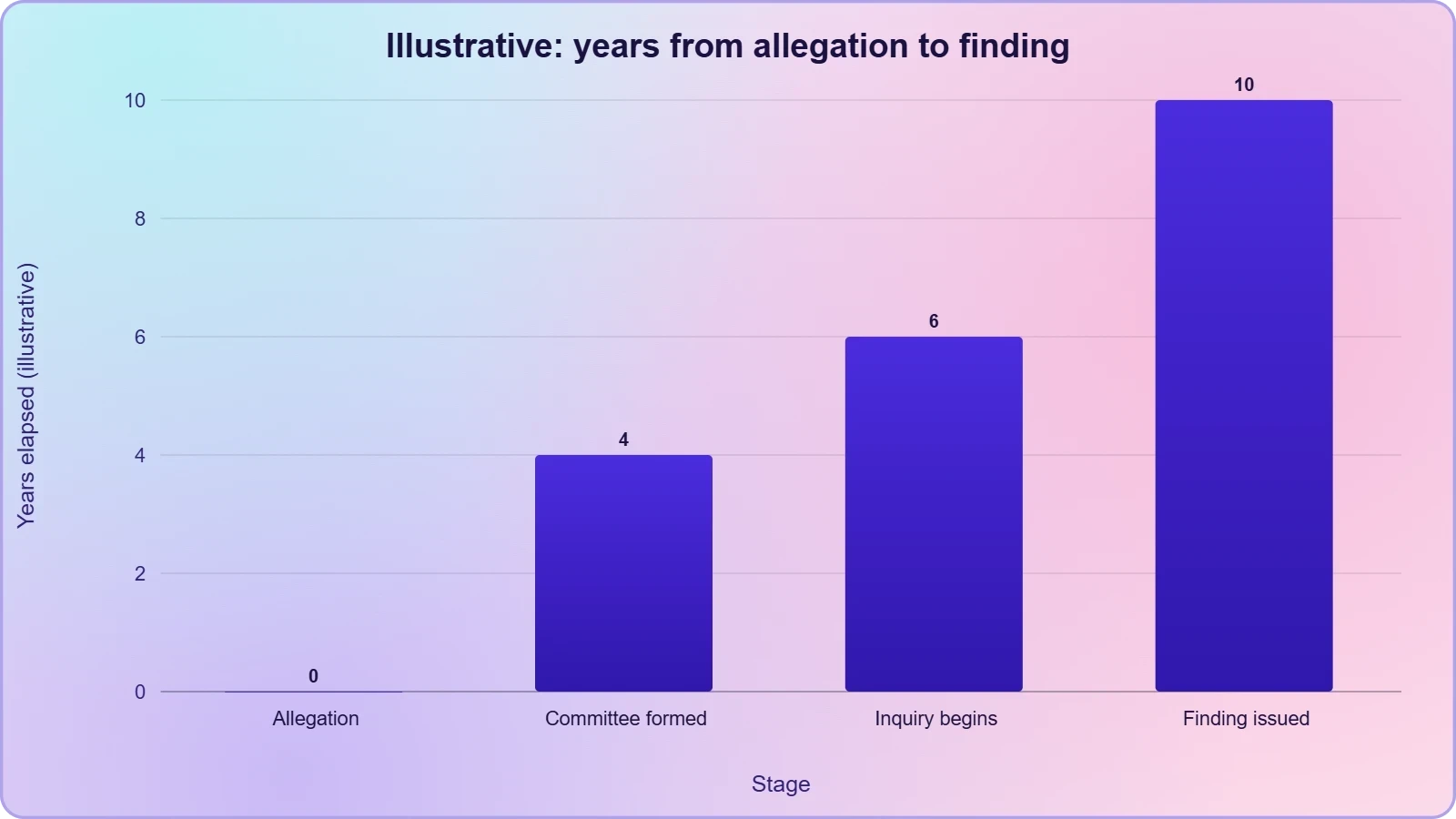
By the time the machinery produces a finding, the practical question has shifted from what the officer did to what should be done about his pension.
Committees as a Substitute for Action
Constituting a committee is the most convenient way to appear responsive without being decisive. It signals that the matter is being taken seriously while transferring responsibility to a body that will report at some unspecified future date. The announcement satisfies the immediate political need, and the substance can be deferred indefinitely.
This is why the formation of an inquiry team has become the standard response to serious allegations. It is an action that looks like action, costs little, and commits no one to a particular outcome.
The committee becomes a holding pen for inconvenient files, and the accused continues in office while it deliberates.
Retirement as an Escape Route
The most corrosive feature of the slow machinery is how reliably it outlasts the officer's tenure. An official arrested in 2014 can see his departmental inquiry conclude a decade later, after retirement, when the only remaining question is whether his pension should be affected. The process has effectively run out the clock.
Retirement should not function as an amnesty, yet in practice it does. When the consequence of proven misconduct is a deliberation over pension three years after the officer has left service, the system has communicated that time itself is the most reliable defense available. That is a devastating message to send to every serving official.
Why Light Punishment Is Worse Than None
There is a temptation to treat a withheld increment as a partial victory, a sign that the system at least acknowledged wrongdoing. That framing is mistaken. A token penalty does something more damaging than inaction: it certifies that the matter has been addressed, closing the file and foreclosing further scrutiny while leaving the underlying incentive structure untouched.
When the public sees a serious allegation resolved with a minor salary adjustment, the lesson is not that accountability works. The lesson is that accountability is theater. That perception corrodes trust in every institution that depends on public confidence, and it makes future complaints seem pointless to the citizens who bear the cost of corruption.
The Signal Sent to Serving Officials
Officials read disciplinary outcomes the way investors read earnings reports. A pattern of withheld increments tells every serving officer that the expected cost of misconduct is low, delayed, and survivable. Rational actors respond to expected costs, and the current expected cost is close to zero.
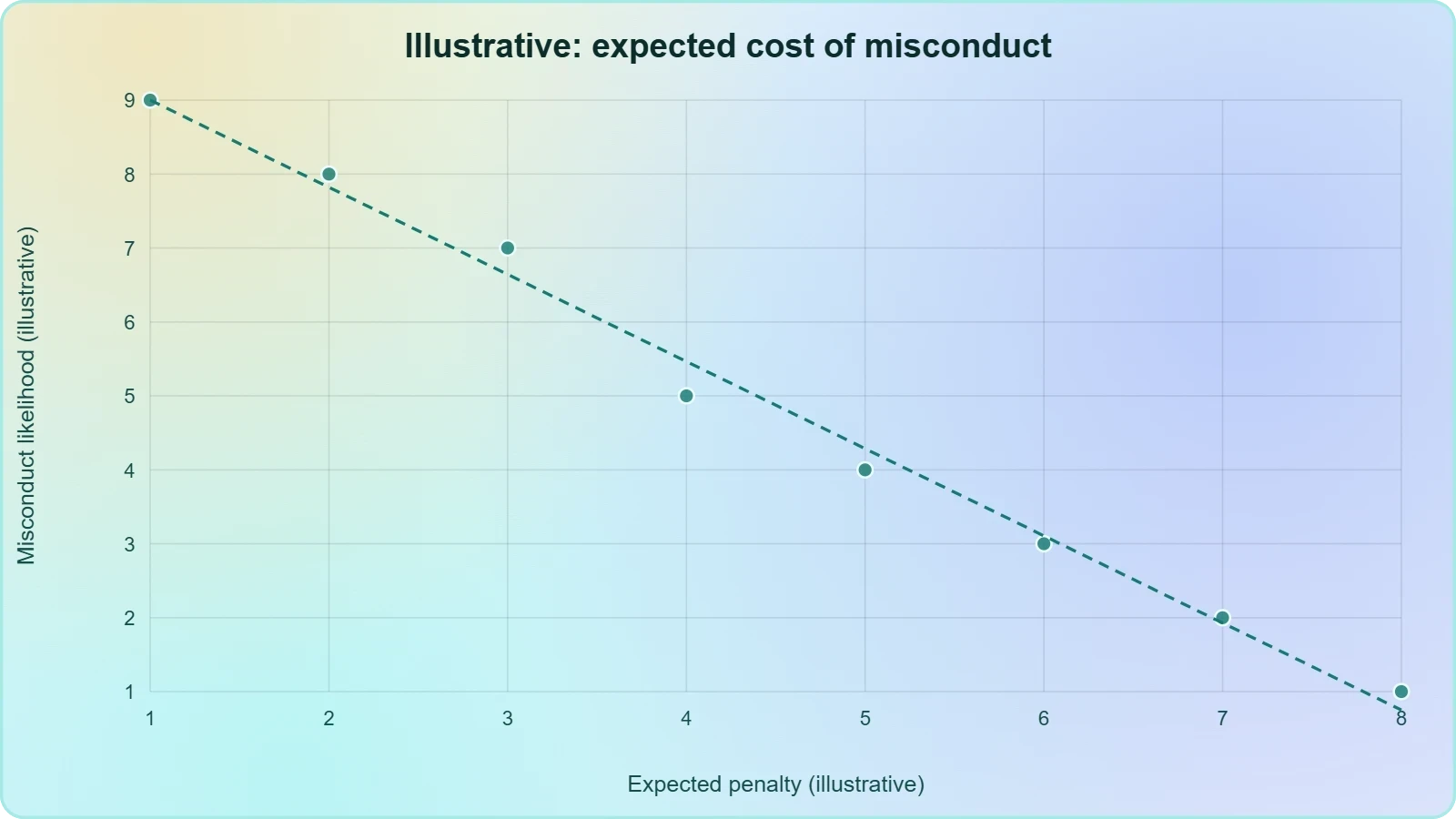
This is why the argument for severity is not vindictive but preventive. Proportionate punishment is the only mechanism that aligns an individual's calculation of risk with the public interest. When the calculation favors misconduct, misconduct will continue regardless of how many committees are formed.
The Erosion of Public Trust
Citizens encounter the state primarily through its officials, and they judge the system by what happens when those officials are caught. A visible pattern of light penalties teaches the public that the rules apply differently to those who enforce them, which undermines compliance across the entire administrative landscape.
Trust is not restored by announcements or by the mere existence of inquiry bodies. It is restored when consequences are visible, swift, and proportionate. Every token penalty is a withdrawal from a reserve of public confidence that took decades to accumulate and cannot be rebuilt by rhetoric alone.
- 01
- 02
- 03
- 04
What Genuine Accountability Would Require
If the diagnosis is that delay and leniency protect the guilty, the remedy must attack both. That means statutory timelines for completing inquiries, with automatic escalation when they lapse. It means disciplinary panels empowered to impose demotion and dismissal rather than defaulting to increment withholding. And it means recovery of financial losses as a standard part of every corruption finding.
None of this requires new institutions. It requires the political will to make existing ones work within defined limits. A committee that must report within ninety days is a different instrument from one that may report whenever it chooses. The difference is not procedural detail; it is the difference between accountability and its simulation.
Timelines With Teeth
A deadline without consequence is a suggestion. If an inquiry is not completed within a fixed period, the responsible authority should face automatic review, and the accused should face interim suspension rather than continued service. Time limits must impose costs on the system, not merely on the file.
Interim measures matter as much as final ones. An officer under investigation for serious misconduct should not continue exercising the powers that enabled it. Suspension pending inquiry is not punishment; it is the minimum condition for an investigation that is not compromised by the accused's continued authority.
Proportionate and Career-Ending Consequences
Punishment must match the misconduct. Revenue fraud, physical violence, and collusion with criminal networks are not increment-level offenses, and treating them as such is a category error with real consequences. The disciplinary scale must be used across its full range, not clustered at its gentlest end.
Recovery of losses deserves particular emphasis. When corruption causes measurable financial harm, the public should be made whole. A finding that leaves the loss unrecovered has punished the paperwork, not the conduct, and has left the citizen to bear the cost of an official's misconduct.
We Also Published
The Political Cost of Looking the Other Way
There is a persistent assumption that leniency toward officials is politically safe, that the public does not notice administrative discipline and that no government pays a price for it. The evidence points the other way.
Corruption is among the most visible and most resented features of everyday life, and citizens experience it directly at offices, counters, and checkpoints.
When a government presides over a visible pattern of token penalties, it forfeits the moral authority to speak about clean administration. The opposition does not need to invent a scandal; it only needs to read out the outcomes. Every withheld increment becomes a campaign line, and every delayed inquiry becomes evidence of complicity.
Accountability as Political Capital
Strong action against corrupt officials is one of the few policies that costs a government little and earns it a great deal. It does not require new spending, does not alienate a major constituency, and directly addresses a grievance that voters raise constantly. The political logic for severity is overwhelming.
The obstacle is not political risk but administrative inertia and internal resistance. Departments protect their own, and senior officials are reluctant to set precedents that might later apply to them. Breaking that resistance requires leadership willing to accept short-term discomfort within the bureaucracy for long-term credibility with the public.
The Example That Sets the Standard
One genuinely severe punishment, widely publicized, would do more than a hundred withheld increments. It would establish that the ceiling of consequences is real, that rank offers no permanent shelter, and that the system can act decisively when it chooses. Precedent is the most powerful disciplinary instrument available.
Bihar does not lack the legal authority to dismiss, demote, or recover losses. It lacks the demonstrated willingness to use that authority at the top of the scale. The first case handled with full severity would change expectations across the entire administrative cadre, and it would change them quickly.
The Verdict: Stop Rewarding Delay
The record is unambiguous. Bihar's disciplinary system has developed a stable equilibrium in which investigations take years, penalties are minimal, and careers continue undisturbed. This is not a malfunction; it is the system working as its incentives dictate. Until those incentives change, no amount of new committees will produce a different result.
The argument for severity is not an argument for harshness. It is an argument for proportion, speed, and finality. A system that punishes serious misconduct seriously, promptly, and visibly will deter it.
A system that punishes it with a withheld increment after five years will not, and pretending otherwise is a failure of honesty.
Citizens are entitled to a state that treats their losses as real. When an official's fraud drains revenue or his violence injures athletes, the harm is concrete and the remedy must be too. Withholding an increment is not a remedy; it is a receipt for a file that was never really opened. The time for that particular ritual has long passed.
What follows from this argument is a demand, not a hope. Departments must be required to conclude inquiries within fixed periods, to impose penalties proportionate to the harm, and to recover what was lost. Officials must learn that the ceiling of consequences is real. Anything less is an invitation to repeat the same conduct with the same confidence.
From our network :
- CISA’s Ten-Advisory Wave: Why Generic Patching Fails in OT and How to Build Product-Specific PlaybooksCISA released ten ICS advisories in one week, exposing critical infrastructure risks. Generic patching fails in OT. Learn to build product-specific remediation playbooks.
- The Hidden Cost of AI Convenience: Why Over-Permissioned Agents Are a Security Time BombDiscover why AI agents with excessive permissions create dangerous single points of failure, and learn how implementing least privilege principles can protect your organization from exploitation.
- Live Online English Classes for Kids: Do They Actually Reduce Anxiety?A ten-week study reveals that synchronous online English classes can significantly reduce child language anxiety while improving listening and reading skills. Discover what makes these programs effective and how parents can select the right one.
- Mobile Learning and VR in English: What Global Evidence Reveals About Effective Language TechnologyA systematic review across 14 countries reveals which language-learning technologies genuinely work. Mobile learning, AI, and VR show measurable benefits when pedagogically integrated. This evidence-based guide helps educators and learners select technology that delivers real return on investment.
- Committed Mediterranean Precipitation Decline: Why Emissions Cuts Alone Cannot Restore Winter RainsNew NOAA research reveals that Mediterranean winter rains may decline irreversibly even with emissions cuts. Explore the science of committed climate change and regional impacts.
- How AI Agents Will Change the Way We Manage Personal FinancesExplore how AI agents are transforming personal finance through automated budgeting, bill payment, and investment management, while examining the critical security protocols and governance frameworks required for safe deployment.
- University Language Proficiency Exams: Why Institutional Tests Demand Different Preparation Than IELTS and TOEFLDiscover why university-specific language proficiency examinations differ fundamentally from IELTS and TOEFL, and learn strategic preparation approaches for institutional assessment success.
- The Final Descent: How ESA Retired the Legendary Cluster Constellation After 24 Years of Space Weather ScienceAfter 24 years mapping Earth’s magnetosphere, ESA’s Cluster mission concluded with a precisely controlled reentry over the South Pacific. This analysis explores the scientific legacy, engineering decisions, and debris mitigation principles behind one of space exploration’s most responsible retirements.
- Forbidden Matrix Patterns and Visible Lattice Points: A Geometric DictionaryExplore how multidimensional 0–1 matrices encode geometric truths, linking forbidden patterns to visible lattice points and hypergraph theory, with applications in combinatorics and computational geometry.
RESOURCES
- Resources will be updated soon.
- 01
- 02
- 03
- 04
- 05
- 06
- 07
- 08
0 Comments