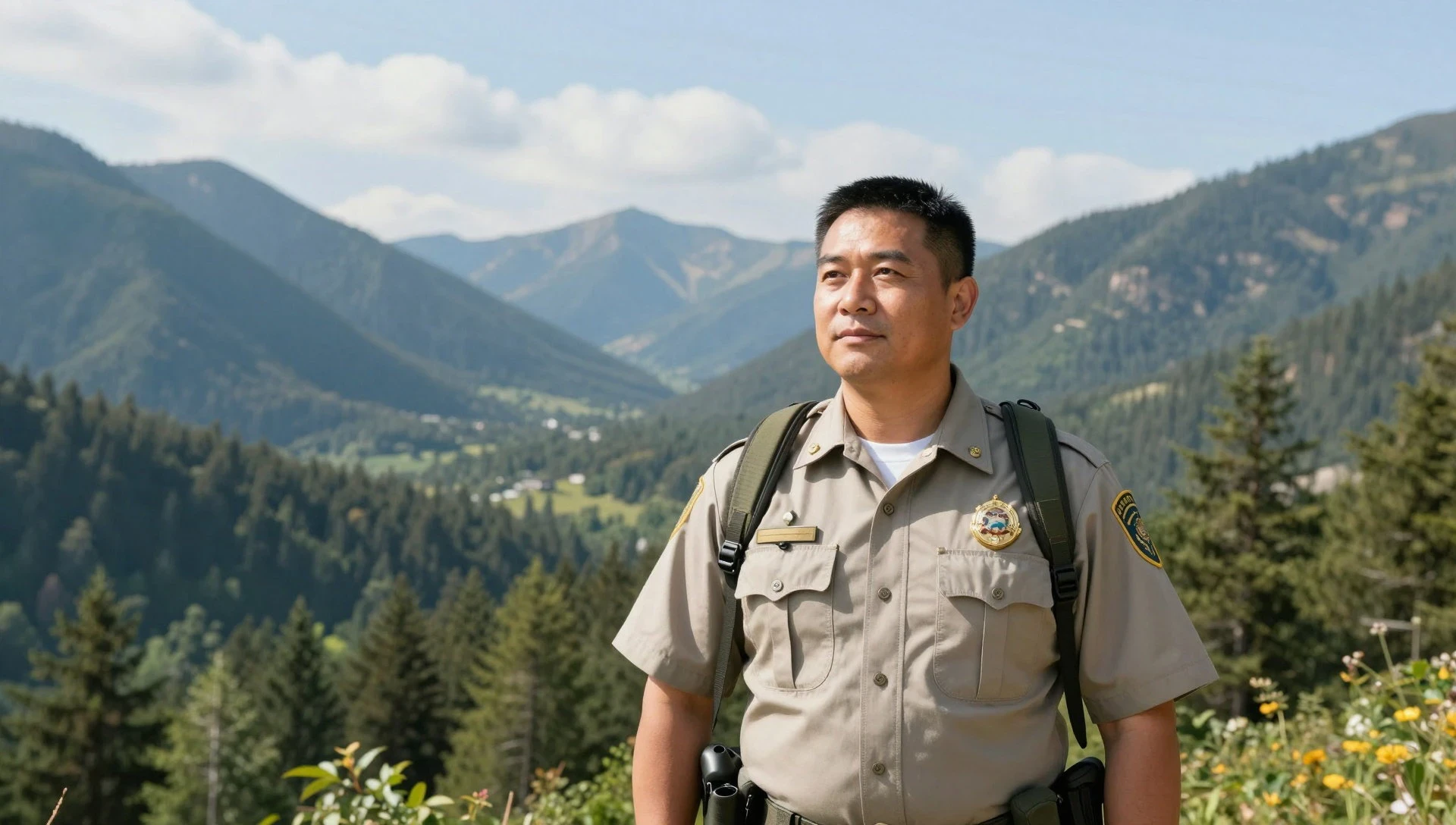
The badge is the least interesting thing about a park ranger. What matters is what happens between sunrise and the last trailhead sweep: a visitor with a twisted ankle two miles from the road, a poacher's snare found near a creek, a campground that needs quieting at midnight, a wildfire report that must be relayed before the wind shifts. The ranger job sits at an unusual intersection of public service, field science, law enforcement, and hospitality, and the people who do it well tend to be equally comfortable reading a topographic map, calming a frightened child, and writing an incident report that will hold up in court.
Public imagination has done this profession a disservice by flattening it into a uniform and a hat. In reality, rangers work across wildly different settings — national parks, state forests, county preserves, historic sites, coastal reserves — and the daily work shifts accordingly. A backcountry ranger in the alpine West may spend more time on patrol and rescue than on interpretation, while an urban preserve ranger might spend most of the week running school programs and managing volunteer crews. Understanding what rangers actually do requires looking past the postcard imagery and into the operational structure of public land management.
This guide examines the role from the inside out: the core duties that define the job, the seasonal rhythms that shape a ranger's year, the training and credentials that employers expect, the physical and emotional demands that rarely make the brochure, and the career pathways that open after the first season. It is written for people weighing the work as a career, for students mapping out relevant degrees, and for anyone curious about the labor that keeps trails open, wildlife protected, and visitors safe.
On This Page
TL;DR Park rangers are public land professionals who blend visitor services, resource protection, law enforcement, emergency response, and field science into a single role. The job varies enormously by agency and setting, but the common thread is stewardship — keeping people safe while keeping ecosystems and cultural sites intact. Most rangers enter through seasonal positions, hold degrees or equivalent field experience in natural resource fields, and build toward permanent roles through specialized certifications in first aid, firearms or defensive tactics where required, and resource management. Pay is modest relative to the demands, but the work offers unusual autonomy, outdoor time, and public purpose.
The Core Duties That Define a Ranger's Working Day
Ask ten rangers to describe a typical day and you will get ten different answers, yet the underlying structure is remarkably consistent. The role is built around four pillars: visitor assistance and interpretation, resource protection, emergency response, and administrative work that holds the other three together. Most rangers move between these pillars several times in a single shift, which is precisely what makes the job difficult to summarize and rewarding to perform. A morning might involve leading a nature walk for a school group, an afternoon might involve documenting vandalism at a historic structure, and the evening might end with a search for a missing hiker.
What distinguishes the ranger job from adjacent professions is the expectation of generalism. A police officer focuses on law enforcement, a biologist on research, a teacher on instruction. A ranger is expected to perform credible versions of all three, often without backup and frequently without reliable cell service. That breadth is the profession's defining characteristic and its most demanding requirement.
Patrol, Visitor Contact, and Interpretation
Patrol is the backbone of the work. Rangers walk trails, drive backroads, and boat shorelines to maintain a visible presence, check permits, and catch problems early. Visibility itself is a management tool: visitors who see a ranger are less likely to damage resources and more likely to report hazards. During patrol, rangers answer questions, distribute maps, enforce regulations gently where possible and firmly where necessary, and document conditions — a washed-out culvert, a downed sign, an illegal fire ring — that feed into maintenance and planning decisions.
Interpretation is the softer counterpart and, in many agencies, the most heavily weighted part of the job. Rangers lead walks, staff visitor centers, design exhibits, and deliver evening programs that translate ecology, geology, and history into language a family on vacation can absorb. Strong interpreters do more than recite facts; they build emotional connection to a place, which research consistently links to stronger public support for conservation. A ranger who can make a child care about a salamander has done something a regulation never could.
Resource Protection and Wildlife Monitoring
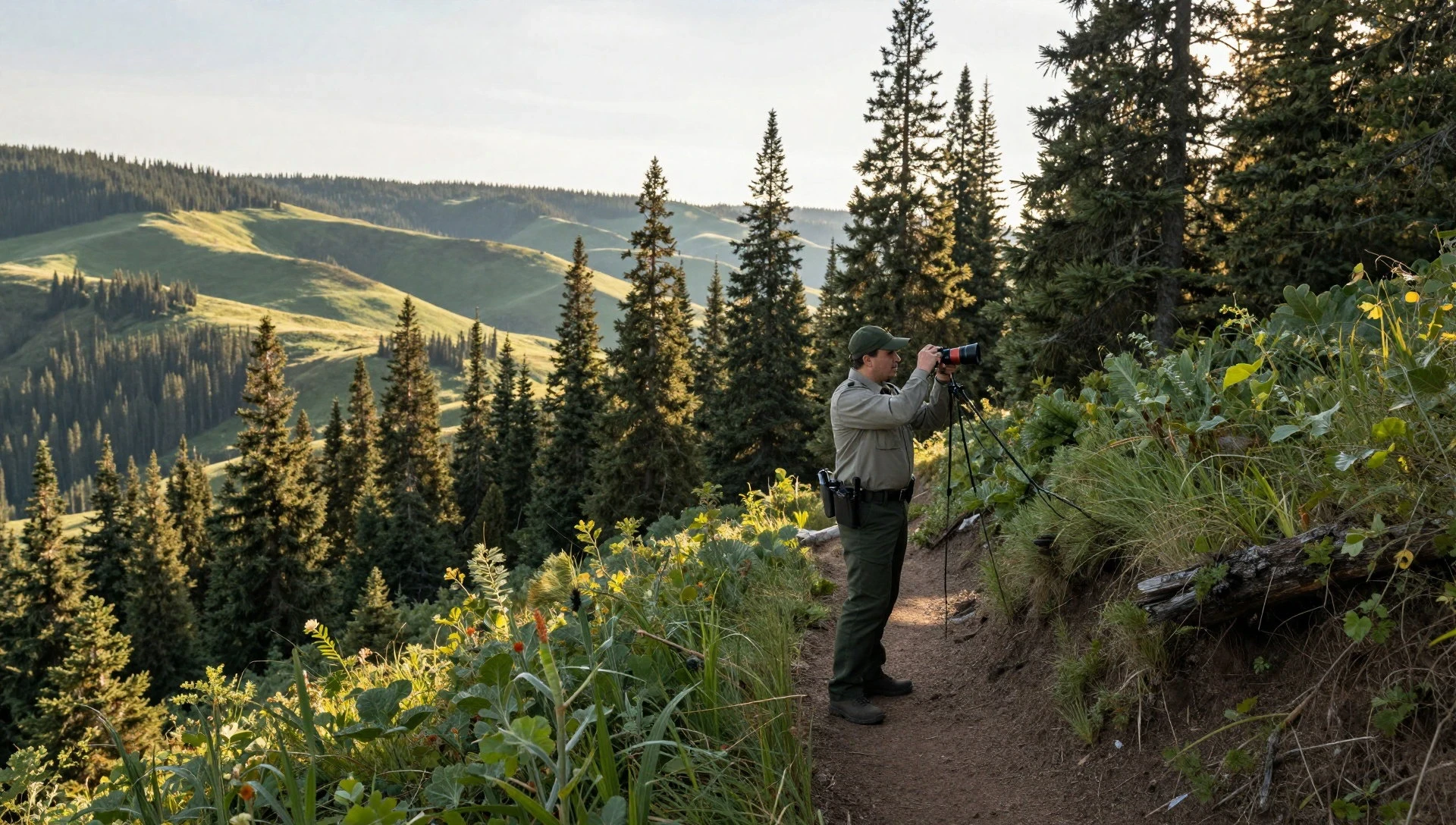
Behind the visitor-facing work sits the scientific and protective layer. Rangers monitor wildlife populations, record sightings, track invasive species, survey trail conditions, and collect the field data that agency biologists rely on. In many parks, rangers are the eyes that first detect disease outbreaks in bat colonies, illegal timber cutting, or the early signs of erosion that will eventually close a trail. This monitoring is often unglamorous — repeated transects, data entry, photo documentation — but it is the foundation of evidence-based land management.
Resource protection also means enforcement. Rangers investigate poaching, illegal collecting of plants and artifacts, off-road vehicle damage, and vandalism. At cultural sites, the stakes extend to archaeology: a single looted pueblo or disturbed grave site represents an irreplaceable loss. Rangers document, secure, and refer cases to investigators, and their field notes frequently determine whether a prosecution succeeds.
Emergency Response and the Safety Mandate

Every ranger is, in effect, a first responder. Search and rescue, medical aid, wildfire response, flood evacuation, and vehicle accidents all fall within the operational envelope, and the ranger on scene is often the first trained person to arrive. Many agencies require current certifications in wilderness first aid or wilderness first responder, CPR, and sometimes swift-water or technical rescue. The expectation is not that rangers perform every rescue personally, but that they stabilize, coordinate, and communicate until specialized teams arrive.
The safety mandate extends beyond emergencies into prevention. Rangers assess hazards, close unsafe areas, post warnings, and manage risk in environments where visitors routinely underestimate conditions. A sunny trailhead can become a hypothermia scenario within hours at higher elevations, and rangers spend considerable effort persuading people to carry layers, water, and navigation tools they believe they will not need.
Search, Rescue, and Incident Command
Search and rescue operations reveal the ranger job at its most intense. A missing hiker triggers a structured response: interviews with the reporting party, trailhead checks, hasty searches along likely routes, and coordination with county sheriffs, volunteer teams, and sometimes aircraft. Rangers frequently serve as initial incident commanders, which means managing radio traffic, assigning search segments, and making judgment calls about when to escalate. These operations can run through the night and demand clear thinking under fatigue.
Incident command training has become standard in larger agencies, reflecting a broader professionalization of the field. Rangers learn to run the same command structures used by fire and emergency medical services, which allows seamless coordination across agencies during large events. For people drawn to the work, this operational dimension is often the most surprising and the most compelling part of the job.
Law Enforcement Authority and Its Limits
Authority varies sharply by agency and jurisdiction. National park rangers in the United States typically carry full law enforcement commissions, including firearms authority, and attend a federal law enforcement academy. State park rangers may hold peace officer status, limited citation authority, or no enforcement role at all, depending on the state. Some rangers are explicitly interpretive or scientific staff with no police powers whatsoever. Prospective applicants should research the specific agency rather than assume a uniform standard.
Where enforcement authority exists, it comes with weight. Rangers must apply discretion constantly — deciding when a warning suffices and when a citation is warranted — and must document decisions carefully. The best rangers understand that authority is a tool for protecting resources and people, not a personality trait, and that a calm conversation resolves more problems than a citation book ever will.
Training, Credentials, and the Hiring Pipeline

There is no single credential that makes someone a ranger, but a recognizable pattern exists. Most permanent rangers hold a bachelor's degree in a field such as natural resource management, wildlife biology, environmental science, forestry, parks and recreation, history, or environmental education. Degrees are not universally mandatory, but they are the standard currency in a competitive applicant pool where a single seasonal opening can draw hundreds of applications. Relevant coursework in ecology, GIS, and communications strengthens a candidate considerably.
Equally important is field experience, which is why the seasonal pipeline dominates entry into the profession. Aspiring rangers typically begin with seasonal or volunteer positions — trail crew, campground host, interpretive aide, biological technician — and use those seasons to build a track record. Hiring managers weigh demonstrated competence in the field heavily, because the job demands practical judgment that no classroom fully replicates.
Certifications That Matter in Hiring
Certain certifications function as near-universal expectations. Wilderness first responder or wilderness first aid training is standard, as is CPR. Defensive tactics, firearms qualification, and academy graduation apply to enforcement-track positions. Beyond the baseline, specialized credentials differentiate candidates: swift-water rescue, technical rope rescue, wildland firefighter training (often called red card certification), chainsaw operation, commercial driving licenses for larger vehicles, and GIS proficiency all carry weight.
Interpretive credentials deserve mention because they are frequently undervalued by applicants. Training through the National Association for Interpretation, including certified interpretive guide or certified interpretive trainer designations, signals that a candidate can connect with audiences rather than merely patrol them. In agencies where visitor education is central to the mission, that skill set can be decisive.
Seasonal Work as the Real Apprenticeship
The seasonal system is the profession's apprenticeship, and it is both a filter and a proving ground. Seasonal rangers often work four to six months, live in shared housing, and earn modest wages, returning year after year in hopes of a permanent appointment. The lifestyle demands flexibility and a tolerance for uncertainty, and it quietly tests whether a person genuinely wants the work or merely the idea of it.
Those who thrive in the seasonal years tend to develop reputations quickly. Supervisors notice who volunteers for the difficult patrol, who handles a visitor crisis calmly, and who documents incidents thoroughly. Permanent hiring decisions frequently favor known quantities, which means the seasonal years are not merely a waiting period but an extended audition.
- 01
- 02
- 03
- 04
The Physical, Emotional, and Financial Realities
The romantic version of the job omits the wear. Rangers spend long hours on their feet, carry packs, work in weather that ranges from punishing heat to driving sleet, and often live far from medical facilities and familiar social networks. Housing is frequently provided but basic, and the isolation of remote postings is a genuine adjustment. The physical demands are real, and repetitive strain, knee injuries, and back problems are common occupational complaints.
The emotional demands are less discussed and equally significant. Rangers absorb the grief of families after fatal accidents, manage confrontations with angry visitors, and carry the weight of decisions made quickly with incomplete information. Repeated exposure to trauma and conflict takes a toll, and agencies have become more attentive to peer support and mental health resources, though provision remains uneven across the profession.
Pay, Benefits, and the Housing Question
Compensation is modest relative to the responsibility. Entry-level seasonal ranger pay in many jurisdictions hovers near the lower end of public sector wages, and permanent ranger salaries, while stable, rarely approach those of comparable law enforcement or scientific roles in the private sector. Benefits — health coverage, retirement contributions, and leave — are often the strongest part of the package, and they matter considerably for people planning a long career.
Housing can transform the financial picture. Subsidized or provided housing in high-cost gateway communities is a meaningful benefit, and some remote postings are effectively impossible without it. Candidates should evaluate total compensation rather than salary alone, factoring in housing, vehicle use, uniform allowances, and the real cost of living near popular public lands.
Work-Life Rhythm and Seasonal Isolation
The ranger year has a distinct rhythm. Summer brings peak visitation, long shifts, and constant public contact; winter brings maintenance projects, planning work, training, and in some parks a near-total absence of visitors. Many rangers cherish the off-season for its quiet and its opportunity to do the deep work — trail assessment, resource surveys, program development — that summer crowds make impossible.
That rhythm also strains relationships. Seasonal separations, remote locations, and schedules that include weekends and holidays complicate family life. Rangers who last tend to build deliberate structures around the work: clear boundaries during off-hours, strong peer networks, and honest conversations with partners about the geography of the job.
We Also Published
Career Pathways and Specialization
The ranger job is less a single occupation than a family of related roles, and most careers involve movement between them. A ranger might begin in interpretation, shift into backcountry patrol, specialize in resource management, and later move into supervision or planning. Larger agencies maintain distinct tracks — law enforcement, interpretation, resource management, maintenance, administration — and rangers often cross between them as interests and opportunities evolve.
Specialization tends to follow both passion and demand. Wildland fire, search and rescue, cultural resource protection, and GIS analysis are among the most sought-after niches, and each carries additional training requirements. Rangers who develop a specialty often find themselves in higher demand and with more leverage to choose postings, which matters in a field where location is a major part of job satisfaction.
Advancement Into Supervision and Planning
Advancement typically runs from seasonal to permanent ranger, then to lead ranger, district or area supervisor, and eventually park management or regional administration. Supervisory roles trade field time for personnel management, budgeting, and interagency coordination, which is a genuine adjustment for people who entered the profession to be outdoors. Some rangers deliberately remain in field positions for decades, valuing autonomy over rank.
Planning and resource management roles offer another path. Rangers with strong scientific backgrounds often move into positions focused on environmental compliance, land use planning, or resource stewardship, where they shape decisions at a scale that individual patrols cannot. These roles reward analytical skill and patience with process, and they represent a meaningful alternative to the enforcement ladder.
Adjacent Careers and Transferable Skills
The skills developed in ranger work travel well. Former rangers move into environmental consulting, conservation nonprofits, outdoor education, emergency management, and corporate sustainability roles, carrying with them field competence, public communication ability, and the capacity to make decisions under pressure. The profession's generalist character, often a frustration inside the job, becomes an asset in transition.
Some rangers also build portfolio careers, combining seasonal ranger work with teaching, guiding, writing, or research. This pattern is increasingly common as housing costs and stagnant wages push people toward diversified income. It requires discipline and planning, but it preserves the field time that drew them to the work in the first place.
Weighing the Work: Who Thrives and Who Leaves
The people who thrive as rangers share a recognizable temperament. They tolerate ambiguity, enjoy physical work, communicate easily with strangers, and derive satisfaction from stewardship rather than recognition. They are comfortable being alone for long stretches and equally comfortable managing a crowd. They tend to be practical problem-solvers who can fix a gate, calm a dispute, and file the paperwork afterward without losing their composure.
Those who leave often cite the same pressures: low pay, housing insecurity, seasonal instability, and the emotional weight of the work. The gap between the romantic image and the operational reality is wide, and some people discover that they love wild places but not the public-facing labor of protecting them. Honest self-assessment before committing years to the seasonal pipeline saves considerable heartache.
Questions Worth Asking Before Applying
Prospective rangers benefit from asking concrete questions. Which agency, and what authority does its rangers actually hold? Is housing provided, and at what cost? What proportion of the job is interpretation versus enforcement versus maintenance? How does the agency handle mental health support after critical incidents? What does the path from seasonal to permanent look like in practice, and how many people actually make that transition?
These questions cut through recruitment materials and reveal the operational truth. Talking to current rangers, visiting during shoulder seasons, and reading agency planning documents all provide a clearer picture than any brochure. The profession rewards informed commitment and punishes romantic assumptions, so the research phase deserves real effort.
The Stewardship Ethic That Sustains the Profession
What holds the profession together, despite the pay and the strain, is a stewardship ethic that is difficult to quantify but easy to recognize. Rangers speak about specific places with a proprietary affection — a particular meadow, a stretch of river, a historic cabin — and that attachment translates into care that no job description captures. They are, in a real sense, the human interface between the public and the land.
That ethic also explains why the work attracts people who could earn more elsewhere. The ranger job offers something increasingly rare: daily contact with the natural and cultural inheritance held in public trust, and a role in keeping it intact for people who will never know your name. For the right person, that is compensation of a different order.
From our network :
- University Language Proficiency Exams: Why Institutional Tests Demand Different Preparation Than IELTS and TOEFLDiscover why university-specific language proficiency examinations differ fundamentally from IELTS and TOEFL, and learn strategic preparation approaches for institutional assessment success.
- Forbidden Matrix Patterns and Visible Lattice Points: A Geometric DictionaryExplore how multidimensional 0–1 matrices encode geometric truths, linking forbidden patterns to visible lattice points and hypergraph theory, with applications in combinatorics and computational geometry.
- Mobile Learning and VR in English: What Global Evidence Reveals About Effective Language TechnologyA systematic review across 14 countries reveals which language-learning technologies genuinely work. Mobile learning, AI, and VR show measurable benefits when pedagogically integrated. This evidence-based guide helps educators and learners select technology that delivers real return on investment.
- The Final Descent: How ESA Retired the Legendary Cluster Constellation After 24 Years of Space Weather ScienceAfter 24 years mapping Earth’s magnetosphere, ESA’s Cluster mission concluded with a precisely controlled reentry over the South Pacific. This analysis explores the scientific legacy, engineering decisions, and debris mitigation principles behind one of space exploration’s most responsible retirements.
- The Hidden Cost of AI Convenience: Why Over-Permissioned Agents Are a Security Time BombDiscover why AI agents with excessive permissions create dangerous single points of failure, and learn how implementing least privilege principles can protect your organization from exploitation.
- Committed Mediterranean Precipitation Decline: Why Emissions Cuts Alone Cannot Restore Winter RainsNew NOAA research reveals that Mediterranean winter rains may decline irreversibly even with emissions cuts. Explore the science of committed climate change and regional impacts.
- CISA’s Ten-Advisory Wave: Why Generic Patching Fails in OT and How to Build Product-Specific PlaybooksCISA released ten ICS advisories in one week, exposing critical infrastructure risks. Generic patching fails in OT. Learn to build product-specific remediation playbooks.
- Live Online English Classes for Kids: Do They Actually Reduce Anxiety?A ten-week study reveals that synchronous online English classes can significantly reduce child language anxiety while improving listening and reading skills. Discover what makes these programs effective and how parents can select the right one.
- How AI Agents Will Change the Way We Manage Personal FinancesExplore how AI agents are transforming personal finance through automated budgeting, bill payment, and investment management, while examining the critical security protocols and governance frameworks required for safe deployment.
RESOURCES
- Jobs - California State Parks - CA.govparks.ca.govFeatured Opportunities · CA State Park Peace Officer Cadet Academy Exams (Ranger/Lifeguard) · California State Parks State Archeologists · Communications Operator.
- Work for Us - National Park Servicenps.govMar 18, 2025 ... Are you looking for a full-time, permanent job? We've got those. Or maybe you'd prefer to work in parks for…
- Become a Park Ranger - Washington State Parks - WA.govparks.wa.govIf you are interested in becoming a Washington State Parks Ranger, read on to learn how to qualify and what the hiring process looks…
- Park Rangers - New York State Parks & Historic Sitesparks.ny.govCurrent salary for a Park Ranger is $22.47 an hour. Positions Available. Positions for Park Rangers exist in all eleven regions of the NY…
- Considering park ranger as a career, is it worth it? - Redditreddit.comApr 4, 2023 ... Park rangers generally don't spend time outside in nature enjoying the park. They're there to help the visitor enjoy the…
- Careers in Virginia State Parksdcr.virginia.govJul 9, 2026 ... Careers. park ranger with a turtle Virginia State Park rangers. Careers at Virginia State Parks offer an opportunity to work…
- Park Ranger - GS-0025 | U.S. Department of the Interiorcareers.doi.govExplore Park Ranger careers (GS-0025) at DOI. Park Rangers play a critical role in making public lands inviting, inspiring, safe, and accessible for ...
- Becoming a Park Ranger | Florida State Parksfloridastateparks.orgWe have both part-time and full-time positions, meaning even those with a tight schedule can work at a state park. Park rangers often move…
- How to Start a Career as a Park Ranger | ANPRanpr.orgA person entrusted with protecting and preserving parklands – national, state, provincial, or local parks...The profession includes a number of disciplines and ...
- State Parks - Jobs & Careers at TPWDtpwd.texas.govCareer Opportunities. Park and Historic Site Operations Park superintendents, park rangers, maintenance specialists, project managers, customer service clerks, ...
- Park Ranger - St. Louis Metropolitan Police Departmentslmpd.orgMar 3, 2026 ... functions of the job · Patrolling city parks and recreation centers, issuing parking tickets, and enforcing curfew regulations · Serving…
- Park Ranger - USAJOBS - Searchusajobs.govThe government puts many jobs on the General Schedule (GS) grade scale which sets pay based on experience. The higher the grade means the…
- Urban Park Ranger | City of New York Jobscityjobs.nyc.govJul 31, 2026 ... Urban Park Ranger · Job Description · This vacancy has now expired. · Minimum Qualifications · Preferred Skills · 55a…
- Careers | Colorado Parks and Wildlifecpw.state.co.usCareers with CPW include managing the land, caring for State Parks, and keeping trails open and safe.
- Jobs | NC State Parksncparks.govJobs. Jobs. Come work with us! Park rangers may be the most recognizable face of North Carolina's state parks system, but their dedication to…
- 01
- 02
- 03
- 04
- 05
- 06
- 07
- 08
0 Comments