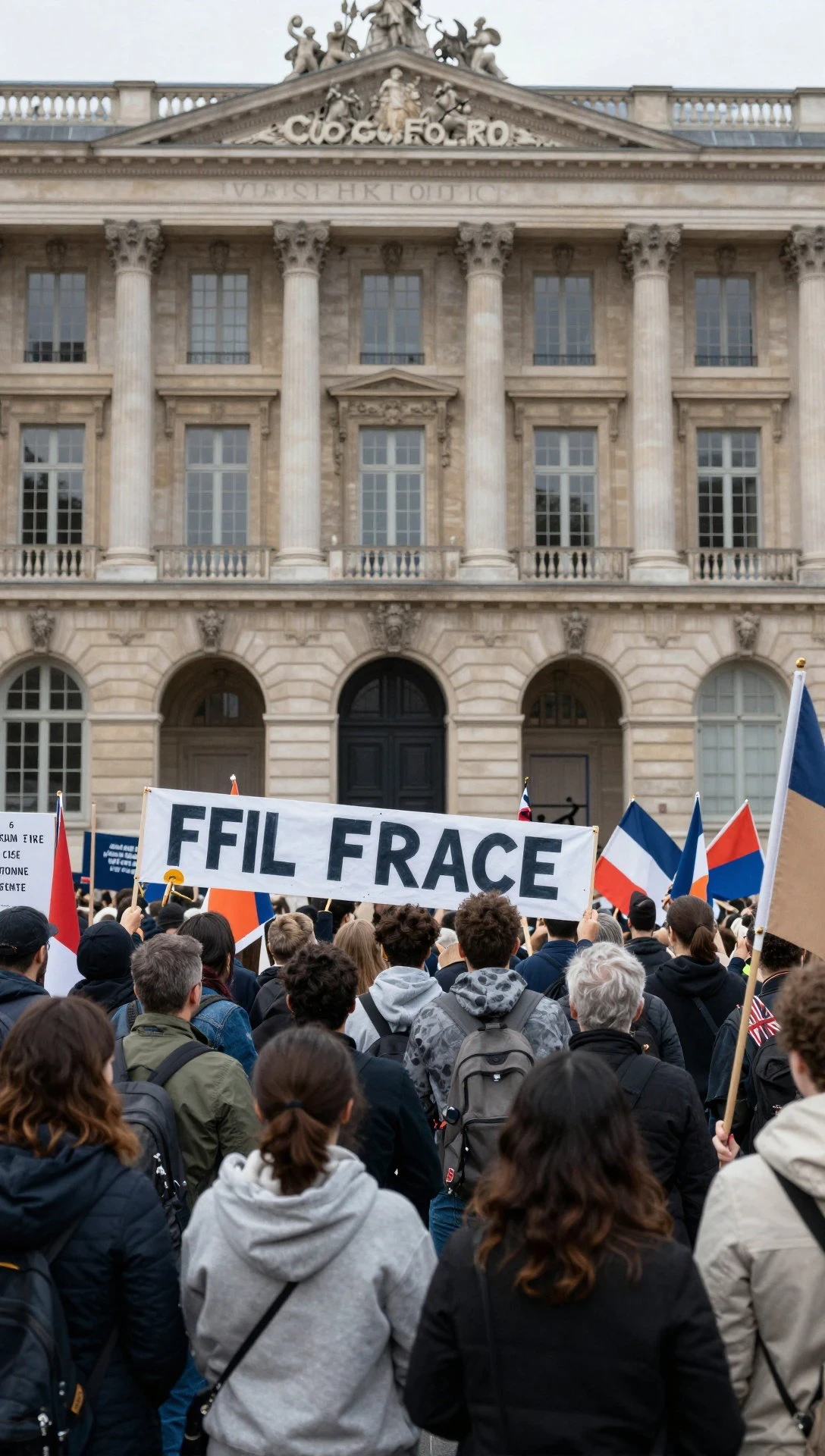
When a high school in Créteil, southeast of Paris, became the flashpoint for a student-led movement on September 17, few observers anticipated how swiftly the discontent would travel. Within weeks, the agitation had migrated to Saint-Denis and then rippled outward across France, drawing in students, teachers, and university cohorts who shared a common grievance about the physical and human conditions of public education.
What began as a localized complaint about crumbling facilities evolved into a national conversation about dignity, funding, and the state's obligations to its youngest citizens.
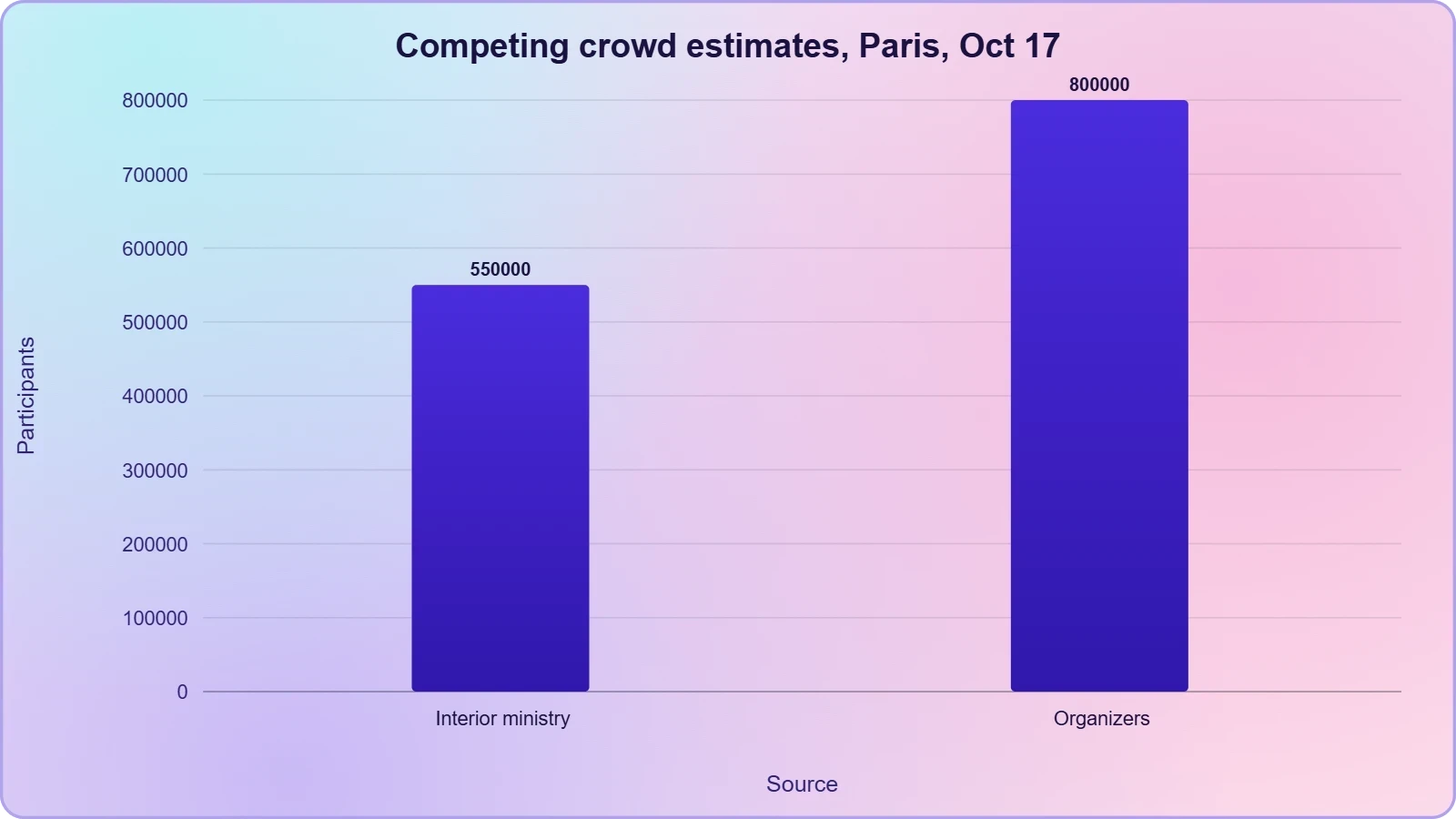
The protests carry a distinctive character that sets them apart from conventional French street politics. Students have blocked school entrances, joined national strikes, and staged demonstrations that, by the interior ministry's count, drew 550,000 people to Paris on October 17, while organizers claimed 800,000.
On This Page
Yet alongside the anger, participants have cultivated a spirit of solidarity and even festivity, wearing costumes on cold, rainy mornings to signal that their movement is about hope as much as hardship. This blend of resolve and joy gives the unrest a texture worth examining closely.
Understanding this movement requires looking beyond the headlines to the lived realities inside French schools: rats in courtyards, cockroaches in classrooms, restrooms that fail basic hygiene standards, and water that trickles too slowly to serve a student body. Teachers, too, have joined the ranks, voicing their own frustration with the conditions in which they are expected to teach.
The following analysis traces the origins, demands, and broader implications of a protest wave that speaks to deeper questions about educational equity in France.
TL;DR A student-led protest movement that ignited at a Créteil high school in September 2026 spread to roughly 400 schools across France, demanding better classrooms, sanitation, and facilities. Teachers have joined students in criticizing deteriorating conditions, particularly in Paris suburbs like Saint-Denis. The movement blends anger with creative solidarity, and its scale reflects long-simmering frustration over educational inequality and state underinvestment.
The Origins and Geography of a Spreading Movement
The movement's geography tells its own story about where educational neglect concentrates. Créteil and Saint-Denis, both situated in the Paris suburbs, are home to communities that have long shouldered the burden of underfunded schools and overcrowded classrooms.
When students at a single Créteil high school walked out on September 17, they articulated grievances that resonated instantly with peers in neighboring districts and, eventually, across the country.
From a Single High School to a National Wave
By the end of September, an estimated 400 schools, including several universities, had joined the movement. This rapid diffusion suggests that the conditions described in Créteil were not isolated anomalies but symptoms of a systemic pattern. Students in Saint-Denis and beyond recognized their own schools in the accounts emerging from the original flashpoint, and the movement's momentum grew accordingly.
The suburban concentration of the protests is significant. These are the areas where public services have historically been stretched thinnest, where immigrant communities and working-class families rely most heavily on state education, and where the gap between republican promises and material reality is widest. The protests thus carry an implicit critique of spatial inequality within the French education system.
The Role of Teachers as Allies
Teachers have not merely observed the movement from the sidelines; they have joined it, expressing solidarity with students while voicing their own grievances about working conditions. An English teacher at a Saint-Denis high school described being impressed by the clarity of her students' political arguments, noting that growing frustration explains the movement's scale. This alliance between students and educators strengthens the protests' legitimacy.
When teachers publicly endorse student demands, they transform what might otherwise be dismissed as youthful rebellion into a credible indictment of institutional failure. The presence of educators in the movement also complicates any attempt by authorities to frame the protests as disorderly or misguided. Teachers lend professional weight to claims about infrastructure, hygiene, and resource allocation.
We Also Published
The Material Realities Behind the Anger
Beneath the political rhetoric and the striking imagery of costumed students lies a catalogue of concrete deficiencies that would be unacceptable in any wealthy nation's public institutions. Students describe restrooms that are dirty and chaotic, water pressure so weak that drinking becomes difficult, and hallways and classrooms contaminated by pests. These are not abstract complaints; they are daily indignities that shape how young people experience schooling.
Sanitation, Pests, and Infrastructure Failure
A seventeen-year-old at a Saint-Denis trade school offered a stark inventory: rats sighted in the courtyard and restrooms, cockroaches in classrooms, insufficient drinking water, and pervasive filth. Such conditions raise immediate public health concerns and signal a deeper failure of maintenance and investment. When students cannot access clean facilities, their ability to learn is compromised in ways that no curriculum reform can address.
The persistence of these conditions in suburban schools points to a structural pattern. Maintenance budgets, like other educational resources, are not distributed evenly, and schools serving disadvantaged populations often bear the brunt of deferred repairs. The protests have forced these invisible failures into public view, transforming what was once tolerated as background misery into a political demand.
The Psychological Cost of Neglected Spaces
Beyond physical health, neglected school environments exact a psychological toll. Students who spend their days in dirty, pest-infested buildings receive an implicit message about their worth and the state's regard for their futures. The anger animating the protests is therefore not merely about facilities; it is about dignity, recognition, and the promise of equal citizenship that French public education is supposed to embody.
This dimension helps explain why the movement has resonated so broadly. Students in other regions recognized the same disregard in their own schools, even where specific conditions differed. The shared experience of institutional neglect created a common language of grievance that transcended local circumstances and fueled the movement's national reach.
Costume, Joy, and the Culture of Protest
The visual language of the protests has captured public attention in ways that conventional demonstrations rarely do. On a cold, rainy morning in early November, students and teachers gathered outside a locked Saint-Denis high school, some of them dressed in costumes. This choice was deliberate, and it reveals something important about how the movement understands itself and seeks to communicate.
Why Students Chose to Dress Up
A seventeen-year-old participant explained that dressing up helped preserve a sense of joy and hope alongside the anger driving the protests. The costumes, she suggested, demonstrate that the movement is not solely about violence or confrontation; there is also good cheer and fun within it. This framing counters stereotypes of student unrest as mindless disruption and presents the protesters as thoughtful, creative agents.
The strategy also serves a communicative purpose. In a media environment that often reduces protests to images of clashes and chaos, costumes offer a different visual register. They humanize the participants, invite curiosity, and make the movement harder to dismiss. By choosing festivity over pure fury, students assert control over their own representation and refuse to be reduced to caricatures.
The Political Logic of Playful Resistance
Playful resistance is not a contradiction in terms; it is a well-documented tactic in social movements worldwide. Carnivalesque elements can lower the emotional cost of participation, sustain morale during prolonged campaigns, and attract sympathetic attention from audiences otherwise indifferent to policy disputes. The Saint-Denis costumes fit within this tradition, even as they respond to specifically French cultural sensibilities.
There is also a defensive dimension. By foregrounding joy, students preempt accusations that their movement is nihilistic or violent. The costumes function as a kind of rhetorical shield, allowing participants to press radical demands while maintaining public sympathy. This sophistication belies any assumption that young protesters lack political awareness or strategic thinking.
Numbers, Crowd Estimates, and Public Opinion
The scale of the October 17 Paris protest became a contest of numbers, as is common in French political life. The interior ministry estimated 550,000 participants, while organizers claimed 800,000. Such discrepancies are routine, but they matter because they shape public perception of momentum and legitimacy. A movement that can plausibly claim hundreds of thousands in the streets commands attention from policymakers.
Reading the Crowd Counts
Independent observers often place actual attendance somewhere between official and organizer figures, though methodology varies widely. What matters for political analysis is not the precise number but the order of magnitude: a demonstration drawing hundreds of thousands signals genuine public concern rather than fringe discontent. The October 17 turnout established the movement as a significant national phenomenon.
The peak of protest size occurred in early October, according to available accounts, but the movement did not dissolve afterward. Many young people, particularly in the suburbs, have refused to return to class until demands are met. This persistence distinguishes the current wave from shorter-lived outbursts and suggests that underlying grievances remain unresolved.
Teachers' Support and Shifting Public Sympathy
Teacher participation has likely influenced public opinion favorably. When educators publicly back student demands, they signal that the complaints are substantive rather than performative. An English teacher's remark that she was impressed by her students' political arguments illustrates how the movement has earned credibility among professionals who might otherwise remain skeptical of youth-led activism.
Public sympathy, however, is not unlimited. Prolonged school closures can strain the patience of parents and communities, and authorities may seek to exploit such fatigue. The movement's ability to sustain support will depend on its capacity to articulate clear, achievable demands and to demonstrate that disruption is a last resort rather than an end in itself.
Educational Inequality and the Suburban Question
The protests cannot be understood apart from France's long-standing struggle with suburban inequality. The banlieues surrounding Paris have repeatedly been sites of social tension, from the 2005 riots to periodic clashes over policing and opportunity. Schools in these areas often serve as the front line where the republic's promise of equality confronts the reality of concentrated disadvantage.
- 01
- 02
- 03
- 04
Schools as Mirrors of Spatial Inequality
When students in Saint-Denis describe rats and cockroaches, they are describing more than maintenance failures. They are describing the material expression of a political order that has consistently underinvested in certain neighborhoods. The school becomes a mirror reflecting broader patterns of neglect, and the protests become a demand that this mirror be shattered and replaced.
French educational philosophy has long emphasized the school as a unifying institution, a place where citizens are formed regardless of origin. When that institution visibly fails in specific locales, it undermines the credibility of the entire republican project. The protests thus raise questions that extend far beyond sanitation budgets and into the foundations of French social cohesion.
Teacher Frustration and Professional Dignity
Teachers who have joined the movement articulate a parallel grievance: they are expected to deliver quality education in conditions that make the task nearly impossible. Their frustration reflects a broader crisis of professional dignity in public services, where workers are asked to compensate for systemic failures through individual dedication. The alliance with students amplifies both parties' claims.
When educators publicly criticize the conditions in which they teach, they break with a professional culture that often discourages open dissent. Their willingness to do so signals the depth of the problem and lends moral weight to the students' demands. The movement has thus become a coalition of those who experience educational neglect firsthand.
What the Movement Reveals About French Society
Beyond the specific grievances, the protests illuminate broader tensions within contemporary French society. They expose the gap between the egalitarian rhetoric of the republic and the stratified reality of its public services. They reveal a generation willing to organize, articulate demands, and sustain action over weeks rather than days. And they demonstrate that education remains a potent political terrain.
A Generation Finding Its Political Voice
The students involved have shown a capacity for political expression that challenges condescending assumptions about youth apathy. Their arguments, as one teacher noted, are clear and politically sophisticated. They have learned to use media, to stage symbolic actions, and to build alliances with adults. Whatever the outcome, this generation is acquiring skills it will carry into future civic life.
The movement also reflects a broader pattern of youth activism across Europe and beyond, where young people have taken leading roles in climate, housing, and education struggles. The French students are part of a transnational cohort that refuses to accept inherited conditions passively. Their protests signal that the politics of the coming decade may be shaped significantly by those now in classrooms.
The Unresolved Question of State Responsibility
At its core, the movement poses a question that French governments have long struggled to answer: what does the state owe its citizens in the realm of public education? The students' demands are modest in material terms—clean facilities, functioning plumbing, pest control—yet they touch on fundamental principles of equality and dignity. How the state responds will signal its priorities.
The protests have already achieved something significant by forcing these questions into public debate. Whether they produce concrete improvements depends on political will, budgetary choices, and the movement's ability to sustain pressure. The coming months will reveal whether the anger and hope expressed in Saint-Denis translate into meaningful change or fade into another chapter of unmet promises.
From our network :
- CISA’s Ten-Advisory Wave: Why Generic Patching Fails in OT and How to Build Product-Specific PlaybooksCISA released ten ICS advisories in one week, exposing critical infrastructure risks. Generic patching fails in OT. Learn to build product-specific remediation playbooks.
- The Final Descent: How ESA Retired the Legendary Cluster Constellation After 24 Years of Space Weather ScienceAfter 24 years mapping Earth’s magnetosphere, ESA’s Cluster mission concluded with a precisely controlled reentry over the South Pacific. This analysis explores the scientific legacy, engineering decisions, and debris mitigation principles behind one of space exploration’s most responsible retirements.
- Committed Mediterranean Precipitation Decline: Why Emissions Cuts Alone Cannot Restore Winter RainsNew NOAA research reveals that Mediterranean winter rains may decline irreversibly even with emissions cuts. Explore the science of committed climate change and regional impacts.
- University Language Proficiency Exams: Why Institutional Tests Demand Different Preparation Than IELTS and TOEFLDiscover why university-specific language proficiency examinations differ fundamentally from IELTS and TOEFL, and learn strategic preparation approaches for institutional assessment success.
- Live Online English Classes for Kids: Do They Actually Reduce Anxiety?A ten-week study reveals that synchronous online English classes can significantly reduce child language anxiety while improving listening and reading skills. Discover what makes these programs effective and how parents can select the right one.
- Mobile Learning and VR in English: What Global Evidence Reveals About Effective Language TechnologyA systematic review across 14 countries reveals which language-learning technologies genuinely work. Mobile learning, AI, and VR show measurable benefits when pedagogically integrated. This evidence-based guide helps educators and learners select technology that delivers real return on investment.
- The Hidden Cost of AI Convenience: Why Over-Permissioned Agents Are a Security Time BombDiscover why AI agents with excessive permissions create dangerous single points of failure, and learn how implementing least privilege principles can protect your organization from exploitation.
- How AI Agents Will Change the Way We Manage Personal FinancesExplore how AI agents are transforming personal finance through automated budgeting, bill payment, and investment management, while examining the critical security protocols and governance frameworks required for safe deployment.
- Forbidden Matrix Patterns and Visible Lattice Points: A Geometric DictionaryExplore how multidimensional 0–1 matrices encode geometric truths, linking forbidden patterns to visible lattice points and hypergraph theory, with applications in combinatorics and computational geometry.
RESOURCES
- How dilapidated are French schools and how bad is inequality in the ...theguardian.comOct 7, 2026 ... School students say the education system is riven with inequality ... schools protests across France. Read more. Éric Charbonnier, a…
- 'Real inequality': France's education divide laid bare by protestsfrance24.comOct 16, 2026 ... Students cheered as they stacked rubbish bins against the entrance to a school outside Paris, while a speaker thumped out…
- French High School Students Lead Mass Protests over School ...democracynow.orgOct 6, 2026 ... French High School Students Lead Mass Protests over School Funding, Inequality; Thousands Arrested ... France has done on education has ...
- Education, Inequality, and France's Political Crisis: A System Under ...epis-thinktank.comOct 13, 2026 ... In autumn 2026,France has witnessed a wave of student-led protests over deteriorating school conditions, teacher shortages and educational ...
- Six questions on the protests erupting across France and Spainsfs.georgetown.eduOct 19, 2026 ... The current protests were sparked by outrage over the poor quality of public education: overcrowded classrooms, long school days and ...
- The Algorithm Driving French Student Protests - Project Syndicateproject-syndicate.orgOct 20, 2026 ... While such automated decision-making systems do not create educational inequalities, they can exacerbate them. A protester wrapped in a French ...
- Inequality and Educational Justice in Chile, France, and Austriabildungswissenschaft.univie.ac.atWe are pleased to cordially invite all those interested to our upcoming Brown Bag Seminar: "When High School Students Protest: Inequality and Educational ...
- More than 400,000 protest across France, challenging Macron ... - PBSpbs.orgOct 24, 2026 ... Clashes erupted in Paris as a mass march drew to a close Saturday, with more than 400000 people rallying across…
- Student protests test France's Republican promise | Al Majallaen.majalla.comOct 16, 2026 ... The French government's hopes of containing the country's secondary school protests ... According to Kokoreff, social inequality in educational ...
- 'High school students have put France's real problems at the heart of ...lemonde.frNov 2, 2026 ... COLUMN. The protest movement has forced candidates for the French presidency to address fundamental issues such as young people's future…
- French school protests: a rite of passage – and the result of genuine ...theconversation.comOct 14, 2026 ... This was due in part to French educational ... The protests against racial inequality and police brutality in 2005 that…
- French high school protests: 'Today, public spending allocates €2 to ...lemonde.frNov 3, 2026 ... OP-ED. The anger among high school students is partly due to the fact that a significant portion of the national…
- 'Real inequality': France's education divide laid bare by protestsyahoo.comOct 16, 2026 ... Students cheered as they stacked rubbish bins against the entrance to a school outside Paris, while a speaker thumped out…
- Amid Student Protests, Pessimism About France's Futurewashingtonmonthly.comOct 9, 2026 ... The massive outpouring I saw in Paris was animated by more than students' legitimate concerns about deteriorating schools.
- Chartbook 480 France's schools system may be bad, but we should ...adamtooze.substack.comOct 25, 2026 ... Given the unrest in France triggered by student protests, it seems obvious to ask, how bad is the state of…
- 01
- 02
- 03
- 04
- 05
- 06
- 07
- 08
0 Comments