Pakistan's Ministry of Information and Broadcasting issued a formal statement on a Saturday night in November 2026 declaring terrorism a "red line" and warning Afghanistan that Islamabad will take all necessary steps to eliminate cross-border threats.
The declaration represents one of the sharpest public escalations in Pakistan-Afghanistan relations since the Taliban's return to power in Kabul, and it reframes the bilateral dispute from a diplomatic disagreement into a question of national security doctrine.
The ministry's language was deliberate: it named the Afghan Taliban leadership directly, accused it of failing to act against militants operating from Afghan soil, and reserved the right to act unilaterally under international law.
On This Page
The immediate trigger was a counter-statement from an Afghan Taliban spokesperson, who accused Islamabad of refusing dialogue and of blocking a peaceful resolution while disclaiming Afghan responsibility for Pakistan's counter-terrorism problems. That exchange matters because it exposes a structural deadlock rather than a temporary quarrel.
Each government frames the other's conduct as the root cause: Pakistan points to militant safe havens and Taliban inaction; Kabul points to Pakistani policy failures and externalised blame. Neither position leaves room for a negotiated middle ground, and both sides now speak in the vocabulary of sovereignty and self-defence rather than cooperation.
This analysis examines the statement's core meaning, the strategic logic behind Pakistan's red-line formulation, and the wider regional consequences for South Asian security, border management and the credibility of Taliban governance.
It draws on the official text, the Afghan response and the historical pattern of Pakistan-Afghanistan friction over militancy, and it separates what the statement says from what it implies about future action.
TL;DR Pakistan's information ministry declared cross-border terrorism a "red line" and warned Afghanistan that Islamabad will take all necessary measures, including under international law, to remove threats originating from Afghan territory. The statement followed an Afghan Taliban spokesperson's accusation that Pakistan refuses dialogue and is itself responsible for the counter-terrorism impasse. The exchange signals a hardening of positions, a shift from diplomatic complaint to security doctrine, and a rising risk of unilateral action along a disputed and porous border.
The Red-Line Doctrine: What Pakistan's Statement Actually Establishes
The statement's central move is categorical rather than incremental. By designating terrorism a red line, Pakistan's information ministry converts a long-running grievance into a declared threshold, implying that further attacks traced to Afghan territory will trigger consequences rather than further diplomacy.
The phrasing "all necessary steps" and the explicit invocation of international law are standard markers of a self-defence justification, and they are typically deployed in advance of military or cross-border action.
The Language of Conditionality and Reserved Rights
Pakistan's ministry did not announce an operation, but it constructed the legal and rhetorical predicate for one. The claim that security "will not be held back" by Taliban inaction is a conditional threat: it transfers responsibility for escalation to Kabul while preserving Islamabad's freedom of action. This is the grammar of deterrence, and it is designed to be read by multiple audiences simultaneously.
The domestic audience is asked to accept that the state has exhausted patience and retains resolve. The Afghan audience is told that blame-shifting will no longer function as a substitute for enforcement.
International audiences, particularly Western capitals and multilateral bodies, are offered a legal framing under which any future action can be presented as defensive rather than aggressive.
The statement also assigns responsibility with unusual precision. It states that dealing with cross-border threats "lies with the Afghan Taliban government," which is both an accusation of dereliction and a pre-emptive rebuttal of the argument that Pakistan should manage its own security problems internally. That assignment of duty is the pivot on which the entire red-line logic rests.
Notably absent is any reference to a timeline, a verification mechanism or a diplomatic channel. The statement offers no benchmarks by which Taliban compliance could be measured, which suggests the threshold is political rather than technical.
A red line without metrics is a discretionary instrument, and discretion is precisely what a reserved-rights doctrine requires.
Why the Ministry of Information Issued the Warning
The choice of the Ministry of Information and Broadcasting as the issuing authority is analytically significant. Security warnings are conventionally delivered by foreign or defence ministries; routing this one through the information ministry signals that the message is intended primarily as public communication rather than private diplomacy. It is a broadcast, not a note verbale.
That channel choice also allows the government to set a narrative before military or foreign-policy institutions commit to specific measures. Public framing precedes operational decision, creating domestic expectations that constrain later flexibility. Once a red line is announced publicly, backing away carries reputational cost, which raises the credibility of the threat.
The timing, a Saturday night release, maximises media pickup across Sunday news cycles in both countries. Such scheduling is routine in crisis communication and indicates a deliberate desire for rapid, wide dissemination rather than quiet consultation. The statement was built to travel, and it did.
The Afghan Counter-Claim and the Blame Deadlock
The Afghan Taliban spokesperson's response inverted Pakistan's framing entirely. Rather than addressing the substance of the safe-haven allegation, he argued that Islamabad was unwilling to resolve tensions through dialogue and that its policies were blocking a solution. He further stated that Afghanistan was not responsible for the counter-terrorism problems Pakistan raised.
This is a classic attribution contest. Pakistan locates the cause of instability in Afghan territory; Kabul locates it in Pakistani policy. When both parties assign causation externally, the dispute becomes structurally unresolvable, because neither accepts the premise required for joint action.
Dialogue is invoked by both sides as a value while being defined by each as the other's concession.
The deadlock is reinforced by the asymmetry of the claims. Pakistan's statement is specific about conduct, alleging that the Taliban leadership has not dealt with militants and has ignored its own failures. The Afghan response is general, denying responsibility without offering an enforcement record. Specificity tends to win in international argument, even when it is contested.
There is also a sovereignty dimension. Kabul's position rests on the principle that it cannot be held accountable for problems defined by a neighbouring state, while Islamabad's rests on the principle that a state is accountable for threats emanating from its territory. Both principles are recognised in international law, and their collision is the essence of the dispute.
We Also Published
Strategic Logic, Border Realities and the Risk of Escalation
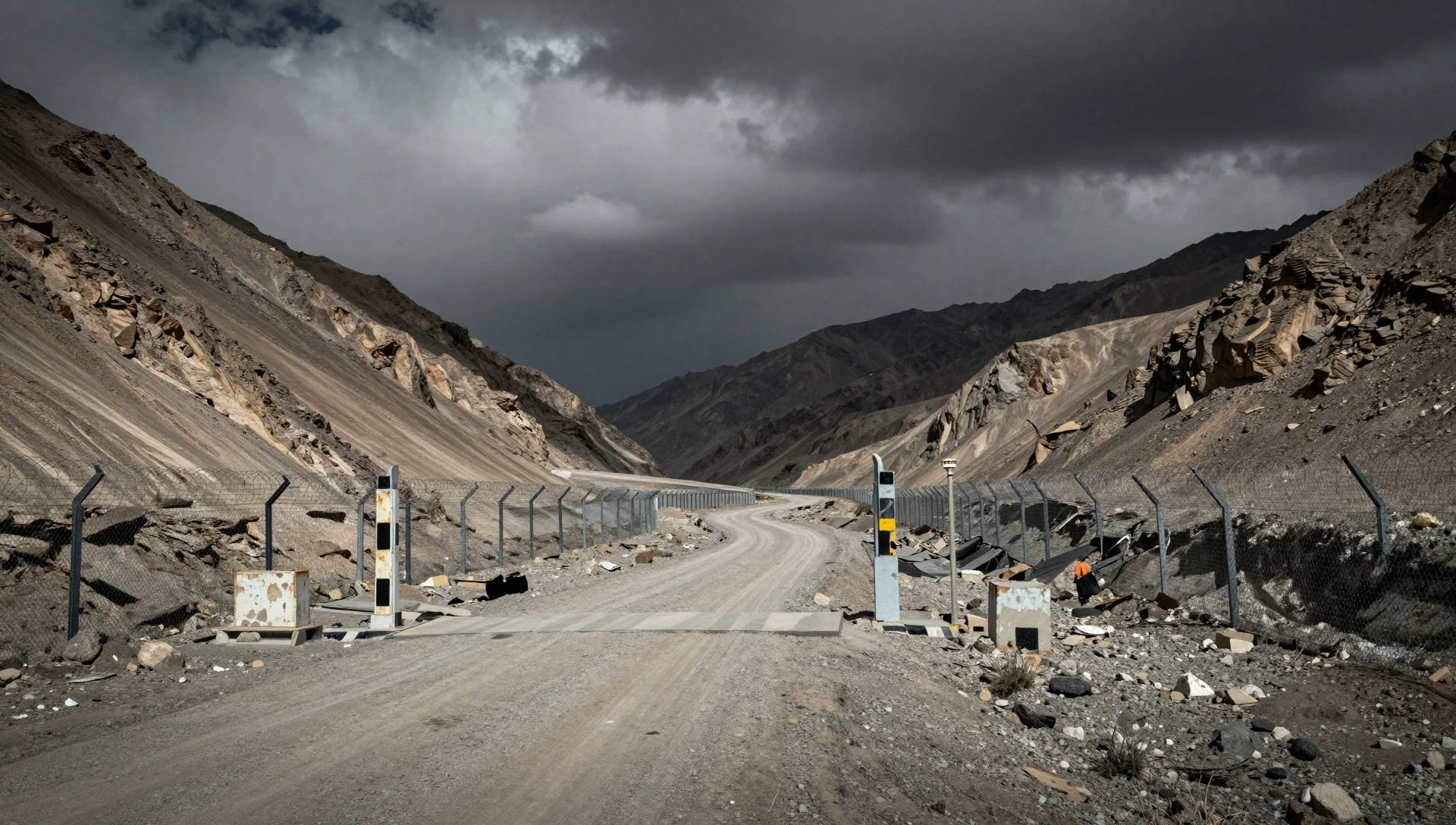
Behind the declaratory language sits a hard geographic and institutional reality. The Pakistan-Afghanistan boundary runs roughly 2,600 kilometres through mountainous terrain that neither state has ever fully controlled, and cross-border movement has historically been managed by kinship, trade and local arrangement as much as by formal border posts.
A red line drawn across such terrain is a political statement about a physical problem that no single government can solve alone.
The Durand Line and the Sovereignty Problem
Afghan governments have never formally recognised the Durand Line as a permanent international border, and the Taliban inherit that position. This unresolved status complicates every enforcement claim: Pakistan asserts a right to remove threats crossing a border whose legal character Kabul disputes. The sovereignty argument therefore cuts both ways and hardens resistance to joint operations.
Border management has improved in patches, with fencing and new crossing points, but the terrain and the density of cross-border social ties limit what physical infrastructure can achieve. Militant groups have historically exploited exactly these gaps, moving between sanctuaries and operational areas with local knowledge that distant capitals lack. Declarations do not close valleys.
The dispute also intersects with refugee policy. Pakistan has hosted millions of Afghan nationals over four decades, and periodic repatriation drives have strained relations further. When Islamabad speaks of citizens' safety, Kabul hears a broader pressure campaign encompassing refugees, trade and transit, not counter-terrorism alone.
Taliban Governance Credibility and the Recognition Question
The statement's insistence that the Taliban leadership address terrorism touches the central dilemma of Taliban governance: no state has extended formal recognition, and the movement's international standing depends on exactly the conduct Pakistan is questioning. Kabul's refusal to accept responsibility therefore protects a narrative of sovereign competence it cannot yet demonstrate.
For the Taliban, conceding that militants operate from Afghan territory would validate the core of Pakistan's case and invite further demands, including on women's education, minority rights and inclusive government. The counter-accusation of Pakistani intransigence is thus a defensive posture with wider diplomatic stakes attached to it.
Regional powers watch this exchange closely. China, Iran and the Central Asian republics share an interest in Afghan stability and in preventing militant spillover, and each has its own leverage over Kabul.
A unilateral Pakistani action would force those capitals to choose between condemning escalation and endorsing counter-terrorism, an uncomfortable position for all.
Escalation Pathways and Their Costs
The reserved-rights formulation opens several escalation pathways, ranging from targeted cross-border strikes to closure of crossing points and intensified repatriation. Each carries costs: military action risks civilian casualties and Taliban retaliation, while border closures disrupt trade worth billions of dollars annually and hurt Pakistani exporters as much as Afghan consumers.
Historical precedent is instructive. Previous periods of Pakistan-Afghanistan tension have featured artillery exchanges, air incidents and tit-for-tat closures, none of which durably reduced militancy. Escalation has tended to produce cycles of retaliation followed by mediated de-escalation, often brokered by Gulf states or China, restoring the status quo without resolving it.
The more consequential risk is miscalculation. A strike that kills civilians or senior figures could trigger mobilisation along the border and draw in militant factions currently hedging between the two governments.
In a region where armed groups maintain complex loyalties, a single incident can realign alliances faster than any diplomatic process can manage.
Economic pressure is the quieter instrument. Trade through Torkham and Chaman sustains Afghan import dependence and Pakistani export corridors, and transit arrangements are a form of leverage Islamabad has used before. But leverage that damages both economies is difficult to sustain politically, and it rarely changes a neighbour's core doctrine.
Regional Consequences and the Wider Meaning of the Exchange
The November 2026 exchange carries significance beyond the bilateral quarrel. It illustrates how post-withdrawal Afghanistan functions as a test case for a broader question: whether an unrecognised government can be held accountable for transnational threats without a functioning enforcement relationship. Pakistan's answer is unilateral action; the Taliban's answer is denial of responsibility. Neither produces security.
South Asian Security Architecture Under Strain
South Asia lacks a regional security organisation capable of adjudicating such disputes, and the absence is consequential. Without a standing mechanism for verification, complaint and remedy, each crisis must be managed bilaterally or through external brokers, which rewards escalation over procedure. The red-line statement fills a vacuum that institutions should occupy.
India watches the exchange with its own calculus, given its long-standing allegations of cross-border militancy and its interest in Afghan stability. Other neighbours, including Iran and the Central Asian states, prioritise border security and trade connectivity.
The result is a fragmented set of interests that no single forum aggregates, leaving bilateral coercion as the default instrument.
Multilateral bodies have limited traction. The United Nations can pass resolutions but cannot enforce them inside Afghanistan, and Western sanctions architecture constrains engagement without offering Kabul incentives for compliance. Pakistan's invocation of international law is therefore partly rhetorical, aimed at legitimising action rather than triggering a legal process.
What the Statement Reveals About Pakistan's Calculus
Pakistan's willingness to issue such a warning publicly indicates that internal assessments have shifted toward treating Afghan inaction as a persistent condition rather than a transitional one. The statement's emphasis on citizens' safety and on the Taliban's "avoidance" suggests a government preparing its public for a harder line, possibly including military measures.
Yet the statement also reveals restraint. It does not announce operations, set deadlines or withdraw ambassadors, and it repeatedly frames action as a reserved right rather than an immediate programme.
That combination of maximal language and minimal commitment is characteristic of coercive diplomacy seeking to change the other side's behaviour without incurring the costs of enforcement.
The domestic dimension should not be underestimated. Public opinion in Pakistan has grown impatient with cross-border attacks, and governments face pressure to demonstrate resolve. A red-line declaration satisfies that demand at low immediate cost, while preserving options. It is a political instrument as much as a security one.
Prospects for De-escalation and the Conditions for Progress
Meaningful de-escalation would require three conditions that are currently absent: a shared factual baseline on militant activity, a verification mechanism acceptable to both capitals, and political cover for the Taliban to act against groups it has historically tolerated or used. None of these can be created by declaration, and all require sustained third-party engagement.
External brokers could supply parts of that architecture. Gulf states with financial leverage over Kabul and China with infrastructure interests both have incentives to mediate, and previous crises have been calmed through such channels.
But mediation tends to restore the status quo rather than resolve the underlying dispute, which is why cycles recur.
The most realistic near-term outcome is managed tension: periodic warnings, occasional incidents, mediated pauses and continued friction. That is a stable equilibrium only in the narrow sense that it has persisted before.
It remains vulnerable to a single violent event that converts rhetoric into action and leaves both governments with commitments they cannot easily reverse.
The deeper meaning of the exchange is therefore structural. Two neighbours share a disputed border, a transnational militant problem and no agreed framework for resolving either. Until that framework exists, statements like Pakistan's will recur, each one raising the stakes slightly higher than the last, and each one making the eventual reckoning more costly for both sides.
From our network :
- CISA’s Ten-Advisory Wave: Why Generic Patching Fails in OT and How to Build Product-Specific PlaybooksCISA released ten ICS advisories in one week, exposing critical infrastructure risks. Generic patching fails in OT. Learn to build product-specific remediation playbooks.
- The Final Descent: How ESA Retired the Legendary Cluster Constellation After 24 Years of Space Weather ScienceAfter 24 years mapping Earth’s magnetosphere, ESA’s Cluster mission concluded with a precisely controlled reentry over the South Pacific. This analysis explores the scientific legacy, engineering decisions, and debris mitigation principles behind one of space exploration’s most responsible retirements.
- The Hidden Cost of AI Convenience: Why Over-Permissioned Agents Are a Security Time BombDiscover why AI agents with excessive permissions create dangerous single points of failure, and learn how implementing least privilege principles can protect your organization from exploitation.
- Live Online English Classes for Kids: Do They Actually Reduce Anxiety?A ten-week study reveals that synchronous online English classes can significantly reduce child language anxiety while improving listening and reading skills. Discover what makes these programs effective and how parents can select the right one.
- University Language Proficiency Exams: Why Institutional Tests Demand Different Preparation Than IELTS and TOEFLDiscover why university-specific language proficiency examinations differ fundamentally from IELTS and TOEFL, and learn strategic preparation approaches for institutional assessment success.
- Mobile Learning and VR in English: What Global Evidence Reveals About Effective Language TechnologyA systematic review across 14 countries reveals which language-learning technologies genuinely work. Mobile learning, AI, and VR show measurable benefits when pedagogically integrated. This evidence-based guide helps educators and learners select technology that delivers real return on investment.
- Committed Mediterranean Precipitation Decline: Why Emissions Cuts Alone Cannot Restore Winter RainsNew NOAA research reveals that Mediterranean winter rains may decline irreversibly even with emissions cuts. Explore the science of committed climate change and regional impacts.
- How AI Agents Will Change the Way We Manage Personal FinancesExplore how AI agents are transforming personal finance through automated budgeting, bill payment, and investment management, while examining the critical security protocols and governance frameworks required for safe deployment.
- Forbidden Matrix Patterns and Visible Lattice Points: A Geometric DictionaryExplore how multidimensional 0–1 matrices encode geometric truths, linking forbidden patterns to visible lattice points and hypergraph theory, with applications in combinatorics and computational geometry.
RESOURCES
- Terrorism is 'red line': Pakistan tells Afghanistan as it warns of action ...thehindu.com1 day ago ... Pakistan warns Afghanistan that terrorism is a red line and vows action against cross-border threats amid tensions with the Taliban…
- Pakistan has warned Afghanistan that it will take all necessary steps ...facebook.com21 hours ago ... Pakistan has warned Afghanistan that it will take all necessary steps to stop cross-border terrorism, saying that terrorism is a…
- Pakistan's president says Afghan Taliban forces crossed a 'red line ...courthousenews.comMar 14, 2026 ... ... X that its defense forces along the border in the eastern ... “Only the end of terrorism from Afghan…
- Afghanistan accuses Pakistan of carrying out airstrikes that killed ...pbs.orgMar 16, 2026 ... ... cross-border terrorism." UN calls on Afghanistan to combat militants. The strike came hours after the U.N. Security Council called…
- Pakistan says it conducted new strikes at Afghanistan's military ...aljazeera.comMar 14, 2026 ... Smoke rises on the Afghan side of the Torkham border crossing near Pakistan on February 28 [Maaz Awan/AP Photo] ...…
- Pakistan has warned Afghanistan that it will take all necessary steps ...instagram.com20 hours ago ... ... Afghanistan that it will take all necessary steps to stop cross-border terrorism, saying that terrorism is a "red line"…
- 'New Normal': Is Pakistan trying to set new red lines with Afghan ...aljazeera.comOct 15, 2025 ... Kabul has not confirmed the Taliban's casualty figures. Advertisement. Cross-border fighting resumed on Tuesday night, as Pakistani military ...
- Durand Line - Wikipediaen.wikipedia.orgThe Durand Line, also known as the Afghanistan–Pakistan International border, is a 2,640-kilometre (1,640 mi) international border between Afghanistan and ...
- Pakistan, accused of terrorist infiltration, starts to fence its border ...washingtonpost.comJun 24, 2017 ... ... red line between neighboring, nuclear-armed rivals. Its sole official crossing is a heavily guarded military post. Long stretches are ...
- Pakistan: Cross-Border Terrorism Coming from Afghanistan - VOAvoanews.comJan 3, 2023 ... ... Afghanistan and he has urged that nation's Taliban rulers to stop it in line with their counterterrorism pledges. Asif's…
- The Durand Line: A British Legacy Plaguing Afghan-Pakistani ...mei.eduJun 27, 2017 ... ... Pakistan rather than redirecting their attention across the border. ... terrorists were taking advantage of the porosity of border.
- Can Trilateral Diplomacy Secure Pakistan from Terrorism?globalsecurityreview.comSep 15, 2025 ... A distinguishing feature of this operation is its full acknowledgment of cross-border terrorism, particularly that originating from Afghanistan.
- Afghanistan accuses Pakistan of killing more than 200 civilians in ...france24.comMar 16, 2026 ... ... cross-border clashes have included multiple Pakistani airstrikes on Afghanistan's capital, Kabul. ... red line” by deploying drones that ...
- Afghan Taliban's drone attacks on civilians 'crossed red line ...scmp.comMar 14, 2026 ... Pakistani President Asif Ali Zardari says the administration in Kabul has brought 'grave consequences upon itself'.
- Pakistan Prime Minister Warns Taliban Against Cross-Border ...kabulnow.comMar 20, 2024 ... Pakistan Prime Minister Warns Taliban Against Cross-Border Terrorism ... Pakistan's geographical frontiers is a red line for his government.
- 01
- 02
- 03
- 04
- 05
- 06
- 07
- 08
0 Comments