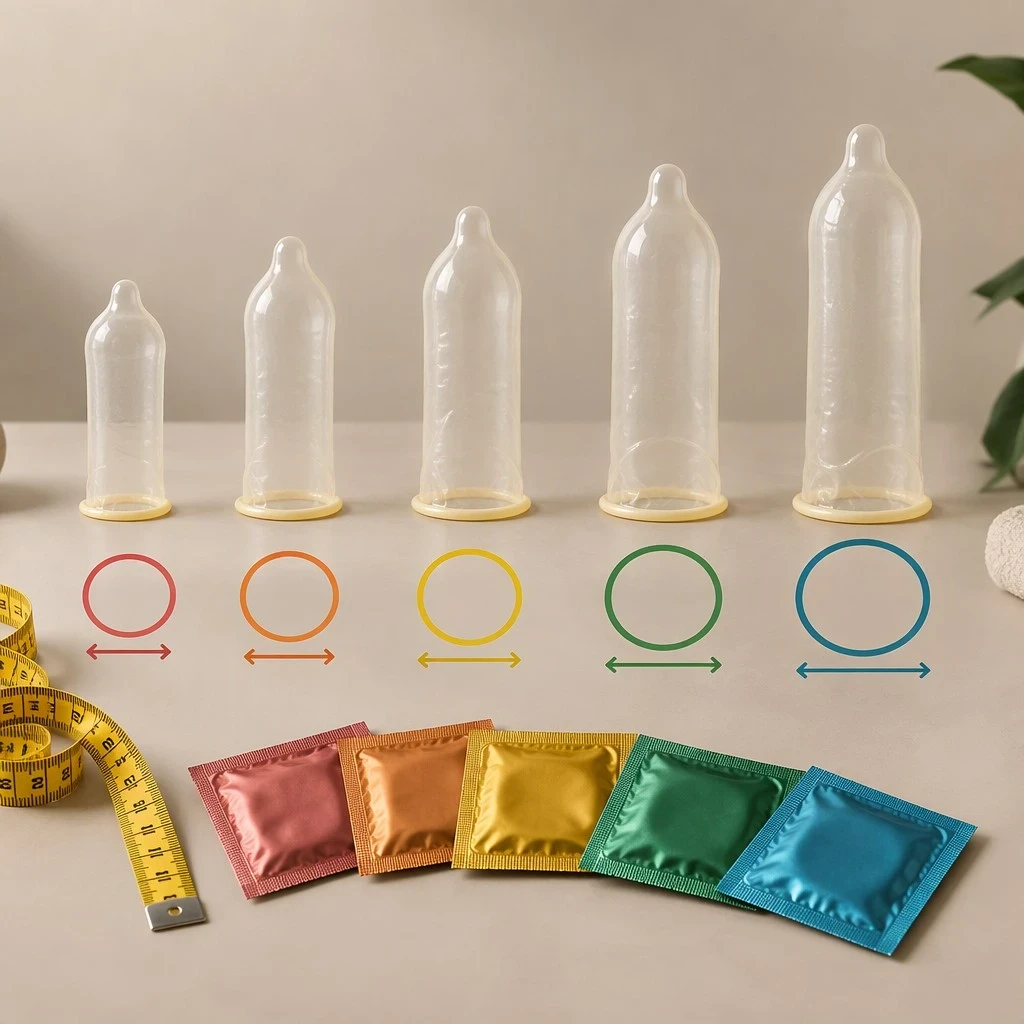
Condom sizing remains one of the most quietly neglected aspects of sexual health, yet it sits at the intersection of comfort, confidence, and contraceptive reliability. Many people assume that a condom is either "standard" or "large," a binary that ignores the genuine anatomical variation among individuals. In reality, fit is governed by a precise measurement called nominal width, expressed in millimetres, which determines how the latex or polyisoprene sheath behaves during use. Understanding this metric transforms a guessing game into a deliberate, informed choice that protects both partners and preserves sensation.
The consequences of poor fit are neither trivial nor purely aesthetic. A condom that is too tight can cause discomfort, restrict blood flow, and increase the likelihood of breakage under friction, while one that is too loose may slip off or allow fluid exchange at the base. Public health research consistently links correct fit with higher rates of consistent use, because people are far more willing to wear protection that feels natural rather than distracting. This guide walks through the practical mechanics of measuring, interpreting nominal width, and recognising the physical signals that indicate a condom is either constricting or baggy.
Beyond the numbers, choosing the right condom involves material, thickness, lubrication, and personal preference, all of which interact with fit. A well-sized condom in a comfortable material encourages the kind of reliable habit that reduces risk over a lifetime. The sections that follow translate technical specifications into plain, actionable guidance, offering readers a structured method for finding a fit that is both safe and satisfying, without embarrassment or guesswork.
On This Page
- The Anatomy of Condom Sizing and Why Nominal Width Governs Fit
- Measuring Yourself Accurately and Without Guesswork
- Recognising the Signs of a Poor Fit
- Material, Thickness, and Lubrication as Fit Variables
- Building a Reliable Routine and Avoiding Common Mistakes
- Frequently Asked Questions About Condom Fit
- Conclusion: Fit as a Foundation for Safer Sexual Health
TL;DR Condom fit is determined primarily by nominal width, the flat width of the condom measured in millimetres, which must correspond to penile circumference rather than length. A correct fit stays securely in place, rolls down smoothly, and feels snug without pinching. Signs of a too-tight condom include visible stretching, numbness, and difficulty unrolling; signs of a too-loose condom include wrinkling, slippage, and gaps at the base. Measuring circumference with a soft tape and matching it to a nominal width chart is the most reliable method. Material, lubrication, and thickness further influence comfort, and consistent use depends on finding a combination that feels natural.
The Anatomy of Condom Sizing and Why Nominal Width Governs Fit
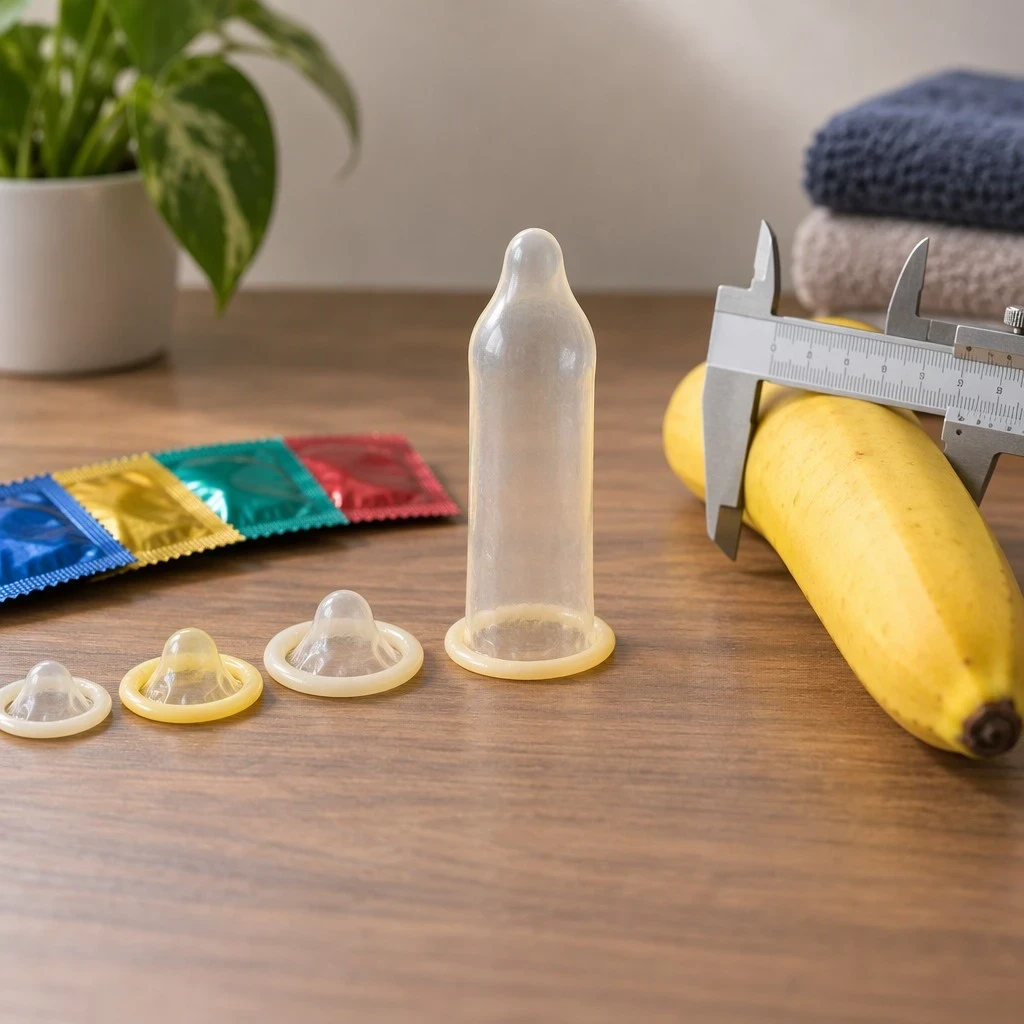
Condom sizing is frequently misunderstood because packaging emphasises length and vague labels such as "XL" rather than the measurement that actually matters. Nominal width refers to the flat width of the condom when laid out, and it is the single most important specification for achieving a secure fit. Because latex stretches circumferentially, the nominal width must align with the wearer's circumference, not their length. A condom that is nominally too narrow will exert excessive pressure, while one that is too wide will fail to grip the shaft, creating slippage risk during intercourse.
Understanding Nominal Width and Circumference
Nominal width is typically expressed in millimetres and ranges from roughly 41 mm for snug fits to 69 mm or beyond for larger sizes. To translate this into a personal measurement, wrap a soft measuring tape around the widest part of the erect penis to obtain circumference, then divide by two to approximate the required flat width. Most standard condoms sit between 52 mm and 56 mm nominal width, accommodating a broad middle range of users. Matching circumference to nominal width is far more accurate than relying on visual estimation or the length printed on the box.
The relationship between circumference and nominal width is not perfectly linear because latex elasticity allows some tolerance. A condom can comfortably stretch to accommodate a circumference somewhat larger than twice its nominal width, but exceeding that tolerance increases tension and breakage risk. Conversely, a condom significantly wider than needed will wrinkle and may slip. The practical takeaway is to treat nominal width as a starting coordinate, then refine through real-world testing with a small number of sizes before committing to a preferred brand.
Why Length Matters Less Than Most People Assume
Length receives disproportionate attention in marketing, yet it plays a secondary role in fit and safety. Condoms are manufactured with generous length, often 180 mm or more, and are designed to be unrolled only as far as needed, leaving a small reservoir at the tip. What matters is that the condom covers the shaft adequately and that the base remains snug. A condom that is slightly long is harmless; one that is too short, however, can leave the base exposed and compromise protection.
Because length is forgiving, buyers should prioritise circumference when comparing products. A longer condom in the correct nominal width will outperform a shorter condom in the wrong width every time. This reframing helps demystify the shopping experience: instead of chasing length labels, focus on the width specification and the material's stretch characteristics, which together determine how the condom behaves during use.
Measuring Yourself Accurately and Without Guesswork

Accurate measurement is the foundation of correct fit, yet many people never attempt it because the process feels awkward or unnecessary. In practice, a single measurement taken at home with a soft tape provides more useful information than years of trial and error. The goal is not precision for its own sake but a reliable starting point that narrows the field of suitable products. Once circumference is known, the nominal width chart becomes a practical tool rather than an abstract specification, and the shopping experience becomes considerably less frustrating.
The Measurement Method That Works
To measure circumference, use a flexible cloth or tailor's tape and wrap it around the widest part of the erect penis, keeping the tape snug but not compressing the tissue. Record the measurement in millimetres, then divide by two to estimate the flat width. For example, a circumference of 130 mm suggests a nominal width near 65 mm before accounting for stretch tolerance, though most users will find a slightly narrower condom comfortable because latex expands. Repeat the measurement on two or three occasions to confirm consistency before drawing conclusions.
Those without a tape can use a strip of paper or string, mark the overlap point, and measure the marked length against a ruler. The method matters less than the consistency of the result. It is also worth noting that girth can vary slightly with arousal and temperature, so averaging several readings produces a more dependable figure. Once the number is established, it can be compared directly against the nominal width printed on any condom box, eliminating the ambiguity of labels like "large" or "snug."
Interpreting the Numbers in Practice
Translating a measurement into a purchase requires a small amount of interpretation. Because latex stretches, a condom whose nominal width is somewhat below half the measured circumference will still fit, often comfortably, while one that is far below will feel restrictive. A useful rule of thumb is to begin with a nominal width close to half the circumference and adjust by one or two millimetres based on the feel during a trial. Buying a small multipack of two or three adjacent sizes allows comparison without excessive cost.
It is equally important to recognise that fit is personal and that the chart is a guide rather than a verdict. Some users prefer a snugger feel for security, while others prioritise freedom of movement. The measurement narrows the range; experience selects the final choice. Keeping a note of the nominal width that works best simplifies future purchases and reduces the temptation to default to whatever is available at the nearest shop.
Recognising the Signs of a Poor Fit

Discomfort during use is the body's most direct signal that something is wrong, yet many people tolerate it because they assume condoms are inherently unpleasant. That assumption is both common and incorrect. A properly fitted condom should be barely noticeable once in place, allowing sensation to remain largely intact. When a condom pinches, bunches, or shifts, the body is reporting a mismatch between nominal width and anatomy, and the appropriate response is to change size rather than persevere with an ill-fitting product.
Indicators That a Condom Is Too Tight
A condom that is too tight announces itself through several reliable signs. Unrolling may require noticeable effort, and the latex may appear visibly stretched or translucent at the base. During use, the wearer may experience numbness, a ring-shaped indentation after removal, or a sensation of constriction that distracts from pleasure. Breakage risk rises because excessive tension reduces the material's ability to absorb friction, and the reservoir tip may be compromised if the condom is stretched lengthwise as well.
Persisting with an overly tight condom carries practical consequences beyond discomfort. Studies of condom failure consistently identify tight fit as a contributor to breakage, and discomfort undermines the willingness to use protection consistently. The remedy is straightforward: move up one or two nominal width steps and retest. Because latex tolerates a range of circumferences, a slightly wider condom often resolves the problem without introducing slippage, provided the base still grips securely.
Indicators That a Condom Is Too Loose
A loose condom reveals itself through wrinkling along the shaft, a base that does not sit flush against the skin, and a tendency to slide or bunch during movement. The wearer or partner may notice the condom shifting position, and in more serious cases it may slip off entirely, defeating its purpose. Excess material at the tip can also trap air, increasing the chance of rupture when pressure builds. These signs should prompt an immediate move to a narrower nominal width.
Slippage is the more dangerous failure mode because it can occur without obvious warning and may result in unprotected exposure. Choosing a condom that fits snugly at the base is therefore essential, and a small amount of resistance when unrolling is a reassuring sign rather than a problem. If a condom feels baggy even after careful sizing, consider a different brand, since manufacturing tolerances and material blends vary between products.
- 01
- 02
- 03
- 04
Material, Thickness, and Lubrication as Fit Variables
Nominal width is the primary determinant of fit, but material composition and thickness shape how that fit feels in practice. Latex remains the most elastic and forgiving option, accommodating a range of circumferences while maintaining a secure grip. Polyisoprene offers similar stretch for those with latex sensitivity, whereas polyurethane is notably less elastic and tends to fit more rigidly, making precise sizing more important. Understanding these differences helps buyers interpret why the same nominal width can feel different across materials.
How Material Affects Stretch and Security
Latex condoms stretch considerably, which means a nominal width slightly below the ideal can still perform well. Polyurethane, by contrast, stretches less and conforms differently, so users often need a nominal width closer to their measured circumference to avoid either constriction or looseness. Lambskin condoms, which are porous and do not protect against sexually transmitted infections, behave differently again and are not recommended for disease prevention. Material choice therefore interacts directly with sizing strategy and should be considered alongside width.
Thickness also influences perception of fit. Ultra-thin condoms transmit sensation more directly, which can make a slightly tight fit more noticeable, while thicker condoms may mask minor sizing imperfections. Neither is inherently superior; the right balance depends on individual preference and the importance of sensitivity versus durability. Testing a few combinations of material and thickness within the correct nominal width range is the most efficient way to identify a personal favourite.
The Role of Lubrication in Comfort and Safety
Lubrication is frequently overlooked in discussions of fit, yet it directly affects how a condom behaves during use. Adequate water-based or silicone-based lubricant reduces friction, lowering the risk of breakage caused by tension and heat. Oil-based lubricants degrade latex and should be avoided entirely with latex condoms. Applying a small amount inside the tip and more on the outside improves comfort and helps the condom move naturally rather than pulling against the skin.
For those who experience dryness or discomfort, lubrication can also compensate for minor fit imperfections by reducing the friction that makes tightness apparent. However, lubricant cannot correct a fundamentally wrong nominal width; it merely improves the experience within an appropriate range. Combining correct sizing with generous lubrication produces the most reliable and comfortable result, and it is a habit worth building into routine use.
Building a Reliable Routine and Avoiding Common Mistakes
Finding the right fit is a process rather than a single decision, and the most reliable approach combines measurement, trial, and a small amount of record-keeping. Once a preferred nominal width and material are identified, purchasing becomes routine and the risk of reverting to ill-fitting defaults drops sharply. Consistency matters because condom effectiveness depends on correct use every time, and comfort is the strongest predictor of consistent use. A modest investment in finding the right size pays dividends in both safety and satisfaction.
Practical Steps for Consistent Correct Use
Correct use begins before the condom is opened: check the expiry date, tear the packet carefully to avoid nicks, and pinch the reservoir tip to expel air before rolling down. Roll the condom all the way to the base, ensuring it sits snugly without wrinkles. After ejaculation, hold the base while withdrawing to prevent slippage. These steps are simple but frequently skipped, and each omission increases failure risk regardless of how well the condom fits.
Storage also affects performance. Condoms kept in wallets, glove compartments, or hot environments degrade faster, becoming more prone to breakage. Storing them in a cool, dry place and replacing expired stock ensures the material retains its elasticity. Combining correct storage with correct sizing and technique produces a level of reliability that approaches the condom's laboratory-tested effectiveness, which is considerably higher than typical real-world use suggests.
Myths and Missteps to Leave Behind
Several persistent myths undermine good sizing practice. The belief that one size fits all ignores the genuine range of human anatomy, while the assumption that a larger condom is always better can lead to slippage and reduced sensation. Wearing two condoms, sometimes attempted for extra safety, actually increases friction and breakage risk. Similarly, stretching a condom over the hand to demonstrate durability says nothing about fit and encourages complacency about sizing.
Another common misstep is choosing a condom based on length labels rather than nominal width, which leads to repeated discomfort and eventual abandonment of protection. Partners can support better outcomes by discussing fit openly and without embarrassment, treating it as a practical health matter rather than a sensitive one. Dispelling these myths through accurate information is a small but meaningful contribution to safer sexual health practices.
We Also Published
Frequently Asked Questions About Condom Fit
Questions about condom sizing tend to cluster around a handful of recurring concerns, from whether "large" labels are meaningful to how to handle a partner's preferences. Addressing these directly removes the uncertainty that often leads people to settle for poor fits. The answers below reflect established guidance from sexual health organisations and the practical experience of clinicians who counsel on contraception and infection prevention. Each response is designed to be actionable rather than abstract, so readers can apply it immediately.
Does Condom Size Really Affect Effectiveness?
Yes, and the effect is measurable. Research on condom failure consistently identifies fit as a significant factor in breakage and slippage, both of which compromise protection. A condom that is too tight is more likely to tear under friction, while one that is too loose may slip off during intercourse. Correct fit does not guarantee perfect protection, but it removes a major and easily correctable source of failure, making it one of the most practical improvements a user can make.
Effectiveness also depends on consistent use, and comfort drives consistency. People who find a condom uncomfortable are more likely to remove it mid-use or avoid it altogether, both of which undermine protection. Treating fit as a core component of condom effectiveness, rather than an optional refinement, aligns with how sexual health professionals approach the topic and leads to better outcomes over time.
How Many Sizes Should Someone Try Before Settling?
Most people find a comfortable fit within two or three attempts if they begin with a measured nominal width rather than guessing. Starting with a standard size and adjusting by one or two millimetres in either direction usually identifies the right range quickly. Buying small multipacks of adjacent sizes is an economical way to compare without committing to a full box, and keeping notes on which nominal width and brand worked best simplifies future purchases.
It is also worth trying more than one brand within the same nominal width, since manufacturing tolerances and material blends vary. A condom that feels slightly tight from one manufacturer may feel ideal from another. This variation is normal and does not indicate a measurement error; it simply reflects the diversity of the market and rewards a little experimentation.
Conclusion: Fit as a Foundation for Safer Sexual Health
Condom sizing is a practical skill that rewards a small amount of effort with meaningful improvements in comfort, confidence, and protection. Nominal width, measured against personal circumference, provides the clearest guide, while material, thickness, and lubrication refine the experience. Recognising the signs of a tight or loose fit allows users to adjust quickly rather than tolerate discomfort, and a consistent routine of correct use and storage maximises reliability. None of this requires embarrassment; it requires only a tape measure and a willingness to try a few options.
Sexual health guidance increasingly emphasises that protection works best when it feels natural, and fit is central to that principle. By treating sizing as a normal part of preparation rather than an awkward afterthought, individuals and partners can reduce failure risk and build habits that last. The information here is straightforward, evidence-aligned, and immediately applicable, offering a clear path from measurement to confident, comfortable use.
From our network :
- Live Online English Classes for Kids: Do They Actually Reduce Anxiety?A ten-week study reveals that synchronous online English classes can significantly reduce child language anxiety while improving listening and reading skills. Discover what makes these programs effective and how parents can select the right one.
- CISA’s Ten-Advisory Wave: Why Generic Patching Fails in OT and How to Build Product-Specific PlaybooksCISA released ten ICS advisories in one week, exposing critical infrastructure risks. Generic patching fails in OT. Learn to build product-specific remediation playbooks.
- University Language Proficiency Exams: Why Institutional Tests Demand Different Preparation Than IELTS and TOEFLDiscover why university-specific language proficiency examinations differ fundamentally from IELTS and TOEFL, and learn strategic preparation approaches for institutional assessment success.
- How AI Agents Will Change the Way We Manage Personal FinancesExplore how AI agents are transforming personal finance through automated budgeting, bill payment, and investment management, while examining the critical security protocols and governance frameworks required for safe deployment.
- Mobile Learning and VR in English: What Global Evidence Reveals About Effective Language TechnologyA systematic review across 14 countries reveals which language-learning technologies genuinely work. Mobile learning, AI, and VR show measurable benefits when pedagogically integrated. This evidence-based guide helps educators and learners select technology that delivers real return on investment.
- Forbidden Matrix Patterns and Visible Lattice Points: A Geometric DictionaryExplore how multidimensional 0–1 matrices encode geometric truths, linking forbidden patterns to visible lattice points and hypergraph theory, with applications in combinatorics and computational geometry.
- The Final Descent: How ESA Retired the Legendary Cluster Constellation After 24 Years of Space Weather ScienceAfter 24 years mapping Earth’s magnetosphere, ESA’s Cluster mission concluded with a precisely controlled reentry over the South Pacific. This analysis explores the scientific legacy, engineering decisions, and debris mitigation principles behind one of space exploration’s most responsible retirements.
- Committed Mediterranean Precipitation Decline: Why Emissions Cuts Alone Cannot Restore Winter RainsNew NOAA research reveals that Mediterranean winter rains may decline irreversibly even with emissions cuts. Explore the science of committed climate change and regional impacts.
- The Hidden Cost of AI Convenience: Why Over-Permissioned Agents Are a Security Time BombDiscover why AI agents with excessive permissions create dangerous single points of failure, and learn how implementing least privilege principles can protect your organization from exploitation.
RESOURCES
- Resources will be updated soon.
- 01
- 02
- 03
- 04
- 05
- 06
- 07
- 08
0 Comments