On This Page
Redefining the Standard for Nude Apparel
Moving Beyond the Beige Default
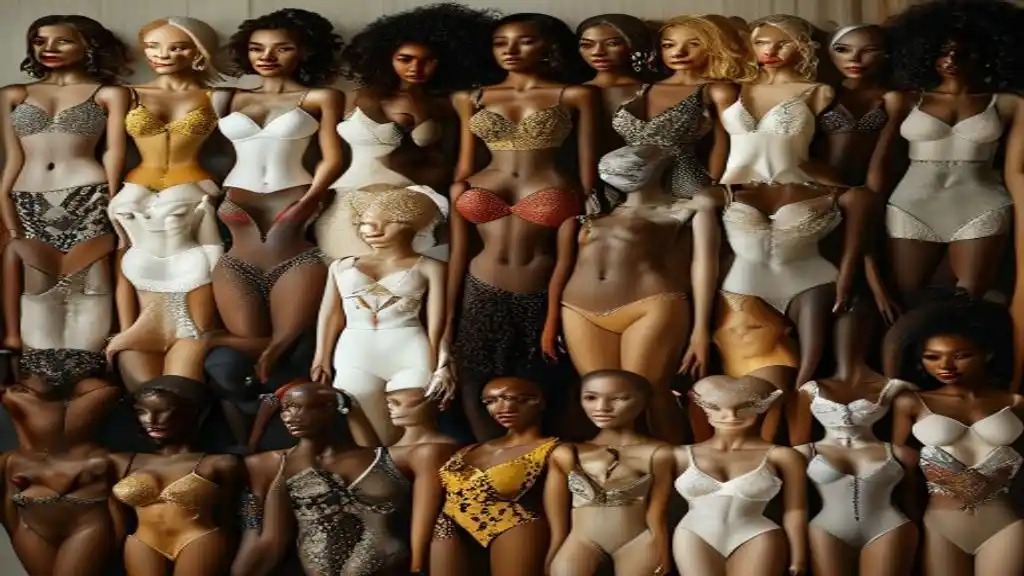
For decades, the term nude in the apparel industry referred almost exclusively to a light beige shade. This narrow definition alienated millions of consumers who could not find products that matched their unique skin.
Modern fashion brands are finally acknowledging that human skin comes in an incredible spectrum of colors. By abandoning the singular beige default, companies are fostering a more welcoming and inclusive shopping environment today.
This transition represents a fundamental change in how designers approach color palettes. Instead of viewing skin tones as secondary, manufacturers now treat diverse hues as essential core components of every professional lingerie collection.
Retailers who cling to outdated notions of neutrality risk losing significant market share. Today, shoppers prioritize brands that demonstrate awareness of their identity and provide products that genuinely blend with their natural complexion.
The movement toward true inclusivity is not merely a fleeting trend. It is a necessary evolution that aligns the fashion industry with the broader societal push for equality, representation, and respect for diversity.
The Impact of Visibility on Confidence
When a customer finds a garment that perfectly matches their skin tone, the psychological impact is profound. It validates their identity while providing the functional benefit of seamless wear under various clothing items.
Inclusivity directly influences how individuals perceive themselves in their daily lives. Providing options that celebrate every skin tone enhances the user experience, making the act of dressing an empowering and personal ritual.
Brands that invest in diverse shade ranges often report higher levels of customer satisfaction. When people feel seen and valued by a label, they are far more likely to remain loyal customers long-term.
Conversely, the absence of inclusive options can cause frustration and feelings of exclusion. Consumers often feel marginalized when their specific needs are ignored, which inevitably leads to a decline in brand reputation.
True luxury in the modern era is defined by personalization. Giving shoppers the tools to find their perfect match is an act of service that builds lasting, trust-based relationships within the global market.
Technical Challenges in Color Matching
Achieving accurate color representation across different fabrics and manufacturing processes remains a complex technical challenge. Achieving consistent results requires deep expertise in dye chemistry and advanced material science to ensure color fidelity.
Designers must account for how different materials, such as lace or silk, absorb pigments differently. This requires rigorous testing to maintain uniformity across an entire collection of diverse skin-tone lingerie pieces.
Digital visualization also plays a crucial role in modern retail. Brands must ensure that their online photography accurately represents these subtle color variations, which can be difficult due to screen calibration differences.
The industry is increasingly using sophisticated software to manage color standards. Implementing a universal system ensures that a specific shade of brown or tan remains consistent regardless of the product type manufactured.
Overcoming these technical hurdles is essential for maintaining brand integrity. When a product looks different in person than it does online, it leads to returns and undermines the trust built during shopping.
Global Market Expectations and Nuance
Consumer expectations regarding skin-tone representation vary significantly across global regions. Brands must navigate these cultural nuances to ensure their product offerings remain relevant and sensitive to the diverse populations they serve daily.
Understanding local preferences is key to success. For instance, some markets may prioritize lighter tones while others demand a broader focus on deeper, richer pigments to satisfy the local demographic requirements effectively.
Global brands need to adopt a flexible strategy that balances universal standards with regional customization. This approach allows companies to scale operations while still providing a localized experience for their international customers.
Social media has accelerated the demand for inclusivity worldwide. Influencers and activists now hold brands accountable, ensuring that the conversation around skin-tone representation remains at the forefront of the industry's global discourse.
Ultimately, the global expectation is clear: consumers want products that reflect their reality. Brands that fail to adapt to this international mandate will struggle to compete in an increasingly crowded, demanding marketplace.
Commercial Drivers of Inclusive Design
Conversion Rates and Purchase Confidence
Data consistently shows that inclusive product ranges lead to higher conversion rates. When shoppers find a shade that matches them, the hesitation typically associated with online lingerie shopping decreases significantly for them.
Providing clear shade-matching tools helps customers make informed decisions. When shoppers feel confident in their selection, the likelihood of completing a purchase rises, directly impacting the bottom line of the retail business.
Detailed product descriptions that explain undertones help bridge the gap between digital images and physical reality. This educational approach reduces the guesswork, making the shopping journey smoother and more efficient for everyone.
Brands that prioritize clarity in their imagery gain a competitive edge. By showcasing products on diverse models, companies provide social proof that their range is designed for a broad spectrum of people.
Increased confidence leads to higher average order values. Customers are more likely to buy multiple items when they are certain that the color and fit will meet their expectations upon final delivery.
Reducing Return Rates Through Accuracy
Returns represent a major operational cost for lingerie retailers. By providing accurate shade descriptions and high-quality imagery, brands can significantly reduce the frequency of returns caused by color mismatches or dissatisfaction.
Well-informed customers make better purchasing choices. When a brand provides comprehensive guides on how to select the right tone, the return rate drops, which improves the overall profitability of the company.
Returns are not just a financial burden; they also carry an environmental cost. Efficient, accurate shopping experiences are more sustainable, aligning with the growing consumer demand for environmentally conscious and responsible business.
Investing in better shade-match technology is a strategic move. Utilizing tools like virtual try-ons or detailed comparison charts helps customers visualize the final product, ensuring that expectations align with the delivered items.
Reducing return rates also improves inventory management. When products stay with the customers, brands can better forecast demand and optimize their supply chain, leading to a more efficient, profitable business model overall.
The Role of Brand Trust
Brand trust is the currency of the modern retail economy. Offering an inclusive range of skin tones is a powerful way to signal to customers that a brand is thoughtful and ethical.
Authenticity matters to today's shoppers. When a company genuinely commits to diversity, it builds a loyal community of advocates who feel valued and understood by the brand’s mission and its product line.
Transparency regarding the development process can further strengthen this trust. Sharing the story behind the creation of a new shade range demonstrates a commitment to quality and inclusivity that resonates deeply.
Brands that listen to customer feedback often see the best results. Engaging with the community to understand what is missing allows companies to refine their offerings and stay ahead of the competition.
Long-term success depends on consistency. A brand must maintain its commitment to inclusivity across all categories and collections to ensure that trust is not just earned, but sustained over many years.
Strategic Merchandising for Growth
Effective merchandising is essential for highlighting an inclusive lingerie range. Brands should feature these collections prominently, ensuring that customers can easily navigate through the various options to find their perfect match.
Cross-merchandising with other related products can drive further engagement. For example, pairing a specific shade of bra with matching briefs or slips creates a cohesive set that encourages higher purchase volumes.
Seasonal updates are also an opportunity to refresh the range. Introducing new tones or refining existing ones based on seasonal changes or customer demand keeps the brand feeling fresh and highly relevant.
Utilizing data analytics helps brands understand which shades perform best. This information allows for targeted inventory allocation, ensuring that the most popular colors are always in stock and ready for immediate purchase.
A well-planned merchandising strategy transforms a product category into a core pillar of the brand. This focus on growth ensures that the company remains a leader in the inclusive lingerie market space.
| Strategy | Benefit | Outcome |
|---|---|---|
| Undertone Naming | Clarity | Higher Conversion |
| Diverse Modeling | Representation | Brand Loyalty |
| Virtual Matching | Accuracy | Lower Returns |
Implementing Inclusivity in Daily Operations
Leveraging Undertone-Based Naming
Using descriptive language like warm, cool, golden, or deep helps customers narrow down their choices effectively. Abstract names often confuse shoppers, whereas clear, functional descriptors provide necessary clarity for the purchasing process.
Implementing a standardized system for naming shades makes the entire product range easier to shop. Customers can quickly identify which category they belong to, streamlining their path from discovery to final checkout.
This approach also helps in cross-category matching. If a customer knows their shade name, they can easily find complementary pieces across different lingerie styles, creating a consistent and satisfying shopping experience overall.
Brands should provide guides that explain these undertones in simple terms. This educational content adds value beyond the product itself, positioning the brand as an expert in the field of inclusive fashion.
Consistent naming conventions improve searchability. When customers search for specific terms like cool-toned nude, they are more likely to find exactly what they need, driving traffic and sales to the website.
Creating Content That Converts
High-quality educational content is a powerful tool for driving conversions. Articles, videos, and interactive tools that explain how to choose the right shade help shoppers feel confident in their final purchase.
Comparison pages are particularly effective. Showing a grid of different skin tones side-by-side with the product shades allows users to visualize which option is the best fit for their unique complexion.
Social media integration is vital for content distribution. Sharing user-generated content that features the product on real people helps potential customers see the items in a natural, relatable, and authentic context.
SEO-optimized blog posts about finding the perfect fit can attract new customers. By answering common questions, brands establish authority and build a pipeline of interested shoppers who are ready to buy.
The goal is to remove friction from the shopping experience. Every piece of content should serve a purpose, whether it is to educate, inspire, or guide the customer toward the right decision.
- 01
- 02
- 03
- 04
We Also Published
Expanding Product Categories
While bras are the most obvious category, inclusivity should extend to everything. Slips, bodysuits, and seamless briefs are essential items that benefit greatly from having a wide range of available skin-tone shades.
High-frequency staples should be the priority. Because these items are worn daily, the need for a perfect match is higher than with occasional lingerie pieces, making them a key area for expansion.
Brands should also consider expanding into loungewear and sleepwear. The demand for inclusive nude-toned comfort wear is growing, providing a significant opportunity for brands to capture more of the customer's daily wardrobe.
Consistency across all categories is important. A customer who finds their perfect bra shade will expect that same color to be available in their matching briefs, ensuring a unified and polished look.
Strategic expansion into these categories creates a comprehensive offering. By becoming a one-stop destination for inclusive essentials, brands can increase the lifetime value of their customers and strengthen their market position.
Future-Proofing Your Brand Strategy
The market is evolving, and brands must remain agile. Keeping a pulse on consumer trends and feedback allows companies to pivot their strategies and continue meeting the changing needs of their audience.
Sustainability and inclusivity are increasingly linked. Future-proofing involves not just shade ranges, but also the ethical sourcing of materials and the fair treatment of workers throughout the entire global supply chain process.
Continuous innovation in material technology will allow for even better shade matching. Investing in research and development today will pay off in the future by keeping the brand at the competitive forefront.
Building a diverse team is also crucial. A workforce that reflects the diversity of the customer base will bring valuable perspectives to the table, leading to more inclusive designs and better marketing.
Ultimately, the goal is to create a brand that stands the test of time. By staying committed to the principles of inclusivity and quality, companies can build a lasting legacy of success.
| Category | Focus | Priority |
|---|---|---|
| Essentials | Daily Wear | High |
| Bridal | Special Occasion | Medium |
| Loungewear | Comfort | Medium |
Inclusivity is a journey, not a destination. Brands must constantly refine their processes, listen to their customers, and adapt to the shifting landscape of global fashion to remain relevant and successful long-term.
The mathematical representation of customer satisfaction ##S## can be modeled as a function of product diversity ##D## and shade accuracy ##A##, expressed as:
where ##R## represents the return rate.
Focusing on these key metrics will help retailers balance the cost of expanded ranges with the benefit of increased customer loyalty. This balanced approach is the hallmark of a truly professional business.
As the industry moves forward, the expectation for inclusive skin-tone lingerie will only grow. Brands that embrace this change now will be well-positioned to lead the market into a more inclusive future.
Thank you for exploring this topic with us. We hope this analysis provides actionable insights that help you navigate the complex and exciting world of modern, inclusive retail in the current era.
From our network :
- CISA’s Ten-Advisory Wave: Why Generic Patching Fails in OT and How to Build Product-Specific PlaybooksCISA released ten ICS advisories in one week, exposing critical infrastructure risks. Generic patching fails in OT. Learn to build product-specific remediation playbooks.
- Committed Mediterranean Precipitation Decline: Why Emissions Cuts Alone Cannot Restore Winter RainsNew NOAA research reveals that Mediterranean winter rains may decline irreversibly even with emissions cuts. Explore the science of committed climate change and regional impacts.
- The Hidden Cost of AI Convenience: Why Over-Permissioned Agents Are a Security Time BombDiscover why AI agents with excessive permissions create dangerous single points of failure, and learn how implementing least privilege principles can protect your organization from exploitation.
- Norbert’s Uncertain Path: Why Hawaii’s Storm Watch Demands Patience Over PanicTropical Storm Norbert strengthens in the Eastern Pacific with winds near 50 mph, forecast to reach Category 1 hurricane status by Friday. Long-range models disagree sharply on whether Hawaii faces any threat around September 19–23, making official guidance essential.
- The Final Descent: How ESA Retired the Legendary Cluster Constellation After 24 Years of Space Weather ScienceAfter 24 years mapping Earth’s magnetosphere, ESA’s Cluster mission concluded with a precisely controlled reentry over the South Pacific. This analysis explores the scientific legacy, engineering decisions, and debris mitigation principles behind one of space exploration’s most responsible retirements.
- Forbidden Matrix Patterns and Visible Lattice Points: A Geometric DictionaryExplore how multidimensional 0–1 matrices encode geometric truths, linking forbidden patterns to visible lattice points and hypergraph theory, with applications in combinatorics and computational geometry.
- Former Soap Stars Embark on Ambitious Writing Projects and Theatrical StagesDiscover how former soap opera actors are transitioning into independent scriptwriting and high-profile theatrical stage productions.
- Analyzing Hoya Corporation’s Midday Volume Shifts and Financial FundamentalsExamine Hoya Corporation’s midday trading volume contraction, technical moving averages, robust solvency ratios, and stellar quarterly earnings performance.
- How AI Agents Will Change the Way We Manage Personal FinancesExplore how AI agents are transforming personal finance through automated budgeting, bill payment, and investment management, while examining the critical security protocols and governance frameworks required for safe deployment.
RESOURCES
- Nubian Skin | For the Melanin Blessednubianskin.comI'm proud to have been a pioneer in revolutionising the lingerie industry when I created Nubian Skin. When we launched back in 2014, we…
- Redefining 'Nude': Our Journey to Inclusive Bra Tonesevelynbobbie.comWe used a pantone scanner to scan the skintone hundreds of real women, and then use that information to select the most complimentary skin…
- Marks and Spencer launches inclusive skin tone lingerie linefashionunited.ukJun 22, 2021 ... Marks and Spencer have launched a new “neutrals” lingerie line offering more skin tone “nude” colours and sizes.
- M&S launches 'new neutrals' lingerie line with inclusive skin tone ...uk.fashionnetwork.comJun 22, 2021 ... M&S's brand new neutrals offer is a “clear and simple proposition for all women – more colours, more sizes and…
- 10 Best Sustainable Underwear Brands (2026 Review)thegoodtrade.comJun 1, 2026 ... ... intimates | Kent Best inclusive nude lingerie for all skin tones | PROCLAIM ... The tan wasn't as flattering…
- Introducing the 2023 Pantone SkinTone Guidepantone.comMar 15, 2023 ... The SkinTone™ Guide makes it easy for intimates companies to match ... skin tone range is as inclusive as possible.…
- Ade Hassan, a lingerie visionary for women of colourlionessesofafrica.comJul 28, 2024 ... Lioness Weekender Cover Story Nubian Skin, the first brand to make inclusive, skin-tone undergarments catered to women of colour.
- PANTONE SkinTone Guidepantone.com... inclusive skin tones for the last decade. View the SkinTone Guide. Digital ... Intimates; Cosmetics; Skincare; Costume Design. The Color Science of Skin.
- Lingerie Brand Redefines 'Nude' With Ten Inclusive Skin Tonesdongascience.comJun 15, 2016 ... The underwear in the photo could be called true 'skin-colored underwear.' It is designed in shades that closely match the…
- Rihanna's Inclusive Lingerie Line Is Making Some People Emotionalbusinessinsider.comMay 11, 2018 ... Others have praised Savage x Fenty for including "nude" options for various skin tones. But some believe the line still…
- 01
- 02
- 03
- 04
- 05
- 06
- 07
- 08
0 Comments