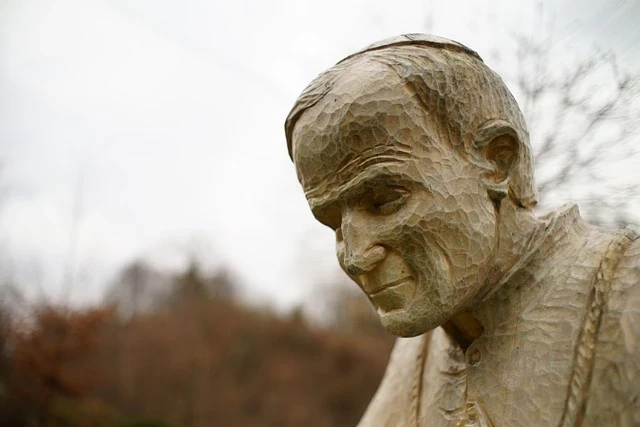
When the successor of Saint Peter travels to the heart of a secular republic, the machinery of state must bend entirely toward a single, sacred purpose: the safe passage of a spiritual leader through streets crowded with the faithful.
Paris, a city that has weathered revolutions, occupations, and terror attacks, now prepares for one of the most intricate security operations in its modern history.
Pope Leo XIV's apostolic visit to France has triggered a mobilization of roughly 14,000 police officers and gendarmes, a force comparable to the deployments reserved for heads of state summits or national emergencies.
On This Page
The scale of this operation reveals how the intersection of faith, public order, and geopolitical symbolism demands extraordinary logistical precision.
The centerpiece of the visit is a Mass expected to draw approximately 600,000 attendees on Saturday, September 26, transforming the French capital into a vast open-air sanctuary.
Ten metro stations will be shuttered, search corridors established, and surveillance intensified across key arrondissements. Beyond Paris, the pontiff will journey to Saint-Denis, a suburb whose diverse population carries deep symbolic weight, and to Lourdes, the Marian shrine that has drawn pilgrims for over a century.
Each stop carries its own security calculus, its own emotional charge, and its own potential for both transcendence and disruption. The operation is not merely about crowd control; it is about protecting a moment of collective spiritual significance in a nation wrestling with questions of identity, secularism, and social cohesion.
Understanding this event requires looking beyond the headline numbers and into the layered realities of modern pilgrimage security, the political subtext of papal diplomacy, and the logistical choreography that allows hundreds of thousands to gather in peace.
The following analysis dissects the operational architecture, the symbolic geography, and the broader implications of Pope Leo XIV's historic French journey.
TL;DR Paris is deploying approximately 14,000 police officers and gendarmes to secure Pope Leo XIV's visit to France, with a Mass on September 26 expected to draw 600,000 attendees. Ten metro stations will close, and search operations will be widespread. The pope will also visit Saint-Denis, where local leaders hope for strong messages on solidarity and anti-racism, and Lourdes, where some residents express concern. The operation represents one of France's largest peacetime security mobilizations, balancing crowd safety, religious freedom, and the symbolic weight of a papal visit to a fiercely secular republic.
The Architecture of a 14,000-Officer Security Umbrella
Securing a papal visit in a major European capital is not a simple matter of adding more officers to the streets. It requires a layered, multi-agency architecture that integrates national police, gendarmerie units, municipal services, emergency medical teams, and intelligence apparatus.
The 14,000 personnel figure represents the visible tip of a much deeper operational iceberg. Command centers coordinate real-time feeds from surveillance cameras, drone reconnaissance, and ground spotters.
The goal is to create concentric rings of protection that allow the faithful to gather while keeping potential threats at a distance.
Command Structure and Inter-Agency Coordination
The Prefecture of Police in Paris assumes overall tactical command, working alongside the Ministry of the Interior and the Vatican's own security detail, the Gendarmerie Corps of Vatican City State.
This collaboration involves shared threat assessments, joint briefings, and unified communication protocols. French authorities have not disclosed specific threat levels, but the mere scale of deployment signals a high degree of caution.
The coordination extends to hospital networks, public transport operators, and even private security firms contracted for peripheral zones.
Intelligence sharing between French domestic services and Vatican security has become increasingly sophisticated since the 2015 terror attacks in Paris. The Vatican's security team, though small, brings specialized knowledge of papal protocols and potential adversaries specific to the Holy See.
French officers, meanwhile, contribute deep familiarity with local terrain, radical networks, and crowd dynamics. This fusion of institutional knowledge creates a security envelope that is both flexible and formidable.
One critical challenge is the sheer length of the papal itinerary. A single Mass is manageable; a multi-city tour with motorcades, public appearances, and private meetings multiplies the variables exponentially.
Each transition point—airport tarmacs, cathedral steps, hospital entrances—requires its own micro-operation. The 14,000 figure reflects not a static wall of officers but a rotating, repositioning force that shifts with the pope's movements across Paris, Saint-Denis, and eventually Lourdes.
Communication interoperability is another linchpin. French police use the ANTARES radio network, while gendarmes operate on RUBIS. Integrating these systems with Vatican security channels and municipal emergency frequencies demands pre-positioned technical bridges.
Any communication failure during a mass gathering could cascade into panic or worse. The operation's success hinges on invisible technical layers that most attendees will never notice.
Metro Closures and Urban Mobility Reconfiguration
Ten metro stations will close around the primary event zones, a decision that ripples through the daily lives of hundreds of thousands of Parisians.
Stations serving the Champ de Mars, Trocadéro, and adjacent areas will shutter, forcing commuters onto buses, trams, and walking routes. The RATP, Paris's transport authority, will reroute several bus lines and increase frequency on peripheral services.
For pilgrims, the closures mean longer walks and earlier arrivals, but also reduced congestion at critical entry points.
Urban mobility during a papal visit is a study in controlled chaos. Authorities must balance the need to move 600,000 people into and out of a confined area with the imperative to keep emergency corridors clear.
The closure of ten stations effectively creates a pedestrian exclusion zone around the Mass site, allowing security forces to screen attendees at designated checkpoints. This funneling strategy is standard for high-security events, but its scale here is exceptional.
Alternative transport plans include shuttle buses from suburban park-and-ride facilities, enhanced tram services, and dedicated walking routes marked with signage in multiple languages.
The city has also coordinated with ride-sharing platforms to establish drop-off and pick-up zones outside the security perimeter. These measures aim to prevent the kind of gridlock that could strand pilgrims or delay emergency vehicles during a crisis.
For residents and businesses within the closure zone, the disruption is significant. Shops may close, deliveries will be delayed, and daily routines will bend around the security perimeter.
Yet the Prefecture has emphasized that the operation is designed to minimize inconvenience while prioritizing safety. The balance between civic disruption and public protection is never perfect, but the planning process involves extensive consultation with local councils and business associations.
Search Protocols and Access Control
Every attendee at the Mass will pass through a search corridor, a process that transforms the pilgrim experience into a security screening operation. Bag checks, metal detectors, and body scanners will be deployed at multiple entry points.
The sheer volume of people—600,000—means that screening must be fast, efficient, and humane. Authorities have trained officers in crowd psychology and cultural sensitivity to avoid inflaming tensions during what should be a peaceful religious gathering.
Access control extends beyond the Mass site. Hotels, restaurants, and public spaces along the papal route will be subject to spot checks and increased patrols.
Plainclothes officers will mingle with crowds, looking for behavioral indicators rather than relying solely on technology. This human intelligence component is often more effective than cameras at detecting pre-attack planning or suspicious behavior.
The Vatican's own security protocols add another layer. Papal events typically include a secure zone immediately around the pontiff, managed by Swiss Guards and Vatican gendarmes. French officers respect this inner perimeter while maintaining outer rings.
The interface between these two security cultures—one Swiss and ceremonial, one French and tactical—requires careful rehearsal and mutual trust.
Search protocols also raise civil liberties questions. France's state of emergency provisions, though partially rolled back, still grant police expanded powers for mass events.
Civil liberties groups have urged authorities to ensure that screening is non-discriminatory and that personal data collected during checks is handled lawfully. The Prefecture has published guidelines emphasizing proportionality and respect for religious freedom.
Medical and Emergency Response Readiness
With 600,000 people gathered in one place, medical emergencies are inevitable. Heat exhaustion, cardiac events, diabetic crises, and panic attacks will occur regardless of security measures.
The operation therefore includes a robust medical component: field hospitals, ambulance staging areas, and rapid response teams positioned throughout the crowd. The French Red Cross and SAMU (emergency medical services) will coordinate with police to ensure that help can reach those in need without compromising security.
Emergency response planning also accounts for worst-case scenarios: a stampede, a structural failure, or a coordinated attack. Evacuation routes have been mapped, and crowd management specialists have modeled flow dynamics to prevent bottlenecks.
The goal is to create a security environment where the faithful can focus on spiritual experience rather than fear.
Communication with the public is another critical element. Authorities will use social media, public address systems, and multilingual signage to provide real-time updates on crowd conditions, transport changes, and emergency procedures.
A well-informed crowd is a safer crowd, and the Prefecture has invested heavily in public messaging.
Finally, the medical dimension extends to the pope himself. A dedicated medical team will accompany the papal motorcade, and hospitals along the route have been placed on standby.
The pontiff's health and safety are paramount, not only for his own sake but for the symbolic stability of the entire event.
Saint-Denis and Lourdes: Symbolic Geographies of Faith and Friction
Pope Leo XIV's itinerary extends beyond the boulevards of Paris into two locations that carry profound symbolic weight: Saint-Denis, the northern suburb where French kings are buried and where a diverse, often marginalized population now lives, and Lourdes, the Pyrenean shrine that has drawn millions of pilgrims seeking healing.
Each destination amplifies the visit's spiritual and political dimensions. In Saint-Denis, local leaders hope the pope will address racism, solidarity, and the plight of immigrant communities.
In Lourdes, some residents express concern about disruption and the commercialization of their town. These contrasting reactions reveal the complex terrain a modern pontiff must navigate.
The Saint-Denis Expectation: Solidarity and Anti-Racism
Bally Bagayoko, a local figure who will welcome the pope in Saint-Denis, has publicly stated his hope that the pontiff will make strong statements about solidarity, world peace, and the fight against racism.
Saint-Denis is a community of extraordinary diversity, home to families from North Africa, sub-Saharan Africa, the Caribbean, and South Asia. Many residents feel marginalized by mainstream French society, subjected to discrimination, and neglected by state institutions.
A papal visit to this banlieue is a powerful acknowledgment of their presence and their dignity.
The choice of Saint-Denis as a papal destination is not accidental. The Basilica of Saint-Denis, the burial place of French monarchs, stands as a monument to a history that excluded many of the suburb's current inhabitants.
By visiting this site, Pope Leo XIV bridges a historical divide, signaling that the Church stands with those on the margins. The symbolism is potent: a spiritual leader walking where kings once ruled, in a neighborhood where many feel abandoned by the republic.
Local organizers have planned a series of encounters between the pope and community representatives, including youth groups, interfaith leaders, and social workers. These meetings are designed to amplify voices that rarely reach national or international audiences.
The pope's words in Saint-Denis will be scrutinized not only by French media but by Vatican watchers worldwide, who see in them a potential blueprint for the Church's engagement with urban poverty and racial justice.
Yet expectations must be tempered by reality. A papal visit is a pastoral event, not a political rally. The pope may speak in general terms about fraternity and human dignity without endorsing specific policies or movements.
Still, the mere act of visiting Saint-Denis carries a message: that the Church sees and values communities that others overlook. For residents, that recognition may be as important as any particular statement.
Lourdes: Pilgrimage, Commerce, and Local Anxiety
Lourdes, a small town in southwestern France, has built its identity around pilgrimage. Since the reported apparitions of the Virgin Mary to Bernadette Soubirous in 1858, the town has welcomed millions of visitors seeking spiritual and physical healing.
The sanctuary, the baths, the candlelit processions—these are the rhythms of Lourdes. Yet the prospect of a papal visit has stirred anxiety among some residents, who worry about security restrictions, crowds, and the disruption of daily life.
The concerns in Lourdes are not new. Papal visits to major shrines inevitably bring logistical challenges: road closures, accommodation shortages, and a surge in demand for services.
For a town of roughly 13,000 people, hosting a pope and the accompanying security apparatus is a massive undertaking. Some residents fear that the spiritual essence of Lourdes will be overshadowed by the spectacle of security and protocol.
Others see opportunity. The visit will bring international attention, economic activity, and a renewed sense of purpose to a town that depends heavily on pilgrimage tourism. Hotels, restaurants, and shops will benefit from the influx of visitors.
The sanctuary itself will gain a global platform for its message of hope and healing. For believers, the pope's presence in Lourdes is a profound blessing, a moment of grace that transcends logistical inconvenience.
The tension between spiritual meaning and practical disruption is inherent to any major religious event. In Lourdes, that tension is amplified by the town's intimate scale and its deep identification with the pilgrimage tradition.
The pope's visit will test the community's ability to balance hospitality with security, devotion with daily life. How Lourdes navigates this moment may offer lessons for other pilgrimage sites facing similar challenges.
Geopolitical and Ecclesial Subtexts
Pope Leo XIV's visit to France occurs against a backdrop of shifting geopolitical alignments and internal Church debates. France, a staunchly secular republic, has a complicated relationship with religion.
The 1905 law on the separation of Church and State remains a foundational text, yet Catholicism retains cultural and historical significance. The pope's visit is both a pastoral journey and a diplomatic gesture, signaling the Vatican's continued engagement with Europe's secular heart.
Within the Church, Pope Leo XIV has positioned himself as a bridge-builder, seeking to reconcile progressive and traditionalist factions. His choice to visit France—a country where Mass attendance has plummeted but where Catholic intellectual and social traditions remain vibrant—reflects a strategic priority.
The visit allows him to engage with a society that embodies both the challenges and opportunities of secularization.
Geopolitically, the visit also carries implications for France's relations with the Vatican and with Catholic-majority nations. The pope's messages on peace, solidarity, and racism will resonate beyond France's borders, particularly in Africa and the Middle East, where Catholic communities look to Rome for moral leadership.
The French government, meanwhile, will use the visit to project an image of competence, tolerance, and openness.
The intersection of these subtexts makes the visit a rich subject for analysis. It is not merely a religious event but a multidimensional phenomenon involving security, politics, media, and culture.
Understanding it requires attention to both the visible choreography and the invisible currents that shape its meaning.
Media Coverage and Public Perception
French media coverage of the papal visit has been extensive, focusing on the security operation, the expected crowds, and the symbolic significance of the itinerary.
Outlets like franceinfo.fr have provided detailed reporting on the 14,000-officer deployment and the metro closures. International media, including Vatican-affiliated outlets, have highlighted the pope's messages and the reactions of local communities.
The narrative is one of a major event that tests France's capacity to manage both faith and security.
Public perception is more fragmented. For devout Catholics, the visit is a source of joy and spiritual renewal. For secular Parisians, it may be an inconvenience or a curiosity.
For residents of Saint-Denis and Lourdes, it is a mix of pride, anxiety, and hope. Social media has amplified these diverse reactions, creating a cacophony of voices that both enriches and complicates the public conversation.
Media framing also shapes how the visit is remembered. If the operation proceeds smoothly, the story will be one of successful planning and peaceful gathering.
If there are disruptions—security incidents, logistical failures, or protests—the narrative may shift to questions of competence and priorities. The stakes are high for French authorities, who are aware that the world is watching.
In an era of declining trust in institutions, the papal visit offers a rare opportunity for collective attention to a figure who transcends partisan divides.
Whether that attention translates into lasting goodwill or fades into the next news cycle remains to be seen. What is certain is that the images and words from Paris, Saint-Denis, and Lourdes will circulate globally, shaping perceptions of the Church, France, and the possibilities of peaceful assembly.
We Also Published
Operational Logistics: Moving a Pope Through a Secular Republic
The logistical complexity of moving a pope through France cannot be overstated. Every motorcade route, every helicopter transfer, every walking segment must be planned to the minute.
The Vatican's diplomatic protocol intersects with French security imperatives, creating a choreography that is both rigid and adaptable. Behind the scenes, hundreds of planners, liaisons, and technicians work to ensure that the pope's movements are seamless, secure, and symbolically appropriate. This section examines the operational layers that make such a visit possible.
Motorcade Protocols and Route Security
Papal motorcades are carefully calibrated exercises in visible security and invisible preparation. The pope typically travels in a modified vehicle with reinforced armor and medical support, flanked by police motorcycles and unmarked escort cars.
Route security involves pre-positioning officers at intersections, clearing parked vehicles, and establishing rapid response teams at key points. In Paris, the motorcade will navigate narrow streets, historic squares, and congested boulevards, each presenting unique challenges.
Route planning begins months in advance, with reconnaissance teams mapping every meter of the journey. Alternate routes are prepared in case of unexpected obstacles or threats.
Traffic signals are synchronized to allow smooth passage, and pedestrian crossings are managed to prevent sudden rushes toward the papal vehicle. The goal is to maintain momentum while minimizing exposure to potential threats.
Communication during the motorcade is continuous. The lead vehicle, the papal car, and the trailing security units maintain encrypted contact with a central command post. Drone feeds and helicopter surveillance provide real-time aerial views.
If a threat is detected, the motorcade can be rerouted within seconds. This level of coordination requires extensive rehearsal and trust among all participating agencies.
For spectators, the motorcade is a fleeting glimpse of the pope, a moment of excitement and devotion. For security forces, it is a high-stakes operation where a single mistake could have catastrophic consequences.
The visible spectacle and the invisible tension coexist, each essential to the event's success.
Accommodation, Protocol, and Diplomatic Engagement
The pope's accommodation in France will be a secure, discreet location, likely a Vatican-owned property or a high-security hotel. Diplomatic engagements with French officials, including the president and religious leaders, will follow strict protocol.
These meetings are not merely ceremonial; they are opportunities for the Vatican to advance its diplomatic priorities and for France to demonstrate its commitment to religious freedom and international cooperation.
Protocol extends to every detail: the order of greetings, the seating arrangements, the exchange of gifts, the language of official statements. The Vatican's diplomatic corps works closely with French counterparts to ensure that nothing is left to chance.
A misstep in protocol could overshadow the visit's spiritual message, so both sides invest heavily in preparation.
Accommodation security involves sweeping for listening devices, controlling access to the pope's quarters, and coordinating with local law enforcement. The pope's personal staff, including medical personnel and secretaries, are vetted and briefed on security procedures.
Even meals are prepared under controlled conditions. The goal is to create a secure bubble that allows the pope to rest and prepare for his public appearances.
Diplomatic engagement also includes interfaith meetings, encounters with civil society, and visits to institutions that reflect the pope's priorities. In France, these may include meetings with Muslim leaders, Jewish representatives, and secular humanist organizations.
Each encounter is designed to build bridges and demonstrate the Church's commitment to dialogue and mutual respect.
Technology and Surveillance in Crowd Management
Modern crowd management relies heavily on technology. In Paris, authorities will deploy a network of surveillance cameras, drones, and sensor systems to monitor crowd density, movement patterns, and potential incidents.
Artificial intelligence algorithms can analyze video feeds in real time, flagging anomalies such as sudden rushes, unattended bags, or aggressive behavior. This technological layer complements human observation and intelligence.
Drones provide aerial perspectives that are invaluable for crowd control. They can track the flow of people, identify bottlenecks, and guide ground units to areas of concern.
However, drone use is regulated, and privacy concerns must be balanced against security needs. French law permits drone surveillance for major events under specific conditions, and authorities have published guidelines to ensure compliance.
Communication technology is equally critical. A dedicated network will link police, gendarmes, medical teams, and command centers. Redundant systems are in place to prevent failures.
Public address systems, digital signage, and mobile alerts will keep attendees informed and direct them safely. The integration of these technologies creates a nervous system for the event, allowing rapid response to any development.
Yet technology is not infallible. False alarms, system glitches, and cyber threats are real risks. Authorities have therefore built in human oversight and manual backups.
The goal is to use technology as a force multiplier, not a replacement for judgment and experience.
- 01
- 02
- 03
- 04
Contingency Planning for Disruption and Crisis
No security operation is complete without contingency planning. Authorities in Paris have developed scenarios for a range of disruptions: a terror attack, a stampede, severe weather, a medical emergency involving the pope, or a sudden political crisis.
Each scenario has a corresponding response protocol, and key personnel have been trained to execute these protocols under pressure.
Evacuation plans are particularly important. If the Mass site must be cleared, routes have been designated to move people away from danger quickly and safely. Assembly points, transport links, and communication channels have been established.
The challenge is to execute an evacuation without causing panic, which requires clear instructions and calm leadership.
Crisis communication is another critical component. If an incident occurs, authorities must inform the public accurately and promptly while avoiding misinformation. A dedicated media center will coordinate with press outlets, and social media teams will monitor and respond to rumors. The goal is to maintain public trust and prevent chaos.
Finally, contingency planning includes coordination with international partners. If the pope is injured or a major incident occurs, Vatican officials, French authorities, and possibly other governments will need to communicate and cooperate.
Pre-established channels and protocols facilitate this coordination, ensuring that responses are swift and unified.
Broader Implications: Faith, Security, and the Public Square
The papal visit to France raises profound questions about the place of religion in public life, the balance between security and freedom, and the role of symbolic events in shaping collective identity.
France's strict secularism, known as laïcité, creates a unique context for a religious gathering of this magnitude. The state must protect the event without endorsing its spiritual content, a delicate dance that reflects broader tensions in French society. This section explores the implications beyond the immediate logistics.
Laïcité and the Limits of State Neutrality
Laïcité, the French principle of state neutrality toward religion, is both a legal framework and a cultural value. It guarantees freedom of worship while prohibiting state endorsement of any faith. A papal visit tests the boundaries of this principle.
The state provides security, infrastructure, and diplomatic protocol, but it cannot officially participate in religious ceremonies. This separation is carefully maintained, yet the symbolic weight of the event inevitably blurs lines.
Critics argue that the massive security operation represents an implicit endorsement of Catholicism, privileging one religion over others. Defenders counter that the state is protecting a public event, not promoting a faith. The distinction is subtle but important.
French authorities have emphasized that the operation is about safety, not spirituality, and that similar resources would be deployed for any major gathering.
The debate over laïcité extends beyond the papal visit. France has struggled with questions of religious symbols in schools, face coverings in public spaces, and the integration of Muslim communities.
The papal visit highlights the tension between a secular state and a society where religion remains a powerful force in many lives. How France navigates this tension will shape its social cohesion for years to come.
For the Vatican, the visit is an opportunity to engage with a secular state on its own terms. Pope Leo XIV has emphasized dialogue and respect for diverse worldviews.
His presence in France is a gesture of openness, an invitation to conversation rather than confrontation. Whether that gesture is reciprocated remains an open question.
Security, Civil Liberties, and the Surveillance Dilemma
Massive security operations inevitably raise civil liberties concerns. The deployment of 14,000 officers, the closure of metro stations, and the use of surveillance technology create an environment where individual freedoms are curtailed in the name of collective safety.
French law permits such measures for major events, but the scale of this operation invites scrutiny. How far can a democratic state go to protect a religious gathering?
Civil liberties organizations have urged authorities to ensure that security measures are proportionate, non-discriminatory, and time-limited. They warn against the normalization of surveillance and the erosion of privacy rights.
The papal visit, they argue, should not become a precedent for permanent restrictions on public assembly or movement.
Authorities respond that the measures are temporary and targeted, designed specifically for the event's duration and geography. They emphasize that the goal is to protect all attendees, regardless of faith, and that the operation has been planned with legal oversight.
The Prefecture has published guidelines on data protection and has committed to transparency in its security protocols.
The surveillance dilemma is not unique to France. Across Europe and beyond, governments grapple with the balance between security and liberty in an age of terrorism and mass gatherings.
The papal visit offers a case study in how that balance is struck in practice, with all the imperfections and compromises that entails.
The Economics of Pilgrimage and Urban Impact
Papal visits generate significant economic activity. Hotels, restaurants, transport services, and retailers benefit from the influx of pilgrims and media. In Paris, the Mass alone is expected to draw 600,000 people, many of whom will spend money on food, accommodation, and souvenirs.
In Lourdes, the visit is a boon for a town whose economy depends on pilgrimage tourism. The economic impact extends beyond the immediate event, as media coverage promotes France as a destination for religious and cultural tourism.
Yet the economic benefits are unevenly distributed. Large hotels and established businesses capture much of the spending, while small vendors and informal traders may be displaced by security perimeters.
Residents in affected areas may face lost income due to closures and disruptions. The Prefecture has worked with local authorities to mitigate these impacts, but some friction is inevitable.
The urban impact also includes long-term investments in infrastructure. Security upgrades, transport improvements, and communication systems installed for the visit may have lasting benefits.
Conversely, the event may accelerate gentrification or displacement in neighborhoods like Saint-Denis, where the papal visit shines a spotlight on existing inequalities.
Understanding the economics of pilgrimage requires looking beyond the headline numbers. It involves tracing the flows of money, people, and attention, and asking who benefits and who bears the costs.
The papal visit is not just a spiritual event; it is an economic phenomenon with winners and losers.
Legacy of the Visit: Memory, Meaning, and Momentum
What will remain after the crowds disperse and the security barriers are removed? The legacy of a papal visit is multifaceted. For believers, it may be a source of lasting spiritual inspiration, a memory of grace and community.
For the Church, it may strengthen ties with French Catholics and open new avenues for dialogue with secular society. For France, it may reinforce its image as a nation capable of hosting major international events with competence and grace.
Yet legacies are contested. Critics may remember the disruption, the cost, and the perceived privileging of one religion. Supporters may recall the moments of unity, the messages of peace, and the beauty of collective worship.
The meaning of the visit will be constructed and reconstructed in public discourse, shaped by media narratives, personal experiences, and political agendas.
Momentum is another dimension. A papal visit can catalyze social initiatives, interfaith projects, and charitable efforts. It can inspire individuals to engage more deeply with their faith or with social justice.
It can also fade quickly, absorbed into the rhythms of daily life. The extent to which the visit's momentum is sustained depends on follow-through by Church leaders, community organizers, and civil society.
Ultimately, the legacy of Pope Leo XIV's visit to France will be determined by how people choose to remember and act upon it.
The security operation, the crowds, the messages, the encounters—all of these elements combine to create a tapestry of meaning that no single narrative can capture. The visit is a moment in time, but its echoes may resonate for years.
From our network :
- Mobile Learning and VR in English: What Global Evidence Reveals About Effective Language TechnologyA systematic review across 14 countries reveals which language-learning technologies genuinely work. Mobile learning, AI, and VR show measurable benefits when pedagogically integrated. This evidence-based guide helps educators and learners select technology that delivers real return on investment.
- Forbidden Matrix Patterns and Visible Lattice Points: A Geometric DictionaryExplore how multidimensional 0–1 matrices encode geometric truths, linking forbidden patterns to visible lattice points and hypergraph theory, with applications in combinatorics and computational geometry.
- Live Online English Classes for Kids: Do They Actually Reduce Anxiety?A ten-week study reveals that synchronous online English classes can significantly reduce child language anxiety while improving listening and reading skills. Discover what makes these programs effective and how parents can select the right one.
- Committed Mediterranean Precipitation Decline: Why Emissions Cuts Alone Cannot Restore Winter RainsNew NOAA research reveals that Mediterranean winter rains may decline irreversibly even with emissions cuts. Explore the science of committed climate change and regional impacts.
- The Hidden Cost of AI Convenience: Why Over-Permissioned Agents Are a Security Time BombDiscover why AI agents with excessive permissions create dangerous single points of failure, and learn how implementing least privilege principles can protect your organization from exploitation.
- The Final Descent: How ESA Retired the Legendary Cluster Constellation After 24 Years of Space Weather ScienceAfter 24 years mapping Earth’s magnetosphere, ESA’s Cluster mission concluded with a precisely controlled reentry over the South Pacific. This analysis explores the scientific legacy, engineering decisions, and debris mitigation principles behind one of space exploration’s most responsible retirements.
- How AI Agents Will Change the Way We Manage Personal FinancesExplore how AI agents are transforming personal finance through automated budgeting, bill payment, and investment management, while examining the critical security protocols and governance frameworks required for safe deployment.
- University Language Proficiency Exams: Why Institutional Tests Demand Different Preparation Than IELTS and TOEFLDiscover why university-specific language proficiency examinations differ fundamentally from IELTS and TOEFL, and learn strategic preparation approaches for institutional assessment success.
- CISA’s Ten-Advisory Wave: Why Generic Patching Fails in OT and How to Build Product-Specific PlaybooksCISA released ten ICS advisories in one week, exposing critical infrastructure risks. Generic patching fails in OT. Learn to build product-specific remediation playbooks.
RESOURCES
- Air France prepares to transport Pope Leo XIV during his visit to ...corporate.airfrance.com3 days ago ... To mark Pope Leo XIV's first visit to France, Air France will operate three special flights between Paris ... security…
- Major security operation in France for Champions League finallemonde.frMay 28, 2026 ... Pope Leo XIV's France visit · World · Europe · France · Environment · Opinion ... Last year also saw…
- Grand Palais closed this weekend due to Pope Leo XIV's visit to Paris.sortiraparis.com1 day ago ... The move comes as Pope Leo XIV's visit to Paris triggers a major security operation around Place de la Concorde…
- 15000 police officers, 2500 journalists… the surprising numbers ...zenit.org6 days ago ... - Paris is preparing for Pope Leo XIV without the visual language usually associated with a papal arrival. ... The…
- Pritzker discusses immigration crackdown with Pope Leo XIV in Romecapitolnewsillinois.comNov 19, 2025 ... JB Pritzker meets Pope Leo XIV in Rome, discusses ICE raids, and invites the Chicago-born pontiff to visit Illinois.
- TRAFFIC ADVISORY: Pope Leo XIV Visit to Pompei and Naples ...facebook.comMay 5, 2026 ... TRAFFIC ADVISORY: Pope Leo XIV Visit to Pompei and Naples Please be advised that Pope Leo XIV will be visiting…
- Algeria hit by two suicide attacks during pope's visit, sources sayeuronews.comApr 14, 2026 ... No link has yet been established between the attacks and the pope's visit to the country, which was conducted under…
- More than 1.2 million people attend Pope Leo's mass in Madridfrance24.comJun 7, 2026 ... A huge logistical and security operation was in place for the event ... Pope Leo XIV calls for 'robust' regulation…
- Pope Leo XIV in Paris: Metro Closures & Travel Adviceouistarstravel.com3 days ago ... A security perimeter will operate around Notre-Dame from 10:00 to 20:00 on Friday. Traffic restrictions begin earlier on some approaches ...
- POPE LEO XIV IN PARIS: HOW THE CITY WILL OPERATE ON ...instagram.com4 days ago ... ✨ Follow me and comment “autumn” to get my guide « what to see in Paris » ✨ Follow me…
- Pope's visit to France likely to attract 1M people, with Mass and vigil ...abcnews.comSep 8, 2026 ... PARIS -- PARIS (AP) — Pope Leo XIV' s forthcoming trip to France ... In addition, the French state will…
- Pope Leo XIV in Paris 25-26 September 2026 | Hôtel Fabrichotelfabric.comAug 30, 2026 ... Leo XIV then flies to Lourdes later that day. The full programme for the papal visit is available on the…
- Lourdes prepares for the visit of Leo XIV with a device worth more ...infovaticana.comJul 25, 2026 ... Just over two months before the arrival of Pope Leo XIV, scheduled for September 27, the organization has launched a…
- UNESCO : Building Peace through Education, Science and Culture ...unesco.orgPope Leo XIV will make an official visit to UNESCO on 25 September 2026, at ... UNESCO will welcome Pope Leo XIV on 25…
- The Robert Schuman Foundation the Research and Studies Centre ...robert-schuman.euThe Robert Schuman Fundation uses cookies, which are necessary for the operation and security of the site. ... Pope Leo XIV's visit to Metz…
- 01
- 02
- 03
- 04
- 05
- 06
- 07
- 08
0 Comments