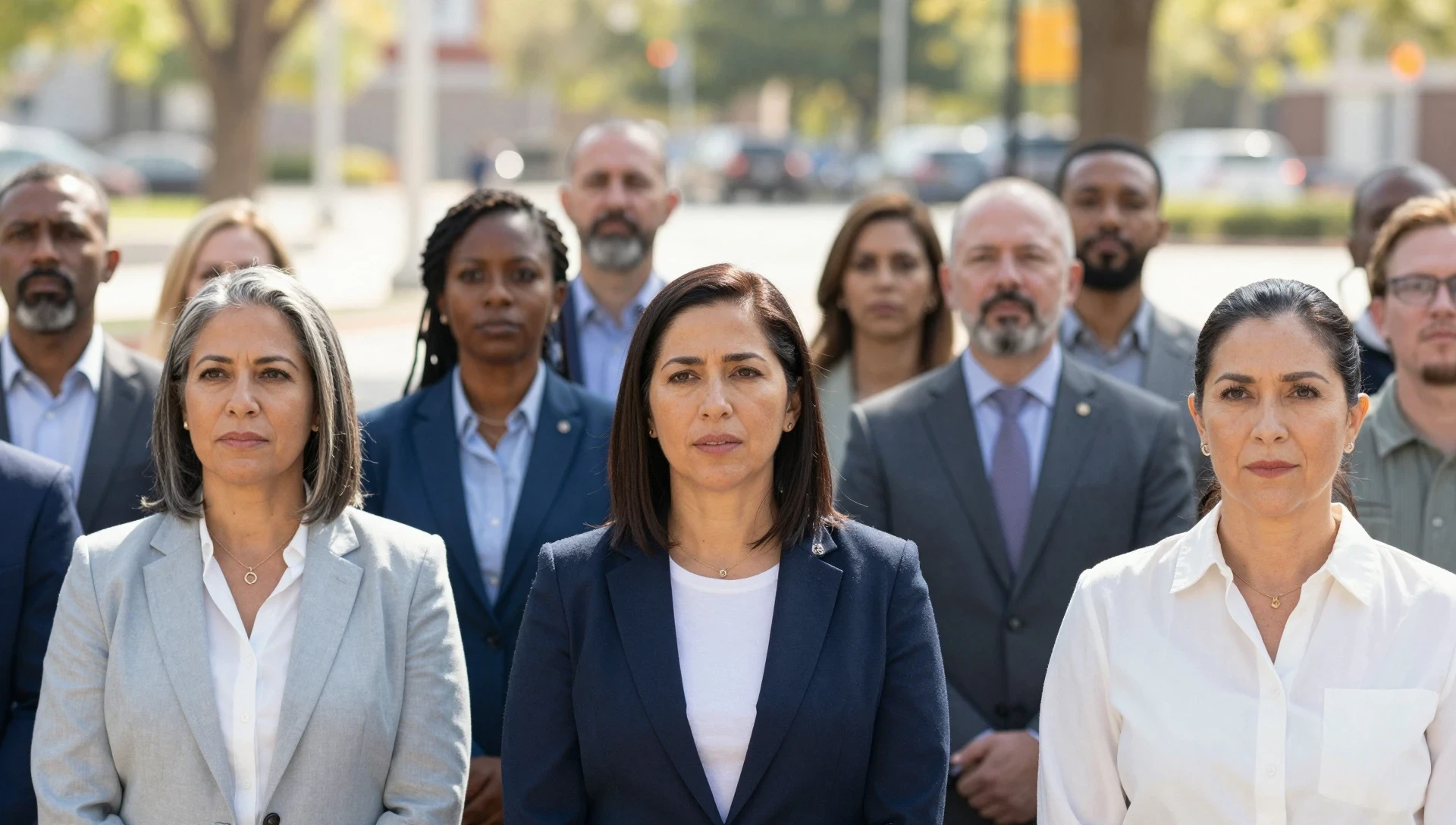
The Democratic Party enters the 2026 midterm cycle carrying a structural contradiction it has not resolved since 2016: a base that has moved left on economics and climate, and a donor class that has not.
Reporting from France 24, filed 1 November 2026, documents a progressive surge in which candidates are contesting corporate money in politics while pressing for universal healthcare, climate action and an end to police violence. The party's immediate objective is regaining control of Congress. Its internal argument concerns what that control would be used for.
This analysis treats the progressive insurgency as an arithmetic problem rather than a moral one. Primary electorates are small, activist-dense and disproportionately urban, which means a candidate can win a nomination on a fraction of the general electorate. That asymmetry explains why left candidates advance faster than the party's national platform shifts.
On This Page
The sections below examine the policy demands, the fundraising counter-economics and the general-election risk, using polling and finance data to test whether the leftward push expands or narrows the Democratic coalition.
The stakes extend beyond one cycle. If progressive nominees hold suburban swing districts, the party's center of gravity moves; if they lose them, the establishment gains a durable argument for gatekeeping. Either outcome reshapes fundraising, committee assignments and the 2028 presidential field. The evidence assembled here suggests the outcome will vary district by district rather than resolve nationally.
TL;DR Progressive candidates are winning Democratic primaries by attacking corporate money and championing universal healthcare, climate action and police reform, while the party tries to retake Congress. The insurgency is driven by small-dollar fundraising and low-turnout primary electorates, not by a national ideological shift. General-election polling shows these positions are competitive in urban districts and risky in suburban ones, so the party's direction will be settled seat by seat rather than by a single national verdict.
The Policy Program Behind the Progressive Push
The progressive platform is narrower and more poll-tested than its rhetoric implies. Universal healthcare, climate investment and police accountability each command majority support in isolation, but the coalition favoring one is not the coalition favoring all three.
Candidates therefore bundle them as a single moral package, which mobilizes activists while exposing nominees to wedge attacks in districts where only one item polls well.
Universal Healthcare as the Defining Commitment
Medicare for All remains the movement's litmus test, and its polling has been remarkably stable. Support clusters among younger voters and lower-income households, while opposition concentrates among seniors already enrolled in Medicare and voters with employer-sponsored coverage.
A nominee who leads with the plan energizes volunteers but must answer cost questions within the first thirty seconds of any general-election advertisement.
The financing arithmetic is the vulnerability. Independent estimates of single-payer costs run into the trillions annually, and candidates rarely specify the tax instruments required. That silence is rational in a primary and costly in a general election, where opponents can attach a number to the proposal without proposing an alternative. The debate thus becomes about taxation rather than coverage.
Public option proposals poll better than single payer in every swing-state survey reviewed, yet they attract less activist energy. This creates a persistent gap between what primary voters reward and what general electorates tolerate.
Candidates who bridge it tend to frame single payer as a destination and a public option as the vehicle, buying room without abandoning the commitment.
Healthcare also functions as a turnout instrument. Districts with high uninsured rates and hospital closures respond to the issue directly, and progressive candidates have outperformed expectations where rural hospital losses are recent.
The policy is therefore not uniformly urban in its appeal, which complicates the assumption that left economics only works in cities.
Climate Action and the Green Transition
Climate policy has shifted from an environmental concern to an economic one. Progressive candidates now sell decarbonization as industrial policy: grid construction, domestic manufacturing and retrofit employment. That framing performs better with union households than emissions targets alone, and it explains why labor endorsements have followed in several contested primaries.
The liability is geographic. Districts dependent on fossil fuel extraction or refining resist transition language even when residents support clean energy in principle. Progressive nominees in those seats have experimented with "just transition" guarantees, promising wage and pension protection before plant closures. The approach softens resistance but rarely converts it.
Climate also drives the small-dollar fundraising that sustains insurgent campaigns. National donors treat climate as a portfolio issue and give across district lines, which means a candidate in a conservative-leaning seat can outraise a local incumbent. That dynamic is central to the fundraising tables below.
Police Reform and Public Safety Politics
Police accountability is the most volatile item in the package. Support for specific reforms such as body cameras, chokehold bans and misconduct databases is broad; support for reduced police budgets is narrow and has declined since 2020.
Candidates who conflate the two have struggled in general elections, particularly among older Black and Latino voters in urban districts.
The evidence from recent cycles is consistent. Nominees who emphasized reinvestment without specifying cuts performed roughly at party baseline, while those who endorsed reductions underperformed by mid-single digits. The lesson is not that reform is unpopular but that its framing determines its electoral cost, and framing is set during primaries for audiences that reward maximalism.
Public safety has also become the Republicans' most efficient attack vector against the entire progressive agenda. By linking police funding to healthcare and climate spending, opponents can portray the platform as a single package of risk. Progressive candidates have begun separating the issues in paid communication, a defensive adaptation that acknowledges the vulnerability.
We Also Published
The Money Question and the Primary Electorate
Corporate money is the organizing grievance of the progressive surge, and the candidates have built a financing model to match the message. Refusing PAC and corporate contributions is both a moral claim and a marketing device that converts small donors at scale.
The model works because national fundraising platforms let a candidate in a safe district subsidize a campaign in a competitive one.
Small-Dollar Fundraising as Political Infrastructure
ActBlue-style conduits have compressed the cost of national fundraising. A candidate with a compelling video can raise six figures in a week from donors who will never vote in the district. This decouples insurgent campaigns from local donor networks, which historically functioned as the party establishment's gatekeeping mechanism.
The trade-off is dependency. Small-dollar campaigns must sustain attention continuously, which rewards confrontation and penalizes compromise. A nominee who softens a position for the general election risks the donor flow that financed the primary. This incentive structure, more than ideology, explains the persistence of maximalist rhetoric after nomination.
Incumbents have adapted by building their own small-dollar programs, narrowing the insurgents' advantage. The result is a bidding war for online attention in which both sides spend more to raise the same money. Net fundraising efficiency has declined even as gross receipts rise, a pattern visible in quarterly filings across competitive primaries.
Primary Electorate Composition and Turnout Bias
Midterm primaries routinely draw turnout in the low twenties as a share of eligible voters, and the electorate skews older, more educated and more ideologically engaged than the November electorate. A position that wins 60 percent of a primary electorate may command 40 percent of a general one. This composition effect, not persuasion, drives most progressive primary victories.
The math is straightforward. If a primary electorate is one-fifth the size of the general electorate and twice as progressive, a candidate needs only a modest advantage among activists to win the nomination while remaining outside the general-election median. The gap between the two electorates is the space in which the party's internal conflict operates.
Turnout bias also shapes which incumbents are vulnerable. Members representing districts with low primary participation and high activist density face the greatest risk, regardless of their voting records. Ideology matters less than the ratio of activists to habitual primary voters in a given seat.
Corporate PAC Refusals and Their Limits
Refusing corporate PAC money is symbolically potent and financially modest. For most congressional campaigns, corporate PAC contributions represent a small share of total receipts, so the pledge costs little and signals much. Its real function is to define the incumbent as compromised without requiring a policy dispute.
The pledge has limits as a governing instrument. Once in office, members still vote on legislation affecting the industries they refused to court, and the refusal does not constrain lobbying. Critics note that the gesture addresses fundraising optics while leaving the influence mechanisms of committee jurisdiction and revolving-door employment untouched.
Some progressive candidates have extended the pledge to bundled individual contributions from executives, a stricter standard that has caused friction with allied unions and advocacy groups. The internal debate over where money becomes unacceptable reveals that the movement's target is not donations as such but the reciprocity they imply.
Electoral Consequences and the Party's Direction
The decisive question is whether progressive nominees expand the Democratic coalition or merely relocate it. Evidence from recent cycles is mixed and district-specific: left candidates have overperformed in urban seats with young and renter-heavy populations, and underperformed in suburban seats where college-educated moderates decide outcomes. A single national verdict is unlikely.
Polling Gaps Between Primary and General Electorates
The polling divergence is measurable. Positions that clear 60 percent in primary surveys frequently fall below 45 percent among likely general-election voters in the same district. This is not evidence of dishonesty but of different samples. Candidates who ignore the gap win nominations and lose seats, a pattern both wings now cite selectively.
Aggregate models suggest the penalty is conditional rather than universal. Progressive positions cost roughly three to five points in suburban districts and gain a similar margin in urban ones, netting to near zero nationally. The party's seat total therefore depends on where its nominees are placed, not on the platform's average appeal.
Turnout composition amplifies the effect. Progressive candidates mobilize irregular young voters who may not appear in November, while moderate candidates rely on habitual voters who do. The mobilization advantage is real but unreliable, and campaigns that count on it have repeatedly missed their modeled turnout targets.
Down-Ballot Effects and Coalition Maintenance
Top-of-ticket positioning affects every race beneath it. A nominee associated with reduced police funding can depress turnout among moderate voters who also decide school board and state legislative contests. Party committees therefore treat the progressive surge as a resource-allocation problem, not merely an ideological one.
Coalition maintenance cuts both ways. Labor unions, civil rights organizations and immigrant advocacy groups overlap with the progressive base but not completely, and their endorsements carry weight with constituencies the left needs. Candidates who alienate these groups during primaries spend the general election repairing relationships instead of persuading swing voters.
The Republican strategy is to nationalize every district race around the most extreme position any Democratic nominee has taken. This makes the party's internal discipline an electoral asset. Where leaders can enforce message coherence, the attack loses force; where they cannot, individual nominees absorb the cost.
What the 2026 Outcome Will Settle
The midterms will function as a natural experiment. If progressive nominees hold competitive suburban seats, the establishment's gatekeeping argument weakens and the party's platform shifts leftward in substance. If they lose those seats while holding urban ones, the argument for ideological screening gains empirical support.
Either result will shape the 2028 presidential field. A strong progressive showing invites multiple left candidates into the primary; a weak one consolidates the center and pushes the left toward movement-building outside electoral politics. The direction of the party is thus decided by district-level results long before any platform vote.
What will not change is the underlying tension. The Democratic coalition contains constituencies with genuinely different economic interests, and no candidate can fully reconcile them. The progressive surge makes that tension visible and contestable, which is its substantive contribution regardless of the seat count.
From our network :
- Committed Mediterranean Precipitation Decline: Why Emissions Cuts Alone Cannot Restore Winter RainsNew NOAA research reveals that Mediterranean winter rains may decline irreversibly even with emissions cuts. Explore the science of committed climate change and regional impacts.
- Forbidden Matrix Patterns and Visible Lattice Points: A Geometric DictionaryExplore how multidimensional 0–1 matrices encode geometric truths, linking forbidden patterns to visible lattice points and hypergraph theory, with applications in combinatorics and computational geometry.
- The Hidden Cost of AI Convenience: Why Over-Permissioned Agents Are a Security Time BombDiscover why AI agents with excessive permissions create dangerous single points of failure, and learn how implementing least privilege principles can protect your organization from exploitation.
- CISA’s Ten-Advisory Wave: Why Generic Patching Fails in OT and How to Build Product-Specific PlaybooksCISA released ten ICS advisories in one week, exposing critical infrastructure risks. Generic patching fails in OT. Learn to build product-specific remediation playbooks.
- The Final Descent: How ESA Retired the Legendary Cluster Constellation After 24 Years of Space Weather ScienceAfter 24 years mapping Earth’s magnetosphere, ESA’s Cluster mission concluded with a precisely controlled reentry over the South Pacific. This analysis explores the scientific legacy, engineering decisions, and debris mitigation principles behind one of space exploration’s most responsible retirements.
- Mobile Learning and VR in English: What Global Evidence Reveals About Effective Language TechnologyA systematic review across 14 countries reveals which language-learning technologies genuinely work. Mobile learning, AI, and VR show measurable benefits when pedagogically integrated. This evidence-based guide helps educators and learners select technology that delivers real return on investment.
- How AI Agents Will Change the Way We Manage Personal FinancesExplore how AI agents are transforming personal finance through automated budgeting, bill payment, and investment management, while examining the critical security protocols and governance frameworks required for safe deployment.
- University Language Proficiency Exams: Why Institutional Tests Demand Different Preparation Than IELTS and TOEFLDiscover why university-specific language proficiency examinations differ fundamentally from IELTS and TOEFL, and learn strategic preparation approaches for institutional assessment success.
- Live Online English Classes for Kids: Do They Actually Reduce Anxiety?A ten-week study reveals that synchronous online English classes can significantly reduce child language anxiety while improving listening and reading skills. Discover what makes these programs effective and how parents can select the right one.
RESOURCES
- Our Candidates - Colorado Democratic Partycoloradodems.orgThese are our nominees for the 2026 General Election.
- Progressive surge complicates Democrats' midterms focus on pricesreuters.comJul 2, 2026 ... Four progressive candidates, including three democratic socialists, won competitive Democratic ... Early voting for the 2026 midterm ...
- Democratic socialist candidates show gains but limited reach in 2026brookings.eduAug 19, 2026 ... ... candidates who read as standard progressive or even moderate Democrats. ... democratic-socialists-mamdani-midterms-party-ca2ddf9a); low ...
- Voter guide: What's on the ballot in Michigan in the 2026 election?votebeat.orgSep 16, 2026 ... Voters during the 2026 midterms will weigh in on several consequential statewide races. ... The major party candidates are Democratic…
- Our 2026 Candidates - Working Families Partyworkingfamilies.orgProp – 4: Small-Donor Democracy Over Big Money in Politics: Yes; Prop – 5: Reform Recall Elections: Yes; Prop 38: Fund Life-Saving Medical Research:…
- Young Progressive Candidates and the 2026 Midterms - C-SPANc-span.orgAug 18, 2026 ... Run for Something co-founder and president Amanda Litman talked about her group's efforts to help elect young progressives in the…
- Inside the Left's Playbook for Winning Elections - The New York Timesnytimes.comAug 10, 2026 ... Progressives are being outspent and are receiving little support from the Democratic Party ... Many of the progressive candidates who…
- California U.S. House: Races to watch in 2026 midterm electioncalmatters.orgHe faces progressive Visalia School Board member and college professor Randy Villegas, a once-dark horse candidate who beat the Democratic Party's chosen ...
- The Swing Voters of the 2026 Midterms Want Democrats to Tax the ...dataforprogress.orgJul 9, 2026 ... Finally, swing voters were provided a list of policies — some more moderate, some more progressive — that Democratic candidates…
- Progressive victories signal mood of some Democratic voters ahead ...pbs.orgJun 24, 2026 ... Progressive Democrats dominated New York's midterm primary elections in a resounding show of strength for the Democratic Socialist mayor of ...
- CPR News' voter guide to the 2026 midterm electioncpr.orgSep 24, 2026 ... The power and responsibility of our democracy is now in your hands. Let's go! Here, we'll learn about every candidate…
- What one campaign rally in Michigan reveals about young voters ...pbs.orgApr 9, 2026 ... Debbie Dingell, a longtime Democratic congresswoman, was there to watch progressive U.S. Senate candidate Abdul El-Sayed campaign with Hasan ...
- 2026 Candidate Profiles - ACLU of Ohioacluohio.orgThis resource outlines the candidates' positions on the four pillars of our Strategic Plan: Engaged Democracy; Individual Freedoms and Dignity, Free Speech, ...
- Voter Guide: 2026 Michigan General Electionmichiganadvance.com3, Michigan voters will cast ballots in the 2026 Midterm Election. ... Candidate (Democrat)(D) Jocelyn Benson; Candidate (Republican)(R) John James.
- 01
- 02
- 03
- 04
- 05
- 06
- 07
- 08
0 Comments