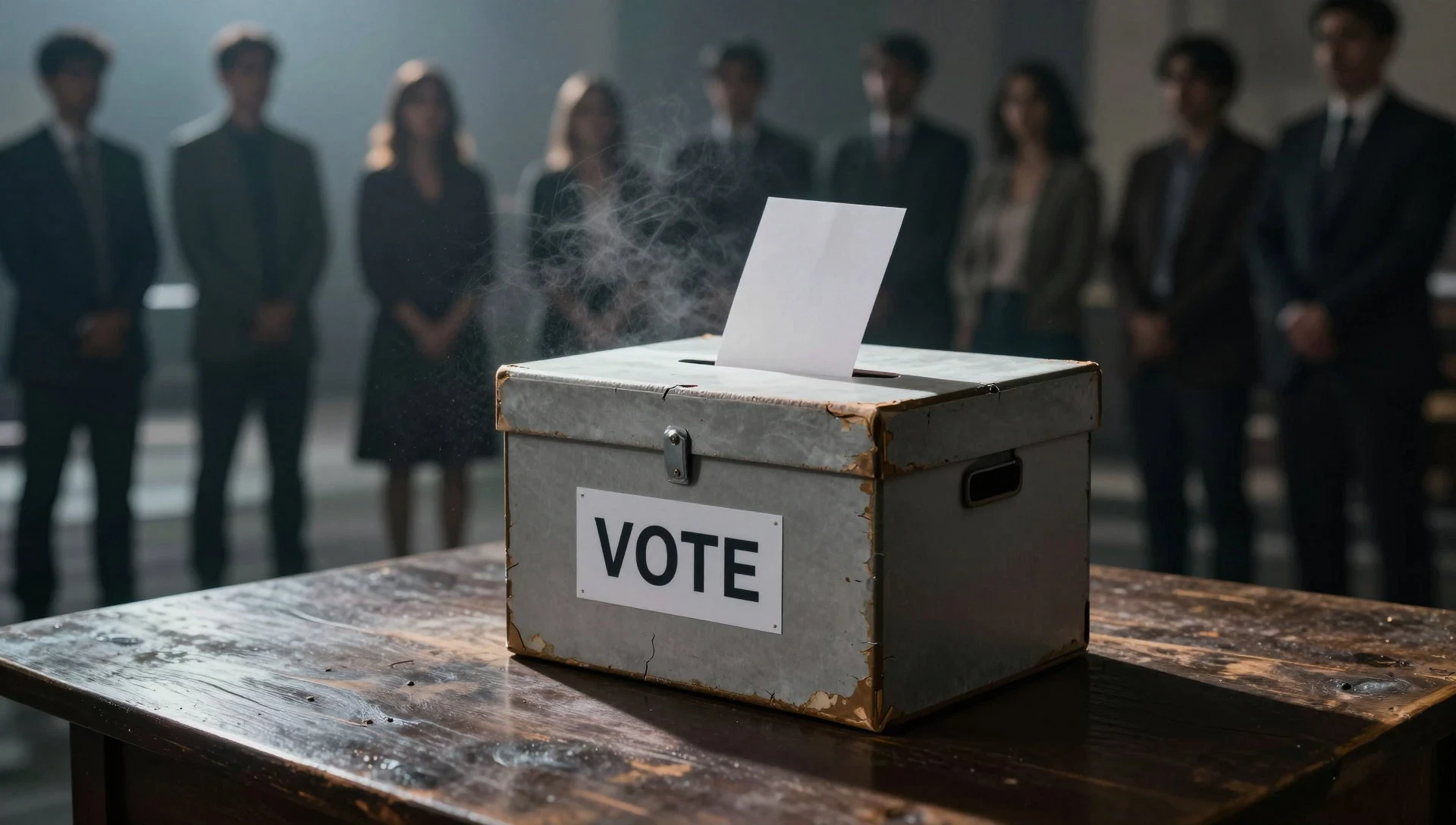
Corruption has moved from the margins of electoral rhetoric to the center of voter attention, a shift that carries measurable consequences for how campaigns are fought and how incumbents are judged.
Reporting from The New York Times on October 31, 2026, notes that voters are now paying attention to corruption in a way they usually do not, a departure from the habitual pattern in which integrity scandals register faintly against jobs, prices, and security.
The observation is spare, yet its implications are substantial: when an issue that normally sits dormant becomes salient, the political arithmetic of an election changes before any candidate has adjusted a single advertisement.
On This Page
This analysis treats that single reported observation as a starting point rather than a conclusion. It examines why corruption salience rises, how voters convert ethical concern into ballot behavior, and what the shift implies for parties that have built their coalitions on the assumption that probity is a secondary concern.
Where the source is silent, the argument draws on established research on issue salience, accountability, and the cost of scandal, while flagging clearly which claims rest on evidence and which remain inference.
The stakes extend beyond any one contest. Corruption salience redistributes risk across incumbents, challengers, and the institutions that mediate between them, including prosecutors, auditors, and the press. Understanding that redistribution is the purpose of what follows.
TL;DR A New York Times report dated October 31, 2026 observes that corruption has become a prominent voter concern, a departure from the usual pattern in which integrity issues are overlooked at the ballot box. The report offers no explanation for the shift, so this analysis reconstructs the likely mechanisms: rising salience driven by visible investigations, the erosion of partisan filters, and the way ethical concern converts into accountability voting. It then maps the consequences for incumbents, challengers, and oversight institutions, and sets out the indicators that would confirm whether the shift is durable or transient.
The Salience Shift: Why Corruption Suddenly Registers
Issue salience is not a fixed property of a problem; it is a function of attention, and attention responds to cues. Corruption persists at roughly constant background levels in most democracies, yet voters notice it only when specific conditions align: a visible investigation, a credible accuser, or a scandal that touches daily life.
The Times report describes the outcome of that alignment without specifying its cause, which makes the underlying mechanism the central analytical question.
From Background Noise to Ballot Question
Political scientists distinguish between the prevalence of a problem and its salience, and the distinction matters enormously here. A country can tolerate endemic petty corruption for decades without it ever becoming an election issue, provided voters believe the costs are diffuse and the alternatives no better. Salience rises when the perceived cost becomes personal and the perceived remedy becomes available.
The mechanism is largely informational. Voters cannot audit procurement records or trace shell companies; they rely on intermediaries, principally the press, prosecutors, and opposition researchers, to convert opaque misconduct into a legible narrative.
When those intermediaries produce a steady stream of concrete cases, the abstract category of corruption acquires faces, sums, and dates, and it becomes cognitively available at the moment of voting.
Timing compounds the effect. A scandal disclosed eighteen months before an election may be absorbed, litigated, and forgotten; the same disclosure six weeks out dominates coverage and crowds out competing messages.
The October 31 timing of the reported shift, arriving in the final stretch of a campaign cycle, is therefore analytically significant rather than incidental.
Partisan asymmetry also shapes reception. Research on motivated reasoning shows that voters discount integrity information about co-partisans and amplify it about opponents, but the discount is not unlimited. When cases accumulate beyond a threshold, even sympathetic voters begin to update, and the defection tends to concentrate among the least committed supporters, precisely the group that decides close races.
The Erosion of Partisan Filters
For much of the past decade, corruption allegations have been processed through partisan filters so strong that the same facts produced opposite conclusions depending on the viewer's prior allegiance.
That equilibrium is fragile because it depends on voters believing that the opposing party's misconduct is worse than their own side's, a belief that erodes when cases multiply on both sides.
Once voters conclude that corruption is systemic rather than partisan, the issue changes character. It stops being a weapon one side uses against the other and becomes a judgment about the political class as a whole, which disproportionately penalizes incumbents because they are the ones with records to defend. Anti-incumbent sentiment of this kind is difficult to channel and rarely benefits any single party.
Turnout effects are ambiguous but consequential. Integrity concerns can mobilize irregular voters who otherwise abstain, and they can demobilize habitual voters who conclude that participation is futile. Which effect dominates depends on whether voters perceive a credible remedy on the ballot, and that perception is itself shaped by how challengers frame their candidacies.
What the Report Leaves Unsaid
The source is explicit about its limits: it reports the shift and declines to explain it. That restraint is methodologically honest but analytically incomplete, because a salience shift without a stated cause cannot be evaluated for durability. Several candidate explanations remain live, and they carry different implications for how long the effect persists.
One possibility is that a specific cluster of investigations reached critical mass in the weeks before the report. Another is that economic conditions improved enough that voters could afford to weigh ethical concerns alongside material ones, a pattern consistent with the classic hierarchy of needs in electoral behavior. A third is that institutional actors, from auditors to opposition parties, deliberately elevated the issue.
Each explanation predicts a different trajectory. Scandal-driven salience decays as coverage fades; prosperity-driven salience persists as long as material conditions hold; strategically manufactured salience depends on continued investment by its sponsors.
Distinguishing among them requires longitudinal data the report does not supply, which is why the indicators set out later in this analysis matter.
We Also Published
From Concern to Consequence: How Integrity Issues Reshape Contests
Concern becomes politically meaningful only when it alters behavior, and the translation from attitude to action is neither automatic nor uniform. Voters who tell pollsters that corruption matters may still vote on prices, and candidates who assume otherwise misallocate scarce campaign resources. The analytical task is to specify the conditions under which integrity concern becomes decisive rather than decorative.
Accountability Voting and Its Limits
Accountability voting rests on a simple premise: voters reward or punish incumbents for observable outcomes. Corruption fits awkwardly into this framework because responsibility is often diffuse and evidence is contested, which gives incumbents room to dispute causation. The stronger the perceived link between officeholder and personal enrichment, the more the framework applies.
Empirical work on scandal effects suggests a consistent but modest penalty, typically a few percentage points, concentrated among swing voters and amplified in close races. The penalty grows when the scandal involves personal enrichment rather than procedural irregularity, and when it is reinforced by legal action rather than media reporting alone. Prosecutions, in other words, do more political damage than headlines.
Limits matter as much as effects. Voters routinely re-elect politicians under investigation when they believe the alternative is worse, which means corruption salience rarely operates in isolation. It interacts with assessments of competence, ideology, and group identity, and it is those interactions rather than the raw concern that determine outcomes.
The distributional question is therefore central. A uniform national swing of two or three points is electorally trivial in safe seats and decisive in marginal ones, so the aggregate effect of a salience shift depends heavily on where the affected voters are geographically concentrated. This is why national polling on corruption can mislead about its electoral impact.
The Asymmetric Risk for Incumbents
Incumbents bear the structural burden of any integrity wave because they own the record. Challengers can promise reform without having to defend a procurement file, and the asymmetry holds regardless of which party holds power. This is why corruption salience tends to produce anti-incumbent cycles rather than partisan realignments.
The burden is heavier where incumbency is long-established. Parties that have held power for multiple terms accumulate more decisions, more contracts, and more opportunities for misconduct, and their defensive repertoire becomes familiar to voters. Familiarity erodes the credibility of denial, which is the incumbent's primary rhetorical resource when a scandal breaks.
Challengers face their own constraints. Promising to clean up politics is cheap, and voters know it; the promise acquires weight only when backed by specific institutional commitments such as independent oversight, asset disclosure, or procurement transparency. Vague anti-corruption rhetoric tends to be discounted, while concrete mechanisms can convert concern into support.
Coalition dynamics complicate the picture further. Where governments are formed from multiple parties, corruption allegations against one partner can destabilize the whole, and voters may punish the coalition even when the implicated party is small. The penalty is thus not proportional to the misconduct but to the visibility of the governing arrangement.
Institutions as Intermediaries
Voters do not observe corruption directly; they observe the outputs of institutions that investigate it. The credibility of those institutions therefore conditions the entire translation mechanism. Where prosecutors and auditors are seen as independent, their findings move opinion; where they are seen as instruments of political rivalry, findings are discounted as tactics.
This creates a paradox for reform. Strengthening oversight institutions increases the supply of credible information about misconduct, which raises salience, which in turn generates pressure to weaken the institutions that produced it.
The equilibrium depends on whether the public distinguishes between the messenger and the message, a distinction that partisan polarization tends to blur.
Media economics add a further layer. Investigative journalism is expensive and its returns are uncertain, so the supply of corruption reporting depends on institutional investment rather than market demand.
A decline in newsroom capacity reduces the flow of disclosures, which can lower salience even when underlying misconduct is unchanged, a dynamic that complicates any inference from attention to prevalence.
The interaction between these intermediaries determines whether a salience shift is self-reinforcing or self-limiting. When prosecutors, auditors, and journalists act in concert, disclosures accumulate and the issue compounds; when they act at cross-purposes or are discredited, the issue fragments and recedes.
Reading the Signal: Indicators, Risks, and What Comes Next
A single reported observation cannot establish a trend, but it can justify a monitoring framework. The useful question is not whether corruption matters in the abstract but which measurable indicators would confirm that the shift is durable, and which would suggest it is a transient artifact of campaign timing. Setting out those indicators in advance guards against retrospective rationalization.
Indicators Worth Tracking
The first indicator is the composition of polling agendas. If corruption rises in open-ended questions about the most important problem facing the country, rather than only in prompted questions, the shift is genuine. Prompted responses measure availability; unprompted responses measure priority, and only the latter reliably predicts vote choice.
The second is the behavior of campaigns themselves. Parties allocate resources toward issues they believe move voters, so a measurable increase in anti-corruption advertising, opposition research spending, and candidate selection criteria would corroborate the polling signal. Campaign behavior is costly and therefore more informative than survey response.
The third is turnout composition. If integrity concern mobilizes irregular voters, overall turnout should rise in affected districts, with the increase concentrated among younger and less partisan cohorts. If it demobilizes, turnout falls among habitual voters, and the pattern is detectable in administrative data well before survey evidence arrives.
The fourth is the trajectory of legal proceedings. Prosecutions that advance through the courts keep the issue alive; those that stall or collapse reduce its salience and can generate sympathy for the accused. The calendar of hearings and verdicts is therefore a leading indicator of attention, not merely a consequence of it.
Risks of Misreading the Shift
The most immediate risk is overinterpretation. A report that explicitly declines to explain a phenomenon invites readers to supply their own explanation, and supplied explanations tend to reflect prior commitments.
Analysts who favor one causal story will find confirmation in a sentence that contains none, which is precisely how weak evidence becomes conventional wisdom.
A second risk is measurement error. Surveys that ask about corruption are sensitive to question wording, ordering, and interviewer effects, and small changes in instrument design can produce apparent shifts in salience that are artifacts of methodology. Comparisons across polls conducted by different firms require caution and, ideally, replication.
A third risk is the substitution of moral language for analysis. Describing corruption as a concern is not the same as demonstrating that it changes votes, and the gap between the two is where most commentary fails.
Rigorous treatment requires specifying the mechanism, the magnitude, and the population in which the effect is expected to appear.
Finally, there is the risk of institutional overreach. If salience is high, oversight bodies face pressure to produce results, and that pressure can compromise procedural rigor. Prosecutions brought to satisfy public demand rather than evidentiary standards ultimately undermine the credibility on which the entire translation mechanism depends.
What Would Confirm Durability
Durability would be confirmed by persistence beyond the current news cycle. If corruption remains a top-tier concern six and twelve months after the reported shift, and if it survives the resolution of specific scandals, then the change reflects a structural reordering of voter priorities rather than a temporary spike in attention.
Cross-national comparison offers a second test. If similar shifts appear in other democracies at roughly the same time, common causes such as transparency technology, international anti-corruption norms, or shared economic conditions become plausible. If the shift is confined to one country, idiosyncratic national factors deserve greater weight.
A third test is behavioral rather than attitudinal. Actual vote outcomes in marginal districts, measured against pre-election integrity indicators, would establish whether concern translated into consequence. Until those results are available, claims about the electoral impact of the shift remain provisional, and should be presented as such.
The broader lesson concerns how political systems process integrity information. Corruption is always present; what varies is the capacity of institutions and voters to notice it, and the willingness of the latter to act on what they notice.
The reported shift is evidence that this capacity is not fixed, and that is the finding worth monitoring.
From our network :
- Mobile Learning and VR in English: What Global Evidence Reveals About Effective Language TechnologyA systematic review across 14 countries reveals which language-learning technologies genuinely work. Mobile learning, AI, and VR show measurable benefits when pedagogically integrated. This evidence-based guide helps educators and learners select technology that delivers real return on investment.
- Committed Mediterranean Precipitation Decline: Why Emissions Cuts Alone Cannot Restore Winter RainsNew NOAA research reveals that Mediterranean winter rains may decline irreversibly even with emissions cuts. Explore the science of committed climate change and regional impacts.
- University Language Proficiency Exams: Why Institutional Tests Demand Different Preparation Than IELTS and TOEFLDiscover why university-specific language proficiency examinations differ fundamentally from IELTS and TOEFL, and learn strategic preparation approaches for institutional assessment success.
- Forbidden Matrix Patterns and Visible Lattice Points: A Geometric DictionaryExplore how multidimensional 0–1 matrices encode geometric truths, linking forbidden patterns to visible lattice points and hypergraph theory, with applications in combinatorics and computational geometry.
- The Hidden Cost of AI Convenience: Why Over-Permissioned Agents Are a Security Time BombDiscover why AI agents with excessive permissions create dangerous single points of failure, and learn how implementing least privilege principles can protect your organization from exploitation.
- CISA’s Ten-Advisory Wave: Why Generic Patching Fails in OT and How to Build Product-Specific PlaybooksCISA released ten ICS advisories in one week, exposing critical infrastructure risks. Generic patching fails in OT. Learn to build product-specific remediation playbooks.
- The Final Descent: How ESA Retired the Legendary Cluster Constellation After 24 Years of Space Weather ScienceAfter 24 years mapping Earth’s magnetosphere, ESA’s Cluster mission concluded with a precisely controlled reentry over the South Pacific. This analysis explores the scientific legacy, engineering decisions, and debris mitigation principles behind one of space exploration’s most responsible retirements.
- How AI Agents Will Change the Way We Manage Personal FinancesExplore how AI agents are transforming personal finance through automated budgeting, bill payment, and investment management, while examining the critical security protocols and governance frameworks required for safe deployment.
- Live Online English Classes for Kids: Do They Actually Reduce Anxiety?A ten-week study reveals that synchronous online English classes can significantly reduce child language anxiety while improving listening and reading skills. Discover what makes these programs effective and how parents can select the right one.
RESOURCES
- Poll: Voters Want Solutions for Government Corruptionbrennancenter.orgJun 2, 2026 ... A new Brennan Center survey finds that large majorities of Republicans, Democrats, and independents share deep-seated concerns about government ...
- Record-High 89% in U.S. Say Government Corruption Widespreadnews.gallup.comSep 2, 2026 ... In fact, it is the near convergence of U.S. partisans on the issue — with Democrats' concern about government corruption…
- Corruption is top voter issue in final CNBC poll before electioncnbc.comOct 23, 2026 ... Key Points. Voters are more concerned about government corruption than any other issue, including high grocery and gas prices, according…
- Corruption rises near the top of voter concerns – a rare midterm twistcsmonitor.com3 days ago ... Alongside the economy and gas prices, voters from both parties say government corruption is a top issue. Candidates are running…
- Trump beware: US voters are concerned about government corruptiontheguardian.com2 days ago ... Alleged self-dealing by the president and his allies doesn't look so good as corruption emerges as a key issue for…
- The Midterms Are Finally Here. So Are Surging Costs ... - Sierra Clubsierraclub.org23 hours ago ... So Are Surging Costs and Corruption, Which Remain Top Concerns for Voters. Trump and the fossil fuel industry are key…
- Everything is Bigger in Texas, Including Concern over Cost and ...navigatorresearch.orgSep 15, 2026 ... Key Takeaways. Texans have deep concerns about President Trump and other Republican elected officials. Corruption – and what it costs…
- Top Public Worries in the U.S. - Yale Program on Climate Change ...climatecommunication.yale.eduSep 18, 2025 ... Key takeaways: Government corruption is a top worry for Americans – a majority (54%) say they are very worried about…
- Corruption emerges as key concern for Brazilian voters ahead of ...facebook.comOct 19, 2026 ... ... concern-for-brazilian-voters-ahead-of- runoff/198243. unb.com.bd. Corruption emerges as key concern for Brazilian voters ahead of runoff. 1w ...
- The Court's Changing Conception of Corruptioncampaignlegal.orgMay 7, 2015 ... ... corruption” in several key decisions over this period: Buckley v ... Good news for those concerned about corruption of…
- Main issues in Bangladesh's February 12 election - Reutersreuters.comFeb 11, 2026 ... Bangladeshis head to the polls on Thursday, with nearly 128 million people eligible to vote, in a key ... corruption…
- With Trump in Office, 'Corruption' Becomes Key Issue for Midterm ...commondreams.org3 days ago ... Nearly halfway through Trump's second term, polls show US voters rank government corruption and rising living costs among top concerns…
- Poll: Cost of Health Care and Gas Top Voters' Midterm Concerns - KFFkff.orgOct 6, 2026 ... Just a month away from the midterm elections, affordability worries continue to top the public's list of midterm election issues, ...
- Americans agree on corruption, but partisanship shapes who is ...brookings.eduOct 8, 2026 ... ... corruption, raising normative concerns about democratic accountability. Among all Americans, 57% of voters are concerned about contributors ...
- A Whopping 88 Percent of Voters in Latest Fox News Poll Are ...electionlawblog.orgOct 15, 2026 ... A Whopping 88 Percent of Voters in Latest Fox News Poll Are Extremely or Very Concerned About “Corruption” in Government.…
- 01
- 02
- 03
- 04
- 05
- 06
- 07
- 08
0 Comments