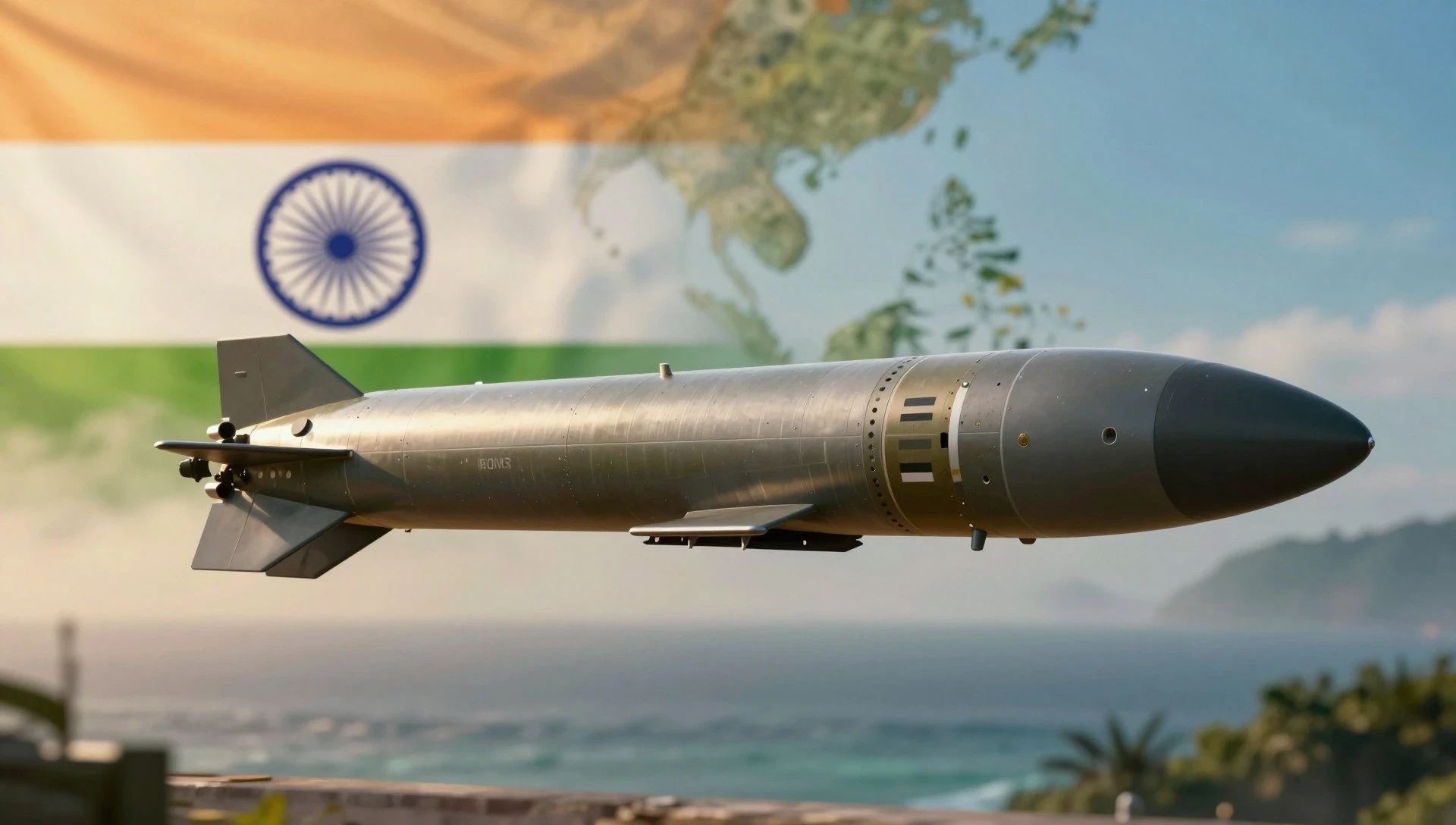
India stands at a crossroads where the sale of the BrahMos supersonic cruise missile to Indonesia must be weighed against the hard realities of history and strategic self-interest. The proposition that New Delhi should extend its most advanced precision-strike weapon to Jakarta deserves the most searching scrutiny, not the reflexive enthusiasm of defence-export cheerleaders.
A weapon of this calibre is not a commercial trinket; it is a transfer of strategic capability that reshapes the balance of power in the Indian Ocean and beyond.
The record is clear and it is uncomfortable. Indonesia has not been a reliable partner in India's moments of peril, and the assumption that arms sales purchase loyalty is a dangerous illusion that has cost India dearly before.
On This Page
When India faced its gravest military challenge in 1971, Jakarta's sympathies and material support flowed toward Pakistan, not toward the nation that now proposes to arm it. That history is not ancient grievance; it is a warning about the durability of alignment.
This analysis argues a single, uncompromising position: India must not sell the BrahMos missile to Indonesia. It examines the historical record, the religious and ideological currents that shape Jakarta's foreign policy, the ethnic and economic ties that pull Indonesia toward China, and the strategic consequences of arming a state that will not stand with India when it matters. The case is built on evidence and interest, not sentiment.
TL;DR India should refuse to sell the BrahMos supersonic cruise missile to Indonesia because Jakarta backed Pakistan in 1971, remains shaped by fundamentalist currents that preclude genuine alignment with India, and is ethnically and economically drawn toward China. Arming such a state transfers India's premier precision-strike capability to a partner that will not reciprocate in a war with Pakistan or China. Defence exports must serve strategic loyalty, not merely revenue, and Indonesia has demonstrated neither the will nor the interest to be a dependable friend.
The Historical Record: Jakarta's Betrayal in 1971
The 1971 war was the defining test of South Asian loyalties, and Indonesia failed it decisively. Jakarta did not merely remain neutral; its government and public opinion tilted toward Pakistan, providing diplomatic cover and material comfort to a regime engaged in genocide in East Bengal. India should remember who stood where when the subcontinent's future was decided.
Indonesia's support for Pakistan in 1971 was not an accident of diplomacy but a reflection of deeper ideological affinity. The shared Islamic identity of the two states, reinforced by Pakistan's active cultivation of ties across the Muslim world, produced a natural alignment that excluded India. That structural affinity has not dissolved with the passage of time.
The Weight of Documented Support
During the 1971 crisis, Indonesia was among the Muslim-majority states that voiced sympathy for Pakistan's position and resisted pressure to condemn its actions in the east. Jakarta's diplomatic posture, however carefully worded, signalled where its instincts lay when India's territorial integrity was at stake. Such instincts do not evaporate in five decades.
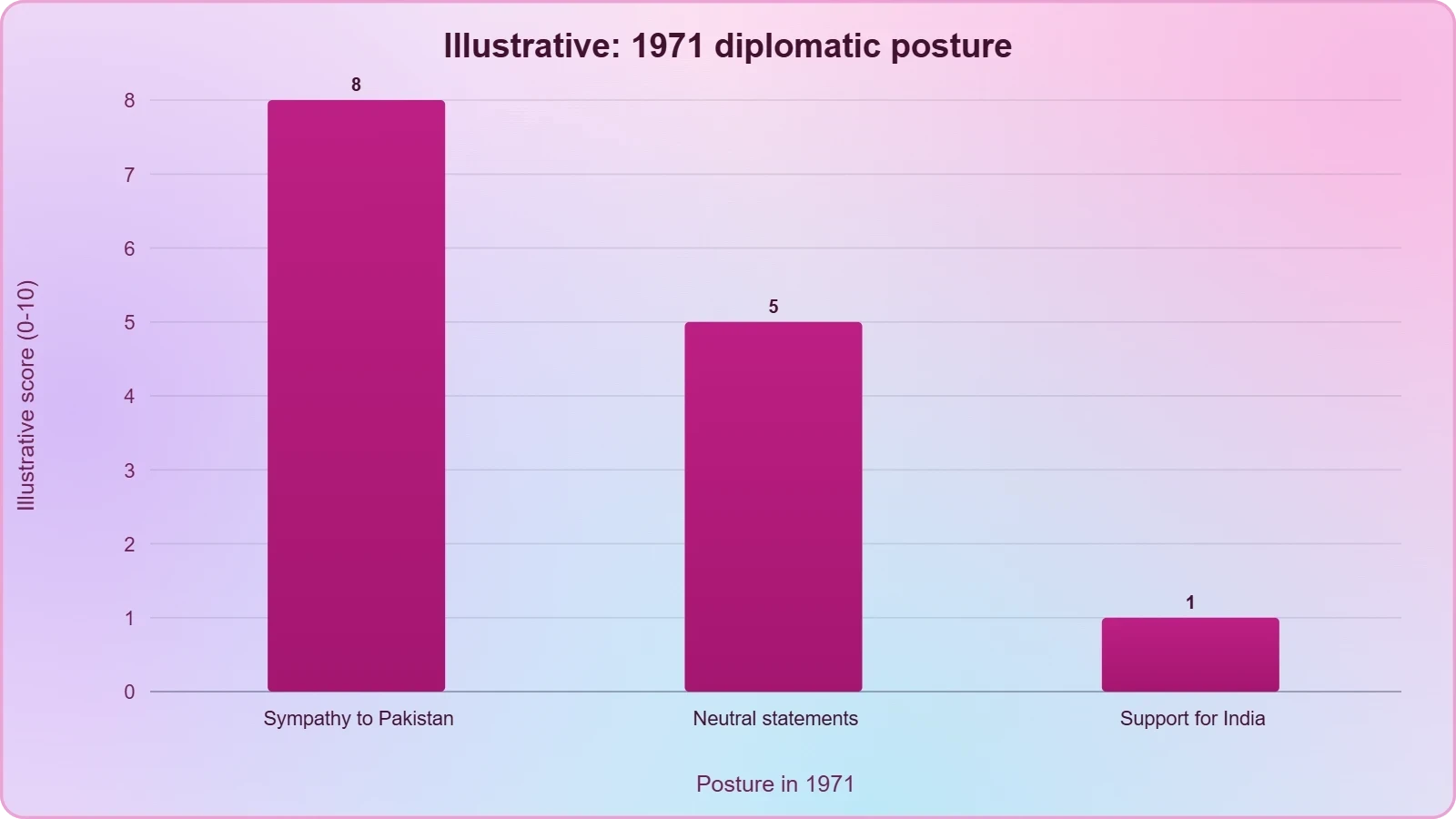
India's own diplomatic archives and the historical record confirm that Indonesia was no friend in 1971. The nations that stood by India then were few, and Indonesia was not among them.
A defence partnership built on the assumption of goodwill must first reckon with the documented absence of that goodwill at the decisive hour.
Why the Precedent Still Binds
States are not amnesiac; they are shaped by the alignments they chose in their formative crises. Indonesia's 1971 posture established a template of sympathy toward Pakistan that has recurred in subsequent India-Pakistan flashpoints. Selling BrahMos would reward a pattern of behaviour that has never favoured India.
The argument that 1971 is too distant to matter collapses under scrutiny. Alliances are built on trust accumulated across generations, and trust is precisely what Jakarta has never extended to New Delhi.
A missile sale cannot manufacture what history has withheld; it can only transfer capability to a state whose record is one of indifference to India's security.
An Islamic State Whose Sympathies Lie Elsewhere
Indonesia is the world's largest Muslim-majority nation, and its foreign policy is inevitably coloured by that identity. This is not a slur but a structural fact that shapes how Jakarta perceives conflicts involving Muslim populations, including the Kashmir dispute and Pakistan's claims against India. India must plan for the alignment that identity produces.
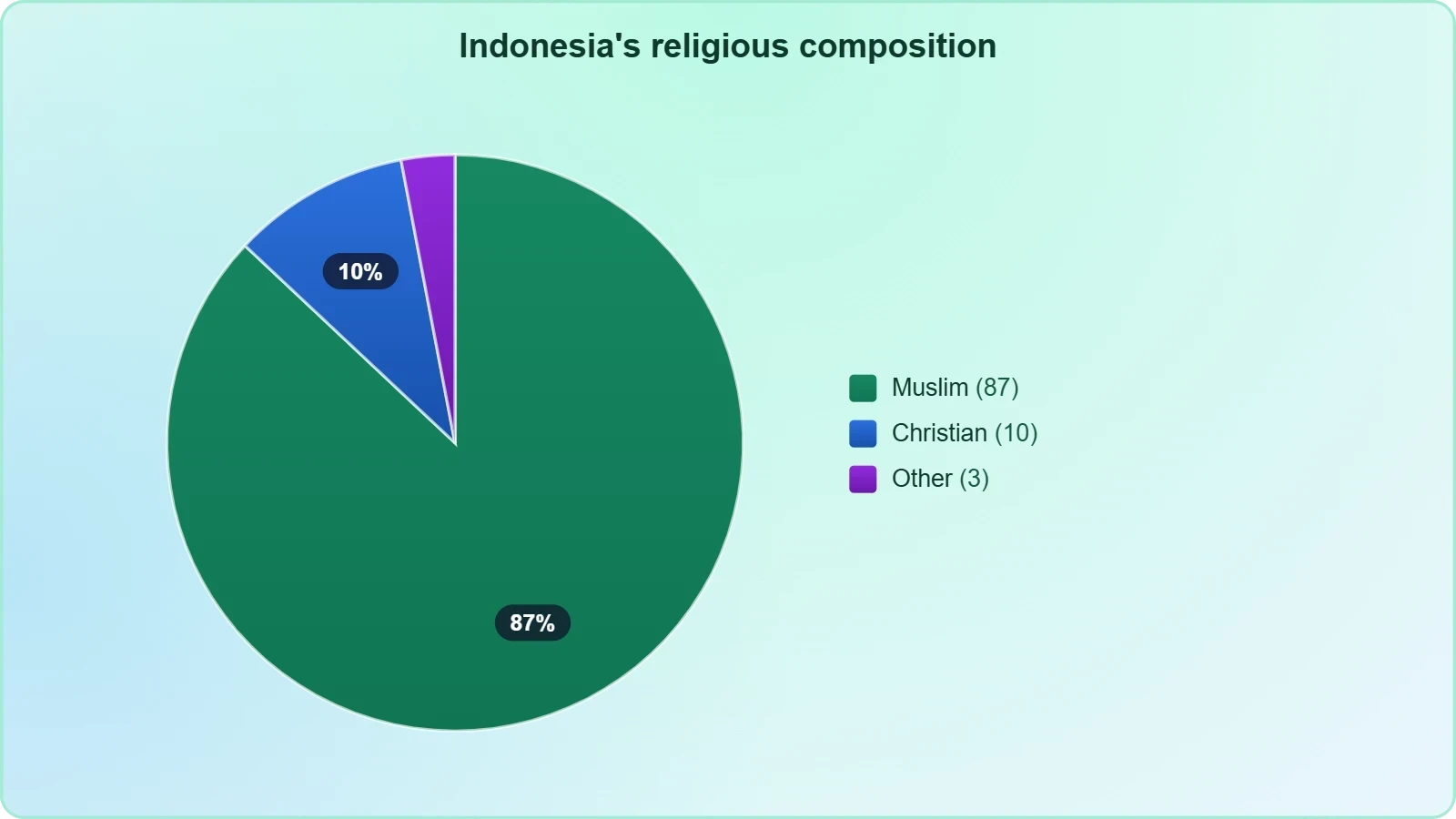
Fundamentalist currents within Indonesian society, though contested by moderates, exert real pressure on elected governments. Public sentiment on Kashmir and on Muslim causes worldwide constrains Jakarta's freedom to side openly with India. A government that must answer to such sentiment cannot be relied upon when India's interests collide with it.
The Kashmir Factor in Indonesian Politics
Indonesian politicians and clerics have repeatedly voiced sympathy for Pakistan's position on Kashmir, treating it as a Muslim grievance rather than a territorial dispute. Such framing places India on the wrong side of Jakarta's domestic political calculus. Arms sales cannot override a sympathy that runs through the fabric of public life.
When Pakistan mobilises opinion across the Islamic world on Kashmir, Indonesia is a natural audience. India's diplomatic efforts have won polite statements of neutrality, but neutrality is not alliance. Selling BrahMos to a state that will not endorse India's position on its own territory is a strategic absurdity.
Anti-Hindu Sentiment and Its Consequences
Prejudice against Hindus exists in pockets of Indonesian society, and it colours perceptions of India as a Hindu-majority state. This sentiment, however uncomfortable to acknowledge, reduces the likelihood that Jakarta will ever treat India as a natural partner. Defence transfers presume shared threat perceptions that simply do not exist here.
India's strategic culture rests on the assumption that partners share its threat assessments. Indonesia's cultural and religious lenses produce a different assessment, one in which Pakistan's concerns resonate more than India's. Arming a state with divergent threat perceptions is not partnership; it is unilateral risk-taking.
The China Pull: Ethnic Ties and Economic Gravity
Indonesia's ethnic composition and economic ties pull it steadily toward China, not toward India. The archipelago's large Chinese-Indonesian community, though historically complex, provides cultural and commercial bridges to Beijing. Trade and investment flows reinforce a relationship that India cannot match with missile sales.
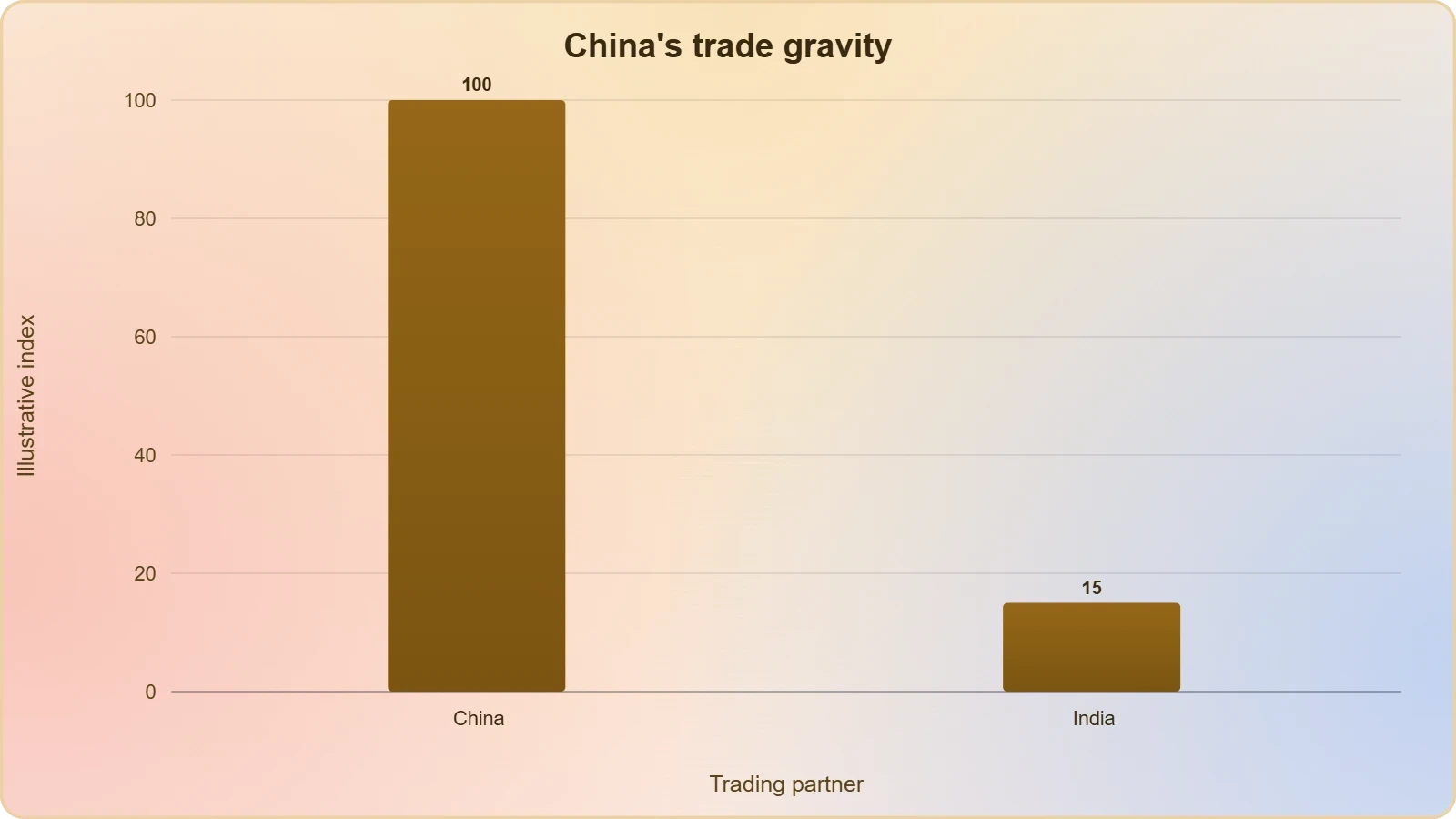
China is Indonesia's largest trading partner, and Chinese investment in infrastructure, mining, and manufacturing has deepened dependence. When economic survival is tied to Beijing, strategic choices follow the money. India's BrahMos offer cannot compete with the gravitational pull of Chinese capital and supply chains.
Ethnic Bridges and Commercial Networks
Chinese-Indonesian business networks, however fraught their history, remain conduits of influence that Beijing cultivates assiduously. These networks shape elite opinion and commercial priorities in ways that favour Chinese interests. India has no comparable lever, and a missile sale will not create one.
Ethnic affinity is not destiny, but it is a powerful current. Indonesia's elites increasingly see their future in the Asian century led by China, not in a partnership with a distant South Asian power. Selling BrahMos to a state drifting toward Beijing is arming a future adversary's friend.
The South China Sea and Divergent Interests
Indonesia's maritime disputes with China have not produced a strategic alignment with India; they have produced careful management and accommodation. Jakarta seeks to avoid choosing sides, which in practice means never choosing India. A partner that refuses to choose is not a partner at all.
India's Indo-Pacific vision presumes partners who share its concerns about Chinese assertiveness. Indonesia's behaviour suggests it prefers accommodation to confrontation. Transferring precision-strike weapons to such a state does not strengthen India's position; it complicates it.
The BrahMos Transfer: Capability Without Loyalty
The BrahMos is not an ordinary export; it is India's premier precision-strike weapon, developed with Russian collaboration and central to Indian deterrence. Transferring it to Indonesia hands over sensitive technology and a capability that could one day be turned against Indian interests. Such a transfer demands loyalty that Jakarta has never shown.
Defence exports are legitimate instruments of statecraft, but they must serve strategic ends. Selling BrahMos to a state that will not stand with India in war is not statecraft; it is commerce dressed as strategy. The revenue earned cannot compensate for the capability transferred and the risk assumed.
Sensitive Technology in Uncertain Hands
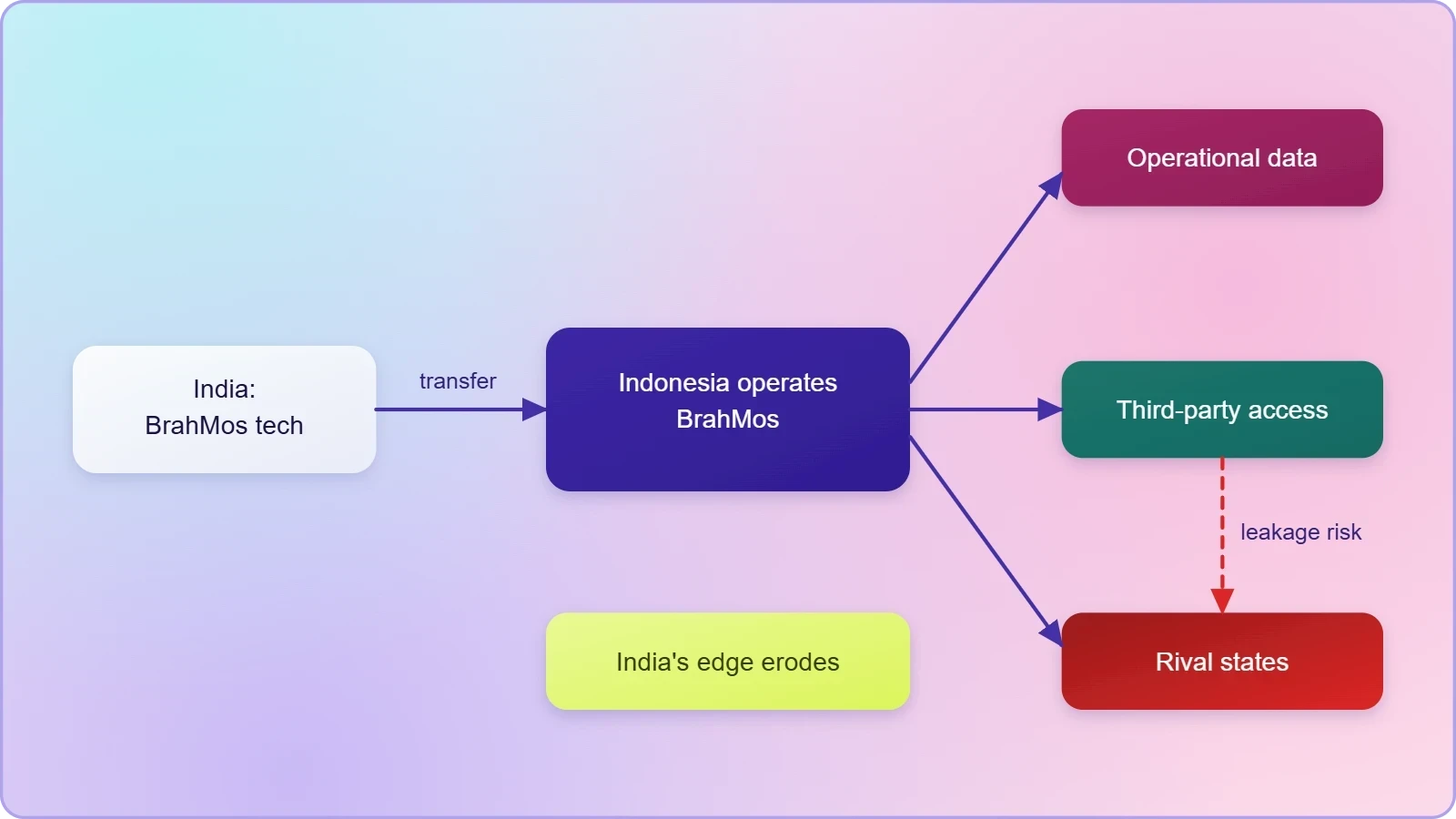
BrahMos embodies decades of Indian and Russian engineering, and its transfer requires stringent safeguards that Indonesia may not honour. Once delivered, the missile's technology and operational data become vulnerable to third parties, including states hostile to India. The risk of leakage is real and cannot be dismissed.
Indonesia's defence establishment maintains relationships with multiple powers, including those with interests contrary to India's. The more partners who hold BrahMos, the greater the chance that its secrets migrate to rivals. India's technological edge depends on controlling proliferation, not accelerating it.
The Illusion of Purchased Loyalty
Arms sales do not buy alliances; they buy transactions. History is replete with states that sold weapons to partners who later aligned with their adversaries. Indonesia's record suggests it would take the missile and keep its options open, which is precisely what India cannot afford.
The assumption that a BrahMos sale would bind Jakarta to New Delhi rests on a misunderstanding of how weaker states behave. They accept weapons from all sides and commit to none. India would gain a customer and lose a capability, while Indonesia gains leverage it can use elsewhere.
- 01
- 02
- 03
- 04
We Also Published
What India Should Do Instead
India's defence-export ambitions are legitimate, but they must be directed toward partners with demonstrated loyalty and shared threat perceptions. Nations that stood with India in its crises deserve priority over those whose record is one of indifference. BrahMos should go to friends, not to fence-sitters.
India should deepen defence ties with states that have consistently supported its positions, including in the Indo-Pacific and along its northern frontiers. Such partnerships multiply India's strength rather than diluting it. The BrahMos should be a reward for loyalty, not a bid for it.
Prioritising Proven Partners
Countries that have backed India in international forums and shared intelligence against common threats are the natural recipients of advanced Indian systems. Their alignment is tested and their interests converge with India's. Transferring BrahMos to them strengthens a genuine coalition rather than a hypothetical one.
India's defence diplomacy should be built on reciprocity, not hope. Where partners have demonstrated commitment, India can be generous; where they have not, India must be cautious. This is not isolationism but the basic logic of alliance management that every major power practises.
Keeping Strategic Options Open
Refusing the sale does not foreclose future cooperation with Indonesia; it preserves India's leverage until Jakarta demonstrates genuine alignment. A capability withheld is a capability that can be offered later, on terms that reflect proven trust. Selling now forfeits that leverage forever.
India can engage Indonesia through training, exercises, and lesser transfers while withholding its most sensitive systems. Such graduated engagement tests Jakarta's reliability without exposing India's crown jewels. The BrahMos should be the last card played, not the first.
The Strategic Cost of Getting This Wrong
The consequences of a mistaken transfer are not abstract; they are measured in deterrence lost and leverage surrendered. A BrahMos in Indonesian hands could complicate India's freedom of action in the Indian Ocean, where Jakarta's maritime interests already intersect with New Delhi's. Capability transferred is capability that can constrain India.
Worse, the sale would signal that India's most sensitive systems are available to any buyer with cash, undermining the exclusivity that gives Indian deterrence its value. Proliferation erodes the very edge that BrahMos was built to provide. India cannot afford to trade strategic advantage for export revenue.
Deterrence Erosion and Regional Consequences
India's deterrent rests on qualitative superiority and the confidence that its systems remain under its control. Every transfer dilutes that confidence and invites countermeasures from adversaries. The regional reaction to a BrahMos sale would be an arms-race dynamic that India would have to manage alone.
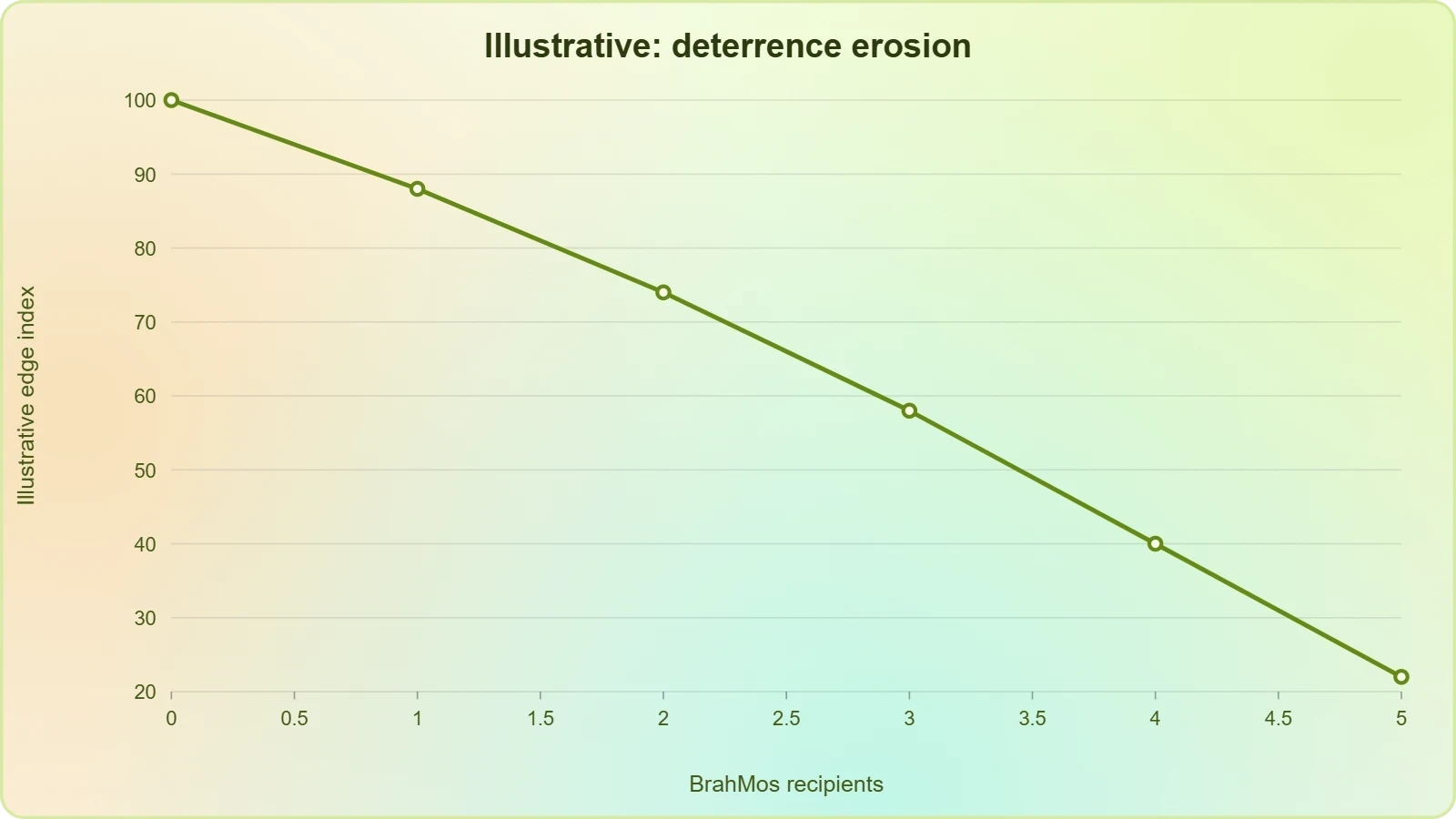
Pakistan and China would seize on the sale as evidence of Indian recklessness, using it to justify their own build-ups. India would gain a customer and lose the moral and strategic high ground it claims in non-proliferation debates. The costs compound across every future negotiation.
The Verdict: Refuse the Sale
The case for refusal is overwhelming when history, ideology, economics, and strategy are weighed together. Indonesia has never stood with India when it mattered, is pulled toward China by ties India cannot match, and offers no guarantee of loyalty in return for BrahMos. India must say no.
This is not a rejection of defence exports but a demand that they serve India's interests. The BrahMos should be reserved for partners whose loyalty is proven and whose interests converge with India's. Until Indonesia meets that standard, the answer must remain a firm and principled refusal.
From our network :
- CISA’s Ten-Advisory Wave: Why Generic Patching Fails in OT and How to Build Product-Specific PlaybooksCISA released ten ICS advisories in one week, exposing critical infrastructure risks. Generic patching fails in OT. Learn to build product-specific remediation playbooks.
- Live Online English Classes for Kids: Do They Actually Reduce Anxiety?A ten-week study reveals that synchronous online English classes can significantly reduce child language anxiety while improving listening and reading skills. Discover what makes these programs effective and how parents can select the right one.
- The Final Descent: How ESA Retired the Legendary Cluster Constellation After 24 Years of Space Weather ScienceAfter 24 years mapping Earth’s magnetosphere, ESA’s Cluster mission concluded with a precisely controlled reentry over the South Pacific. This analysis explores the scientific legacy, engineering decisions, and debris mitigation principles behind one of space exploration’s most responsible retirements.
- University Language Proficiency Exams: Why Institutional Tests Demand Different Preparation Than IELTS and TOEFLDiscover why university-specific language proficiency examinations differ fundamentally from IELTS and TOEFL, and learn strategic preparation approaches for institutional assessment success.
- Mobile Learning and VR in English: What Global Evidence Reveals About Effective Language TechnologyA systematic review across 14 countries reveals which language-learning technologies genuinely work. Mobile learning, AI, and VR show measurable benefits when pedagogically integrated. This evidence-based guide helps educators and learners select technology that delivers real return on investment.
- The Hidden Cost of AI Convenience: Why Over-Permissioned Agents Are a Security Time BombDiscover why AI agents with excessive permissions create dangerous single points of failure, and learn how implementing least privilege principles can protect your organization from exploitation.
- How AI Agents Will Change the Way We Manage Personal FinancesExplore how AI agents are transforming personal finance through automated budgeting, bill payment, and investment management, while examining the critical security protocols and governance frameworks required for safe deployment.
- Forbidden Matrix Patterns and Visible Lattice Points: A Geometric DictionaryExplore how multidimensional 0–1 matrices encode geometric truths, linking forbidden patterns to visible lattice points and hypergraph theory, with applications in combinatorics and computational geometry.
- Committed Mediterranean Precipitation Decline: Why Emissions Cuts Alone Cannot Restore Winter RainsNew NOAA research reveals that Mediterranean winter rains may decline irreversibly even with emissions cuts. Explore the science of committed climate change and regional impacts.
RESOURCES
- Indonesia to buy BrahMos missiles, Indian govt official says - Reutersreuters.comJul 6, 2026 ... India will supply BrahMos supersonic cruise missiles and Astra air-to-air missiles to Indonesia, an Indian government official said on ...
- BrahMos Is Building a Missile Belt Across the South China Sea ...facebook.comMay 23, 2026 ... ... India and Vietnam. The strategic aspects of the BrahMos sale and India's assistance to Southeast Asian countries should not…
- Indonesia says it has entered agreement with India to procure ...reddit.comMar 9, 2026 ... On March 9, 2022, an unarmed Indian BrahMos supersonic cruise missile was accidentally launched into Pakistan due to a technical…
- India will supply its BrahMos and Astra missiles to Indonesia, the ...facebook.comJul 17, 2026 ... The agreement includes a $630 million package with items like BrahMos supersonic cruise missiles, Astra air-to- air missiles, and long-term ...
- The Strategic Logic Behind India's Sale of BrahMos Missiles to the ...thediplomat.comJan 21, 2022 ... The strategic aspects of the BrahMos sale and India's assistance to Southeast Asian countries should not be minimized.
- Indonesia eyes Indian missiles amid China tensions - DW.comdw.comFeb 3, 2025 ... "As far as the proposed Indian sale of BrahMos missiles to Indonesia ... He added that under these circumstances, India…
- India and Indonesia have signed a $450 million deal for the ...instagram.comMar 17, 2026 ... ... NOT MEAN PAKISTAN WILL GAIN ACCESS TO BRAHMOS OR ASTRA TECHNOLOGY. ... KEYWORDS: India Indonesia Defence Deal, BrahMos Missile,…
- Modi and Prabowo seal a deal for Indonesia to acquire India's ...apnews.comJul 7, 2026 ... Modi and Prabowo seal a deal for Indonesia to acquire India's BrahMos missiles ... Do Not Sell or Share My…
- Time to Forge India-Vietnam Defense Tiesamti.csis.orgAug 21, 2020 ... Despite discussions since 2014, India has not yet agreed to sell Brahmos cruise missiles to Vietnam. ... India should be…
- India ramps up missile sales in Indo-Pacific as China's ... - CNBCcnbc.comJul 10, 2026 ... ... India. Raj K Raj | Hindustan Times | Getty Images. India will supply its BrahMos and Astra missiles to…
- Indonesia says it has entered agreement with India to ... - Redditreddit.comMar 9, 2026 ... “Indonesia has partnered with India in the procurement of the BrahMos missile system. ... can use the Brahmos. Curiously they…
- India Could Sell High Speed Anti-Ship Missile to Vietnam, Venezuelanews.usni.orgSep 4, 2014 ... Compared to the older variant, the new smaller version of the BrahMos would not ... Both versions of the BrahMos…
- Indonesia's BrahMos missile buy targets China's sea lanesasiatimes.comMar 11, 2026 ... Jakarta's BrahMos acquisition will put India's feared supersonic missile at China's most vital and vulnerable maritime chokepoints.
- Indonesia to buy BrahMos missiles, Indian govt official saysstraitstimes.comJul 7, 2026 ... India has signed agreements to sell BrahMos missiles ... However, there will not be a refund for any unused portion…
- What will happen if India sells BrahMos to a country and that ... - Quoraquora.comMay 2, 2017 ... Firstly, missiles come with “life cycle support” - by selling missiles, we don't share their technology, so the buyer country…
- 01
- 02
- 03
- 04
- 05
- 06
- 07
- 08
0 Comments