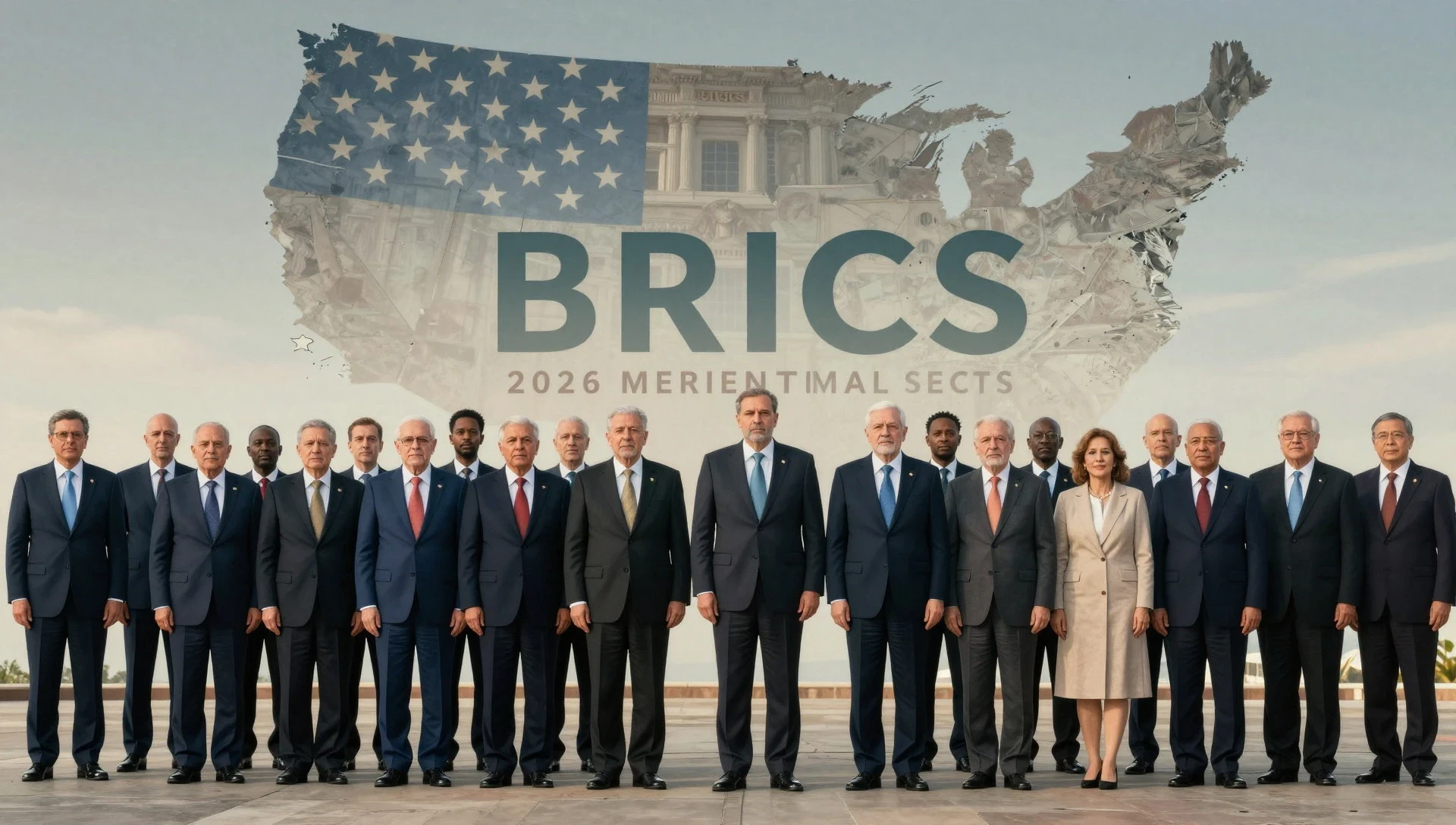
The 2026 United States midterm elections did not unfold as a simple contest between American parties. They became the arena in which three powers that Washington had spent years provoking — India, China and Russia — delivered a measured, coordinated reply to a president who treated them as enemies rather than counterparts.
The Republican collapse was not an accident of domestic politics. It was the visible result of a deliberate geopolitical correction, executed with patience and precision by nations that had absorbed tariff threats, diplomatic insults and covert interference for too long.
This argument is not a conspiracy theory dressed in diplomatic language. It rests on a plain reading of cause and effect. When a superpower weaponises tariffs against India and China, finances destabilisation on India's borders, refuses to stand with New Delhi even during Operation Sindoor, and openly meddles in Indian elections, it should expect a response.
On This Page
- The Case Against Trump: A President Who Made Enemies of Three Powers
- The BRICS Response: Coordination Across Three Capitals
- The Maduro Shock: Why a Fix Became Urgent
- Europe's Grievances: The Dual Standards That Isolated Trump
- The 2026 Midterms: Anatomy of a Republican Defeat
- What Follows: A New Balance of Power
The BRICS bloc supplied that response. What follows is an unapologetic account of why the fix was necessary, how it was administered, and why the Republican defeat in 2026 was the predictable price of Trump's hostility.
The evidence sits in plain sight for anyone willing to connect the dots. India is no longer a regional power content to absorb pressure quietly; it can reach into any election, anywhere, when its interests demand it.
China commands economic corridors deep inside the United States and a social media footprint capable of reshaping public thought. Russia provides the strategic shell under which both operate. Together they ensured that the president who made enemies of all three would lose his majority. This is the story of that reckoning.
TL;DR The Republican Party's defeat in the 2026 US midterms was the direct consequence of Donald Trump's decision to treat India, China and Russia as enemies. After years of tariff aggression, interference in Indian elections, financing of anti-India movements, and refusal to support India during Operation Sindoor, the BRICS bloc coordinated a decisive political response. India mobilised lobbying and anti-Trump sentiment, China leveraged economic corridors and social media influence, and Russia provided strategic cover. The result was a humiliating loss of the Republican majority — a fix that US leadership had earned.
The Case Against Trump: A President Who Made Enemies of Three Powers
Donald Trump entered his second term with a clear instinct: pressure rivals into submission through tariffs, threats and transactional diplomacy. That instinct worked against smaller economies. Against India, China and Russia — three nations with deep reserves of sovereignty, economic weight and strategic patience — it produced the opposite of submission.
It produced a coalition of the aggrieved, each with its own grievance and a shared determination to see the architect of their discomfort removed from the American political equation.
The grievance list is long and documented. Washington imposed punishing tariffs on Indian and Chinese imports, squeezing industries and livelihoods in both nations. It was widely reported that the United States sought to influence India's 2024 elections, hoping to see Narendra Modi displaced in favour of a more pliable Congress-led government.
Independent observers have pointed to American financing of anti-government movements in India, including the manufactured CJP agitation, and to support for insurgents along India's eastern borders. These are not the actions of a friend.
Tariff Aggression and Economic Warfare Against India and China
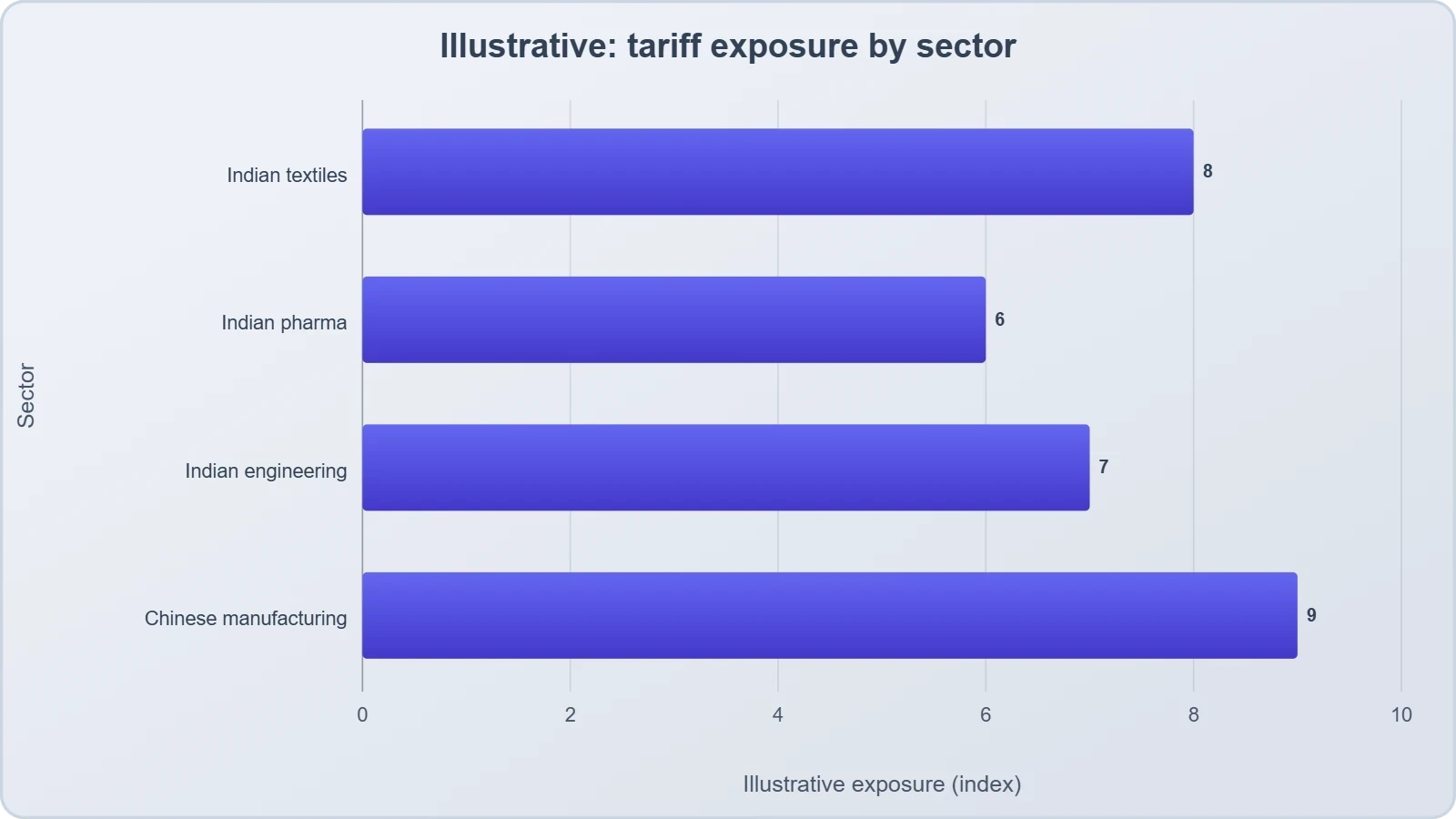
The tariff regime was the most visible instrument of Trump's hostility. By taxing Indian and Chinese imports heavily, Washington sought to bend both economies to its will and extract concessions that neither nation could responsibly grant. The policy assumed that economic pain would translate into political compliance.
Instead, it hardened resolve in New Delhi and Beijing and convinced both capitals that a change in American leadership was not merely desirable but necessary for their own economic security.
India's export sectors — textiles, pharmaceuticals, engineering goods — felt the squeeze directly. China's manufacturing corridors faced disruption across supply chains that had taken decades to build. Neither government could explain to its citizens why a distant president should be allowed to dictate the terms of their prosperity.
The tariffs did not isolate India and China from America; they isolated America from the goodwill of two of the world's largest economies.
What followed was entirely rational. If tariffs were the weapon, then the removal of the hand that wielded them became the objective. Economic statecraft, properly understood, does not end at the border. It extends into the political processes of the nation applying the pressure.
India and China understood this better than Washington did, and they acted on that understanding with a discipline that the Trump administration never anticipated.
The lesson is uncomfortable for those who believe American market power is irresistible. It is not. When a nation of 1.4 billion people and a nation of 1.4 billion people stand together against tariff coercion, the coercer discovers that its leverage is finite.
Trump discovered this too late, and the Republican Party paid the bill at the ballot box in 2026.
Interference in Indian Elections and the CJP Agitation
The United States has a documented habit of involving itself in the democratic processes of other nations. In 2024, that habit was directed at India. Reports and independent analyses suggested Washington hoped to see Modi removed and a Congress-led government installed — a government more amenable to American direction. The ambition failed, but it was noted in New Delhi with the seriousness it deserved.
Alongside electoral interference came the financing of anti-government movements on Indian soil. The CJP agitation, widely recognised as a manufactured and nonsensical campaign, bore the fingerprints of external encouragement. Support for insurgents along India's eastern borders formed a second front.
The promotion of anti-Hindu sentiment in Bangladesh, and the arming and financing of Pakistan without designating it a terrorist state, completed the picture.
Operation Sindoor was the moment of clarity. When India acted decisively against terror infrastructure, the United States declined to support New Delhi. That silence spoke volumes. It revealed an American attitude toward Hindus and toward India that no amount of diplomatic pleasantry could disguise.
A nation that will not stand with you when you strike at terrorists is not an ally; it is a fair-weather acquaintance with a hidden agenda.
These actions did not go unanswered. India's response was not a military one — it did not need to be. It was political, patient and precise. The instruments were lobbying, coalition-building and the cultivation of anti-Trump sentiment within and beyond the Republican Party.
The objective was simple: ensure that the president who had behaved as a direct enemy of India would lose his majority in 2026. India succeeded.
The BRICS Response: Coordination Across Three Capitals
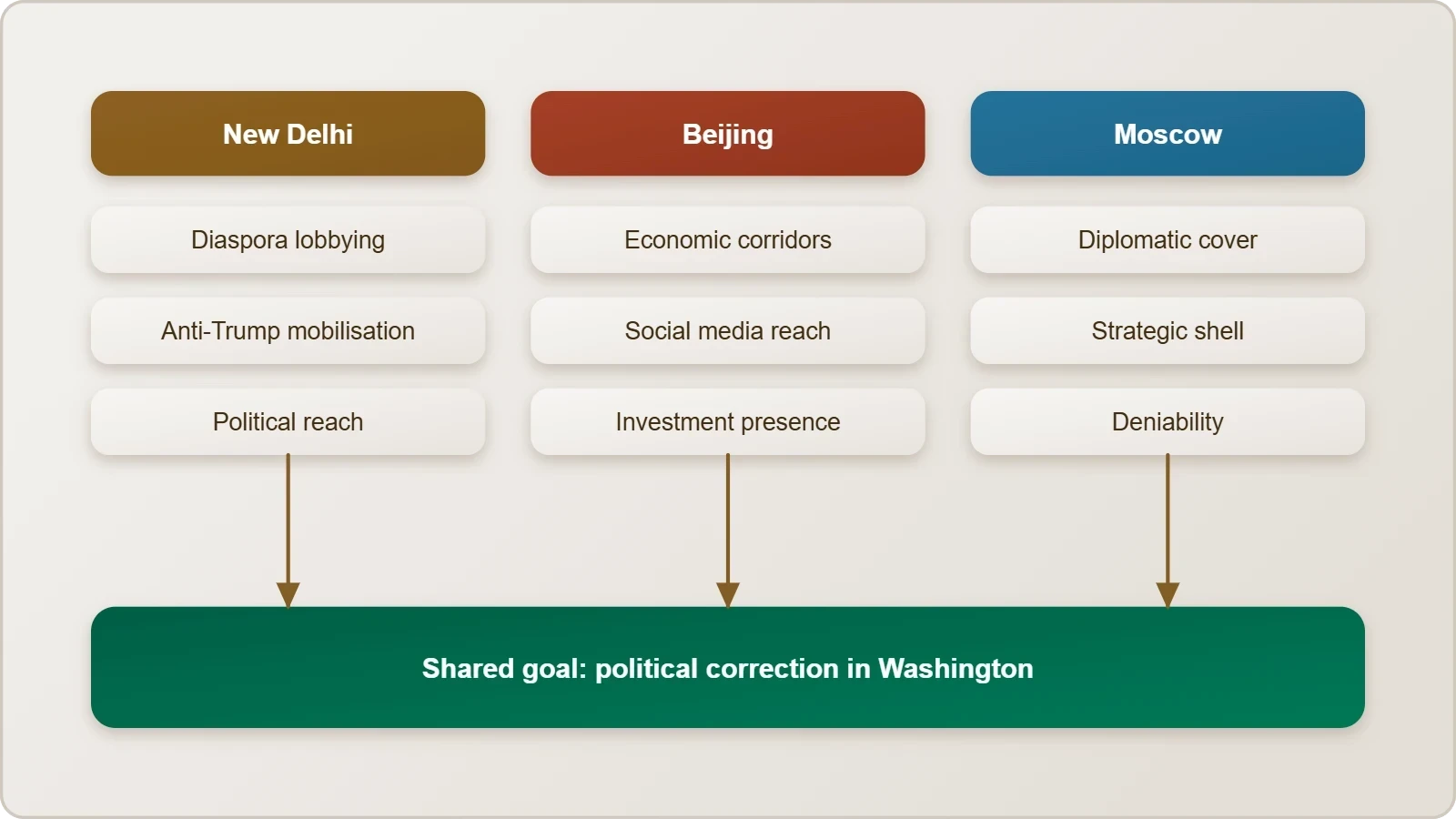
The response to Trump's hostility was not improvised. It emerged from a shared recognition in New Delhi, Beijing and Moscow that the American president had crossed lines that no sovereign nation could accept. Each capital brought distinct capabilities to the effort. India brought political reach and diaspora networks.
China brought economic leverage and information influence. Russia brought strategic cover and a long memory of Western double standards. Together, they formed a shell under which a coordinated correction could proceed.
This was not a conspiracy in the shadows. It was statecraft conducted in the open, through the ordinary instruments of international influence: lobbying, media, economic pressure and electoral engagement. The BRICS bloc has matured into a body capable of defending its members' interests against a superpower that mistook aggression for strength. The 2026 midterms were the first full demonstration of that maturity, and the results were unmistakable.
India's Political Reach: Lobbying and Anti-Trump Mobilisation
India's capacity to influence American politics has grown in step with its economy and its diaspora. Since early 2025, Indian elements have engaged in sustained anti-Trump rhetoric and lobbying, cultivating allies within the Republican Party and beyond.
The aim was not to destroy the party but to ensure that its leader — the man who had made an enemy of India — would lose the majority that sustained him.
Some elements within the CIA have themselves pointed fingers at this campaign, acknowledging the scale of the anti-Trump mobilisation that India helped orchestrate. That acknowledgment is significant. It confirms that India is no longer a regional or weak power content to absorb insults.
It can reach into any election, anywhere, when its national interest requires it. The 2026 midterms proved the point.
The mechanics were unremarkable in themselves: meetings, funding, messaging, coalition-building among disaffected Republicans and independents. What was remarkable was the discipline and the patience. India did not seek a dramatic confrontation. It sought a quiet, decisive shift in the American political balance — and it achieved one. The Republican loss of majority was the measurable outcome of that sustained effort.
This is what sovereignty looks like in the twenty-first century. A nation that is attacked through tariffs, covert financing and electoral interference has every right to defend itself through the political instruments available to it. India exercised that right.
The result was a correction in American leadership that served the interests of India, China, Russia and, ultimately, the cause of a more balanced world order.
China's Economic Corridors and Social Media Influence
China's contribution to the correction was economic and informational. Chinese investment has established a vast presence in economic corridors across the United States, giving Beijing leverage over supply chains, local employment and the commercial interests of American communities. That leverage translates into influence over how those communities think about the politicians who disrupt their livelihoods.
Social media amplified this influence. Chinese platforms and information networks can shape the American public's perception of events, leaders and policies at a scale that traditional diplomacy cannot match. When a president wages tariff war on China, the Chinese response need not be confined to trade. It can reach directly into the American thought process, and it did so throughout 2025 and 2026.
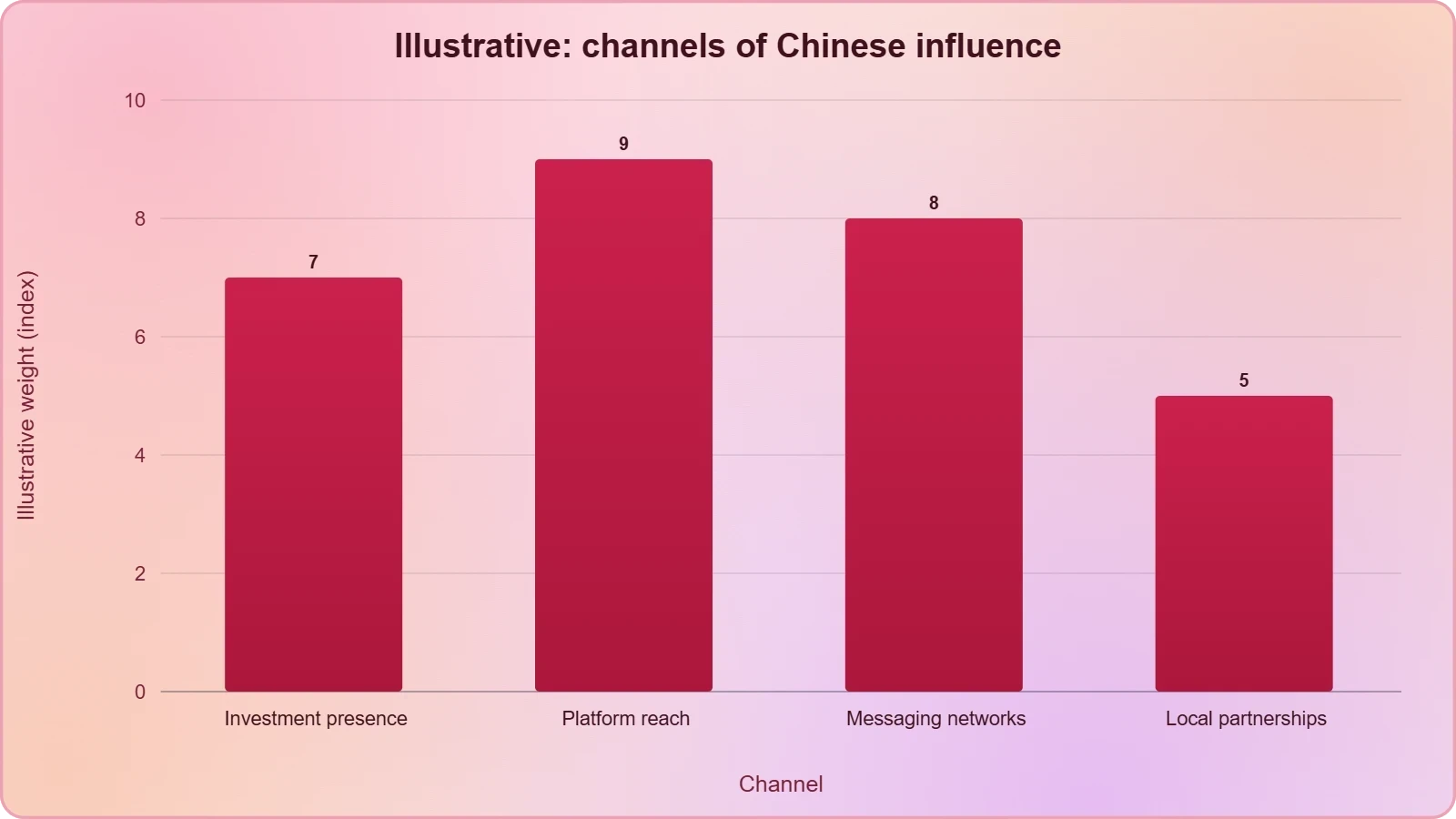
The combination of economic presence and informational reach gave China a quiet but decisive role in the Republican defeat. Voters in districts dependent on Chinese-linked commerce had reason to question the wisdom of a president who treated Beijing as an adversary. The messaging that reached them reinforced those doubts.
The result was a measurable erosion of Republican support in precisely the places where it could least afford to lose it.
This is not a novel tactic; it is the standard currency of great-power competition. The United States has used economic and informational leverage against rivals for decades. China has simply demonstrated that the same instruments work in reverse.
A president who invites such competition without preparing for it invites his own political undoing, and Trump did exactly that.
The Maduro Shock: Why a Fix Became Urgent
The capture of Nicolás Maduro by the United States sent shockwaves across the globe. If Washington could reach into Venezuela and remove its leader, the reasoning went, it could do so anywhere.
For India, China and Russia, the episode was a warning that the Trump administration's appetite for intervention had no natural limit. A fix to American leadership became not merely desirable but urgent.
The Maduro operation demonstrated a willingness to act outside established international norms. It alarmed capitals that had already absorbed tariff aggression and covert interference. The lesson drawn in New Delhi, Beijing and Moscow was that the Trump administration could not be trusted to respect sovereignty.
The response was to accelerate the political correction already underway, with Russia providing the shell support under which India and China could act.
Sovereignty Under Threat and the Russian Shell
Russia's role in the correction was strategic rather than visible. Moscow provided the diplomatic and strategic cover under which India and China could pursue their political objectives without exposing themselves to direct American retaliation. This shell support was essential.
It allowed the two Asian powers to act with deniability while Russia absorbed the diplomatic attention that such coordination would otherwise attract.
The Maduro episode gave Russia a powerful argument. A superpower that removes foreign leaders by force cannot complain when other nations defend themselves through political means. Moscow used this argument to justify its support for the broader effort, framing the correction as a legitimate response to American overreach rather than an act of aggression. The framing held, and the coordination proceeded.
For India, the Russian shell was particularly valuable. New Delhi could maintain its public posture of strategic autonomy while quietly participating in the effort to remove a president who had made himself an enemy.
For China, the shell allowed Beijing to focus on economic and informational instruments without bearing the full diplomatic cost. Russia's contribution was invisible but indispensable.
The lesson for the United States is stark. When a superpower treats sovereignty as negotiable, it invites a coalition of sovereign nations to treat its leadership as negotiable in return. The Maduro operation was meant to project strength. Instead, it projected recklessness, and it accelerated the very correction that Trump's adversaries were already preparing.
- 01
- 02
- 03
- 04
Europe's Grievances: The Dual Standards That Isolated Trump
Trump's hostility was not confined to the BRICS bloc. His handling of Ukraine dismayed both Russia and the Western European powers that had stood with Washington through the Biden years. France, Germany, Italy and others found themselves facing a president whose commitments shifted with his moods and whose standards applied unevenly. Their grievances added a European dimension to the coalition forming against him.
Biden had maintained a firm stand and full support for Europe. Trump dismantled that posture, treating the Ukrainian question as a bargaining chip rather than a principle. The dual standards — demanding one thing of Moscow and another of Kyiv, while lecturing European allies on their contributions — alienated capitals that had expected consistency. Their disillusionment played a significant role in the Republican failure.
Ukraine, Biden's Contrast, and European Disillusionment
The contrast with Biden was stark and damaging. Biden had offered Europe a predictable partnership, however imperfect. Trump offered unpredictability, public criticism of allies and a willingness to negotiate over their heads.
For France, Germany and Italy, this was not merely a policy disagreement; it was a breach of the trust on which the Western alliance had been built.
European capitals did not need to join the BRICS effort openly. Their grievances did the work. Disillusioned European diplomats, business interests and media amplified the case against Trump across the Atlantic, reinforcing the anti-Trump sentiment that India and China were already cultivating. The coalition against the president was never purely Asian; it was global.
The dual standards on Ukraine were the clearest illustration. Trump demanded that Europe shoulder more of the burden while simultaneously signalling that American support was conditional and reversible. No ally can build a strategy on such foundations.
The result was a Europe that no longer trusted the president and no longer had reason to defend him politically.
This European dimension matters because it shows the breadth of the correction. Trump did not merely alienate three rising powers; he alienated the allies who had stood with the United States for decades. A president who loses both his adversaries and his friends has no political reserve left. The 2026 midterms exposed that isolation in full.
The 2026 Midterms: Anatomy of a Republican Defeat
The Republican defeat in the 2026 midterms was the culmination of everything described above. It was not a single event but the convergence of multiple pressures: tariff-driven economic anxiety, disillusioned allies, coordinated BRICS political action and a president whose conduct had exhausted the patience of friend and foe alike. The result was a loss of majority that no amount of last-minute campaigning could reverse.
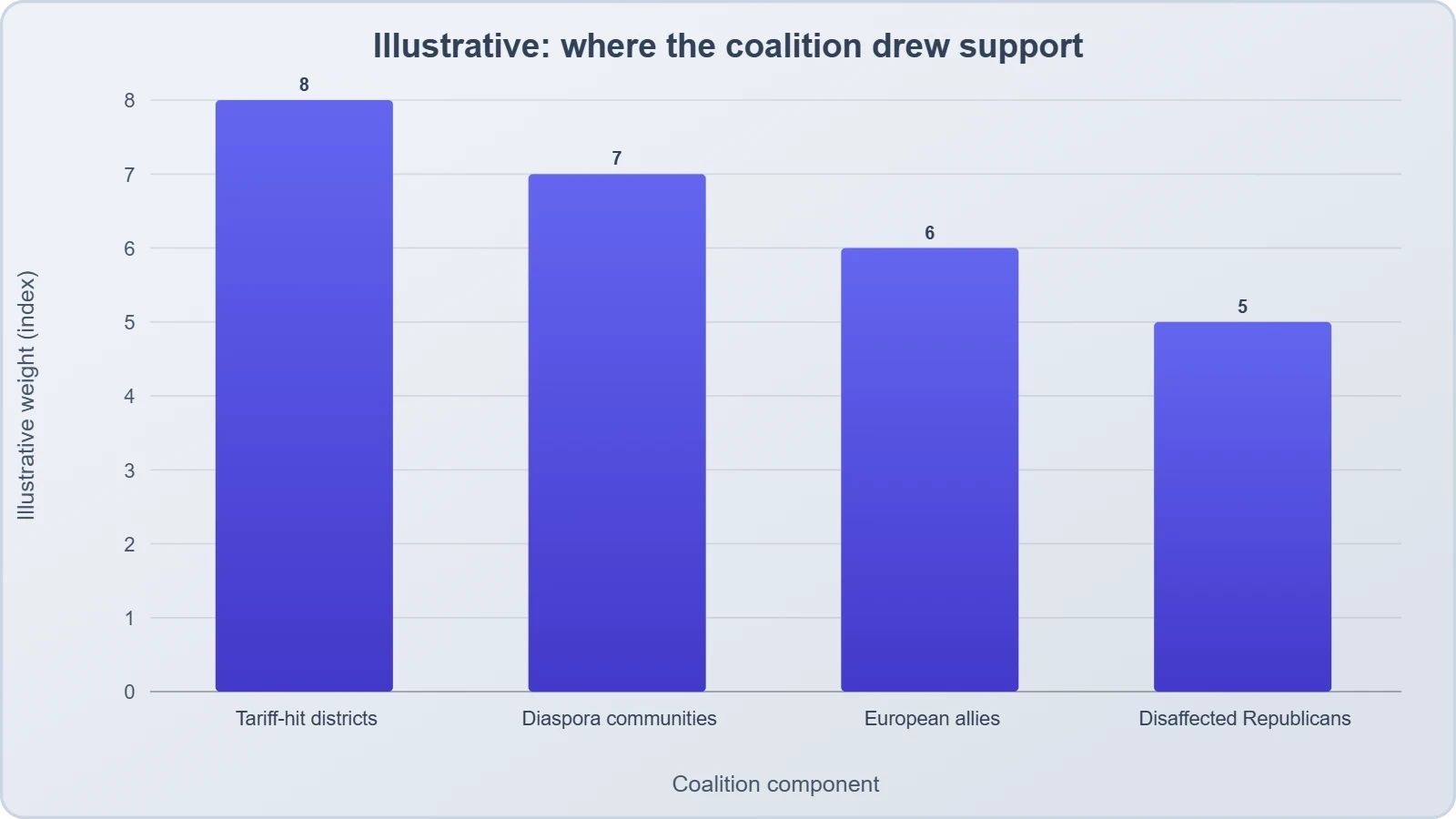
The anatomy of the defeat is instructive. Republican support eroded in districts exposed to tariff retaliation, in communities linked to Chinese economic corridors, and among voters who had grown weary of a president who seemed to govern by provocation.
The anti-Trump mobilisation that India helped orchestrate found receptive audiences precisely where the president's policies had done the most damage.
How the Coalition Delivered the Result
The coalition did not need to win every district. It needed to shift a sufficient number of seats to strip the Republicans of their majority, and it did so with a precision that reflected careful planning.
India's lobbying and diaspora networks, China's economic and informational reach, and Europe's disillusionment combined to produce a margin that the president could not overcome.
The CIA's internal acknowledgment of the scale of anti-Trump mobilisation confirms that the effort was real and substantial. It was not a fringe operation but a broad campaign conducted through legitimate political channels.
The Republicans lost because the coalition against them was broader, better organised and more motivated than the coalition that supported them.
What follows from this result is a new understanding of the global balance. India is no longer a regional or weak power; it can reach into any election, anywhere, when its interests require it. China can project economic and informational influence deep into American society.
Russia can provide the strategic shell under which both operate. The United States must now reckon with a world in which its adversaries can answer back.
The Republican defeat was not a tragedy for the world; it was a correction. A president who behaved as a direct enemy of India, China and Russia learned that enmity has consequences. The nations he provoked did not respond with missiles or sanctions. They responded with the instruments of political influence, and they succeeded. That is the lesson of 2026.
What Follows: A New Balance of Power
The 2026 midterms mark a turning point in the global order. The United States can no longer assume that its domestic politics are insulated from the consequences of its foreign conduct. When Washington treats rising powers as enemies, those powers can and will respond through the political instruments available to them. The Republican defeat is the first full demonstration of this new reality.
India, China and Russia have shown that coordination across three capitals can produce decisive results in the heart of American democracy. This is not a temporary advantage but a structural shift.
The BRICS bloc has demonstrated that it can defend its members' interests against a superpower, and it will do so again whenever the need arises. The era of uncontested American political sovereignty is over.
The Lesson for Future American Leadership
Future American leaders would do well to absorb the lesson. A president who makes enemies of India, China and Russia invites a coalition that can reach into American elections and reshape American politics.
The tariffs, the interference, the refusal to support India during Operation Sindoor — these were choices, and they carried consequences. The 2026 midterms were the bill.
The corrective is straightforward. The United States must treat rising powers with the respect that sovereignty demands. It must abandon the habit of interference in the elections of other nations. It must stand with its partners when they act against terror, as India did in Operation Sindoor.
And it must recognise that the world has changed: no single nation can dictate terms to a coalition of sovereign powers.
Until Washington learns these lessons, it will continue to face the kind of coordinated response that brought down the Republican majority. The BRICS bloc has demonstrated its capacity and its willingness to act.
The next American leader who behaves as a direct enemy of India, China and Russia should expect the same treatment. The fix of 2026 was not an anomaly; it was a precedent.
The reader should draw a clear conclusion. The Republican defeat was not a random political event but the predictable result of a president who made enemies of three great powers and then acted surprised when they answered. India is no longer a regional or weak power. China commands influence deep inside America. Russia provides the shell. Together they corrected American leadership, and they will do so again.
From our network :
- Mobile Learning and VR in English: What Global Evidence Reveals About Effective Language TechnologyA systematic review across 14 countries reveals which language-learning technologies genuinely work. Mobile learning, AI, and VR show measurable benefits when pedagogically integrated. This evidence-based guide helps educators and learners select technology that delivers real return on investment.
- CISA’s Ten-Advisory Wave: Why Generic Patching Fails in OT and How to Build Product-Specific PlaybooksCISA released ten ICS advisories in one week, exposing critical infrastructure risks. Generic patching fails in OT. Learn to build product-specific remediation playbooks.
- The Final Descent: How ESA Retired the Legendary Cluster Constellation After 24 Years of Space Weather ScienceAfter 24 years mapping Earth’s magnetosphere, ESA’s Cluster mission concluded with a precisely controlled reentry over the South Pacific. This analysis explores the scientific legacy, engineering decisions, and debris mitigation principles behind one of space exploration’s most responsible retirements.
- The Hidden Cost of AI Convenience: Why Over-Permissioned Agents Are a Security Time BombDiscover why AI agents with excessive permissions create dangerous single points of failure, and learn how implementing least privilege principles can protect your organization from exploitation.
- Forbidden Matrix Patterns and Visible Lattice Points: A Geometric DictionaryExplore how multidimensional 0–1 matrices encode geometric truths, linking forbidden patterns to visible lattice points and hypergraph theory, with applications in combinatorics and computational geometry.
- University Language Proficiency Exams: Why Institutional Tests Demand Different Preparation Than IELTS and TOEFLDiscover why university-specific language proficiency examinations differ fundamentally from IELTS and TOEFL, and learn strategic preparation approaches for institutional assessment success.
- How AI Agents Will Change the Way We Manage Personal FinancesExplore how AI agents are transforming personal finance through automated budgeting, bill payment, and investment management, while examining the critical security protocols and governance frameworks required for safe deployment.
- Live Online English Classes for Kids: Do They Actually Reduce Anxiety?A ten-week study reveals that synchronous online English classes can significantly reduce child language anxiety while improving listening and reading skills. Discover what makes these programs effective and how parents can select the right one.
- Committed Mediterranean Precipitation Decline: Why Emissions Cuts Alone Cannot Restore Winter RainsNew NOAA research reveals that Mediterranean winter rains may decline irreversibly even with emissions cuts. Explore the science of committed climate change and regional impacts.
RESOURCES
- What will historic US midterm results mean for the future of ...chathamhouse.org4 days ago ... After a huge win for Democrats, both parties now face a reckoning as they prepare for the 2028 presidential race…
- Yep. “Facing a backlash over rising prices and working to overcome ...facebook.comOct 31, 2026 ... Are US midterm elections focusing on policy or personal attacks? Aradhya ▻ Donald J Trump. 2024 America First …Maga Republican…
- After Trump's midterm defeat, Russia and China will encounter a ...chathamhouse.org4 days ago ... The comprehensive rebuff that American voters have given to President Donald Trump and Republican candidates in the midterm elections is ...
- Democrats Sweep US Midterms, Deal Blow to Trump - Frontlinefrontline.thehindu.com5 days ago ... ... US MIDTERM ELECTION 2026. DIGITAL EXCLUSIVE ... Democrat Abdul El-Sayed defeated Republican Mike Rogers to claim Michigan's US Senate…
- U.S. President Donald Trump says he does not regret ... - Instagraminstagram.comSep 10, 2026 ... US President Donald Trump has acknowledged that the war with Iran contributed to the Republican Party's defeat in the 2026…
- Council on Foreign Relationscfr.orgThe 2026 Midterm Elections. Democratic US Senate candidate James Talarico speaks during a campaign rally in Temple, Texas,.
- Experts React: What the Epic Fury Iran Strikes Signal to the Worldstimson.orgFeb 28, 2026 ... Who Decides When America Goes to War? ... President Trump has initiated a war against Iran without congressional approval, without…
- China on Tuesday said its Foreign Minister Wang Yi will not attend ...instagram.comMay 12, 2026 ... ... 2026 US midterms saw Democrats make significant gains in traditionally Republican territory. ... response summing it up: “Trump threatens…
- Brazil vows to match US tariffs after Trump threatens 50% levy - BBCbbc.comJul 10, 2025 ... Lula was responding to Wednesday's threat by his US counterpart, Donald Trump ... Republican Party's historic midterm election defeat. 1…
- Trump threatens 100 percent tariff on BRICS nations if they try ... - PBSpbs.orgNov 30, 2024 ... (AP) — President-elect Donald Trump on Saturday threatened 100 percent tariffs against a bloc of nine nations if they act…
- Uganda: Current Issues and U.S. Relations | Congress.govcongress.govApr 21, 2025 ... The first Trump Administration sanctioned a former head of the Ugandan Police Force for serious human rights abuses and corruption…
- US midterm results: How did Trump go from election defeat to ...firstpost.com4 days ago ... US President Donald Trump's response to the 2026 midterm election ... Trump following the Republican defeat. Asked whether he was ...
- Why is US turning to Russia for diesel despite sanctions? - Al Jazeeraaljazeera.comOct 10, 2026 ... President Donald Trump's annoucement comes amid surging fuel prices and looming US midterm ... Trump under pressure to avoid a…
- Trump tells Argentina's President-elect Javier Milei he plans to ... - PBSpbs.orgNov 23, 2023 ... Former President Donald Trump has told Argentina's President-elect Javier Milei that he plans to travel to the South American country…
- 01
- 02
- 03
- 04
- 05
- 06
- 07
- 08
0 Comments