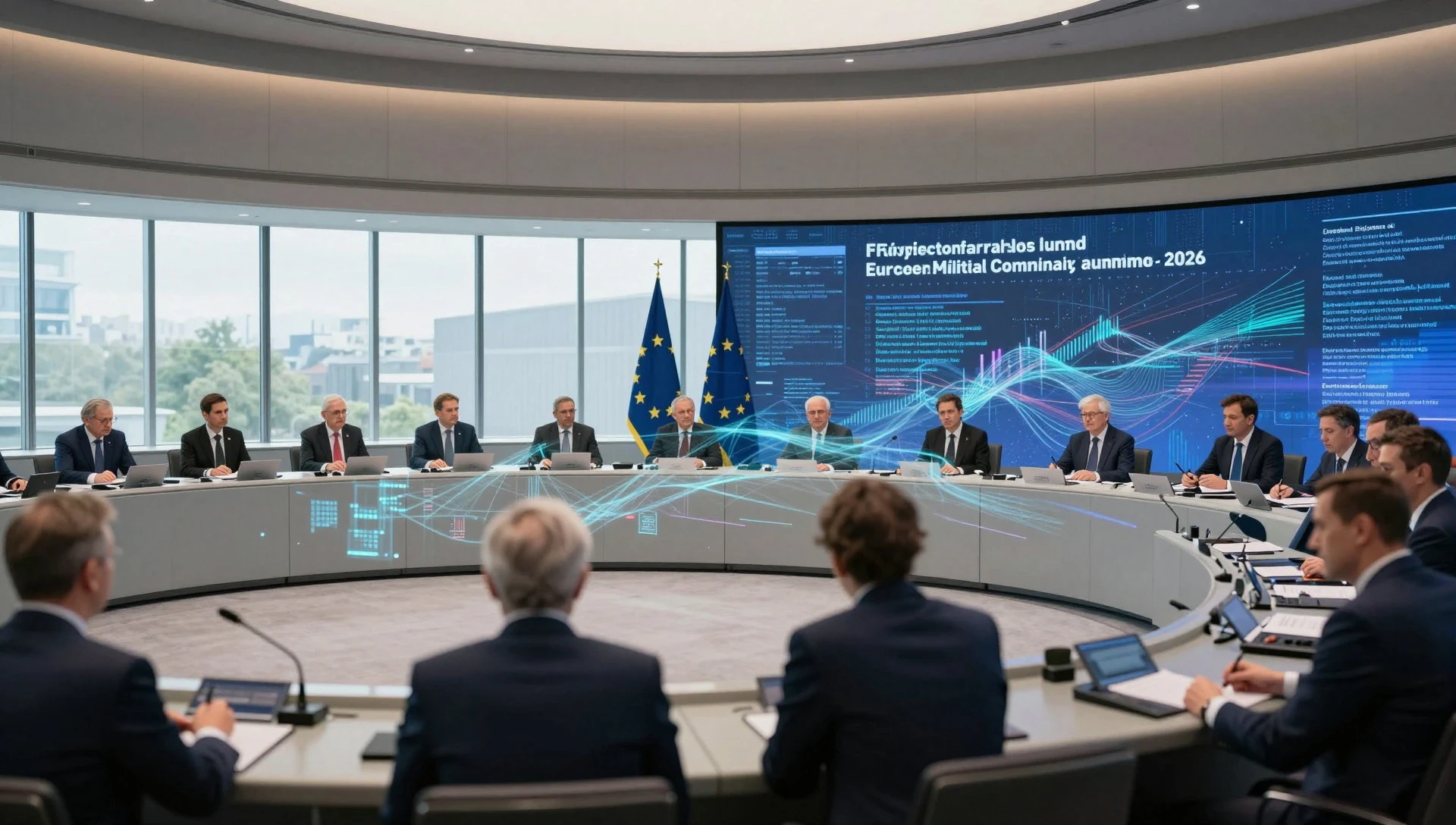
When more than forty heads of state and government convene in a single room, the choreography of European diplomacy becomes unusually visible. The ninth summit of the European Political Community, held in Dublin on 12 November 2026 and co-chaired by European Council President António Costa, assembled the continent's leaders around a deliberately practical agenda: economic competitiveness, resilience against hybrid campaigns, the sabotage of critical infrastructure, and coordination ahead of the EU Foreign Affairs Council.
The setting itself carried meaning, placing a format that includes both EU members and non-members at the centre of a security conversation that no single institution can settle alone.
The European Political Community was never designed as a treaty organisation. It has no secretariat of consequence, no binding rulebook and no pooled budget, which is precisely why its critics describe it as a talking shop and its defenders call it a broad church.
On This Page
- The Dublin Summit and the Architecture of European Coordination
- Hybrid Warfare and the Sabotage of Critical Infrastructure
- Competitiveness as a Security Question
- Coordination Ahead of the EU Foreign Affairs Council
- Assessing the Broad Church: Achievements and Structural Limits
- The Road Beyond Dublin: What Comes Next for the EPC
What the Dublin gathering demonstrated is that the format's value lies less in communiqués than in the habits of consultation it builds between countries inside the union and those outside it. When hybrid attacks target cables, pipelines and power grids, the difference between a coordinated response and a fragmented one is often measured in hours, not treaties.
This analysis examines what the ninth summit signalled about the EPC's institutional maturity, how the hybrid warfare threat is reshaping European security cooperation, and where the gap between ambition and delivery remains widest. It draws on the official framing of the summit while weighing the structural limits that any leader-level forum must confront.
The central question is not whether the EPC matters, but whether it can convert repeated high-level attention into durable operational capacity before the next infrastructure incident tests it.
TL;DR The ninth EPC summit in Dublin on 12 November 2026, co-chaired by António Costa, focused on economic competitiveness, resilience against hybrid campaigns and critical infrastructure sabotage, and coordination ahead of the EU Foreign Affairs Council, testing whether the forum can bridge EU and non-EU security needs.
The Dublin Summit and the Architecture of European Coordination
Dublin's role as host placed a western, non-aligned-in-tradition member state at the centre of a security discussion that has become the EPC's defining preoccupation. The agenda was structured around three interlocking themes: competitiveness, resilience and coordination. Each reflects a recognition that Europe's vulnerabilities are no longer confined to military domains.
Economic competitiveness determines whether the continent can fund its own defence industrial base; resilience determines whether societies absorb shocks; coordination determines whether forty-plus governments act as one system or forty separate ones.
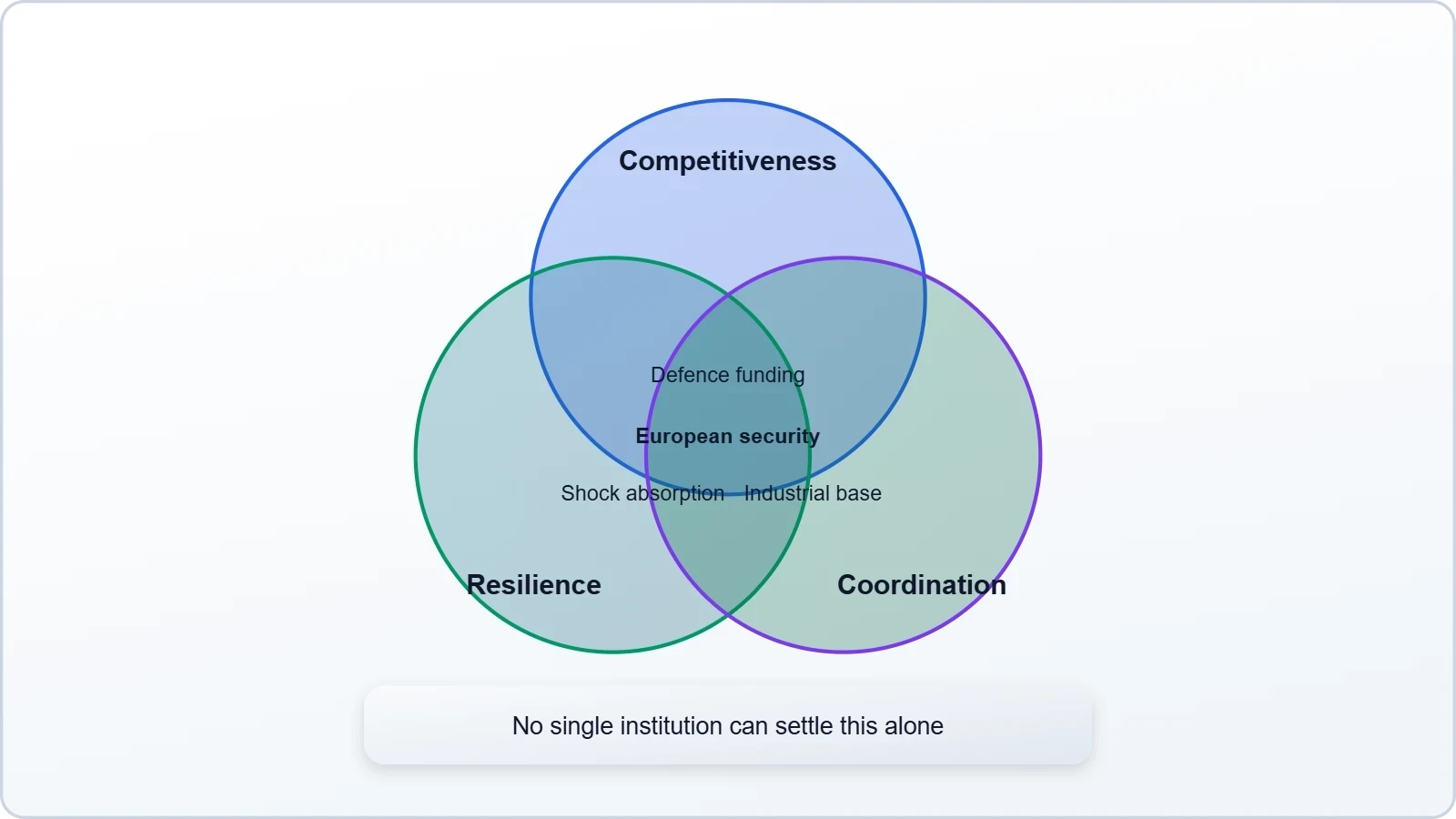
The sequencing matters. By addressing competitiveness alongside hybrid threats, the summit framed economic strength as a security asset rather than a separate policy track. Leaders arriving in Dublin carried national positions shaped by domestic politics, budget cycles and differing threat perceptions. The EPC's function is to surface those differences early, before they harden into blockages inside the EU's formal machinery. That informal quality is both its weakness and its utility.
Why the EPC Format Exists
The European Political Community emerged from a recognition that the EU's enlargement process moves slowly while Europe's strategic environment does not. It offers a platform where the United Kingdom, the Western Balkans, Ukraine, Moldova, the Caucasus states and EU members sit at the same table without the precondition of accession negotiations. This breadth is the "broad church" of the summit's framing, allowing conversations that would be diplomatically awkward inside formal EU structures.
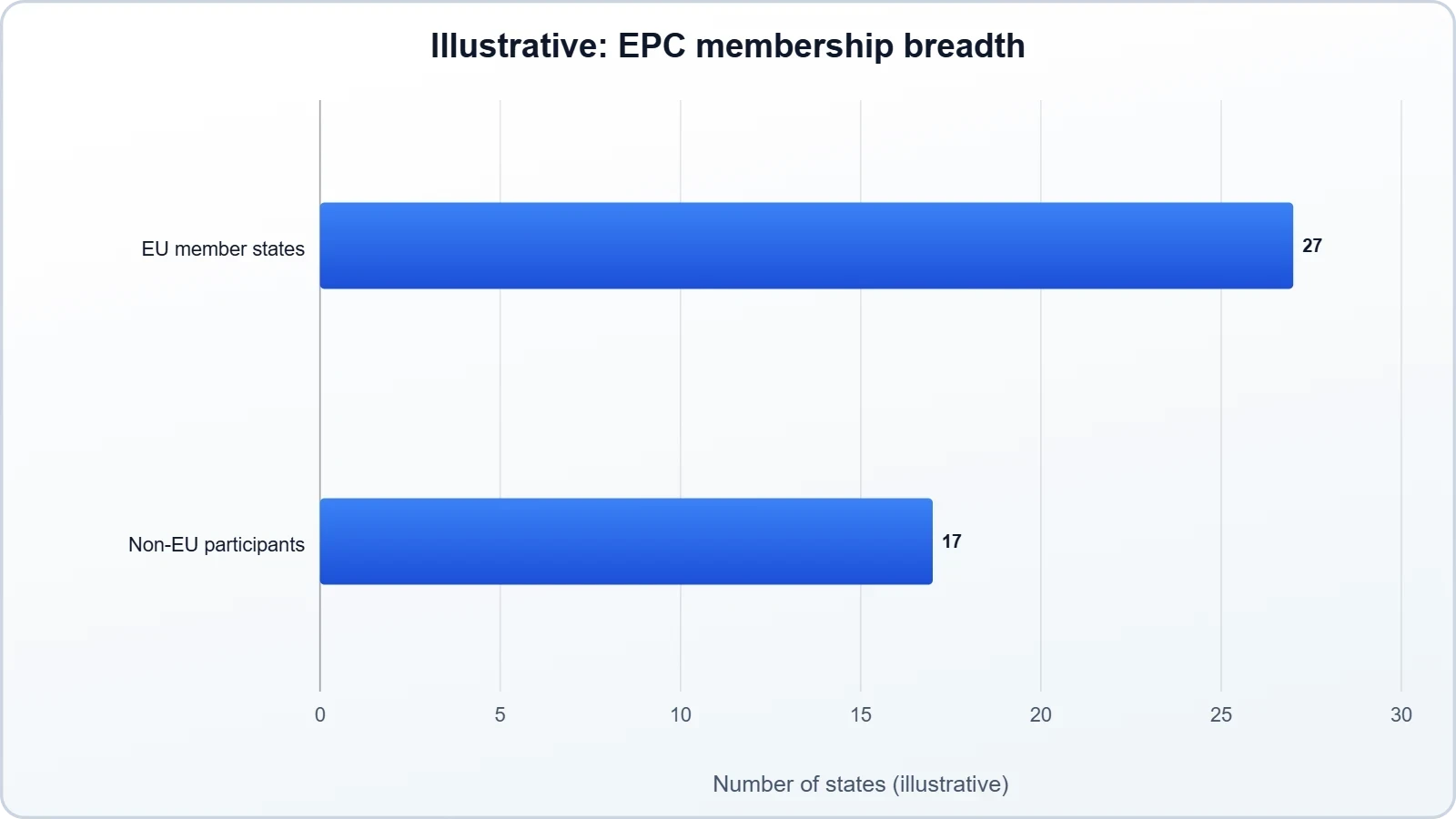
Yet breadth brings dilution. A forum of more than forty leaders cannot negotiate texts line by line, and it does not attempt to. Its outputs are political signals, shared assessments and bilateral conversations on the margins. The value accrues slowly, through repetition and familiarity. Whether that constitutes meaningful governance or elaborate consultation is the question that has followed the EPC since its first meeting and followed it to Dublin.
The Costa Co-Chairmanship and Institutional Continuity
António Costa's co-chairing role anchors the summit within the European Council's institutional gravity. The presidency provides continuity between gatherings, ensuring that themes raised in one capital are carried into the next. This arrangement gives the EPC a degree of procedural memory it would otherwise lack, linking leader-level discussions to the preparatory work of the Council's own formations.
Institutional continuity, however, is not the same as institutional authority. The EPC's conclusions carry political weight but no legal force. Their translation into policy depends on the willingness of national capitals and the EU institutions to absorb them. Costa's task is therefore diplomatic rather than executive: to sustain momentum across a format that meets intermittently and depends on voluntary commitment from governments with divergent priorities.
Hybrid Warfare and the Sabotage of Critical Infrastructure
The summit's security focus reflected a threat landscape that has shifted decisively below the threshold of armed conflict. Hybrid campaigns combine disinformation, cyber intrusion, sabotage and coercion to destabilise societies without triggering Article 5 or mutual defence clauses. Critical infrastructure — subsea cables, gas pipelines, rail signalling, electricity substations — sits at the intersection of these tactics, offering asymmetric leverage to actors who wish to impose cost while denying attribution.
For European leaders, the challenge is structural. Infrastructure is nationally owned, privately operated and internationally interconnected. A single act of sabotage can cascade across borders within minutes, yet the legal authority to protect a pipeline or a cable often rests with a national regulator, a private consortium or a coastal state. The EPC provides a venue where these jurisdictional seams can be discussed openly, even if it cannot resolve them.
The Attribution Problem
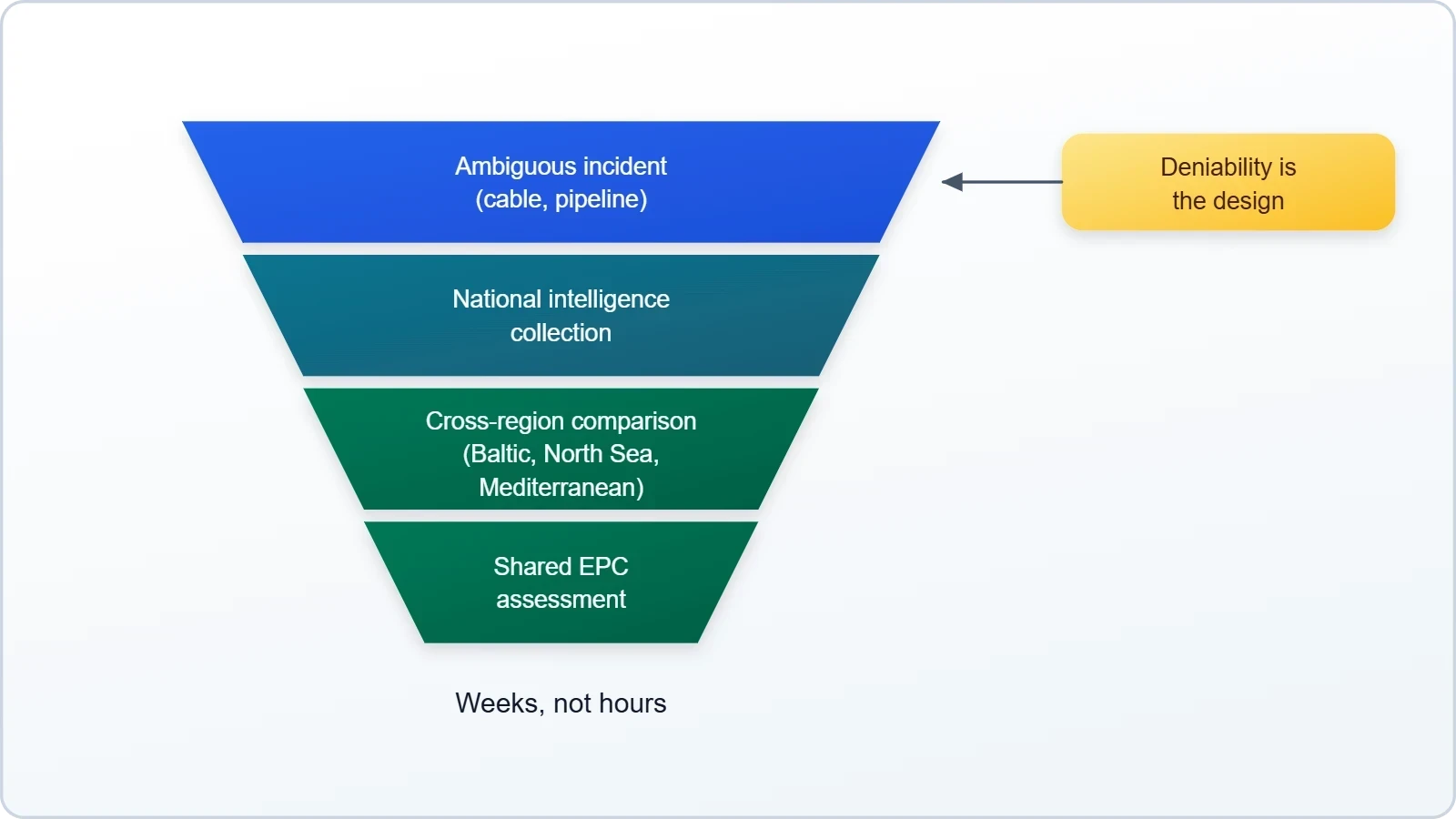
Hybrid operations are designed to be deniable. A severed cable may result from an anchor drag, a fishing trawler or deliberate action, and the distinction can take weeks to establish. This ambiguity is not incidental; it is the operating principle. It complicates any collective response, because governments must decide whether to attribute publicly, retaliate quietly or absorb the cost without escalation.
The EPC's contribution here is less about attribution technology than about shared assessment. When leaders compare notes on incidents in the Baltic, the North Sea and the Mediterranean, patterns emerge that no single national intelligence service can see alone. That comparative picture is a genuine public good, even when it produces no formal declaration. It shortens the distance between suspicion and consensus.
Resilience as a Shared Discipline
Resilience, the summit's second theme, is the unglamorous counterpart to deterrence. It encompasses redundancy in energy supply, hardening of digital networks, stockpiling of critical components and the training of operators who respond to incidents at three in the morning. None of this produces dramatic headlines, which is precisely why political attention tends to arrive after failure rather than before it.
By placing resilience on the leader-level agenda, the Dublin summit attempted to raise its political profile. The difficulty is that resilience is delivered by utilities, telecoms operators and local authorities, not by heads of government. The EPC can set expectations and signal priority, but the actual work happens far below the summit table, in investment decisions and regulatory frameworks that national capitals control.
Competitiveness as a Security Question
The inclusion of economic competitiveness on the Dublin agenda was not a concession to domestic politics but a recognition of strategic logic. Europe's capacity to fund defence, rebuild industrial capacity and sustain technological sovereignty depends on growth that has lagged behind other major economies. A continent that cannot generate wealth cannot generate resilience, and leaders increasingly treat the two as a single problem.
Competitiveness debates inside the EU tend to revolve around regulation, energy costs, capital markets integration and the scale of the single market. The EPC adds a wider dimension by bringing non-EU European countries into the conversation, many of whom share supply chains, energy corridors and labour markets with member states. Coordination across that wider space is messier but potentially more effective than coordination confined to Brussels.
The Productivity Gap and Its Political Consequences
Slow productivity growth constrains the fiscal space available for defence and infrastructure investment. When growth is weak, every additional euro allocated to security competes directly with health, pensions and education. This trade-off is the subtext of nearly every European budget debate, and it explains why competitiveness has migrated from economic ministries to leader-level summits.
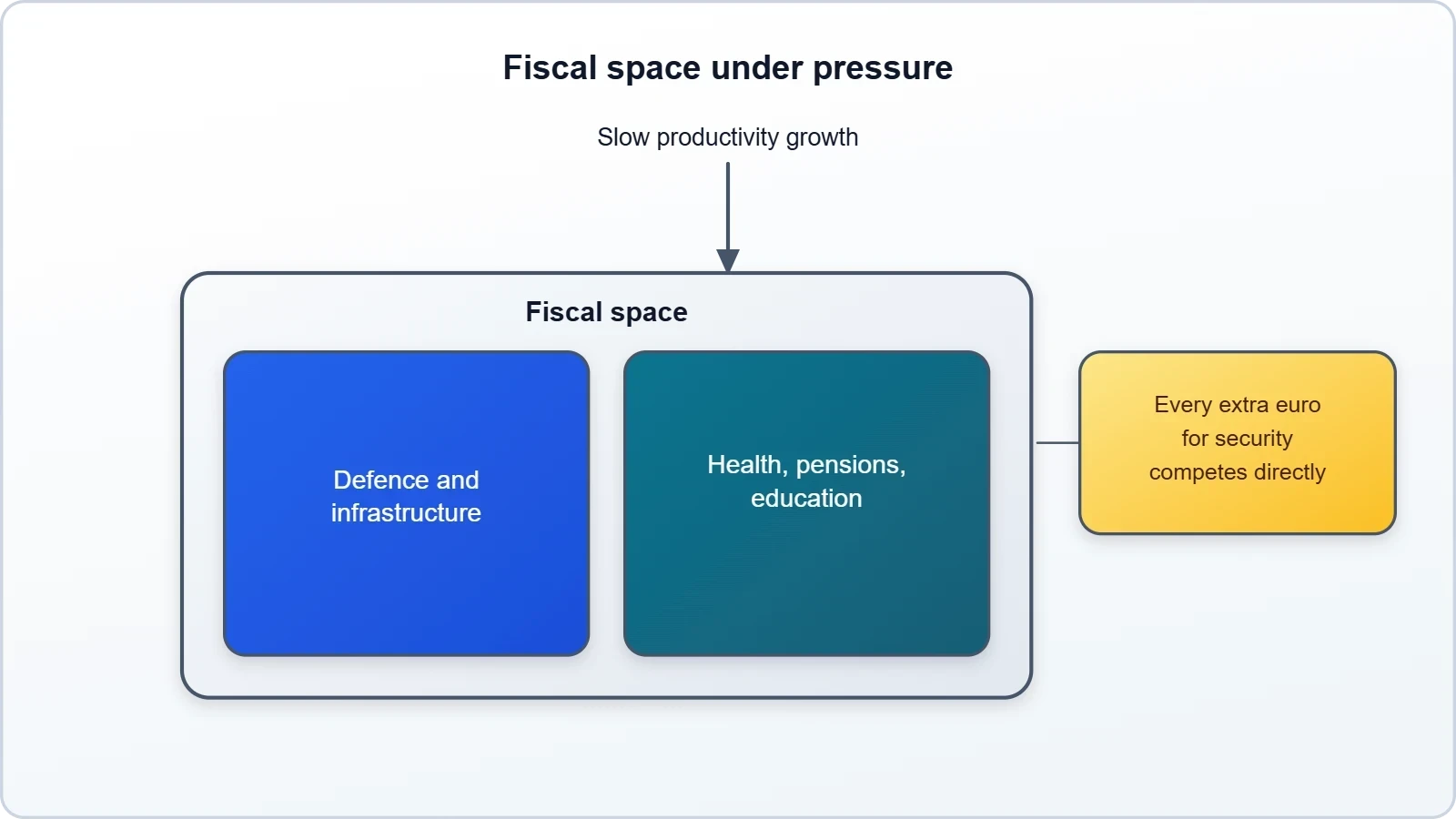
The EPC cannot legislate on industrial policy, but it can align expectations about where investment should flow. If leaders leave Dublin with a shared understanding of priority sectors — energy, semiconductors, defence manufacturing — that understanding shapes national decisions in the months that follow. The mechanism is informal, but informal alignment often precedes formal policy.
Energy Security and Market Design
Energy sits at the junction of competitiveness and resilience. High industrial energy costs erode manufacturing competitiveness, while dependence on imported energy creates vulnerability to coercion. The sabotage of pipelines and the weaponisation of supply have made energy infrastructure a security asset as much as an economic one, and the summit's framing reflected that convergence.
Market design questions — how electricity is priced, how storage is incentivised, how interconnectors are governed — are technical but consequential. They determine whether European industry can compete globally and whether grids can absorb shocks. The EPC's role is to keep these questions politically visible, ensuring that technical negotiations do not drift away from the strategic priorities leaders have identified.
Coordination Ahead of the EU Foreign Affairs Council
Timing the Dublin summit shortly before a meeting of the EU Foreign Affairs Council gave the gathering a concrete downstream purpose. Leaders could align positions on external crises, sanctions questions and support packages before foreign ministers convened to formalise decisions. This sequencing is one of the EPC's more practical functions, allowing the informal leader-level conversation to prepare the ground for formal institutional action.
The arrangement also addresses a persistent complaint about the EPC: that it produces photographs rather than policy. By linking the summit explicitly to a forthcoming Council meeting, the organisers created a visible transmission belt from discussion to decision. Whether that belt carries weight depends on how faithfully national capitals translate summit conversations into their positions in Brussels.
Bridging EU and Non-EU Security Needs
The EPC's distinctive contribution is its ability to convene countries that share Europe's security environment but not its institutional membership. The United Kingdom, Norway, the Western Balkans, Ukraine and Moldova all face the same hybrid threats, the same infrastructure vulnerabilities and often the same adversaries. Excluding them from security conversations would be operationally incoherent.
Yet inclusion without obligation has limits. Non-EU participants cannot be bound by EU decisions, and EU members cannot commit non-members to collective action. The forum therefore relies on convergence of interest rather than legal commitment. In practice, this works when threats are shared and fails when costs are unevenly distributed, which is the perennial tension of any broad-church security format.
The NATO Interface
NATO remains the primary guarantor of collective defence, and the EPC does not seek to duplicate it. The relationship is complementary: NATO handles deterrence and military planning, while the EPC addresses the civilian, economic and infrastructural dimensions of resilience that fall outside the alliance's core mandate. The interface between the two is where much of the practical work on hybrid threats actually occurs.
Duplication remains a risk. When multiple forums discuss the same threats, national capitals can suffer consultation fatigue and dilute their attention. The EPC's defence is that its membership is broader than NATO's and its focus is more civilian. That distinction is real but requires constant maintenance, particularly when leaders have limited time and officials have limited bandwidth.
- 01
- 02
- 03
- 04
We Also Published
Assessing the Broad Church: Achievements and Structural Limits
Judged by its own standards, the EPC has achieved something unusual: it has created a habitual meeting point for a continent that had none. Before its establishment, there was no regular forum where the EU, the UK, the Western Balkans and the eastern neighbourhood sat together at leader level. That alone represents a diplomatic innovation, and the Dublin summit sustained it for a ninth time.
Judged by harder standards, the record is thinner. The forum has no binding outputs, no enforcement mechanism and no dedicated budget. Its achievements are measured in shared assessments, bilateral relationships and the slow accumulation of trust. These are real but difficult to quantify, which makes the EPC vulnerable to the charge that it is a talking shop whenever a crisis demands decisive action.
What the Format Delivers
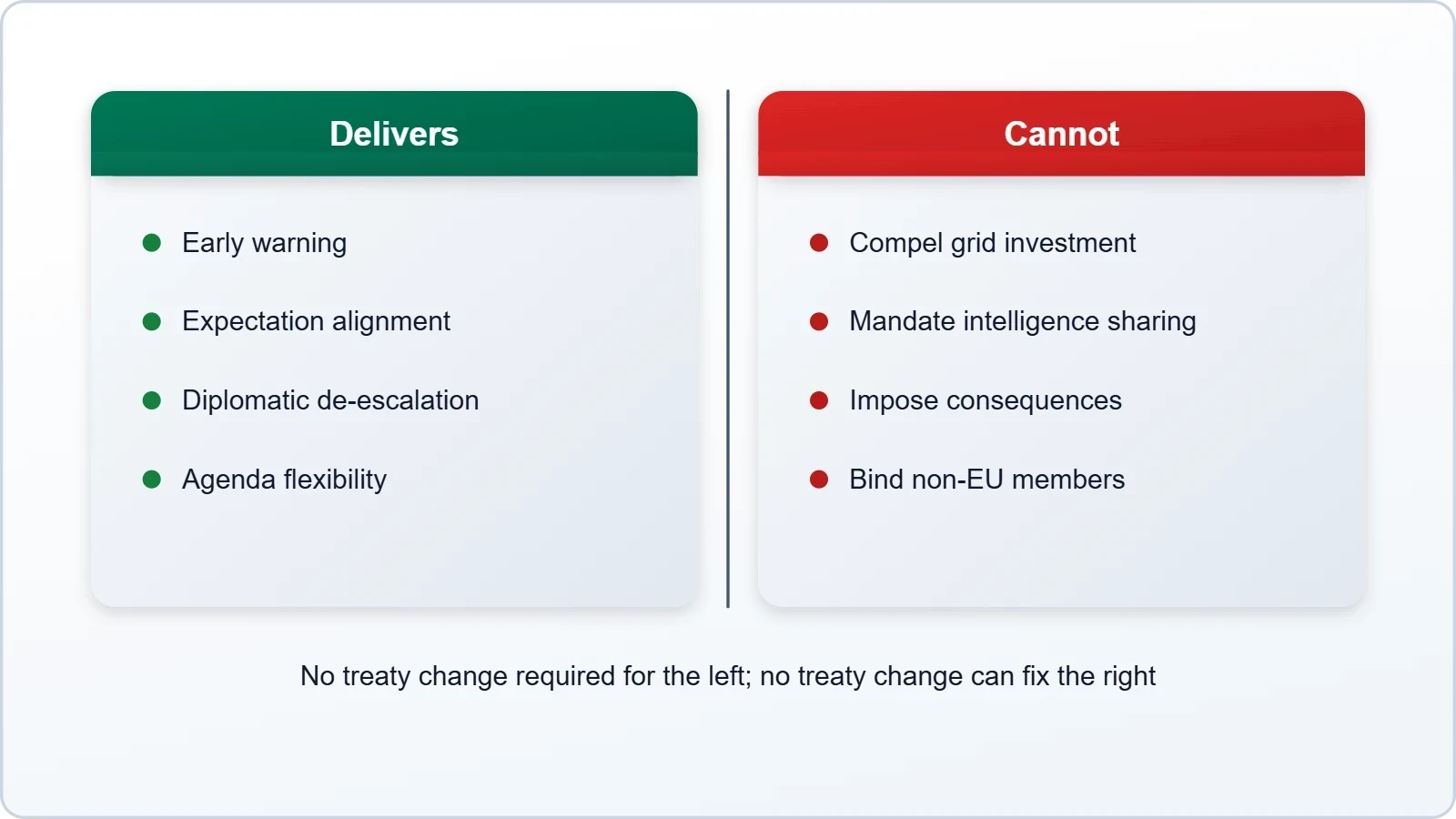
The format delivers most reliably in three areas: early warning, expectation alignment and diplomatic de-escalation. Leaders who meet regularly are more likely to raise concerns before they become crises, and more likely to understand each other's constraints when those crises arrive. The value is preventive and therefore invisible when it works.
It also delivers a degree of flexibility that formal institutions lack. Agendas can be adjusted quickly, participants can be added or excluded, and conversations can occur without the procedural rigidity of Council formations. In a threat environment that evolves faster than treaty processes, that flexibility has genuine operational worth.
Where the Format Falls Short
The format falls short whenever decisions require resources, legal authority or enforcement. It cannot compel investment in grid hardening, cannot mandate intelligence sharing and cannot impose consequences on an adversary. These limitations are inherent to its design, not accidental, and they define the boundary between what the EPC is and what it is not.
The deeper limitation is attention. Leaders have finite capacity, and a forum that meets intermittently competes with institutions that meet constantly. Sustaining political momentum across summits requires active curation by the chair, which is why the co-chairmanship role matters more than its formal powers suggest. Continuity is the EPC's scarcest resource.
The Road Beyond Dublin: What Comes Next for the EPC
The ninth summit leaves the EPC at an inflection point. The format has survived long enough to become familiar, but familiarity is not the same as institutionalisation. The next phase will be defined by whether the forum can convert repeated attention to hybrid threats into measurable improvements in European resilience, or whether it remains a venue for periodic declarations that fade between meetings.
Several indicators will reveal the answer. The first is whether national capitals begin referencing EPC discussions in their formal Council positions. The second is whether infrastructure investment decisions reflect the priorities articulated at leader level. The third is whether non-EU participants feel their security concerns are genuinely addressed rather than merely acknowledged. Each is observable, and each will be tested before the tenth summit convenes.
Institutionalisation Without Bureaucracy
The EPC's founders deliberately avoided creating a heavy secretariat, and that choice remains defensible. Bureaucracy would add capacity but also rigidity, and the forum's flexibility is among its few comparative advantages. The challenge is to build enough procedural memory to sustain continuity without acquiring the institutional weight that would make the format redundant with existing EU structures.
A middle path exists: light-touch coordination through the European Council presidency, thematic working groups that meet between summits, and clearer reporting lines from EPC discussions into Council formations. None of these requires treaty change, and all could strengthen the transmission belt from conversation to decision without altering the forum's essential character.
The Test of the Next Incident
Ultimately, the EPC will be judged by its performance during the next major infrastructure incident. If a coordinated European response emerges quickly, with shared attribution and aligned messaging, the forum's defenders will have their evidence. If responses fragment along national lines, the talking-shop critique will harden into conventional wisdom.
That is an uncomfortable position for any institution, but it is the position the EPC occupies. It has built the habits of consultation that a coordinated response requires. Whether those habits hold under pressure is a question that no summit communiqué can answer in advance. Dublin set the agenda; the next incident will deliver the verdict.
Disclaimer: This article is an analytical commentary based on the official framing of the ninth European Political Community summit published by the Council of the European Union. It does not represent the views of any government or institution and should not be treated as a definitive account of closed-door discussions.
Disclaimer: This article is for general information and education only. It describes what historical prices and technical indicators showed on the date mentioned and does not predict future movements. It is not investment advice, a recommendation, or an offer to buy or sell any security. Indicators are calculated from past data and can mislead, and all investments carry risk. Please consult a SEBI-registered investment adviser before making any financial decision.
From our network :
- Committed Mediterranean Precipitation Decline: Why Emissions Cuts Alone Cannot Restore Winter RainsNew NOAA research reveals that Mediterranean winter rains may decline irreversibly even with emissions cuts. Explore the science of committed climate change and regional impacts.
- CISA’s Ten-Advisory Wave: Why Generic Patching Fails in OT and How to Build Product-Specific PlaybooksCISA released ten ICS advisories in one week, exposing critical infrastructure risks. Generic patching fails in OT. Learn to build product-specific remediation playbooks.
- University Language Proficiency Exams: Why Institutional Tests Demand Different Preparation Than IELTS and TOEFLDiscover why university-specific language proficiency examinations differ fundamentally from IELTS and TOEFL, and learn strategic preparation approaches for institutional assessment success.
- How AI Agents Will Change the Way We Manage Personal FinancesExplore how AI agents are transforming personal finance through automated budgeting, bill payment, and investment management, while examining the critical security protocols and governance frameworks required for safe deployment.
- Forbidden Matrix Patterns and Visible Lattice Points: A Geometric DictionaryExplore how multidimensional 0–1 matrices encode geometric truths, linking forbidden patterns to visible lattice points and hypergraph theory, with applications in combinatorics and computational geometry.
- The Final Descent: How ESA Retired the Legendary Cluster Constellation After 24 Years of Space Weather ScienceAfter 24 years mapping Earth’s magnetosphere, ESA’s Cluster mission concluded with a precisely controlled reentry over the South Pacific. This analysis explores the scientific legacy, engineering decisions, and debris mitigation principles behind one of space exploration’s most responsible retirements.
- Mobile Learning and VR in English: What Global Evidence Reveals About Effective Language TechnologyA systematic review across 14 countries reveals which language-learning technologies genuinely work. Mobile learning, AI, and VR show measurable benefits when pedagogically integrated. This evidence-based guide helps educators and learners select technology that delivers real return on investment.
- Live Online English Classes for Kids: Do They Actually Reduce Anxiety?A ten-week study reveals that synchronous online English classes can significantly reduce child language anxiety while improving listening and reading skills. Discover what makes these programs effective and how parents can select the right one.
- The Hidden Cost of AI Convenience: Why Over-Permissioned Agents Are a Security Time BombDiscover why AI agents with excessive permissions create dangerous single points of failure, and learn how implementing least privilege principles can protect your organization from exploitation.
RESOURCES
- Alain Berset to make the case for democratic security at European ...coe.int2 days ago ... ... war of aggression, hybrid threats and protecting ... European Political Community (EPC) Summit in Dublin on Thursday 12 November…
- Europe's security 'fundamentally reshaped' by war in Ukraine - BBCbbc.com2 days ago ... Hybrid warfare or hybrid ... EPA. Michéal Martin (C-L) speaks to the media at the ninth European Political Community (EPC)…
- Regional security dominates European talks in Dublin amid hybrid ...aljazeera.com2 days ago ... Participants of the European Political Community (EPC) Summit pose ... 2026 in Dublin, the Republic of Ireland [Peter Morrison/AP Photo].
- 50 world leaders will meet in Ireland for historic meeting of the ...irish-presidency.consilium.europa.euTaoiseach Micheál Martin today (12 ... 50 leaders will meet in the Convention Centre Dublin under the theme of “Europe – strong, secure and…
- European Political Community leaders meet in Dublin for ... - AP Newsapnews.com2 days ago ... Leaders from over 40 European countries are gathering in Dublin for a summit focused on the continent's fragile security.
- Europe Unites in Dublin Against Russia's Hybrid War - Latin Timeslatintimes.com1 day ago ... The ninth European Political Community summit addressed Russian-attributed hybrid ... Political Community (EPC), in Dublin on November 12, 2026 ...
- Tomorrow, I'll take part in the European Political Community Summit ...x.com3 days ago ... These include ensuring that Belarus is addressed during peace talks, countering Russian hybrid threats and threats to Belarusian sovereignty, ...
- In Dublin for today's European Political Community Summit, with ...instagram.com2 days ago ... Photo by Roberta Metsola on November 12, 2026. May be an image of poster.
- Declaration on key principles of European security. - Élyséeelysee.fr2 days ago ... ... Summit of the European Political Community ... European strategic stability will be conditional upon the conclusion of the war…
- NATO: North Atlantic Treaty Organizationnato.intOn 12 November 2026, NATO's Secretary General, Mark Rutte, took part in a Summit meeting of the European Political Community (EPC) in Dublin, Ireland.…
- Today I joined the 9th European Political Community Summit in ...instagram.com2 days ago ... Today I joined the 9th European Political Community Summit in Dublin ... Prepare better defenses against hybrid, asymmetric, cyber warfare.
- Doorstep statement | NATO Transcriptnato.intby NATO Secretary General Mark Rutte at the Summit meeting of the European Political Community (EPC) in Dublin, Ireland. 12 November 2026. 5 MIN…
- The President called for strengthening deterrence and supporting ...lrp.lt2 days ago ... President Gitanas Nausėda, speaking on Thursday at the European Political Community (EPC) summit in Dublin, Ireland, emphasized that Europe ...
- Conclusions of the Franco-German Defence and Security Councilelysee.frSep 2, 2025 ... As we face war and escalating hybrid threats on our continent ... 12 November 2026 9th European Political Community Summit…
- 01
- 02
- 03
- 04
- 05
- 06
- 07
- 08
0 Comments