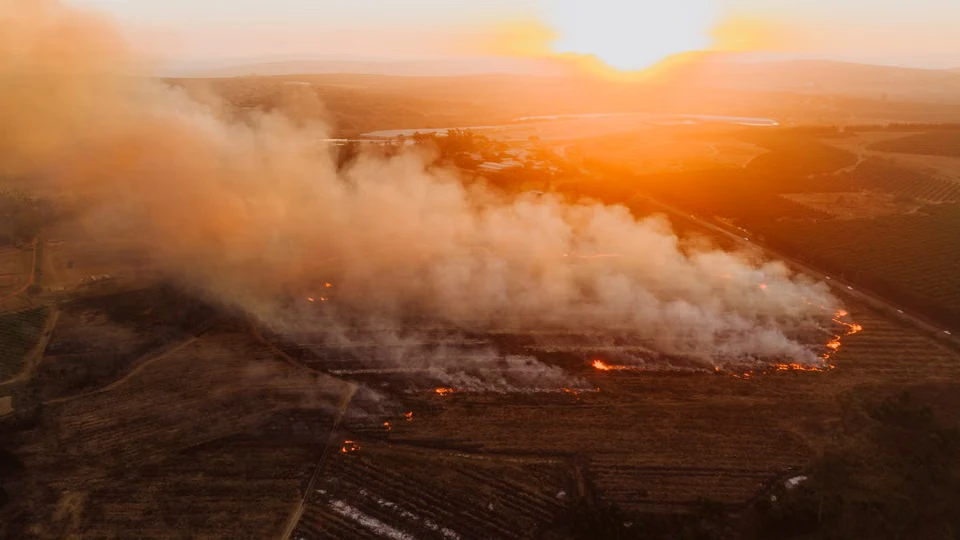
When four firefighters perished in the smoldering highlands of East Java, the tragedy crystallized a slow-burning catastrophe that had been building for months across the Indonesian archipelago. The men died battling flames inside Bromo Tengger Semeru National Park, a volcanic sanctuary normally celebrated for its ethereal sunrise vistas, now scarred by the worst forest fires the nation has endured in more than a decade.
Their sacrifice, acknowledged with deep condolences by the Forestry Ministry, exposes the brutal arithmetic of a crisis where human courage collides with ecological collapse.
This is not merely a story about flames. It is a story about haze that respects no border, about respiratory wards filling with the vulnerable, about schools shuttered in neighboring Malaysia and East Timor, and about a region forced to confront the uncomfortable truth that environmental negligence in one nation becomes a public health emergency in another.
On This Page
- The Human Cost of Containing Indonesia's Inferno
- Satellite Data and the Escalating Hotspot Crisis
- Transboundary Haze and Regional Health Emergency
- International Assistance and the Politics of Acceptance
- Climate Change, Peatlands, and the Road Ahead
- The Path Forward: From Crisis Response to Systemic Resilience
The fires raging across Sumatra and Borneo have become a transnational reckoning, one that tests diplomatic goodwill, emergency preparedness, and the moral obligations of sovereignty itself.
What follows is a comprehensive examination of the disaster's anatomy — the human toll, the meteorological mechanics, the geopolitical friction, and the hard-won lessons about safety in firefighting operations.
We trace how 799 high-confidence hotspots detected by satellite monitoring on a single Thursday night spiraled into a regional emergency, and why President Prabowo Subianto's decision to accept foreign assistance marks a pivotal moment in Indonesia's approach to disaster governance.
TL;DR Indonesia is battling its most severe forest fire season in over a decade, with four firefighters killed in Bromo Tengger Semeru National Park and two others critically burned. Satellite monitoring detected 799 high-confidence hotspots nationwide, a sharp jump of 427 in a single day, concentrated heavily across Sumatra and Borneo. The resulting transboundary haze has triggered respiratory crises affecting hundreds of thousands, forced school closures in Malaysia and East Timor, and drawn international criticism. President Prabowo Subianto has approved accepting foreign assistance, with Malaysia and Singapore offering helicopters, aircraft, and personnel, though logistical follow-through remains uncertain. The crisis underscores the lethal risks of firefighting operations and the urgent need for regional cooperation on peatland management and climate resilience.
The Human Cost of Containing Indonesia's Inferno
Behind every statistic about hectares burned lies a human story of exhaustion, bravery, and irreplaceable loss. The four firefighters who died in Bromo Tengger Semeru National Park were not anonymous casualties of a distant disaster; they were officers, volunteers, and local residents who chose to stand between the flames and their communities.
Their deaths, confirmed by the Forestry Ministry on a somber Friday statement, represent the sharpest possible reminder that extinguishing forest and land fires ranks among the most dangerous operations any emergency responder can undertake.
The ministry's response was notably candid about the operational realities. It emphasized that safety must come first, a principle that sounds obvious in retrospect but is frequently compromised in the chaotic, fast-moving environment of a wildfire front.
Tracking fire spread and wind direction, maintaining ready evacuation routes, and conducting rigorous condition assessments before and during operations are not bureaucratic formalities; they are the difference between containment and catastrophe.
The Anatomy of Firefighter Fatalities in Peatland Terrain
Wildfires in Indonesia present hazards that differ fundamentally from those in temperate forests. The archipelago's vast peatlands, drained for agriculture and plantation development over decades, become subterranean infernos when ignited. These fires smolder underground, creeping beneath the surface and emerging unpredictably, sometimes kilometers from their origin.
Firefighters cannot simply attack a visible flame line; they must contend with an enemy that hides, shifts, and ambushes.
The two firefighters who survived with serious burns are receiving treatment, but their injuries illustrate the thermal intensity of peat fires. Unlike surface fires that move quickly and burn relatively cool, peat fires generate intense heat and produce dense, toxic smoke laden with particulate matter and carbon monoxide.
The combination of disorientation, limited visibility, and rapid oxygen depletion creates conditions where even experienced personnel can be trapped within minutes.
Local volunteers and residents often form the first line of defense, a reality the ministry acknowledged by praising their courage and dedication. These individuals frequently lack advanced protective equipment, relying instead on intimate knowledge of the terrain and a profound stake in protecting their villages.
Their presence on the fire lines is both indispensable and deeply precarious, raising uncomfortable questions about the distribution of risk and resources.
The ministry's decision to withhold the victims' names reflects standard practice in many disaster contexts, but it also underscores a broader tension. These deaths are simultaneously personal tragedies and national symbols of a crisis that has been allowed to escalate.
Naming the dead would humanize them; withholding names protects families from media intrusion while inadvertently abstracting the loss into policy language.
Operational Protocols That Save Lives
The Forestry Ministry's emphasis on pre-operation assessments deserves serious attention. In wildfire management, the window between a manageable situation and an uncontrollable one can close in seconds. Assessing wind direction is not merely prudent; it is existential.
A sudden shift can turn a flanking operation into a head-on confrontation with a wall of flame moving at terrifying speed.
Evacuation route readiness represents another critical protocol. In the dense, road-scarce terrain of national parks like Bromo Tengger Semeru, escape options are limited. Firefighters who venture deep into forested areas without clearly marked and communicated withdrawal paths are effectively gambling with their lives.
The ministry's renewed focus on this principle suggests that previous operations may have been less rigorous than they should have been.
Tracking fire spread requires technological investment that many local firefighting units lack. Satellite monitoring provides macro-level intelligence, but ground-level tracking demands drones, thermal imaging, and real-time communication networks. The gap between national capabilities and local execution remains one of Indonesia's most persistent challenges in disaster response, a gap that costs lives when fires accelerate beyond expectations.
Perhaps the most difficult protocol to enforce is the decision to withdraw. Firefighting culture, like military culture, valorizes persistence and sacrifice. But the ministry's statement implicitly acknowledges that no patch of forest is worth a human life.
Institutionalizing the principle that retreat is sometimes the wisest tactical choice requires cultural change as much as procedural reform.
Satellite Data and the Escalating Hotspot Crisis
Numbers tell a story that individual fire reports cannot. When the Forestry Ministry announced that satellite monitoring had detected 799 high-confidence hotspots nationwide as of Thursday night, the figure represented a staggering increase of 427 from the previous day.
That single-day surge, nearly doubling the detected thermal anomalies, signals a fire complex expanding faster than containment resources can be deployed. The archipelago is not merely burning; it is accelerating toward a tipping point.
Understanding what a hotspot actually represents requires nuance that headlines often flatten. The ministry was careful to note that hotspots are not synonymous with fires, because a single conflagration can register as multiple thermal anomalies across different satellite passes.
This distinction matters for resource allocation: misinterpreting hotspot counts can lead to either complacency or panic, neither of which serves effective fire management.
Yet the trend line is unmistakable. Sumatra and Borneo, the two largest islands in the archipelago and the historical epicenters of Indonesia's annual fire seasons, are again bearing the brunt.
Their proximity to Singapore and Malaysia means that atmospheric circulation patterns carry smoke and particulate matter directly across international boundaries, transforming a domestic land-management failure into a regional public health emergency with diplomatic consequences.
Why Sumatra and Borneo Burn
The geography of fire in Indonesia is inseparable from the political economy of land. For decades, peatland forests across Sumatra and Borneo have been drained, cleared, and converted for palm oil plantations, pulpwood concessions, and smallholder agriculture.
Drained peat becomes tinder, and once ignited, it burns not for hours or days but for weeks or months, resisting conventional suppression techniques.
Smallholder farmers practicing slash-and-burn cultivation are frequently blamed for ignitions, and in some cases the attribution is accurate. But the structural drivers lie deeper: land tenure insecurity, corporate concession practices, and the absence of affordable mechanical clearing alternatives create conditions where fire remains the cheapest and most accessible tool for land preparation. Blaming individual farmers without addressing these structural realities is analytically shallow and politically convenient.
Climate change compounds the crisis. El Niño cycles, which bring prolonged drought to the maritime continent, have historically correlated with severe fire seasons. The 2015 fires, widely considered the worst in modern Indonesian history, burned an estimated 2.6 million hectares and cost the economy tens of billions of dollars.
The current season's intensity suggests that either El Niño conditions have returned or that accumulated peat degradation has lowered the ignition threshold permanently.
What distinguishes this year's crisis is its timing and scale relative to available resources. The fires have spread beyond Indonesia's borders, covering neighboring countries in haze, a phrase that sanitizes the reality of airborne particulate matter penetrating homes, schools, and hospitals.
The worst-affected islands near Singapore and Malaysia have become involuntary recipients of a pollution crisis they did not create and cannot unilaterally solve.
Reading the Data: Hotspots Versus Active Fires
Satellite-based fire detection relies on thermal sensors that identify anomalously hot pixels. A single large fire can generate dozens of such pixels across consecutive satellite overpasses, inflating hotspot counts relative to actual fire events.
Conversely, smoldering peat fires may produce insufficient thermal signatures to register as high-confidence hotspots despite burning intensely below the surface.
This detection asymmetry means that official hotspot figures likely underestimate the true extent of peat fires while potentially overstating the number of distinct surface fires. The ministry's caution about equating hotspots with fires is scientifically sound, but it also creates a communication challenge: the public wants simple numbers, and simple numbers can mislead in both directions.
For operational purposes, however, the 427-unit single-day increase is unambiguous. Whether those hotspots represent 799 separate fires or a smaller number of larger conflagrations, the thermal energy released has increased dramatically. Firefighting resources, already stretched thin, must now contend with a rapidly expanding perimeter across two major islands and multiple provinces.
International monitoring networks, including those operated by ASEAN and various research institutions, provide complementary data that can help triangulate the true scale. The discrepancy between national and regional estimates often becomes a source of diplomatic friction, with downstream countries accusing upstream neighbors of underreporting and upstream governments accusing downstream critics of exaggeration.
Transboundary Haze and Regional Health Emergency
The smoke produced by burning peat and forest does not recognize the sovereignty of nations. It drifts across the Strait of Malacca, settles over Singapore's skyline, blankets Malaysian cities, and reaches as far as East Timor.
What Indonesia experiences as a domestic land-management crisis, its neighbors experience as an involuntary public health emergency, one that recurs with depressing regularity and erodes regional goodwill with each successive season.
Hundreds of thousands of people across the affected region have suffered respiratory problems, according to reporting by Reuters. The health impacts extend beyond acute respiratory distress to include cardiovascular complications, eye irritation, and psychological stress from prolonged exposure to diminished air quality.
Children, the elderly, and those with pre-existing conditions bear disproportionate burdens, transforming an environmental disaster into a health equity crisis.
School closures in Malaysia and East Timor represent a secondary but significant consequence. When air quality indices reach hazardous levels, governments face an impossible choice between keeping children indoors in poorly ventilated facilities or suspending education entirely. Both options carry costs, and both are ultimately attributable to fires burning in another country. This asymmetry of cause and consequence fuels diplomatic tension.
The Diplomacy of Smoke
Indonesia has faced heavy criticism over the fires, a phrase that understates the diplomatic pressure the nation has endured. Downstream governments have repeatedly called for stronger enforcement against illegal burning, greater transparency in hotspot reporting, and meaningful accountability for corporate actors whose concessions frequently overlap with fire zones. Indonesia has consistently resisted external interference, framing fire management as a matter of national sovereignty.
Foreign Minister Arrmanatha Nasir's announcement that President Prabowo Subianto has approved accepting help from neighboring countries marks a notable shift. Malaysia offered last month to send three helicopters, an aircraft, and 52 personnel, according to Reuters, but there has been no follow-up. Singapore has also said it is ready to help. The gap between offers and implementation reveals the logistical and political complexities of disaster assistance.
Accepting foreign assistance carries implicit acknowledgments that domestic capacity is insufficient, a politically uncomfortable position for any government. It also raises questions about coordination, command structures, and the potential for assistance to be perceived as criticism.
The fact that Malaysia's offer has languished without follow-up suggests that bureaucratic friction, rather than diplomatic reluctance, may be the primary obstacle.
Regional frameworks like the ASEAN Agreement on Transboundary Haze Pollution provide institutional architecture for cooperation, but their effectiveness depends on political will and enforcement mechanisms that remain weak. The agreement lacks binding sanctions, and its monitoring provisions rely on voluntary reporting. Without teeth, it functions more as a forum for dialogue than a tool for accountability.
Health Impacts and Vulnerable Populations
The particulate matter in haze, particularly PM2.5, penetrates deep into lung tissue and enters the bloodstream, causing systemic inflammation. Prolonged exposure correlates with increased rates of asthma, bronchitis, cardiovascular events, and adverse birth outcomes.
The health burden falls heaviest on those with the fewest resources to relocate, purchase air purifiers, or access quality healthcare.
Hospitals and clinics across affected regions report surges in respiratory complaints during severe haze episodes. Medical systems already strained by other demands must absorb additional patient loads without corresponding increases in staffing or supplies.
The economic costs of lost productivity, school days, and tourism revenue compound the direct health expenditures, creating a multiplier effect that extends far beyond the fire zones.
Mental health impacts are less visible but equally real. The uncertainty of recurring haze seasons, the inability to protect children from airborne toxins, and the sense of helplessness in the face of distant fires contribute to anxiety and stress. Communities in downstream countries have developed coping mechanisms, but adaptation should not be mistaken for acceptance.
East Timor's inclusion among affected nations highlights the geographic reach of the crisis. The small nation, still building its institutional capacity after decades of occupation and independence, lacks the resources to mount comprehensive public health responses to recurring haze episodes. Its inclusion in the crisis narrative underscores the regional, rather than merely bilateral, nature of the problem.
We Also Published
- 01
- 02
- 03
- 04
International Assistance and the Politics of Acceptance
The decision to accept foreign assistance represents a significant political moment for Indonesia. President Prabowo Subianto's approval, conveyed through Foreign Minister Arrmanatha Nasir, signals a pragmatic recognition that national resources alone cannot contain a crisis of this magnitude.
Yet the gap between approval and implementation reveals the complex choreography of international disaster response, where offers of help must navigate sovereignty concerns, logistical coordination, and domestic political sensitivities.
Malaysia's offer of three helicopters, an aircraft, and 52 personnel, made last month according to Reuters, has not been followed up. This delay is puzzling given the escalating severity of the fires. Possible explanations include bureaucratic inertia, concerns about operational integration, or a preference for bilateral arrangements over multilateral coordination. Whatever the cause, the absence of follow-through means that assets that could be saving lives remain grounded.
Singapore's stated readiness to help adds another dimension to the regional response. The city-state has both the resources and the technical expertise to contribute meaningfully, particularly in aerial firefighting and haze monitoring.
Its willingness to assist despite being a frequent critic of Indonesia's fire management suggests that humanitarian imperatives can, at least temporarily, transcend diplomatic friction.
Why Offers Stall and Assets Sit Idle
International disaster assistance is rarely as straightforward as it appears in press releases. Offers of personnel and equipment must be matched to actual needs, integrated into existing command structures, and supported by logistics chains that may not exist. A helicopter without fuel, maintenance, and qualified crew is merely an expensive static display.
Sovereignty concerns also play a role. Accepting foreign firefighters means allowing foreign nationals access to sensitive areas, potentially exposing land-use practices that Indonesia might prefer to keep out of international scrutiny.
The political calculus of accepting help is therefore never purely humanitarian; it is always entangled with questions of image, control, and precedent.
Domestic political dynamics within Indonesia add further complexity. Nationalist sentiment can frame foreign assistance as an admission of failure, while opposition figures may seize on the crisis to criticize government preparedness. The Prabowo administration must balance the operational benefits of assistance against the political costs of appearing dependent on neighbors.
Regional frameworks like the ASEAN Agreement on Transboundary Haze Pollution provide a diplomatic channel for cooperation, but their voluntary nature limits effectiveness. Without binding commitments or enforcement mechanisms, assistance remains a matter of bilateral negotiation rather than collective obligation. The current crisis may test whether the agreement can evolve beyond its current limitations.
Lessons from Previous Fire Seasons
The 2015 fire season, Indonesia's worst in modern history, offered painful lessons that appear not to have been fully absorbed. That crisis burned an estimated 2.6 million hectares, caused over 100,000 premature deaths across the region according to some estimates, and cost the Indonesian economy tens of billions of dollars. It also demonstrated that peatland restoration and fire prevention are far cheaper than suppression and recovery.
International assistance during the 2015 crisis was substantial but arrived late, after fires had already reached peak intensity. The lesson is clear: early intervention, including pre-positioning of equipment and personnel before the dry season peaks, is far more effective than reactive deployment. The current delay in activating Malaysian assistance suggests that this lesson remains unlearned.
Community-based fire prevention programs have shown promise in some regions, particularly where local communities are empowered to manage peatlands sustainably and given alternatives to burning. Scaling these programs requires sustained investment, secure land tenure, and coordination across multiple levels of government, all of which have historically been in short supply.
Corporate accountability remains the most contentious dimension. Plantation companies with concessions in fire-prone areas have repeatedly been accused of using fire for land clearing while evading responsibility through complex ownership structures.
Enforcement has improved in recent years, but prosecutions remain rare relative to the scale of the problem, and penalties are often insufficient to deter violations.
Climate Change, Peatlands, and the Road Ahead
The fires raging across Indonesia are not merely a seasonal inconvenience; they are a symptom of deeper ecological and governance failures that climate change is amplifying. Drained peatlands, which represent some of the world's most carbon-dense ecosystems, become net carbon emitters when burned, transforming Indonesia from a carbon sink into a carbon source during fire seasons. This feedback loop accelerates global warming while simultaneously making future fires more likely.
Restoring peatlands requires rewetting, which in turn requires abandoning or modifying agricultural and plantation practices that depend on drainage. The economic interests arrayed against such changes are formidable, encompassing palm oil conglomerates, pulp and paper companies, and smallholder farmers who rely on drained land for their livelihoods. Any serious restoration effort must address these interests directly rather than pretending they do not exist.
Climate projections suggest that El Niño events, which historically correlate with severe fire seasons, may become more intense and frequent. If this proves accurate, Indonesia and its neighbors face a future in which the current crisis becomes the new normal rather than an exceptional event.
Preparing for that future requires investments in fire prevention, peatland restoration, and regional cooperation that far exceed current commitments.
Technological Solutions and Their Limits
Satellite monitoring, drone surveillance, and artificial intelligence-based fire prediction represent genuine advances in detection and early warning. Indonesia's ability to identify 799 high-confidence hotspots in a single night reflects significant technological capacity.
But detection without response is merely documentation of disaster; the gap between knowing where fires are and being able to extinguish them remains the critical bottleneck.
Aerial firefighting, including water bombing and cloud seeding, can suppress surface fires but is largely ineffective against deep peat fires that burn underground. The most advanced technology cannot compensate for the fundamental challenge of peat: it burns below the surface, resists water application, and can reignite weeks after appearing extinguished. Prevention, not suppression, must be the primary strategy.
Community-based monitoring systems, mobile applications for reporting fires, and early warning networks have empowered local communities to respond faster than centralized agencies. These decentralized approaches complement national capabilities and should be expanded, but they require sustained funding and technical support that often evaporates once the immediate crisis passes.
International technology transfer, including access to advanced firefighting equipment and expertise, could accelerate Indonesia's response capacity. However, such transfers must be accompanied by training, maintenance, and institutional support to be sustainable. Equipment without capacity-building is a short-term fix that leaves no lasting improvement.
Governance Reforms That Could Break the Cycle
Breaking the cycle of annual fires requires governance reforms that address root causes rather than symptoms. Strengthening land tenure security for smallholders would reduce incentives for speculative burning. Enforcing corporate accountability for fires on concession lands would shift the cost-benefit calculus for plantation companies. Investing in alternative land-clearing technologies would provide farmers with viable alternatives to fire.
Regional cooperation mechanisms must evolve beyond voluntary agreements to include binding commitments, transparent monitoring, and meaningful consequences for non-compliance. The ASEAN Agreement on Transboundary Haze Pollution provides a foundation, but it requires political will at the highest levels to become an effective instrument rather than a diplomatic formality.
International climate finance offers a potential resource stream for peatland restoration and fire prevention, but accessing these funds requires institutional capacity and governance frameworks that many affected regions lack. Simplifying access procedures and providing technical assistance for proposal development could unlock resources that currently remain out of reach.
The four firefighters who died in Bromo Tengger Semeru National Park did not die in vain if their sacrifice catalyzes meaningful change. But history suggests that crises often produce declarations rather than transformations, and that the political attention span is shorter than the ecological timescales involved.
Whether Indonesia and its neighbors can break the cycle depends on whether the current tragedy generates sustained commitment rather than temporary outrage.
The Path Forward: From Crisis Response to Systemic Resilience
The fires of 2026 will eventually be extinguished, whether by monsoon rains, international assistance, or the exhaustion of combustible material. But the underlying conditions that produced them will persist unless addressed through sustained, coordinated action.
The four firefighters who lost their lives in Bromo Tengger Semeru National Park deserve more than condolences; they deserve a commitment to ensuring that future generations do not inherit a landscape primed to burn.
That commitment must begin with honesty about the scale of the challenge. Indonesia's peatlands are not merely national assets; they are global carbon reservoirs whose degradation affects climate stability worldwide.
The fires that burn there are not merely local disasters; they are transnational health emergencies that violate the sovereignty of neighboring nations through atmospheric pollution. Acknowledging these realities is the first step toward addressing them.
International cooperation, however imperfect, remains the only viable path forward. No single nation can solve a problem that spans borders, ecosystems, and generations. The offers of assistance from Malaysia and Singapore, even if delayed, represent the kind of solidarity that must become routine rather than exceptional.
The ASEAN framework, for all its weaknesses, provides a foundation that can be strengthened if political will exists.
Ultimately, the measure of this crisis will not be the number of hectares burned or the volume of diplomatic statements issued. It will be whether the deaths of four firefighters in a Javanese national park catalyze a transformation in how Indonesia and its neighbors manage their shared environment.
That transformation is possible, but it requires vision, courage, and sustained commitment that outlasts the news cycle. The fires will return; the question is whether we will be better prepared when they do.
From our network :
- The Final Descent: How ESA Retired the Legendary Cluster Constellation After 24 Years of Space Weather ScienceAfter 24 years mapping Earth’s magnetosphere, ESA’s Cluster mission concluded with a precisely controlled reentry over the South Pacific. This analysis explores the scientific legacy, engineering decisions, and debris mitigation principles behind one of space exploration’s most responsible retirements.
- Committed Mediterranean Precipitation Decline: Why Emissions Cuts Alone Cannot Restore Winter RainsNew NOAA research reveals that Mediterranean winter rains may decline irreversibly even with emissions cuts. Explore the science of committed climate change and regional impacts.
- How AI Agents Will Change the Way We Manage Personal FinancesExplore how AI agents are transforming personal finance through automated budgeting, bill payment, and investment management, while examining the critical security protocols and governance frameworks required for safe deployment.
- Live Online English Classes for Kids: Do They Actually Reduce Anxiety?A ten-week study reveals that synchronous online English classes can significantly reduce child language anxiety while improving listening and reading skills. Discover what makes these programs effective and how parents can select the right one.
- Forbidden Matrix Patterns and Visible Lattice Points: A Geometric DictionaryExplore how multidimensional 0–1 matrices encode geometric truths, linking forbidden patterns to visible lattice points and hypergraph theory, with applications in combinatorics and computational geometry.
- University Language Proficiency Exams: Why Institutional Tests Demand Different Preparation Than IELTS and TOEFLDiscover why university-specific language proficiency examinations differ fundamentally from IELTS and TOEFL, and learn strategic preparation approaches for institutional assessment success.
- The Hidden Cost of AI Convenience: Why Over-Permissioned Agents Are a Security Time BombDiscover why AI agents with excessive permissions create dangerous single points of failure, and learn how implementing least privilege principles can protect your organization from exploitation.
- Mobile Learning and VR in English: What Global Evidence Reveals About Effective Language TechnologyA systematic review across 14 countries reveals which language-learning technologies genuinely work. Mobile learning, AI, and VR show measurable benefits when pedagogically integrated. This evidence-based guide helps educators and learners select technology that delivers real return on investment.
- CISA’s Ten-Advisory Wave: Why Generic Patching Fails in OT and How to Build Product-Specific PlaybooksCISA released ten ICS advisories in one week, exposing critical infrastructure risks. Generic patching fails in OT. Learn to build product-specific remediation playbooks.
RESOURCES
- Why Southeast Asia Is Facing a Haze Crisis - indonesia - TIMEtime.comSep 17, 2026 ... Transboundary haze a persistent problem ... forest and peatland fires in Indonesia from land clearing for agriculture and plantations.
- Malaysia to Raise Transboundary Haze Crisis With ASEAN Foreign ...thediplomat.com3 days ago ... Over the past four months, massive wildfires have raged across Indonesia, particularly on the islands of Borneo and Sumatra, causing…
- Public concerns about transboundary haze: A comparison of ...sciencedirect.comThis paper presents an analysis of public concerns about transboundary haze resulting from forest fires in Indonesia, Singapore, and Malaysia for crises ...
- Up in smoke: why Southeast Asia failed to halt the hazescmp.comSep 12, 2026 ... Scenes from across Southeast Asia as dense transboundary haze from widespread forest and peatland fires triggers ... transboundary haze crisis ...
- Transboundary Haze Pollution in Island Southeast Asia: A Crisis of ...seasia.yale.eduDec 27, 2021 ... Stemming from forest and peat fires on Indonesian islands Sumatra and Borneo, transboundary haze is responsible for a host of…
- Southeast Asia's haze crisis: Have lessons been learned? - DW.comdw.comOct 6, 2026 ... Forest and land fires have burned across parts of the Indonesian islands of ... Transboundary Haze Pollution. "But the underlying…
- As dry season starts in Indonesia, risk of fires — and haze — loomsnews.mongabay.comJul 6, 2022 ... There's a degree of risk that Southeast Asia may see the return of transboundary haze this year from forest fires…
- ASEAN haze framework misses the Indonesian forests for the treeseastasiaforum.orgDec 8, 2024 ... Transboundary haze events primarily stemming from fires in Indonesia have plagued Southeast Asia for decades, affecting several ASEAN countries.
- The Limits of Regional Disaster Law: Transboundary Haze Pollution ...brill.comAug 11, 2025 ... ... of forest fires in Indonesia which results in the transboundary haze pollution discussed above. ... Crisis', (2016) Indonesia Sustainable ...
- As fires burn, can Indonesia avoid repeat of 2015 haze crisis?preventionweb.netAug 5, 2019 ... Indonesia has taken measures to avoid a repeat of the 2015 haze crisis, but more could be done, especially on…
- Toxic haze from Indonesian forest fires chokes Malaysian Borneoaljazeera.comSep 1, 2026 ... Respiratory illnesses surge as smoke settles over Malaysia's Sarawak in the region's worst haze crisis in a decade.
- Indonesia drags its feet on ASEAN haze treaty - The Conversationtheconversation.comSep 8, 2017 ... In fact, Indonesia does not categorise the spread of haze from forest burning as a disaster. ... transboundary haze crisis.…
- SAM and WALHI working together to address the issue of Forest ...foeasiapacific.orgDec 24, 2019 ... ... Indonesian forest and plantation fires, and the resulting transboundary haze. ... transboundary haze crisis to be tightly integrated into ...
- THE 'HAZE' CRISIS IN SOUTHEAST ASIA - Singapore - NUS Lawlaw.nus.edu.sgFor several days in that month, transboundary haze pollution arising from forest and land fires in Indonesia reached an unprecedented high in Singapore. The…
- Indonesian Crisis Communication Response after Deliberate Forest ...osf.ioThe crisis of the pollution of transboundary haze was a large-scale burning and deliberate forest fires mainly in Indonesia. The source of the majority…
- 01
- 02
- 03
- 04
- 05
- 06
- 07
- 08
0 Comments