The confrontation between the Bharatiya Janata Party and the INDIA bloc over a mock Parliament session staged at Congress president Mallikarjun Kharge's residence on 31 October 2026 is best read as a dispute about institutional legitimacy rather than a routine partisan exchange.
The opposition convened the symbolic sitting to press a public impeachment of Chief Election Commissioner Gyanesh Kumar, alleging irregularities in the special intensive revision (SIR) of electoral rolls and in the conduct of elections more broadly.
The BJP's response, delivered by MP Sambit Patra at a New Delhi press conference, reframed the event as a theatrical assault on democratic institutions rather than a legitimate accountability exercise.
On This Page
The numbers at the centre of the dispute are substantial and contested. Patra cited roughly 12 crore voters who had permanently shifted residence, about 6 crore of whom had already filed Form 6 for re-inclusion, alongside approximately 2.8 crore names deleted on grounds of death and nearly 1 crore duplicate entries removed.
Against these figures, the opposition's claim that the voting rights of 13 crore people were stripped represents the sharpest point of factual disagreement. Both sides invoke scale, but neither has published a reconciled dataset that would settle the arithmetic.
What follows examines the episode through three lenses: the procedural mechanics of the SIR and the Form 6 process, the political strategy behind the mock session and the BJP's counter-framing, and the institutional questions concerning the Election Commission's internal decision-making.
The analysis relies on the claims as stated, treating each figure as an assertion to be tested rather than a settled fact.
TL;DR The INDIA bloc staged a mock Parliament at Mallikarjun Kharge's residence to symbolically impeach Chief Election Commissioner Gyanesh Kumar over alleged irregularities in the special intensive revision of electoral rolls. The BJP dismissed the exercise as a mockery of democratic institutions, arguing that opposition booth-level agents failed in their duties and that the SIR merely removed dead, duplicate and shifted entries. The dispute turns on competing interpretations of roughly 13 crore contested voter records, the legality of Form 6 amendments, and whether the Election Commission's decisions were unanimous.
The SIR Arithmetic: Deletions, Re-inclusions and the 13 Crore Dispute
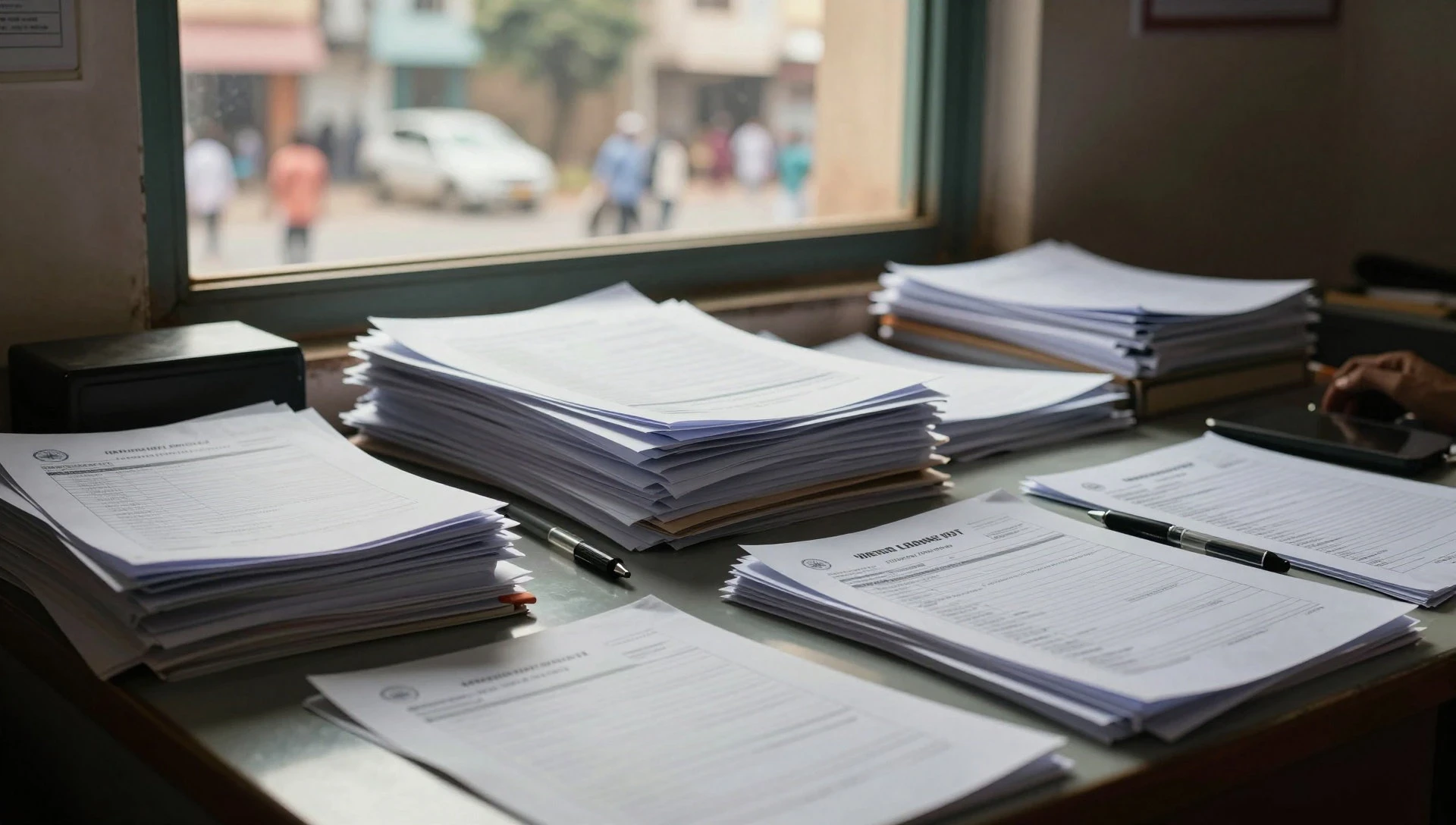
The special intensive revision is the operational core of the entire controversy, and its scale explains why the political temperature rose so sharply. Patra's briefing offered a decomposition of the revision's effects: permanent migration, mortality, and duplication.
Each category carries a different legal consequence, and conflating them is precisely what the opposition alleges the government has done. The BJP's position is that the categories are distinct and separately remediable through Form 6.
Deconstructing the Deletion Categories
Approximately 12 crore voters were classified as having permanently shifted, according to the BJP's account. Of these, about 6 crore had already submitted Form 6, the standard application for inclusion in the electoral roll at a new address.
The remaining half were said to be in process, with notices issued and responses pending. This split matters because it converts an absolute figure into a workflow status.
Deaths account for roughly 2.8 crore deletions, a figure that is demographically plausible given India's mortality rates across a multi-year revision window. Duplicate entries removed total nearly 1 crore.
Together, these two categories represent about 3.8 crore records that the BJP characterises as unambiguously ineligible, leaving the migration cohort as the genuinely contested terrain.
The opposition's 13 crore figure appears to aggregate all deletion categories rather than isolating the migration group. If that reading is correct, the two sides are not disputing the same number but describing different subsets of the same dataset. This is a common pattern in electoral disputes, where aggregate framing obscures category-level agreement.
Patra's counter-argument rested on a simple empirical test: if 13 crore people had genuinely lost voting rights, mass protest would have followed. He noted that those marked absent were also being included, suggesting the revision is not a one-way deletion process. The claim is rhetorically effective but methodologically weak, since disenfranchisement often produces diffuse rather than concentrated grievance.
Form 6, the Declaration Clause and the May 27 Judgment
The opposition alleges that Form 6 was amended to create new documentary hurdles for re-inclusion. Patra rejected this, stating that only a declaration was added and that a Supreme Court judgment dated 27 May 2026 had addressed the matter.
The distinction between a substantive amendment and an added declaration is legally significant, since the former alters eligibility while the latter typically modifies attestation.
If the change is confined to a declaration, the practical burden on a displaced voter is procedural rather than substantive: the applicant affirms a fact rather than proving it through additional documents. That framing supports the BJP's contention that re-inclusion remains accessible. It does not, however, resolve whether the declaration requirement is being applied uniformly across states.
The Supreme Court's intervention, as described, suggests the judiciary has already examined the amendment's legality. Without the judgment's operative text, the scope of that validation remains unclear. A ruling on procedural validity is not the same as a finding that the revision was conducted without error in every district.
Patra also noted that SIR had been conducted ten times during Congress rule, invoking precedent to argue that the mechanism itself is not novel. The precedent argument is historically grounded but does not address whether the current iteration's scale or methodology differs materially from earlier exercises.
The West Bengal Bogus Vote Allegation
The BJP's most pointed allegation concerned Trinamool Congress rule in West Bengal, where party workers were said to have cast bogus votes in the names of deceased persons. Patra argued that SIR had curtailed this practice and that the resulting frustration was natural. The claim is serious and, if substantiated, would constitute a significant electoral offence.
No evidentiary detail accompanied the allegation in the briefing as reported. The assertion therefore functions politically rather than forensically, linking the revision's rationale to a specific regional grievance. It also serves to explain opposition resistance in motivational terms, attributing it to lost capacity for fraud rather than principled objection.
This framing has a strategic function: it shifts the burden of proof onto the opposition, requiring them to demonstrate that their objections are not self-interested. Whether that shift is persuasive depends on whether voters accept the underlying premise about organised bogus voting at scale.
The allegation also connects to the broader question of why the revision was undertaken with such intensity. If the official rationale is accuracy, the West Bengal example supplies the political justification. If the rationale is partisan advantage, the same example supplies the suspicion.
We Also Published
The Mock Parliament as Political Theatre and Its Counter-Framing
The mock session at Kharge's residence was designed as a symbolic public impeachment, a format with no constitutional force but considerable communicative value. By staging it in a structure resembling the old Parliament building, the organisers sought to invoke institutional gravity while operating entirely outside institutional procedure.
The BJP's decision to engage the symbolism directly, rather than ignore it, indicates the format achieved its intended visibility.
Symbolism, Venue and the Impeachment Format
Patra's retort that the opposition should seat Rahul Gandhi as a mock Prime Minister in the same structure was a deliberate inversion. By extending the theatrical logic to its absurd conclusion, he sought to drain the event of solemnity.
The line was calibrated for quotation, and it worked: the remark became the headline framing of the BJP's response.
The choice of venue is itself analytically relevant. Holding the session at the Congress president's residence rather than in a public hall or party office signals that the event was intra-coalition in character, aimed as much at consolidating INDIA bloc cohesion as at persuading external audiences. Coalition signalling and public accountability were pursued simultaneously.
Symbolic impeachment carries no legal consequence, but it can shape the political weather around an institution. The target was not merely Gyanesh Kumar as an individual but the credibility of the Commission's conduct of the revision. That is a longer-term project than any single session.
The format also imposes costs. Critics can characterise the exercise as performance rather than scrutiny, which is precisely the line the BJP adopted. Once framed as theatre, the substantive allegations risk being discounted alongside the staging.
The Booth Agent Argument and Organisational Responsibility
Patra's most substantive counter was organisational: if the opposition's 38 lakh booth-level agents had performed their duties properly, the mock Parliament would have been unnecessary. This argument relocates responsibility from the Commission to the parties themselves, framing the revision's errors as failures of vigilance rather than administration.
The figure of 38 lakh booth agents is a claim about the opposition's own machinery. Every major party deploys polling booth agents, and their role includes verifying rolls and challenging improper deletions.
If the agents existed at that scale, the argument runs, discrepancies should have been caught at the booth level before escalation.
The counter to this is that booth agents operate within asymmetric information. They can observe local rolls but cannot audit a statewide or national revision process. Organisational presence at the booth does not translate into analytical capacity at the aggregate level, which is where the disputed figures reside.
Patra's framing nonetheless has political traction because it converts a systemic critique into a competence critique. Parties that cannot manage their own booth machinery are vulnerable to the charge that their objections are performative rather than operational.
Double Standards and the Precedent Defence
The BJP's precedent defence rests on the claim that SIR was conducted ten times under Congress governments. If accurate, it establishes that the mechanism predates the current administration and is not inherently partisan. The defence is strongest when the current exercise is methodologically comparable to its predecessors.
Comparability is the weak link. A revision conducted at a different scale, with different digital infrastructure and different political stakes, may share a name without sharing a character. The precedent argument establishes lineage, not equivalence, and the opposition can concede the former while contesting the latter.
The double standards charge also cuts both ways. If earlier revisions were accepted without protest, the opposition must explain why this one is different. If earlier revisions were also contested, the BJP must explain why the current objections are uniquely illegitimate.
Neither side has published a systematic comparison of revision methodologies across cycles. That absence is itself notable, since such a comparison would be the most direct way to test the precedent claim on its merits rather than on assertion.
- 01
- 02
- 03
- 04
Institutional Questions: The Commission, ECINET and Unanimity Claims
Beneath the partisan exchange lies a structural question about how the Election Commission reaches and communicates decisions. Patra stated that the Commission had clarified that decisions on SIR were taken unanimously and that there was no disagreement regarding ECINET, its digital platform.
The claim of unanimity is significant because it forecloses the possibility of internal dissent being cited as evidence of procedural irregularity.
The Unanimity Claim and Its Limits
Unanimity among commissioners is a procedural fact, not a substantive guarantee. A unanimous decision can still be wrong, and the absence of recorded dissent does not establish that deliberation was thorough. The claim therefore addresses process legitimacy while leaving outcome legitimacy open.
The opposition's impeachment case depends on demonstrating irregularity, and internal disagreement would have been powerful evidence. By asserting unanimity, the Commission and the BJP together remove that evidentiary path. The dispute then shifts to whether the unanimous decision was substantively correct.
There is also a transparency dimension. If decisions were unanimous, the minutes should reflect that, and their publication would settle the matter. Absent publication, the claim of unanimity rests on assertion rather than documentation, which weakens its evidentiary force.
The Commission's institutional interest lies in projecting cohesion, since public division would undermine confidence in the revision. That interest creates an incentive to emphasise unanimity regardless of the deliberation's actual texture, which is why independent verification matters.
ECINET and the Digital Infrastructure Question
ECINET, described as the Commission's digital platform, sits at the centre of the technical dispute. Patra stated there was no disagreement regarding it, responding to allegations that internal concerns had been raised. Digital infrastructure questions are consequential because they determine how roll data is compiled, verified and contested.
If the platform's design choices shape which records are flagged for deletion, then technical decisions carry political consequences. The absence of documented disagreement does not establish that the design was optimal, only that it was accepted by the commissioners who reviewed it.
External audit of such systems is rare in electoral administration, which limits the scope for independent assessment. The opposition's allegations therefore cannot be easily tested without access to the platform's specifications and change logs, neither of which appears to be public.
The broader lesson is that electoral disputes increasingly turn on software rather than paperwork. Institutions that cannot explain their digital systems in accessible terms will struggle to defend them against allegations of bias, however unfounded those allegations may be.
Accountability, Legitimacy and the Road Ahead
The mock Parliament will not remove the Chief Election Commissioner, and the BJP's counter-offensive will not silence the opposition. What the episode has done is place the revision's methodology under sustained public scrutiny, which is a form of accountability even when the mechanism is symbolic rather than constitutional.
The decisive variable is the re-inclusion rate. If the roughly 6 crore Form 6 applications are processed and the remaining migration cohort is restored before the next electoral cycle, the opposition's strongest empirical claim weakens. If processing lags, the 13 crore figure gains credibility through demonstrated consequence.
Institutional legitimacy in electoral administration rests on verifiability rather than assertion. Both sides have made large numerical claims, and neither has published a reconciled dataset. The gap between claim and evidence is where public confidence is either built or eroded.
For observers, the appropriate posture is neither deference nor dismissal. The figures should be tracked, the Form 6 processing rates monitored, and the Commission's documentation examined as it becomes available. That is a more demanding standard than either side's rhetoric invites.
From our network :
- How AI Agents Will Change the Way We Manage Personal FinancesExplore how AI agents are transforming personal finance through automated budgeting, bill payment, and investment management, while examining the critical security protocols and governance frameworks required for safe deployment.
- Committed Mediterranean Precipitation Decline: Why Emissions Cuts Alone Cannot Restore Winter RainsNew NOAA research reveals that Mediterranean winter rains may decline irreversibly even with emissions cuts. Explore the science of committed climate change and regional impacts.
- Mobile Learning and VR in English: What Global Evidence Reveals About Effective Language TechnologyA systematic review across 14 countries reveals which language-learning technologies genuinely work. Mobile learning, AI, and VR show measurable benefits when pedagogically integrated. This evidence-based guide helps educators and learners select technology that delivers real return on investment.
- University Language Proficiency Exams: Why Institutional Tests Demand Different Preparation Than IELTS and TOEFLDiscover why university-specific language proficiency examinations differ fundamentally from IELTS and TOEFL, and learn strategic preparation approaches for institutional assessment success.
- Forbidden Matrix Patterns and Visible Lattice Points: A Geometric DictionaryExplore how multidimensional 0–1 matrices encode geometric truths, linking forbidden patterns to visible lattice points and hypergraph theory, with applications in combinatorics and computational geometry.
- CISA’s Ten-Advisory Wave: Why Generic Patching Fails in OT and How to Build Product-Specific PlaybooksCISA released ten ICS advisories in one week, exposing critical infrastructure risks. Generic patching fails in OT. Learn to build product-specific remediation playbooks.
- The Hidden Cost of AI Convenience: Why Over-Permissioned Agents Are a Security Time BombDiscover why AI agents with excessive permissions create dangerous single points of failure, and learn how implementing least privilege principles can protect your organization from exploitation.
- The Final Descent: How ESA Retired the Legendary Cluster Constellation After 24 Years of Space Weather ScienceAfter 24 years mapping Earth’s magnetosphere, ESA’s Cluster mission concluded with a precisely controlled reentry over the South Pacific. This analysis explores the scientific legacy, engineering decisions, and debris mitigation principles behind one of space exploration’s most responsible retirements.
- Live Online English Classes for Kids: Do They Actually Reduce Anxiety?A ten-week study reveals that synchronous online English classes can significantly reduce child language anxiety while improving listening and reading skills. Discover what makes these programs effective and how parents can select the right one.
RESOURCES
- India: Authorities trampling on human rights in crackdown on ...amnesty.orgOct 2, 2026 ... ... controversy over the Election Commission's Special Intensive Revision (SIR) of electoral rolls. More than 130 million people have been ...
- Why India's tens of millions of voter deletions have led to ... - Reutersreuters.comOct 9, 2026 ... India started verification of its voter rolls last year ahead ... While voter roll revisions are routine, this round became…
- What to know about nationwide protests in India over voter list ... - NPRnpr.orgOct 6, 2026 ... The dispute centers on a nationwide voter list revision known as the Special Intensive Revision, or SIR. It began last…
- Declared dead: Indian voters fight to get back on electoral rollsreuters.comOct 22, 2026 ... The Special Intensive Revision (SIR) has led to removals for reasons ranging from "logical discrepancies" to people being recorded as…
- Divided India revises voter rolls - Lowy Institutelowyinstitute.orgDec 9, 2025 ... The currently ongoing Special Intensive Revision (SIR) of electoral rolls ... Cut and thrust of local politics aside, the SIR…
- How exclusion of nine million voters could shape state politics - BBCbbc.comApr 12, 2026 ... ... rolls as part of the Special Intensive Revision (SIR) exercise. Voting to elect a new state government will take…
- A Misguided Tech Solution is Putting India's Electoral Integrity at Risktechpolicy.pressSep 29, 2026 ... The current update of the electoral rolls—the Special Intensive Revision (SIR)—began in 2025 and does not merely repeat these past…
- SIR: India's voter roll revision is worrying migrant workers - BBCbbc.comNov 24, 2025 ... ... voter is excluded and no ineligible name remains on the rolls. A similar controversial exercise was carried out in…
- India's supreme court demands answers over changes to voter rolltheguardian.comOct 5, 2026 ... There are accusations that revision of the electoral rolls ... The controversies over the ECI have once again driven India's…
- India's Wave of Gen Z Protests and Growing Distrust in Democratic ...steptoe.comOct 22, 2026 ... India's voter-roll controversy centers on the Election Commission of India's (ECI) Special Intensive Revision (SIR), a large-scale overhaul ...
- 'Shaken faith': Why are India's elections under unprecedented ...aljazeera.comSep 26, 2026 ... Why is revision of voters' list controversial? The Special Intensive Revision (SIR), as the process of revising the list is…
- Tens of thousands joined a protest led by opposition politicians in ...instagram.com17 hours ago ... India's SIR Voter-Roll Dispute Draws Global ... Protests have intensified over India's Special Intensive Revision (SIR) of electoral rolls ...
- India dispatch: legal challenge to Bihar's controversial electoral roll ...jurist.orgJul 8, 2025 ... In the present case, the ECI conducted a Special Intensive Revision (SIR), a process that is intended to ensure that…
- Why is India's Election Commission facing a crisis of credibility?acleddata.comNearly 130 million voters have been struck from India's electoral rolls under the Election Commission of India's (ECI) Special Intensive Revision (SIR), ...
- #SupremeCourt upholds the legality of Special Intensive Revision ...instagram.comMay 27, 2026 ... ... India (ECI) regarding the controversial Special Intensive Revision (SIR) of electoral rolls. A bench led by Chief Justice of…
- 01
- 02
- 03
- 04
- 05
- 06
- 07
- 08
0 Comments