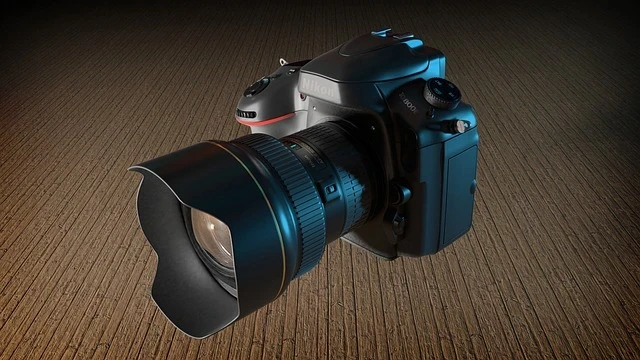
Nikon has quietly rewritten the rules of entry-level full-frame photography with a bold, almost heretical decision: removing the electronic viewfinder entirely. The Nikon Z5 IIC arrives as a 24-megapixel full-frame mirrorless body that deliberately strips away the optical peephole most photographers treat as sacred.
By eliminating that single component, Nikon slashed weight, size, and above all price, delivering a camera that undercuts its own sibling, the Z5 II, while preserving the sensor and processing DNA that made that model a quiet favorite among enthusiasts.
The "C" in the name stands for compact, and the numbers back the claim convincingly. At 537 grams, the Z5 IIC sheds roughly 163 grams against the 700-gram Z5 II, a reduction of about 25 percent.
On This Page
That difference matters enormously for travelers, vloggers, and street shooters who carry a body for hours at a time. Nikon kept the full-sized grip and manual controls intact, so the camera still feels like a serious instrument rather than a toy, even though the joystick and several buttons from the Z5 II have vanished.
What remains is a fascinating proposition: a full-frame sensor, in-body stabilization rated at 7.5 stops, internal N-RAW recording, and a fully articulating 3.2-inch touchscreen with 1,040K dots, all for $1,400 body-only.
This is not a crippled camera; it is a strategically reimagined one. The Z5 IIC targets creators who compose through a screen anyway, and it challenges the assumption that every serious mirrorless body must carry a viewfinder.
Understanding this camera means understanding a broader shift in how modern imaging tools are designed, priced, and marketed.
TL;DR The Nikon Z5 IIC is a 24-megapixel full-frame mirrorless camera that removes the electronic viewfinder to cut cost, weight, and bulk, landing at 537 grams and $1,400 body-only. It retains the Z5 II sensor, 7.5-stop in-body stabilization, 4K/30 oversampled video, internal N-RAW with N-Log, and a 3.2-inch articulating touchscreen. Trade-offs include a single SD UHS-II slot, no joystick, and fewer physical controls. It is a deliberate play for screen-first creators, travelers, and hybrid shooters who prioritize price and portability over traditional eye-level composition.
The Strategic Logic Behind Removing the Viewfinder
Camera manufacturers rarely delete a flagship feature without extensive internal debate, yet Nikon's calculus here is remarkably coherent. The electronic viewfinder has long been the single most expensive electronic assembly in a mirrorless body, consuming both money and internal volume.
Removing it allows Nikon to reposition a full-frame sensor into a price bracket previously reserved for APS-C flagships, which fundamentally reshapes the competitive landscape for budget-conscious buyers.
This decision also reflects a generational shift in photographic behavior. Millions of creators now compose exclusively through rear screens, especially when shooting video, vlogging, or publishing directly to social platforms.
For that audience, an electronic viewfinder is dead weight, an expensive component they never use. Nikon is essentially acknowledging that the viewfinder has become a segmentation tool rather than a universal necessity, and pricing accordingly.
Critics will argue that bright sunlight makes screen-only composition painful, and they are not wrong. Yet the trade-off is transparent and deliberate: Nikon is not pretending the Z5 IIC replaces the Z5 II.
Instead, it offers a parallel path for photographers who value grams, dollars, and discretion over eye-level framing. That honesty is refreshing in a market often saturated with inflated marketing claims.
The broader industry implication is significant. If a full-frame body without a viewfinder succeeds commercially, competitors will almost certainly follow with similar stripped-down models.
Nikon has effectively opened a new product category: the viewfinder-less full-frame hybrid, aimed squarely at creators who treat the rear LCD as their primary compositional instrument.
Why the "C" Designation Matters
Nikon's naming conventions have always carried quiet meaning, and the "C" suffix here signals compactness as a deliberate design philosophy. It tells buyers immediately that this body prioritizes portability over completeness.
That clarity helps shoppers self-select: those who need a viewfinder choose the Z5 II, while those who value lightness choose the Z5 IIC without confusion or regret.
Compactness in full-frame cameras is genuinely difficult to achieve because the sensor itself dictates a minimum flange distance and lens mount geometry.
Nikon worked within those constraints by removing the viewfinder housing, which occupies substantial vertical space above the sensor. The result is a body that feels closer to an APS-C camera in hand while retaining the light-gathering advantages of a 35mm sensor.
This matters for hybrid shooters who mount the camera on gimbals, sliders, or compact tripods. Lower weight reduces the payload demands on stabilization rigs and makes handheld work less fatiguing.
For documentary creators working long days, that ergonomic relief compounds into meaningfully better footage and fewer missed moments.
The "C" also signals Nikon's willingness to experiment with product segmentation. Rather than simply discounting the Z5 II, the company created a distinct model with its own identity.
That approach protects the Z5 II's perceived value while opening a new entry point for first-time full-frame buyers.
Weight, Size, and Ergonomics in Practice
Holding a 537-gram full-frame body changes how photographers move through the world. It slips into smaller bags, hangs comfortably from a wrist strap, and draws less attention in crowded streets.
Those practical advantages rarely appear in specification tables, yet they shape daily shooting habits more than any single feature.
Nikon preserved the full-sized grip, which is a crucial decision. Many compact cameras sacrifice grip depth and become awkward with larger lenses. The Z5 IIC avoids that trap, offering secure handling even with substantial optics attached.
Manual controls remain, though the joystick and several buttons from the Z5 II are gone.
Removing the joystick is the most debatable omission. That control accelerates autofocus point selection dramatically, and its absence forces shooters to rely on the touchscreen or directional pad.
For deliberate photographers this is tolerable; for fast-action shooters it may prove frustrating. Nikon clearly assumes the target audience shoots more slowly.
The silver-and-black color option adds a retro aesthetic that appeals to style-conscious buyers. Combined with the reduced footprint, the Z5 IIC looks less like professional equipment and more like a lifestyle object, which may be exactly the marketing positioning Nikon intends.
Target Audience and Market Positioning
The Z5 IIC speaks directly to vloggers, travel creators, and hybrid shooters who compose through screens. These users typically mount the camera facing themselves, monitor framing via the articulating LCD, and rarely raise the body to their eye. For them, the missing viewfinder is not a sacrifice but a sensible subtraction.
First-time full-frame buyers also benefit enormously. The $1,400 price point lowers the barrier to entry while still delivering a genuine 35mm sensor, in-body stabilization, and internal RAW video.
That combination was unthinkable at this price just a few years ago, and it makes the Z5 IIC a compelling gateway into Nikon's Z ecosystem.
Professional backup use is another plausible niche. A lightweight second body that shares lenses with a primary Z-series camera offers real value, especially when traveling light or shooting behind-the-scenes content. The Z5 IIC fits that role without demanding a second flagship investment.
Competitors should take note. Canon, Sony, and Panasonic all offer entry full-frame bodies, but none has yet removed the viewfinder to hit this price and weight.
Nikon has created temporary differentiation, and the market's response will determine whether others follow.
We Also Published
Video Capabilities and the Creator-First Workflow
Nikon clearly built the Z5 IIC with video creators in mind, and the recording specifications reflect that priority. It captures 4K at 30 frames per second oversampled from the full 6K sensor width, which yields sharper detail and cleaner color than line-skipped alternatives. That oversampling advantage is a genuine technical benefit, not a marketing footnote.
For slow-motion work, the camera records 4K at 60 fps with a 1.5x crop, plus 1080p at 120 fps. The crop is a real limitation, narrowing the field of view and effectively shrinking the sensor area in use.
Creators who rely heavily on 60p should weigh that constraint carefully against the camera's otherwise generous feature set.
Internal N-RAW recording with N-Log support is arguably the headline capability. RAW video preserves maximum dynamic range and color information, giving editors enormous latitude in post-production.
At this price point, internal RAW is exceptional, and it positions the Z5 IIC well above typical entry-level expectations.
H.265 recording is also available for creators who prefer smaller files and faster workflows. Nikon states that video autofocus matches the Z5 II, and subject detection covers humans, animals, birds, vehicles, and fish. That breadth makes the camera unusually versatile for documentary and nature content.
Autofocus, Subject Detection, and Reliability
Autofocus performance determines whether a camera feels trustworthy in unpredictable conditions. Nikon claims the Z5 IIC inherits the Z5 II's video autofocus system, which is a meaningful endorsement.
Subject detection spans five categories, allowing the camera to lock onto eyes, faces, and bodies across a wide range of scenarios.
Photo autofocus offers the same subject-detection options as video, creating consistency between stills and motion workflows. That consistency reduces cognitive load for hybrid shooters who switch modes frequently.
Reliable tracking also means fewer ruined frames when subjects move unpredictably through the frame.
In-body image stabilization rated at 7.5 stops further supports handheld work. That rating, measured in CIPA-standard conditions, represents class-leading performance and enables slower shutter speeds without blur. Combined with subject detection, it makes handheld video genuinely usable without gimbals.
Real-world autofocus behavior always depends on lighting, lens choice, and subject contrast. Buyers should test the camera with their preferred lenses before committing, since autofocus quality varies across the Z lens lineup. Reviews will ultimately reveal whether the Z5 IIC matches Nikon's claims.
Recording Formats and Post-Production Flexibility
N-RAW and N-Log together give editors exceptional control over exposure, white balance, and color grading. RAW footage retains sensor-level data, allowing aggressive recovery of highlights and shadows that would be lost in compressed formats. For commercial work, that flexibility often justifies the larger file sizes.
H.265 provides a practical middle ground for creators who need efficient storage and fast turnaround. It balances quality and file size reasonably well, making it suitable for social media delivery and client previews. Having both options in one body is a genuine workflow advantage.
Imaging recipes, including some contributed by RED, add another creative layer. These presets apply distinctive color science directly in-camera, reducing post-production time for creators who want a specific look. It is a subtle feature that reflects Nikon's attention to modern content pipelines.
Waveform display, focus peaking, and zebras round out the professional monitoring toolkit. These tools help shooters expose and focus accurately without external monitors, which keeps rigs compact.
Their inclusion signals that Nikon understands the needs of serious video creators, not just casual users.
- 01
- 02
- 03
- 04
Still Photography Performance and Creative Tools
Despite its video-forward design, the Z5 IIC remains a capable stills camera. It shoots at 14 fps with continuous autofocus in RAW and JPEG, or 30 fps in JPEG-only electronic shutter mode.
Those figures place it comfortably within enthusiast territory, even if they trail dedicated action bodies.
The expanded ISO range reaches 64,000, which supports low-light shooting without excessive noise. Combined with 7.5-stop stabilization, this makes handheld twilight and indoor photography far more practical. Photographers can push into dim environments with confidence rather than hesitation.
Fifteen scene modes, including portraits, pets, food, night landscape, and twilight, offer guided assistance for less experienced users. These modes adjust exposure and processing automatically, reducing the learning curve for newcomers. Experienced shooters can ignore them entirely and work manually.
A front REC light provides clear visual confirmation when recording, which is invaluable for solo creators. The product review mode shifts focus between a presenter and objects, a feature clearly designed for commerce and review content. These touches reveal Nikon's awareness of modern content creation workflows.
Stills-Specific Features and Controls
Focus peaking and zebras, though often associated with video, also assist manual-focus stills shooters. They provide visual confirmation of sharpness and exposure, which is especially useful with adapted lenses. Nikon has effectively merged stills and video toolkits into one coherent interface.
The single SD UHS-II card slot is the most significant stills compromise. The Z5 II offers two slots, providing redundancy that professionals value highly.
Wedding and event photographers may find one slot unacceptable, while casual shooters will rarely notice the difference.
Manual controls remain robust despite the removal of the joystick and some buttons. Dials for shutter speed, aperture, and ISO are present, supporting fast adjustments without menu diving. The full-sized grip ensures comfortable handling during long shooting sessions.
Image quality should closely match the Z5 II given the shared sensor lineage. That means excellent dynamic range, pleasing color science, and strong high-ISO performance. Buyers effectively get flagship-adjacent image quality at a substantially reduced price.
Accessories, Lenses, and Ecosystem Considerations
The Z5 IIC ships body-only at $1,400 or bundled with the Z 24-50mm f/4.3-5.3 kit lens. That compact zoom pairs naturally with the lightweight body, creating a genuinely portable full-frame package. For beginners, the bundle represents an accessible entry point into the Z system.
Nikon's Z mount ecosystem continues to expand, offering everything from budget primes to professional telephotos. Buyers are not locked into a limited lens selection, which protects their investment over time. Third-party support is also growing, adding further flexibility.
The silver-and-black colorway adds aesthetic appeal that may attract lifestyle-oriented buyers. Accessories like cages, grips, and external monitors are widely available for the Z series. That ecosystem maturity reduces friction for creators building complete rigs.
Battery life and thermal performance remain open questions until independent reviews arrive. Compact bodies sometimes struggle with sustained recording, so creators should monitor early testing. Nikon's official specifications provide a baseline, but real-world results matter more.
Pricing, Value Proposition, and Buying Advice
At $1,400 body-only, the Z5 IIC occupies a strategically important price point. It undercuts many APS-C flagships while offering a full-frame sensor, which is a rare combination.
Buyers seeking maximum sensor size per dollar will find this camera difficult to ignore.
The value equation shifts depending on priorities. Those who need a viewfinder, dual card slots, or a joystick should pay more for the Z5 II.
Those who shoot primarily through the rear screen and value portability will find the Z5 IIC delivers more per dollar.
Preorders are already open, and early demand will signal whether Nikon's gamble pays off. If sales are strong, expect competitors to announce similar viewfinder-less models within a year.
The camera may ultimately be remembered as a category-defining product rather than a niche experiment.
Prospective buyers should consider total system cost, not just the body price. Lenses, cards, batteries, and accessories add up quickly. Budgeting holistically ensures the Z5 IIC remains a value purchase rather than a false economy.
Who Should Buy the Z5 IIC
Vloggers and solo creators top the list, since they compose through screens and benefit from reduced weight. Travel photographers also gain substantially, as lighter gear encourages more spontaneous shooting.
Hybrid shooters who split time between stills and video will appreciate the unified feature set.
First-time full-frame buyers form another natural audience. The lower entry price reduces risk while still delivering professional-grade image quality. Students and emerging creators can build skills on a body that will not limit their growth for years.
Professionals needing redundancy should look elsewhere. The single card slot and missing viewfinder make the Z5 IIC a poor primary body for weddings or high-stakes events. It works better as a secondary or travel companion camera.
Enthusiasts who already own Z-mount lenses gain the most, since they can add a lightweight body without new glass investments. That ecosystem lock-in makes the Z5 IIC particularly attractive to existing Nikon users seeking a compact second option.
Who Should Skip It
Wildlife and sports photographers should generally avoid the Z5 IIC. Eye-level framing and rapid autofocus point selection are critical in those genres, and the missing viewfinder and joystick hinder both. The Z5 II or a higher-tier body serves those needs far better.
Photographers who frequently shoot in bright sunlight may also struggle. Rear screens wash out under direct sun, making composition difficult without a viewfinder or external monitor. That limitation is real and should not be dismissed lightly.
Anyone requiring dual card slots for client work should look elsewhere. Data redundancy protects against card failure during once-in-a-lifetime events. The Z5 IIC simply cannot provide that safety net, and professionals should respect that constraint.
Finally, buyers who value traditional handling may find the reduced controls frustrating. The joystick's absence slows autofocus point selection noticeably. Those who prioritize tactile control should invest in the Z5 II instead.
Competitive Landscape and Industry Impact
Nikon's move places pressure on Canon, Sony, and Panasonic to respond with similarly stripped-down full-frame bodies. None currently offers a viewfinder-less full-frame model at this price.
That gap gives Nikon a temporary but meaningful first-mover advantage in a growing niche.
Sony's compact full-frame bodies remain the closest competitors, but they retain viewfinders and cost more. Canon's entry full-frame options also include viewfinders, keeping prices higher. Nikon has effectively created a new subcategory that competitors must now address.
The broader industry lesson is that segmentation through subtraction can be as powerful as segmentation through addition. Removing a costly component lets manufacturers hit aggressive price points without degrading core image quality. Expect this strategy to spread across the camera market rapidly.
Consumers ultimately benefit from this competition. More options at lower prices mean creators can choose tools that match their actual workflows rather than paying for features they never use. The Z5 IIC is a symptom of a maturing, customer-focused mirrorless market.
Final Verdict and Long-Term Outlook
The Nikon Z5 IIC is a bold, well-reasoned product that trades tradition for accessibility. It delivers full-frame image quality, strong stabilization, and internal RAW video at a price that reshapes expectations. For screen-first creators, it may be the smartest full-frame purchase available today.
Its limitations are real but clearly defined. No viewfinder, one card slot, and fewer controls will deter some buyers, and that is entirely by design.
Nikon is not trying to please everyone; it is serving a specific, growing audience with precision.
Long-term, the Z5 IIC may be remembered as the camera that normalized viewfinder-less full-frame bodies. If competitors follow, the category will expand, and prices will fall further. That outcome would benefit creators everywhere, regardless of brand loyalty.
For now, the Z5 IIC stands as a compelling argument that less can genuinely be more. It rewards photographers who know their workflow and refuse to pay for unused features. In a market full of compromises, that clarity is refreshing and quietly revolutionary.
From our network :
- Mobile Learning and VR in English: What Global Evidence Reveals About Effective Language TechnologyA systematic review across 14 countries reveals which language-learning technologies genuinely work. Mobile learning, AI, and VR show measurable benefits when pedagogically integrated. This evidence-based guide helps educators and learners select technology that delivers real return on investment.
- Committed Mediterranean Precipitation Decline: Why Emissions Cuts Alone Cannot Restore Winter RainsNew NOAA research reveals that Mediterranean winter rains may decline irreversibly even with emissions cuts. Explore the science of committed climate change and regional impacts.
- University Language Proficiency Exams: Why Institutional Tests Demand Different Preparation Than IELTS and TOEFLDiscover why university-specific language proficiency examinations differ fundamentally from IELTS and TOEFL, and learn strategic preparation approaches for institutional assessment success.
- Forbidden Matrix Patterns and Visible Lattice Points: A Geometric DictionaryExplore how multidimensional 0–1 matrices encode geometric truths, linking forbidden patterns to visible lattice points and hypergraph theory, with applications in combinatorics and computational geometry.
- The Hidden Cost of AI Convenience: Why Over-Permissioned Agents Are a Security Time BombDiscover why AI agents with excessive permissions create dangerous single points of failure, and learn how implementing least privilege principles can protect your organization from exploitation.
- How AI Agents Will Change the Way We Manage Personal FinancesExplore how AI agents are transforming personal finance through automated budgeting, bill payment, and investment management, while examining the critical security protocols and governance frameworks required for safe deployment.
- CISA’s Ten-Advisory Wave: Why Generic Patching Fails in OT and How to Build Product-Specific PlaybooksCISA released ten ICS advisories in one week, exposing critical infrastructure risks. Generic patching fails in OT. Learn to build product-specific remediation playbooks.
- The Final Descent: How ESA Retired the Legendary Cluster Constellation After 24 Years of Space Weather ScienceAfter 24 years mapping Earth’s magnetosphere, ESA’s Cluster mission concluded with a precisely controlled reentry over the South Pacific. This analysis explores the scientific legacy, engineering decisions, and debris mitigation principles behind one of space exploration’s most responsible retirements.
- Live Online English Classes for Kids: Do They Actually Reduce Anxiety?A ten-week study reveals that synchronous online English classes can significantly reduce child language anxiety while improving listening and reading skills. Discover what makes these programs effective and how parents can select the right one.
RESOURCES
- Nikon releases the Z5IIC full-frame mirrorless camera | Newsnikon.com12 hours ago ... 1. User-friendly features for first-time mirrorless camera users · 2. A portable design ideal for everyday use · 3. Outstanding…
- Nikon Z5 IIC Review: Smaller, Prettier, and Mostly Capable | PetaPixelpetapixel.com12 hours ago ... This camera uses the venerable Nikon EN-EL15C battery, which is used in most of Nikon's full-frame mirrorless cameras. It offers…
- Nikon Z5 IIC Announced: Full Frame Stripped Downphotographylife.com1 day ago ... Combining the superior image quality of a full-frame mirrorless camera with intuitive operation even beginners can enjoy. September 24, 2026.
- Nikon Z5 II C Review: They Made Another Street Photography Camerathephoblographer.com12 hours ago ... The new Nikon Z5 II C is a fascinating entry into the world of full-frame cameras designed to be more…
- Nikon's Z5 IIC is an inexpensive but powerful full-frame camera.facebook.com7 hours ago ... Nikon Z5 full frame camera review and first impressions. Dan Watson ... Nikon Z5 entry-level full-frame mirrorless camera announced.
- The Nikon Z5 IIC Makes Full-Frame Photography Feel More Like a ...the-gadgeteer.com7 hours ago ... Moving from a smartphone to a full-frame camera can feel like trading simplicity for image quality. ... Nikon Z5IIC full-frame…
- NIKON ANNOUNCES THE Z5IIC FULL-FRAME MIRRORLESS ...prnewswire.com12 hours ago ... Z5IIC: Key features ; 1. User-friendly shooting with 15 scene modes for first-time mirrorless camera users ; 4. High-quality full-frame…
- Nikon Z5 IIC Review by Ken Rockwellkenrockwell.com9 hours ago ... This is the first FX (Full-Frame) Nikon mirrorless with scene modes. So? Added noise function ("film effects"). Just use a…
- Cameras - Page 1 - Bedford Camera & Videobedfords.comNikon Z5 IIC Mirrorless Camera with 24-50mm f/4-6.3 Lens (Black) ... A Full-Frame Companion, Redesigned Stay in the moment as you create with the…
- Nikon's new Z5 IIC is a cheaper Z5 II without the electronic viewfinderengadget.com7 hours ago ... The company just announced the 24-megapixel Z5 IIC mirrorless camera ... Nikon's Z5 IIC full-frame camera is shown from the…
- Nikon Z5 IIC Review - Camera Decisioncameradecision.com11 hours ago ... Nikon Z5 IIC is a 25.0MP Advanced Mirrorless camera with a Full frame sized BSI-CMOS sensor and Nikon Z mount.…
- Nikon Z5 II C | Radozhivaradojuva.com5 hours ago ... ... Nikon Z5 IIC —a powerful hybrid camera ideal for everyday use. ... List of all 'Nikon Nikkor Z' full-frame…
- Camera Decision - Compare and Review Digital Camerascameradecision.comCompare digital cameras, sort and filter the results, find the best prices. Choose from the latest DSLRs, compacts and Mirrorless cameras from Canon, Nikon, ...
- Nikon Z5IIC Announced – 24.5MP Full-Frame, N-RAW to SD Card ...cined.com8 hours ago ... Shop with our affiliates B&H and CVP. Our reviews are always unbiased. Learn more about our principles. Z5 IIC Mirrorless…
- Nikon Z5 IIC Mirrorless Camera (Black) - B&Hbhphotovideo.comThe full-frame sensor provides greater depth of field, low-light performance, and image quality than comparable travel-sized cameras with smaller sensors.
- 01
- 02
- 03
- 04
- 05
- 06
- 07
- 08
0 Comments