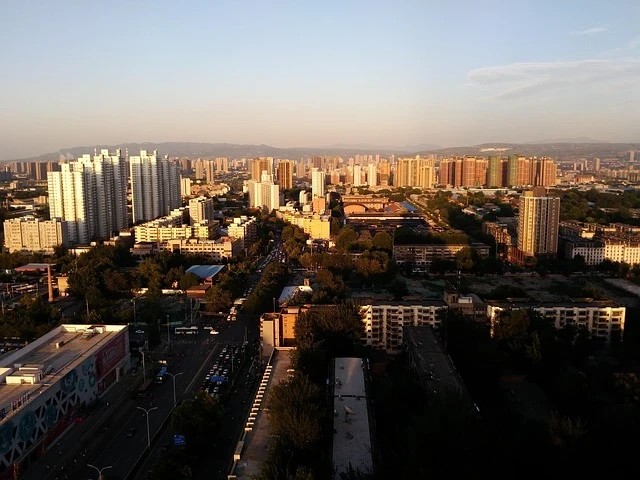
The convergence of three of the world's most consequential leaders in the Kyrgyz capital of Bishkek signals far more than a routine diplomatic courtesy. When Vladimir Putin, Xi Jinping, and Narendra Modi share a table, the geopolitical gravity of that moment reverberates across Eurasia, reshaping alliances and recalibrating the global balance of power.
This trilateral encounter, occurring on the sidelines of an international summit, carries profound implications for regional security, economic corridors, and the evolving architecture of multipolar diplomacy.
For analysts tracking the shifting tectonic plates of world order, the Bishkek meeting represents a rare opportunity to observe the personal dynamics among three leaders who collectively govern nearly half of humanity. Russia's isolation from Western institutions, China's assertive expansionism, and India's delicate balancing act between competing power blocs create a fascinating diplomatic triangle.
On This Page
The absence of immediate communiqués only deepens the intrigue, leaving observers to parse subtle signals and body language for hints of substantive agreements.
This analysis examines the strategic context, historical precedents, and potential outcomes of this high-stakes trilateral engagement. By exploring the individual motivations of each leader, the institutional frameworks that bind their nations, and the broader implications for regional stability, we can better understand why Bishkek suddenly became the epicenter of Eurasian diplomacy.
TL;DR The trilateral meeting between Putin, Xi, and Modi in Bishkek represents a pivotal moment in Eurasian diplomacy, signaling a coordinated approach to counter Western influence while managing divergent national interests. Russia seeks to cement its pivot to Asia, China aims to consolidate its Belt and Road ambitions, and India attempts to preserve strategic autonomy. The meeting's outcomes will shape regional security architectures, economic integration, and the future of multipolar governance.
The Geopolitical Chessboard: Why Bishkek Matters
Kyrgyzstan's capital has historically served as a neutral venue for great power diplomacy, offering a non-aligned setting where rival interests can converge without the baggage of Western-dominated forums. The choice of Bishkek reflects a deliberate effort to conduct substantive negotiations away from the glare of traditional diplomatic capitals. Central Asia's strategic location between Russia, China, and South Asia makes it an ideal crossroads for trilateral engagement.
The Shanghai Cooperation Organization framework provides the institutional scaffolding for this meeting, yet the trilateral format suggests deeper bilateral agendas. Each leader arrived with distinct priorities, yet all share a common interest in resisting unipolar dominance. The summit's timing, coinciding with ongoing tensions in Ukraine and the South China Sea, adds urgency to their discussions on collective security arrangements.
Russia's Strategic Pivot to Asia
For Moscow, the Bishkek meeting represents a critical opportunity to solidify its eastern partnerships amid unprecedented Western sanctions. Russia's economic survival increasingly depends on energy exports to China and India, making these bilateral relationships existential rather than merely strategic. The Kremlin views the trilateral format as a mechanism to prevent any single partner from gaining excessive leverage over its foreign policy.
Putin's diplomatic calculus involves demonstrating that Russia retains significant global influence despite its isolation from Western institutions. By convening with Xi and Modi, Moscow signals that alternative governance structures exist and function effectively. The Russian president's personal diplomacy remains his most potent tool, compensating for economic weaknesses through relationship cultivation and strategic patience.
Energy security dominates Russia's agenda, with discussions likely covering long-term hydrocarbon supply agreements and nuclear technology transfers. India's growing energy demands and China's insatiable consumption create natural complementarities with Russian production capacity. These commercial arrangements provide the economic foundation for deeper political alignment, insulating all three nations from Western financial pressure.
Military-technical cooperation also features prominently in Russia's objectives, particularly given India's continued dependence on Russian defense equipment. The meeting may address maintenance contracts, spare parts supplies, and potential joint production ventures that circumvent sanctions. Such cooperation reinforces Russia's position as an indispensable security partner for both Asian giants.
China's Belt and Road Ambitions
Beijing approaches the trilateral meeting with a comprehensive vision for Eurasian integration centered on the Belt and Road Initiative. China's infrastructure investments across Central Asia have transformed regional connectivity, creating economic dependencies that translate into political influence. Xi Jinping's participation signals China's commitment to multilateral frameworks that advance its core interests without confronting Western powers directly.
The China-Kyrgyzstan-Uzbekistan railway project represents a flagship initiative likely discussed in Bishkek, offering a southern route to European markets that bypasses Russia. This infrastructure corridor would significantly reduce transit times and costs, reshaping regional trade patterns. China's willingness to finance such projects demonstrates its capacity to provide public goods that Western institutions increasingly cannot.
Security cooperation forms another pillar of China's agenda, particularly regarding counterterrorism and intelligence sharing through the Shanghai Cooperation Organization framework. Beijing seeks to stabilize its western frontier by engaging Central Asian governments in joint security operations. The trilateral format allows China to coordinate these efforts with Russia and India, creating a unified approach to regional threats.
China's economic statecraft extends to digital infrastructure, with discussions likely covering 5G networks, artificial intelligence cooperation, and cybersecurity protocols. By standardizing technological frameworks across Eurasia, Beijing aims to create an alternative digital ecosystem independent of Western control. These initiatives position China as the architect of a parallel global system.
India's Delicate Balancing Act
New Delhi's participation in the trilateral meeting reflects its commitment to strategic autonomy, maintaining robust relationships with all major powers simultaneously. India's foreign policy tradition emphasizes non-alignment, yet contemporary realities require nuanced engagement with both Western and Eastern power centers. Modi's presence in Bishkek demonstrates India's capacity to navigate competing alliances without sacrificing its core interests.
The Quadrilateral Security Dialogue with the United States, Japan, and Australia creates potential tensions with India's Russia and China relationships. However, New Delhi has consistently maintained that its partnerships are not mutually exclusive, allowing simultaneous engagement across different frameworks. This diplomatic dexterity enables India to extract maximum benefits from all relationships while avoiding excessive dependence on any single partner.
Border tensions with China along the Line of Actual Control remain a sensitive issue, yet both nations have shown willingness to manage disputes through dialogue. The Bishkek meeting provides an opportunity for informal discussions that could de-escalate military standoffs and restore trust. India's participation signals its preference for diplomatic solutions over confrontation.
Economic cooperation with Russia, particularly in energy and defense, remains vital for India's development trajectory. Discounted Russian crude oil imports have helped India manage inflation while maintaining strategic reserves. The trilateral format allows India to pursue these beneficial arrangements without appearing to align against Western interests.
Historical Precedents and Institutional Frameworks
The Bishkek trilateral meeting builds upon decades of diplomatic engagement among Russia, China, and India, yet represents a novel configuration in contemporary geopolitics. Historically, these nations have interacted primarily through bilateral channels or larger multilateral forums, rarely convening as a distinct trilateral bloc. The emergence of this format signals a recognition that their collective interests increasingly intersect in ways that demand coordinated dialogue.
The Shanghai Cooperation Organization provides the most significant institutional framework for this engagement, having evolved from a border-security mechanism into a comprehensive regional governance body. Founded in 2001, the SCO now encompasses major Eurasian powers and serves as a platform for addressing terrorism, extremism, and separatism. The Bishkek summit occurs within this organizational context, lending institutional legitimacy to trilateral discussions.
The Evolution of Russia-China-India Relations
Relations among these three powers have traversed remarkable transformations over the past century, from ideological alignment to territorial conflict and eventual pragmatic cooperation. The Sino-Soviet split of the 1960s created lasting divisions, while India's non-aligned movement positioned it as a bridge between competing blocs. Contemporary relations reflect a mature understanding that cooperation serves mutual interests better than confrontation.
The 1990s witnessed significant rapprochement as all three nations embraced market reforms and sought integration into global economic systems. Russia's post-Soviet transition created opportunities for renewed engagement with both China and India, leading to strategic partnership agreements in the late 1990s. These formal frameworks established mechanisms for regular consultation and confidence-building measures.
The 21st century has seen accelerating convergence driven by shared opposition to Western interventionism and unilateralism. All three nations consistently advocate for multipolar world order and respect for national sovereignty. This philosophical alignment provides ideological coherence to their practical cooperation, distinguishing their approach from Western-led internationalism.
Territorial disputes continue to complicate relations, particularly the Sino-Indian border question and unresolved demarcation issues. However, both nations have demonstrated commitment to peaceful resolution through bilateral mechanisms. The trilateral format may provide additional channels for managing these sensitive issues without external interference.
Institutional Mechanisms for Trilateral Cooperation
Beyond the SCO, several other frameworks facilitate Russia-China-India engagement, including BRICS and the Russia-India-China trilateral dialogue mechanism. These institutions provide regular opportunities for ministerial-level consultations and working-group meetings on technical cooperation. The accumulation of institutional experience enables more substantive outcomes at leadership summits.
BRICS, comprising Brazil, Russia, India, China, and South Africa, has evolved into a significant platform for economic cooperation and alternative governance proposals. The New Development Bank and Contingent Reserve Arrangement represent concrete institutional achievements that reduce dependence on Western financial institutions. These mechanisms complement bilateral arrangements and strengthen the collective bargaining position of member states.
The Russia-India-China trilateral dialogue, initiated in 2002, provides a dedicated forum for foreign ministerial consultations. This mechanism has addressed issues ranging from counterterrorism to UN Security Council reform, building trust and identifying areas of common interest. The Bishkek meeting represents an elevation of this dialogue to the leadership level, signaling enhanced priority.
Regional organizations such as the Conference on Interaction and Confidence-Building Measures in Asia further expand the institutional ecosystem for trilateral engagement. These frameworks create overlapping networks of cooperation that reinforce bilateral relationships while providing alternatives to Western-dominated institutions. The cumulative effect strengthens the resilience of trilateral cooperation against external pressures.
Economic Interdependence and Trade Flows
Trade among Russia, China, and India has expanded dramatically over the past two decades, creating economic interdependencies that anchor political cooperation. China has emerged as the largest trading partner for both Russia and India, while Russia supplies critical energy resources to both Asian economies. These commercial relationships create mutual stakes in regional stability and cooperative governance.
Energy trade represents the most significant economic linkage, with Russia exporting crude oil, natural gas, and coal to both China and India. The construction of the Power of Siberia pipeline and potential future pipelines demonstrates long-term commitment to energy integration. India's increasing reliance on Russian crude, particularly following Western sanctions, has created new dependencies that shape diplomatic calculations.
Defense trade constitutes another substantial component, with Russia historically supplying the majority of India's military equipment. Joint production ventures, such as the BrahMos missile program, exemplify deep technological cooperation. China's military modernization has also benefited from Russian technology transfers, though to a lesser extent than India's procurement relationship.
Infrastructure connectivity projects, particularly China's Belt and Road Initiative, create new economic corridors linking all three nations. The International North-South Transport Corridor connecting India to Russia through Iran offers alternative trade routes. These infrastructure investments reshape regional economic geography, creating dependencies that reinforce political alignment.
We Also Published
- 01
- 02
- 03
- 04
Implications for Global Governance and Regional Security
The Bishkek trilateral meeting carries profound implications for the future of global governance, potentially accelerating the transition toward a multipolar world order. By demonstrating that major powers can coordinate effectively outside Western institutional frameworks, Russia, China, and India challenge the legitimacy of Western-led governance structures. This coordination may inspire other nations to pursue similar arrangements, fragmenting the international system into competing blocs.
Regional security architectures in Central and South Asia will likely be reshaped by the outcomes of this meeting, with potential implications for Afghanistan, Pakistan, and the broader neighborhood. Coordinated approaches to counterterrorism, border management, and transnational crime could enhance regional stability. However, divergent interests may also create new tensions as each power seeks to expand its influence.
Multipolarity and the Challenge to Western Hegemony
The trilateral meeting reinforces the narrative of multipolarity, challenging the assumption that Western institutions represent the sole legitimate framework for international governance. By convening in Bishkek rather than Geneva or New York, these leaders signal their preference for alternative venues and frameworks. This symbolic choice carries substantive implications for how international norms and rules are developed and enforced.
Russia's ongoing conflict with Ukraine has accelerated its pivot toward Asian partnerships, making trilateral cooperation with China and India existential for its diplomatic survival. Moscow's ability to maintain significant international engagement despite Western isolation demonstrates the viability of alternative governance structures. This resilience may encourage other nations to diversify their diplomatic relationships.
China's rise as a global power has fundamentally altered the distribution of international influence, creating new centers of gravity that challenge Western dominance. Beijing's willingness to provide public goods, from infrastructure financing to peacekeeping contributions, positions it as a credible alternative to Western-led institutions. The trilateral format amplifies China's capacity to shape regional governance.
India's emergence as a major economy and military power adds further complexity to the multipolar transition, as New Delhi maintains relationships across competing blocs. India's participation in both the Quad and trilateral formats demonstrates that multipolarity does not require exclusive alignment. This flexibility may serve as a model for other nations navigating great power competition.
Security Cooperation and Regional Stability
Counterterrorism cooperation represents a significant area of potential trilateral coordination, given all three nations' experience with extremist threats. Intelligence sharing, joint exercises, and capacity building could enhance regional security without requiring formal military alliances. These cooperative mechanisms may prove more effective than Western-led counterterrorism frameworks that lack local legitimacy.
Afghanistan's stability remains a shared concern, with all three nations seeking to prevent the country from becoming a haven for terrorist groups. Coordinated engagement with the Taliban government could provide leverage for ensuring security guarantees. However, competition for influence in Afghanistan may complicate trilateral cooperation, as each power pursues distinct interests.
Maritime security in the Indian Ocean and South China Sea presents both opportunities and challenges for trilateral cooperation. While all three nations support freedom of navigation, their competing territorial claims create potential flashpoints. The trilateral format may provide channels for managing these disputes without escalating to confrontation.
Nuclear non-proliferation and arms control represent areas where trilateral coordination could complement existing international frameworks. All three nations possess nuclear weapons and have expressed support for eventual disarmament, yet maintain distinct positions on specific agreements. Coordinated approaches could strengthen the non-proliferation regime while protecting national security interests.
Economic Governance and De-dollarization Efforts
The trilateral meeting may accelerate efforts to reduce dependence on the US dollar in international trade and finance. Russia's exclusion from SWIFT and Western financial systems has intensified its push for alternative payment mechanisms. China's digital yuan and India's UPI payment system offer technological solutions for bilateral settlement that bypass Western infrastructure.
Local currency settlement agreements between Russia and China have expanded significantly, with a growing share of bilateral trade conducted in rubles and yuan. Similar arrangements between India and Russia have emerged following Western sanctions. The trilateral format could standardize these mechanisms, creating a coherent alternative financial architecture.
The development of alternative payment messaging systems, such as Russia's SPFS and China's CIPS, provides infrastructure for financial transactions independent of SWIFT. Expanding these systems to include Indian financial institutions would create a parallel network capable of supporting substantial trade volumes. Such developments would reduce vulnerability to Western financial sanctions.
Gold purchases and reserve diversification represent another dimension of de-dollarization, with all three nations increasing their gold holdings in recent years. Coordinated reserve management could enhance financial stability while reducing exposure to US monetary policy. These measures collectively strengthen the economic foundations of trilateral cooperation.
Strategic Autonomy and the Future of Non-Alignment
India's participation in the trilateral meeting while maintaining its Quad commitments demonstrates the viability of strategic autonomy in contemporary geopolitics. New Delhi's capacity to engage across competing blocs without sacrificing core interests offers a model for other middle powers. This approach may gain traction as nations seek to avoid forced alignment in great power competition.
The trilateral format provides India with additional leverage in its relationships with Western powers, demonstrating that alternatives exist to Western-centric alliances. This leverage enables India to extract more favorable terms in technology transfers, defense cooperation, and market access. Strategic autonomy thus translates into tangible economic and security benefits.
Russia's experience with Western sanctions demonstrates the costs of excessive dependence on any single partnership, reinforcing the value of diversified relationships. Moscow's successful pivot to Asian markets despite unprecedented sanctions offers lessons for other nations facing similar pressures. The trilateral format institutionalizes this diversification strategy.
China's approach to international engagement emphasizes sovereignty and non-interference, principles that resonate with many developing nations. By championing these norms within the trilateral framework, Beijing positions itself as a defender of state sovereignty against Western interventionism. This narrative strengthens China's soft power and diplomatic influence globally.
Challenges and Divergences Within the Trilateral Framework
Despite shared interests, significant divergences among Russia, China, and India may limit the depth of trilateral cooperation. The Sino-Indian border dispute remains a persistent source of tension, with periodic military standoffs threatening to escalate. Managing this bilateral friction within a trilateral context requires careful diplomacy and confidence-building measures.
Competition for influence in Central Asia and South Asia creates potential friction, as each power seeks to expand its economic and security footprint. China's Belt and Road investments may be perceived as encroaching on traditional Russian influence zones. India's growing engagement with Central Asian states may similarly create tensions with both Russia and China.
Divergent approaches to global governance may also complicate trilateral coordination, particularly regarding UN Security Council reform and international norms. India's pursuit of permanent membership creates potential conflicts with China's position. Russia's approach to international law may differ from India's commitment to rules-based order.
Domestic political considerations in each nation may constrain the depth of trilateral cooperation, particularly regarding sensitive security issues. Leaders must balance international commitments with domestic constituencies and political calculations. These constraints may limit the scope of agreements reached at Bishkek.
From our network :
- Analyzing Hoya Corporation’s Midday Volume Shifts and Financial FundamentalsExamine Hoya Corporation’s midday trading volume contraction, technical moving averages, robust solvency ratios, and stellar quarterly earnings performance.
- CISA’s Ten-Advisory Wave: Why Generic Patching Fails in OT and How to Build Product-Specific PlaybooksCISA released ten ICS advisories in one week, exposing critical infrastructure risks. Generic patching fails in OT. Learn to build product-specific remediation playbooks.
- Forbidden Matrix Patterns and Visible Lattice Points: A Geometric DictionaryExplore how multidimensional 0–1 matrices encode geometric truths, linking forbidden patterns to visible lattice points and hypergraph theory, with applications in combinatorics and computational geometry.
- How AI Agents Will Change the Way We Manage Personal FinancesExplore how AI agents are transforming personal finance through automated budgeting, bill payment, and investment management, while examining the critical security protocols and governance frameworks required for safe deployment.
- Former Soap Stars Embark on Ambitious Writing Projects and Theatrical StagesDiscover how former soap opera actors are transitioning into independent scriptwriting and high-profile theatrical stage productions.
- The Hidden Cost of AI Convenience: Why Over-Permissioned Agents Are a Security Time BombDiscover why AI agents with excessive permissions create dangerous single points of failure, and learn how implementing least privilege principles can protect your organization from exploitation.
- The Final Descent: How ESA Retired the Legendary Cluster Constellation After 24 Years of Space Weather ScienceAfter 24 years mapping Earth’s magnetosphere, ESA’s Cluster mission concluded with a precisely controlled reentry over the South Pacific. This analysis explores the scientific legacy, engineering decisions, and debris mitigation principles behind one of space exploration’s most responsible retirements.
- Committed Mediterranean Precipitation Decline: Why Emissions Cuts Alone Cannot Restore Winter RainsNew NOAA research reveals that Mediterranean winter rains may decline irreversibly even with emissions cuts. Explore the science of committed climate change and regional impacts.
- Norbert’s Uncertain Path: Why Hawaii’s Storm Watch Demands Patience Over PanicTropical Storm Norbert strengthens in the Eastern Pacific with winds near 50 mph, forecast to reach Category 1 hurricane status by Friday. Long-range models disagree sharply on whether Hawaii faces any threat around September 19–23, making official guidance essential.
RESOURCES
- SCO summit brings Xi, Modi and Putin to Bishkek - Yeni Safak Englishen.yenisafak.com4 days ago ... Iranian President Masoud Pezeshkian is also scheduled to attend, with plans to meet Putin on the sidelines of the summit,…
- Meeting with President of China Xi Jinping and President of ...en.kremlin.ruJun 14, 2019 ... President of Russia Vladimir Putin: President Xi Jinping, President Khaltmaagiin Battulga,. Russia is committed to the development of trilateral ...
- After SCO handshake, will Modi, Xi and Putin hold a trilateral at Brics ...firstpost.com2 hours ago ... ... Bishkek, where Modi, Xi and Putin were all present. ... A Modi-Xi-Putin meeting in New Delhi would carry considerable…
- PM Modi की Putin और Xi Jinping से मुलाकात, पूरी दुनिया की नजर ...instagram.com21 hours ago ... pm modi, narendra modi, vladimir putin, xi jinping, modi putin, modi xi, putin xi, trilateral meeting, three leaders, leaders meeting,…
- Xi Jinping, Vladimir Putin and Narendra Modi are traveling to ...facebook.com1 day ago ... Xi Jinping, Vladimir Putin and Narendra Modi are traveling to Bishkek for the Shanghai Cooperation Organization summit.
- Russia-India-China Trilateral Grouping: More Than Hype?thediplomat.comJul 5, 2019 ... These efforts started in Bishkek, when Russian President Vladimir Putin, Indian Prime Minister Narendra Modi, and Chinese President Xi Jinping ...
- PM Modi meets Russian President Vladimir Putin in Bishkek | India ...timesofindia.indiatimes.comJun 13, 2019 ... In December last, PM Modi, President Putin and Chinese President Xi Jinping held a trilateral meeting, the second among the…
- Chinese President Xi Jinping, Russian President Vladimir Putin and ...facebook.com4 days ago ... ... Modi meets Putin, Xi Jinping at SCO Summit. 0 reactions ·. 1 comment ... meeting behind closed doors for…
- PM Modi Meets Xi Jinping, Vladimir Putin on Sidelines of SCO Summitm.thewire.inJun 13, 2019 ... Bishkek: Prime Minister Narendra Modi ... Prime Minister Modi, President Putin and Chinese President Xi Jinping held a trilateral meeting ...
- Putin In China And Four Other Things To Watch At This Year's SCO ...rferl.orgAug 31, 2025 ... Russian President Vladimir Putin and Chinese leader Xi Jinping meet in Astana, Kazakhstan for the 2024 SCO summit. Russian President…
- Will Modi's snub of Xi's belt and road derail China-India ties?scmp.comJun 19, 2019 ... ... Bishkek declaration. Now, after equal parts public bonhomie and ... With just 10 days before Xi and Modi meet…
- PM Modi holds talks with Putin, Xi Jinping at SCO Summitthestatesman.comJun 13, 2019 ... “PM Modi has accepted the invitation,” he said. Advertisement. Gokhale said that India, Russia and China will be holding a…
- IndiaTV News English - YouTubeyoutube.com2 hours ago ... Modi-Putin-Xi at SCO Summit 2026: What's on the Agenda in Bishkek? ... SCO Summit 2026: PM Modi Meets Indian, Kyrgyz…
- PM Modi meets Xi Jinping, Vladimir Putin And Ashraf Ghani At Bishkekindiatoday.inJun 14, 2019 ... Prime Minister Narendra Modi held three bilateral meetings in Bishkek. The first meeting was with Chinese President Xi Jinping, ...
- Leaders of India, China, and Russia to Hold Second Trilateral ...diplomacybeyond.comJun 26, 2019 ... In a key trilateral meeting between India, China and Russia ... Prime Minister of India Narendra Modi, Chinese President Xi…
- 01
- 02
- 03
- 04
- 05
- 06
- 07
- 08
0 Comments