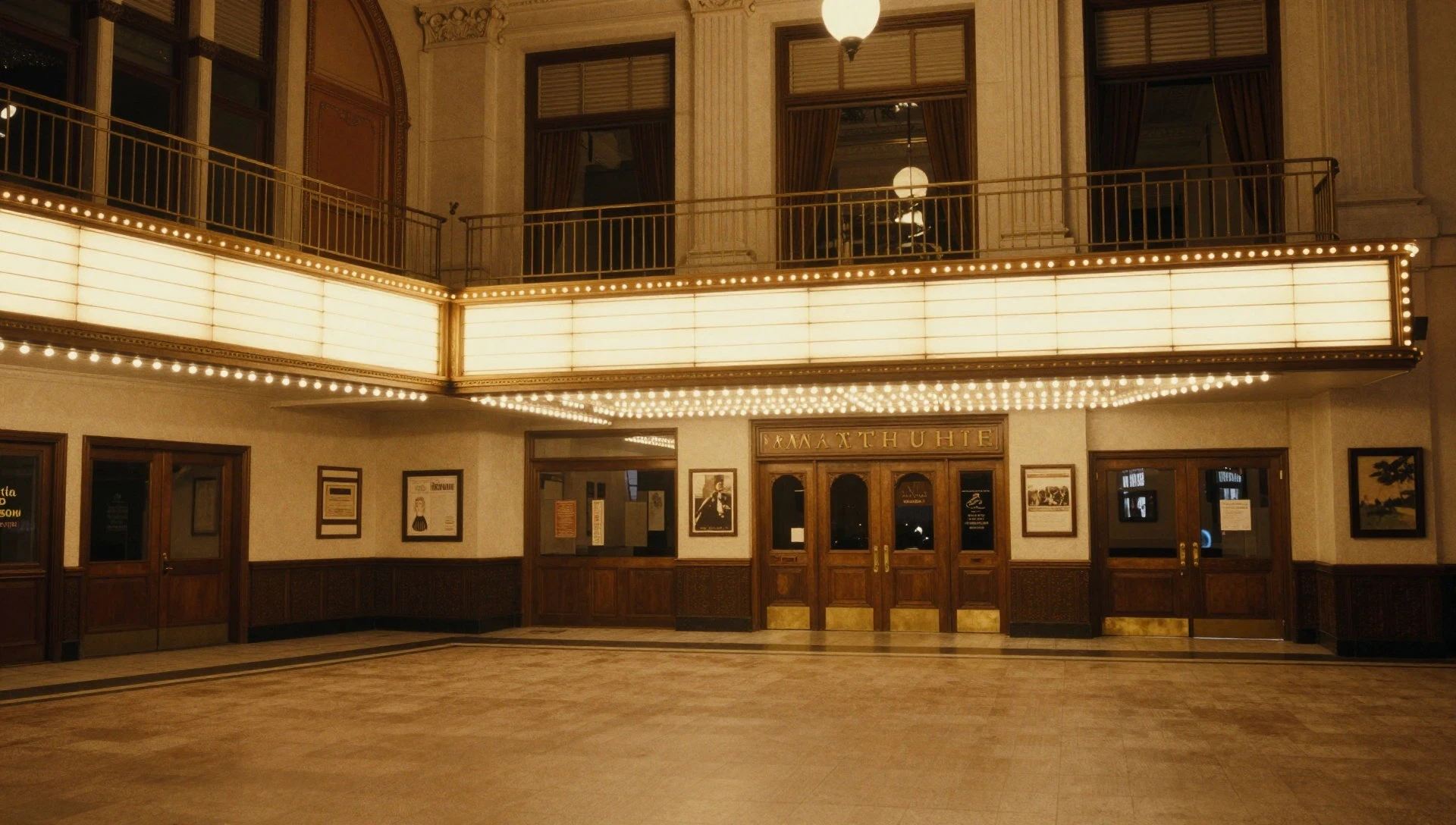
The matinee show was never merely a screening scheduled before dusk; it was a distinct social institution with its own economics, etiquette, and emotional register. In the middle decades of the twentieth century, the afternoon performance functioned as the working person's cinema, a low-cost portal into Hollywood spectacle that asked little of the patron beyond a few coins and an hour of free time. Its rise tracked the spread of permanent picture houses into neighbourhoods and small towns, where a single auditorium served an entire community and the programme had to be stretched across the whole day to justify the rent. Understanding the matinee means understanding how ordinary people negotiated leisure, money, and respectability in an era when a ticket stub carried real social weight.
What made the daytime screening remarkable was the way it inverted the hierarchy of the evening show. The night performance was aspirational, a dressed-up occasion tied to courtship and status; the matinee was practical, unbuttoned, and forgiving. Mothers brought infants, schoolchildren smuggled in sweets, shift workers arrived in overalls, and pensioners claimed the same back-row seats every Tuesday. This casual crowd gave the afternoon its texture, and it also gave exhibitors a reliable revenue stream during hours when the building would otherwise sit dark and unprofitable. The matinee was, in essence, a business solution that accidentally became a cultural ritual, and its story illuminates how commercial logic and everyday habit so often shape one another.
The following analysis traces that ritual from its origins in continuous-performance programming through the discount structures, double features, and newsreel formats that defined it, and on to the forces that gradually dissolved it. It examines who actually attended, what they paid, and how the experience differed from the evening show in atmosphere and expectation. It also considers the quieter legacy: the way matinee habits trained generations to treat cinema as a routine rather than an event, and how that training still echoes in the discount screenings and streaming windows of the present day.
On This Page
TL;DR The matinee show era describes the long period when daytime cinema screenings served as affordable, informal entertainment for workers, families, students, and retirees. Cheaper tickets, continuous programming, and a relaxed social atmosphere made the afternoon performance a fixture of local exhibition, distinct from the aspirational evening show. The matinee declined as television, suburbanisation, rising labour costs, and changing leisure patterns eroded its audience, yet its influence persists in modern discount screenings, senior cinema programmes, and the broader expectation that films should be available at convenient, low-cost times.
The Origins of Daytime Cinema and the Continuous Performance Model
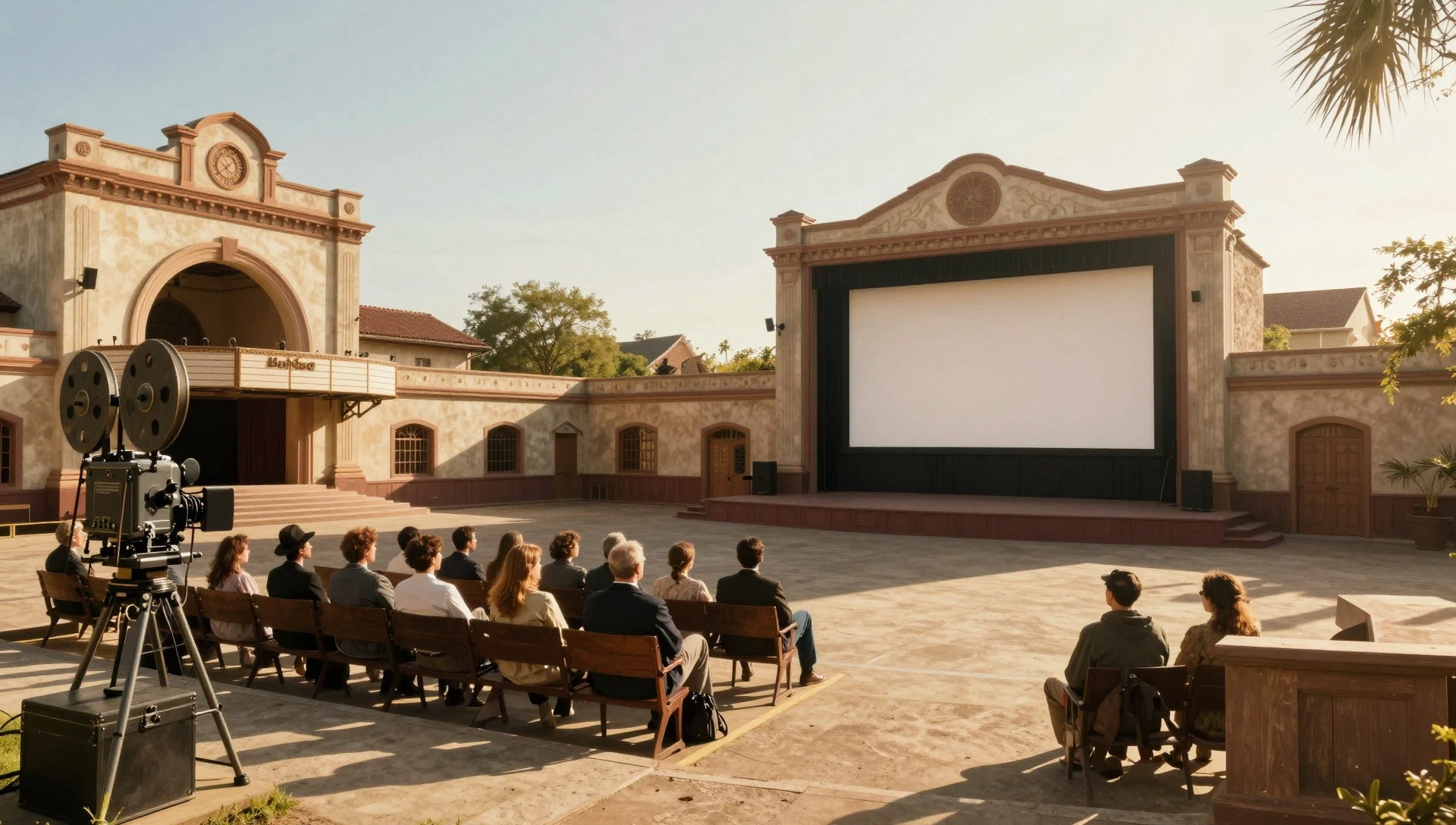
The matinee did not arrive as a deliberate innovation so much as an economic necessity. Early nickelodeons and storefront theatres discovered that keeping the projector running through the afternoon spread fixed costs across more paying customers, and the practice of continuous performance, in which patrons entered at any point and stayed as long as they wished, became the default operating model. This arrangement suited an audience without fixed schedules, and it established the expectation that cinema was something you dropped into rather than something you booked. The afternoon slot therefore emerged from the practical arithmetic of exhibition rather than from any grand cultural design.
From Storefront Screens to Purpose-Built Palaces
As picture houses grew into purpose-built theatres during the 1910s and 1920s, the matinee survived the transition and even flourished. Palatial cinemas with thousands of seats needed to fill them repeatedly, and afternoon programming allowed a single venue to serve distinct audiences across the day. Exhibitors began advertising specific matinee times and tailoring bills to local tastes, while trade publications debated the merits of shorter afternoon programmes against the longer evening presentations. The matinee thus became a formalised part of the exhibition calendar, with its own advertising language and its own assumptions about who would attend.
The physical experience of the afternoon show differed markedly from the evening. Daylight leaked through imperfectly shaded windows, audiences were smaller and more dispersed, and the atmosphere was conversational rather than ceremonial. Ushers enforced looser standards, and the programme often included serials, cartoons, and travelogues that appealed to casual viewers. This informality was not a defect but a feature, and it helped cement the matinee as a space where the rules of public behaviour were gently relaxed.
The Role of Newsreels and Serial Programming
Afternoon bills leaned heavily on formats that rewarded repeat attendance. Serialised adventure films, with their weekly cliffhangers, were tailor-made for patrons who could return at the same time each week, and newsreels offered a cheap way to keep programming topical. Cartoons and short comedies filled the gaps between features and gave the matinee a varied, magazine-like rhythm. These formats were inexpensive for exhibitors to license and easy for audiences to follow, and they shaped the matinee into something closer to a variety programme than a single cinematic event.
The serial format in particular created a loyal afternoon constituency. Children and adolescents who could not attend evening shows became regular matinee patrons, and their enthusiasm sustained the format for decades. Exhibitors recognised this and began marketing directly to younger audiences, sometimes with contests and giveaways timed to the afternoon slot. The matinee thereby became a training ground for future cinema habit, embedding the idea of regular film attendance into the routines of people who would later graduate to evening shows.
The Economics of the Cheap Ticket

Price was the matinee's defining feature and its most powerful marketing tool. Afternoon tickets typically cost a fraction of evening admission, and exhibitors justified the discount through lower labour costs, reduced heating and lighting demands, and the simple fact that an empty seat earns nothing. This pricing structure made cinema accessible to audiences who could not afford the evening show, including children, domestic workers, and the elderly. The cheap ticket was not charity but arithmetic, yet its social consequences were profound, because it democratised access to a cultural form that might otherwise have remained the preserve of the comfortably off.
Discount Structures and Local Variation
Discounting was rarely uniform. Urban palaces might offer modest reductions, while small-town houses used aggressive pricing to fill afternoon seats, and some exhibitors experimented with scaled prices by age or seat location. Children's matinees, Saturday morning clubs, and ladies' afternoon screenings each carried their own price points and their own promotional logic. This variation reflected local market conditions and the ingenuity of individual managers, and it produced a patchwork of pricing practices that trade journals regularly surveyed and debated.
The economics also shaped programming. Cheaper tickets meant thinner margins, which encouraged exhibitors to book less expensive films for the afternoon and reserve prestige pictures for the evening. Reissues, B-features, and imported shorts filled matinee bills, and this gave the afternoon show a reputation for scrappier, more eclectic fare. Audiences came to expect this, and the matinee developed its own canon of beloved minor films that never played the evening slot.
Who Actually Attended
The matinee audience was defined by who could not attend at night. Mothers with young children, shift workers, students, retirees, and the unemployed formed the core constituency, alongside children whose parents considered an afternoon film a safe diversion. This composition gave the matinee a distinctive social character, more heterogeneous and less status-conscious than the evening crowd. Sociologists and contemporary commentators noted the matinee's role as a levelling space, where different classes and generations shared an auditorium without the formalities that governed evening attendance.
Attendance patterns also varied by day and season. Weekday afternoons drew smaller, more local crowds, while weekends and school holidays brought surges of younger patrons. Summer heat made the air-conditioned cinema an attractive refuge, and winter afternoons offered warmth and light in equal measure. These seasonal rhythms made the matinee a responsive institution, adapting its appeal to the immediate needs of its neighbourhood.
The Social Atmosphere of the Afternoon Screening

Anyone who remembers the matinee remembers the noise. Afternoon audiences talked back to the screen, passed sweets along rows, and treated the auditorium as an extension of the street or the parlour. Babies cried, children ran in the aisles, and ushers exercised a tolerant authority that would have been unthinkable at the evening show. This relaxed atmosphere was not a failure of discipline but a different set of expectations, and it made the matinee welcoming to people who might have felt out of place in a more formal setting. The cinema became, for a few hours, a genuinely public living room.
Etiquette, Tolerance, and the Usher's Discretion
Exhibitors developed informal codes for managing the afternoon crowd. Ushers were instructed to intervene only when behaviour threatened the screening or the safety of patrons, and managers tolerated a degree of disorder that would have been unacceptable later in the day. This discretion reflected both commercial pragmatism and a recognition that the matinee audience expected a looser experience. The result was a distinctive social contract, unwritten but widely understood, in which patrons policed themselves and staff intervened sparingly.
The tolerance had limits, of course. Persistent disruption could lead to ejection, and some venues enforced stricter rules for unaccompanied children. But the general pattern was permissive, and it helped the matinee retain its reputation as the friendly, unpretentious face of cinema. Contemporary accounts often describe the afternoon show with affection precisely because of this informality, contrasting it with the stiff formality of evening attendance.
Gender, Class, and the Matinee Public
The matinee was also a gendered space. Afternoon screenings drew heavily on women, particularly mothers and domestic workers whose schedules allowed daytime leisure, and some exhibitors cultivated this audience with dedicated ladies' programmes and matinee clubs. These initiatives acknowledged that the afternoon audience had different tastes and priorities from the evening crowd, and they helped establish cinema as a legitimate daytime activity for women at a time when public leisure was often constrained by propriety.
Class dynamics were equally visible. The cheap ticket drew working-class patrons who might have felt excluded from the evening show, and the mixed audience of the matinee produced encounters across social boundaries that were rare elsewhere. This mixing was not always comfortable, and some commentators worried about the influence of the afternoon crowd on cinema's respectability. Yet the matinee persisted, and its persistence suggests that the demand for accessible, informal entertainment outweighed anxieties about decorum.
We Also Published
- 01
- 02
- 03
- 04
Programming, Double Features, and the Afternoon Bill
The matinee bill was an art form in its own right. Exhibitors assembled afternoon programmes from a mix of features, shorts, serials, and newsreels, sequencing them to hold attention across several hours. The double feature, which became widespread during the 1930s, was particularly suited to the matinee, since two films for one low price offered obvious value to budget-conscious patrons. This programming logic shaped what audiences saw and how they understood cinema, teaching them to expect variety and volume rather than a single prestige attraction.
The Double Feature as Value Proposition
Double features transformed the economics of the afternoon. By pairing a stronger film with a weaker one, exhibitors could fill seats while spreading the cost of the programme across two titles. The format also encouraged audiences to arrive early and stay late, increasing concession sales and extending the visit. Critics worried that the double feature lowered standards and encouraged rushed production, but audiences embraced it, and the practice became a defining feature of mid-century cinema-going.
The double feature also changed how films were made and marketed. Studios produced B-pictures specifically for the lower half of the bill, and these films developed their own genres and stars. The afternoon audience became the primary market for these productions, and their tastes influenced what studios chose to make. The matinee was therefore not just a distribution channel but a creative force, shaping the output of an entire tier of the film industry.
Newsreels, Cartoons, and the Magazine Rhythm
Between the features, the matinee offered a stream of shorter material that gave the afternoon its distinctive rhythm. Newsreels provided a window on the world, cartoons offered reliable laughs, and travelogues and instructional shorts filled the remaining time. This magazine-like structure meant that even a mediocre feature could be part of an enjoyable afternoon, and it gave audiences a reason to arrive at the start rather than drifting in midway.
The short subjects also carried cultural weight. Newsreels shaped public understanding of current events, cartoons introduced children to a shared vocabulary of characters, and serials created weekly rituals of anticipation. These formats have largely disappeared from modern cinema, but their influence persists in the way audiences expect variety and pacing within a single screening.
The Decline of the Afternoon Show
The matinee's long decline was gradual and uneven, driven by forces that reshaped leisure across the industrialised world. Television is often named as the primary culprit, and it certainly eroded the habit of leaving home for an afternoon film, but the story is more complex. Suburbanisation moved audiences away from neighbourhood cinemas, rising labour costs made afternoon staffing expensive, and changing work patterns reduced the pool of daytime leisure. Each of these pressures weakened the matinee, and together they transformed it from a universal fixture into a niche offering.
Television, Suburbia, and Changing Leisure
Television offered free, convenient entertainment in the home, and it competed directly with the matinee's core appeal. Why pay for an afternoon film when the living room offered cartoons, serials, and news at no cost? Suburbanisation compounded the problem by relocating audiences away from the dense neighbourhoods that had sustained local cinemas, while the automobile made the drive-in a rival attraction. These shifts did not kill the matinee overnight, but they steadily reduced its audience and its economic viability.
Changing work patterns also mattered. The spread of the five-day week and the decline of shift work altered when people had free time, and the afternoon slot lost some of its distinctiveness as leisure hours converged. Rising labour costs made it harder to justify staffing an auditorium for a small afternoon crowd, and many exhibitors responded by cutting matinee sessions or consolidating them into weekends. The institution that had once been universal became increasingly selective.
Survivals and Adaptations
The matinee did not vanish entirely. Discount afternoon screenings persisted in many markets, particularly for families and older audiences, and the concept adapted to new formats such as senior cinema programmes and weekday bargain shows. Some art-house cinemas retained afternoon slots for niche audiences, and the rise of streaming has revived a version of the matinee through flexible viewing times. The institution proved resilient because its core appeal, affordable and convenient access to film, never disappeared.
These survivals reveal what the matinee really was: a response to the practical constraints of everyday life rather than a fixed cultural form. As those constraints changed, the matinee changed with them, shedding its serials and newsreels but keeping its essential promise of accessible, low-pressure cinema. The afternoon show endures in altered form because the need it served endures.
The Matinee's Enduring Legacy in Modern Cinema Culture
The matinee left a deeper mark than its declining attendance figures might suggest. It trained generations to treat cinema as a routine pleasure rather than a rare occasion, and it established the principle that films should be available at prices and times that fit ordinary life. That principle survives in discount Tuesdays, senior screenings, and the flexible viewing windows of streaming platforms. The matinee also shaped audience expectations about variety and pacing, and its influence can be seen in the way modern programmes mix features with shorts and supplementary content.
From Bargain Matinees to Streaming Windows
Contemporary cinema chains still offer discounted daytime screenings, often aimed at families and older patrons, and these programmes are direct descendants of the original matinee. Streaming platforms have extended the logic further, releasing films at times designed to suit household routines rather than theatrical convention. The vocabulary has changed, but the underlying idea, that access should be convenient and affordable, remains recognisably matinee-like. The afternoon show's DNA is embedded in the scheduling decisions of the present.
The comparison is not merely rhetorical. Both the matinee and modern streaming windows respond to the same question: when and how do ordinary people actually want to watch films? The matinee answered that question for a cinema-centred age, and streaming answers it for a screen-saturated one. Recognising the continuity helps explain why certain scheduling ideas persist across radically different technologies.
What the Matinee Teaches About Everyday Leisure
The matinee's history is a case study in how commercial institutions adapt to the rhythms of everyday life. It succeeded because it fit around work, childcare, and limited budgets, and it declined when those rhythms changed. This suggests that leisure institutions endure not through tradition alone but through their continued usefulness, and that the most durable cultural forms are often the most practical ones. The afternoon show was never glamorous, but it was useful, and usefulness kept it alive for decades.
That lesson applies well beyond cinema. Any institution that serves ordinary people must reckon with the constraints of time and money, and those that do tend to outlast those that do not. The matinee's quiet persistence, in adapted forms, is evidence that the everyday audience remains the most important constituency in popular culture, and that serving it well is its own kind of distinction.
From our network :
- CISA’s Ten-Advisory Wave: Why Generic Patching Fails in OT and How to Build Product-Specific PlaybooksCISA released ten ICS advisories in one week, exposing critical infrastructure risks. Generic patching fails in OT. Learn to build product-specific remediation playbooks.
- Forbidden Matrix Patterns and Visible Lattice Points: A Geometric DictionaryExplore how multidimensional 0–1 matrices encode geometric truths, linking forbidden patterns to visible lattice points and hypergraph theory, with applications in combinatorics and computational geometry.
- The Final Descent: How ESA Retired the Legendary Cluster Constellation After 24 Years of Space Weather ScienceAfter 24 years mapping Earth’s magnetosphere, ESA’s Cluster mission concluded with a precisely controlled reentry over the South Pacific. This analysis explores the scientific legacy, engineering decisions, and debris mitigation principles behind one of space exploration’s most responsible retirements.
- University Language Proficiency Exams: Why Institutional Tests Demand Different Preparation Than IELTS and TOEFLDiscover why university-specific language proficiency examinations differ fundamentally from IELTS and TOEFL, and learn strategic preparation approaches for institutional assessment success.
- The Hidden Cost of AI Convenience: Why Over-Permissioned Agents Are a Security Time BombDiscover why AI agents with excessive permissions create dangerous single points of failure, and learn how implementing least privilege principles can protect your organization from exploitation.
- How AI Agents Will Change the Way We Manage Personal FinancesExplore how AI agents are transforming personal finance through automated budgeting, bill payment, and investment management, while examining the critical security protocols and governance frameworks required for safe deployment.
- Committed Mediterranean Precipitation Decline: Why Emissions Cuts Alone Cannot Restore Winter RainsNew NOAA research reveals that Mediterranean winter rains may decline irreversibly even with emissions cuts. Explore the science of committed climate change and regional impacts.
- Live Online English Classes for Kids: Do They Actually Reduce Anxiety?A ten-week study reveals that synchronous online English classes can significantly reduce child language anxiety while improving listening and reading skills. Discover what makes these programs effective and how parents can select the right one.
- Mobile Learning and VR in English: What Global Evidence Reveals About Effective Language TechnologyA systematic review across 14 countries reveals which language-learning technologies genuinely work. Mobile learning, AI, and VR show measurable benefits when pedagogically integrated. This evidence-based guide helps educators and learners select technology that delivers real return on investment.
RESOURCES
- Garth Brooks is entering his Elvis era, playing matinees ... - Facebookfacebook.comOct 28, 2026 ... Garth Brooks is entering his Elvis era, playing matinees and delivering a robust show of hits. A recent show in…
- For a Meal and Musical, I Always Drive to Eugene - Jazzy Ladies Cafejazzyladiescafe.comJan 16, 2026 ... I've been in my musical era for a while – I just can't get enough ... matinee or an evening…
- Student Matinee Series - Writers Theatrewriterstheatre.orgStudent Matinee Series. Writers Theatre Education welcomes students to ... A Black boxer in the Jim Crow era risks it all for his shot…
- Midday Matinees | ECC Arts Centereccartscenter.orgWith a lively, intimate musical backdrop that captures the charm of every era, this show is a feel good journey through the tunes that…
- Ready Steady 60's Matinee Show at MacArts - TicketSourceticketsource.comWith stunning vocals and high-energy performances, they recreate the magic of this unforgettable era, delivering a fantastic two-hour show you won't want to ...
- TICKETS | KC JAZZ ORCHESTRAkcjo.orgThis year, we invite students to an abbreviated, matinee showing in addition to the evening show. ... Welcome to In My Jazz Era! Enjoy…
- CSC'S SHAKESPEARE BEYOND MARKS AMERICA'S 250TH WITH ...chesapeakeshakespeare.com... ERA ROMEO AND JULIET Baltimore (6.22.26) - This summer, Chesapeake ... CSC's vibrant education program includes an extensive matinee series, camps ...
- The Mersey Beatles "Sgt Pepper's Lonely Heart Club Band" Matineecityofedwardsville.comOct 28, 2026 ... ... show. Relive the sights and sounds of Beatlemania in the 2nd half of the show, with a set of…
- What time period are Contemporary plays from? : r/MusicalTheatrereddit.comNov 4, 2020 ... Definition of a period piece in theatre. Meaning of matinee in theatre. Matinee show times for plays. Understanding pre-show in…
- Indoor Kids: Family-Friendly Matinees | Music Box Theatremusicboxtheatre.com... Matinees”, a recurring series celebrating films for the whole family, from every era of filmdom. Bring just yourself; bring your nephews, nieces, kids;…
- Student Matinee Series - Newman Center for the Performing Artsnewmancenterpresents.comThe Newman Center's popular student matinee series features four performances during the 2026-27 season. ... era. The Ballet boasts a full complement of 60 ...
- A New Era Begins: Pacific Symphony Announces Artistic and Music ...pacificsymphony.orgFeb 4, 2026 ... The 2026-27 Classical Series includes 12 subscription weeks, plus four Sunday matinees and six specials. This is a season to…
- Victory Belles Matinee Luncheon | The National WWII Museumnationalww2museum.orgTheir repertoire includes all the treasured gems of the WWII era plus patriotic classics, including a musical salute to each branch of the US…
- Education | Medieval Times Dinner & Tournamentmedievaltimes.comFrom age-appropriate lesson plans to pre-made student activities and worksheets, putting your Medieval Era Curriculum together will be a snap. Lessons, Grades K ...
- Princess Theater Trained Actors | Iowa PBSiowapbs.orgThe acting companies put on nightly shows and three or four matinee performances each week. ... Famous entertainers of the era got their start…
- 01
- 02
- 03
- 04
- 05
- 06
- 07
- 08
0 Comments