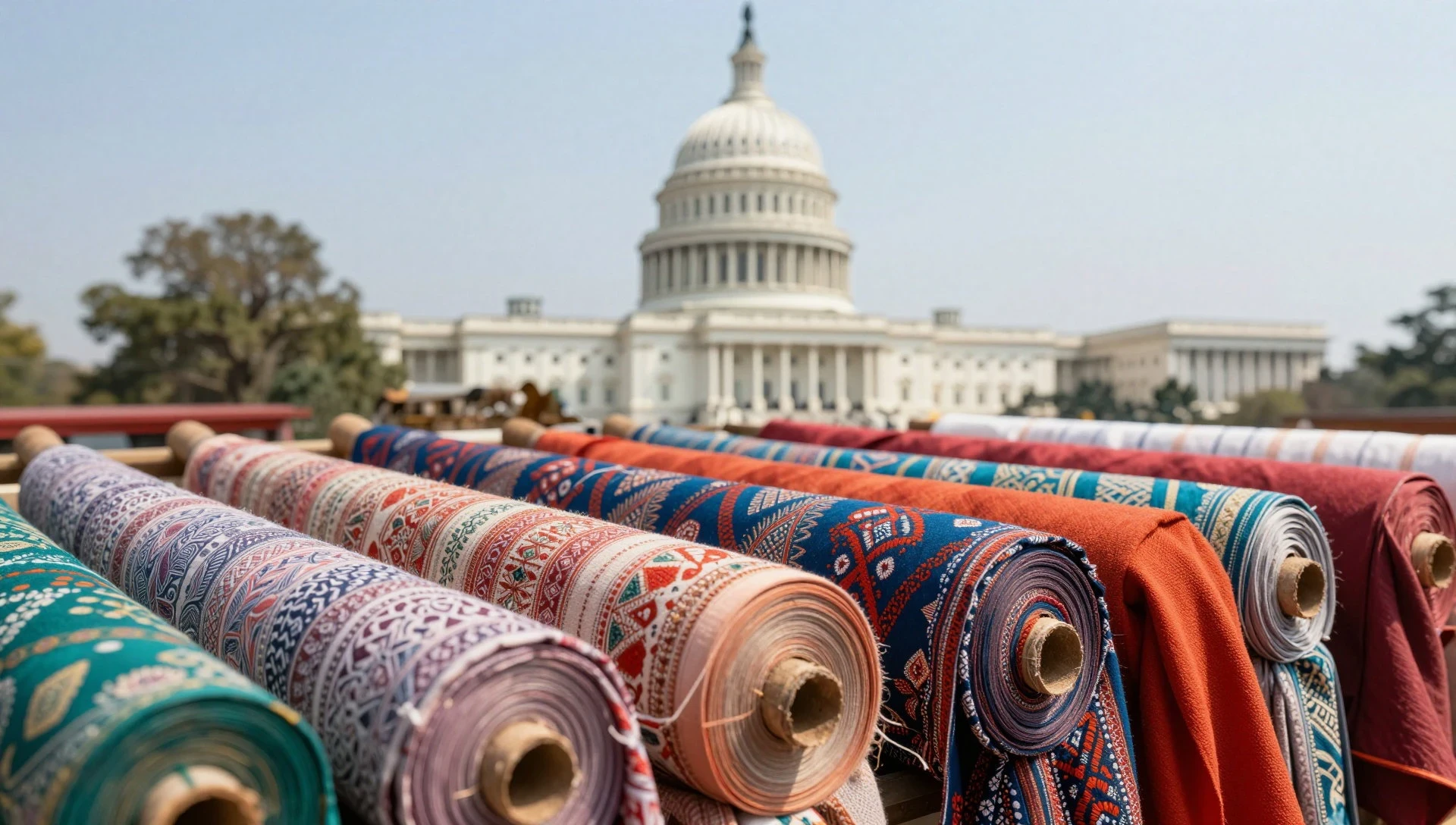
Bangladesh's exposure to American policy decisions has become a structural feature of its economy rather than a passing irritant. Over roughly eighteen months, tariff rates on Bangladeshi garments have shifted five separate times, an Iran-related war has driven up imported fuel costs, and a strong dollar has inflated the local-currency burden of servicing foreign debt.
None of these levers sits in Dhaka's hands, yet each transmits directly into export earnings, fiscal balances, and household prices. The 3 November midterm elections, in which Americans choose a new House of Representatives and about one-third of the Senate, therefore carry unusual weight for a South Asian economy with no vote in the contest.
The analytical question is not whether a Democratic-controlled Congress would restore the cooperative American posture Bangladesh navigated for five decades. It would not. The realistic question is narrower and more measurable: could divided government impose procedural limits on an administration that has treated alliances as transactions and trade as leverage?
On This Page
Dhaka has concrete reason to welcome such limits, and trade policy offers the clearest evidence. A legislature able to compel public justification of tariffs and war powers would convert unilateral discretion into contestable process, which matters enormously to exporters pricing forward orders.
This analysis reconstructs the tariff chronology, weighs the historical base rates for midterm losses, and separates what a Democratic majority can actually deliver from what it cannot. It also examines the transmission channels running from Washington to Dhaka: garment duties, fuel import costs, dollar-denominated debt, and multilateral concessional finance.
The conclusion is deliberately unsentimental. A counterweight is not a rescue, but for a trading economy absorbing repeated shocks, procedural constraint on executive discretion has measurable commercial value.
TL;DR Bangladesh has absorbed five changes to US garment tariffs since April 2025, alongside fuel-cost inflation from an Iran conflict and heavier dollar debt service. The 3 November US midterms could deliver a Democratic House and a narrower Senate edge, but not veto-proof majorities. Congress cannot reverse tariffs or end the Iran war; it can force disclosure, scrutiny, and slower unilateral action. Because the US buys roughly one-fifth of Bangladesh's garment exports, and because damage has flowed more from uncertainty than from any single rate, that procedural check is the realistic prize for Dhaka.
The Tariff Chronology and the Uncertainty Premium
The sequence of American tariff decisions on Bangladeshi goods reads less like a coherent trade strategy than a series of improvisations, each superseding the last within months. Washington announced a 37 percent duty in April 2025, imposed 20 percent in August, and settled on 19 percent under a trade agreement signed on 9 February this year.
Eleven days later, the US Supreme Court ruled that the emergency statute underpinning those duties granted the president no authority to impose them. A temporary 10 percent levy followed, replaced in July by a fresh measure under Section 301 of the Trade Act.
For Dhaka, the legal whiplash has produced a specific and unresolved problem: nobody can state with confidence what the February agreement is actually worth. A pact signed under one legal theory, then undercut by a court ruling and superseded by a different statutory route, offers limited assurance to buyers or to the Bangladeshi exporters who must plan capacity, source fabric, and finance working capital months ahead of shipment. The agreement's value now depends on political durability rather than legal finality.
The commercial damage is best understood as an uncertainty premium rather than a tariff burden. An American buyer placing a spring order needs a defensible final landed cost before committing volume.
When the applicable rate can change by executive action, buyers either demand price concessions that compress Bangladeshi margins or shift sourcing toward countries with stable treatment. Both responses reduce orders even when the headline tariff is unchanged, which explains why eighteen months of disruption has not tracked neatly to any single rate.
Five Rate Changes in Eighteen Months
Each shift in the tariff schedule reset buyer expectations and forced exporters to reprice outstanding negotiations. The pattern matters more than any individual figure because it demonstrates that the operative variable is volatility itself.
A stable 19 percent duty would be painful but plannable; a rate that moves from 37 to 20 to 19 to 10 and then to an untested Section 301 basis is not. Forecasting becomes guesswork, and guesswork gets priced into contracts.
The Supreme Court ruling deserves particular attention because it briefly appeared to offer relief and instead produced a new vulnerability. Rather than seek congressional approval to extend the temporary 10 percent levy beyond its 150-day limit, the administration simply changed statutory instruments.
That maneuver is the single most instructive fact in the entire chronology: it shows how readily the White House can route around legislative constraint when the constraint is procedural rather than substantive.
Section 301 requires no such congressional approval, which means the current tariff architecture rests on executive discretion alone. For Bangladeshi exporters, this is the critical structural point. Even if the present rate holds, the mechanism permitting new duties without legislative consent remains intact.
Any assessment of midterm consequences must therefore focus on whether Congress can impose friction on that mechanism, not on whether it can repeal the duties outright.
Why the February Agreement Lacks Enforceable Value
A trade agreement's worth depends on the durability of the legal instrument behind it and the political will to sustain it. Bangladesh's February pact satisfied neither test for long.
The Supreme Court removed the statutory foundation within eleven days, and the administration's subsequent pivot to Section 301 demonstrated that the executive branch could reconstruct equivalent pressure through alternative means. Dhaka is therefore negotiating against a counterparty whose commitments can be re-based unilaterally.
This asymmetry has practical consequences for how Bangladesh should read any future American assurance. Legal text matters less than the political cost of reversal. Where reversal carries no congressional price, assurances are cheap.
That is precisely the gap a legislative counterweight would narrow, not by binding future administrations but by raising the domestic political expense of abrupt changes. For a mid-sized exporting economy, that is a meaningful improvement in the reliability of counterparty commitments.
The Section 301 Route and Executive Discretion
Section 301 of the Trade Act allows the executive to act against foreign trade practices without seeking fresh congressional authorization, which is why it became the instrument of choice once the emergency statute collapsed. The shift was not cosmetic.
It moved the tariff regime from a legally contested footing onto firmer procedural ground while preserving presidential control over rates, targets, and timing. Congressional leverage over that channel is limited to oversight rather than approval.
Understanding this distinction is essential to any realistic appraisal of the midterms. Analysts who frame the election as a referendum on tariffs misread the institutional mechanics. A Democratic majority cannot simply vote the duties down; it can summon officials, demand documentation, publish findings, and attach conditions to unrelated legislation.
Each of those tools raises the cost of discretion without eliminating it, which is a modest but genuine shift in the balance of advantage.
How Buyers Price Political Risk
Sourcing decisions are made by merchandisers working to delivery calendars, not by diplomats. When a tariff basis can change between order placement and shipment, buyers respond by shortening commitments, splitting volumes across countries, or demanding open-ended price adjustments. Bangladeshi factories then absorb the residual risk through thinner margins and underused capacity. The aggregate effect resembles a tax on reliability rather than on goods.
This is why the composition of American government matters commercially. Divided government produces gridlock, and gridlock in trade policy means fewer abrupt changes. For an exporter, legislative paralysis is not a civic failure but a form of predictability.
The paradox is worth stating plainly: Bangladesh's immediate economic interest lies less in who wins than in whether the winner can restrain unilateral action.
Electoral Arithmetic and the Limits of a Democratic Majority
Forecasters and polls point toward Democrats winning the House comfortably and securing a narrower advantage in the Senate. The historical baseline supports that expectation: the president's party has lost House seats in 20 of the 22 midterm elections since 1938, a remarkably consistent pattern of midterm correction.
This cycle's discontent is driven principally by the cost of living, which registers directly in household budgets and tends to dominate voter priorities over foreign policy questions.
The vote will also function as a referendum on an administration that treats alliances as transactions and shows limited interest in the democratic partnerships that once defined American leadership. That broader question is what the rest of the world, including capitals far from Dhaka, will be watching.
For Bangladesh, however, the relevant variable is not the symbolic meaning of the result but the specific institutional powers that change hands, and those powers are narrower than headlines suggest.
Divided government in Washington produces negotiation, delay, and public justification. Each of those outcomes is commercially useful to an exporter facing unpredictable duties. The analysis below quantifies the gap between what a Democratic majority can deliver and what observers might assume it can deliver, because that gap determines whether Dhaka's stake in the result is substantial or merely rhetorical.
The 20-of-22 Historical Pattern
Since 1938, the incumbent president's party has lost House seats in twenty of twenty-two midterm contests. The pattern is robust enough to function as a baseline rather than a prediction, and it reflects structural features of American politics: turnout advantages for the opposition, the tendency of governing coalitions to accumulate grievances, and the natural rhythm of correction after presidential victories. This cycle fits the template closely.
What distinguishes this election is the salience of living costs. Inflation and price levels dominate voter concern, and they translate into losses for whichever party controls the executive. For Bangladesh, the implication is that American voters are responding to domestic economic pain, not to foreign policy doctrine.
That matters because it suggests the resulting congressional majority will prioritize oversight of prices and spending over a wholesale rethinking of trade strategy toward South Asia.
Historical base rates should nonetheless be handled with care. A comfortable House margin and a narrow Senate edge produce different legislative dynamics, and the Senate's procedural rules give individual members outsized leverage.
The precise size of any Democratic advantage will determine whether oversight becomes a sustained campaign or a sporadic gesture, which in turn shapes how much reassurance Bangladeshi exporters can draw from the result.
Why Veto-Proof Majorities Are Unlikely
Democrats are unlikely to secure two-thirds of either chamber, which means a presidential veto remains a decisive obstacle to any substantive reversal. A war powers resolution aimed at ending the Iran conflict would struggle to overcome such a veto, and tariff legislation would face the same barrier. The arithmetic of supermajorities, not the intensity of opposition, sets the ceiling on what Congress can accomplish.
This constraint is frequently underweighted in commentary that treats midterm outcomes as policy switches. In practice, a congressional majority without veto-proof margins functions as an investigative and rhetorical force rather than a legislative one. It can compel testimony, subpoena documents, hold hearings, and shape public argument. It cannot, on its own, withdraw a tariff or terminate a military engagement against presidential resistance.
For Dhaka, the practical translation is that expectations should be calibrated to oversight rather than relief. The value of a Democratic majority lies in the friction it introduces into executive decision-making, not in any anticipated reversal of the tariff regime.
Bangladeshi trade officials who plan around the latter will be disappointed; those who plan around the former can at least anticipate slower, more contested, and therefore more predictable policy shifts.
Oversight as a Substitute for Legislation
Congressional oversight operates through hearings, document requests, investigations, and public questioning of officials who currently decide with limited scrutiny. Its effects are indirect but real. Agencies become more careful about legal justification, officials anticipate adversarial questioning, and the political cost of unilateral action rises. For trade partners, this translates into a slower and more documented decision process.
The mechanism is particularly relevant to the Section 301 route, which requires no congressional approval but does require administrative findings. Oversight can probe those findings, challenge their evidentiary basis, and force disclosure of the analysis behind tariff determinations.
Even without changing the law, sustained scrutiny can narrow the range of politically costless options available to the executive, which is precisely the constraint Dhaka would value.
Oversight also creates a channel for affected parties. Exporters, buyers, and governments can supply testimony and evidence to committees, placing their commercial experience into the public record. That record then constrains subsequent justification.
The effect is incremental rather than transformative, but for an economy absorbing repeated unilateral shocks, incremental constraint on discretion is the realistic and measurable gain.
We Also Published
Bangladesh's Exposure: Garments, Fuel, Debt, and Concessional Finance
The United States buys roughly one-fifth of Bangladesh's garment exports, which makes American consumer demand and American trade policy jointly decisive for the country's largest industrial sector. That concentration creates both dependence and leverage risk.
When tariff treatment shifts repeatedly, the effect propagates through order books, factory utilization, and employment in a sector that anchors formal manufacturing jobs, particularly for women entering the labor force.
Beyond garments, three additional channels transmit American and American-adjacent decisions into the Bangladeshi economy. A war involving Iran has raised imported fuel costs, feeding through to power generation, transport, and industrial input prices. A strong dollar has made foreign debt repayments more expensive in local currency.
And multilateral concessional funding, notably through the World Bank's IDA window, remains sensitive to the political direction of major donor countries.
These channels interact rather than operate in isolation. Higher fuel costs compress industrial margins at the same moment that tariff uncertainty depresses order volumes, while currency pressure raises the local-currency cost of servicing external obligations.
The combined effect is a narrowing of fiscal and external buffers precisely when the economy needs them most, which is why the midterm result carries weight beyond the trade portfolio alone.
One-Fifth of Garment Exports at Stake
Roughly twenty percent of Bangladesh's garment exports flow to the United States, a share large enough that American policy changes register immediately in national export statistics. The concentration also means Bangladeshi exporters have limited ability to redirect volumes quickly if American demand or tariff treatment deteriorates. Alternative markets exist, but they cannot absorb displaced volume at comparable prices on short notice.
The damage over the past eighteen months has resulted less from any single tariff rate than from the uncertainty surrounding successive changes. That distinction is analytically important because it implies different remedies.
A lower but volatile rate may harm exporters more than a higher but stable one, since volatility prevents the forward contracting and capacity planning on which the industry depends. Stability, not generosity, is the operative demand.
Buyer behavior confirms the point. American retailers and brands placing spring orders require landed-cost certainty before committing volumes, and they respond to ambiguity by diversifying sourcing or demanding margin concessions. Both responses reduce Bangladeshi earnings even when the nominal tariff is unchanged. The uncertainty premium thus functions as an additional, invisible duty that no trade agreement explicitly addresses.
Fuel Costs and Dollar-Denominated Debt
The Iran conflict has raised imported fuel costs for an economy that depends heavily on imported energy for power generation and transport. Higher fuel prices propagate through electricity tariffs, freight costs, and manufacturing input prices, compressing margins across export sectors.
Unlike tariff policy, this channel operates through global commodity markets and is largely immune to congressional action, which limits what any electoral outcome can deliver on this front.
Dollar strength compounds the problem by raising the local-currency cost of servicing foreign debt. When the dollar appreciates, the same nominal obligation requires more taka to discharge, tightening the fiscal position and diverting resources from productive investment.
The interaction between currency pressure and fuel costs is mutually reinforcing, and neither is directly addressable through American legislative channels.
This asymmetry matters for how Bangladesh should weight the midterms. Congressional oversight can influence tariff process and war powers debate, but it cannot set the dollar's external value or global energy prices.
The realistic expectation is partial relief on the trade-policy channel, with the fuel and currency channels continuing to operate according to forces beyond any single election's reach.
IDA Funding and Donor Politics
Concessional finance through the World Bank's IDA window provides Bangladesh with below-market funding for development priorities, and its availability reflects the political priorities of major shareholder countries. American legislative sentiment influences those priorities, which means congressional composition can affect the generosity and conditionality of multilateral lending. The connection is indirect but traceable through appropriation and shareholder direction.
A Congress inclined toward oversight of executive foreign policy may also scrutinize the strategic rationale for development finance, potentially linking IDA contributions to governance or geopolitical criteria. For Bangladesh, this introduces a further element of uncertainty into an already complex financing picture.
Concessional flows are not guaranteed, and their terms can shift with donor-country politics rather than with recipient-country need.
The prudent reading is that Bangladesh should treat multilateral concessional finance as a variable rather than a constant. Diversifying funding sources, strengthening domestic revenue mobilization, and improving debt management capacity all reduce sensitivity to donor politics.
None of these measures is quick, but each lowers the transmission of American electoral outcomes into Bangladeshi fiscal planning.
Strategic Implications for Dhaka and the Broader World Order
Bangladesh's stake in the American midterms is real but bounded, and clarity about those bounds is itself a strategic asset. A Democratic-controlled Congress would not restore the cooperative American posture that defined five decades of bilateral relations.
It could, however, place procedural limits on an administration that has demonstrated willingness to change tariff treatment by executive action and to shift legal instruments when one route closes.
The broader significance extends beyond Bangladesh. The election will indicate whether Americans endorse an administration that treats alliances as transactions and shows little interest in the democratic partnerships that once anchored American leadership.
That question is being watched in capitals across Asia, Europe, and the Middle East, because the answer determines whether the current posture is a durable reorientation or a temporary deviation subject to domestic correction.
For Dhaka, the practical agenda is to reduce exposure while engaging the constraint that does exist. Diversifying export markets, deepening regional trade integration, strengthening domestic revenue, and improving debt management all lower sensitivity to American policy swings.
Simultaneously, Bangladeshi diplomats can cultivate congressional relationships, supplying evidence and testimony that make the commercial costs of tariff volatility visible to legislators inclined toward oversight.
Reading the Result Correctly
The correct reading of a Democratic victory would emphasize process over substance. Expect hearings on tariff determinations, scrutiny of Section 301 findings, and public questioning of officials who currently act with limited scrutiny.
Expect also continued presidential control over rates and targets, since the statutory architecture permits it and veto power protects it. The net effect is slower, more documented, and more contestable decision-making.
That outcome has genuine commercial value for exporters, even if it falls short of relief. Predictability is the scarce commodity in Bangladesh's trade relationship with Washington, and any institutional development that reduces the frequency of abrupt changes improves planning conditions. The gain is incremental, but incremental gains compound across order cycles, investment decisions, and factory utilization rates.
Misreading the result in either direction carries costs. Excessive optimism would encourage Dhaka to defer diversification and wait for relief that will not arrive. Excessive pessimism would overlook the real constraint that oversight imposes on executive discretion.
The disciplined position treats the midterms as one variable among several, important but not determinative, and subordinate to the structural work of reducing concentration.
Diversification as the Durable Response
Reducing dependence on any single market is the only response fully within Bangladesh's control. Regional trade arrangements, expanded access to European and Asian markets, and growth in non-garment exports all dilute the transmission of American policy shocks.
These efforts require years and sustained investment in logistics, compliance, and product upgrading, but they convert external volatility from an existential threat into a manageable fluctuation.
Domestic reforms matter equally. Strengthening revenue mobilization reduces reliance on concessional external finance, while improved debt management lowers vulnerability to dollar strength. Energy diversification addresses the fuel-cost channel that no American election can influence. Each measure independently reduces the number of transmission channels through which foreign decisions reach Bangladeshi households and firms.
The strategic logic is straightforward: influence what can be influenced, and insure against what cannot. Congressional oversight is worth cultivating because it is available and consequential. Market diversification and fiscal strengthening are worth pursuing because they are durable and self-directed.
Pursuing both simultaneously produces a position less exposed to any single electoral outcome in any single foreign capital.
What the World Is Watching
The midterms will be interpreted internationally as a signal about American reliability. Allies and partners have adjusted to an administration that treats alliances as transactions, and they are now assessing whether domestic politics will restore a more conventional posture.
The answer will shape expectations in Europe, Asia, and the Middle East, influencing everything from defense planning to trade negotiations and investment flows.
For Bangladesh, this broader question is context rather than direct concern. Dhaka's interest lies in the specific mechanics of trade policy and the procedural constraints that can be imposed on executive discretion.
The country has no vote in the contest and no capacity to shape its outcome, but it does have a clear, calculable interest in the institutional balance that emerges from it.
That interest should be pursued through patient diplomacy, evidence-based engagement with legislators, and relentless domestic reform. The midterms are a variable, not a verdict. Bangladesh's economic trajectory will be determined far more by its own diversification, fiscal discipline, and institutional capacity than by any single American election, however consequential that election may appear from Dhaka.
From our network :
- Forbidden Matrix Patterns and Visible Lattice Points: A Geometric DictionaryExplore how multidimensional 0–1 matrices encode geometric truths, linking forbidden patterns to visible lattice points and hypergraph theory, with applications in combinatorics and computational geometry.
- The Final Descent: How ESA Retired the Legendary Cluster Constellation After 24 Years of Space Weather ScienceAfter 24 years mapping Earth’s magnetosphere, ESA’s Cluster mission concluded with a precisely controlled reentry over the South Pacific. This analysis explores the scientific legacy, engineering decisions, and debris mitigation principles behind one of space exploration’s most responsible retirements.
- How AI Agents Will Change the Way We Manage Personal FinancesExplore how AI agents are transforming personal finance through automated budgeting, bill payment, and investment management, while examining the critical security protocols and governance frameworks required for safe deployment.
- Committed Mediterranean Precipitation Decline: Why Emissions Cuts Alone Cannot Restore Winter RainsNew NOAA research reveals that Mediterranean winter rains may decline irreversibly even with emissions cuts. Explore the science of committed climate change and regional impacts.
- Mobile Learning and VR in English: What Global Evidence Reveals About Effective Language TechnologyA systematic review across 14 countries reveals which language-learning technologies genuinely work. Mobile learning, AI, and VR show measurable benefits when pedagogically integrated. This evidence-based guide helps educators and learners select technology that delivers real return on investment.
- Live Online English Classes for Kids: Do They Actually Reduce Anxiety?A ten-week study reveals that synchronous online English classes can significantly reduce child language anxiety while improving listening and reading skills. Discover what makes these programs effective and how parents can select the right one.
- University Language Proficiency Exams: Why Institutional Tests Demand Different Preparation Than IELTS and TOEFLDiscover why university-specific language proficiency examinations differ fundamentally from IELTS and TOEFL, and learn strategic preparation approaches for institutional assessment success.
- The Hidden Cost of AI Convenience: Why Over-Permissioned Agents Are a Security Time BombDiscover why AI agents with excessive permissions create dangerous single points of failure, and learn how implementing least privilege principles can protect your organization from exploitation.
- CISA’s Ten-Advisory Wave: Why Generic Patching Fails in OT and How to Build Product-Specific PlaybooksCISA released ten ICS advisories in one week, exposing critical infrastructure risks. Generic patching fails in OT. Learn to build product-specific remediation playbooks.
RESOURCES
- Bangladesh election offers hope to garment sector battered by tariffs ...reuters.comFeb 11, 2026 ... The country's biggest industry has suffered six straight months of falling exports due to U.S. tariffs and domestic political and…
- The U.S. Economy Was Shaky Before the Iran War. Now It's in Real ...cfr.orgApr 28, 2026 ... In Bangladesh, garment ... The conflict's economic repercussions could prove pivotal—and political—during a midterm election year in the United ...
- Bangladesh secures reduced 19% US tariff, exemption for ... - Reutersreuters.comFeb 10, 2026 ... Feb 9 (Reuters) - Bangladesh has secured a reduced 19% U.S. tariff under a trade agreement signed between the two…
- Why EU-India Trade Deal Could Be Bad News for Bangladeshthediplomat.comJan 30, 2026 ... India has secured tariff-free access to the EU's garment market even as Bangladesh's loss of preferential status looms.
- Press Releases - United States Fashion Industry Association - USFIAusfashionindustry.comFashion Industry to Meet the Day After the U.S. Midterm Elections to Discuss Expected Impact on Trade & Business Outlook ... Impact of the…
- US midterms: Why Bangladesh has a stake in the resultthedailystar.net2 days ago ... US Midterms Impact on Bangladesh: As Americans head to the polls, Bangladesh faces uncertainty over trade tariffs, fuel costs, ...
- Actions by the United States in the Investigations under Section 301 ...whitehouse.govJul 23, 2026 ... The Trade Representative proposed tariffs of 10 percent ad valorem ... affect any other tariff directed in this memorandum that…
- Some Walmart garment orders from Bangladesh on hold due to U.S. ...nbcnews.comJul 11, 2025 ... ... tariff on the textile hub disrupts business. ... FOR SUBSCRIBERSWatch Steve Kornacki answer your questions on the midterm elections…
- Recent Political Developments in Bangladesh - Congress.govcongress.govMay 11, 2026 ... parliamentary elections, as well as changes that have taken place in Bangladesh's politics and foreign policy, economic challenges, and human ...
- US hits dozens of countries with new wave of tariffs - BBCbbc.comJul 24, 2026 ... The US has imposed new tariffs on 60 trading partners in the latest escalation in the trade war reignited by…
- Tariffs: sneakers, jeans and most clothing could cost soon moreapnews.comApr 5, 2025 ... Another trade group, Footwear Distributors and Retailers of America, provided estimates of the price increases that could be in store…
- US launches probe into trading partners including the EU, China ...bbc.comMar 12, 2026 ... White House lifts tariffs on some Canadian goods as midterm elections loom ... US ban on Canadian alcohol and dairy…
- A look at the countries that received tariff letters from Trump - PBSpbs.orgJul 8, 2025 ... President Donald Trump has sent letters to 14 countries outlining higher tariffs they'll face if they don't make trade deals…
- Cambodia Strengthens Trade Compliance in Response to US ...bowergroupasia.comAug 14, 2026 ... ... impact of the new Section 301 tariff. Despite ... BGA Head of Research Murray Hiebert wrote a client update…
- 01
- 02
- 03
- 04
- 05
- 06
- 07
- 08
0 Comments