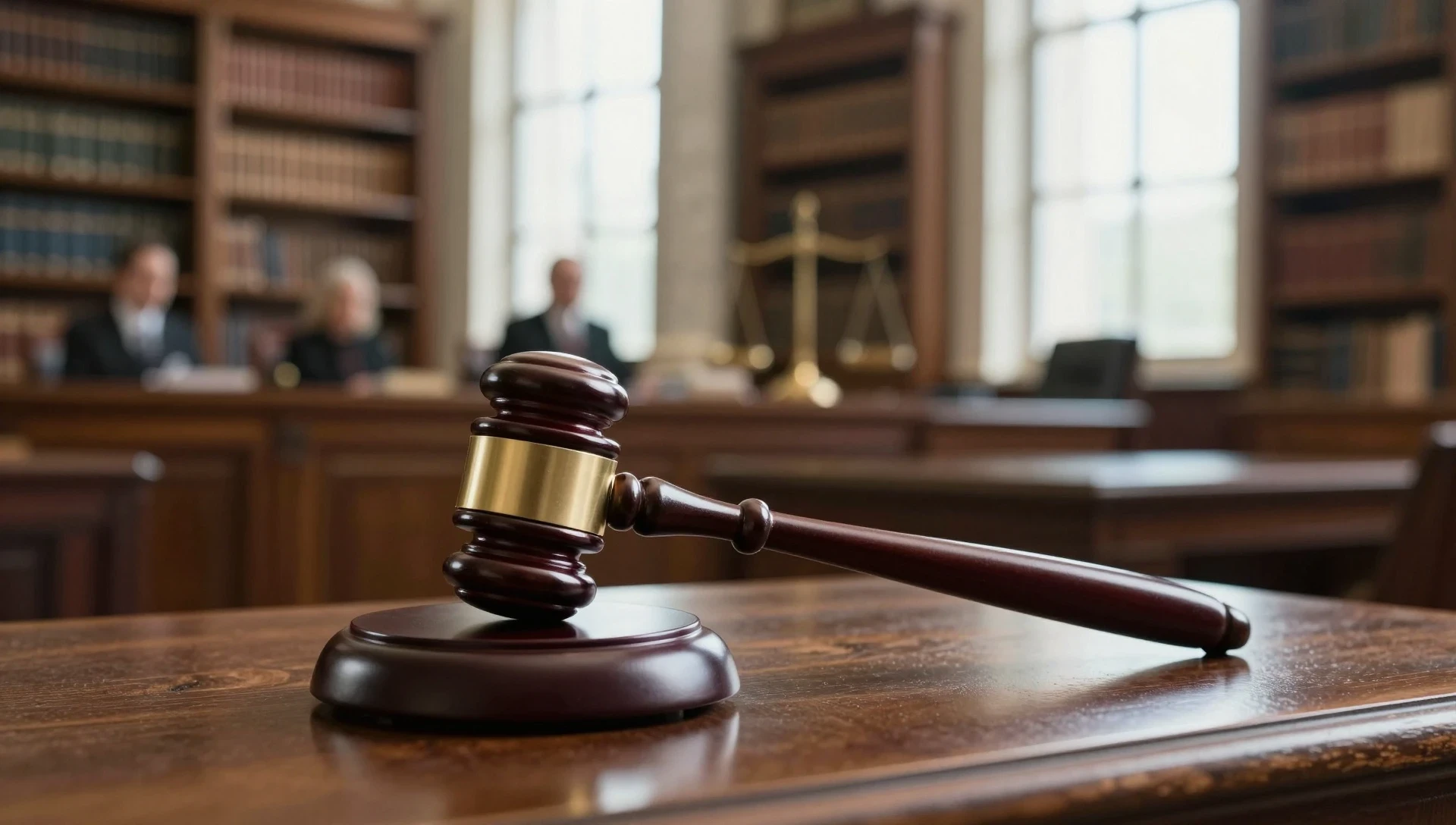
The relationship between elite American law firms and political power has rarely been tested as directly as it is in the run-up to the 2026 midterm elections. According to reporting by The New York Times, several prominent firms that previously accommodated pressure from Donald Trump are now deliberately keeping a low public profile as the electoral cycle intensifies.
The pattern is not incidental. It reflects a calculated institutional posture in which silence functions as a risk-management instrument rather than an absence of opinion.
What makes the story analytically significant is the asymmetry it exposes. Firms that once yielded to executive pressure now avoid public positioning precisely when public positioning would carry the greatest reputational weight. The quiet is therefore a signal, not a void.
On This Page
It tells observers something about how legal institutions price political exposure, how they weigh client relationships against civic expectations, and how quickly the norms of professional independence can be recalibrated under sustained pressure.
This analysis examines the mechanics behind that silence. It traces the sequence of accommodation, the commercial logic that sustains it, and the accountability questions that persist when the midterms conclude.
The evidence points to a structural shift in how large firms manage political risk, one with consequences that extend well beyond any single election cycle or any single administration.
TL;DR Several major law firms that previously yielded to pressure from Donald Trump are now maintaining a deliberately low profile as the 2026 midterms approach, according to The New York Times. The silence is best read as a calculated risk posture rather than neutrality. It reflects commercial dependence on politically exposed clients, reputational caution, and the absence of enforceable professional norms that would compel public positioning. The episode raises durable questions about institutional independence, the pricing of political exposure, and the accountability gap that persists when legal elites choose discretion over voice.
The Architecture of Accommodation and Its Commercial Logic
The sequence matters. Firms did not arrive at silence spontaneously; they arrived there after a period in which accommodation was tested, priced, and found preferable to confrontation. Understanding the current quiet requires reconstructing that earlier calculus, because the same variables that produced capitulation now produce reticence. Both behaviors flow from a single underlying model of institutional self-preservation.
How Pressure Translated Into Concession
Executive pressure on private law firms operates through identifiable channels rather than vague intimidation. Government contracts, regulatory forbearance, access to appointments, and the threat of adverse publicity all function as levers.
When a firm depends on federal work or on clients whose interests intersect with regulatory agencies, the cost of resistance becomes concrete and quantifiable while the benefit of defiance remains diffuse.
That asymmetry explains why concession tends to be incremental rather than dramatic. A firm may decline a representation, reassign a matter, or soften a public statement. Each step is small enough to be defended internally as prudent judgment.
Cumulatively, however, the steps establish a pattern in which the firm's independence is calibrated against political sensitivity rather than professional obligation.
The New York Times reporting suggests that several prominent firms crossed that threshold. Having done so, they now face a second decision: whether to acknowledge the earlier accommodation publicly.
Silence resolves that dilemma efficiently, because it neither confirms nor denies the pattern while preserving optionality for whatever political configuration emerges after the votes are counted.
The Economics of Staying Quiet
Silence carries measurable commercial value. A firm that says nothing cannot be quoted against itself, cannot alienate a client bloc, and cannot be drawn into litigation over public statements.
For partnerships whose revenue concentrates among a small number of institutional clients, the expected cost of a misjudged comment can exceed the expected benefit of any principled declaration.
There is also a timing dimension. Midterm elections create a window in which political alignments may shift, committee control may change, and enforcement priorities may be reset. Firms that commit publicly before that window closes forfeit flexibility.
Waiting costs little and preserves the ability to align with whichever configuration emerges, a posture that is rational for the firm even if it appears evasive to the public.
The reporting indicates that the firms in question have not taken a public stance in the current political climate. That phrasing is precise. It describes an active choice to withhold positioning, not a passive failure to form one. The distinction matters because it locates agency with the firms themselves rather than with external circumstances.
Reputation, Clients, and the Cost of Being Quoted
Reputational capital in elite legal practice is relational rather than mass-market. A firm's standing depends on the judgments of general counsel, corporate boards, and peer partners, not on public approval. Those audiences often reward discretion and may penalize visible political engagement as a signal of unpredictability. Silence therefore aligns with the preferences of the constituencies that actually allocate work.
This creates a divergence between professional reputation and civic expectation. The public may read quiet as complicity; the client base may read it as discipline. Firms resolve that divergence in favor of the paying audience, which is unsurprising given partnership structures that tie compensation directly to client retention and matter flow rather than to public standing.
The consequence is that reputational risk is not uniform across stakeholders. It is concentrated where revenue is concentrated. Any analysis that treats firm reputation as a single variable misses the internal hierarchy of audiences that governs how large partnerships actually make decisions about visibility and voice.
Silence as Strategy: Reading the Midterm Posture
The current quiet is best understood as a strategic posture with identifiable components. It is defensive in that it limits exposure, optional in that it preserves future alignment, and collective in that no single firm wants to move first.
These three properties reinforce one another, which is why the silence has held even as political attention has increased.
The Coordination Problem Among Peer Firms
No firm wants to be the first to speak, because the first mover absorbs the full cost of any backlash while the benefits of a changed norm accrue to everyone. This is a classic collective action problem.
Individually rational reticence produces collectively consequential silence, and no single actor has sufficient incentive to break the pattern unilaterally.
The problem intensifies when the political environment is unsettled. If the midterms produce a shift in congressional control, the calculus of speaking changes for everyone simultaneously. Firms therefore wait for the electoral result to resolve the coordination problem for them, which explains why the quiet is expected to persist until the votes are counted.
Peer monitoring reinforces the equilibrium. Partners observe what comparable firms do and calibrate accordingly. When the observed norm is discretion, deviation carries social as well as commercial cost within the professional community, further suppressing the likelihood of a public break from the pattern.
What the Quiet Signals to Clients and Regulators
To clients, silence signals reliability. A firm that does not generate political headlines is easier to retain during contentious periods, particularly for corporations whose own stakeholders span the political spectrum. The absence of commentary becomes a selling point in pitches, framed as focus on the matter rather than on the moment.
To regulators, silence signals non-provocation. Firms that litigate against agencies or comment publicly on enforcement priorities invite scrutiny of their own compliance posture. Quiet reduces that surface area. It is a form of regulatory risk management that operates through omission rather than through formal undertaking.
To political actors, silence signals availability. A firm that has not committed publicly remains a plausible partner after the election, regardless of outcome. This optionality is valuable precisely because midterm results are uncertain, and it explains why firms with the most at stake have been the most reticent.
Precedent: Firms That Spoke and Firms That Did Not
Historical comparison sharpens the analysis. During earlier confrontations between the executive branch and the legal profession, some firms did speak publicly and absorbed consequences that ranged from client attrition to exclusion from appointments. Others remained silent and retained access. The record suggests that silence has generally been the lower-cost strategy.
That record also shapes current expectations. Partners who witnessed the costs of public defiance in earlier cycles are unlikely to repeat it absent a compelling reason. Institutional memory within firms functions as a deterrent, transmitting caution across generations of leadership and reinforcing the default preference for discretion over declaration.
The comparison is not perfectly clean, because the political and commercial conditions differ across cycles. But the directional lesson is consistent. Firms that spoke paid a price that was visible and attributable; firms that stayed quiet avoided that price. Rational actors learn from such distributions, and the current posture reflects that learning.
We Also Published
Accountability, Professional Norms, and the Road Past November
The deeper question is not why these firms are quiet but whether any mechanism exists to make the quiet consequential. Accountability in this domain depends on professional norms, client pressure, and public scrutiny.
Each of those mechanisms is currently weak, which is why the silence has persisted without meaningful cost to the firms that adopted it.
The Accountability Gap in Legal Ethics
Bar rules govern conflicts of interest, competence, and candor to tribunals. They do not govern political posture. A firm that declines a representation for political reasons may raise ethical questions, but enforcement is rare and the standards are permissive. The regulatory architecture simply does not reach the conduct at issue here.
This gap is structural rather than accidental. The legal profession has historically defended its independence from external control, and that independence includes latitude over which matters to accept. The same autonomy that protects firms from political coercion also protects them from accountability when they yield to it.
Market discipline is the substitute, but it operates weakly at the top tier. Clients that value discretion reward it, and clients that value courage are diffuse and rarely decisive in mandate allocation.
The result is a market that prices silence favorably and voice unfavorably, which is precisely the incentive structure now on display.
What Changes After the Votes Are Counted
Post-election dynamics will reset the calculus. If control of Congress shifts, firms that remained uncommitted will be well positioned to engage the new majority. If it does not, the same firms will face continued pressure from the same direction. Either way, silence preserved their ability to adapt.
The adaptation will likely be quiet as well. Firms rarely announce a change in political posture; they simply begin accepting different matters, hiring different personnel, and making different introductions. Observers should watch for shifts in representation patterns rather than for statements, because the operative signals are structural rather than rhetorical.
Public attention will move on quickly, as it typically does. The firms understand this, and their strategy is calibrated to outlast the news cycle rather than to shape it. Durability, not persuasion, is the objective, and silence is the instrument best suited to achieving it.
- 01
- 02
- 03
- 04
Independence as a Fragile Institutional Asset
Professional independence is not a fixed attribute; it is a stock that depreciates when unused. Each accommodation draws down the reserve of credibility that allows a firm to resist future pressure.
Firms that yielded once have less capacity to resist again, which is why the initial concession matters more than its immediate scale.
The depreciation is difficult to reverse. Rebuilding independence requires visible acts of resistance, and those acts carry the very costs that firms sought to avoid. The result is a ratchet: accommodation is easy, restoration is expensive, and the equilibrium drifts toward greater political sensitivity over time.
This is the core analytical finding. The quiet before the midterms is not a temporary aberration but a visible marker of accumulated depreciation. It reflects a stock of independence that has already been drawn down, and it signals that further drawdowns are likely unless the incentive structure changes.
What Observers Should Track Next
Statements will be scarce, so observers should track structural indicators instead. Representation patterns, lateral hiring, practice group investment, and the composition of pro bono portfolios all reveal political posture more reliably than press releases. These indicators move before rhetoric does and persist after attention fades.
Client rosters are equally informative. A shift in the mix of corporate and individual clients, or in the sectors represented, signals a recalibration of risk appetite. Firms rarely announce such shifts, but they are visible in public filings, court dockets, and professional directories to anyone who tracks them systematically.
The most telling indicator will be whether any firm breaks ranks after the election. A single public statement from a prominent firm would signal that the coordination problem has been resolved and that the cost of voice has fallen. Absent such a break, the silence should be expected to persist into the next cycle.
From our network :
- Forbidden Matrix Patterns and Visible Lattice Points: A Geometric DictionaryExplore how multidimensional 0–1 matrices encode geometric truths, linking forbidden patterns to visible lattice points and hypergraph theory, with applications in combinatorics and computational geometry.
- Committed Mediterranean Precipitation Decline: Why Emissions Cuts Alone Cannot Restore Winter RainsNew NOAA research reveals that Mediterranean winter rains may decline irreversibly even with emissions cuts. Explore the science of committed climate change and regional impacts.
- University Language Proficiency Exams: Why Institutional Tests Demand Different Preparation Than IELTS and TOEFLDiscover why university-specific language proficiency examinations differ fundamentally from IELTS and TOEFL, and learn strategic preparation approaches for institutional assessment success.
- Live Online English Classes for Kids: Do They Actually Reduce Anxiety?A ten-week study reveals that synchronous online English classes can significantly reduce child language anxiety while improving listening and reading skills. Discover what makes these programs effective and how parents can select the right one.
- How AI Agents Will Change the Way We Manage Personal FinancesExplore how AI agents are transforming personal finance through automated budgeting, bill payment, and investment management, while examining the critical security protocols and governance frameworks required for safe deployment.
- CISA’s Ten-Advisory Wave: Why Generic Patching Fails in OT and How to Build Product-Specific PlaybooksCISA released ten ICS advisories in one week, exposing critical infrastructure risks. Generic patching fails in OT. Learn to build product-specific remediation playbooks.
- The Final Descent: How ESA Retired the Legendary Cluster Constellation After 24 Years of Space Weather ScienceAfter 24 years mapping Earth’s magnetosphere, ESA’s Cluster mission concluded with a precisely controlled reentry over the South Pacific. This analysis explores the scientific legacy, engineering decisions, and debris mitigation principles behind one of space exploration’s most responsible retirements.
- Mobile Learning and VR in English: What Global Evidence Reveals About Effective Language TechnologyA systematic review across 14 countries reveals which language-learning technologies genuinely work. Mobile learning, AI, and VR show measurable benefits when pedagogically integrated. This evidence-based guide helps educators and learners select technology that delivers real return on investment.
- The Hidden Cost of AI Convenience: Why Over-Permissioned Agents Are a Security Time BombDiscover why AI agents with excessive permissions create dangerous single points of failure, and learn how implementing least privilege principles can protect your organization from exploitation.
RESOURCES
- Exposing and Disrupting Federal Attempts to Interfere in the 2026 ...democracyforward.orgOct 9, 2026 ... Documents obtained by Democracy Forward show that in the months before the midterm elections, the Trump-Vance administration has aggressively ...
- Critics say Virginia anti-redistricting fight is a MAGA misinformation ...virginiaindependentnews.comMar 26, 2026 ... ... midterms following redistricting efforts. Republican anti ... However, they have remained silent on Trump's original push for the ...
- HOW THE TRUMP ADMINISTRATION IS TARGETING ...democrats-cha.house.govSep 18, 2026 ... This report highlights some of the ways the Administration is undercutting civil society by abusing law enforcement and national security ...
- Trump's moves against media outlets mirror authoritarian ... - PBSpbs.orgSep 18, 2025 ... Since taking office in January, President Donald Trump has waged an aggressive campaign against the media unlike any in modern…
- After Quiet Off-Year Elections, Democrats Renew Worries About ...news.wttw.comDec 30, 2025 ... 'Voter Protection' vs 'Election Integrity'. Voting rights lawyers and election officials have been preparing for months for the midterms, trying ...
- Trump's Attacks on Lawyers Are Attacks on the Rule of Lawafj.orgApr 30, 2025 ... In the wake of the Trump administration's unlawful behavior and intimidation of major law firms, this year's observation presents an…
- Epstein-linked Leon Black waged bid to 'silence' law firm and ...theguardian.comMar 3, 2026 ... Wigdor LLP accuses billionaire of trying to 'destroy those who seek to hold him to account for alleged sexual assault'
- The Trump Administration Is Interfering in the 2026 Midterm ...americanprogress.orgAug 12, 2026 ... In one of the most alarming escalations in the administration's election interference campaign, federal law enforcement officials have operated ...
- Governor Newsom signs bills curbing billionaire influence on ...gov.ca.govOct 2, 2025 ... Trump's attacks on democracy. Attacking law firms who would otherwise work to hold any federal administration accountable to the law.…
- Are President Trump and His Allies Laying the Groundwork To ...campaignlegal.orgOct 16, 2026 ... With the 2026 midterms approaching, the Trump administration and its allies have intensified a sweeping campaign to erode the safeguards ...
- Status of Trump's 2025 Anti-Voting Executive Orderbrennancenter.orgMar 4, 2026 ... Executive Office of the President, California v. Trump, and Washington v. Trump — are proceeding at various stages in federal…
- Trump admin has weakened federal election oversight ahead of ...spotlightpa.orgJun 8, 2026 ... 2026 midterms poised to have less federal oversight as Trump admin ... attorneys offices who aren't as well versed in…
- Justice Department Attempts to Shield Its Lawyers from ...brennancenter.orgApr 6, 2026 ... That regime ensures that government lawyers are subject to independent ethical constraints. ... Trump's election defeat in 2020. By ...
- U.S. Democratic Backsliding in Comparative Perspectivecarnegieendowment.orgAug 25, 2025 ... Weakening societal constraints on executive power: Trump has stymied civil society opposition by attacking independent media, punishing lawyers ...
- Law firms loved diversity, until it became a liability | Reutersreuters.comJun 15, 2026 ... ... law firms have been all but silent. ... Longtime legal industry diversity advocates I spoke to said the DEI…
- 01
- 02
- 03
- 04
- 05
- 06
- 07
- 08
0 Comments