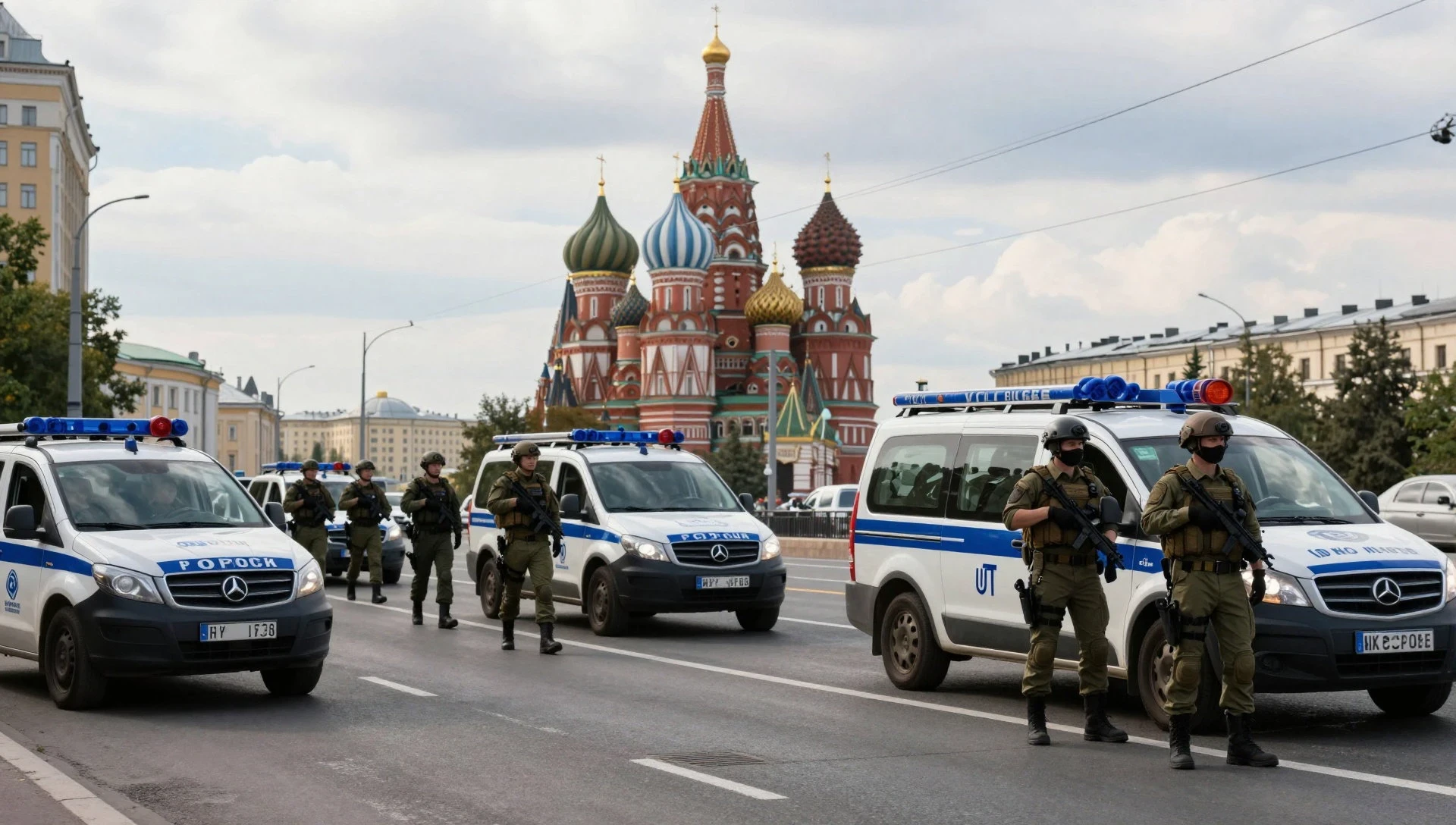
The warning issued by the United States embassy in Moscow on 1 November 2026, and Russia's Federal Security Service response to it, describes a counterterrorism exchange unfolding inside an unusually warm diplomatic channel.
Washington flagged a credible threat of a mass-casualty event at the Tsaritsyno Museum Reserve, an imperial palace and park complex in southern Moscow, and Russian authorities confirmed they had received the intelligence and set appropriate work in motion.
The episode matters less for the specific plot than for what it reveals about how Washington and Moscow now communicate: threat data moving between two governments whose broader relationship remains defined by war, sanctions and mutual suspicion.
On This Page
- The Tsaritsyno Warning and the Mechanics of Intelligence Sharing
- Trump, Putin and the Politics Surrounding the Alert
- Reading the Signal: What the Exchange Reveals and What It Does Not
- Attribution Gaps and Information Asymmetry
- Domestic Politics Inside Russia
- Allied Cohesion and the Cost of Divergence
- Threat Advisory Anatomy: What Each Public Statement Confirms
- What Would Confirm a Genuine Shift
- Scenario Matrix: Possible Outcomes of the Tsaritsyno Warning
- Implications for Allies and Markets
- Stakeholder Impact Assessment: Who Gains and Who Bears Risk
- Conclusion: A Narrow Channel Inside a Wider Rivalry
- Key Takeaways: Analytical Summary
The precedent is explicit and recent. In March 2024, the same embassy warned that extremists had imminent plans for an attack in Moscow; days later, gunmen struck the Crocus City Hall concert venue outside the capital, killing more than 140 people.
That sequence established a template in which American intelligence warnings precede Russian security operations, and it gives the current alert an evidentiary weight that routine diplomatic notices rarely carry.
The FSB's public acknowledgment that it acted on US-supplied information is itself a signal, because Moscow has historically treated such cooperation as politically inconvenient.
Set against that operational cooperation is a strategic picture that cuts the other way. President Donald Trump has appeared more accommodating toward the Kremlin than America's traditional European allies, striking a deal to purchase Russian diesel that reverses years of Western efforts to isolate Moscow economically, and reportedly preparing to host Vladimir Putin at December's G20 summit.
The Tsaritsyno warning therefore sits at the intersection of intelligence sharing and geopolitical realignment, and the analysis below separates the security facts from the political context surrounding them.
TL;DR The US embassy in Moscow warned of a credible mass-casualty terrorist threat at the Tsaritsyno Museum Reserve for Saturday, and Russia's FSB confirmed it received the intelligence and took appropriate measures. The exchange echoes March 2024, when a US warning preceded the Crocus City Hall attack that killed over 140 people. It occurs amid warmer Trump-Putin relations, a controversial Russian diesel purchase, and reports that Putin will attend December's G20 summit in the US, while European allies continue to shun Russian Foreign Minister Sergei Lavrov.
The Tsaritsyno Warning and the Mechanics of Intelligence Sharing
The public record of the Tsaritsyno episode is narrow but specific: a named location, a named day, an explicit reference to mass casualties, and confirmation from both capitals that information changed hands.
That level of detail distinguishes a credible warning from a generic advisory, and it explains why Russian law enforcement moved visibly rather than quietly. The embassy advised people to avoid the area, stay alert and avoid crowds, while a Russian Telegram channel linked to law enforcement reported the park closed and open only for people leaving, with officers on the premises.
What the US Embassy Actually Disclosed
The embassy stated it was aware of a credible threat of a mass-casualty event on Saturday at the Tsaritsyno Museum Reserve and said it had coordinated with Russian authorities on a response.
It did not identify who was believed to be planning the attack, a deliberate omission that preserves operational flexibility and avoids prejudging attribution. The advisory language followed standard practice: avoid the area, remain alert, steer clear of crowds. Each element is calibrated to reduce exposure without disclosing sourcing.
Tsaritsyno is a significant choice of target in symbolic terms. The palace and park complex is a popular public destination in southern Moscow, drawing families and tourists in large volumes, which is precisely the profile that mass-casualty planners seek. A weekend timing compounds the exposure, since visitor density peaks then.
The embassy's decision to name the site publicly, rather than issue a generic citywide caution, indicates confidence in the location-specific intelligence.
The FSB Response and Its Public Framing
The Federal Security Service said it had received information from the United States about preparations for a terrorist attack and that appropriate work was underway. That formulation is standard Russian security vocabulary, broad enough to cover surveillance, detentions, site hardening or all three, and deliberately short on operational detail.
The FSB's willingness to credit US sourcing publicly is the notable element, because it implicitly validates American intelligence at a moment when Moscow's broader rhetoric treats Washington as hostile.
Russian authorities face a dual imperative in such moments. Operationally, they must disrupt a plot they did not originate; politically, they must avoid appearing dependent on Western intelligence or, alternatively, avoid appearing to have ignored a warning.
The Crocus City Hall aftermath demonstrated the cost of the second failure mode, when questions about missed signals became a domestic political liability. Publicly acknowledging the US tip and visible police deployment at Tsaritsyno serve both imperatives simultaneously.
The Crocus City Hall Precedent
The March 2024 sequence remains the controlling reference point. The US embassy warned that extremists had imminent plans for an attack in Moscow; days later, gunmen attacked the Crocus City Hall concert venue outside the capital, killing more than 140 people.
The gap between warning and attack, and the scale of the casualty toll, turned intelligence-sharing failures into a subject of sustained public scrutiny in Russia.
That history shapes how the current warning will be read. A disrupted plot at Tsaritsyno would validate the channel and strengthen the case for continued exchanges; a successful attack despite the warning would raise harder questions about whether information was acted upon quickly enough.
Either outcome will be interpreted through the Crocus lens, which is why the FSB's public statement matters as much as its undisclosed operational measures.
We Also Published
Trump, Putin and the Politics Surrounding the Alert
The intelligence exchange arrives during a period of unusual warmth between Washington and Moscow, and that context changes how each side reads the other's motives. Trump has appeared more accommodating toward the Kremlin than America's traditional European allies, despite Moscow's ongoing war against Ukraine.
Last month he struck a controversial deal to buy Russian diesel, reversing years of Western efforts to isolate Moscow economically. The agreement could provide Putin with billions of dollars to sustain his war, which makes any security cooperation simultaneously more plausible and more politically charged.
The Diesel Deal and Economic Leverage
The diesel purchase is the clearest material expression of the shift. Reversing years of Western efforts to isolate Moscow economically, the agreement could channel billions of dollars toward a war economy that sanctions were designed to constrain.
For European governments that absorbed energy costs to maintain a common front, the deal reads as a unilateral reversal. For the Kremlin, it represents both revenue and a crack in the isolation architecture.
Economic accommodation and security cooperation are not automatically contradictory, but they interact. A Washington that buys Russian diesel has leverage and a channel; it also has a stake in Moscow's stability that did not exist under a pure containment posture.
Sharing a credible terrorist warning fits that logic, because a mass-casualty attack in the Russian capital would destabilize the very counterparty the diesel deal depends upon.
The G20 Dimension and European Pushback
European media are reporting that Putin will accept Trump's invitation to attend December's G20 summit in the United States. Putin has not attended a G20 summit since 2019, and Russia was removed from the G8 after its annexation of Crimea in 2014.
A presidential-level return would mark the most visible rehabilitation of Moscow's standing since the full-scale invasion of Ukraine began.
The pushback is already visible at the working level. At the G20 foreign ministers' meeting in Atlanta this weekend, the traditional group photo was cancelled after several US allies, including Australia, refused to be photographed alongside Russian Foreign Minister Sergei Lavrov.
That refusal is a small protocol decision with a large signal: allies are unwilling to normalize Moscow's presence visually, even where they accept its participation procedurally.
Ukraine, Sanctions and the Limits of Cooperation
None of this alters the war. Moscow's campaign against Ukraine continues, and the sanctions architecture built in response remains largely intact despite the diesel exception. Intelligence cooperation on terrorism is a narrow, transactional channel that can function even between adversaries, because both governments gain from preventing an attack. Reading it as a broader rapprochement overstates what the exchange demonstrates.
The more accurate reading is compartmentalization. Washington shares threat data because a mass-casualty attack serves no American interest; Moscow accepts it because ignoring a warning carries domestic political risk. Meanwhile, the diesel deal and the G20 invitation proceed on a separate track driven by Trump's preferences.
The two tracks can coexist, but neither validates the other, and European allies are treating the distinction as important.
Reading the Signal: What the Exchange Reveals and What It Does Not
Analytically, the Tsaritsyno warning is best treated as a test of institutional channels rather than a turning point in US-Russia relations. The relevant questions are operational: whether the intelligence was specific enough to disrupt a plot, whether Russian services acted quickly, and whether the channel survives the next political friction.
The political questions, about diesel, G20 seating and allied solidarity, run in parallel and should not be conflated with the security file.
Attribution Gaps and Information Asymmetry
Neither government has identified who was believed to be planning the attack, and that silence is analytically significant. Attribution in terrorism cases is contested, slow and often politically inconvenient, particularly when the suspected network has regional or transnational links.
The absence of a named perpetrator means outside observers cannot assess whether the threat was domestic, externally directed, or a hybrid.
Information asymmetry compounds the problem. Washington holds the sourcing; Moscow holds the ground truth on detentions and site security; the public holds neither. Statements from both capitals are therefore consistent with several scenarios, from a fully disrupted plot to a precautionary closure based on partial intelligence. Responsible analysis should register that uncertainty rather than resolve it prematurely.
Domestic Politics Inside Russia
For the Kremlin, the episode carries domestic messaging value. A visible security response at a prominent public site demonstrates state capacity, while public acknowledgment of US cooperation can be framed as great-power dialogue rather than dependency.
The Crocus precedent makes this delicate: authorities must show they learned from 2024 without inviting renewed scrutiny of what went wrong then.
The Telegram reporting that the park was closed and open only for people leaving, with law enforcement officers on the premises, indicates a physical security operation rather than a purely informational one. Visible policing at a landmark site serves deterrence and reassurance simultaneously.
Whether it reflects a specific lead or a general posture is not disclosed, and the distinction matters for assessing the warning's precision.
Allied Cohesion and the Cost of Divergence
The Atlanta photo cancellation is the clearest available measure of allied sentiment. Several US allies, including Australia, refused to be photographed alongside Lavrov, forcing the cancellation of a routine protocol moment.
Such refusals are inexpensive to execute and difficult to ignore, and they signal that European and Indo-Pacific partners will not follow Washington's accommodation at the same pace.
That divergence has practical consequences. Sanctions regimes, intelligence-sharing arrangements and diplomatic coordination all depend on allied trust, and unilateral deals erode it incrementally. The diesel purchase and the G20 invitation may deliver short-term leverage for Washington, but they raise the price of maintaining a common front on Ukraine. The Tsaritsyno exchange, by contrast, costs allies nothing and benefits everyone.
What Would Confirm a Genuine Shift
Observers seeking evidence of a durable change in US-Russia relations should look for indicators beyond a single warning. Sustained intelligence exchanges across multiple incidents, formalized communication channels, or coordinated counterterrorism statements would constitute stronger evidence than one advisory and one FSB acknowledgment. So would any movement on sanctions relief beyond the diesel exception.
Conversely, the absence of such indicators would suggest the Tsaritsyno exchange is transactional and bounded. That is the more parsimonious interpretation given the continuation of the Ukraine war, the intact sanctions architecture, and the visible allied resistance in Atlanta. Cooperation on a specific threat is compatible with strategic rivalry, and the evidence currently supports that reading.
Implications for Allies and Markets
For allied governments, the episode reinforces a familiar dilemma: they depend on American intelligence while disagreeing with American diplomacy. Australia's refusal to appear alongside Lavrov did not prevent it from benefiting from the same threat-sharing architecture that produced the Tsaritsyno warning. That asymmetry is sustainable in the short term but corrosive if unilateral deals multiply.
Markets have treated the diesel agreement and the G20 invitation as incremental signals rather than structural breaks, and a single terrorism warning is unlikely to move energy or currency pricing. The more consequential variable remains the trajectory of sanctions policy, where any broadening of exceptions would carry measurable economic effects. For now, the security file and the economic file remain analytically distinct.
Conclusion: A Narrow Channel Inside a Wider Rivalry
The Tsaritsyno warning demonstrates that counterterrorism cooperation can survive strategic hostility, and that both Washington and Moscow see value in maintaining it. The FSB's public acknowledgment of US intelligence, and the visible security deployment at a landmark site, indicate a functioning channel. The Crocus precedent explains why neither side can afford to treat such warnings casually.
What the episode does not demonstrate is a broader reconciliation. The Ukraine war continues, sanctions remain in place, and allied governments are visibly unwilling to normalize Moscow's diplomatic presence. The diesel deal and the reported G20 attendance are consequential, but they operate on a different track. The warning is best read as a narrow, transactional success inside a rivalry that remains unresolved.
From our network :
- The Hidden Cost of AI Convenience: Why Over-Permissioned Agents Are a Security Time BombDiscover why AI agents with excessive permissions create dangerous single points of failure, and learn how implementing least privilege principles can protect your organization from exploitation.
- University Language Proficiency Exams: Why Institutional Tests Demand Different Preparation Than IELTS and TOEFLDiscover why university-specific language proficiency examinations differ fundamentally from IELTS and TOEFL, and learn strategic preparation approaches for institutional assessment success.
- CISA’s Ten-Advisory Wave: Why Generic Patching Fails in OT and How to Build Product-Specific PlaybooksCISA released ten ICS advisories in one week, exposing critical infrastructure risks. Generic patching fails in OT. Learn to build product-specific remediation playbooks.
- Mobile Learning and VR in English: What Global Evidence Reveals About Effective Language TechnologyA systematic review across 14 countries reveals which language-learning technologies genuinely work. Mobile learning, AI, and VR show measurable benefits when pedagogically integrated. This evidence-based guide helps educators and learners select technology that delivers real return on investment.
- Committed Mediterranean Precipitation Decline: Why Emissions Cuts Alone Cannot Restore Winter RainsNew NOAA research reveals that Mediterranean winter rains may decline irreversibly even with emissions cuts. Explore the science of committed climate change and regional impacts.
- How AI Agents Will Change the Way We Manage Personal FinancesExplore how AI agents are transforming personal finance through automated budgeting, bill payment, and investment management, while examining the critical security protocols and governance frameworks required for safe deployment.
- Forbidden Matrix Patterns and Visible Lattice Points: A Geometric DictionaryExplore how multidimensional 0–1 matrices encode geometric truths, linking forbidden patterns to visible lattice points and hypergraph theory, with applications in combinatorics and computational geometry.
- Live Online English Classes for Kids: Do They Actually Reduce Anxiety?A ten-week study reveals that synchronous online English classes can significantly reduce child language anxiety while improving listening and reading skills. Discover what makes these programs effective and how parents can select the right one.
- The Final Descent: How ESA Retired the Legendary Cluster Constellation After 24 Years of Space Weather ScienceAfter 24 years mapping Earth’s magnetosphere, ESA’s Cluster mission concluded with a precisely controlled reentry over the South Pacific. This analysis explores the scientific legacy, engineering decisions, and debris mitigation principles behind one of space exploration’s most responsible retirements.
RESOURCES
- FSB says US warned Russia of possible Moscow attack - Reutersreuters.com2 days ago ... ... terrorist attack in Moscow and was taking appropriate measures ... Tsaritsyno Museum Reserve and that the US government was ...
- Russia says responding to US report of planned attack on Moscowfrance24.com2 days ago ... Russia's FSB security service said on Saturday it was carrying out "appropriate" measures after the US embassy in Moscow warned…
- Russia responds to US warning of planned Moscow terrorist attackabc.net.au1 day ago ... Russia's FSB security service says it has carried out ... threat of a mass casualty event" at the Tsaritsyno Museum…
- Russia Says Teen Held After US Warning on Moscow Terror Threatbloomberg.com17 hours ago ... Russia's Federal Security Service said it detained a minor teenaged boy on suspicion of planning a terrorist attack on a…
- Russia detains minor over alleged Moscow attack plot after US ...aljazeera.com16 hours ago ... Russian authorities have detained a teenager suspected of planning an attack at a popular Moscow park after receiving a warning…
- Russian authorities have detained a teenager suspected of planning ...instagram.com11 hours ago ... The United States has warned Russia about a potential terrorist attack in Moscow. ... us-embassy-moscow-tsaritsyno-mass-casualty-warning-fsb.
- US Warning Leads to Moscow Museum Terror Arrest - WBAL-TVwbaltv.com8 hours ago ... Russia says a U.S. tip led to the arrest of a teen accused of plotting a terror attack at a…
- US Embassy Warns Moscow of Mass-Casualty Attack at Tsaritsyno ...newscord.org1 day ago ... US Embassy warned of credible mass-casualty terrorist threat at Moscow's Tsaritsyno Park and Museum. FSB said it took appropriate security ...
- Russia's security service detains a teenager planning a 'terror attack ...cnn.com15 hours ago ... Putin's reaction was different in 2017, during US President Donald Trump's first presidency, when the US warned Moscow about a…
- Russia says responding to US report of planned attack on Moscowglobalnation.inquirer.net1 day ago ... ... Moscow warned of a planned "terrorist" attack in the capital ... MOSCOW — Russia's FSB security service said on…
- US Embassy in Russia warns of Moscow terror attackjpost.com1 day ago ... ... attack threat at the Tsaritsyno Museum in Moscow ... Russia's FSB security and intelligence agency said that US intelligence…
- US warns Russia of imminent terror attack in Moscow - Israel Hayomisraelhayom.com2 days ago ... Russia's Federal Security Service (FSB) says it received US intelligence about preparations for a terrorist attack in the capital and…
- Russia Arrests Minor Over Moscow Park Terror Plot After ... - SOFXsofx.com3 hours ago ... Takeaways Up Front 1. Russia's FSB said it detained a Russian minor on U.S. intelligence pointing to a planned attack…
- Russia says responding to US report of planned attack on Moscowrfi.fr2 days ago ... Russia's FSB security service said on Saturday it was carrying out "appropriate" measures after the US embassy in Moscow warned…
- U.S. Embassy Warns of Potential 'Mass Casualty Event' in Moscowthemoscowtimes.com2 days ago ... In 2024, the U.S. warned Moscow of an impending terrorist threat ... Russia's FSB Says Minor Detained Over Moscow Park…
- 01
- 02
- 03
- 04
- 05
- 06
- 07
- 08
0 Comments