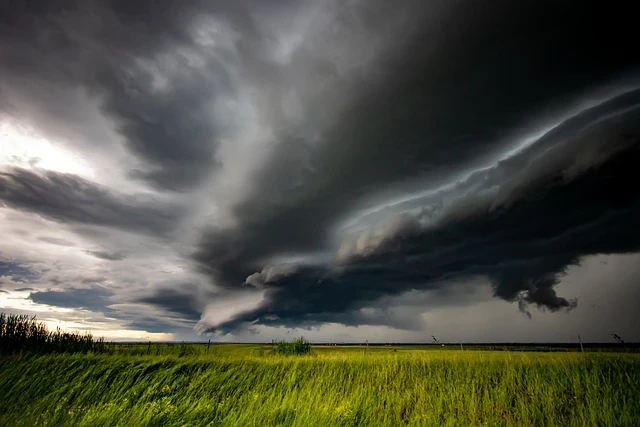
When violent atmospheric turbulence tears through critical transport corridors, the consequences ripple far beyond downed wires and darkened homes. On 24 September 2026, Moscow Railway confirmed that a punishing cocktail of rain, thunderstorms, and ferocious gusty winds crippled power supplies along the Bryansk–Oryol and Bryansk–Novozybkov sections, stranding a dozen trains and testing the resilience of an entire regional network.
The event stands as a textbook illustration of how meteorological volatility translates directly into logistical paralysis, financial loss, and human inconvenience across a sprawling geography.
This analysis dissects the Bryansk weather emergency from every operational angle, examining the precise mechanics of the outage, the cascading delays that reached nearly three hours, and the emergency response mounted by regional energy crews.
On This Page
We explore why 17 settlements lost electricity simultaneously, how railway infrastructure remains acutely vulnerable to wind-loading events, and what such disruptions reveal about the fragility of interconnected utility systems in modern Russia. The lessons extend well beyond a single storm.
Readers will gain a rigorous understanding of infrastructure interdependency, the economics of transport delay, and the strategic importance of rapid restoration protocols.
By grounding the discussion in verified reporting from vz.ru and Moscow Railway statements, we construct a comprehensive picture of a regional crisis that unfolded in real time.
The implications for disaster preparedness, grid hardening, and climate-adaptive planning are profound and demand serious attention from policymakers and operators alike.
TL;DR Severe winds, rain, and thunderstorms struck Russia's Bryansk region on 24 September 2026, cutting electricity to 17 settlements and delaying 12 trains on the Bryansk–Oryol and Bryansk–Novozybkov lines by up to 2 hours 44 minutes. Moscow Railway and regional emergency crews launched immediate restoration efforts, underscoring the acute vulnerability of rail and power infrastructure to extreme weather and the critical need for hardened, climate-resilient utility networks.
The Meteorological Anatomy of the Bryansk Infrastructure Crisis
Understanding the Bryansk disruption requires a forensic look at the atmospheric forces that converged on the region. A volatile weather system delivered sustained rain, embedded thunderstorms, and powerful gusty winds that collectively overwhelmed both overhead power lines and railway signaling equipment.
Such compound events are notoriously difficult to forecast with precision, leaving operators with narrow windows to enact protective measures before impact.
How Gusty Winds Topple Power Infrastructure
Wind loading on overhead transmission and distribution lines follows well-established physical principles that engineers model rigorously. The drag force exerted on a conductor rises with the square of wind velocity, meaning modest speed increases produce disproportionate mechanical stress on poles, insulators, and spans. When gusts exceed design thresholds, conductors sway, clash, or snap outright.
The relationship can be expressed through the drag equation governing aerodynamic force on a cylindrical conductor:
Here ##rho## represents air density, ##v## the wind velocity, ##C_d## the drag coefficient, and ##A## the projected area of the conductor. A doubling of wind speed quadruples the force, explaining why gusty squalls so frequently trigger cascading failures across exposed rural networks like those serving Bryansk's settlements.
Fallen trees and flying debris compound the mechanical assault, striking lines and transformers with unpredictable force. Regional grids in forested zones remain especially exposed because vegetation management cannot eliminate every hazard along hundreds of kilometers of right-of-way. The 17 settlements that lost power illustrate this vulnerability vividly.
Thunderstorms and Electrical Grid Instability
Thunderstorms introduce a second, distinct threat vector through lightning-induced surges and transient overvoltages. A direct strike or nearby discharge can trip protective relays, damage transformers, and force automatic reclosing sequences that momentarily destabilize the entire feeder.
When multiple strikes occur within a short interval, protection systems may lock out entirely.
Rain adds further complications by degrading insulation performance and accelerating corrosion on aging hardware. Wet conditions can bridge small air gaps that remain safely insulating when dry, creating flashover pathways that engineers must account for in design margins. The combination of moisture and voltage stress is a well-documented failure accelerator.
Meteorological compounding—where wind, rain, and lightning act simultaneously—produces failure probabilities far exceeding the sum of individual risks. This nonlinearity explains why the Bryansk event proved so disruptive despite affecting a geographically bounded area. Operators face a genuinely multidimensional threat environment during such storms.
The Bryansk–Oryol and Bryansk–Novozybkov Corridors
These two railway sections carry significant passenger and freight traffic through western Russia, linking regional centers and onward connections. Their exposure to open terrain and forested stretches makes them particularly susceptible to wind-driven outages. When power fails, signaling, level crossings, and traction systems all degrade simultaneously.
The Bryansk–Oryol corridor serves as a vital artery connecting regional capitals, while the Bryansk–Novozybkov line reaches toward the Belarusian frontier. Disruption on either route ripples through timetables across the broader network.
The twelve delayed trains represent only the immediately visible symptom of deeper systemic stress.
Redundancy in power supply is the primary defense for such corridors, yet redundancy itself can be compromised when a single storm cell blankets an entire region. Backup feeders routed through the same affected geography offer little protection. This spatial correlation of risk remains a central challenge in railway electrification planning.
Timeline of the Disruption and Immediate Response
Moscow Railway reported the outages as weather conditions deteriorated, with delays accumulating rapidly across affected sections. The longest single delay reached 2 hours 44 minutes, a substantial burden for passengers and freight customers alike. Energy workers mobilized promptly once the scale of damage became apparent.
Restoration crews prioritize critical feeders and signaling circuits to restore safe train movement before addressing lower-priority loads. This triage approach reflects decades of operational experience in managing storm recovery. The regional emergency ministry coordinated closely with railway authorities throughout the response.
Rapid restoration depends on pre-positioned crews, spare transformers, and clear communication channels between utilities and transport operators. Bryansk's response demonstrated these protocols functioning under genuine pressure.
Nevertheless, the event exposed margins that leave little room for error when storms intensify.
Railway Operations Under Extreme Weather Stress
Railways represent one of the most weather-sensitive components of modern transport infrastructure, and the Bryansk event laid this reality bare. Electrified lines depend on continuous power for traction, signaling, communications, and level-crossing protection, meaning a single outage can halt multiple trains simultaneously. The cascading delays that followed illustrate how tightly coupled these systems truly are.
Signaling Failures and Safe Movement Protocols
When power to signaling equipment fails, railways must revert to degraded operating modes that prioritize safety over speed. Trains may proceed only under manual authorization, with strict separation distances and reduced velocities enforced by dispatchers. These protocols prevent collisions but dramatically reduce throughput.
Each train forced into degraded mode consumes dispatcher attention and track occupancy time far beyond normal operations. The cumulative effect across a busy corridor quickly produces the kind of delays documented in Bryansk. Recovery requires restoring full signaling before normal timetables can resume.
Modern signaling systems increasingly incorporate battery backup and uninterruptible power supplies, yet these reserves are finite. Extended outages exhaust backup capacity, forcing complete suspension of movements.
The duration of the Bryansk disruption suggests backup systems performed as designed but could not fully compensate.
Traction Power and Rolling Stock Considerations
Electric traction depends on substations that convert high-voltage transmission into usable railway power. When upstream supply fails, substations go dark and electric locomotives lose their motive force entirely. Diesel backup exists on some routes but cannot substitute for full electrified capacity.
Stranded trains present immediate passenger welfare challenges, including heating, lighting, and sanitation. Operators must dispatch assistance, arrange alternative transport, and communicate transparently with affected travelers. Each of these tasks competes for the same limited resources during a regional emergency.
Rolling stock positioned across a disrupted network becomes difficult to reposition, creating knock-on effects that persist long after power returns. The twelve delayed trains in Bryansk likely required hours of careful sequencing to restore normal service patterns. Such operational debt accumulates rapidly.
Passenger Impact and Communication Challenges
Passengers experiencing multi-hour delays face genuine hardship, particularly when information arrives slowly or inconsistently. Clear, timely communication is the single most effective tool for maintaining trust during disruptions. Moscow Railway's public statements provided the transparency essential to managing expectations.
Compensation policies, rebooking options, and alternative routing all matter enormously to affected travelers. Railways that handle these dimensions well preserve long-term ridership confidence. Those that falter risk lasting reputational damage that outlasts the storm itself.
Freight customers face parallel concerns, including spoilage, contractual penalties, and downstream production delays. The economic footprint of a twelve-train disruption extends well beyond the railway's own balance sheet. Supply chains dependent on punctual delivery absorb real costs.
Economic Consequences of Transport Disruption
Transport economists quantify delay costs through passenger time valuation, freight inventory carrying costs, and lost productivity. Even modest delays across a dozen trains generate measurable economic drag. Multi-hour delays multiply these figures substantially.
Beyond direct costs, disruptions erode reliability perceptions that underpin modal choice. Shippers who experience repeated delays may shift volumes to road transport, undermining rail's competitiveness. This dynamic makes resilience investment economically justified, not merely operationally desirable.
Regional economies dependent on rail connectivity suffer when corridors falter, particularly where alternative routes are limited. Bryansk's position as a transport hub amplifies the stakes. The storm's economic ripples likely extended into neighboring oblasts.
We Also Published
Emergency Response, Grid Restoration, and Institutional Coordination
The speed and effectiveness of restoration efforts determine how quickly a weather emergency transitions from crisis to recovery. In Bryansk, energy workers began repairs promptly, coordinating with railway authorities and regional emergency services.
This institutional choreography reflects established protocols refined through repeated exposure to similar events across Russia's vast territory.
Prioritization Logic in Power Restoration
Restoration crews follow a disciplined hierarchy that places critical infrastructure first, followed by densely populated areas and essential services. Railway feeders typically rank high because they support both transport and emergency access. Hospitals, water treatment, and communications infrastructure receive comparable priority.
This triage logic optimizes societal benefit per unit of restoration effort, but it inevitably leaves some customers waiting longer. Transparent communication about expected restoration times helps manage frustration.
The 17 affected settlements likely experienced staggered restoration as crews worked through the priority list.
Damage assessment must precede restoration, consuming precious time even as crews stand ready. Aerial reconnaissance, drone surveys, and ground patrols identify fault locations and severity.
Only then can resources be deployed efficiently rather than scattered across a broad affected area.
Coordination Between Railway and Energy Authorities
Effective restoration demands seamless information flow between railway dispatchers and utility control centers. Each party needs real-time visibility into the other's status to sequence activities correctly. Joint command structures or dedicated liaison officers accelerate this coordination significantly.
Moscow Railway's public statements indicate active engagement with regional energy providers throughout the incident. Such collaboration is essential because railway power often depends on utility-owned transmission infrastructure. Neither organization can restore service unilaterally.
Mutual aid agreements allow utilities to draw crews and equipment from neighboring regions during major events. These arrangements proved valuable in Bryansk, where localized damage could have overwhelmed available resources. Regional solidarity remains a cornerstone of Russian emergency management.
Infrastructure Hardening and Preventive Measures
Every major weather disruption prompts reassessment of hardening investments, from stronger poles to underground cabling. Undergrounding eliminates wind exposure entirely but carries substantial capital costs and its own flooding vulnerabilities. Utilities must weigh these tradeoffs carefully.
Vegetation management programs represent one of the highest-return preventive investments available. Regular tree trimming along rights-of-way dramatically reduces wind-driven contact failures. Yet budgets for such unglamorous work frequently face pressure during fiscal tightening.
Smart grid technologies offer another avenue, enabling rapid fault isolation and automatic rerouting around damaged sections. These systems reduce the number of customers affected by any single failure. Their deployment across rural Russia remains uneven but is steadily expanding.
Climate Adaptation and Future Resilience Planning
Changing climate patterns may intensify the frequency and severity of extreme weather events affecting infrastructure. Design standards calibrated to historical norms may prove inadequate for future conditions. Adaptive planning must therefore incorporate forward-looking risk assessments.
Scenario modeling helps operators stress-test networks against plausible worst-case events, identifying vulnerabilities before they manifest. Investments guided by such analysis deliver disproportionate resilience returns. The Bryansk event provides valuable empirical data for refining these models.
Ultimately, resilience is a continuous process rather than a destination, requiring sustained investment, vigilant monitoring, and institutional learning. Each disruption offers lessons that, if properly absorbed, strengthen future performance. The true test lies in whether organizations translate experience into concrete improvement.
Strategic Lessons and the Broader Resilience Imperative
The Bryansk storm disruption transcends its immediate circumstances, offering durable lessons about infrastructure vulnerability in an era of intensifying weather extremes. Twelve delayed trains and seventeen darkened settlements represent more than isolated inconvenience; they signal systemic exposure demanding strategic response. Every such event is both a warning and an opportunity for improvement.
Interdependence of Transport and Energy Systems
Modern societies rest on tightly interwoven infrastructure networks where failure in one domain rapidly propagates to others. Railways depend on electricity; electricity restoration depends on road access; road access depends on fuel supply. This web of mutual dependence creates cascading vulnerability.
Resilience planning must therefore adopt a systems perspective rather than optimizing individual sectors in isolation. Investments that strengthen one node may deliver benefits across multiple networks. Conversely, neglected interdependencies become hidden single points of failure waiting to trigger.
The Bryansk event exemplifies this principle, as a meteorological hazard simultaneously degraded power distribution and rail operations. Addressing either in isolation would have left the other exposed. Integrated planning offers the only durable path forward.
Economic and Social Costs of Infrastructure Failure
Quantifying the full cost of infrastructure failure requires accounting for direct repair expenses, economic disruption, and less tangible social harms. Lost productivity, missed appointments, and eroded public confidence all carry real weight. These costs accumulate across every affected household and business.
Insurance mechanisms can transfer some financial risk, but they cannot restore lost time or prevent inconvenience. Prevention and hardening investments therefore deliver value that pure financial analysis may understate. Societal resilience is a public good deserving sustained support.
Vulnerable populations suffer disproportionately during infrastructure failures, including the elderly, infirm, and economically marginalized. Equity considerations must inform resilience planning to ensure that protective investments reach those most in need. Fairness and effectiveness are complementary goals.
Technological Pathways to Greater Resilience
Emerging technologies offer powerful tools for strengthening infrastructure against weather extremes. Advanced forecasting enables preemptive positioning of crews and resources. Remote sensing detects incipient failures before they cascade. Automation accelerates restoration once damage occurs.
Distributed energy resources, including local generation and storage, can maintain critical services when centralized grids fail. Microgrids serving railway facilities and emergency shelters enhance community resilience. These approaches complement rather than replace traditional grid hardening.
Data analytics increasingly inform maintenance prioritization, directing limited resources toward the highest-risk assets. Machine learning models trained on historical outage data can predict failure probabilities with growing accuracy. Such tools transform reactive repair into proactive prevention.
Preparedness as a Continuous Discipline
Preparedness is not a project with a completion date but a permanent organizational commitment. Regular drills, updated protocols, and continuous training keep response capabilities sharp. Complacency between events erodes readiness precisely when it is most needed.
Post-event reviews must be conducted rigorously and honestly, identifying both successes and failures without defensiveness. Lessons captured but not implemented represent wasted opportunity. Accountability mechanisms ensure that recommendations translate into action.
Ultimately, the measure of a society's resilience lies in how it responds to disruption and whether it emerges stronger. Bryansk's experience, properly absorbed, can strengthen not only regional infrastructure but national preparedness culture. The storm has passed; the work of building resilience continues.
From our network :
- University Language Proficiency Exams: Why Institutional Tests Demand Different Preparation Than IELTS and TOEFLDiscover why university-specific language proficiency examinations differ fundamentally from IELTS and TOEFL, and learn strategic preparation approaches for institutional assessment success.
- Forbidden Matrix Patterns and Visible Lattice Points: A Geometric DictionaryExplore how multidimensional 0–1 matrices encode geometric truths, linking forbidden patterns to visible lattice points and hypergraph theory, with applications in combinatorics and computational geometry.
- The Hidden Cost of AI Convenience: Why Over-Permissioned Agents Are a Security Time BombDiscover why AI agents with excessive permissions create dangerous single points of failure, and learn how implementing least privilege principles can protect your organization from exploitation.
- Mobile Learning and VR in English: What Global Evidence Reveals About Effective Language TechnologyA systematic review across 14 countries reveals which language-learning technologies genuinely work. Mobile learning, AI, and VR show measurable benefits when pedagogically integrated. This evidence-based guide helps educators and learners select technology that delivers real return on investment.
- Live Online English Classes for Kids: Do They Actually Reduce Anxiety?A ten-week study reveals that synchronous online English classes can significantly reduce child language anxiety while improving listening and reading skills. Discover what makes these programs effective and how parents can select the right one.
- CISA’s Ten-Advisory Wave: Why Generic Patching Fails in OT and How to Build Product-Specific PlaybooksCISA released ten ICS advisories in one week, exposing critical infrastructure risks. Generic patching fails in OT. Learn to build product-specific remediation playbooks.
- The Final Descent: How ESA Retired the Legendary Cluster Constellation After 24 Years of Space Weather ScienceAfter 24 years mapping Earth’s magnetosphere, ESA’s Cluster mission concluded with a precisely controlled reentry over the South Pacific. This analysis explores the scientific legacy, engineering decisions, and debris mitigation principles behind one of space exploration’s most responsible retirements.
- How AI Agents Will Change the Way We Manage Personal FinancesExplore how AI agents are transforming personal finance through automated budgeting, bill payment, and investment management, while examining the critical security protocols and governance frameworks required for safe deployment.
- Committed Mediterranean Precipitation Decline: Why Emissions Cuts Alone Cannot Restore Winter RainsNew NOAA research reveals that Mediterranean winter rains may decline irreversibly even with emissions cuts. Explore the science of committed climate change and regional impacts.
RESOURCES
- Ukraine's General Staff releases footage of Storm Shadow strike on ...pravda.com.uaMar 10, 2026 ... Ukraine's General Staff releases footage of Storm Shadow strike on Bryansk ... Trains across Ukraine delayed by up to 14…
- Russia Travel Advisory | Travel.State.govtravel.state.govRussian authorities do not always notify the U.S. embassy about the detention of a U.S. citizen. They may delay or deny U.S. consular help.…
- Russian Offensive Campaign Assessment, March 25, 2026 | ISWunderstandingwar.orgMar 25, 2026 ... ... train over 70,000 drone operators in 2026.[30] The Russian Ministry ... Storm-Z instructor claimed on March 25 that Ukrainian…
- The Evening: War Demands, WH Cyber Strategy, California, and Morecsis.orgMar 2, 2023 ... The Kremlin on Thursday blamed Ukraine for an attack in two villages in the Bryansk ... ©2026 Center for Strategic…
- Russian Offensive Campaign Assessment | MAR–MAY 2026 | ISWunderstandingwar.orgReuters reported that Russia and the PRC previously concluded an agreement wherein about 200 Russian military personnel would train in the PRC, and several ...
- Russia and Ukraine head to latest U.S.-brokered talks with low ...pbs.orgFeb 16, 2026 ... Ukrainian civilians endure Russian aerial barrages that repeatedly knock out power ... train with other members of the negotiating team ...
- The Crimean Tatar movement trying to ruin Russia's army from withinaljazeera.comPublished On 22 Jan 202622 Jan 2026. On the weekend, a power cut shut down a train ... the region of Bryansk in western…
- In Moscow, a Week of Mobile Internet Shutdowns Makes Life a Real ...themoscowtimes.comMar 13, 2026 ... ... outage on Thursday, sources in the parliament told Russian media. ... Bryansk using British-supplied Storm Shadow missiles. The ministry ...
- Operation Barbarossa And Germany's Failure In The Soviet Unioniwm.org.ukHe had advocated an all-out drive on the capital. But when Hitler resumed the assault with Operation 'Typhoon' it was too late. The German…
- Ukraine heads to Geneva for US-brokered talks with Russia as war ...foxbaltimore.comFeb 16, 2026 ... Ukrainian civilians endure Russian aerial barrages that repeatedly knock out power ... Weather Alert | Tracking severe storm chances ...
- Timeline of the Russo-Ukrainian war (1 January 2026 - Wikipediaen.wikipedia.org... power outage in the region. Russian forces struck energy infrastructure ... In Bryansk 120 drones attacked the city according to Bryansk Oblast Governor…
- Ukraine Invasion Updates, January 2026 - Critical Threatscriticalthreats.orgMar 9, 2026 ... ... an unspecified technological disruption, not a Russian strike.[1] The ... Ulyanov is deliberately ignoring the context of this power…
- Two bridges collapse in Russian regions bordering Ukraine, killing ...cnn.comMay 31, 2025 ... ... train late Saturday, with railway authorities ... Bryansk's regional governor Alexander Bogomaz blamed the collapse in his region on…
- Russian Offensive Campaign Assessment, June 23, 2026criticalthreats.orgJun 23, 2026 ... ... Bryansk cities; Primorsko-Akhtarsk, Krasnodar Krai; and ... an energy facility in Dnipropetrovsk Oblast overnight and caused power outages.
- Ukraine updates: Kyiv targets major Russian explosives plantdw.comOct 22, 2025 ... What you need to know. Ukraine says it successfully launched a large-scale missile and air strike on a chemical plant…
- 01
- 02
- 03
- 04
- 05
- 06
- 07
- 08
0 Comments