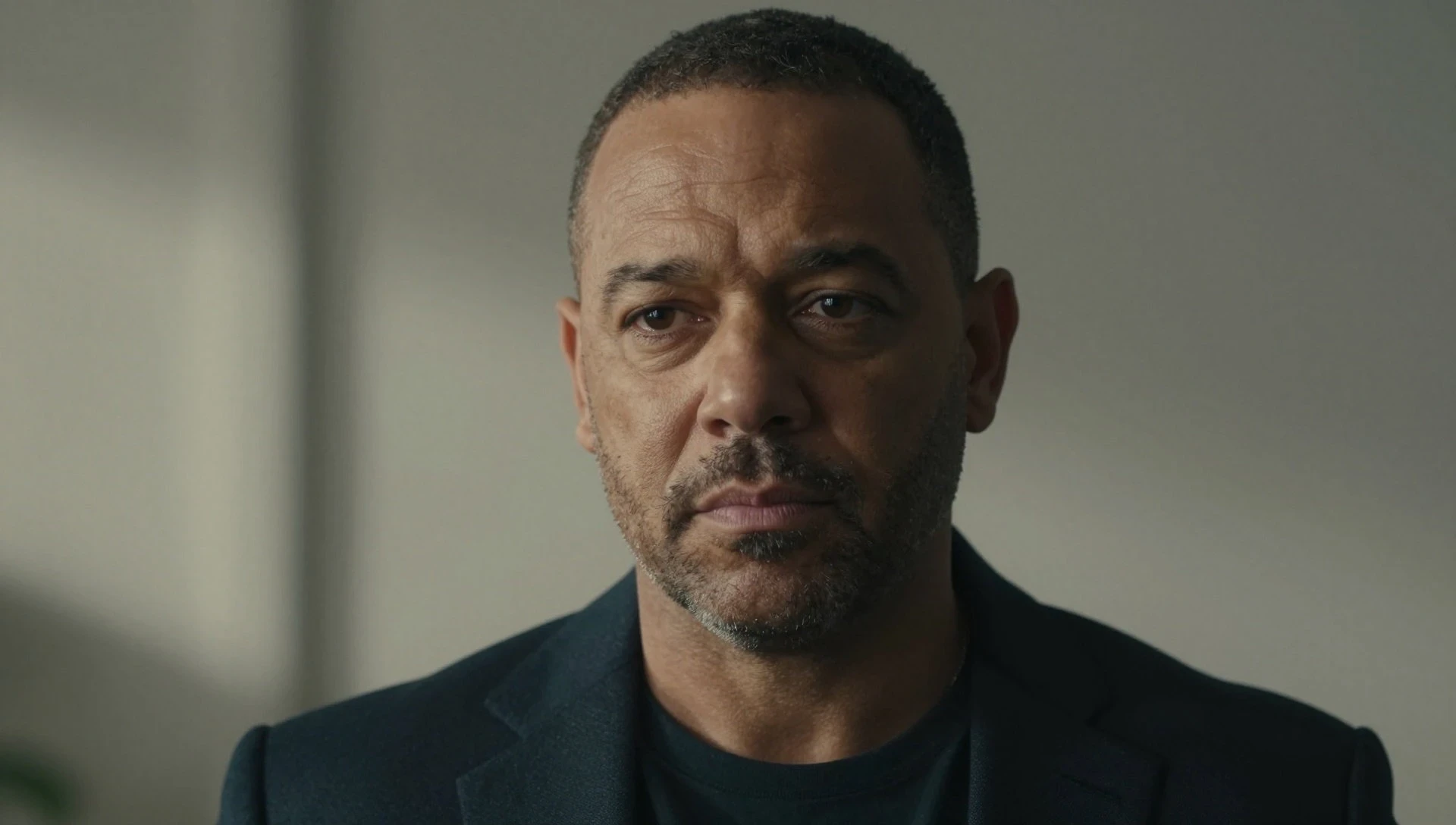
David Walliams, one of Britain's most commercially successful entertainers, has publicly denied allegations that he groomed and preyed upon teenage girls, a denial issued after a court order that had shielded his identity for months finally collapsed. The claims, published by ITV News and The Guardian following a three-year investigation, describe a pattern of conduct stretching back to 2003, when Walliams was in his early thirties and already a rising television presence. A judge rejected his request for an injunction last week, and his anonymity expired late on Monday local time, forcing the story into open circulation.
The allegations carry particular weight because of who Walliams is: a comedian who became a household name through Little Britain, a best-selling children's author with more than 60 million copies sold worldwide, a former Britain's Got Talent judge, and an OBE recipient in 2017. That public profile — family entertainer, charity fundraiser, celebrated author — sits in stark tension with the accounts now published. The story is therefore not merely a celebrity scandal but a study in how fame, legal machinery, and journalistic persistence interact when powerful figures face serious accusations.
What follows examines the substance of the allegations, the legal battle that delayed publication, the structure of the investigation itself, and the broader questions the case raises about power, consent, and accountability in the entertainment industry. The material is drawn from reporting by ABC News, ITV News, and The Guardian, and it is presented with attention to what is alleged, what is denied, and what remains contested.
On This Page
- The Allegations and the Public Figure at Their Centre
- The Legal Battle That Delayed Publication
- Inside the Investigation: Sourcing and Method
- Walliams's Denial and the Language of Regret
- Power, Consent, and the Ethics of Celebrity
- Media, Privacy, and the Public Interest
- What Comes Next for the Case and Its Wider Echoes
TL;DR David Walliams, the British comedian and children's author, has denied allegations that he groomed and sexually pursued teenage girls, claims published by ITV News and The Guardian after a three-year investigation. A court injunction had blocked publication, but a judge rejected his request last week and his anonymity expired late Monday. The allegations date to 2003 and involve multiple women, including one who says she was sexually assaulted at 15. Walliams denies abusing his position of power, acknowledging only thoughtless behaviour in casual relationships. The case raises questions about fame, consent, legal suppression, and journalistic accountability.
The Allegations and the Public Figure at Their Centre
The claims against David Walliams emerged from a reporting effort that spanned three years and drew on more than 30 sources with first-hand accounts, according to the outlets that published them. At the centre of the story is a performer whose career arc moved from cult comedy to mass-market children's publishing, a transition that made him a trusted figure in millions of households. That trust is precisely what gives the allegations their force, because the women describe a man who used visibility and status as instruments of access rather than as incidental features of his life.
What the Women Describe
The Guardian reported that multiple women said Walliams used his fame and position to pursue them for sexual purposes when they were teenagers or young women. One woman alleged she was sexually assaulted by him at his London home when she was 15. Others said he groomed them as teenagers, and several said he first contacted them on social media. Another woman said she had sex with him at 17, which she described as consensual but felt pressured; his lawyers said he believed she was 18. A further account describes meeting him at 15 through social media and later being invited to his house, where she says he touched her inappropriately.
Taken together, the accounts sketch a recurring method rather than isolated encounters: initial contact through digital platforms, cultivation of a relationship with a much younger person, and eventual meetings in private settings. The women's descriptions vary in severity, from grooming to an alleged assault, but they share a structural similarity that investigators found significant. The outlets emphasised that the reporting relied on first-hand testimony rather than inference, and that the allegations were put to Walliams before publication.
The Career That Made Him a Household Name
Walliams became famous in the early 2000s through Little Britain, the sketch show he created with Matt Lucas, which turned him into a fixture of British comedy. He later built a parallel career as a children's author, selling more than 60 million copies worldwide, and served as a judge on Britain's Got Talent from 2012 to 2022. He was appointed an OBE in 2017. Each of these roles deepened his public association with family entertainment, and that association is now the backdrop against which the allegations are being read.
The Legal Battle That Delayed Publication
For months, the story existed in a legal limbo. A court order had blocked publication while Walliams sought to prevent the allegations from becoming public, and his legal team pursued an injunction that would have kept his identity and the substance of the claims under wraps. Last week, a judge rejected that request, and his anonymity expired late on Monday local time. The sequence matters because it illustrates how English courts can be used to delay, though not necessarily to prevent, reporting on matters of public interest.
How Anonymity Orders Work in Practice
Anonymity orders in England and Wales are granted when a court accepts that publication would cause irreparable harm, and they are frequently used in cases involving privacy, reputation, or the protection of vulnerable people. They are not, however, permanent shields. Judges must balance the right to privacy against the right to freedom of expression, and the public interest in reporting serious allegations often prevails when the claims are well-sourced and concern a figure whose conduct affects public trust. The rejection of Walliams's bid reflects that balancing exercise rather than any finding on the truth of the allegations.
The mechanics of the delay are also instructive. During the period of suppression, the outlets continued reporting and preparing their material, and the eventual publication arrived with a substantial evidential base rather than as a rushed revelation. That pattern — investigation first, legal challenge second, publication third — has become characteristic of high-profile British media cases, and it places considerable pressure on the courts to decide quickly whether suppression is justified.
What the Ruling Does and Does Not Establish
The judge's decision to reject the injunction does not validate the allegations, nor does it establish Walliams's guilt. It establishes only that the legal threshold for prior restraint was not met. That distinction is essential to any fair reading of the case, because the absence of an injunction is a procedural outcome, not a verdict. Walliams retains the right to contest the claims, and the reporting itself is careful to attribute allegations to the women who made them rather than to present them as established fact.
Inside the Investigation: Sourcing and Method
The credibility of any allegation-heavy story rests on method, and the reporting behind this case is notable for its scale. The outlets said their investigation involved more than 30 sources with first-hand accounts, a figure that suggests sustained documentary and testimonial work rather than a single confidential tip. That volume of sourcing is unusual in celebrity reporting, where stories often rest on one or two anonymous voices, and it raises the evidentiary bar that any denial must now address.
Why Source Volume Matters
In investigative journalism, the number of independent sources is a rough proxy for reliability, though it is never a guarantee. Multiple accounts that converge on similar patterns — initial contact through social media, cultivation of young women, private meetings — are harder to dismiss as coincidence or malice than a single claim. The outlets also stated that the allegations were put to Walliams before publication, giving him an opportunity to respond, which is a standard safeguard against one-sided reporting and a marker of procedural fairness.
At the same time, source volume does not resolve contested questions of fact. Some accounts involve disputed details, such as whether a woman was 17 or 18 at the time of a sexual encounter, and those disputes will matter if the matter proceeds to formal legal proceedings. The reporting presents the women's accounts as allegations, not as proven findings, and that distinction is central to how the story should be read.
The Role of Social Media in the Accounts
Several women said Walliams first contacted them on social media, a detail that situates the allegations within a broader shift in how public figures interact with young audiences. Platforms that allow direct messaging collapse the distance between celebrity and fan, and they create channels of access that did not exist in earlier eras. The accounts describe that access being used to initiate contact with teenagers, which is precisely the kind of conduct that grooming frameworks are designed to identify.
Walliams's Denial and the Language of Regret
Walliams's response, delivered in a letter to the journalists, is carefully calibrated. He denied abusing his position of power, and he framed his past conduct in terms of thoughtlessness rather than predation. He said he sometimes behaved thoughtlessly in casual sexual relationships and did not always consider others' feelings, which he regretted. He added that while a power imbalance is inevitable when one person is famous, abusing that power is different and something he never did. The denial thus concedes imperfect behaviour while rejecting the central charge.
Reading the Distinction He Draws
The pivot of the denial is a distinction between the existence of a power imbalance and the abuse of it. That is a meaningful legal and moral line, because fame does create asymmetries of status, access, and influence in almost any encounter between a celebrity and a member of the public. The question the allegations raise is whether those asymmetries were actively exploited, particularly with people who were teenagers at the time. Walliams's letter accepts the asymmetry and denies the exploitation, which places the dispute squarely on questions of conduct and intent.
His acknowledgement of thoughtlessness is also significant in tone. It offers a partial concession that may serve to humanise his position, but it does not address the specific claims of grooming or assault. A general statement of regret about casual relationships is not a response to an allegation that a 15-year-old was assaulted at his home, and the gap between the two is where the case will be contested.
What a Denial Can and Cannot Resolve
A denial is a necessary element of fair process, but it is not evidence. It establishes the position of the person accused and preserves the presumption of innocence, which remains intact unless and until a court finds otherwise. What a denial cannot do is settle contested facts, particularly when multiple women have given independent accounts and when some details, such as a woman's age at the time of an encounter, are disputed. The resolution of those questions, if it comes, will depend on evidence rather than assertion.
- 01
- 02
- 03
- 04
Power, Consent, and the Ethics of Celebrity
The case opens onto a wider conversation about how fame shapes consent. When one party is a national celebrity and the other is a teenager, the asymmetry is not merely social but structural: it affects access, confidence, the ability to say no, and the interpretation of what a young person's agreement actually means. Grooming frameworks exist precisely because consent obtained through cultivation and imbalance is not straightforwardly free, and the allegations here are framed in those terms rather than as isolated encounters.
Why Age and Status Compound
Age and status compound each other. A 15-year-old lacks the legal capacity to consent to sexual activity, and a public figure who contacts such a person through social media is operating in territory where the ordinary defences of mutual attraction become difficult to sustain. The women's accounts describe being pursued by someone whose fame made him seem both exciting and authoritative, and that dynamic is central to why the conduct is characterised as grooming rather than as a relationship.
The ethical questions extend beyond the individual case. Entertainment industries have repeatedly confronted the problem of powerful men whose access to young admirers is treated as a perk of success, and the reckoning that has unfolded across the past decade has forced institutions to examine how they screen, supervise, and respond to such conduct. The Walliams case adds another entry to that ledger, and it will be read alongside the others.
Institutional Silence and Public Trust
Institutions that employed or promoted Walliams now face questions about what they knew and when. Publishers, broadcasters, and talent agencies are not courts, but they are custodians of public trust, and their response to serious allegations is itself a matter of public interest. The story's publication places those institutions under scrutiny, and the adequacy of their past safeguarding practices will likely be part of the wider conversation that follows.
We Also Published
Media, Privacy, and the Public Interest
The publication of the allegations also raises questions about the balance between privacy and public interest. Walliams sought to prevent the story from appearing, and the courts initially allowed a period of suppression. That outcome is not unusual in English law, where privacy injunctions can delay reporting while claims are examined. The eventual rejection of the injunction reflects a judgment that the public interest in knowing about serious allegations against a prominent family entertainer outweighed the privacy claim.
The Case for Reporting
The case for publication rests on the nature of the allegations and the profile of the person accused. Walliams built a career on being trusted by children and families, and allegations of grooming and assault go directly to that trust. Where a public figure's conduct is alleged to have harmed young people, the argument that the public has a legitimate interest in knowing is strong, and it is reinforced by the number of women willing to speak and the length of the investigation that preceded publication.
There is also a deterrent dimension. Reporting of this kind can encourage other potential complainants to come forward, and it can prompt institutions to review their safeguarding practices. Those effects are not guaranteed, but they are part of the reason courts treat prior restraint as a serious step requiring clear justification rather than a routine convenience for the famous.
The Case for Caution
The countervailing argument is that allegations published before any court finding can inflict irreversible reputational damage, and that the presumption of innocence is easily eroded in the court of public opinion. Walliams has not been charged with any offence, and the claims remain contested. A responsible reading of the story therefore holds both truths at once: the allegations are serious and well-sourced, and the person accused has denied them and retains the right to be presumed innocent until a court decides otherwise.
What Comes Next for the Case and Its Wider Echoes
The immediate future of the case is uncertain. Walliams has denied the allegations and may pursue further legal avenues, while the women who spoke to ITV News and The Guardian have placed their accounts on the public record. Whether the matter proceeds to any formal criminal or civil process is not yet clear, and the absence of charges means the allegations remain untested in a courtroom. What is clear is that the story has moved from suppressed to public, and that shift carries consequences for everyone involved.
Possible Legal and Professional Consequences
For Walliams, the professional consequences may arrive faster than the legal ones. Broadcasters, publishers, and brands that have associated themselves with his family-friendly image will now assess the reputational risk, and past collaborations may be revisited. Legally, the denial leaves open the possibility of defamation proceedings or other challenges, though the strength of the outlets' sourcing and their adherence to right-of-reply norms would make such a course difficult. Any criminal process would depend on complainants and prosecutorial discretion.
For the outlets, the publication represents the culmination of a long and costly investigation, and it will be scrutinised for accuracy and fairness. For the women, speaking publicly carries its own risks, and the decision to do so after years of legal delay is a significant one. The case therefore has multiple stakeholders whose interests do not align, and the coming months will reveal how each of them responds.
The Broader Reckoning in Entertainment
The Walliams case belongs to a wider pattern in which celebrated figures in entertainment face allegations of misconduct that were long known in private but suppressed in public. Each case tests the willingness of institutions to act on what they know, the capacity of courts to balance privacy against public interest, and the readiness of audiences to separate affection for a performer's work from judgment about their conduct. Those tests are not resolved by a single story, but they are sharpened by it.
The most durable lesson may concern the mechanics of power. Fame grants access, and access without accountability creates the conditions in which harm can occur. The allegations against Walliams describe exactly that dynamic, and the denial he has offered concedes the existence of the imbalance while disputing its abuse. How the public, the courts, and the industry weigh that distinction will determine not only his future but the standards applied to others who occupy similar positions.
From our network :
- The Hidden Cost of AI Convenience: Why Over-Permissioned Agents Are a Security Time BombDiscover why AI agents with excessive permissions create dangerous single points of failure, and learn how implementing least privilege principles can protect your organization from exploitation.
- The Final Descent: How ESA Retired the Legendary Cluster Constellation After 24 Years of Space Weather ScienceAfter 24 years mapping Earth’s magnetosphere, ESA’s Cluster mission concluded with a precisely controlled reentry over the South Pacific. This analysis explores the scientific legacy, engineering decisions, and debris mitigation principles behind one of space exploration’s most responsible retirements.
- Mobile Learning and VR in English: What Global Evidence Reveals About Effective Language TechnologyA systematic review across 14 countries reveals which language-learning technologies genuinely work. Mobile learning, AI, and VR show measurable benefits when pedagogically integrated. This evidence-based guide helps educators and learners select technology that delivers real return on investment.
- University Language Proficiency Exams: Why Institutional Tests Demand Different Preparation Than IELTS and TOEFLDiscover why university-specific language proficiency examinations differ fundamentally from IELTS and TOEFL, and learn strategic preparation approaches for institutional assessment success.
- CISA’s Ten-Advisory Wave: Why Generic Patching Fails in OT and How to Build Product-Specific PlaybooksCISA released ten ICS advisories in one week, exposing critical infrastructure risks. Generic patching fails in OT. Learn to build product-specific remediation playbooks.
- Committed Mediterranean Precipitation Decline: Why Emissions Cuts Alone Cannot Restore Winter RainsNew NOAA research reveals that Mediterranean winter rains may decline irreversibly even with emissions cuts. Explore the science of committed climate change and regional impacts.
- How AI Agents Will Change the Way We Manage Personal FinancesExplore how AI agents are transforming personal finance through automated budgeting, bill payment, and investment management, while examining the critical security protocols and governance frameworks required for safe deployment.
- Live Online English Classes for Kids: Do They Actually Reduce Anxiety?A ten-week study reveals that synchronous online English classes can significantly reduce child language anxiety while improving listening and reading skills. Discover what makes these programs effective and how parents can select the right one.
- Forbidden Matrix Patterns and Visible Lattice Points: A Geometric DictionaryExplore how multidimensional 0–1 matrices encode geometric truths, linking forbidden patterns to visible lattice points and hypergraph theory, with applications in combinatorics and computational geometry.
RESOURCES
- UK children's author David Walliams accused of grooming minorsaljazeera.com22 hours ago ... A joint investigation by The Guardian and ITV News details allegations made by multiple women against the 55-year-old.
- David Walliams Dropped by Agency Following 'Grooming' Allegationsvariety.com1 day ago ... Former “Britain's Got Talent” star David Walliams has been dropped by Independent Talent Group following allegations of “grooming” and ...
- British comedian David Walliams faces allegations of grooming teensupi.com20 hours ago ... Comedian and former "Britain's Got Talent" judge David Walliams has been accused of inappropriate relationships and grooming of young women ...
- British comedian and children's author David Walliams accused of ...pbs.org22 hours ago ... One woman alleged he sexually assaulted her at his house when she was 15, while others accused him of grooming…
- David Walliams accused of sexual misconduct in Guardian ... - BBCbbc.com21 hours ago ... David Walliams accused of sexual misconduct after losing injunction bid ... ITV News and the Guardian have published reports alleging…
- UK children's author David Walliams accused of sex assault ...afp.com22 hours ago ... UK media on Tuesday published allegations that British comedian and children's author David Walliams groomed teenage fans and sexually ...
- David Walliams Accused of Grooming, Sexual Assault in Bombshell ...hollywoodreporter.com1 day ago ... David Walliams Revealed as Previously Unnamed Celebrity Alleged to Have “Preyed on Teenage Girls for Sex”. Accused of sexual assault…
- UK children's author David Walliams accused of grooming teensafp.com1 day ago ... UK media on Tuesday published allegations that British comedian and children's author David Walliams groomed teenagers as young as 15…
- David Walliams named after failed bid to block publication of ... - SBSsbs.com.au22 hours ago ... David Walliams named after failed bid to block publication of grooming allegations · David Walliams is best known as one…
- David Walliams accused of targeting teens as young as 15 - YouTubeyoutube.com1 day ago ... ... allegations of inappropriate behaviour towards women in the workplace. David Walliams denies all allegations of wrongdoing against him ...
- How grooming claims against David Walliams came to lightabc.net.au13 hours ago ... A three-year investigation by UK media has unearthed accusations against high-profile UK celebrity David Walliams of grooming and sexual ...
- David Walliams named as celebrity who tried to block publication of ...reddit.com1 day ago ... Walliams denies grooming, sexual harassment, criminal conduct and abusing his position of power. 1. Allegations Involving Teenage Girls. - Alex, ...
- British children's author David Walliams accused of sexual misconductapnews.com19 hours ago ... British children's author and comedian David Walliams is facing allegations of using his fame to groom girls and young women…
- Are you surprised by the lack of furore around the recent Walliams ...reddit.comDec 29, 2025 ... In the age of grooming gangs ... David Walliams dropped by Harper Collins - Allegations of inappropriate behaviour towards young…
- What Did Jonathan Ross Say About David Walliams? - Graziagraziadaily.co.uk23 hours ago ... As allegations of grooming and sexual assault against David Walliams have surfaced, a resurfaced clip of a joke told by…
- 01
- 02
- 03
- 04
- 05
- 06
- 07
- 08
0 Comments