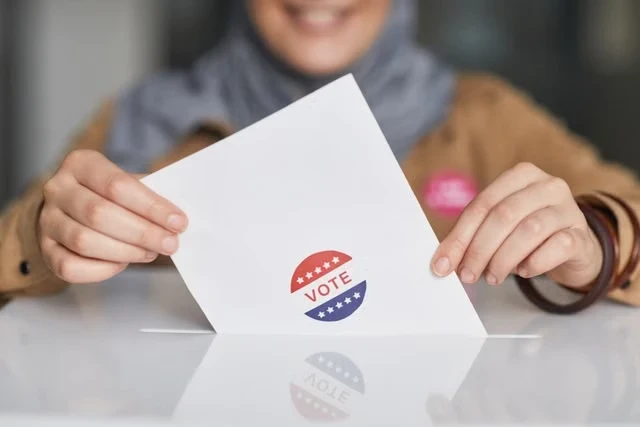
Early polling is not a crystal ball, yet it is becoming the loudest instrument in the 2026 U.S. midterm orchestra. The real value of these signals lies in how campaigns and media interpret them: they shape what voters hear, what candidates emphasize, and which narratives gain momentum. Polling, in other words, does not merely measure politics—it actively helps manufacture the political weather.
Two years is an eternity in election time, which is exactly why “forecasting” can be misleading. With shifting economic conditions, foreign-policy shocks, court decisions, and candidate changes, most poll snapshots reflect the present more than the future. Still, trends can reveal durable issues—trust in institutions, inflation fatigue, and governance credibility—that campaigns cannot easily erase.
This post frames the 2026 midterm environment as a dynamic rehearsal, not the final performance. Voters can learn how poll results get spun and what survey limitations actually imply. Campaign strategists, meanwhile, are learning how quickly narrative control can harden into voter belief long before Election Day.
On This Page
What early polling is actually revealing—and why it matters
Early polling rarely predicts outcomes with clean precision; it more reliably identifies direction. When poll numbers move—especially on economic satisfaction, government effectiveness, and issue salience—those shifts can influence fundraising priorities, message discipline, and candidate positioning. That is why the “environment” around 2026 feels more consequential than a casual reading of toplines would suggest.
Polling also acts as an attention mechanism. Editors, influencers, donors, and activists tend to rally around perceived momentum, which can amplify advantages for candidates who look “ahead.” When a narrative becomes widely repeated, it can change voter expectations, setting up a feedback loop that is political, not statistical.
Momentum signals vs. two-year volatility
The fastest-growing mistake is treating early polling margins as destiny. In reality, voter coalitions can reconfigure under economic stress, leadership scandals, high-salience events, or coalition-mobilization efforts. Those factors can swing opinion more than campaign rhetoric can immediately counter.
That does not make polling irrelevant—it makes interpretation harder. Analysts should watch not only “who leads,” but also which groups are moving: independents, younger voters, suburban voters, and turnout-sensitive segments. The electorate is a moving target; the most useful polls explain who is changing, not merely how much.
Narrative control: how campaigns weaponize “the numbers”
Once polls become headlines, they become ammunition. Candidates highlight favorable figures, ignore methodological caveats, and convert uncertainty into certainty for persuasive effect. Media outlets then compete for immediacy, often amplifying the most dramatic toplines rather than the underlying stability.
For voters, the discipline is simple: ask what the poll measures, how respondents were sampled, and whether comparisons are consistent across time. A poll is not a prediction machine; it is a temporary measurement tool, repeatedly reinterpreted by political actors.
What voters can learn—and what polls cannot forecast two years out
Voters should treat polling as an early-warning system for issues and attitudes, not as a calendar-based prediction. The clearest lesson is that “the economy” is not a vague slogan; it is a bundle of specific frustrations—prices, wages, and employment security—that polls can isolate. That makes polls useful for deciding what to demand from leaders.
Yet polls struggle to forecast rare events and human behavior under future uncertainty. Candidate health, leadership crises, scandals, geopolitical shocks, and major policy decisions can rewire preferences overnight. A two-year horizon also invites complacency: if supporters believe the result is settled, turnout models can break.
Reading methodology: sample, mode, and question wording
Most poll misunderstandings begin with one missing skill: reading how the survey was conducted. Sampling rules, response rates, weighting assumptions, and the difference between live calling, online panels, and mixed-mode collection can all bias outcomes. Even question wording—about the “direction of the country” versus “economic conditions”—can produce different emotional reactions.
Therefore, voters should compare polls that track similar questions over time. Ask whether the trend is consistent across multiple reputable surveys, rather than whether one organization issued a dramatic headline. If methods align imperfectly, the “signal” may be noise packaged as certainty.
Why forecasting fails far from Election Day
Forecasting two years out requires stacking assumptions: stable turnout behavior, predictable issue salience, and limited disruption. Politics does not cooperate. When a major story dominates the news cycle, it changes what voters think about, how they discuss it, and which candidates they credit or blame.
Moreover, partisan enthusiasm and independent persuasion evolve in response to campaign visits, advertisements, and debates. Early polling can show who is receptive today, but it cannot fully model how persuasion campaigns will reshape the electorate later. Expect adaptation, not linear progress.
We Also Published
How the 2026 midterm narrative is being formed: economy, governance, and credibility
The most consequential element of the 2026 midterm environment is how voters assign blame and distribute hope. Early polling often spotlights the economy and governance because those are the two domains where performance becomes measurable. When people feel prices are rising or government is ineffective, elections become referendums rather than debates.
Campaigns understand this brutal arithmetic of persuasion. They attempt to connect current discomfort to either competent problem-solving or failed leadership, using polls to refine the story. The result is a pre-election narrative battle where “what voters think” is constantly challenged by “what campaigns say they think.”
Issue salience: why economic mood dominates governance debates
Economic mood is persuasive because it is visceral. Even when policy details are complex, voters can still express the everyday reality—what it costs to live, whether work feels stable, and whether the future seems less secure. Polls that track these perceptions provide campaign planners with a map of urgency.
Governance then becomes the interpretive frame: if voters believe government can act, they become more tolerant of short-term strain. If they believe governance is failing, they seek change. Thus, early polling can reveal whether midterms are likely to be a continuation of frustration or a turning point toward restoration.
Credibility games: accountability, scapegoats, and the “two-step” narrative
In modern campaigns, credibility is contested through a two-step narrative process. First, candidates argue that a problem is real and urgent. Second, they assert that the opponent’s policies created it—then they promise an alternative path. Polling helps determine which step resonates more strongly with undecided voters.
Yet credibility narratives are fragile. A single policy correction, an unexpected economic trend, or a compelling candidate can flip the emotional verdict. Therefore, the best voter lesson is not to chase instant polls, but to watch which claims survive repeated cycles and which collapse when the real world changes.
TL;DR Early 2026 midterm polling is best read as a map of shifting attitudes—not a timetable for certainty. Voters can learn which economic and governance concerns are gaining traction, how trust is changing, and which narratives campaigns are trying to lock in. What polls cannot reliably do two years out is forecast the outcome, because politics is vulnerable to disruption, turnout swings, and strategic adaptation. Treat polling as a measurement for today’s emotions, then use discipline to track trends across time rather than surrender to headline margins.
From our network :
- CISA’s Ten-Advisory Wave: Why Generic Patching Fails in OT and How to Build Product-Specific PlaybooksCISA released ten ICS advisories in one week, exposing critical infrastructure risks. Generic patching fails in OT. Learn to build product-specific remediation playbooks.
- Former Soap Stars Embark on Ambitious Writing Projects and Theatrical StagesDiscover how former soap opera actors are transitioning into independent scriptwriting and high-profile theatrical stage productions.
- Analyzing Hoya Corporation’s Midday Volume Shifts and Financial FundamentalsExamine Hoya Corporation’s midday trading volume contraction, technical moving averages, robust solvency ratios, and stellar quarterly earnings performance.
- Committed Mediterranean Precipitation Decline: Why Emissions Cuts Alone Cannot Restore Winter RainsNew NOAA research reveals that Mediterranean winter rains may decline irreversibly even with emissions cuts. Explore the science of committed climate change and regional impacts.
- Norbert’s Uncertain Path: Why Hawaii’s Storm Watch Demands Patience Over PanicTropical Storm Norbert strengthens in the Eastern Pacific with winds near 50 mph, forecast to reach Category 1 hurricane status by Friday. Long-range models disagree sharply on whether Hawaii faces any threat around September 19–23, making official guidance essential.
- The Final Descent: How ESA Retired the Legendary Cluster Constellation After 24 Years of Space Weather ScienceAfter 24 years mapping Earth’s magnetosphere, ESA’s Cluster mission concluded with a precisely controlled reentry over the South Pacific. This analysis explores the scientific legacy, engineering decisions, and debris mitigation principles behind one of space exploration’s most responsible retirements.
- How AI Agents Will Change the Way We Manage Personal FinancesExplore how AI agents are transforming personal finance through automated budgeting, bill payment, and investment management, while examining the critical security protocols and governance frameworks required for safe deployment.
- Forbidden Matrix Patterns and Visible Lattice Points: A Geometric DictionaryExplore how multidimensional 0–1 matrices encode geometric truths, linking forbidden patterns to visible lattice points and hypergraph theory, with applications in combinatorics and computational geometry.
- The Hidden Cost of AI Convenience: Why Over-Permissioned Agents Are a Security Time BombDiscover why AI agents with excessive permissions create dangerous single points of failure, and learn how implementing least privilege principles can protect your organization from exploitation.
RESOURCES
- 2026 House Election Interactive Map - 270toWin.com270towin.com... predict the outcome of the 435 House races in the midterm 2026 election ... U.S. House and make a forecast for the 2026…
- What history tells us about the 2026 midterm elections | Brookingsbrookings.eduAug 28, 2025 ... Even so, a swing of 6.5 points toward the Democrats in the overall House vote would produce a Democratic seat…
- As the 2026 Midterms Approach, Economy Is Front and Centerpewresearch.orgU.S. Elections & Voters. > Election 2026. Report. |. July 23, 2026. As the 2026 Midterms Approach, Economy Is Front and Center. Democratic candidates…
- Predicting the 2026 Elections | Polls and Political Newsracetothewh.comTrack the Latest Polling - from the 2026 Midterms to the 2028 Presidential Election · New Feature: Explore all the latest polls in one…
- Cook Political Report | Non-Partisan Political Analysis for US ...cookpolitical.comThe Cook Political Report with Amy Walter is an independent, non-partisan newsletter that analyzes state, federal and presidential elections, and American ...
- Predictions for the Senate - 2026 Midterms - Race to the White Houseracetothewh.comThe RacetotheWH Senate Forecast predicts the outcome of every Senate race in 2026 using a data-driven model that factors in the latest polling, ...
- Decision Desk HQ's 2026 Forecast: The Senate Seats That Will ...decisiondeskhq.substack.comJul 20, 2026 ... Part 2 of the introduction to our 2026 midterm election forecast looks at the U.S. Senate. ... Using political data,…
- The Race for Congress: Latest 2026 Polls - The New York Timesnytimes.comTrack the latest Congressional ballot surveys that ask who Americans plan to vote for in the 2026 midterm election.
- Who will win the 2026 midterm elections? Polls and predictionsthetimes.com8 hours ago ... Illustration of Donald Trump, the US Capitol building, a waving American flag, and President Trump looms large over elections in…
- Become a Poll Worker | U.S. Election Assistance Commissioneac.govThe EAC encourages those interested in becoming poll workers at the polls on Election Day to learn more about what is required and how…
- 01
- 02
- 03
- 04
- 05
- 06
- 07
- 08
0 Comments