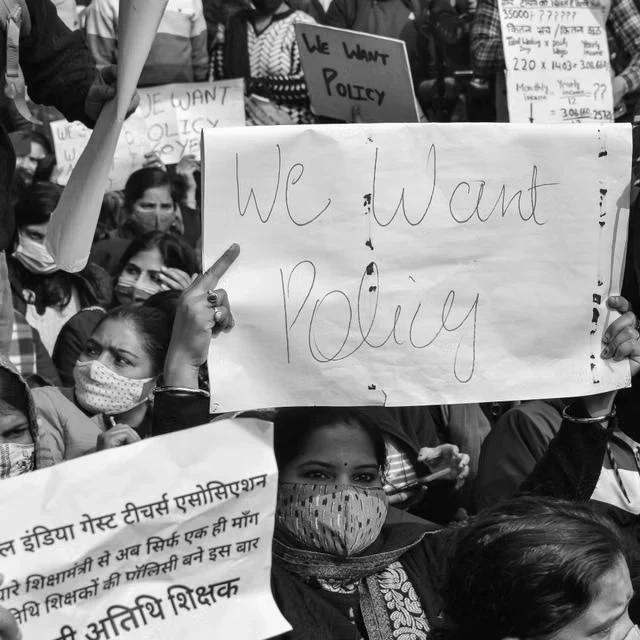
South Africa’s latest flare-up of anti-immigration unrest in Durban is not merely a policing story; it is a warning about how quickly misinformation can harden into public disorder. A false narrative about a Constitutional Court ruling on asylum seekers helped ignite protests that escalated into looting, arson, attempted murder allegations, and mass arrests. The incident now sits at the intersection of law, migration anxiety, political pressure, and the fragile authority of public institutions.
The scale of the violence matters. Nineteen suspects were already facing the courtroom after arrests spread across multiple days, while police continued tracing those responsible for burning vehicles and buildings. The unrest also spilled beyond KwaZulu-Natal into Gauteng, showing that the issue had become symbolic and contagious, not local and isolated. What emerges is a portrait of a society where rumor, grievance, and crowd behavior can rapidly overwhelm civic restraint.
The response from authorities was equally revealing. Police insisted the MTN8 Cup Final would proceed, pushed back against social-media panic, and warned that any protest near Moses Mabhida Stadium would meet firm resistance. At the same time, provincial and national officials urged calm while acknowledging public concern. That tension—between grievance and legality, protest and criminality—forms the central message of this case.
On This Page
TL;DR Nineteen people arrested in Durban after violent anti-immigration protests will appear in court on charges including public violence and malicious damage to property, with additional allegations such as attempted murder and firing a gun in public already recorded against some suspects. The unrest was fueled by false claims about a Constitutional Court ruling on asylum seekers, then spread into looting, arson, and wider disorder, including spillover tension in Gauteng. Police and government officials have urged calm, denied rumors about the MTN8 Final, and signaled a hard security response around Moses Mabhida Stadium.
What Happened in Durban and Why It Matters
The Durban unrest began as a politically charged anti-immigration protest, but it quickly transformed into a public-order emergency. Police arrested nineteen people in connection with violence that included looting, arson, and gun-related allegations. The case now matters not only for the criminal charges involved, but also for what it reveals about social instability driven by misinformation.
A protest fuelled by false legal claims
The immediate trigger was misinformation about a Constitutional Court ruling on asylum seekers. That kind of distortion is especially dangerous because it gives anger an illusion of legality. Once people believe a court has ordered something dramatic, a crowd can become convinced it is acting in defense of justice rather than in defiance of it.
A Home Affairs directive issued on September 28 had instructed refugee reception offices to accept asylum applications in line with a July court judgment, but that directive was later withdrawn. This sequence matters because policy confusion can be exploited by agitators who thrive on ambiguity. In a volatile environment, every mixed signal becomes fuel.
The scale of disorder on the ground
Police reported that the violence did not remain contained to one street or one group. Protesters split into smaller factions, looted shops, and set two houses alight in Umbilo. More than 800 people also marched toward the Point area, demanding that foreign nationals leave, which shows how the protest merged grievance with intimidation.
The authorities said several shops were damaged or stripped, while intelligence officers and detectives continued searching for those responsible for burning vehicles and buildings. In practical terms, this is not a symbolic clash alone; it is an urban-security failure with economic consequences, residential harm, and the threat of further retaliation.
The Arrests, Charges, and Legal Exposure
Legal consequences are now beginning to catch up with the unrest. Nineteen suspects are expected in court next week, and police have already linked some of them to serious allegations beyond public violence. The legal process will test whether the state can distinguish between unlawful crowd behavior, organized criminality, and any genuine political grievance.
| Key legal element | Reported detail |
|---|---|
| Total arrests | 19 people arrested in Durban and nearby areas |
| Initial arrests | 4 suspects arrested on Thursday |
| Later arrests | 15 additional suspects arrested on Friday night |
| Core charges | Public violence and malicious damage to property |
| Serious allegations | Attempted murder and firing a gun in public |
Public violence versus ordinary protest
South African law draws a sharp line between peaceful expression and conduct that endangers life or property. Once a protest turns into arson, looting, or firearm-related conduct, the state is no longer dealing with protected dissent alone. It is dealing with conduct that can be prosecuted as criminal violence.
Police indicated that most of the arrested suspects are students, a detail that may matter when courts consider motive, influence, and group dynamics. Youth participation does not excuse wrongdoing, but it can help investigators understand recruitment patterns, social-media mobilization, and how quickly outrage can be converted into collective action.
Why the court process is likely to expand
Authorities have already signaled that more charges may follow as detectives continue their investigations. That is unsurprising in a case of this scale, where property damage, possible firearm use, and multiple locations all create overlapping evidence trails. Court appearances next week are likely to be only the beginning.
The broader legal question is whether the arrests will deter future disorder or simply become another episode in a cycle of protest and retaliation. The answer will depend on the quality of evidence, the speed of prosecution, and the credibility of the state’s response in the eyes of the public.
We Also Published
How Misinformation Turned Grievance Into Violence
This episode demonstrates a familiar modern pattern: a claim circulates online, emotion outruns verification, and a political grievance mutates into public disorder. Misinformation did not create dissatisfaction from nothing, but it sharpened it, directed it, and gave it urgency. That makes rumor not a side issue, but a central cause.
| Escalation stage | Observed outcome |
|---|---|
| Misinformation | False claims about a Constitutional Court ruling spread |
| Mobilization | Anti-immigration crowds assembled in Durban and elsewhere |
| Disorder | Looting, arson, and property damage followed |
| State response | Police deployed, arrests made, and court action prepared |
| Containment effort | Officials issued warnings and denied further rumors |
The dangerous authority of false certainty
Rumors become potent when they appear to confirm a crowd’s existing suspicions. In this case, the alleged court story fit neatly into a broader anti-immigration frame, so it spread fast and met little resistance. That is how false certainty gains authority: it sounds emotionally plausible before it is factually tested.
Once a belief is emotionally anchored, correction becomes harder than prevention. Governments can withdraw directives, issue clarifications, and deploy police, but once a narrative has entered group identity, the damage may already be underway. This is why accurate public communication is not optional; it is an instrument of stability.
The role of digital rumor networks
Social media rumors were serious enough that police had to deny claims linking the unrest to the MTN8 Cup Final. That detail may look minor, but it reveals the broader communications environment. When every large event becomes a potential rumor vehicle, officials must police not just streets, but narratives.
The lesson is severe: disinformation in a tense city can move faster than police vehicles, and correction often arrives after the crowd has already gathered. Public institutions therefore need rapid, consistent, and visible communication strategies that leave far less room for manipulation.
Security, Public Order, and the State’s Response
The state’s immediate duty was to stop the violence from spreading further. Police were deployed, roads to the stadium remained open, and security warnings were issued with unusual firmness. Premier Thami Ntuli even asked for the army to be deployed, underscoring how serious the unrest had become in the eyes of provincial leadership.
Police posture and crowd control
Colonel Robert Netshiunda made clear that law enforcement was preparing for a strong response if unrest moved toward Moses Mabhida Stadium. That warning was not theatrical; it was preventative signaling. When large crowds and major sporting events coexist, uncertainty can become a trigger for panic, stampedes, or opportunistic disruption.
Police also stressed that the match would proceed as planned, pushing back against speculation that disorder would cancel it. That announcement served two purposes: it preserved normal civic life and reduced the power of rumors. In a crisis, continuity can be a form of control.
Government messaging and political responsibility
Government spokesperson William Baloyi urged people not to commit crimes despite what he described as legitimate concerns. That distinction is essential. A state may recognize public anxiety over migration or service delivery, but it cannot permit vigilante action, arson, or collective punishment disguised as activism.
In disciplined governance, concern is acknowledged while criminality is isolated and punished. If officials blur that line, they invite impunity on one side and cynicism on the other. The current response therefore has to be both firm and intelligible if it is to command legitimacy.
The Immigration Debate Behind the Unrest
Although the violence was criminal, the underlying subject remains politically combustible: asylum, migration, and public anxiety over social pressure. South Africa has long struggled with heated debate around borders and refugee administration, and those debates often become easier to weaponize than to solve. Durban’s unrest exposed that vulnerability in its rawest form.
| Underlying issue | Public risk if mishandled |
|---|---|
| Asylum administration | Policy confusion and hostile mobilization |
| Migration anxiety | Scapegoating of foreign nationals |
| Institutional trust | Rumors replacing lawful authority |
| Community frustration | Vigilantism and street violence |
| Weak communication | Rapid escalation and wider disorder |
Why migration becomes a flashpoint
Immigration disputes often attract blame because they are visible, politically useful, and emotionally simple. When services feel strained or neighborhoods feel unsafe, foreigners can become easy targets in the public imagination. That simplicity is deceptive, because the real drivers are usually unemployment, governance failure, and insecurity.
Durban’s unrest shows how quickly a national policy issue can be reframed as a street-level enemy. Once that happens, facts matter less than symbols, and symbols are easier to attack than solutions. The state must therefore address both the policy problem and the emotional fuel surrounding it.
What responsible handling would require
Responsible handling would mean clearer asylum communication, better enforcement against false information, and visible protection for vulnerable communities. It would also require police to act without fear or favoritism, because selective enforcement only deepens resentment. Stability depends on consistency, not improvisation.
Equally important, leaders must resist the temptation to speak only after violence has begun. Prevention is cheaper, safer, and more credible than reaction. Durban’s events prove that when official clarity fails, street-level actors are ready to supply their own rules.
- 01
- 02
- 03
- 04
What Comes Next for Durban and the Country
The next court appearance will be a test of both legal process and public confidence. If charges are pursued effectively, the state may reinforce the principle that violent protest carries consequences. If not, the unrest risks becoming another unresolved episode in a country already familiar with social volatility and contested authority.
The courtroom as a signal
Court proceedings will do more than determine individual guilt. They will signal whether the justice system can respond decisively to politically charged violence without losing procedural discipline. In cases like this, the courtroom becomes a stage on which the credibility of the state is publicly measured.
The evidence trail will matter enormously: eyewitness accounts, police documentation, video material, and forensic links to fires or weapons. Because the allegations span multiple offenses, prosecutors will need precision rather than rhetoric. The more exact the case, the stronger the deterrent effect.
The larger lesson for institutions
The larger lesson is sobering and unmistakable: misinformation, grievance, and weak trust can combine into a civic emergency within hours. Governments must communicate faster, police must act earlier, and political leaders must avoid inflaming fears for short-term gain. The cost of delay is written in burned houses, damaged shops, and shattered confidence.
Durban’s unrest is therefore not an isolated headline but a governance lesson. The state cannot simply arrest its way out of social fear, nor can it allow fear to become a license for violence. Order, credibility, and public truth must be defended together, or none of them will survive for long.
Key Takeaways
The Durban protests are best understood as a convergence of misinformation, anti-immigration sentiment, and public violence. Nineteen arrests, pending court appearances, and continuing police searches show that the legal response is still unfolding. The unrest also reveals a broader institutional challenge: how to keep public anxiety from being converted into criminal action.
Core facts at a glance
False information about asylum policy helped drive crowds into the streets, where looting and arson followed. Police said the MTN8 Final will proceed, roads remain open, and any attempt to disrupt the event will meet a forceful response. The message from authorities is clear: protest is one thing, but violent disorder is another.
What happens next will depend on whether the courts, the police, and political leaders can stay disciplined under pressure. If they do, Durban may yet recover a measure of control. If they do not, the same patterns of rumor and retaliation may return with renewed force.
| Operational priority | Expected impact |
|---|---|
| Swift prosecution | Reinforces deterrence and public confidence |
| Accurate public messaging | Reduces rumor-driven escalation |
| Visible police presence | Limits further disorder and protects infrastructure |
| Policy clarity on asylum | Weakens manipulation around migration fears |
| Community-level engagement | Helps separate legitimate concern from criminal conduct |
From our network :
- The Hidden Cost of AI Convenience: Why Over-Permissioned Agents Are a Security Time BombDiscover why AI agents with excessive permissions create dangerous single points of failure, and learn how implementing least privilege principles can protect your organization from exploitation.
- Committed Mediterranean Precipitation Decline: Why Emissions Cuts Alone Cannot Restore Winter RainsNew NOAA research reveals that Mediterranean winter rains may decline irreversibly even with emissions cuts. Explore the science of committed climate change and regional impacts.
- Mobile Learning and VR in English: What Global Evidence Reveals About Effective Language TechnologyA systematic review across 14 countries reveals which language-learning technologies genuinely work. Mobile learning, AI, and VR show measurable benefits when pedagogically integrated. This evidence-based guide helps educators and learners select technology that delivers real return on investment.
- The Final Descent: How ESA Retired the Legendary Cluster Constellation After 24 Years of Space Weather ScienceAfter 24 years mapping Earth’s magnetosphere, ESA’s Cluster mission concluded with a precisely controlled reentry over the South Pacific. This analysis explores the scientific legacy, engineering decisions, and debris mitigation principles behind one of space exploration’s most responsible retirements.
- Forbidden Matrix Patterns and Visible Lattice Points: A Geometric DictionaryExplore how multidimensional 0–1 matrices encode geometric truths, linking forbidden patterns to visible lattice points and hypergraph theory, with applications in combinatorics and computational geometry.
- How AI Agents Will Change the Way We Manage Personal FinancesExplore how AI agents are transforming personal finance through automated budgeting, bill payment, and investment management, while examining the critical security protocols and governance frameworks required for safe deployment.
- CISA’s Ten-Advisory Wave: Why Generic Patching Fails in OT and How to Build Product-Specific PlaybooksCISA released ten ICS advisories in one week, exposing critical infrastructure risks. Generic patching fails in OT. Learn to build product-specific remediation playbooks.
- University Language Proficiency Exams: Why Institutional Tests Demand Different Preparation Than IELTS and TOEFLDiscover why university-specific language proficiency examinations differ fundamentally from IELTS and TOEFL, and learn strategic preparation approaches for institutional assessment success.
- Live Online English Classes for Kids: Do They Actually Reduce Anxiety?A ten-week study reveals that synchronous online English classes can significantly reduce child language anxiety while improving listening and reading skills. Discover what makes these programs effective and how parents can select the right one.
RESOURCES
- Over 900 arrested during South African anti-migrant protests - Reutersreuters.comJul 1, 2026 ... South African police arrested more than 900 people during nationwide anti-migrant protests on Tuesday that were mostly peaceful but at ...
- South African police said on Friday they had arrested 69 ... - Instagraminstagram.comJul 17, 2026 ... ... protests against asylum applications that turned violent in parts of Durban ... A protest by March and March, an…
- South Africa blames disinformation as anti-migrant protests turn violentreuters.com5 days ago ... ... disinformation over a court ruling on asylum seekers ... DURBAN/JOHANNESBURG, Oct 8 (Reuters) - Anti-migrant protests in two ...
- South African police warned anti-immigration groups ... - Instagraminstagram.comJun 3, 2026 ... ... anti-immigration protests turned violent in Johannesburg and Durban, police say. ... misinformation about the court ruling has contributed ...
- South Africa protests turn violent amid rage over asylum rulingaljazeera.com5 days ago ... Anti-migrant protests in two cities in South Africa have turned violent, with the government blaming disinformation about a court ruling…
- South Africa blames disinformation as anti-migrant protests turn violentmiamiherald.com5 days ago ... DURBAN/JOHANNESBURG, Oct 8 (Reuters) - Anti-migrant protests in two South African cities including Johannesburg's Soweto township turned ...
- South Africa says over 900 arrested during nationwide anti-migrant ...nbcnews.comJul 1, 2026 ... South African police deployed to head off unrest and protests on June 30, 2026,. A demonstration calling for groups for…
- The South African government said Friday it had withdrawn an order ...facebook.com4 days ago ... Anti-migrant protests in Soweto and Durban turned violent on ... However, last week, the Pretoria municipality secured a high court…
- Education And Advocacy - Kopanang Africa Against Xenophobiakaax.org.zaDurban Central Police Station refugees · durban migrants · Durban Refugee ... migrant solidarity march South Africa · migrants · Minister of Police ...
- South Africa seeks court guidance amid anti-immigration protestsnewsaf.cgtn.com1 day ago ... Demonstrations in Durban and Soweto turned violent, with several vehicles set ablaze. ... against misinformation and intimidation ...
- UPDATE | 19 suspects to face court over Durban anti-immigration ...news24.com3 days ago ... Nineteen suspects are set to appear in court this coming week following their arrests in connection with violent protests which…
- Protests, clashes as S. African anti-migrant tensions reignitefrance24.com5 days ago ... South African protesters clashed with foreign nationals on Thursday as tensions over migration were reignited by a court order that ...
- South Africa's president unveils crackdown on illegal migration - BBCbbc.comJun 7, 2026 ... Anti-migrant groups are demanding undocumented migrants leave the country - and have set 30 June as the deadline. Last weekend,…
- Presidency cautions against the spread of misinformation amid ...ewn.co.zaJun 16, 2026 ... Anti-immigration protesters move through Joburg CBD under police watch after Constitutional Court car torching ... immigration protests in Durban.
- South Africa withdraws asylum directive after anti-migrant violencekfgo.com4 days ago ... ... anti-migrant protests turned violent in Johannesburg and Durban. The directive had sought to implement a July 7 Constitutional Court…
- 01
- 02
- 03
- 04
- 05
- 06
- 07
- 08
0 Comments