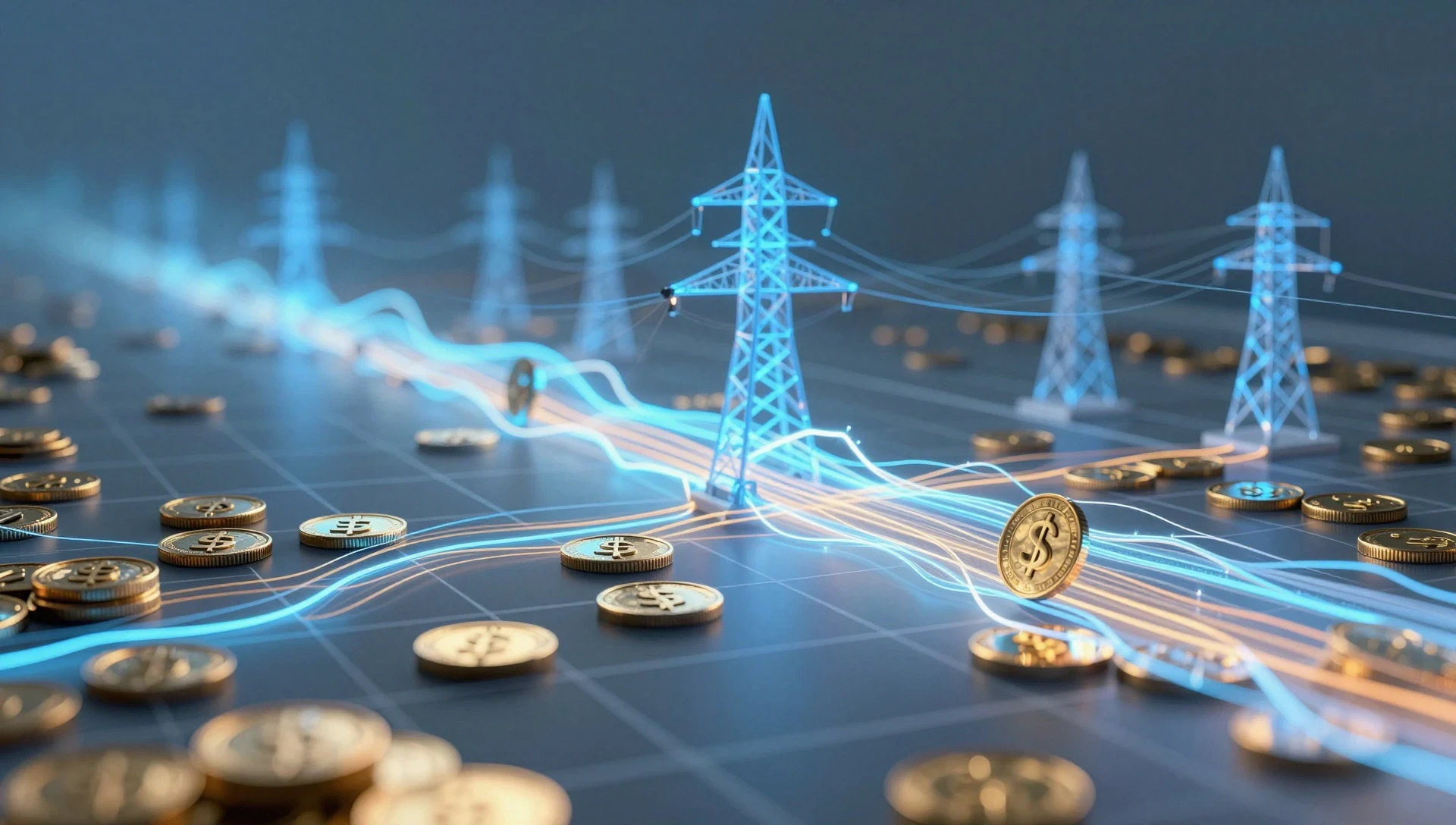
Free electricity has crossed the threshold from subsidy policy into electoral weaponry, and the shift carries consequences far beyond household budgets. When a government absorbs the full cost of power supply, the tariff ceases to function as a price signal and becomes instead a political promise — one that must be renewed, defended, and financed every fiscal year.
The Dawn report of October 31, 2026, identifies this transition without elaboration, but the underlying mechanics are well documented across South Asian energy economics.
The core tension is arithmetic. Electricity generation, transmission, and distribution carry fixed costs that do not disappear when the consumer pays nothing; they migrate to the national exchequer, to state-owned utility balance sheets, or to cross-subsidising industrial consumers.
On This Page
Pakistan's power sector already carries circular debt measured in trillions of rupees, and every additional free unit deepens the liability. The political debate therefore concerns not whether free electricity is popular — it demonstrably is — but who bears the deferred cost and when that deferral becomes unsustainable.
This analysis examines the structural logic behind the free-electricity debate: the fiscal exposure it creates, the political incentives that sustain it, and the comparative evidence from other economies that have attempted similar interventions.
The evidence suggests that free power is rarely free in any meaningful economic sense; it is a transfer whose incidence is determined by tax policy, utility governance, and the credibility of the state's payment obligations.
TL;DR Free electricity has become a contested political instrument rather than a neutral welfare measure. The Dawn report of October 31, 2026, flags the debate without detail, but the economics are clear: zero consumer tariffs shift costs to public balance sheets, deepen utility debt, and create electoral lock-in that constrains future fiscal reform. This analysis maps the fiscal exposure, the political incentives, and the comparative record of subsidised power regimes, concluding that the debate is ultimately about intergenerational cost transfer rather than generosity.
The Fiscal Architecture of Zero-Cost Power
Every unit of electricity delivered without charge represents a cost incurred somewhere in the supply chain. Generation fuel, capacity payments to independent power producers, transmission losses, and distribution salaries are contractual obligations that do not respond to political announcements.
When the tariff is set at zero, the gap between cost and revenue is financed through sovereign borrowing, utility arrears, or delayed payments to generators — each of which carries its own interest burden.
Cost Incidence and the Circular Debt Mechanism
Pakistan's power sector provides the clearest illustration. Circular debt — the accumulated shortfall between billed revenue and actual cost recovery — has repeatedly exceeded 2.3 trillion rupees, forcing the government into repeated debt-retirement operations funded by borrowing.
Each operation converts a flow deficit into a stock liability, and the interest on that stock compounds annually. Free electricity accelerates the flow.
The mechanism is self-reinforcing. When generators are not paid on schedule, they reduce output or demand sovereign guarantees; when output falls, load-shedding rises; when load-shedding rises, public pressure for relief intensifies; and relief is most cheaply delivered, politically, through tariff concessions.
The loop closes with the exchequer absorbing the difference, which is precisely the outcome the original subsidy was meant to avoid.
International Monetary Fund programme conditionality has repeatedly targeted this loop, requiring tariff adjustments and subsidy rationalisation as preconditions for disbursement. The political difficulty is that each adjustment is immediately visible to consumers while the fiscal benefit is diffuse and delayed. This asymmetry explains why free-electricity pledges survive fiscal crises that would ordinarily force retrenchment elsewhere.
Distribution losses compound the problem. In several South Asian jurisdictions, technical and commercial losses — theft, unmetered supply, billing inefficiency — run between 15 and 25 percent of units generated. When the tariff is zero, the incentive to meter accurately weakens further, because no revenue depends on the reading. The subsidy thus finances both legitimate consumption and leakage.
Tariff Design and the Erosion of Price Signals
A tariff performs two functions: it recovers cost and it signals scarcity. Free electricity abolishes both. Consumers facing a zero marginal price have no incentive to shift consumption away from peak hours, invest in efficiency, or moderate demand during supply constraints.
The result is a flatter, higher load curve that requires more peaking capacity — the most expensive generation to build and operate.
Empirical work on electricity demand consistently finds that residential consumption responds to price with elasticities in the range of −0.2 to −0.6 in the short run. Setting the price to zero therefore does not merely remove revenue; it actively increases the quantity demanded, widening the subsidy bill beyond the original projection. The fiscal estimate prepared at announcement is almost always an underestimate.
Tariff design also determines who benefits. A universal free allowance transfers most, in absolute terms, to households with the largest consumption — typically urban, higher-income consumers with air conditioning and multiple appliances. A targeted lifeline slab, by contrast, directs relief to low-consumption households at a fraction of the fiscal cost. The political preference for universality is precisely what makes the policy expensive.
Regulatory independence matters here. Where the regulator sets tariffs on cost-of-service principles, political intervention requires an explicit, visible override. Where the regulator is captured or bypassed, subsidies accumulate without documentation, and the true fiscal position of the utility becomes opaque to creditors and citizens alike.
Comparative Record Across Subsidised Regimes
India's state electricity boards offer a long record. Agricultural power in Punjab, Haryana, and Tamil Nadu has been supplied free or near-free for decades, and the consequences are consistent: groundwater depletion, fiscal stress at the state level, and distribution utilities with negative net worth. The subsidy achieved its political purpose while degrading the resource base it depended on.
Iran provides a starker case. Heavily subsidised energy prices, including electricity, contributed to consumption growth that outpaced generation capacity, producing seasonal blackouts and a fiscal burden estimated at a substantial share of GDP. Reform attempts have repeatedly stalled because the political cost of raising prices exceeds the political cost of rationing.
Venezuela demonstrates the terminal stage. Free or nominal-cost electricity, financed by oil revenue, collapsed when the revenue collapsed. The utility lost the maintenance budget required to keep turbines running, and the result was nationwide blackouts.
The subsidy was affordable only while an unrelated revenue stream held; when it failed, the entire system failed with it.
The comparative lesson is not that subsidies are always wrong. Targeted, time-limited, and transparently budgeted support can be defensible. The failure mode is universal, open-ended, and off-budget — the precise configuration that free-electricity politics tends to produce, because each of those features maximises short-term electoral return.
Political Incentives and Electoral Lock-In
Free electricity is attractive to politicians for reasons that are structurally rational. The benefit is immediate, visible, and attributable to a named government; the cost is deferred, diffuse, and attributable to no one in particular. Voters reward the first and rarely punish the second within an electoral cycle.
This asymmetry is not a failure of voter intelligence; it is a predictable response to information that is genuinely hard to assemble.
The Asymmetry of Visible Benefits and Hidden Costs
A household receiving a zero bill observes the saving directly. The corresponding cost appears as higher public debt, weaker utility creditworthiness, or reduced investment in transmission — all of which materialise years later and are difficult to trace to any single decision. Political competition therefore rewards the promise and penalises the retraction, regardless of underlying fiscal reality.
This dynamic produces a ratchet. Once a subsidy is granted, withdrawal is treated as a new tax rather than the removal of an old benefit. Governments that attempt reform face organised resistance from beneficiaries who have incorporated the transfer into their baseline expectations. The reference point has shifted, and loss aversion does the rest.
Opposition parties face a parallel incentive. Promising an even larger subsidy is cheaper than defending a complex reform programme, and the fiscal consequences will fall on a successor. The result is competitive escalation, in which each electoral cycle raises the baseline commitment and narrows the space for future adjustment.
Media coverage reinforces the pattern. A tariff announcement is a headline; a circular-debt retirement operation is a technical footnote. The public information environment therefore overweights the benefit and underweights the cost, and political actors respond to the information environment they face.
Reform Sequencing and the Credibility Problem
Successful subsidy reform generally follows a sequence: targeted replacement before withdrawal, credible compensation for losers, and institutional mechanisms that prevent reversal. Attempts that begin with price increases and promise compensation later tend to fail, because the compensation is never delivered at the promised scale and public trust collapses.
Indonesia's fuel and electricity subsidy reforms in the mid-2010s illustrate the workable pattern. Cash transfers were scaled up and delivered before prices rose, and the government communicated the reallocation explicitly. The reform held because the compensation was tangible and the fiscal saving was redirected to visible infrastructure and social spending.
Credibility is the binding constraint. A government that has previously reversed reforms will struggle to convince consumers that this time the compensation is real. Building that credibility requires institutional commitment — independent oversight, published fiscal accounts, and legal guarantees — rather than a single political announcement.
Pakistan's repeated engagement with the IMF has produced precisely this credibility deficit. Programme conditionality requires tariff adjustment; political pressure produces partial reversal; the next programme requires deeper adjustment. Each cycle erodes confidence and raises the eventual cost of stabilisation.
We Also Published
Distributional Consequences and the Long-Run Fiscal Position
The distributional question is more subtle than the political framing suggests. Free electricity is often defended as pro-poor, yet the absolute value of the transfer rises with consumption. A household consuming 500 units receives five times the benefit of one consuming 100 units, and the former is typically wealthier. The policy is therefore regressive in absolute terms even when it is progressive in proportional terms.
Who Actually Captures the Subsidy
Consumption data from subsidised regimes consistently show that the top quintile of households captures the majority of the absolute subsidy value. The bottom quintile, which often consumes below the metered threshold or lacks a connection entirely, captures little. The transfer is thus poorly targeted relative to its stated purpose.
Connection rates matter as much as tariff levels. Households without a grid connection receive nothing from a zero tariff, and the subsidy consumes fiscal space that might otherwise fund connection expansion. In this sense, universal free electricity can entrench the very exclusion it claims to address.
Industrial cross-subsidy adds a second distortion. When commercial tariffs are raised to finance residential relief, energy-intensive manufacturing faces higher input costs and loses competitiveness against jurisdictions with cost-reflective pricing. The subsidy thus exports jobs while importing fiscal risk.
Measurement is the final gap. Off-budget subsidies do not appear in standard fiscal accounts, so the true transfer is invisible to most citizens and to many legislators. Transparency is a precondition for any rational debate, and its absence is why the political argument rarely engages the arithmetic.
Intergenerational Cost Transfer
Deferred subsidy costs are ultimately borne by future taxpayers, who receive no benefit from the consumption they are financing. The transfer is intergenerational, and its scale depends on the interest rate at which the deferred obligation compounds. At prevailing sovereign borrowing costs, a subsidy granted today can double in real terms within a decade.
The formal relationship is straightforward. If a subsidy of ##S## is financed by borrowing at rate ##r## and rolled over for ##n## years, the terminal liability is:
A subsidy of 100 billion rupees financed at 12 percent and rolled for ten years produces a terminal liability of roughly 310 billion. The arithmetic explains why apparently modest annual commitments become structurally unmanageable, and why early reform is cheaper than late reform by a wide margin.
This is the core of the free-electricity debate. The question is not whether households deserve relief — they often do — but whether the relief is delivered through a mechanism whose cost is visible, targeted, and time-limited, or through one that compounds silently against future budgets.
Designing a Defensible Alternative
A defensible policy would separate the welfare objective from the tariff instrument. Direct cash transfers, calibrated to household income and delivered through existing social protection systems, achieve the same relief without distorting the price signal or accumulating utility debt. The administrative cost is real but far below the fiscal cost of universal free power.
Where direct transfers are administratively infeasible, a lifeline slab — a fixed quantity of units at zero or near-zero tariff, with cost-reflective pricing above it — preserves the price signal for the majority of consumption while protecting basic needs. The design requires accurate metering and honest billing, which are themselves worth investing in.
Time limits are essential. An open-ended commitment becomes a permanent baseline and loses all reform flexibility. A sunset clause, renewed only on published evidence of need, forces periodic review and prevents the ratchet from operating unchecked.
Finally, the fiscal cost must appear in the budget. An on-budget subsidy is visible, contestable, and comparable against alternative uses of the same funds. An off-budget one is none of these, and its invisibility is precisely why it persists.
The Dawn report captures a moment rather than a resolution. Free electricity has become a political issue because the arithmetic of universal subsidy has become impossible to ignore, and because the electoral incentives that produced it remain intact.
The debate will be settled not by argument alone but by the fiscal calendar, which imposes deadlines that politics cannot indefinitely postpone.
From our network :
- How AI Agents Will Change the Way We Manage Personal FinancesExplore how AI agents are transforming personal finance through automated budgeting, bill payment, and investment management, while examining the critical security protocols and governance frameworks required for safe deployment.
- CISA’s Ten-Advisory Wave: Why Generic Patching Fails in OT and How to Build Product-Specific PlaybooksCISA released ten ICS advisories in one week, exposing critical infrastructure risks. Generic patching fails in OT. Learn to build product-specific remediation playbooks.
- University Language Proficiency Exams: Why Institutional Tests Demand Different Preparation Than IELTS and TOEFLDiscover why university-specific language proficiency examinations differ fundamentally from IELTS and TOEFL, and learn strategic preparation approaches for institutional assessment success.
- Mobile Learning and VR in English: What Global Evidence Reveals About Effective Language TechnologyA systematic review across 14 countries reveals which language-learning technologies genuinely work. Mobile learning, AI, and VR show measurable benefits when pedagogically integrated. This evidence-based guide helps educators and learners select technology that delivers real return on investment.
- Committed Mediterranean Precipitation Decline: Why Emissions Cuts Alone Cannot Restore Winter RainsNew NOAA research reveals that Mediterranean winter rains may decline irreversibly even with emissions cuts. Explore the science of committed climate change and regional impacts.
- Forbidden Matrix Patterns and Visible Lattice Points: A Geometric DictionaryExplore how multidimensional 0–1 matrices encode geometric truths, linking forbidden patterns to visible lattice points and hypergraph theory, with applications in combinatorics and computational geometry.
- Live Online English Classes for Kids: Do They Actually Reduce Anxiety?A ten-week study reveals that synchronous online English classes can significantly reduce child language anxiety while improving listening and reading skills. Discover what makes these programs effective and how parents can select the right one.
- The Hidden Cost of AI Convenience: Why Over-Permissioned Agents Are a Security Time BombDiscover why AI agents with excessive permissions create dangerous single points of failure, and learn how implementing least privilege principles can protect your organization from exploitation.
- The Final Descent: How ESA Retired the Legendary Cluster Constellation After 24 Years of Space Weather ScienceAfter 24 years mapping Earth’s magnetosphere, ESA’s Cluster mission concluded with a precisely controlled reentry over the South Pacific. This analysis explores the scientific legacy, engineering decisions, and debris mitigation principles behind one of space exploration’s most responsible retirements.
RESOURCES
- How to Build Public Support for Energy Subsidy and Pension Reformsimf.orgApr 16, 2025 ... Fiscal policy and management · How Countries Are Adapting as the ... policy issues of the day. The IMF, based…
- Low Income Home Energy Assistance Program (LIHEAP)acf.govAug 5, 2026 ... ... fiscal year. It includes funding allocations, Model Plan ... Stay informed about ACF programs, grants, and policy changes. Email ...
- 2026 Energy Crisis Policy Response Tracker - IEAiea.orgIncrease tax-free fuel subsidy limit for farmers and fishermen. Extended Deepen existing reductions to fuel tax. Phased out (August 2026) Provide cash ...
- Unlocking India's Energy Transition: Opportunities, Challenges, and ...jpia.princeton.eduApr 23, 2025 ... Additionally, patronage politics has inflated subsidies to unsustainable levels, exacerbating financial pressures on utilities (Mehta and ...
- The Budgetary Cost of the Inflation Reduction Act's Energy Subsidiescato.orgMar 11, 2025 ... IRA Energy Tax Credits Could Cost $4.7 Trillion by 2050. The massive cash transfer from taxpayers to private firms under…
- National fiscal policy responses to the energy crisis - Bruegelbruegel.org... subsidies came from windfall profit tax on the nuclear power ... energy crisis in Estonia, involving less fiscal spending and more free market…
- Fossil Fuel Subsidies Are Mostly Fiction, But the Real Energy ...cato.orgJun 25, 2025 ... Official government data show that renewables are subsidized 30 times more than fossil fuels. Most of the subsidies are in…
- Enhanced Premium Tax Credits: Who Benefits, How Much, and ...bipartisanpolicy.orgOct 15, 2025 ... As Democrats and Republicans consider a path forward, this issue brief examines recent federal policy changes to premium subsidies, ...
- Energy Prices and Subsidies in the Western Balkans | OECDoecd.orgMay 14, 2025 ... Monitor policy issues with statistics, simulators, or indexes ... fiscal risks, foster competition, and free up financing for a green…
- Mapping India's Energy Policy 2026iisd.orgRising Electricity Subsidies in India Undermine Financial Viability of Utilities and Fiscal Space for the States ... free electricity to agricultural consumers.
- Low Income Home Energy Assistance Programcsd.ca.govLIHEAP Weatherization provides free energy efficiency upgrades to low ... grant totaled $236,769,308 for the 2026 Federal Fiscal Year. The contents ...
- States Began Scaling Back Expensive Subsidies for Data Centers in ...cbpp.orgAug 7, 2026 ... ... subsidy repeal bill was rewritten – and remains under consideration – as a law that repeals property tax exemptions…
- Fossil Fuel Subsidies: The $760 Billion Lie About 'Free Market' Energyfractracker.orgMar 14, 2025 ... The unaccounted costs of climate change, pollution-related health issues, and environmental damage. $500 billion. Foregone Tax Revenue, Indirect ...
- Grants, Loans, Rebates, and Other Incentivesenergy.maryland.govMEA Fossil Fuel Policy Version 2 for Fiscal Year 2024 - Fiscal Year 2026 ... energy conservation and other sustainable practices, is free and…
- The US Inflation Reduction Act: Is it a Green Deal? - Sciences Posciencespo.frMar 25, 2025 ... ... tax policy, direct investment, and international trade ... Substantively, the IRA includes tax credits for the production of electricity ...
- 01
- 02
- 03
- 04
- 05
- 06
- 07
- 08
0 Comments