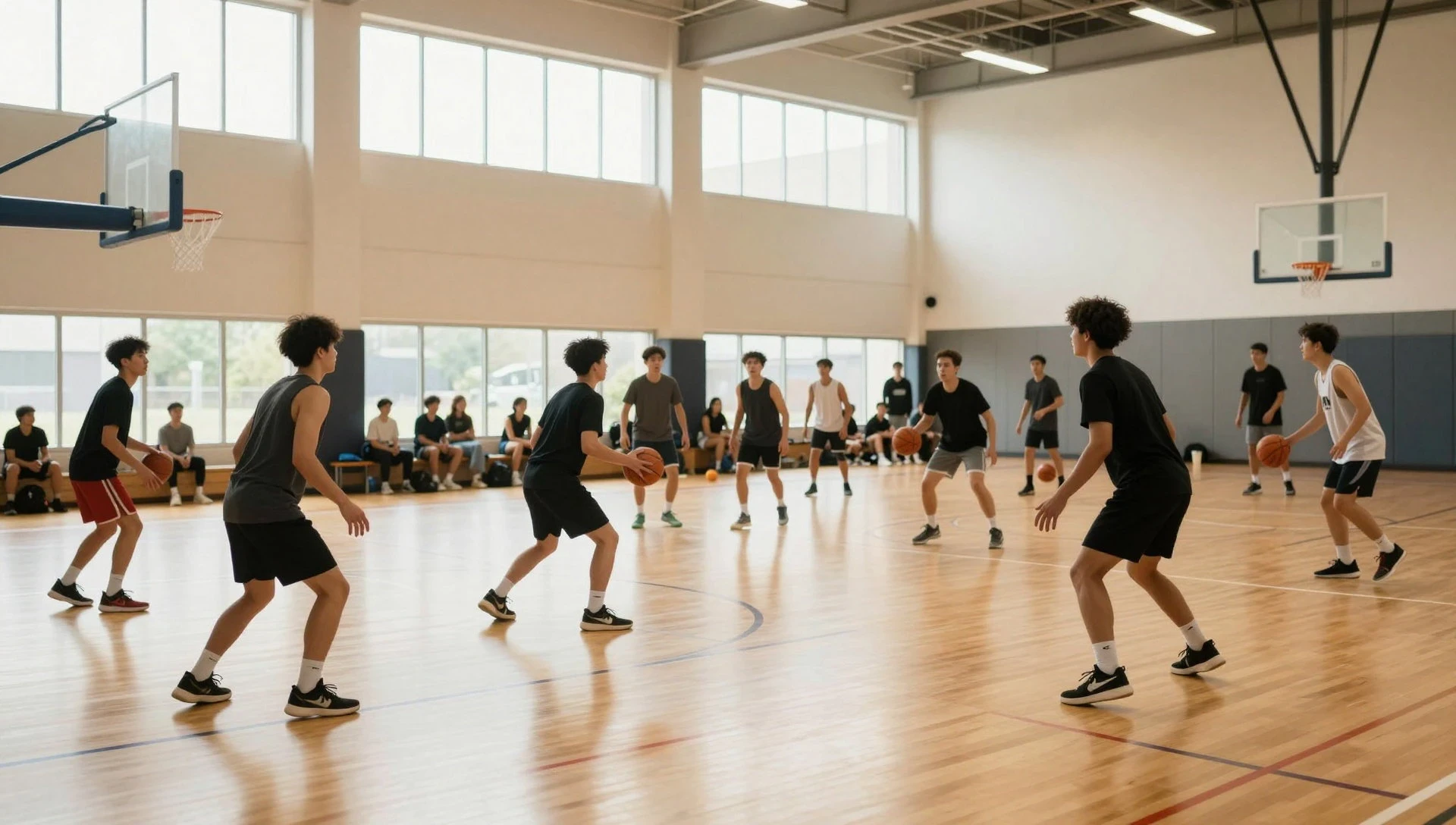
Recreational sport has quietly become one of the most investable corners of the experience economy, and the Brodie Rec League illustrates precisely why. What began in 2020 as a modest basketball operation in Burlington, Ontario, now serves roughly 50,000 players across 25 North American cities, including Toronto, Vancouver, New York City, and Boston.
Its standard $350 sign-up fee bundles team jerseys and a full season of play, yet the real product extends well beyond the box score.
Brodie's differentiation lies in the production values wrapped around ordinary amateur games. Players receive professional photographs at a pre-season media day, track their statistics through an online portal, and see their games filmed for social media distribution. A mid-season all-star game, with players voted in by the community, completes the professional-league theatre.
On This Page
Chief executive Connor Renton frames the ambition plainly: the league aims to deliver the best experience rather than the cheapest one.
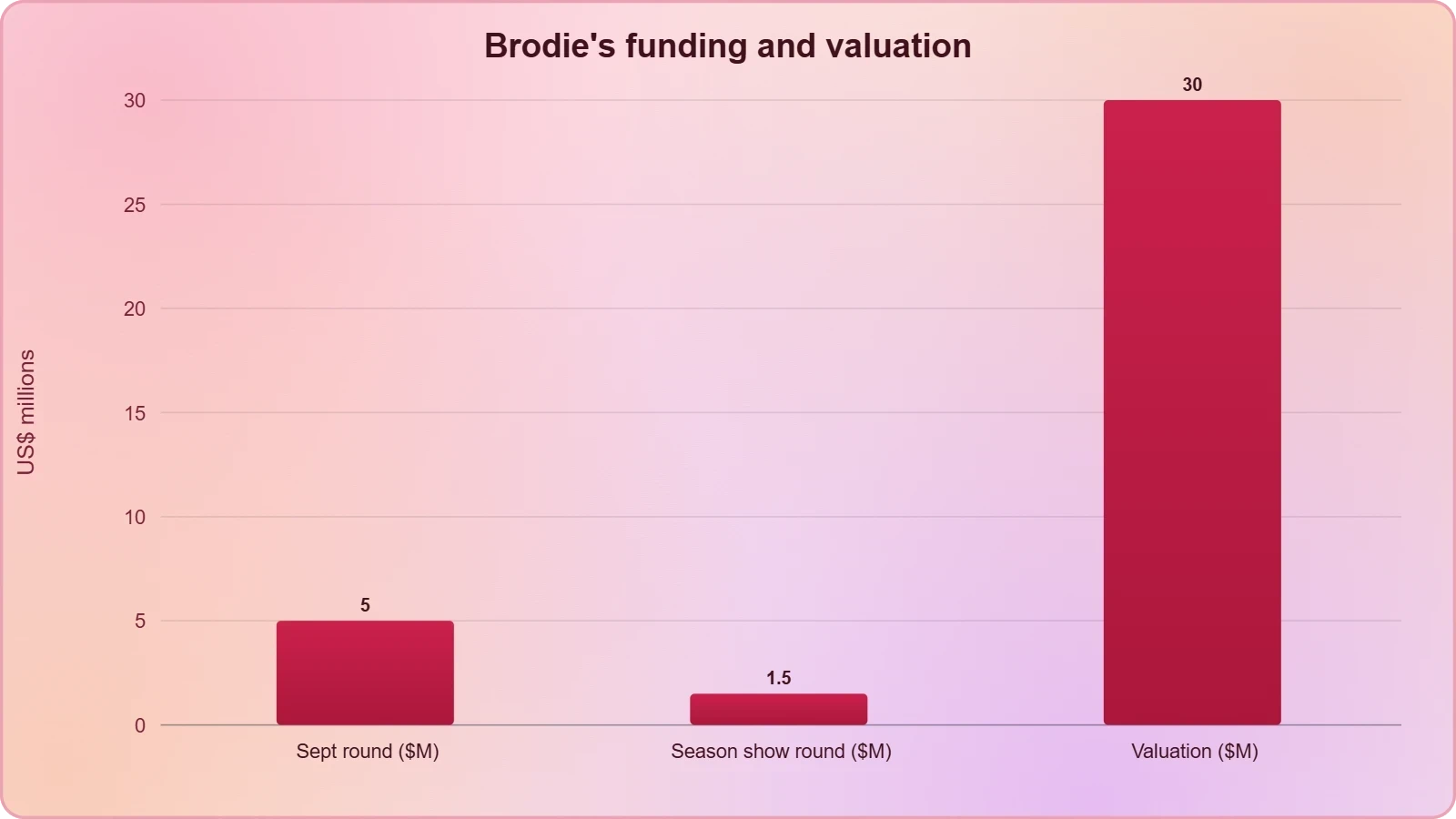
Capital has followed the concept with unusual speed for a recreational sports operator. On September 29, Brodie announced $5 million in funding led by Toronto-based Golden Ventures and New York-based Lerer Hippeau.
A subsequent appearance on a Fall 2026 season show raised another $1.5 million at a $30-million valuation, with three investors acquiring five per cent of the league. The numbers suggest investors see a scalable consumer brand, not merely a local pastime.
TL;DR The Brodie Rec League has converted recreational basketball into a premium, media-rich consumer product, scaling from a single Burlington operation in 2020 to 50,000 players across 25 North American cities. A $350 entry fee funds jerseys, statistics, filmed games, and an all-star showcase, while $6.5 million in recent funding at a $30-million valuation validates the model. The league monetises the vast majority of athletes who never reach professional ranks, selling belonging, visibility, and status rather than basketball alone.
The Economics of Selling Status Instead of Sport
Traditional intramural leagues compete almost entirely on price, offering gym time and a referee for the lowest possible fee. Brodie inverts that logic by treating the player as a protagonist in a produced narrative, complete with media day portraits and highlight reels.
Michael Naraine, an associate professor of sport management at Brock University, captures the distinction neatly: Brodie sells the same product differently, at a higher premium that can generate better returns.
Why Premium Pricing Works in Amateur Sport
A $350 fee would be unremarkable for a weekend clinic but is steep for casual rec basketball, and that is precisely the point. The price signals seriousness and filters for players who value presentation, statistics, and community recognition over raw court access. Renton's stated goal of offering the best experience rather than the cheapest reframes the entire competitive set.
Premium positioning also protects margins in a category where gym rental, officiating, and insurance costs are largely fixed. By layering digital content and events onto the same physical infrastructure, Brodie extracts more revenue per participant without proportionally increasing its cost base. That operating leverage is what transforms a hobby league into a venture-scale business.
The Experience Stack Behind the Fee
Each element of the offering addresses a distinct emotional need. Professional photographs satisfy the desire for recognition, online statistics feed competitive identity, and filmed games supply shareable social currency.
The all-star game, with community voting, adds narrative stakes across an otherwise ordinary season, turning participants into an audience with a vested interest in each other.
This stack mirrors how professional leagues manufacture engagement, scaled down to amateur budgets. The result is a product that feels aspirational yet attainable, which is exactly the psychological territory where consumer brands command pricing power.
Brodie is effectively selling the feeling of professionalism, and the fee reflects that perceived value rather than the cost of gym time.
The Market Gap: Serving the Ninety-Nine Percent
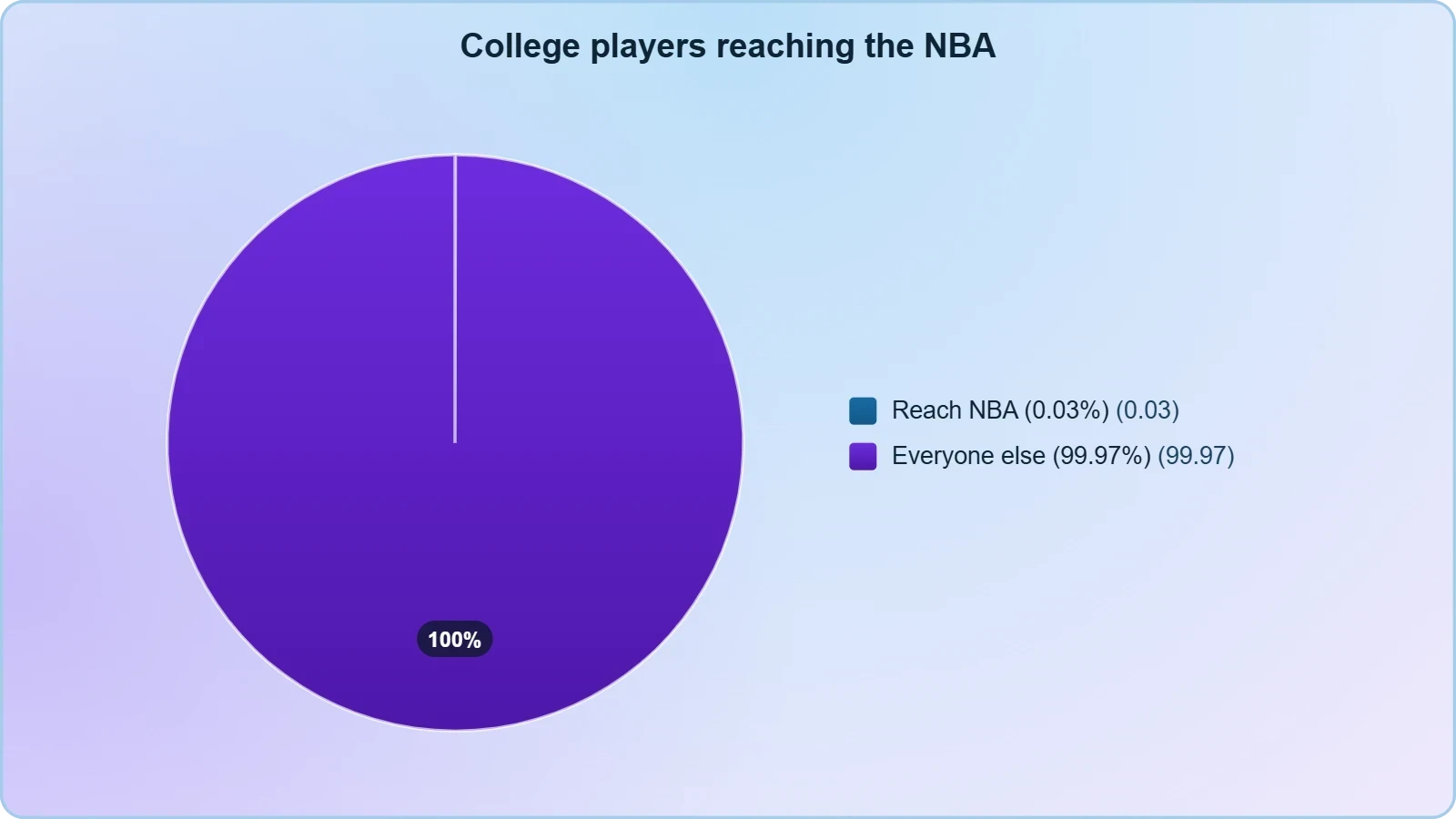
Brodie's strategic insight rests on a stark statistical reality. According to the NCAA, only 0.03 per cent of college basketball players ever reach the NBA, meaning the overwhelming majority of serious athletes confront an abrupt end to organised competition after graduation.
Renton explicitly frames the league for the many people who want to remain involved in sport despite that ceiling.
A Lifetime Customer Base Beyond Elite Talent
Professional leagues monetise a tiny talent pool through broadcast rights and sponsorship. Brodie inverts the pyramid by monetising the vast amateur base directly through participation fees and experience upgrades. Every player cut from a college roster, every former high school starter, and every adult seeking competitive community becomes a potential recurring customer.
That base is structurally larger and more durable than elite talent pipelines. Amateur players pay to participate for decades, not merely during a brief competitive window, and their willingness to spend rises with disposable income.
The addressable market therefore expands with the very demographic trends that make adult recreational sport one of the fastest-growing consumer categories.
Community as a Retention Engine
Rec leagues historically suffer from high churn because the product is transactional: show up, play, leave. Brodie's statistics portal, filmed games, and all-star voting create continuity between sessions, giving players reasons to return and to recruit friends. Social ties formed within teams become switching costs that a cheaper league cannot easily replicate.
Retention economics matter enormously in a subscription-like business. Acquiring a new player costs marketing spend, while retaining one preserves revenue at minimal marginal cost. By embedding players in a visible community with public statistics and social content, Brodie converts a seasonal purchase into an identity, which is the most durable form of customer loyalty available.
Investor Logic and the Creator Economy Tailwind
Golden Ventures and Lerer Hippeau are not conventional sports investors; both firms built their reputations backing consumer software and marketplace businesses. Their participation signals that Brodie is being valued as a consumer platform with recurring revenue, network effects, and content distribution, rather than as a chain of gym rentals. The $30-million valuation after the follow-on round reinforces that framing.
Reading the Valuation Signal
At a $30-million valuation, three investors acquired five per cent for $1.5 million, implying a post-money figure that would be extraordinary for a regional sports operator. The premium reflects expectations of continued city expansion and rising revenue per player. Investors are effectively underwriting a repeatable playbook rather than a single market's cash flow.
That playbook depends on standardisation: identical fee structures, consistent media production, and centralised technology across every city. If Brodie can replicate its Burlington experience in New York and Boston without proportional cost increases, the unit economics improve as the network grows. Scale, in this model, compounds the brand rather than merely the headcount.
Content as a Distribution Engine
Filmed games and social media clips serve a dual purpose: they enhance the player experience and simultaneously function as low-cost customer acquisition. Every highlight shared by a participant reaches friends and colleagues who might otherwise never encounter the league. The creator economy provides the distribution rails that traditional intramural operators never possessed.
This dynamic creates a virtuous loop. More players generate more content, which attracts more players, which strengthens the community and justifies premium pricing. The league's appearance on a Fall 2026 season show extended that loop into mainstream media, converting entertainment exposure into both capital and new registrations across its North American footprint.
- 01
- 02
- 03
- 04
Scaling a Community Brand Across Twenty-Five Cities
Expansion from Burlington to Toronto, Vancouver, New York City, and Boston within roughly six years is remarkable for any consumer business, let alone one built on gym rentals. The challenge lies in preserving the premium feel as operations decentralise. A league that feels bespoke in one city can feel generic across twenty-five if quality control slips.
Standardisation Without Dilution
Brodie's answer appears to be centralised production standards: consistent media days, uniform statistics platforms, and a shared brand identity across markets. Players in Boston should receive the same experience as players in Burlington, which requires investment in training, technology, and vendor management. Standardisation is the price of scale in an experience business.
The risk is that standardisation erodes the local intimacy that made the original league appealing. Community leagues thrive on personal relationships, and aggressive expansion can strain those bonds. Brodie must therefore balance national consistency with enough local autonomy to keep each city's league feeling genuinely rooted in its neighbourhoods.
Operational Constraints and Cost Pressures
Gym capacity is finite and expensive in dense urban markets, and prime evening slots are contested by schools, municipalities, and rival operators. As Brodie enters more cities, facility access becomes a binding constraint on growth. Securing long-term venue partnerships is therefore as strategically important as signing new players.
Insurance, officiating, and staffing costs also scale with participation, limiting the operating leverage that software businesses enjoy. Brodie's margin advantage comes from premium pricing and content-driven acquisition rather than from near-zero marginal costs. Investors are betting that brand strength will sustain that pricing premium as the network expands.
What the Brodie Model Reveals About Modern Consumer Sport
Brodie's rise reflects a broader shift in how people spend on leisure. Consumers increasingly prefer experiences that generate identity, content, and community over passive entertainment or material goods. A basketball league that produces photographs, statistics, and highlight reels sits squarely within that preference, and its premium fee captures the willingness to pay for it.
The Experience Economy Meets Grassroots Sport
For decades, recreational sport was treated as a public good or a low-margin service. Brodie demonstrates that it can be a branded consumer product with pricing power, provided the experience is designed with the same care as a professional broadcast. The league sells participation, but it packages participation as membership in something aspirational.
This reframing has implications far beyond basketball. Adult recreational soccer, hockey, tennis, and running clubs all serve similar demographics with similar unmet desires for recognition and community. Any operator capable of layering media production and digital identity onto those sports could plausibly replicate Brodie's economics in adjacent categories.
Lessons for Founders and Investors
The clearest lesson is that differentiation in mature categories rarely comes from the core activity itself. Gym time is a commodity; the media day, the statistics portal, and the all-star vote are not.
Founders seeking premium positioning should ask which emotional needs their category ignores, then build the experience stack that addresses them.
For investors, Brodie illustrates the value of businesses that monetise overlooked majorities rather than celebrated minorities. The 0.03 per cent of college players who reach the NBA attract enormous attention, but the remaining 99.97 per cent represent a far larger and more durable market. Brodie built its business on that arithmetic, and the capital markets have noticed.
Risks, Competition, and the Road Ahead
Every premium model invites imitation, and Brodie's success will likely attract well-funded competitors in major markets. Traditional intramural operators could upgrade their offerings, while new entrants might copy the media-day format at lower prices. Sustaining the premium depends on brand strength, operational consistency, and continued content innovation.
Competitive and Execution Risks
Expansion into twenty-five cities multiplies the number of things that can go wrong: a poorly run media day in one market can damage the national brand. Quality assurance across franchise-like operations is notoriously difficult, and a single viral complaint can undermine the aspirational positioning that justifies the fee.
Macroeconomic conditions also matter. Discretionary spending on recreational sport is sensitive to household budgets, and a downturn could pressure the $350 price point. Brodie's defence lies in community lock-in and the relatively modest absolute cost compared with other leisure categories, but the risk is real and worth monitoring.
What to Watch Next
Investors and observers should track revenue per player, retention rates across seasons, and the pace of new city launches. Expansion into adjacent sports would signal a platform ambition rather than a single-sport brand, materially changing the long-term valuation case. Sponsorship deals with equipment and apparel brands represent another obvious revenue frontier.
The broader question is whether Brodie can institutionalise its cultural advantage. Professional leagues took decades to build traditions; Brodie is attempting something similar at amateur scale and venture speed. If it succeeds, the league will have proven that community sport can be both authentic and highly profitable, a combination long assumed impossible.
From our network :
- Mobile Learning and VR in English: What Global Evidence Reveals About Effective Language TechnologyA systematic review across 14 countries reveals which language-learning technologies genuinely work. Mobile learning, AI, and VR show measurable benefits when pedagogically integrated. This evidence-based guide helps educators and learners select technology that delivers real return on investment.
- Committed Mediterranean Precipitation Decline: Why Emissions Cuts Alone Cannot Restore Winter RainsNew NOAA research reveals that Mediterranean winter rains may decline irreversibly even with emissions cuts. Explore the science of committed climate change and regional impacts.
- University Language Proficiency Exams: Why Institutional Tests Demand Different Preparation Than IELTS and TOEFLDiscover why university-specific language proficiency examinations differ fundamentally from IELTS and TOEFL, and learn strategic preparation approaches for institutional assessment success.
- CISA’s Ten-Advisory Wave: Why Generic Patching Fails in OT and How to Build Product-Specific PlaybooksCISA released ten ICS advisories in one week, exposing critical infrastructure risks. Generic patching fails in OT. Learn to build product-specific remediation playbooks.
- How AI Agents Will Change the Way We Manage Personal FinancesExplore how AI agents are transforming personal finance through automated budgeting, bill payment, and investment management, while examining the critical security protocols and governance frameworks required for safe deployment.
- The Final Descent: How ESA Retired the Legendary Cluster Constellation After 24 Years of Space Weather ScienceAfter 24 years mapping Earth’s magnetosphere, ESA’s Cluster mission concluded with a precisely controlled reentry over the South Pacific. This analysis explores the scientific legacy, engineering decisions, and debris mitigation principles behind one of space exploration’s most responsible retirements.
- The Hidden Cost of AI Convenience: Why Over-Permissioned Agents Are a Security Time BombDiscover why AI agents with excessive permissions create dangerous single points of failure, and learn how implementing least privilege principles can protect your organization from exploitation.
- Forbidden Matrix Patterns and Visible Lattice Points: A Geometric DictionaryExplore how multidimensional 0–1 matrices encode geometric truths, linking forbidden patterns to visible lattice points and hypergraph theory, with applications in combinatorics and computational geometry.
- Live Online English Classes for Kids: Do They Actually Reduce Anxiety?A ten-week study reveals that synchronous online English classes can significantly reduce child language anxiety while improving listening and reading skills. Discover what makes these programs effective and how parents can select the right one.
RESOURCES
- Brodie® | The Best Rec Basketball League in the Worldbrodierec.comJoin 50000+ athletes in the world's best rec basketball league. 5 skill levels, custom uniforms, pro media & 12-week seasons across 20+ cities. $100/mo.
- Brodie Sports Group | LinkedInlinkedin.comBrodie is the largest recreational basketball league in North America, offering more than 100,000 athletes and fans a space to compete recreationally in 35 ...
- Rec Basketball League in Seattle (Capitol Hill) | 6 Skill Levels | Brodiebrodierec.comPlay in Seattle (Capitol Hill)'s best rec basketball league. 6 skill levels, custom uniforms, pro-style media & 12-week seasons. Join Brodie today.
- How Brodie Rec is turning recreational basketball into a $10-million ...betakit.comSep 29, 2026 ... ... rec basketball league. Brodie runs 600 games per week, across ... business model to other sports, like volleyball. RELATED:…
- Business up top…. #nbl25 @nbl - Instagraminstagram.comJan 19, 2025 ... Brodie Rec League CEO and founder Connor Renton stepped into ... recreational basketball into a $40 million business model. By…
- Basketball League Raises Seed Round As Demand For 'Real-Life ...forbes.comSep 29, 2026 ... Investors noted Brodie's effective strategy in engaging users both ... Brodie Rec League, a recreational basketball league known for ...
- brodierecleague just closed a $3.6M seed round led by Lerer ...instagram.comOct 13, 2026 ... ... recreational basketball into a $40 million business model. By giving 50,000+ everyday athletes pro-level treatment—complete with custom ...
- Brodie Raises $3.6M to Reinvent Rec Basketball - Fitt Insiderinsider.fitt.coSep 30, 2026 ... ... rec basketball league, it plans to reach 100 markets by '27. On track for $10M+ in annual revenue, new…
- How a Toronto rec basketball league became a multimillion-dollar ...cbc.ca24 hours ago ... Brodie Rec League is a basketball league that launched in Burlington in 2020 and now has 50000 athletes playing across…
- Brodie Rec. League - Osler, Hoskin & Harcourt LLPosler.comBrodie is a Toronto-based recreational basketball league operating across Canada and the United States. The company provides organized adult basketball ...
- Brodie Rec League Careers and Employment | Indeed.comca.indeed.com... Brodie Rec League is the best company for you ... League is redefining adult recreational basketball by delivering an elevated, professional-quality experienc...
- City Launcher (DC, Virginia, Maryland) @ Brodie Rec League - Jobsjobs.ashbyhq.comAs one of North America's fastest-growing sports brands, Brodie League is redefining adult recreational basketball by delivering an elevated, professional ...
- Please welcome Brodie Sports Group, the largest recreational ...medium.comSep 29, 2026 ... Brodie's solution: Brodie is the largest recreational basketball league ... But when he went looking for rec leagues to keep…
- 01
- 02
- 03
- 04
- 05
- 06
- 07
- 08
0 Comments