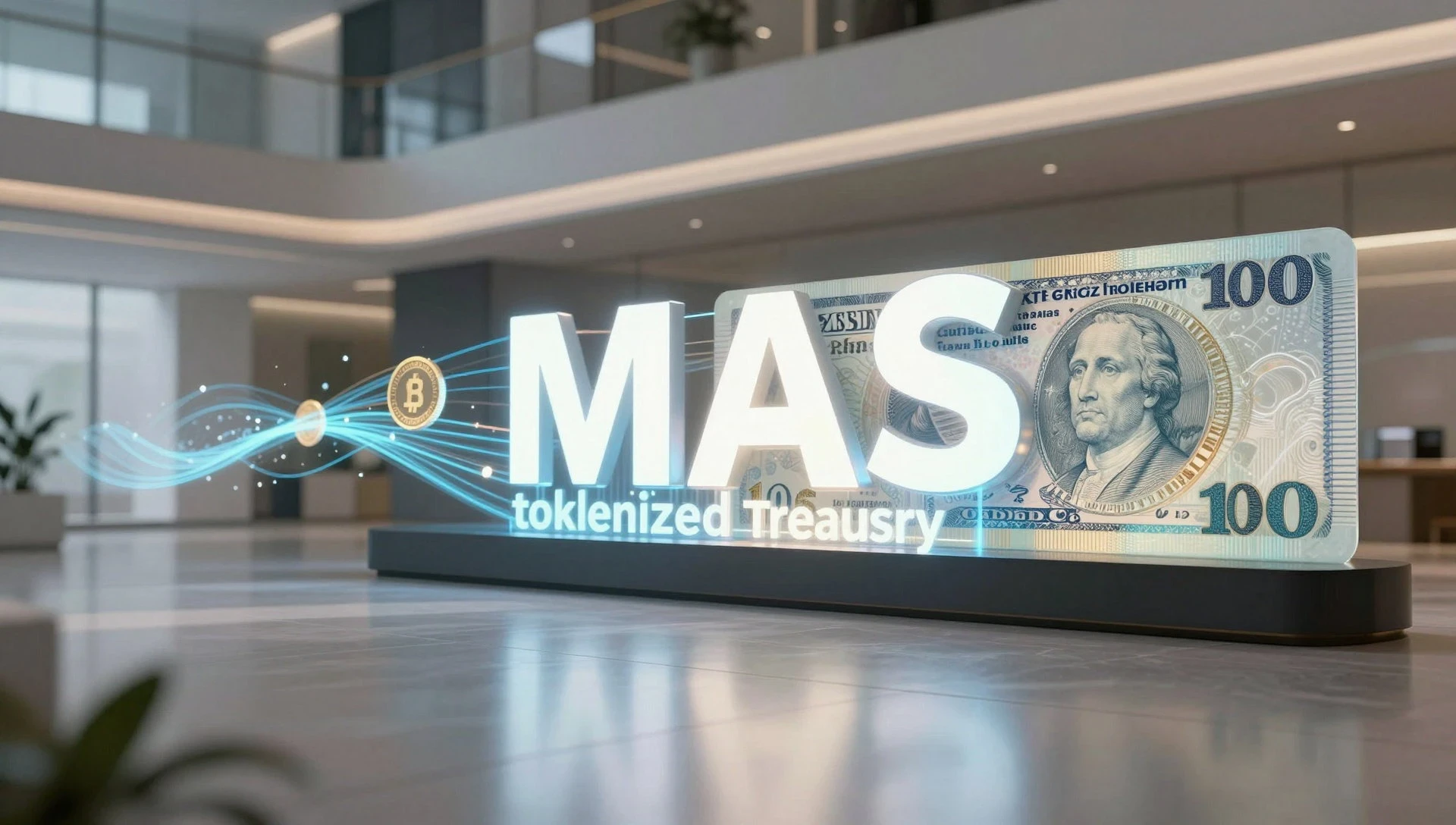
Global sovereign debt operations have long operated on legacy plumbing developed during the paper-certificate era of the twentieth century. While computerized trading desks execute buy and sell orders within microseconds, the post-trade settlement architecture remains bogged down by multi-day delays, extensive manual reconciliations, and sprawling custodial chains. Central banks and finance ministries across the world routinely navigate friction points that expose participating counterparties to liquidity hold-ups and settlement failure risks. The persistent gap between instantaneous market discovery and protracted back-office clearance has long represented an expensive structural inefficiency within the core machinery of international public finance.
The
(MAS) has fundamentally challenged this traditional paradigm by executing the native issuance and immediate settlement of S$100 million in tokenised short-term sovereign paper. Utilizing wholesale Central Bank Digital Currency (wCBDC) deployed across the experimental Singapore Dollar Test Network, this landmark transaction proved that sovereign debt can be minted, allocated, and atomically settled without reliance on conventional multi-day clearinghouse cycles. By merging cash-leg and security-leg settlement into a single, synchronous smart contract event, the pilot demonstrates a clear pathway toward frictionless debt administration that could reshape secondary trading for institutional allocators and retail bondholders alike.
TL;DR The Monetary Authority of Singapore has successfully issued and settled S$100 million in tokenised 4-week Treasury bills using wholesale Central Bank Digital Currency on its distributed Singapore Dollar Test Network. This execution replaces traditional multi-day clearing schedules with atomic, instantaneous delivery-versus-payment settlement, completely eliminating counterparty exposure and balance-sheet reconciliation overhead. The milestone establishes a functional precedent for modern fixed-income infrastructure, demonstrating how digital central bank money can transform primary sovereign issuance and enhance secondary market liquidity for global investors.
On This Page
- The Architectural Shift from Legacy Clearing to Atomic Settlement
- The Singapore Dollar Test Network and Wholesale CBDC Integration
- Transforming Primary Issuance and Secondary Market Liquidity
- Implications for Everyday Savers and Retail Investors
- Risk Management and Regulatory Safeguards in Digital Sovereign Debt
- Global Central Banking and the Future of Sovereign Debt Markets
The Architectural Shift from Legacy Clearing to Atomic Settlement
Conventional fixed-income clearance systems rely on distinct, asynchronous ledgers maintained separately by commercial banks, central securities depositories, and market clearinghouses. Under standard operating arrangements such as T+1 or T+2 regimes, trade confirmations trigger a cumbersome chain of multi-party bilateral notifications, position checks, and manual ledger updates before securities move. This legacy decoupling between cash transfers and asset transfers forces financial institutions to lock up substantial regulatory capital buffers to mitigate bilateral default risks. Transitioning to a unified distributed ledger framework allows institutions to compress these multi-tiered verification workflows into a single computational step, fundamentally changing how risk is measured and managed.
Synchronous Delivery Versus Payment Mechanics

The core breakthrough of atomic settlement rests on synchronous Delivery versus Payment (DvP), where the change of asset ownership and cash transfer take place simultaneously. In historical bond clearing arrangements, DvP was achieved through interlinked messaging systems that operated in scheduled batch processing intervals. When unexpected solvency concerns emerged, market participants faced acute settlement uncertainty if one leg failed to complete before market cut-offs. The smart contract construct resolves this issue by binding the digital MAS bills and the wholesale CBDC into a conditional transaction state, guaranteeing mutual finality.
Technically, the transaction protocol functions as an indivisible binary operation: either both conditions execute in full, or the entire transaction reverts automatically without state alteration. This mathematical certainty prevents asymmetric performance failures, commonly termed Herstatt risk, where one party surrenders value while the counterparty defaults on delivery. By executing the full issuance sequence across the Singapore Dollar Test Network, MAS has demonstrated that high-value primary market placements can proceed seamlessly without intermediary guarantor institutions. Sovereign treasuries thereby gain an uncompromised mechanism to disburse critical debt issues directly into institutional portfolios.
Eliminating Post-Trade Reconciliations
Middle- and back-office reconciliation across custodian banks, custodians' sub-custodians, and primary dealer brokers represents one of banking's most persistent balance-sheet expenses. Financial institutions deploy thousands of specialized analysts and automated matching algorithms simply to ensure internal transaction records align with depository confirmation sheets. Discrepancies stemming from mismatched trade reference numbers, timing misunderstandings, or administrative typos require prolonged dispute resolution procedures. When securities exist as native programmable tokens on a common distributed ledger, every authorized participant shares a cryptographically synchronized single source of truth that renders redundant internal ledgers unnecessary.
The elimination of multi-tier ledger verification translates into direct reductions in back-office payroll, IT maintenance expenses, and legal containment reserves. Primary dealers can reallocate significant capital previously locked as collateral reserves against unsettled transactions back into active underwriting or market-making activities. For sovereign debt managers, this enhanced operational efficiency directly lowers issuance overhead and compresses the sovereign yields demanded by debt syndicates. Streamlining this operational workflow proves that blockchain solutions can serve practical macroeconomic objectives well beyond speculative retail digital asset trading.
We Also Published
The Singapore Dollar Test Network and Wholesale CBDC Integration

The Monetary Authority of Singapore has strategically differentiated its digital currency roadmap by prioritizing wholesale monetary plumbing over retail consumer applications. Rather than issuing a direct retail digital Singapore dollar to individual citizens, the monetary authority focused its engineering efforts on interbank liquidity settlement. The Singapore Dollar Test Network serves as a specialized sandbox designed specifically for institutional banking partners to experiment with tokenised financial assets. By restricting access to regulated primary dealers and domestic clearing entities, MAS ensures institutional compliance while preserving monetary sovereignty and supervisory oversight.
Wholesale Central Bank Digital Currency Infrastructure
Unlike commercial bank deposits or unbacked stablecoins, wholesale CBDC represents a direct claim on the central bank balance sheet. When banks trade tokenised bonds using commercial deposit tokens, they remain exposed to the issuing bank's underlying solvency and operational uptime. Wholesale CBDC strips out this credit risk layer by settling obligations directly in central bank reserves formatted for distributed ledgers. This guarantees that interbank liquidity transfers retain identical risk-free legal standing to transfers conducted through traditional real-time gross settlement systems like MEPS+.
The technical integration requires bridging conventional reserve account balances into cryptographic ledger representations without creating unbacked money supply. Participating financial institutions exchange conventional central bank reserve balances for equivalent wCBDC units, which are subsequently earmarked for smart contract interactions. This strict one-to-one reserve backing guarantees complete price stability while preserving central bank monetary transmission mechanisms. By validating this liquidity link, MAS has established a functional pattern that other central monetary authorities can readily implement within their respective financial jurisdictions.
Tokenised MAS Bills as Programmable Sovereign Debt
The tokenised 4-week MAS Bills were minted not merely as passive digital representations of debt, but as programmable financial instruments containing lifecycle instructions. Embedded within the smart contract logic were maturity terms, yield discount calculation parameters, and autonomous redemption logic. At each step of the instrument's lifecycle, the protocol monitors calendar conditions to automate compliance checks, interest calculations, and redemption payouts. This programmatic automation minimizes administrative oversight, ensuring that debt servicing unfolds accurately according to code logic.
Furthermore, programmable sovereign debt unlocks composability with other institutional smart contracts on permissioned enterprise networks. Financial institutions can automate complex institutional workflows such as repurchase agreements, collateral posting, and regulatory liquidity ratio reporting directly through smart contract code. Because the asset's pedigree, ownership status, and legal authenticity are verifiable on-chain, collateral valuation discounts can be minimized across the market. The success of this pilot demonstrates that tokenised sovereign debt acts as a versatile building block for advanced financial engineering.
Transforming Primary Issuance and Secondary Market Liquidity
The primary distribution of government debt instruments has traditionally been the exclusive domain of an elite group of accredited primary dealers. These institutions bid at centralized periodic debt auctions, take sovereign inventory onto their balance sheets, and distribute notes across secondary dealer networks. This multi-layered structure introduces intermediary pricing markups and timing frictions that limit secondary market participation to well-capitalized institutions. Tokenisation combined with immediate atomic DvP clears a path for wider market access, allowing sovereign treasuries to conduct dynamic, fractional auctions directly with qualified institutional and corporate entities.
Compressing the Primary Auction Cycle
Traditional sovereign bill auctions require extensive logistical scheduling to ensure bids are collected, vetted, and allocated across competitive bidding windows. Following the auction close, several business days frequently elapse before the sovereign entity receives settlement funds and debt notes are deposited into buyer accounts. In volatile macroeconomic environments, this prolonged duration leaves bidders exposed to unexpected shifts in benchmark interest rate expectations. By leveraging atomic settlement on the Singapore Dollar Test Network, primary auction rounds can be concluded and fully settled within minutes of auction close.
Compressing this settlement window removes structural pricing uncertainties, enabling dealers to submit tighter competitive yields to the issuing government. Treasuries gain immediate access to raised capital, optimizing sovereign cash management and public expenditure timelines without maintaining expensive precautionary buffers. Concurrently, participating financial institutions free up intraday liquidity lines that would otherwise remain tied up waiting for traditional batch clearances. This heightened transactional cadence fundamentally transforms sovereign debt issuance into an agile, highly responsive liability management tool.
Unlocking Secondary Collateral Mobility
Beyond initial debt issuance, modern capital markets rely extensively on government bills as high-quality liquid assets (HQLA) for collateralizing loans and derivative positions. In current market regimes, moving collateral between international clearing entities like Euroclear, Clearstream, or domestic central securities depositories involves significant frictional friction. These delays frequently cause collateral bottlenecks during moments of market volatility, exacerbating localized systemic stress. Native tokenised sovereign bills can be pledged, re-hypothecated, or transferred across participating institutions in real time, dramatically improving systemic collateral mobility.
With smart contracts supervising asset ownership, pledging tokenised bills into institutional liquidity facilities requires no manual documentation or escrow intervention. If a borrower defaults or fails to meet maintenance margins, ownership of the tokenised sovereign paper transfers autonomously to the lender without protracted legal negotiations. This immediate collateral finality lowers systemic risk across repo markets and minimizes haircuts applied to high-grade government securities. Singapore's successful issuance confirms that digital sovereign paper can serve as an exceptionally fluid collateral instrument across modern trading desks.
- 01
- 02
- 03
- 04
Implications for Everyday Savers and Retail Investors
While the initial MAS pilot focused squarely on wholesale institutional rails, the long-term structural benefits will inevitably cascade into retail wealth channels. Retail savers seeking conservative yield instruments often find direct access to primary sovereign bills hindered by restrictive minimum lot sizes and complex brokerage interfaces. Consequently, smaller investors are forced to access government debt through intermediate mutual funds or exchange-traded funds that introduce annual management fee expenses. The migration toward tokenised sovereign debt paves the way for direct fractional participation by retail savers at unprecedented cost efficiencies.
Fractional Ownership and Yield Accessibility
Tokenisation breaks physical bond units into granular fractional shares governed by cryptographic ledger entries. Where institutional debt tranches are typically parcelled in denominations of S$100,000 or more, digital tokens can be divided into fractions of a single dollar without inflating administrative bookkeeping expenses. Everyday households can therefore construct diversified fixed-income portfolios tailored precisely to their cash reserves without incurring punitive broker minimums. This demystifies the sovereign bond market and brings retail investors on par with institutional money market funds regarding achievable gross returns.
Moreover, retail capital allocations can be deployed into risk-free government securities with total transparency over underlying yields. Commercial banks often maintain substantial interest rate spreads between central bank benchmark policy rates and consumer savings accounts, capturing wide net interest margins. Direct access to fractionalized treasury bills empowers consumers to park idle liquidity directly into sovereign paper with immediate redemption capabilities. By democratizing access to sovereign debt yields, tokenisation acts as a natural equalizer across the consumer finance landscape, rewarding prudent household saving.
Elimination of Intermediary Fee Friction
Under conventional retail investing setups, purchasing treasury products involves brokerage commissions, platform custody retainers, and settlement clearing markups. Over an extended investment horizon, these administrative fees erode a significant portion of the total compounding return delivered by conservative fixed-income instruments. Because tokenised debt relies on self-executing smart contracts rather than sprawling back-office custodial departments, the transactional cost per trade approaches zero. The resulting cost savings remain directly within the investor's balance sheet, enhancing overall capital accumulation over multi-year cycles.
Furthermore, instant settlement protects retail market participants from liquidity locks during urgent cash demands. Traditional bond redemptions often leave investors waiting days for proceeds to settle into their transactional checking accounts. With atomic wCBDC settlement, secondary retail sales clear immediately, granting savers instant access to their capital without requiring bridge financing. This rapid liquidity turnover transforms sovereign debt into a genuinely modern financial instrument capable of supporting the flexible spending requirements of today's digital economy.
Risk Management and Regulatory Safeguards in Digital Sovereign Debt
While the benefits of instantaneous sovereign debt execution are profound, transitioning national balance sheets to distributed ledger networks demands rigorous risk evaluation. The complete elimination of settlement latency simultaneously compresses the time available to detect operational mistakes, fraudulent transactions, or cybersecurity breaches. In traditional clearing setups, the T+1 settlement window functions as an informal buffer, giving risk managers time to identify erroneous instructions and halt payments. Deploying programmable sovereign debt requires institutional developers to engineer automated safeguards directly within the base protocol to preserve regulatory integrity.
Smart Contract Determinism and Regulatory Rollbacks
The immutable execution characteristic of public blockchain networks presents a fundamental operational challenge for central banks managing sovereign debt. Under public blockchain consensus, once an invalid transaction is mined, the protocol offers no native administrative channel for reversal. To adapt this technology for sovereign finance, MAS deployed permissioned smart contracts that balance cryptographic automation with central supervisory authority. The codebase incorporates strictly audited multi-signature governance controls that empower authorized central bank officers to pause trading or rectify erroneous allocations during catastrophic network anomalies.
This governed approach ensures that sovereign debt markets retain their legal status as protected public capital channels. Regulatory compliance rules, including anti-money laundering (AML) controls and know-your-customer (KYC) validations, are embedded directly into network token standards. Unauthorized addresses cannot receive or transfer tokenised MAS bills, preserving complete alignment with financial crime standards. Through these calibrated safety valves, Singapore proves that the operational efficiencies of decentralization can be harnessed without sacrificing necessary sovereign regulatory oversight.
Liquidity Fragmentation Across Private Networks
As sovereign issuers and global banking consortia construct proprietary tokenisation platforms, the financial ecosystem faces a growing risk of liquidity fragmentation. If institutional investors are forced to manage disconnected digital assets scattered across incompatible private ledgers, overall market efficiency rapidly degrades. A secondary market split across isolated institutional silos impairs price discovery and increases bid-ask spreads for debt paper. Addressing this friction demands robust technological interoperability protocols that enable assets and CBDCs to navigate heterogeneous ledgers effortlessly.
The Singapore Dollar Test Network pilot tackles this vulnerability by establishing standardized data protocols and token interfaces aligned with global financial messaging standards like ISO 20022. By ensuring that wholesale CBDC can interact smoothly across various permissioned ledger architectures, MAS lays the groundwork for cross-border debt mobility. National debt managers can thereby maintain deep, consolidated liquidity pools while taking advantage of distributed settlement performance. Standardization remains the critical pillar required to advance tokenised debt from regional pilots to unified global debt markets.
Global Central Banking and the Future of Sovereign Debt Markets
The successful settlement of MAS Bills via wholesale CBDC establishes an actionable technical template for central banks worldwide. Institutions including the Federal Reserve, the European Central Bank, and the Bank of Japan are evaluating how to modernize aging domestic payment systems. While many regulatory jurisdictions have delayed wholesale ledger adoption due to technological uncertainty, Singapore's live issuance offers tangible empirical evidence of operational viability. The transition toward programmable sovereign liabilities marks a decisive evolution in modern public finance, signaling the retirement of traditional batch-processed clearance networks.
Cross-Border Settlement Interoperability
The ultimate frontier of sovereign debt tokenisation lies in cross-border settlement. Modern cross-border bond purchases require multi-currency foreign exchange conversions, correspondent banking intermediaries, and multiple time-zone reconciliations, resulting in settlement cycles extending well past two business days. Linking sovereign debt networks across multiple central bank wholesale CBDC systems would allow foreign institutions to acquire debt paper with simultaneous currency conversions. This instant settlement capability drastically reduces systemic foreign exchange risk, creating a globally interconnected fixed-income market that functions uninterrupted around the clock.
International experiments such as the Bank for International Settlements' Project Agorá and Project Dunbar have already demonstrated the theoretical power of multi-CBDC shared platforms. The MAS tokenised bill issuance grounds these multilateral concepts in practical execution, confirming that sovereign debt instruments can thrive on digital infrastructure. As common regulatory standards emerge, cross-border sovereign investment will transition from an inefficient, fragmented landscape into a unified digital marketplace. Global allocators will manage portfolio exposures with frictionless capital mobility, lowering overall borrowing costs for prudent fiscal authorities.
The Strategic Imperative for Modern Sovereign Issuers
Sovereign governments worldwide face historically elevated debt levels and mounting debt servicing obligations in a persistent higher-for-longer interest rate climate. Under these conditions, shaving even a fraction of a basis point off debt issuance overhead and secondary liquidity spreads yields millions in public fiscal savings. National treasuries that delay updating their debt settlement infrastructure will place their sovereign bonds at a structural disadvantage compared to digitally modern peers. Institutional capital will increasingly gravitate toward debt markets offering instant collateral liquidity, negligible settlement overhead, and programmatic transparency.
The Monetary Authority of Singapore has decisively established that zero-reconciliation sovereign debt is not merely a theoretical whitepaper proposal, but an achievable operational reality. By merging native tokenised short-term debt with wholesale central bank digital money, MAS has outlined the operational blueprint for public debt administration in the coming decades. As other central monetary institutions follow Singapore's technical lead, global capital markets will experience a systemic modernization that secures capital efficiency, strengthens market resilience, and benefits institutional and retail market participants alike.
From our network :
- Forbidden Matrix Patterns and Visible Lattice Points: A Geometric DictionaryExplore how multidimensional 0–1 matrices encode geometric truths, linking forbidden patterns to visible lattice points and hypergraph theory, with applications in combinatorics and computational geometry.
- Committed Mediterranean Precipitation Decline: Why Emissions Cuts Alone Cannot Restore Winter RainsNew NOAA research reveals that Mediterranean winter rains may decline irreversibly even with emissions cuts. Explore the science of committed climate change and regional impacts.
- The Final Descent: How ESA Retired the Legendary Cluster Constellation After 24 Years of Space Weather ScienceAfter 24 years mapping Earth’s magnetosphere, ESA’s Cluster mission concluded with a precisely controlled reentry over the South Pacific. This analysis explores the scientific legacy, engineering decisions, and debris mitigation principles behind one of space exploration’s most responsible retirements.
- CISA’s Ten-Advisory Wave: Why Generic Patching Fails in OT and How to Build Product-Specific PlaybooksCISA released ten ICS advisories in one week, exposing critical infrastructure risks. Generic patching fails in OT. Learn to build product-specific remediation playbooks.
- How AI Agents Will Change the Way We Manage Personal FinancesExplore how AI agents are transforming personal finance through automated budgeting, bill payment, and investment management, while examining the critical security protocols and governance frameworks required for safe deployment.
- University Language Proficiency Exams: Why Institutional Tests Demand Different Preparation Than IELTS and TOEFLDiscover why university-specific language proficiency examinations differ fundamentally from IELTS and TOEFL, and learn strategic preparation approaches for institutional assessment success.
- Live Online English Classes for Kids: Do They Actually Reduce Anxiety?A ten-week study reveals that synchronous online English classes can significantly reduce child language anxiety while improving listening and reading skills. Discover what makes these programs effective and how parents can select the right one.
- Mobile Learning and VR in English: What Global Evidence Reveals About Effective Language TechnologyA systematic review across 14 countries reveals which language-learning technologies genuinely work. Mobile learning, AI, and VR show measurable benefits when pedagogically integrated. This evidence-based guide helps educators and learners select technology that delivers real return on investment.
- The Hidden Cost of AI Convenience: Why Over-Permissioned Agents Are a Security Time BombDiscover why AI agents with excessive permissions create dangerous single points of failure, and learn how implementing least privilege principles can protect your organization from exploitation.
RESOURCES
- MAS Announces Successful Live Trial of Settlement of Interbank ...mas.gov.sgNov 13, 2025 ... ... Bonds, T-bills, MAS Bills and MAS FRN ... 3 MAS will build on this CBDC settlement pilot, and plans…
- MAS to issue tokenised bills and draft stablecoin law - Central Bankingcentralbanking.comNov 13, 2025 ... The Monetary Authority of Singapore (MAS) has said it will issue tokenised bills that will be settled in central bank…
- Tokenised MAS Bill - Monetary Authority of Singaporemas.gov.sgTokenised MAS Bill · Only institutional investors, as defined in Section 4A of the Securities and Futures Act (Cap. · Any application by an…
- Singapore to trial tokenised bills, bring in stablecoin laws ... - Reutersreuters.comNov 12, 2025 ... SINGAPORE, Nov 13 (Reuters) - Singapore's central bank will hold trials to issue tokenised MAS bills next year and bring…
- Singapore to trial tokenised MAS Bills using central bank digital ...asianbankingandfinance.netNov 13, 2025 ... The Monetary Authority of Singapore (MAS) will begin trialling the issuance of tokenised MAS Bills to primary dealers, with the…
- Singapore tests tokenised Treasury Bills - Capital Pioneercapitalpioneer.co.uk4 days ago ... The 4-week MAS Bills were issued on 6 November and settled natively on the MAS-operated distributed ledger platform, marking one…
- ICMA contribution to MAS Guardian Fixed Income Framework (GFIF ...icmagroup.orgNov 4, 2024 ... factors and disclosures required in a tokenised bond offering document. ... Token Design. The token will be implemented as a…
- The Financial Stability Implications of Tokenisationfsb.orgOct 22, 2024 ... as Treasury bills. Corporate equity/bond. Tokens representing a corporate equity/bond on DLT. Real estate investment trust. (REIT). Tokens ...
- MAS to Settle Tokenised MAS Bills With Wholesale CBDC as Money ...regtech.comOct 21, 2026 ... Tokenised MAS Bills will settle in wholesale Singapore dollar central bank digital currency (CBDC), the Monetary Authority of Singapore (MAS) ...
- Singapore scales up tokenized MAS bills to S$100m - Ledger Insightsledgerinsights.com4 days ago ... Today the Monetary Authority of Singapore (MAS) announced that it issued S$100 million (US$75m) in tokenized MAS bills on November…
- Project Guardian Fixed Income workstream deliverables led by ...icmagroup.orgNov 12, 2025 ... More information on ICMA's FinTech and digitalisation initiatives, including its work on DLT, digital bonds, and tokenisation, can be found…
- MAS 9.1 Maximo Application Framework Configuration Toolcommunity.ibm.comFeb 20, 2026 ... MAS 9.1 Maximo Application Framework Configuration Tool- "Unexpected token '
- Swift, UBS Asset Management, and Chainlink successfully complete ...swift.comNov 5, 2024 ... ... tokenized funds. This initiative is also part of MAS' Project Guardian, a global cooperation between policy makers and key…
- Digital Moneyhome.treasury.govApr 30, 2025 ... deposits, treasury bills, notes or bonds with a remaining / issued ... LHS: Tokenized Government Securities. RHS: Total Stablecoin Market…
- 01
- 02
- 03
- 04
- 05
- 06
- 07
- 08
0 Comments