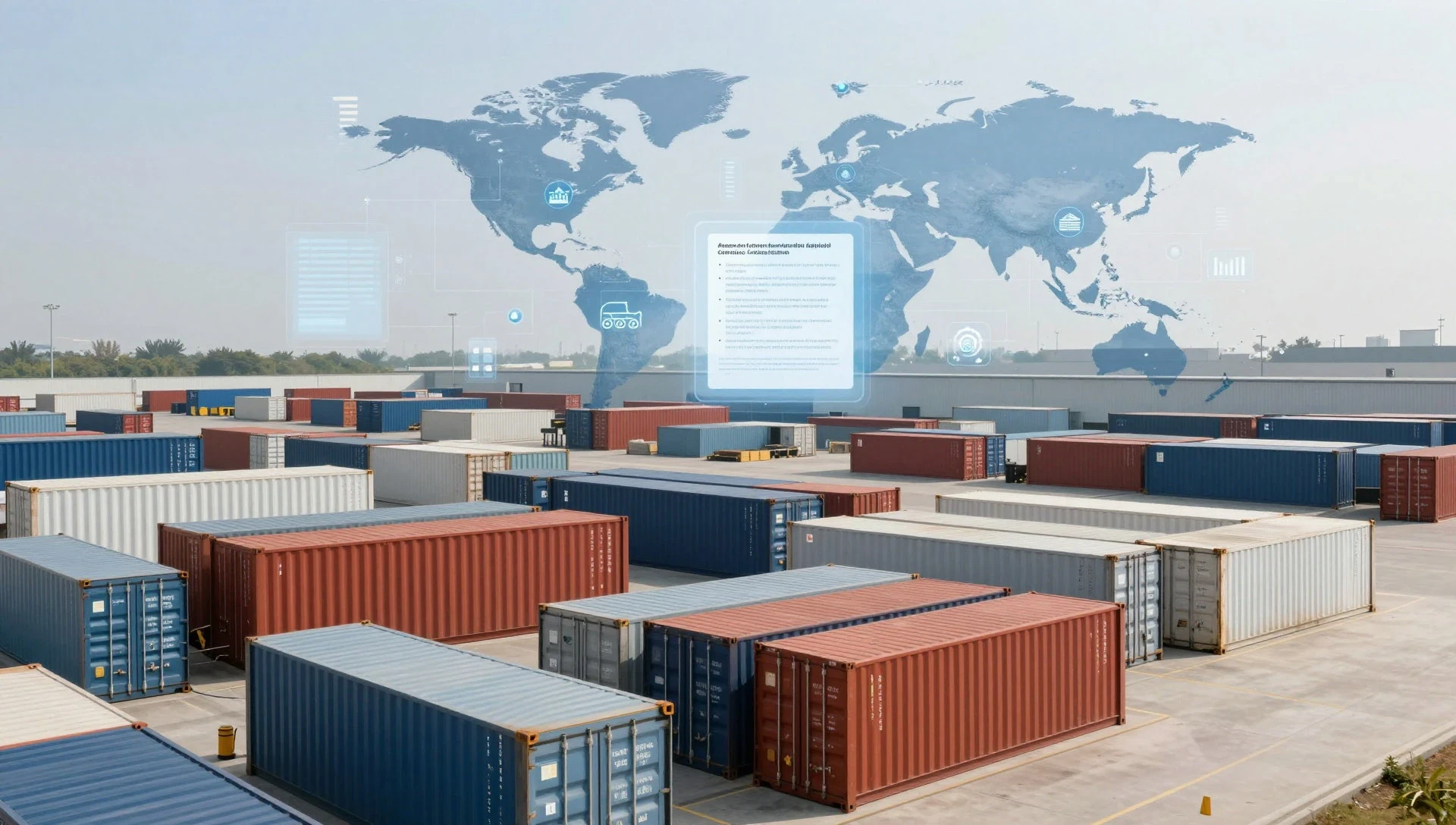
Mullen Group Ltd., the Alberta-based logistics consolidator trading on the Toronto Stock Exchange under the symbol MTL, has closed its acquisition of Willson International Limited and its affiliated entities. The transaction, announced as completed on a Monday, was settled entirely from Mullen's existing cash resources rather than through debt or equity issuance.
No purchase price was disclosed in the public announcement, leaving analysts to infer valuation from segment contribution and goodwill disclosures expected in forthcoming quarterly filings.
Willson International operates as a customs brokerage and trade compliance house serving importers and exporters across Canada and the United States. Its service lines span customs clearance, regulatory documentation, compliance advisory work and cross-border trade facilitation.
On This Page
- Deal Structure and the Discipline of Undisclosed Pricing
- Willson International and the Economics of Customs Brokerage
- Mullen's Portfolio Architecture and Vertical Integration
- Cross-Border Trade Policy and Demand Drivers
- Integration Risk and What Investors Should Monitor
- The Broader Consolidation Pattern in North American Logistics
For Mullen, the purchase extends an already diversified portfolio that includes less-than-truckload and truckload transport, warehousing, transloading, third-party logistics, oversized loads and specialized hauling for energy, mining, forestry and construction clients in western Canada.
The strategic logic rests on vertical integration rather than horizontal scale. Customs brokerage sits at the documentation layer of cross-border freight, where clearance delays translate directly into carrier cost and shipper frustration.
By owning that layer, Mullen captures fee income that would otherwise accrue to independent brokers while tightening coordination across its trucking and warehousing assets. The all-cash structure also signals balance-sheet confidence, preserving Mullen's capacity to pursue further tuck-in acquisitions without immediate leverage pressure.
TL;DR Mullen Group Ltd. (TSX: MTL) has completed its acquisition of Willson International Limited, a customs brokerage and trade compliance provider operating across Canada and the United States. The deal was funded from existing cash, with no purchase price disclosed. The acquisition vertically integrates customs clearance capability into Mullen's broader logistics portfolio, which spans truckload and less-than-truckload transport, warehousing, transloading, third-party logistics and specialized hauling for western Canadian energy, mining, forestry and construction sectors. The transaction reflects a wider pattern of logistics consolidators buying trade-compliance expertise to capture fee income and reduce cross-border friction for shippers.
Deal Structure and the Discipline of Undisclosed Pricing
Mullen Group's decision to fund the Willson International purchase entirely from existing cash carries meaningful signal value for investors tracking the company's capital allocation philosophy. Cash-funded acquisitions avoid dilution and interest expense, but they also consume the liquidity buffer that supports dividend continuity and opportunistic buying.
The absence of a disclosed purchase price is common in mid-market logistics transactions, yet it complicates independent valuation analysis until segment reporting reveals the contribution.
Why Cash Funding Matters for a TSX-Listed Consolidator
For a publicly traded consolidator like Mullen, every acquisition competes for capital against share buybacks, debt reduction and dividend commitments. Deploying cash preserves the net-debt-to-EBITDA ratio that lenders and rating agencies monitor closely.
It also avoids the earnings drag that acquisition-related interest costs can create in the first year, allowing the acquired cash flow to flow through to shareholders more quickly.
Cash funding does introduce opportunity cost. Mullen forgoes the interest income that idle cash would have generated, and it reduces flexibility if a larger target emerges before cash flows replenish.
Management's willingness to accept that trade-off suggests confidence in Willson's near-term cash generation and in the stability of customs brokerage margins, which tend to be fee-based and less cyclical than freight volumes.
The Information Gap Around Purchase Price
Undisclosed pricing is standard practice in private mid-market deals, particularly when the target is privately held and the acquirer prefers to avoid anchoring competitors or future sellers. Investors will eventually see the implied multiple through goodwill, intangible asset and earn-out disclosures in Mullen's financial statements. Until then, the market must rely on qualitative signals rather than quantitative valuation benchmarks.
Analysts typically triangulate such deals by comparing revenue multiples paid in comparable customs brokerage transactions, which historically range across a wide band depending on client concentration and technology investment.
Willson's cross-border footprint and compliance advisory capability likely command a premium to pure clearance volume businesses, since advisory work carries higher margins and stickier client relationships.
Willson International and the Economics of Customs Brokerage
Customs brokerage is a deceptively durable business. Every cross-border shipment requires classification, valuation and origin documentation, and errors invite penalties, delays and demurrage charges. Willson International earns fees for managing that complexity on behalf of importers and exporters, handling customs clearance, regulatory requirements and compliance documentation across both Canadian and American jurisdictions. The work is recurring, contract-based and relatively insulated from spot freight rate volatility.
Service Lines and Client Value Proposition
Willson's offering extends beyond routine clearance into trade advisory work, where specialists interpret tariff schedules, free trade agreement eligibility and anti-dumping exposure. That advisory layer commands higher margins than transactional entry filing and creates switching costs, since clients rarely migrate brokers mid-compliance relationship. For shippers, the value lies in penalty avoidance and predictable transit times at the border.
Regulatory complexity has increased materially in recent years, with shifting tariff regimes, sanctions screening and supply chain due diligence requirements. Brokers that invest in technology and licensed expertise become more valuable as compliance burdens grow.
Willson's dual-jurisdiction capability positions it to serve clients moving goods both northbound and southbound, a structural advantage over single-country operators.
Margin Profile and Cyclicality
Customs brokerage margins typically exceed those of asset-heavy trucking because the business requires limited capital expenditure. Revenue scales with trade volumes rather than fleet utilization, and fee structures often include per-entry charges plus advisory retainers.
During freight downturns, clearance volumes soften but compliance obligations persist, cushioning the earnings decline relative to pure carriage operations.
That counter-cyclical quality appeals to logistics consolidators seeking earnings stability. Mullen's existing portfolio leans heavily on industrial freight tied to energy, mining and construction activity in western Canada, sectors with pronounced capital cycles. Adding fee-based trade compliance income diversifies the revenue base and reduces sensitivity to any single commodity or construction cycle.
Mullen's Portfolio Architecture and Vertical Integration
Mullen Group has assembled a portfolio of logistics businesses across North America, spanning less-than-truckload and truckload transport, warehousing, logistics, transloading, oversized loads, third-party logistics and specialized hauling. Its western Canadian operations serve energy, mining, forestry and construction clients through water management, fluid hauling and environmental reclamation services. Adding customs brokerage inserts a documentation and compliance layer beneath that physical network.
Where Customs Fits in the Logistics Value Chain
Freight moves through discrete stages: pickup, linehaul, border clearance, delivery and documentation. Customs brokerage occupies the clearance and documentation stages, where information asymmetry and regulatory risk concentrate. Owning that stage lets a carrier control handoffs, reduce dwell time at border crossings and offer shippers a single accountable partner for the entire journey.
Vertical integration of this kind also creates cross-selling opportunities. A shipper already using Mullen for truckload service into the United States can be offered Willson's clearance and compliance advisory, deepening the commercial relationship. Each additional service raises switching costs and increases the share of wallet captured from any given client account.
Cross-Selling and Revenue Synergies
Synergy realization depends on organizational integration rather than mere ownership. Sales teams must be aligned, referral incentives structured and client data shared responsibly across business units. Mullen's decentralized operating model, which preserves acquired company brands and management autonomy, could either accelerate or slow that coordination depending on how incentives are designed.
Revenue synergies are typically harder to quantify than cost synergies and take longer to materialize. Investors should watch for disclosure of cross-referral volumes or bundled service wins in subsequent quarters.
Cost synergies in this deal likely center on back-office consolidation, technology platform integration and procurement savings rather than headcount reduction at the client-facing level.
- 01
- 02
- 03
- 04
Cross-Border Trade Policy and Demand Drivers
Customs brokerage demand tracks the volume and complexity of international trade, both of which have been volatile under shifting tariff regimes. North American supply chains remain deeply integrated despite periodic policy friction, and each new tariff schedule, origin rule or sanctions list generates compliance work. Brokers function as interpreters of that regulatory churn, converting policy uncertainty into billable advisory hours.
Tariff Regimes and Compliance Complexity
Recent years have seen repeated revisions to tariff schedules affecting steel, aluminum, automotive components and consumer goods. Each revision requires importers to reassess classification, valuation and origin documentation, often under tight deadlines.
Brokers with deep tariff expertise become indispensable during such transitions, and their advisory revenue tends to rise precisely when trade policy becomes most unpredictable.
Sanctions screening and export controls add another layer. Dual-use goods, restricted parties and end-use verification requirements demand systematic compliance programs that smaller importers cannot maintain internally. Outsourcing those functions to a broker with cross-border licensing and technology infrastructure is often the pragmatic choice, reinforcing recurring revenue for firms like Willson.
Supply Chain Reconfiguration and Nearshoring
Supply chain diversification away from single-country sourcing has increased the number of border crossings per unit of goods produced. Nearshoring to Mexico and reshoring to North America both generate additional clearance events, even as total trade value fluctuates.
For customs brokers, the relevant metric is transaction count rather than aggregate value, and fragmentation of supply chains raises that count.
Mullen's acquisition therefore aligns with a structural trend rather than a cyclical bet. As manufacturers reconfigure sourcing to reduce concentration risk, documentation complexity rises and compliance advisory demand follows.
A broker embedded within a broader logistics network is positioned to capture that demand while offering shippers integrated visibility across transport and clearance stages.
Integration Risk and What Investors Should Monitor
Acquisition completion marks the beginning of integration risk rather than its resolution. Willson's client relationships, licensed customs professionals and technology systems must be retained while Mullen applies its operating discipline.
Cultural fit between a fee-based advisory business and an asset-heavy transport culture is not automatic, and attrition among licensed brokers would erode the acquired value quickly.
Retention of Licensed Expertise and Clients
Customs brokerage value resides substantially in people and client trust. Licensed brokers hold regulatory credentials and deep familiarity with specific client classifications, making them difficult to replace. Retention packages, career pathways and autonomy guarantees are standard tools for preserving that expertise through a change of ownership, and their adequacy will determine deal success.
Client concentration is another consideration. If a small number of large importers account for a disproportionate share of Willson's revenue, the loss of even one account could impair the investment case.
Mullen's disclosure practices in subsequent filings should reveal whether the acquired revenue base is diversified or dependent on a handful of anchor relationships.
Financial Disclosure and Segment Reporting
Investors should track how Mullen reports the acquired business within its segment structure. If customs brokerage is folded into an existing logistics segment, its contribution and margin profile may be obscured.
Separate disclosure, even at a supplementary level, would allow analysts to assess whether the acquisition is meeting return expectations relative to the cash deployed.
Goodwill impairment testing, purchase price allocation and earn-out provisions will all surface in annual filings. Each provides clues about the price paid and management's confidence in future performance. The absence of an announced price does not mean the market will remain uninformed indefinitely; accounting standards require sufficient disclosure to evaluate the transaction's significance.
The Broader Consolidation Pattern in North American Logistics
Mullen's purchase of Willson International fits a recognizable pattern: transport operators buying adjacent service capabilities to become end-to-end logistics providers. Freight markets reward scale and reliability, and shippers increasingly prefer partners who can coordinate carriage, warehousing and clearance under one commercial relationship. Consolidators that assemble these capabilities command pricing power unavailable to single-service operators.
Why Logistics Groups Buy Compliance Capability
Compliance capability is difficult to build organically because it requires licensed personnel, regulatory relationships and client trust accumulated over years. Acquiring an established broker delivers those assets immediately, along with a recurring revenue stream that smooths earnings across freight cycles. The alternative, building a brokerage division from scratch, carries execution risk and delayed payback.
There is also a defensive dimension. Third-party logistics providers and digital freight platforms are expanding into customs services, threatening to disintermediate traditional carriers. By owning brokerage capability, Mullen protects its client relationships from competitors who might bundle clearance with transport and capture the shipper's primary loyalty.
Valuation Discipline in Mid-Market Deals
Mid-market logistics acquisitions typically trade at multiples that reflect recurring revenue quality, client concentration and growth prospects. Cash-funded deals without disclosed pricing leave room for speculation, but the discipline of paying from existing resources imposes a natural constraint.
Management teams answerable to public shareholders tend to be cautious about overpaying when the outlay is visible on the balance sheet.
The strategic question is whether the acquired cash flow exceeds what Mullen could earn deploying the same capital elsewhere. If Willson generates stable fee income with modest capital requirements, the hurdle is lower than for asset-intensive expansion.
Investors will judge the deal on subsequent returns, but the structural logic of integrating compliance into a logistics network is coherent.
From our network :
- Forbidden Matrix Patterns and Visible Lattice Points: A Geometric DictionaryExplore how multidimensional 0–1 matrices encode geometric truths, linking forbidden patterns to visible lattice points and hypergraph theory, with applications in combinatorics and computational geometry.
- Committed Mediterranean Precipitation Decline: Why Emissions Cuts Alone Cannot Restore Winter RainsNew NOAA research reveals that Mediterranean winter rains may decline irreversibly even with emissions cuts. Explore the science of committed climate change and regional impacts.
- The Final Descent: How ESA Retired the Legendary Cluster Constellation After 24 Years of Space Weather ScienceAfter 24 years mapping Earth’s magnetosphere, ESA’s Cluster mission concluded with a precisely controlled reentry over the South Pacific. This analysis explores the scientific legacy, engineering decisions, and debris mitigation principles behind one of space exploration’s most responsible retirements.
- CISA’s Ten-Advisory Wave: Why Generic Patching Fails in OT and How to Build Product-Specific PlaybooksCISA released ten ICS advisories in one week, exposing critical infrastructure risks. Generic patching fails in OT. Learn to build product-specific remediation playbooks.
- University Language Proficiency Exams: Why Institutional Tests Demand Different Preparation Than IELTS and TOEFLDiscover why university-specific language proficiency examinations differ fundamentally from IELTS and TOEFL, and learn strategic preparation approaches for institutional assessment success.
- Live Online English Classes for Kids: Do They Actually Reduce Anxiety?A ten-week study reveals that synchronous online English classes can significantly reduce child language anxiety while improving listening and reading skills. Discover what makes these programs effective and how parents can select the right one.
- The Hidden Cost of AI Convenience: Why Over-Permissioned Agents Are a Security Time BombDiscover why AI agents with excessive permissions create dangerous single points of failure, and learn how implementing least privilege principles can protect your organization from exploitation.
- How AI Agents Will Change the Way We Manage Personal FinancesExplore how AI agents are transforming personal finance through automated budgeting, bill payment, and investment management, while examining the critical security protocols and governance frameworks required for safe deployment.
- Mobile Learning and VR in English: What Global Evidence Reveals About Effective Language TechnologyA systematic review across 14 countries reveals which language-learning technologies genuinely work. Mobile learning, AI, and VR show measurable benefits when pedagogically integrated. This evidence-based guide helps educators and learners select technology that delivers real return on investment.
RESOURCES
- Resources will be updated soon.
- 01
- 02
- 03
- 04
- 05
- 06
- 07
- 08
0 Comments