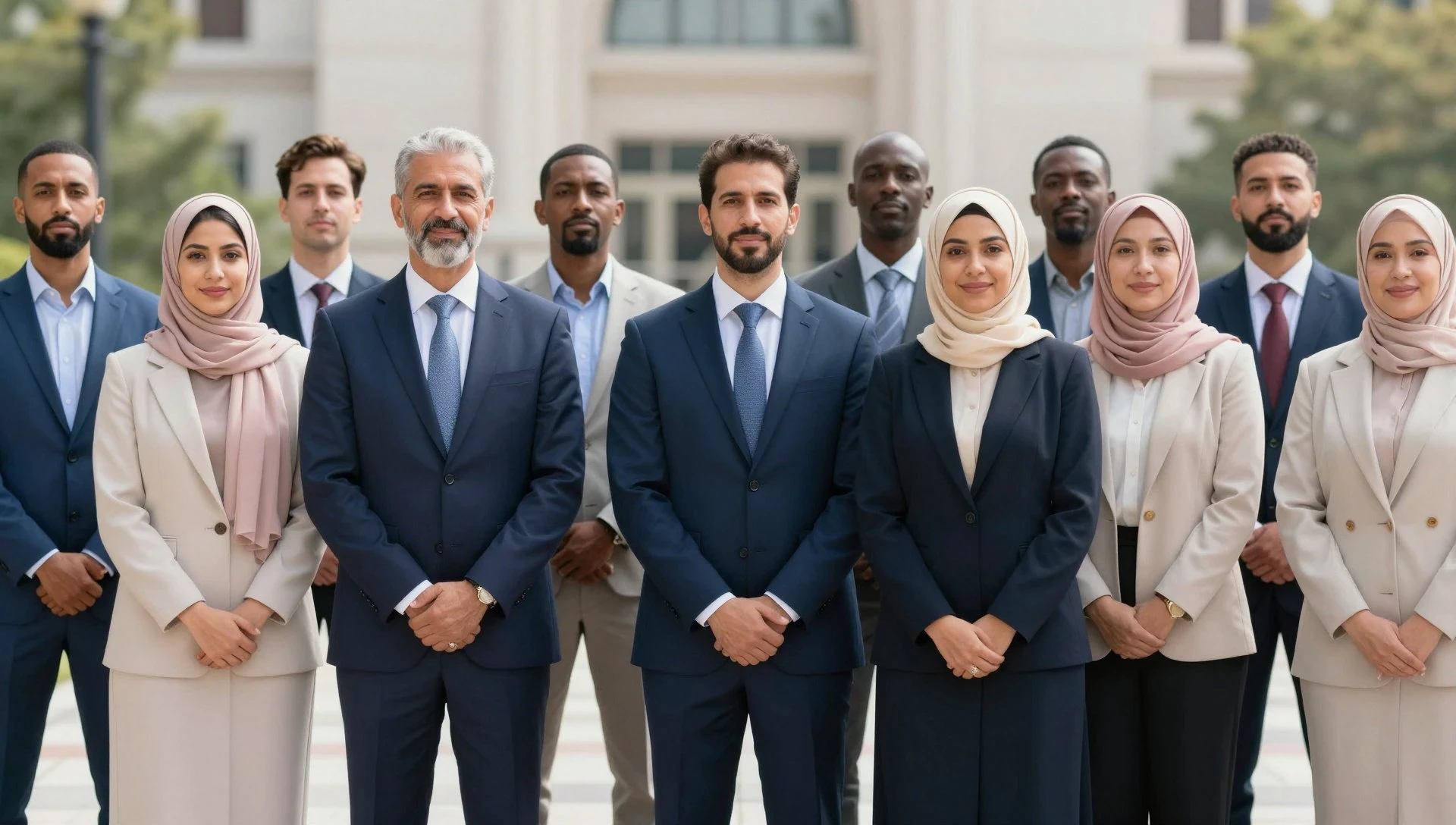
Muslim American candidates are contesting a set of competitive races in the United States midterm elections, and their campaigns are unfolding against a backdrop of sustained debate over foreign policy. The reporting, attributed to Dawn, frames these contests as electorally significant rather than symbolic.
The core claim is narrow but consequential: a demographic group historically marginalised in national politics is now competing in races that carry real weight in the balance of congressional power.
Read analytically, the item identifies an intersection between domestic electoral arithmetic and overseas policy questions. Candidates from a specific community are running in districts and states where foreign policy positions, particularly on the Middle East, have become salient to voters.
On This Page
The source does not quantify the number of candidates, their party affiliations, or their polling margins, so the evidentiary base is thin. What it does establish is that these races are being treated as important by a major international newspaper.
This analysis expands that brief report into a structured examination of electoral context, demographic and geographic distribution, and the policy debate that surrounds these candidacies. It separates what the source states from what can be reasonably inferred, and it flags where data is absent.
The aim is precision: to explain why a short news item about candidate slates matters to how American midterms are understood.
TL;DR Muslim American candidates are competing in competitive US midterm races while foreign policy remains a live issue in the campaign. The source, a Dawn report, establishes the fact of these candidacies and their electoral importance but supplies no candidate counts, party breakdowns, or polling data. This analysis situates the report within midterm mechanics, examines the demographic and geographic dimensions of Muslim American political participation, and assesses how foreign policy debate shapes candidate viability. It concludes that the significance lies less in any single race than in the normalisation of a previously underrepresented group within competitive electoral politics, a shift whose durability depends on turnout, redistricting, and the salience of overseas issues at the ballot box.
Electoral Context and the Mechanics of Midterm Competition
Midterm elections function as a referendum on the sitting president's party, and 2026 fits that pattern. Historically the president's party loses House seats in midterms, with the average loss since 1946 running near 26 seats.
That structural headwind shapes every candidacy, including those of Muslim Americans, because it determines which districts are genuinely competitive.
Candidate quality and district composition matter more than national mood in individual races. A candidate in a safe seat faces a different calculus than one in a swing district where margins fall under five points.
The Dawn report does not specify which category these races fall into, which limits any assessment of their likely impact on the chamber's partisan balance.
Foreign policy rarely decides midterms on its own, but it can move specific constituencies. When overseas conflicts dominate news cycles, voters with familial or religious ties to affected regions become more attentive and more likely to turn out. That dynamic gives candidates with distinct foreign policy positions a mobilisation advantage in concentrated communities.
Primary contests add another layer. A candidate must first win a party nomination, which requires appealing to primary electorates that are often more ideologically uniform than general election voters. Muslim American candidates therefore face a two-stage test: credibility within their party coalition, then persuasiveness across a broader electorate in November.
Seat Allocation and the Geography of Opportunity
Where Muslim Americans live determines where they can realistically win. Population concentration is uneven: Michigan, Illinois, New York, New Jersey, Texas, and California hold the largest communities, while many rural districts hold negligible numbers. A candidate's viability therefore tracks district demography more closely than statewide sentiment.
Michigan illustrates the pattern. Dearborn and surrounding areas contain one of the densest Arab American populations in the country, making local and congressional races there unusually receptive to candidates from the community. Comparable concentrations exist in parts of Queens, Chicago's southwest side, and the Dallas suburbs.
Redistricting compounds the geography. Boundaries drawn after each census can dilute or concentrate a community's voting weight, and litigation over maps frequently continues into the election year. A favourable map can create a winnable seat; an unfavourable one can split a community across three districts and render it electorally invisible.
Party control of state legislatures therefore matters indirectly to these candidacies. The same voters who support a candidate may be redistributed by actors with no interest in that candidate's success. This is a structural constraint the source report does not address but which any serious reading must acknowledge.
Turnout, Mobilisation, and the Limits of Enthusiasm
Turnout among Muslim Americans has historically lagged national averages, though estimates vary widely because surveys rarely sample the group at sufficient size. Community organisations have invested in registration drives, and mosque-based civic networks have become more active in get-out-the-vote operations over the past two decades.
Enthusiasm does not automatically convert into ballots. A candidate who energises a community may still lose if that community is only 3 percent of the district. Conversely, a modest shift among a larger bloc can decide a close race, which is why coalition-building remains essential to viability.
Data on Muslim American voting behaviour is fragmented. Exit polls seldom report the category separately, and academic surveys often aggregate it with broader Asian American or Middle Eastern categories. Any claim about bloc voting strength should therefore be treated as an estimate rather than a measurement.
The practical implication is that these candidacies are best assessed race by race. National narratives about a community's political rise can obscure the local arithmetic that actually determines outcomes. The Dawn report's brevity reflects this: it identifies races without claiming a uniform trend.
Candidate Profiles and Party Positioning
Muslim American candidates do not share a single ideological profile. Some run as progressive Democrats emphasising civil liberties and foreign policy restraint; others contest Republican primaries stressing small business, family policy, or local governance. Party affiliation shapes which coalitions they must assemble.
For Democratic candidates, the primary electorate's views on overseas conflicts can be decisive. For Republican candidates, credibility with national security-focused voters often requires distancing from community positions on the same conflicts. Both paths involve trade-offs between base mobilisation and general election appeal.
Incumbency and experience vary considerably across this candidate pool. Some are sitting state legislators or city officials with established records; others are first-time candidates. The source does not distinguish between them, which is a material omission for assessing electoral prospects.
Fundraising capacity is another unaddressed variable. Competitive congressional races routinely require seven-figure budgets, and candidates without access to national donor networks face structural disadvantages regardless of community support. Money does not guarantee victory, but its absence reliably constrains it.
We Also Published
Foreign Policy as a Campaign Variable
Foreign policy enters midterm campaigns through specific channels rather than as a general theme. It matters when a conflict generates visible costs, when a constituency has direct ties to a region, or when a candidate's position becomes a loyalty test in a primary. The Dawn report places foreign policy debate alongside these races without specifying which channel is operative.
The most plausible reading is that Middle East policy, including US support for allies in active conflicts, has raised the salience of overseas issues for Muslim American voters. That salience can cut both ways: it may mobilise community turnout while simultaneously creating vulnerability in general elections among voters with different priorities.
Comparative evidence supports a measured view. Ethnic and religious constituencies have influenced US foreign policy debates before, from Irish American lobbying on Northern Ireland to Cuban American positions on Cuba policy. In each case, influence depended on concentration in swing states and willingness to vote on the issue.
That comparison suggests Muslim American electoral influence will be strongest where three conditions coincide: geographic concentration, competitive margins, and a community large enough to shift the result. The source report implies these conditions exist in some races but does not identify them.
Salience, Persuasion, and Electoral Trade-offs
Issue salience is not the same as issue persuasion. A voter who ranks foreign policy highly may still choose a candidate on economic grounds if the gap on overseas questions is small. Candidates therefore calibrate: they emphasise foreign policy in primaries and broaden their message for November.
This calibration carries risk. Communities that feel strongly about a conflict may interpret moderation as abandonment, depressing turnout precisely where it is most needed. Conversely, uncompromising positions can alienate persuadable voters in districts where the community is a minority of the electorate.
The trade-off is quantifiable in principle. If a community constitutes 8 percent of a district and turnout rises by 15 points within it, the net effect is roughly 1.2 percentage points of the total vote — enough to decide a race decided by under one point, insufficient in a five-point race.
Such arithmetic explains why analysts should resist generalisations. The same candidacy can be decisive in one district and irrelevant in another, and the difference lies in demographic share and margin, not in the candidate's identity or message quality.
Media Framing and the Politics of Representation
Coverage shapes perception. A report that groups candidates by religious identity frames the races as tests of representation, which can be accurate but also reductive. It may obscure the policy differences among candidates who share a faith but not a platform.
International outlets such as Dawn have particular reasons to cover these races. Readers in South Asia follow American Muslim political participation closely, and the story resonates with diaspora audiences. That editorial logic explains the report's existence as much as any electoral development does.
Domestic US coverage tends to be more granular, focusing on district polling and candidate biographies. The gap between international framing and local reporting is itself informative: it shows how the same candidacies carry different meanings for different audiences.
For analytical purposes, the appropriate response is to hold both frames. Representation matters as a political fact, and district arithmetic matters as an electoral one. Neither alone explains outcomes, and the source report supplies only the first.
- 01
- 02
- 03
- 04
Assessing Significance and the Evidence Gap
The report's central weakness is evidentiary. It asserts that candidates are competing in important races and that foreign policy is being debated, but it supplies no counts, no party labels, no district names, and no polling. Readers cannot verify the scale of the phenomenon from the text alone.
This is characteristic of wire-style international reporting, which prioritises the fact of an event over its quantification. The limitation is not fatal, but it constrains what conclusions are defensible. Claims about a political shift should rest on data the report does not provide.
What can be said with confidence is that Muslim American political participation has grown measurably over two decades. Organisations tracking candidacies have recorded steady increases in the number of Muslim Americans running for state and federal office, though exact totals vary by methodology and year.
The more interesting question is qualitative. When candidates from a group run in competitive races rather than symbolic ones, the group's politics has matured from protest to governance. That transition is the substantive story beneath the headline, and it deserves scrutiny beyond a single report.
What the Numbers Would Need to Show
To evaluate these candidacies properly, analysts would need candidate counts by party and chamber, district partisan lean, community population share, fundraising totals, and any available polling. Each variable contributes independently to the probability of victory.
Historical baselines help. Open-seat races are more competitive than incumbent defences; primaries with multiple candidates from the same community can split the vote and produce a nominee with weak general election appeal. These patterns are well documented in other ethnic constituencies.
Turnout data would be especially valuable. If community turnout in these districts exceeds prior cycles, the candidacies are mobilising new voters, which has downstream effects on other races on the same ballot. If turnout is flat, the candidacies are redistributing existing votes rather than expanding the electorate.
None of this is available in the source. The honest conclusion is that the report identifies a phenomenon worth tracking while leaving the measurement to subsequent coverage and to the election results themselves.
Implications for 2026 and Beyond
The 2026 cycle will test whether these candidacies represent durable institutional presence or a temporary surge tied to a specific conflict. Durability requires pipeline development: school boards, city councils, state legislatures, then Congress. Pipelines take a decade to mature.
Party investment matters too. National committees that recruit and fund candidates from underrepresented groups can accelerate the pipeline; neglect can stall it. The source does not indicate whether either party has made such investments in these specific races.
Foreign policy salience is likely to remain elevated given ongoing conflicts, which sustains community attention but also raises the stakes of candidate positioning. A candidate who misjudges the community's priorities risks losing the very support that made the race competitive.
Longer term, the trajectory points toward normalisation. As more Muslim Americans hold office, coverage will shift from identity to record, and the analytical questions will become ordinary ones about legislation, constituency service, and re-election. That shift, not any single race, is the meaningful development.
Reading the Report Correctly
A short news item is not a research paper, and judging it by the standards of one is unfair. Its function is to signal that a development is occurring and to direct readers toward further inquiry. On that measure, the Dawn report succeeds.
The correct reading treats it as a pointer. It tells us that Muslim American candidates are in competitive races and that foreign policy is part of the conversation. It does not tell us how many, where, or with what prospects, and responsible analysis should say so plainly.
That discipline matters in an information environment where single reports are often inflated into trends. The measured conclusion is that these candidacies are real, electorally consequential in specific districts, and embedded in a foreign policy debate whose intensity varies by constituency.
Whether 2026 marks a turning point will be settled by ballots, not by commentary. Until then, the appropriate posture is attentive scepticism: take the phenomenon seriously, demand the numbers, and resist the temptation to generalise from a headline.
From our network :
- Committed Mediterranean Precipitation Decline: Why Emissions Cuts Alone Cannot Restore Winter RainsNew NOAA research reveals that Mediterranean winter rains may decline irreversibly even with emissions cuts. Explore the science of committed climate change and regional impacts.
- Live Online English Classes for Kids: Do They Actually Reduce Anxiety?A ten-week study reveals that synchronous online English classes can significantly reduce child language anxiety while improving listening and reading skills. Discover what makes these programs effective and how parents can select the right one.
- Mobile Learning and VR in English: What Global Evidence Reveals About Effective Language TechnologyA systematic review across 14 countries reveals which language-learning technologies genuinely work. Mobile learning, AI, and VR show measurable benefits when pedagogically integrated. This evidence-based guide helps educators and learners select technology that delivers real return on investment.
- The Final Descent: How ESA Retired the Legendary Cluster Constellation After 24 Years of Space Weather ScienceAfter 24 years mapping Earth’s magnetosphere, ESA’s Cluster mission concluded with a precisely controlled reentry over the South Pacific. This analysis explores the scientific legacy, engineering decisions, and debris mitigation principles behind one of space exploration’s most responsible retirements.
- Forbidden Matrix Patterns and Visible Lattice Points: A Geometric DictionaryExplore how multidimensional 0–1 matrices encode geometric truths, linking forbidden patterns to visible lattice points and hypergraph theory, with applications in combinatorics and computational geometry.
- The Hidden Cost of AI Convenience: Why Over-Permissioned Agents Are a Security Time BombDiscover why AI agents with excessive permissions create dangerous single points of failure, and learn how implementing least privilege principles can protect your organization from exploitation.
- How AI Agents Will Change the Way We Manage Personal FinancesExplore how AI agents are transforming personal finance through automated budgeting, bill payment, and investment management, while examining the critical security protocols and governance frameworks required for safe deployment.
- CISA’s Ten-Advisory Wave: Why Generic Patching Fails in OT and How to Build Product-Specific PlaybooksCISA released ten ICS advisories in one week, exposing critical infrastructure risks. Generic patching fails in OT. Learn to build product-specific remediation playbooks.
- University Language Proficiency Exams: Why Institutional Tests Demand Different Preparation Than IELTS and TOEFLDiscover why university-specific language proficiency examinations differ fundamentally from IELTS and TOEFL, and learn strategic preparation approaches for institutional assessment success.
RESOURCES
- How Muslim American candidates made history in the midterms - PBSpbs.orgDec 2, 2022 ... More Muslim Americans ran for political office during this year's midterms than ever before, 153 in total. · Judy, this…
- Muslim American candidates make inroads in local races across USnewarab.comOct 13, 2026 ... Michigan voters attend a rally for Republicans, including Senate candidate, former U.S. Rep. US midterms 2026 · World. Live Story ...
- Four takeaways from the first primaries of 2026 US midterm electionsreuters.comMar 4, 2026 ... America's 2026 midterm congressional elections kicked off ... The Texas Republican U.S. Senate primary boiled down to the three candidates ...
- A growing number of US Muslims run for political office in 2026newarab.comMay 7, 2026 ... Haley Stevens endorses Republican candidate in Michigan race ... New Arab. Next. Tags. US affairs · US midterms 2026 ·…
- Republicans are making Muslims a campaign issue in the 2026 US ...reuters.comSep 9, 2026 ... ... American culture and how that influences their votes in the midterm elections. He previously worked for Bloomberg Industry Group,…
- In the recent U.S. elections, 38 of 76 Muslim candidates won office ...facebook.comNov 11, 2025 ... “More Muslim Americans ran for political office during this year's midterms than ever before, 153 in total. That's according to…
- Midterm Elections 2010 - VOAvoanews.comOct 25, 2010 ... Michelle Obama Campaigns for Democrats in US Midterm Elections · US Candidates Reach Out to Arab-American Voters · Obama Reaches…
- Islam and the Midterm Elections | Council on Foreign Relationscfr.orgOct 19, 2010 ... ... congressional candidates--highlight a growing tension over Islam in the United States. ... The American Muslim population is very diverse.
- Michigan race: All you need to know about Abdul El-Sayed vs Mike ...aljazeera.com12 hours ago ... Dearborn, Michigan – Chadi Abdulrazek, an Arab American political activist who has been volunteering to help elect Democratic Senate candidate ...
- Muslim Americans make historic gains in midterm electionswashingtonpost.comNov 14, 2022 ... Nabeela Syed made history in this year's midterms when she defeated a Republican incumbent in Illinois's 51st District, making her…
- Arab and Muslim Candidates Seek to Expand Presence in Congressalhurra.com2 days ago ... Home / USA / Washington D.C.. 3 Ways the US Midterm Elections Could Reshape the Middle East. Tuesday's elections for…
- More Muslims running (and winning) in U.S. electionsprojects.voanews.comNov 7, 2018 ... In the 2018 midterm elections, some Muslim Americans saw an opportunity to push back — and they seized it. Now,…
- Arab-American candidates score big | | AWthearabweekly.comNov 11, 2018 ... ... United States, were victorious in the US midterm elections November 6. Two Muslim-American women will serve for the first…
- El-Sayed's victory sends tremors through Democratic Party - BBCbbc.comAug 5, 2026 ... Primary results across five states on Tuesday were a snapshot of the mood of the American electorate three months before…
- Muslim Studies Program panel discusses 'hostile' climate ...statenews.com3 days ago ... ... speakers about Muslim and MENA candidates in the 2026 U.S. Midterm Elections at the International Center.
- 01
- 02
- 03
- 04
- 05
- 06
- 07
- 08
0 Comments