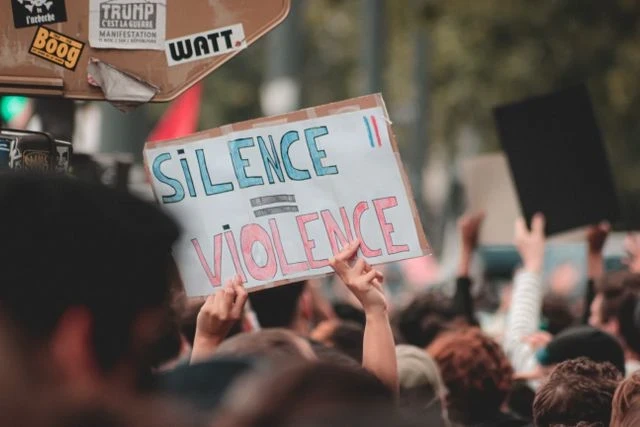
Contemporary democratic societies stand at a perilous precipice where partisan sorting and algorithmic insulation threaten the very foundations of shared civic reality. When citizens voluntarily retreat into hermetically sealed ideological bubbles, the capacity for empathetic listening and rational compromise deteriorates rapidly. This growing societal fracture is not merely an unfortunate byproduct of modern communication channels; it represents a systematic reconfiguration of public consciousness driven by engagement-maximizing digital architectures. Recognizing the gravity of this division requires an uncompromising examination of how personalized media ecosystems systematically reinforce preconceived biases while demonizing dissenting perspectives across the political spectrum.
Navigating this labyrinth of modern polarization demands more than superficial calls for unity; it requires rigorous structural interventions that dismantle ideological silos without infringing upon personal liberty. As public discourse grows increasingly hostile, the survival of democratic institutions depends entirely on our collective willingness to re-engage with uncomfortable truths and heterogeneous viewpoints. The path forward involves cultivating robust intellectual resilience, reforming platform algorithms to prioritize substantive debate over outrage, and actively rebuilding local civic infrastructure where human connection transcends partisan affiliations.
On This Page
TL;DR Political polarization and algorithmic echo chambers severely threaten the health of modern democracies by trapping citizens in hostile, ideologically uniform information silos. Restoring civil discourse requires a multi-layered approach involving algorithmic transparency, psychological resilience, and intentional cross-partisan engagement that replaces outrage with shared factual frameworks.
The Mechanics of Algorithmic Insularities
Modern digital platforms operate on psychological engagement models that inadvertently reward outrage and ideological conformity above all else. When algorithms continuously curate feeds to reflect a user's prior preferences, they construct an impenetrable wall against cognitive dissonance. This systemic isolation fosters radicalization, as moderate voices are routinely drowned out by extreme factions competing for digital visibility and emotional resonance.
Understanding the underlying computational dynamics reveals how profit-driven code transforms human curiosity into predictable partisan loyalty. Feed architectures utilize reinforcement learning to maximize dwell time, exploiting human negativity bias to keep users perpetually hooked on conflict. Consequently, society faces a technological determinism where machine-optimized echo chambers dictate the boundaries of acceptable political imagination, stifling nuanced debate before it even begins.
```python
def calculate_polarization_index(engagement_vector, outrage_score):
"""
Computes the ideological drift and echo chamber entrapment factor.
"""
base_weight = 1.42
drift = (engagement_vector * outrage_score) / base_weight
return round(drift, 4)
index = calculate_polarization_index(0.89, 0.95)
print(f"Calculated Echo Chamber Drift: {index}")
```
The mathematical modeling of social media dispersion demonstrates exponential divergence among ideological clusters over time. As users interact exclusively with validating nodes, their probability of encountering falsifiable counter-evidence approaches zero. The velocity of misinformation within these closed loops accelerates exponentially, creating an alternate epistemic universe that defies traditional journalistic oversight and institutional credibility checks.
Psychological Vulnerabilities and Tribalism
Human beings possess an evolutionary predisposition toward tribalism, seeking safety and validation within tightly knit in-groups while viewing out-groups with deep suspicion. Political actors and media conglomerates skillfully exploit these primal psychological mechanisms to mobilize supporters through fear and moral outrage. Understanding this innate vulnerability is the first critical step toward building personal and institutional defenses against manipulative rhetoric.
Cognitive biases, particularly confirmation bias and motivated reasoning, further cement ideological divisions by filtering out uncomfortable realities. When confronted with empirical evidence that contradicts core beliefs, individuals often experience psychological distress and reflexively reject the source rather than re-evaluate their premises. Overcoming these deep-seated mental shortcuts demands intentional cognitive discipline and a sustained commitment to intellectual humility in public debate.
The mathematical formulation of partisan commitment illustrates how social pressure within closed networks reinforces radical stances. As group identity becomes inextricably linked with political affiliation, abandoning a partisan talking point feels akin to social excommunication. This intense psychological penalty ensures that moderation is punished while uncompromising ideological purity is handsomely rewarded within the local tribe.
We Also Published
Restructuring Institutional and Media Frameworks
Restoring the integrity of public discourse requires comprehensive structural reforms that hold technology companies and media outlets accountable for the societal externalities they generate. Self-regulation has proven entirely inadequate in curbing the spread of divisive misinformation and outrage-baiting content. Policymakers must explore transparent algorithmic audits and legal frameworks that encourage platform interoperability while discouraging engagement models built on societal fracture.
Furthermore, revitalizing public interest journalism and civic education is vital for equipping citizens with the critical thinking tools needed to evaluate complex policy issues objectively. When reliable, independent journalism is replaced by sensationalized clickbait, the entire democratic ecosystem suffers from a profound deficit of shared facts. Reinvesting in local newsrooms and transparent public forums can help re-establish a common baseline of reality essential for productive negotiation.
Institutional design also dictates how legislative bodies conduct internal business, moving away from hyper-partisan grandstanding toward collaborative problem-solving. When committee work is performed away from constant camera scrutiny, politicians find greater latitude to negotiate in good faith. Restoring these procedural norms is essential for demonstrating that democratic governance can deliver tangible results for ordinary citizens across the political spectrum.
- 01
- 02
- 03
- 04
Practical Steps to Bridge Divides
Bridging political divides ultimately begins at the individual level through intentional habits of listening, empathy, and respectful engagement with neighbors who hold contrasting viewpoints. Citizens can actively burst their information bubbles by intentionally consuming journalism from reputable sources outside their usual ideological comfort zones. Practicing steel-manning—accurately representing an opponent's argument in its strongest possible form before offering a critique—transforms hostile debates into constructive intellectual exchanges.
Local community initiatives, town halls, and deliberative assemblies offer powerful offline venues for ordinary people to rediscover common ground on practical, everyday issues. When neighbors focus on shared local challenges such as infrastructure, education, and public safety, partisan labels often recede into the background. Cultivating these grassroots spaces of connection is the most durable antidote to the corrosive toxicity of nationalized culture wars.
Sustaining civil discourse requires lifelong dedication to democratic principles and an unwavering belief that persuasion is superior to coercion. By consciously rejecting the toxic incentives of the outrage economy and embracing rigorous, empathetic dialogue, society can navigate the current storm of polarization and emerge with strengthened democratic resilience.
From our network :
- Forbidden Matrix Patterns and Visible Lattice Points: A Geometric DictionaryExplore how multidimensional 0–1 matrices encode geometric truths, linking forbidden patterns to visible lattice points and hypergraph theory, with applications in combinatorics and computational geometry.
- The Hidden Cost of AI Convenience: Why Over-Permissioned Agents Are a Security Time BombDiscover why AI agents with excessive permissions create dangerous single points of failure, and learn how implementing least privilege principles can protect your organization from exploitation.
- Norbert’s Uncertain Path: Why Hawaii’s Storm Watch Demands Patience Over PanicTropical Storm Norbert strengthens in the Eastern Pacific with winds near 50 mph, forecast to reach Category 1 hurricane status by Friday. Long-range models disagree sharply on whether Hawaii faces any threat around September 19–23, making official guidance essential.
- Analyzing Hoya Corporation’s Midday Volume Shifts and Financial FundamentalsExamine Hoya Corporation’s midday trading volume contraction, technical moving averages, robust solvency ratios, and stellar quarterly earnings performance.
- The Final Descent: How ESA Retired the Legendary Cluster Constellation After 24 Years of Space Weather ScienceAfter 24 years mapping Earth’s magnetosphere, ESA’s Cluster mission concluded with a precisely controlled reentry over the South Pacific. This analysis explores the scientific legacy, engineering decisions, and debris mitigation principles behind one of space exploration’s most responsible retirements.
- Former Soap Stars Embark on Ambitious Writing Projects and Theatrical StagesDiscover how former soap opera actors are transitioning into independent scriptwriting and high-profile theatrical stage productions.
- How AI Agents Will Change the Way We Manage Personal FinancesExplore how AI agents are transforming personal finance through automated budgeting, bill payment, and investment management, while examining the critical security protocols and governance frameworks required for safe deployment.
- CISA’s Ten-Advisory Wave: Why Generic Patching Fails in OT and How to Build Product-Specific PlaybooksCISA released ten ICS advisories in one week, exposing critical infrastructure risks. Generic patching fails in OT. Learn to build product-specific remediation playbooks.
- Committed Mediterranean Precipitation Decline: Why Emissions Cuts Alone Cannot Restore Winter RainsNew NOAA research reveals that Mediterranean winter rains may decline irreversibly even with emissions cuts. Explore the science of committed climate change and regional impacts.
RESOURCES
- Political polarization and its echo chambers: Surprising new, cross ...princeton.eduDec 9, 2021 ... “It's not hard to find evidence of polarized discourse on social ... Civil Rights, Office for Civil Rights, U.S. Department…
- "Polarization and civil discourse in America: a case study of ...digitalcommons.pepperdine.eduSep 9, 2025 ... by social media algorithms that create echo chambers, limiting discourse about diverse viewpoints. Consequently, polarization has become ...
- The Role of Social Media in Building Political Discoursejournals.fasya.uinib.org... Political Discourse: Political Polarization, UU ITE and Echo Chambers. ... civil society to foster a more informative and cohesive political environment. In ...
- Polarization and civil discourse in America: a case study of ...digitalcommons.pepperdine.eduToday, polarization is further fueled by social media algorithms that create echo chambers limiting discourse about diverse viewpoints. Consequently ...
- The Polarizing Impact of Political Disinformation and Hate Speechpmc.ncbi.nlm.nih.govAnalyzes messages on political newsgroups online and finds most messages being civil ... Political polarization and its echo chambers: Surprising new, cross- ...
- GW Sesno Series Addresses Polarization, Government Shutdown ...gwtoday.gwu.eduOct 3, 2025 ... ... civil discourse. ... The panel also discussed how media echo chambers and the collapse of local journalism are exacerbating…
- How the Backfire Effect and Echo Chamber Effect on Social Media ...cupola.gettysburg.edupolarization by widening the gap of political discourse between both ends of the spectrum. Additionally, a study that attempts to prove that political ...
- Social Media Echo Chambers Aren't Politically Polarizing the USnews.northeastern.eduOct 2, 2018 ... Safe Campuses, Civil Discourse FAQ · Federal Landscape FAQ. July 18 ... Social media echo chambers aren't making the US…
- Social Drivers and Algorithmic Mechanisms on Digital Media - PMCpmc.ncbi.nlm.nih.govCould algorithms foster echo chambers of like-minded people and polarization (Garimella et al., 2017)? Do engagement metrics promote hate speech, radicalized ...
- Experts: Civil discourse possible, even in polarized political timeslouisiana.eduOct 30, 2020 ... ... echo chambers of social media. But, in fact, there was no “golden age” of peaceful and constructive political discussion…
- 01
- 02
- 03
- 04
- 05
- 06
- 07
- 08
0 Comments