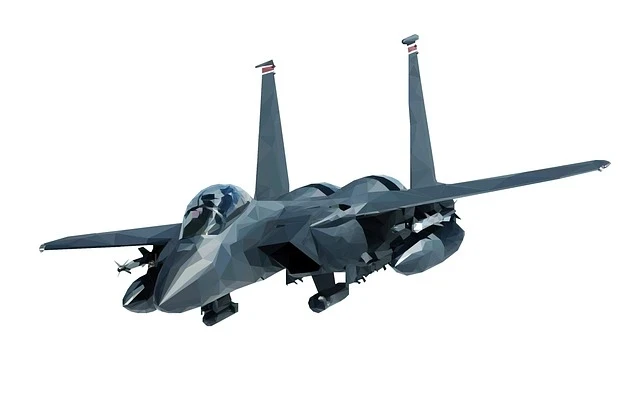
When a cruise missile streaks across the desert sky toward one of Islam's holiest cities, the world holds its breath. Saudi air defenses intercepted exactly such a projectile before it could reach Madinah, destroying the threat mid-flight according to Arab News.
The interception itself is a triumph of layered defense technology, yet the silence surrounding the missile's origin speaks volumes about the fragile security architecture of the modern Middle East.
This event is far more than a single military intercept. It represents the collision of advanced missile warfare, regional proxy conflicts, and the sacred geography of a billion believers.
On This Page
- The Anatomy of Cruise Missile Interception Over Saudi Arabia
- Who Fired the Missile? Motives, Actors, and Regional Flashpoints
- Madinah's Sacred Status and the Psychology of Targeting Holy Cities
- Saudi Arabia's Layered Defense Architecture and Regional Security Posture
- Escalation Risks and the Fragile Equilibrium of the Middle East
- The Investigation Ahead: Attribution, Forensics, and Accountability
Madinah, the city of the Prophet, hosts the Prophet's Mosque and receives millions of pilgrims annually, making any strike attempt a symbolic and humanitarian catastrophe in waiting. Understanding what happened requires examining the technology, the geopolitics, and the strategic calculus behind such an audacious attack.
We will dissect the interception through six analytical lenses: the mechanics of cruise missile defense, the identity and motives of likely perpetrators, the sacred stakes of targeting Madinah, the broader Saudi security posture, the regional escalation risks, and the investigative path forward. Each layer reveals how a single intercepted projectile ripples through global stability, energy markets, and diplomatic alliances.
TL;DR Saudi air defenses successfully intercepted a cruise missile targeting Madinah, preventing what could have been a devastating strike on one of Islam's holiest cities. The missile's origin remains unidentified, and no casualties or damage were reported. This incident underscores the escalating missile threat landscape in the Middle East, the sophistication of Saudi defensive systems, and the profound religious and geopolitical implications of any attack on Madinah. The investigation continues amid regional tensions involving Yemen, Iran, and non-state actors.
The Anatomy of Cruise Missile Interception Over Saudi Arabia
Cruise missiles represent one of the most challenging threats in modern air defense because they fly low, fast, and often under radar coverage. Unlike ballistic missiles that arc high into the atmosphere, cruise missiles hug terrain, making detection a matter of seconds.
Saudi Arabia's interception of a cruise missile bound for Madinah demonstrates a robust, layered defensive network operating at peak readiness.
The kingdom has invested billions in systems like the Patriot PAC-3, the THAAD terminal defense, and advanced radar arrays that can track low-flying objects. When a cruise missile enters defended airspace, the response window is brutally short.
Success requires seamless coordination between early warning satellites, ground-based radar, and interceptor batteries positioned to cover critical assets and cities.
How Modern Air Defense Systems Detect and Destroy Low-Flying Threats
Detection begins with over-the-horizon radar and airborne early warning platforms that scan for anomalous low-altitude signatures. Once a track is established, command centers classify the object and assign interceptors.
The physics of a cruise missile engagement demand that defensive systems calculate a firing solution within seconds, accounting for speed, trajectory, and terrain masking.
Interceptors like the Patriot missile use proximity fuses and hit-to-kill technology to destroy incoming threats. The margin for error is razor-thin because a cruise missile traveling at subsonic speeds can still cover several kilometers in the time it takes to confirm a lock.
Saudi operators train continuously for these scenarios, and their success over Madinah reflects years of investment and drills.
Electronic warfare adds another dimension. Jamming and spoofing can disrupt a cruise missile's guidance, causing it to veer off course or crash harmlessly. The fact that Saudi defenses chose kinetic interception suggests either that electronic countermeasures were unavailable or that commanders prioritized a guaranteed kill over softer disruption methods.
Post-interception analysis is equally critical. Debris recovery allows investigators to identify the missile's manufacturer, guidance components, and launch origin. This forensic work often reveals state-level involvement through serial numbers, propulsion technology, and fuel signatures that point to specific suppliers or arsenals.
The Strategic Value of Defending Madinah and Holy Sites
Madinah is not merely a city; it is the second holiest site in Islam and the resting place of the Prophet Muhammad. Any credible threat to the city carries immense religious weight, potentially inflaming sectarian tensions and mobilizing public opinion across the Muslim world.
Saudi Arabia's role as custodian of the Two Holy Mosques makes its defense of Madinah a sacred duty.
The strategic value extends beyond religion into legitimacy. The House of Saud derives significant authority from its guardianship of Mecca and Madinah. A successful strike on either city would undermine that legitimacy, embolden rivals like Iran, and potentially trigger a crisis of confidence in the kingdom's ability to protect its most cherished assets.
Defending Madinah also protects the annual Hajj and Umrah pilgrimages, which bring millions of visitors and billions of dollars in revenue. A security failure would devastate tourism, disrupt global Muslim travel, and create a humanitarian emergency. The interception therefore safeguarded not just lives but an entire economic and spiritual ecosystem.
Regional adversaries understand this calculus. Any group or state that targets Madinah signals extreme hostility and invites overwhelming retaliation. The attempt itself, regardless of success, constitutes a strategic message that Saudi Arabia's enemies are willing to cross previously unthinkable red lines.
Who Fired the Missile? Motives, Actors, and Regional Flashpoints
The immediate question after any interception is simple: who launched it? Saudi Arabia has not publicly attributed the attack, but the list of plausible actors is short and deeply entangled in the region's proxy wars.
Yemen's Houthi movement, Iranian-aligned militias, and even rogue state elements all possess the intent and, in some cases, the capability to attempt such a strike.
The Houthis have launched hundreds of missiles and drones toward Saudi territory since 2015, including cruise missiles derived from Iranian designs. Their arsenal includes the Quds-1 and Quds-2 cruise missiles, which have struck Aramco facilities and airports. A launch toward Madinah would represent a significant escalation, both geographically and symbolically.
The Houthi Arsenal and Iranian Supply Chains
Iran's support for the Houthis is an open secret, documented through intercepted shipments, recovered debris, and United Nations investigations. Tehran provides technical know-how, components, and sometimes complete systems. The Quds cruise missile family is widely assessed to be an Iranian design, reverse-engineered or directly transferred to Houthi forces.
If a Houthi-launched missile targeted Madinah, it would signal a new phase in the Yemen conflict, one where the rebels deliberately strike Islam's holiest sites to provoke Saudi Arabia and galvanize their own supporters.
Such a move would also test the patience of the broader Muslim world, which has largely tolerated Houthi actions against military and economic targets.
Iran itself could be the culprit, though direct Iranian launches are less likely than proxy operations. Tehran benefits from plausible deniability, using allied militias to strike while avoiding direct retaliation.
The missile's trajectory, if reconstructed from debris, could reveal whether it originated from Yemen, Iraq, or even a maritime platform in the Red Sea.
Other actors, including ISIS remnants or disgruntled tribal factions, lack the technical sophistication to launch a cruise missile. The weapon's complexity narrows the suspect pool to state-level or state-sponsored entities with access to advanced guidance and propulsion technology.
Geopolitical Fallout and Escalation Scenarios
An attack on Madinah, even a failed one, reshapes the strategic landscape. Saudi Arabia would face intense domestic pressure to retaliate decisively, potentially escalating its military campaign in Yemen or striking Iranian assets directly. The kingdom's leadership cannot appear weak when the Prophet's city is threatened.
Regional powers would choose sides. The United Arab Emirates, Egypt, and other Sunni-majority states would likely condemn the attack and support Saudi retaliation. Iran and its allies would deny involvement while preparing for blowback. The United States, a key Saudi security partner, would face pressure to reinforce defensive systems and intelligence sharing.
Global energy markets would react nervously. Any escalation involving Saudi Arabia and Iran threatens the Strait of Hormuz, through which a fifth of the world's oil passes. Even a failed missile strike can spike oil prices, unsettle shipping lanes, and trigger flight cancellations across the region.
The diplomatic fallout could also derail ongoing normalization talks, including Saudi-Israeli discussions brokered by Washington. A security crisis of this magnitude would force Riyadh to prioritize immediate defense over long-term diplomatic gambits, freezing fragile peace processes.
Madinah's Sacred Status and the Psychology of Targeting Holy Cities
Madinah occupies a unique place in Islamic theology and global Muslim consciousness. It is the city where the Prophet Muhammad established the first Muslim community, built the Prophet's Mosque, and where he is buried.
Millions of pilgrims visit annually, and any threat to the city evokes deep emotional and spiritual responses across the ummah.
Targeting Madinah is not merely a military act; it is a psychological and religious assault. Extremist groups have long dreamed of striking holy sites to provoke chaos, but mainstream Muslim opinion universally condemns such actions. The missile's intended target, whether symbolic or operational, aimed at the heart of Islamic civilization.
Religious and Cultural Dimensions of Defending the Holy Cities
Saudi Arabia's legitimacy rests heavily on its custodianship of Mecca and Madinah, a role formalized in the kingdom's official title, Custodian of the Two Holy Mosques. This responsibility transcends politics, binding the monarchy to a sacred duty that demands absolute vigilance and readiness to repel any threat.
The psychological impact of a successful strike would be catastrophic. It would shatter the sense of security surrounding the Hajj and Umrah, potentially triggering mass panic during pilgrimage seasons. Pilgrims from Indonesia, Pakistan, Nigeria, and beyond would question whether they can safely fulfill their religious obligations.
Defending Madinah also involves protecting the Prophet's Mosque, a architectural and spiritual marvel that houses the tomb of Muhammad and the first two caliphs. The mosque's destruction or damage would be an irreplaceable loss, wounding the faith of billions and igniting fury that no diplomatic effort could contain.
Religious scholars and leaders across sects would unite in condemnation of any attack on Madinah, but the response would not stop at words. Calls for jihad against the perpetrators would echo from pulpits, and pressure on Saudi Arabia to retaliate would become irresistible, regardless of the diplomatic consequences.
How Holy Site Threats Reshape Saudi Security Doctrine
Saudi security doctrine has evolved to treat the defense of holy sites as a top-tier national priority, above even oil infrastructure. This hierarchy explains the dense concentration of air defense assets around Mecca, Madinah, and the Red Sea corridor leading to them.
The kingdom has also invested in redundancy, ensuring that multiple radar and interceptor systems can cover the same airspace. If one layer fails, another engages. This layered approach proved its worth over Madinah, where the missile was destroyed before reaching its target.
Beyond hardware, Saudi Arabia has strengthened intelligence cooperation with the United States, the United Kingdom, and Gulf allies. Shared early warning data and satellite imagery allow faster detection and more accurate tracking of missile launches from Yemen or elsewhere.
The interception also serves as a deterrent message. By demonstrating the ability to shoot down a cruise missile aimed at Madinah, Saudi Arabia warns potential attackers that such attempts will fail and invite devastating retaliation. Deterrence, after all, is as much about perception as capability.
Saudi Arabia's Layered Defense Architecture and Regional Security Posture
Saudi Arabia's air defense network is among the most sophisticated in the Middle East, built through decades of investment and close cooperation with the United States. The system integrates multiple layers, from long-range Patriot batteries to short-range systems like the C-RAM and shoulder-fired missiles, creating overlapping coverage.
The kingdom operates the Patriot Advanced Capability-3 (PAC-3), designed to intercept tactical ballistic missiles, cruise missiles, and aircraft. It also deploys the Terminal High Altitude Area Defense (THAAD) system for higher-altitude threats. Together, these systems form a shield that has intercepted hundreds of Houthi projectiles since 2015.
Integration of US, European, and Indigenous Systems
Saudi Arabia sources air defense technology from the United States, Europe, and increasingly its own defense industry. American Patriot and THAAD systems form the backbone, while European radar and command systems fill gaps. Indigenous firms like SAMI are developing local interceptors and drones to reduce dependence on imports.
Integration is the real challenge. Different systems speak different languages, literally and figuratively. Saudi command centers must fuse data from US, European, and indigenous sensors into a single operational picture, a task that requires advanced software and constant training.
The interception over Madinah likely involved multiple systems working in concert. Early warning radar detected the missile, command centers classified it, and Patriot or THAAD batteries engaged. The seamless execution suggests that years of integration efforts are paying off in real-world performance.
Regional security posture extends beyond hardware. Saudi Arabia hosts US military personnel and operates joint command centers with Gulf allies. Intelligence sharing with Washington provides early warning of missile launches from Yemen, Iran, or the sea, buying precious seconds for interception.
Budget, Training, and Readiness Challenges
Maintaining this architecture is expensive. Saudi defense spending exceeds $50 billion annually, with air defense consuming a significant share. Interceptor missiles cost millions each, and training personnel to operate complex systems requires continuous investment in simulators, live-fire exercises, and foreign expertise.
Readiness is another challenge. Air defense crews must remain vigilant around the clock, especially during pilgrimage seasons and regional crises. Fatigue, complacency, and equipment maintenance can degrade performance, making drills and rotations essential to sustained effectiveness.
The kingdom has also faced criticism over the cost-effectiveness of intercepting cheap Houthi drones with expensive Patriot missiles. A single Patriot interceptor can cost $3–4 million, while a Houthi drone may cost a few thousand dollars. This asymmetry has pushed Saudi Arabia to develop cheaper counter-drone systems.
Despite these challenges, the successful interception over Madinah demonstrates that Saudi Arabia's investments have produced a capable, combat-tested air defense force. The system is not perfect, but it is effective enough to protect the kingdom's most sensitive sites from sophisticated threats.
We Also Published
Escalation Risks and the Fragile Equilibrium of the Middle East
The interception over Madinah lands in an already volatile regional environment. The Gaza war, Houthi Red Sea attacks, Iran-Israel tensions, and US-Iran standoffs have created a tinderbox where a single spark can ignite a wider conflict. A missile aimed at Islam's second holiest city is precisely such a spark.
Saudi Arabia has pursued de-escalation with Iran through Chinese-brokered talks, restoring diplomatic ties in 2023. That détente is fragile, and a missile attack traced to Iranian proxies could unravel it overnight. Riyadh would face pressure to abandon diplomacy and return to confrontation.
Pathways to War and Pathways to Peace
Escalation could follow several paths. Saudi Arabia might strike Houthi launch sites in Yemen, risking civilian casualties and renewed international criticism. It could also target Iranian assets in Syria or Iraq, triggering direct retaliation against Saudi oil facilities or shipping in the Gulf.
Alternatively, the kingdom could pursue a measured response, combining diplomatic pressure, intelligence sharing, and targeted strikes on missile infrastructure. This approach aims to punish the perpetrators without triggering a full-scale war, preserving the fragile regional equilibrium.
Peace pathways depend on attribution and restraint. If the missile's origin is traced to a rogue faction rather than a state, Saudi Arabia might limit its response. If Iran is directly implicated, the crisis could spiral beyond control, drawing in the United States and Israel.
International mediation could play a role. The United Nations, China, and Gulf mediators might push for de-escalation, offering face-saving exits for all parties. But mediators can only do so much when sacred sites are threatened and domestic pressure demands retaliation.
Global Economic and Energy Implications
Any escalation in the Gulf sends shockwaves through global energy markets. Oil prices spike on fears of supply disruptions, shipping insurance costs soar, and stock markets wobble. The Strait of Hormuz, a chokepoint for 20% of global oil, becomes a flashpoint.
Saudi Arabia's ability to protect its oil infrastructure and holy sites is a cornerstone of global energy security. A successful strike on Madinah would undermine confidence in that protection, potentially triggering a sustained oil price surge and global recessionary pressures.
Investors and policymakers watch Saudi security incidents closely. The interception over Madinah, while successful, signals that the threat environment is intensifying. Markets may price in higher risk premiums for Gulf assets, affecting everything from sovereign bonds to real estate.
Long-term, the incident could accelerate Saudi Arabia's push for economic diversification and renewable energy. If oil infrastructure and holy cities remain under threat, the kingdom has even more reason to reduce its dependence on hydrocarbon revenues and invest in resilient, diversified industries.
The Investigation Ahead: Attribution, Forensics, and Accountability
The missile's destruction is only the beginning. Investigators now face the painstaking task of determining who launched it, from where, and with what support. Debris analysis, radar tracking, and intelligence intercepts will converge to build a case that could shape Saudi retaliation and regional diplomacy.
Forensic teams will examine the missile's wreckage for serial numbers, manufacturer markings, and component origins. Propulsion systems, guidance modules, and fuel residues can reveal whether the missile was Iranian-made, Houthi-assembled, or sourced from another supplier. This evidence is critical for attribution.
Forensic Missile Analysis and Intelligence Sharing
Radar tracks will help reconstruct the missile's flight path, revealing its launch point and trajectory. If the missile originated from Yemen, the track would show a northern arc toward Madinah. If from the sea or Iraq, the path would differ, narrowing the suspect list.
Intelligence sharing with the United States, Israel, and Gulf allies will supplement forensic findings. Satellite imagery, signals intelligence, and human sources can confirm launch preparations and identify the responsible chain of command. This multi-source approach strengthens attribution confidence.
The investigation's findings will determine Saudi Arabia's response. A clear attribution to the Houthis might trigger strikes on Yemeni launch sites. Attribution to Iran could escalate to direct confrontation. Ambiguity, meanwhile, might push Riyadh toward cautious diplomacy and defensive reinforcement.
Accountability extends beyond military retaliation. Saudi Arabia may pursue international legal action, presenting evidence to the United Nations Security Council and seeking condemnation of the attack. Such moves isolate the perpetrators diplomatically and build a case for future sanctions.
Lessons Learned and Future Defense Upgrades
Every interception yields lessons. Saudi planners will analyze the engagement timeline, radar performance, and interceptor effectiveness to identify gaps. Perhaps detection was late, or the intercept window was narrower than expected. These insights drive upgrades and procedural changes.
Future threats may involve swarms of drones and missiles launched simultaneously, saturating defenses. Saudi Arabia is investing in directed-energy weapons, electronic warfare, and AI-driven command systems to counter such scenarios. The Madinah interception is a data point in a longer technological race.
Training will also evolve. Crews that successfully intercepted the missile will share their experiences with others, spreading best practices across the force. Simulated scenarios will incorporate the lessons learned, ensuring that future engagements are even more effective.
Finally, the incident reinforces the importance of regional cooperation. Shared early warning, joint exercises, and integrated command structures with Gulf allies can extend detection ranges and improve response times. No single nation can defend against missile threats alone.
The interception of a cruise missile aimed at Madinah is a defining moment for Saudi Arabia and the broader Middle East. It showcases the kingdom's defensive capabilities while exposing the persistent threats that define the region's security landscape. The missile's destruction prevented a catastrophe, but the underlying tensions remain unresolved.
As investigators work to identify the perpetrators, the world watches for signs of escalation or restraint. Saudi Arabia's response will shape its relationships with Iran, Yemen, the United States, and the wider Muslim world. The stakes could hardly be higher, encompassing sacred sites, global energy, and regional stability.
Ultimately, the incident reminds us that technology alone cannot guarantee security. Deterrence, diplomacy, and intelligence cooperation are equally vital. The successful interception over Madinah is a victory, but it is a victory in an ongoing struggle that demands vigilance, wisdom, and strategic patience from all parties involved.
From our network :
- Committed Mediterranean Precipitation Decline: Why Emissions Cuts Alone Cannot Restore Winter RainsNew NOAA research reveals that Mediterranean winter rains may decline irreversibly even with emissions cuts. Explore the science of committed climate change and regional impacts.
- How AI Agents Will Change the Way We Manage Personal FinancesExplore how AI agents are transforming personal finance through automated budgeting, bill payment, and investment management, while examining the critical security protocols and governance frameworks required for safe deployment.
- The Final Descent: How ESA Retired the Legendary Cluster Constellation After 24 Years of Space Weather ScienceAfter 24 years mapping Earth’s magnetosphere, ESA’s Cluster mission concluded with a precisely controlled reentry over the South Pacific. This analysis explores the scientific legacy, engineering decisions, and debris mitigation principles behind one of space exploration’s most responsible retirements.
- Live Online English Classes for Kids: Do They Actually Reduce Anxiety?A ten-week study reveals that synchronous online English classes can significantly reduce child language anxiety while improving listening and reading skills. Discover what makes these programs effective and how parents can select the right one.
- University Language Proficiency Exams: Why Institutional Tests Demand Different Preparation Than IELTS and TOEFLDiscover why university-specific language proficiency examinations differ fundamentally from IELTS and TOEFL, and learn strategic preparation approaches for institutional assessment success.
- The Hidden Cost of AI Convenience: Why Over-Permissioned Agents Are a Security Time BombDiscover why AI agents with excessive permissions create dangerous single points of failure, and learn how implementing least privilege principles can protect your organization from exploitation.
- Forbidden Matrix Patterns and Visible Lattice Points: A Geometric DictionaryExplore how multidimensional 0–1 matrices encode geometric truths, linking forbidden patterns to visible lattice points and hypergraph theory, with applications in combinatorics and computational geometry.
- Mobile Learning and VR in English: What Global Evidence Reveals About Effective Language TechnologyA systematic review across 14 countries reveals which language-learning technologies genuinely work. Mobile learning, AI, and VR show measurable benefits when pedagogically integrated. This evidence-based guide helps educators and learners select technology that delivers real return on investment.
- CISA’s Ten-Advisory Wave: Why Generic Patching Fails in OT and How to Build Product-Specific PlaybooksCISA released ten ICS advisories in one week, exposing critical infrastructure risks. Generic patching fails in OT. Learn to build product-specific remediation playbooks.
RESOURCES
- Resources will be updated soon.
- 01
- 02
- 03
- 04
- 05
- 06
- 07
- 08
0 Comments