Saudi Arabia's Capital Market Authority has moved decisively to reshape the architecture of its primary equity market, approving a package of amendments that fundamentally redefines the relationship between issuers, underwriters, and the investing public. The reforms, reported by Asharq Al-Awsat and carried by Arab News, target the mechanics of initial public offerings at their most sensitive pressure points: the timing of underwriting commitments, the credibility of subscription books, and the quality of forward-looking information placed before investors. In a kingdom executing an ambitious privatization and listing agenda under Vision 2030, these are not cosmetic adjustments. They represent a deliberate recalibration of risk allocation, shifting meaningful financial exposure onto the institutions best equipped to bear it while demanding greater transparency from those seeking public capital.
The central innovation is the requirement that underwriting agreements be signed and effective before book-building commences, with underwriters committing at the outset to purchase all offered shares regardless of investor demand. This transforms the underwriter from a facilitator into a genuine principal, a party with skin in the game whose own balance sheet stands behind the offering. Alongside this, the regulator has introduced liquidity verification for institutional subscription orders, mandatory forward-looking financial projections in prospectuses, and a professional due diligence obligation on financial advisers. Together, these provisions aim to make reported subscription levels trustworthy, deter inflated orders, and give investors a more honest picture of an issuer's prospects. The draft rules were published on September 22 for a thirty-day public consultation, signaling a consultative but determined approach to market discipline.
Understanding why these changes matter requires appreciating the peculiar vulnerabilities of emerging IPO markets. In a hot listing cycle, order books can become theater: institutions submit oversized indications of interest they never intend to honor, subscription multiples are reported as evidence of overwhelming demand, and retail investors pile in on the strength of numbers that overstate genuine conviction. When the music stops, allocations are returned, prices sag, and confidence erodes. Saudi Arabia's reforms read as a direct response to that failure mode, replacing soft commitments with hard ones and substituting verified financial capacity for optimistic declarations. The result is a market design that prizes credibility over spectacle, a shift with implications that extend well beyond Riyadh's exchange floor.
On This Page
- The Regulatory Logic Behind Binding Underwriting Commitments
- Liquidity Verification and the Fight Against Inflated Order Books
- Forward-Looking Projections and the Duty of Professional Diligence
- Vision 2030, Privatization, and the Credibility Premium
- Comparative Perspective: How the Rules Sit Against Global Practice
- Operational Realities for Issuers and Advisers
- What the Reforms Signal About Market Governance
TL;DR Saudi Arabia's Capital Market Authority has approved new IPO rules requiring underwriters to sign binding agreements before book-building and to purchase all offered shares even when demand is weak. Institutional orders must now reflect verified cash and cash equivalents, and issuers must publish forward-looking financial projections with disclosed assumptions and risks. The reforms aim to make subscription data credible, shift risk onto underwriters, and improve the reliability of information available to investors in a market central to Vision 2030's privatization agenda.
The Regulatory Logic Behind Binding Underwriting Commitments
The decision to require signed and effective underwriting agreements before book-building begins addresses a structural weakness that has long troubled primary markets globally. Traditionally, an underwriter's commitment crystallizes late in the process, after demand has been gauged, giving the institution room to negotiate terms or walk away if the book looks thin. That sequencing creates a moral hazard: the underwriter markets the deal aggressively while retaining an exit, and the issuer bears the residual risk of a failed offering. Saudi Arabia's amendment reverses the order, forcing the underwriter to commit capital before it knows how investors will respond. The discipline this imposes is considerable, because an institution that must buy every offered share has powerful incentives to price accurately and market honestly from the first day of the roadshow.
Risk Transfer and the Principal Underwriter Model
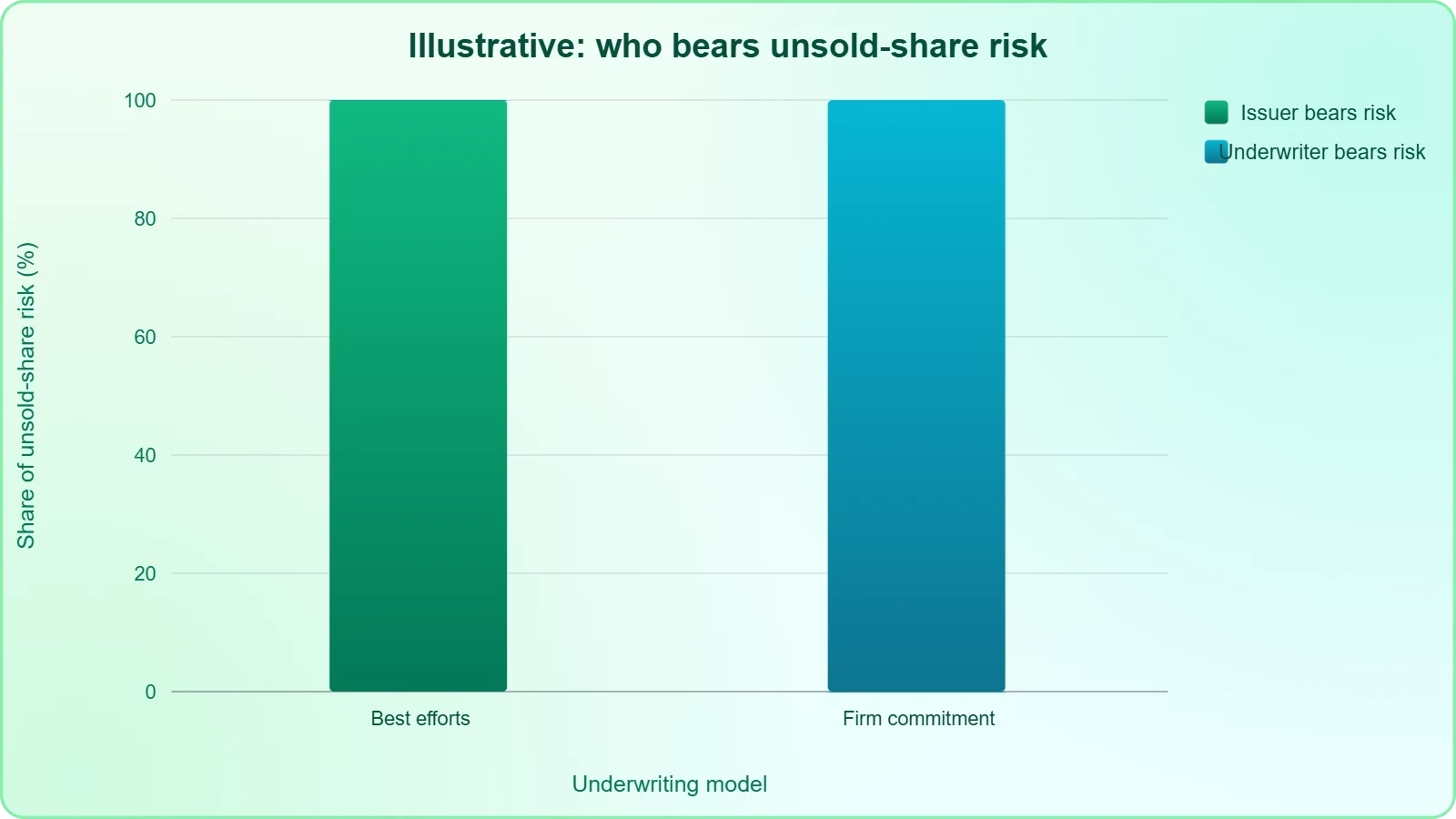
By converting the underwriter into a purchaser of last resort, the CMA effectively imports a firm-commitment model into a market where best-efforts arrangements had allowed ambiguity. Under a firm-commitment structure, the underwriter buys the entire issue and resells it, absorbing any shortfall between the offer price and market demand. This aligns the intermediary's interests with the issuer's and with long-term investors, because a poorly priced deal now damages the underwriter's own P&L rather than merely its reputation. The provision that an underwriter must still purchase all shares even where doing so would breach listing requirements, with the agreement permitted to include a disposal mechanism, shows the regulator anticipated edge cases and closed the loophole rather than leaving it to interpretation.
Implications for Investment Banks and Deal Economics
For investment banks active in the kingdom, the new regime raises the cost of participation and rewards balance-sheet strength. Underwriting fees will need to compensate for genuine capital risk, which may compress margins for smaller advisers and consolidate mandates among larger institutions capable of warehousing unsold stock. Banks will also invest more heavily in pre-deal diligence and price discovery, since a misjudged valuation now translates directly into inventory losses. The likely outcome is a more concentrated but more credible underwriting community, one where the ability to commit capital becomes a competitive moat. Issuers, in turn, may face tougher negotiations on fees and pricing, but they gain something valuable: a market signal that their offering has been genuinely vetted by a party with money at stake.
Liquidity Verification and the Fight Against Inflated Order Books
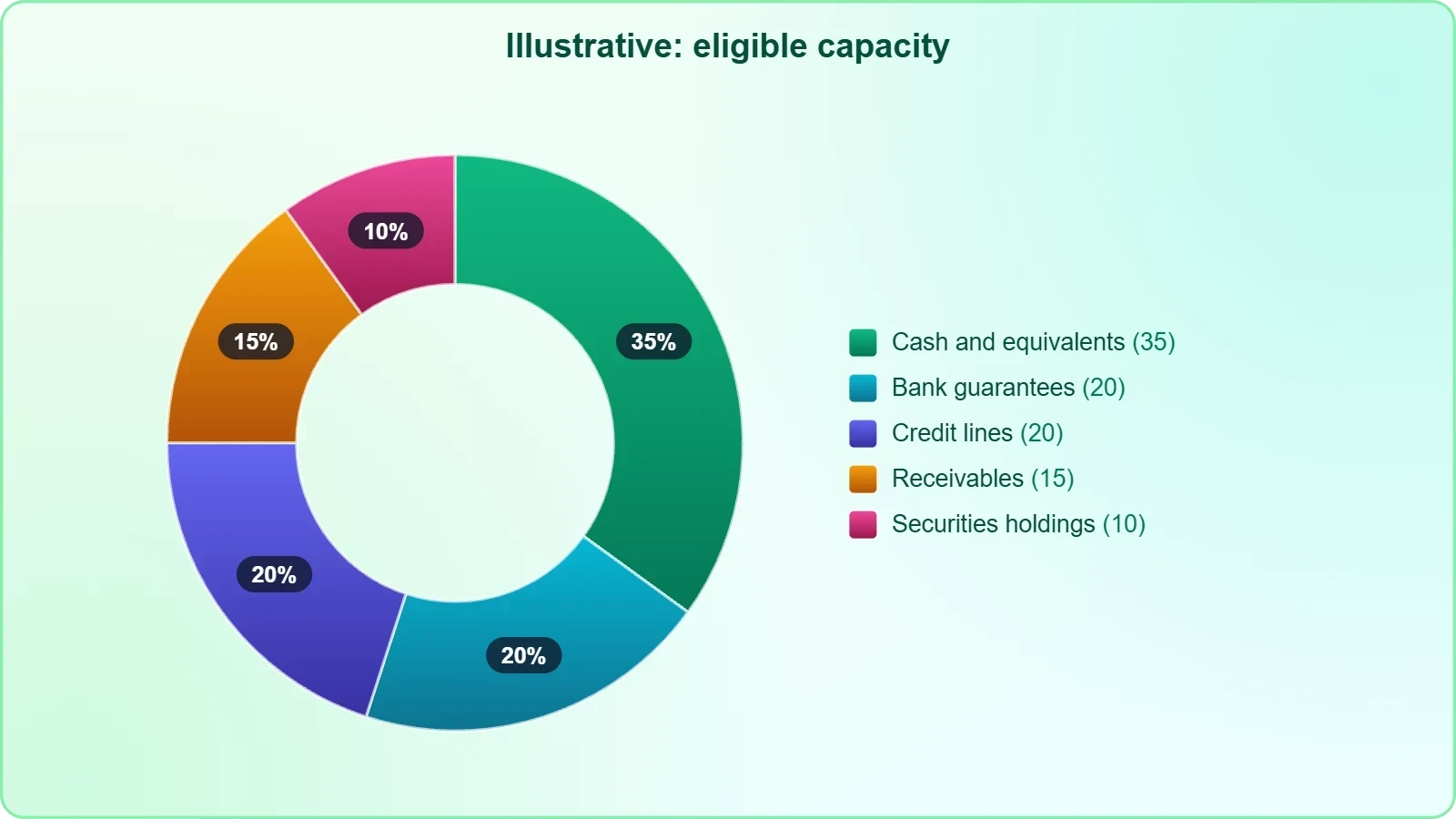
Subscription books in fast-moving emerging markets have a well-documented tendency toward exaggeration. Institutions submit orders that signal enthusiasm without committing resources, and the resulting subscription multiples become marketing material rather than reliable evidence of demand. The CMA's response is elegantly direct: orders from participating investment institutions must be checked against actual available liquidity, assessed using cash and cash equivalents alone, and must constitute binding payment commitments due by the subscription deadline stated in the prospectus. By narrowing the definition of capacity to liquid resources, the regulator eliminates the creative accounting that might otherwise allow institutions to pledge illiquid assets or contingent funding. The stated objective is unambiguous, namely to stop orders exceeding investors' real ability to pay and to make reported subscription levels credible.
What Counts as Financial Capacity
Restricting capacity assessment to cash and cash equivalents is a deliberately conservative choice with far-reaching consequences. It excludes bank guarantees, lines of credit, receivables, and securities holdings that could theoretically be liquidated, all of which had previously provided wiggle room for aggressive order sizing. The practical effect is that an institution's maximum order is bounded by the money it can actually wire on settlement day, which forces portfolio managers to prioritize their highest-conviction allocations rather than spreading speculative orders across every deal. This should produce cleaner books, more accurate price discovery, and allocation outcomes that reflect genuine institutional demand. It also raises operational demands on participating institutions, which must now coordinate treasury and investment functions far more tightly than before.
Enforcement Mechanics and Settlement Discipline
Binding payment commitments shift the compliance burden onto the institutions themselves and onto the underwriters who must verify them. An order that cannot be settled by the deadline becomes a contractual breach rather than a harmless withdrawal, exposing the institution to penalties and reputational damage. Underwriters, already carrying purchase obligations, have every incentive to police order quality rigorously, since a defaulting subscriber leaves them holding more stock than planned. This creates a self-reinforcing enforcement loop in which the underwriter's own capital risk underwrites the integrity of the book. Over time, institutions with weak settlement records will find themselves excluded from allocations, a market-based sanction that may prove more effective than formal penalties.
Forward-Looking Projections and the Duty of Professional Diligence
Perhaps the most consequential change for issuers is the requirement to include forward-looking financial projections in prospectuses and registration documents. Historically, Saudi prospectuses leaned heavily on historical financials, leaving investors to construct their own forecasts from limited disclosure. The amendments require projections covering the period after the most recently reported financial period and at least the following fiscal year, with clarity, non-misleading presentation, and grounding in reasonable, measurable assumptions. Issuers must disclose the methodology used, the key assumptions underpinning the numbers, and the risks and factors that could cause actual results to diverge. The regulator is careful to note that projections do not guarantee outcomes, a caveat that preserves the safe-harbor logic essential to any forward-looking disclosure regime.
Assumptions, Methodology, and Risk Disclosure
The quality of a projection depends entirely on the transparency of its inputs, and the CMA's emphasis on measurable assumptions reflects that reality. An issuer forecasting revenue growth must now explain the market size, pricing, capacity, and competitive dynamics that support the figure, rather than presenting a bare number. Disclosing the method used allows analysts and investors to stress-test the forecast against their own models, which improves price discovery and reduces the information asymmetry that has historically favored insiders. The requirement to flag risks and factors that could affect results also discourages the optimistic scenario-building that often accompanies hot listings. In effect, the regulator is asking issuers to show their work, a demand that will reward companies with genuinely robust planning processes.
The Financial Adviser's Due Diligence Obligation
Financial advisers now carry an explicit professional duty to conduct proper due diligence when advising issuers on projections and to form a reasonable opinion on them. This elevates the adviser from a drafting assistant to a gatekeeper with independent judgment, accountable for the plausibility of numbers it has reviewed. The obligation mirrors established practice in mature markets, where sponsors and advisers must satisfy themselves that forecasts are prepared on a reasonable basis. For Saudi advisers, it means building documented diligence files, challenging management assumptions, and being prepared to defend their conclusions before the regulator. The result should be higher-quality disclosure and a clearer chain of accountability when projections later prove wildly inaccurate.
Vision 2030, Privatization, and the Credibility Premium
Saudi Arabia's listing pipeline is not a peripheral feature of its economic strategy; it is a central mechanism for deepening capital markets, attracting foreign institutional capital, and recycling state assets into productive private ownership. Vision 2030 envisions a vibrant Tadawul capable of financing the kingdom's diversification away from hydrocarbons, and each successful IPO reinforces that narrative. Credibility is therefore a strategic asset. A market where subscription multiples are inflated and underwriters vanish when demand weakens undermines the entire project, deterring the long-horizon international investors whose participation the kingdom actively courts. The CMA's reforms should be read in that light, as an investment in the reputational infrastructure that sustains a credible privatization program.
Attracting Foreign Institutional Capital
International asset managers allocate to emerging markets on the basis of governance quality, disclosure standards, and the reliability of deal mechanics. A market that verifies order capacity and requires firm underwriting commitments checks several boxes on their due diligence lists, reducing the perceived risk of participating in Saudi offerings. The forward-looking projection requirement also aligns local practice with expectations in London, New York, and Hong Kong, where forecast disclosure is routine in many contexts. For global investors, the reforms signal that the regulator understands their concerns and is willing to impose costs on domestic intermediaries to address them. That signaling effect may prove as valuable as the substantive rules themselves.
Balancing Issuer Burden Against Investor Protection
Every disclosure mandate imposes costs, and the CMA's package is no exception. Issuers must now invest in forecasting infrastructure, engage advisers earlier, and accept that their projections will be scrutinized and later compared against outcomes. Underwriters must price capital risk into their fees and hold inventory they might prefer to avoid. The regulator's judgment is that these costs are outweighed by the benefits of a more trustworthy market, a calculation supported by the experience of jurisdictions where firm-commitment underwriting and verified order books are standard. The thirty-day consultation period that preceded approval suggests the CMA sought input on where the balance should fall, and the final rules reflect a deliberate calibration rather than reflexive tightening.
- 01
- 02
- 03
- 04
We Also Published
Comparative Perspective: How the Rules Sit Against Global Practice
Firm-commitment underwriting is the norm in the United States and much of Europe, where investment banks routinely buy entire issues and bear the risk of unsold inventory. What distinguishes the Saudi approach is the explicit prohibition on commencing book-building before the agreement is effective, a sequencing rule that removes the option of gauging demand before committing. Liquidity verification of institutional orders is less common globally, though regulators in several markets have tightened rules on indications of interest after episodes of exaggerated books. Forward-looking projections in prospectuses are standard in some jurisdictions and discouraged in others, where liability concerns lead issuers to disclose only historical data. Saudi Arabia has thus assembled a hybrid regime, borrowing proven elements and adding local innovations aimed at specific market pathologies.
Lessons From Other Emerging Markets
Emerging markets that have tightened IPO mechanics have generally seen short-term friction followed by improved deal quality. Where order books are verified, subscription multiples fall but post-listing performance stabilizes, because allocations reflect genuine demand rather than speculative enthusiasm. Where underwriters bear firm commitments, pricing tends to be more conservative, reducing the first-day pops that attract flippers and distort long-term ownership. The Saudi reforms appear designed to capture these benefits while avoiding the extremes of over-regulation that can chill listing activity. The consultation process and the phased approach suggest the regulator is monitoring for unintended consequences, a prudent stance given the kingdom's ambitious pipeline of state-linked offerings.
Potential Unintended Consequences
Any tightening of IPO rules carries the risk of reducing issuance, particularly among smaller companies that cannot absorb higher underwriting costs or produce credible multi-year forecasts. If banks demand substantial fees for firm commitments, mid-cap issuers may delay listings or seek private capital instead, thinning the pipeline the regulator hopes to deepen. There is also a risk that underwriters, facing unlimited purchase obligations, become excessively conservative in pricing, leaving money on the table and disadvantaging selling shareholders. The provision allowing disposal mechanisms for shares that would breach listing requirements acknowledges one such edge case, but others may emerge in practice. Regulators will need to monitor deal volumes, pricing accuracy, and post-listing performance to confirm the reforms achieve their intended effect without suppressing activity.
Operational Realities for Issuers and Advisers
Translating regulatory text into deal execution requires issuers to rethink their preparation timelines. Projections must be built on documented assumptions, reviewed by advisers, and stress-tested against downside scenarios before they enter a prospectus. Underwriting negotiations now begin earlier and carry more weight, because the agreement must be signed before book-building opens and must specify the purchase obligation clearly. Treasury and investor relations teams need to coordinate with legal counsel on disclosure language that satisfies the clarity and non-misleading standards while preserving appropriate cautionary language. The overall effect is a longer, more rigorous runway to listing, which favors issuers with mature financial functions and well-prepared management teams.
Preparing Projections That Withstand Scrutiny
A projection that will be read by regulators, advisers, and institutional investors demands a defensible analytical spine. Issuers should document the market data, capacity constraints, pricing assumptions, and cost drivers behind each line item, and should be prepared to explain variances if actual results diverge. Sensitivity analysis helps demonstrate that management understands the range of outcomes, while explicit risk factors satisfy the disclosure requirement and reduce liability exposure. The regulator's caveat that projections do not guarantee results provides some protection, but it does not excuse sloppy work. Advisers conducting due diligence will probe assumptions, and their reasonable opinion depends on finding the analysis coherent, internally consistent, and grounded in observable evidence rather than aspiration.
Managing the Underwriter Relationship
With underwriters now bearing genuine capital risk, issuers should expect more demanding negotiations over pricing, fees, and the terms of any disposal mechanism. A bank committing to buy all offered shares will want comfort on valuation, investor education, and the credibility of the equity story, and it may push for a lower offer price to reduce inventory risk. Issuers can manage this dynamic by engaging underwriters early, sharing diligence materials transparently, and building a syndicate whose members have the balance-sheet strength to honor commitments. The relationship shifts from a transactional marketing arrangement to a genuine partnership in risk, which may ultimately produce better-priced, more stable listings and stronger aftermarket performance.
What the Reforms Signal About Market Governance
Beyond their technical provisions, the amendments reveal a regulator willing to impose costs on powerful intermediaries in pursuit of market integrity. Requiring underwriters to buy unsold shares and verifying institutional liquidity are measures that inconvenience banks and large investors, yet the CMA has adopted them because the credibility of reported demand is foundational to investor trust. This willingness to prioritize long-term market quality over short-term deal flow is a mark of regulatory maturity, and it aligns with the kingdom's broader institutional ambitions. The thirty-day consultation, the careful drafting of edge cases, and the explicit caveat on projections all suggest a regulator that has learned from the experience of other markets and is applying those lessons deliberately.
Signals for Regional Markets
Saudi Arabia's approach may influence regulators elsewhere in the Gulf and across emerging markets grappling with similar problems. If the reforms succeed in producing cleaner books and more stable post-listing performance, other exchanges will face pressure to adopt comparable standards, particularly those competing for the same pool of international institutional capital. The liquidity verification requirement, in particular, is a portable innovation that addresses a widely recognized weakness. Regional harmonization around such standards could accelerate the development of deeper, more integrated capital markets, benefiting issuers and investors alike. The kingdom's willingness to lead on these issues reinforces its position as the Gulf's dominant financial center.
The Longer-Term Trajectory
Looking ahead, the reforms are best understood as one step in an ongoing evolution rather than a final destination. As the Saudi market matures, further refinements are likely, including possible adjustments to the projection regime if liability concerns prove chilling, or to the liquidity rules if they prove operationally burdensome. The regulator will be watching deal volumes, pricing accuracy, subscription multiples, and aftermarket performance for evidence of unintended effects. What seems clear is the direction of travel: toward a market where commitments are real, information is reliable, and the interests of issuers, intermediaries, and investors are more closely aligned. For a kingdom staking its economic future on capital market development, that trajectory matters enormously.
From our network :
- CISA’s Ten-Advisory Wave: Why Generic Patching Fails in OT and How to Build Product-Specific PlaybooksCISA released ten ICS advisories in one week, exposing critical infrastructure risks. Generic patching fails in OT. Learn to build product-specific remediation playbooks.
- The Hidden Cost of AI Convenience: Why Over-Permissioned Agents Are a Security Time BombDiscover why AI agents with excessive permissions create dangerous single points of failure, and learn how implementing least privilege principles can protect your organization from exploitation.
- University Language Proficiency Exams: Why Institutional Tests Demand Different Preparation Than IELTS and TOEFLDiscover why university-specific language proficiency examinations differ fundamentally from IELTS and TOEFL, and learn strategic preparation approaches for institutional assessment success.
- Forbidden Matrix Patterns and Visible Lattice Points: A Geometric DictionaryExplore how multidimensional 0–1 matrices encode geometric truths, linking forbidden patterns to visible lattice points and hypergraph theory, with applications in combinatorics and computational geometry.
- Mobile Learning and VR in English: What Global Evidence Reveals About Effective Language TechnologyA systematic review across 14 countries reveals which language-learning technologies genuinely work. Mobile learning, AI, and VR show measurable benefits when pedagogically integrated. This evidence-based guide helps educators and learners select technology that delivers real return on investment.
- Live Online English Classes for Kids: Do They Actually Reduce Anxiety?A ten-week study reveals that synchronous online English classes can significantly reduce child language anxiety while improving listening and reading skills. Discover what makes these programs effective and how parents can select the right one.
- How AI Agents Will Change the Way We Manage Personal FinancesExplore how AI agents are transforming personal finance through automated budgeting, bill payment, and investment management, while examining the critical security protocols and governance frameworks required for safe deployment.
- Committed Mediterranean Precipitation Decline: Why Emissions Cuts Alone Cannot Restore Winter RainsNew NOAA research reveals that Mediterranean winter rains may decline irreversibly even with emissions cuts. Explore the science of committed climate change and regional impacts.
- The Final Descent: How ESA Retired the Legendary Cluster Constellation After 24 Years of Space Weather ScienceAfter 24 years mapping Earth’s magnetosphere, ESA’s Cluster mission concluded with a precisely controlled reentry over the South Pacific. This analysis explores the scientific legacy, engineering decisions, and debris mitigation principles behind one of space exploration’s most responsible retirements.
RESOURCES
- Resources will be updated soon.
- 01
- 02
- 03
- 04
- 05
- 06
- 07
- 08
0 Comments