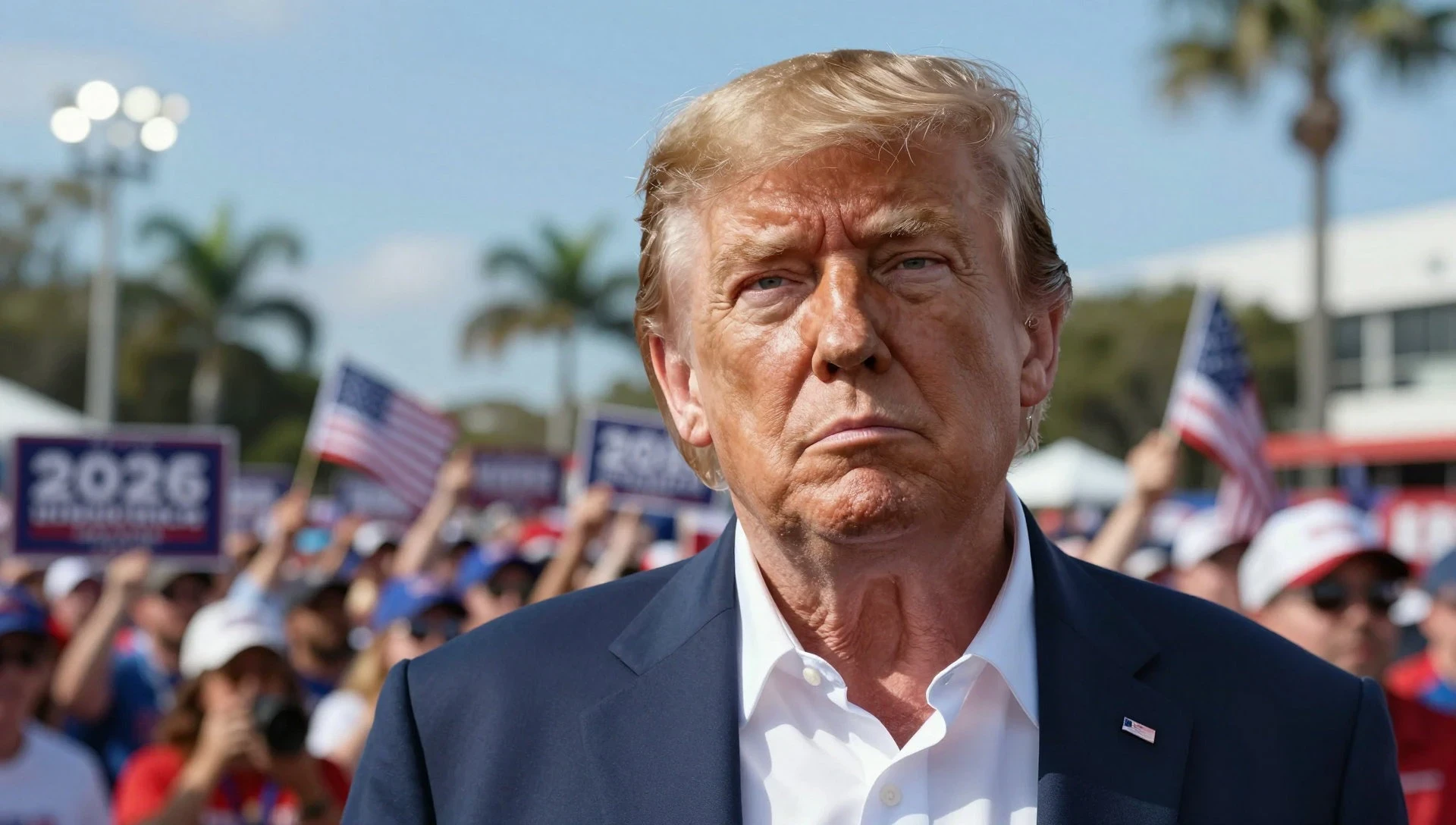
The 2026 Florida gubernatorial contest has become an instructive case study in the evolving rhetoric of American electoral politics, particularly regarding the strategic utility of personal invective. David Jolly, a former Republican congressman now seeking the Democratic nomination for governor, publicly responded to President Donald Trump's disparaging remarks at a Florida campaign rally, where the president stated that Jolly "was thrown out of the party like a dog."
Jolly's rebuttal, delivered during a CNN interview with Erin Burnett, reframed the exchange as evidence of a broader electorate fatigued by insult-driven discourse.
The episode merits scholarly attention because it illustrates a structural tension within contemporary political communication: the persistence of aggressive, personality-centered messaging at the elite level, juxtaposed against survey evidence suggesting diminishing voter tolerance for such tactics.
On This Page
- The Rhetorical Architecture of Political Insult
- Presidential Intervention in State-Level Contests
- Florida's Electoral Geography and the 2026 Midterms
- Voter Fatigue with Insult Politics: Evidence and Interpretation
- Party Realignment, Candidate Identity, and the Jolly Candidacy
- Media Framing, Source Reliability, and Analytical Caveats
Jolly characterized the president's Florida visit as an indicator of a competitive race, implying that incumbent-aligned forces perceive vulnerability in the state. His central claim—that voters believe politicians are "missing the point"—positions substantive governance concerns above performative antagonism.
This analysis examines the Jolly–Trump exchange through multiple analytical lenses: the rhetorical architecture of the insult, the strategic logic of presidential intervention in state contests, the electoral geography of Florida, and the evidentiary basis for claims of voter fatigue.
Each dimension is assessed with appropriate caution, given that the underlying source material derives from a single broadcast interview and that causal inferences about voter behavior remain provisional.
TL;DR David Jolly, a former Republican now pursuing the Democratic gubernatorial nomination in Florida, responded to President Trump's rally remark that he "was thrown out of the party like a dog" by arguing that voters are exhausted by insult politics and want substantive governance. The exchange illuminates broader questions about rhetorical strategy, presidential intervention in state races, and the contested evidentiary status of "voter fatigue" claims. This analysis situates the episode within scholarship on negative partisanship, realignment, and the 2026 midterm landscape, while qualifying inferences drawn from limited broadcast sourcing.
The Rhetorical Architecture of Political Insult
Political invective possesses a long and documented lineage in American electoral history, yet its contemporary form exhibits distinctive characteristics worthy of systematic examination. The phrase attributed to the president—that Jolly "was thrown out of the party like a dog"—operates through dehumanizing simile, framing party departure as expulsion rather than ideological migration.
Such constructions function rhetorically to delegitimize the target's agency and to reinforce in-group boundaries among the speaker's adherents.
Dehumanization and Boundary Maintenance
Scholarship on political communication has established that dehumanizing metaphors lower the perceived legitimacy of opponents and can, under certain conditions, normalize hostility toward out-partisans. The canine simile in question performs this function economically, requiring no policy argument and demanding no evidentiary support. Its efficacy depends on audience receptivity rather than factual accuracy, which renders it resistant to conventional rebuttal.
Jolly's response strategy is analytically notable because it declined to engage the metaphor on its own terms. Rather than contesting the expulsion narrative or defending his partisan trajectory, he redirected attention toward voter sentiment, asserting that citizens are "tired of insults."
This pivot constitutes a rhetorical reframing: the insult becomes evidence for the opponent's detachment rather than a challenge requiring personal defense.
The effectiveness of such reframing remains empirically uncertain. Experimental research on counter-messaging suggests that meta-commentary on incivility can resonate with persuadable voters while failing to penetrate strongly partisan audiences. Jolly's approach therefore targets a specific segment—the swing and independent electorate—rather than attempting to alter the attitudes of committed partisans on either side.
Historical comparison offers instructive context. Mid-twentieth-century campaigns frequently employed personal disparagement, yet the broadcast environment mediated its reach and intensity. Contemporary digital dissemination amplifies insult at near-zero marginal cost, compressing the interval between utterance and saturation.
This structural shift intensifies the salience of rhetorical aggression while simultaneously raising its cumulative cost among fatigue-sensitive voters.
The "Thrown Out Like a Dog" Construction
The specific formulation merits close reading. "Thrown out" implies involuntary exclusion and institutional rejection, while "like a dog" imports connotations of worthlessness and disposability. Together, the construction positions Jolly as an object of contempt rather than a political actor with a coherent record. The president's audience is invited to share in the dismissal.
From a strategic standpoint, the remark serves multiple functions simultaneously. It energizes the speaker's base through shared derision, signals party discipline to wavering officials, and frames Jolly's party switch as opportunistic rather than principled. Whether these functions translate into electoral advantage is a separate question that the available evidence cannot resolve definitively.
Jolly's counter-framing implicitly contests the premise that party departure constitutes betrayal. His political trajectory—from Republican congressman to Democratic gubernatorial candidate—can be narrated either as apostasy or as principled realignment, and the contest over that narrative is itself a central feature of the campaign. The insult attempts to foreclose the realignment reading.
Comparative analysis of party-switching candidates indicates that voter response depends heavily on perceived motivation. Switches attributed to conviction tend to be tolerated better than those attributed to opportunism. The president's remark constitutes an explicit attribution of the latter, and Jolly's response attempts to substitute a conviction narrative centered on voter priorities.
Audience Reception and Persuasion Limits
Claims regarding audience reception must be advanced cautiously, as the source material provides no polling data specific to this exchange. Jolly's assertion that voters are "tired of insults" functions as a characterization of electorate sentiment rather than a measured finding. It may reflect genuine signal from constituent contact, or it may constitute strategic framing.
Survey research on political incivility offers qualified support for the fatigue hypothesis. Multiple studies report that substantial majorities of respondents express disapproval of personal attacks and preference for issue-focused discourse. However, stated preferences frequently diverge from revealed behavior, and incivility can increase engagement and turnout among certain segments.
The divergence between attitudinal and behavioral response constitutes a central methodological challenge for this analysis. Voters may disapprove of insults in the abstract while responding to them at the ballot box, or they may genuinely penalize candidates who employ them. The direction of effect likely varies by context, partisanship, and salience.
Jolly's strategic bet is that the 2026 environment rewards substantive framing over performative conflict. This bet is testable only through electoral outcomes, and the available evidence permits neither confirmation nor refutation.
The analytical posture appropriate to this stage is therefore conditional: if fatigue is electorally consequential, the reframing strategy should yield measurable benefit.
Historical Precedents and Comparative Cases
American political history contains numerous instances in which insult-based campaigns encountered electoral resistance. The 1964 and 1996 cycles, among others, saw candidates penalized for perceived excess in personal attack. These precedents suggest that rhetorical aggression carries risk when it exceeds audience tolerance thresholds, though thresholds are context-dependent.
Conversely, recent cycles demonstrate that candidates employing aggressive rhetoric have achieved substantial electoral success, complicating any simple narrative of voter rejection. The relationship between incivility and electoral outcome appears non-linear and mediated by factors including economic conditions, incumbency, and media framing. Generalization from single cases is therefore hazardous.
The Florida case is further complicated by the state's distinctive political geography. Florida combines a large retiree population, significant Hispanic and Black electorates, and a substantial independent registration, producing a heterogeneous audience with divergent tolerance for confrontational rhetoric. A message effective with one segment may alienate another.
Comparative international evidence offers limited guidance, as institutional and cultural differences constrain transferability. Nonetheless, the general finding that negative campaigning exhibits diminishing returns beyond a saturation point appears reasonably robust across democracies. Jolly's fatigue claim implicitly invokes this saturation logic.
Presidential Intervention in State-Level Contests
The president's decision to appear at a Florida rally and to direct explicit criticism at a gubernatorial candidate raises questions about the strategic calculus of national intervention in subnational races. Such interventions historically occur when national actors perceive state outcomes as consequential for their broader coalition or legislative agenda. The Florida visit, as characterized by Jolly, signals perceived competitiveness.
The Strategic Logic of Presidential Visits
Presidential travel to state contests serves multiple functions: fundraising, turnout mobilization, and narrative setting. When a president attacks a specific candidate by name, the intervention elevates that candidate's profile while simultaneously framing the race as a referendum on national leadership. This dual effect can benefit either party depending on local conditions.
Jolly's interpretation—that the visit demonstrates the race is close—reflects a plausible strategic inference. Incumbents typically allocate scarce political capital to contests perceived as competitive or symbolic. A presidential visit to Florida therefore constitutes a signal, however imprecise, that internal assessments identify vulnerability or opportunity in the state.
The reliability of such signals is contested. Presidential visits also serve donor cultivation and media coverage objectives that may be only loosely correlated with electoral competitiveness. The inference that a visit proves closeness is therefore suggestive rather than conclusive, and should be treated as a hypothesis rather than an established fact.
Midterm dynamics further complicate interpretation. The president's party historically faces headwinds in midterm cycles, and gubernatorial contests often nationalize to a degree that reflects federal approval ratings. Florida's status as a large, demographically complex state amplifies its symbolic value beyond its immediate electoral weight.
Federalism and the Nationalization of Governors' Races
Gubernatorial races have undergone measurable nationalization over recent decades, with voters increasingly evaluating state candidates through federal partisan lenses. This trend enhances the relevance of presidential intervention while simultaneously reducing the weight of state-specific qualifications. Jolly's candidacy sits at the intersection of these dynamics.
The nationalization thesis finds support in correlation between gubernatorial outcomes and presidential approval, though the relationship varies by state and cycle. In Florida, a state with competitive statewide elections, national currents may be decisive in close races. Local factors nonetheless retain capacity to shift outcomes at the margin.
Jolly's rhetorical emphasis on voter fatigue with insults can be read as an attempt to de-nationalize the contest—to shift evaluation from federal partisan identity toward temperament and governance style. Whether such de-nationalization is achievable in a media environment saturated with national framing remains an open empirical question.
Federalism provides the institutional context within which these strategic choices occur. Governors possess substantial policy authority over education, health administration, and emergency management, rendering state contests substantively consequential. This substantive stake supports arguments that voters should weigh state-specific considerations, though behavioral evidence suggests federal cues often dominate.
Case Selection and Signal Interpretation
The selection of Florida for presidential attention is consistent with its status as a perennial battleground. Its electoral vote allocation, population growth, and demographic diversification make it a bellwether in national calculations. Intervention there carries implications beyond the state's borders, signaling priorities to national audiences.
Signal interpretation requires caution because observed interventions are endogenous to strategic assessment. Presidents visit states they believe they can influence, which means the set of visited states is not a random sample. Inferring competitiveness from visit frequency therefore risks selection bias, a methodological caveat that qualifies Jolly's inference.
Within the available evidence, the most defensible conclusion is modest: the president's Florida appearance is consistent with, but does not establish, a competitive race. Additional indicators—polling, fundraising, and candidate recruitment—would be required to support stronger inferences. The source material does not supply these indicators.
Comparative analysis of presidential midterm travel patterns suggests that visits cluster in states with competitive Senate and gubernatorial contests. Florida's inclusion in this cluster is unremarkable and conveys limited incremental information. The analytical value of the visit lies less in its signaling function than in the rhetorical exchange it generated.
Institutional Stakes and Policy Consequences
Gubernatorial authority encompasses appointment powers, budget formulation, and veto authority, rendering the office substantively significant for policy outcomes. In Florida, issues including insurance regulation, environmental management, and education governance fall within gubernatorial purview. These stakes justify analytical attention beyond horse-race coverage.
Jolly's framing emphasizes that voters care about governance rather than insult, implicitly linking his candidacy to substantive policy competence. This linkage, if credible to voters, could differentiate him within a crowded primary field. Credibility depends on demonstrated expertise and coherent policy positions, which the source material does not detail.
The institutional stakes also shape presidential incentives. A governor aligned with the president can facilitate administrative coordination; an opposed governor can resist federal initiatives. This alignment logic explains why presidents invest in gubernatorial contests even when direct federal authority is limited. The Florida race fits this pattern.
Policy consequences extend to electoral administration, which governors influence through appointment and certification authority. In an era of heightened scrutiny of election procedures, gubernatorial control carries heightened salience. This dimension likely informs strategic calculations on both sides, though it remains implicit in the public exchange.
We Also Published
Florida's Electoral Geography and the 2026 Midterms
Florida's electoral geography resists simple characterization, combining Republican strength in northern and central regions with Democratic concentration in the southeast and urban centers. Statewide outcomes depend on turnout differentials and the behavior of a substantial independent and Hispanic electorate. These structural features shape the strategic environment within which Jolly competes.
Demographic Composition and Partisan Lean
The state's population includes significant retiree, Cuban-American, Puerto Rican, and African-American communities, each with distinct political preferences and turnout patterns. This heterogeneity renders statewide messaging inherently difficult, as appeals effective with one segment may alienate another. Jolly's anti-insult framing must navigate this complexity.
Recent electoral results indicate a Republican lean in statewide contests, though margins have fluctuated. Democratic performance has depended on mobilizing low-propensity voters and winning independent support. The 2026 environment, shaped by federal approval and economic conditions, will condition whether these patterns persist or shift.
Demographic change constitutes a slow-moving variable with uncertain partisan implications. In-migration from other states has altered registration balances, though the partisan composition of newcomers remains debated. Analysts should therefore treat projections of demographic destiny with appropriate skepticism, as the empirical record offers mixed support.
Jolly's candidacy introduces an additional variable: his Republican pedigree may appeal to crossover voters while complicating primary support among Democratic activists. This dual constituency problem is characteristic of party-switching candidates and requires careful rhetorical management. His emphasis on voter fatigue may serve as a unifying theme across both audiences.
Primary Dynamics and Coalition Management
Democratic primaries in Florida have historically featured competition between moderate and progressive factions, with turnout often decisive. A former Republican must establish credibility with activists who may view the switch with suspicion. Endorsements, fundraising, and debate performance typically determine whether such candidates achieve viability.
The source material does not specify Jolly's primary opponents or polling position, limiting analytical precision. What can be observed is his strategic choice to emphasize temperament and voter sentiment rather than ideological positioning. This choice suggests an attempt to occupy a broadly appealing space while avoiding factional litmus tests.
Coalition management requires balancing mobilization of the base against persuasion of swing voters. Insult-based attacks from opponents can complicate this balance by forcing responses that alienate one segment or the other. Jolly's reframing strategy attempts to convert such attacks into evidence for his central message, a maneuver with both upside and risk.
The risk lies in appearing to prioritize process over substance. Voters who prioritize policy outcomes may find anti-insult messaging insufficiently concrete. Jolly's success likely depends on pairing temperament appeals with credible policy commitments, which the available source material does not detail.
Turnout, Mobilization, and Message Saturation
Midterm turnout in Florida has varied substantially across cycles, with gubernatorial contests generally attracting higher participation than off-year federal races. Mobilization infrastructure—party organizations, unions, and advocacy groups—plays a decisive role in converting message into votes. Jolly's campaign must compete for these scarce resources.
Message saturation constitutes a relevant constraint. In a media market as expensive and fragmented as Florida's, candidates face high costs to achieve visibility. Insult-driven exchanges generate earned media that amplifies reach at low cost, which may explain their persistence despite elite disapproval. Jolly's reframing attempts to capture this earned media on favorable terms.
The relationship between earned media and persuasion is not straightforward. Attention does not guarantee agreement, and hostile coverage can mobilize opposition. Candidates therefore face a trade-off between visibility and control, and Jolly's strategy implicitly accepts this trade-off in exchange for thematic consistency.
Turnout effects of negative campaigning remain contested in the literature, with studies reporting both demobilizing and stimulating effects depending on target and context. This uncertainty counsels against confident predictions regarding the electoral consequences of the exchange. The appropriate conclusion is conditional and provisional.
Competitiveness Assessment and Evidentiary Limits
Assessing Florida's competitiveness requires polling, fundraising, and historical baseline data that the source material does not provide. Jolly's assertion that the race is close constitutes a strategic claim as much as an empirical observation. It may reflect internal polling or may serve to attract resources and attention.
Analysts should therefore treat competitiveness claims with methodological caution. The most defensible approach is to triangulate multiple indicators, including public polling averages, candidate quality assessments, and national environment measures. None of these are available in the present source, limiting the strength of any conclusion.
What the episode does establish is that the race has attracted presidential attention and generated national media coverage, both of which are consistent with competitiveness. These are necessary but not sufficient conditions. The analytical posture appropriate here is one of qualified inference rather than confident assertion.
Comparative midterm analysis suggests that gubernatorial contests in large swing states often tighten as election day approaches, reflecting increased information and partisan consolidation. Whether Florida will follow this pattern in 2026 cannot be determined from the available evidence, and predictions should be advanced with explicit uncertainty.
Voter Fatigue with Insult Politics: Evidence and Interpretation
The proposition that voters are exhausted by insult-driven politics has intuitive appeal and partial empirical support, yet it requires careful qualification. Survey research consistently finds that majorities express disapproval of personal attacks, but behavioral evidence is more ambiguous. The gap between stated preference and revealed behavior constitutes the central analytical challenge for this claim.
Survey Evidence on Incivility Aversion
Experimental studies in political communication have documented that exposure to incivility can reduce trust in government and lower evaluations of the attacking candidate among some respondents. These effects appear strongest among individuals with low political engagement, who may be disproportionately persuadable. Such findings lend qualified support to Jolly's framing.
However, effect sizes are typically modest and heterogeneous across studies, and replication has been uneven. Meta-analytic work suggests that incivility effects depend on the target, the context, and the respondent's prior attitudes. Generalizing from laboratory findings to statewide electorates therefore requires substantial caution.
Survey measures of fatigue are also vulnerable to social desirability bias, as respondents may underreport tolerance for aggressive rhetoric. This measurement problem complicates inference from stated preferences to electoral behavior. The available evidence supports the existence of aversion but not its decisive electoral weight.
Jolly's claim that voters are "telling politicians that they are missing the point" implies an active signaling process through which constituents communicate priorities. This mechanism is plausible but difficult to verify without detailed constituent communication data, which the source material does not provide.
Behavioral Contradictions and the Engagement Paradox
A substantial body of research documents an engagement paradox: incivility can increase attention, sharing, and turnout among certain segments even as it repels others. This paradox helps explain the persistence of aggressive rhetoric despite widespread stated disapproval. Candidates face incentives that reward provocation even when audiences profess distaste.
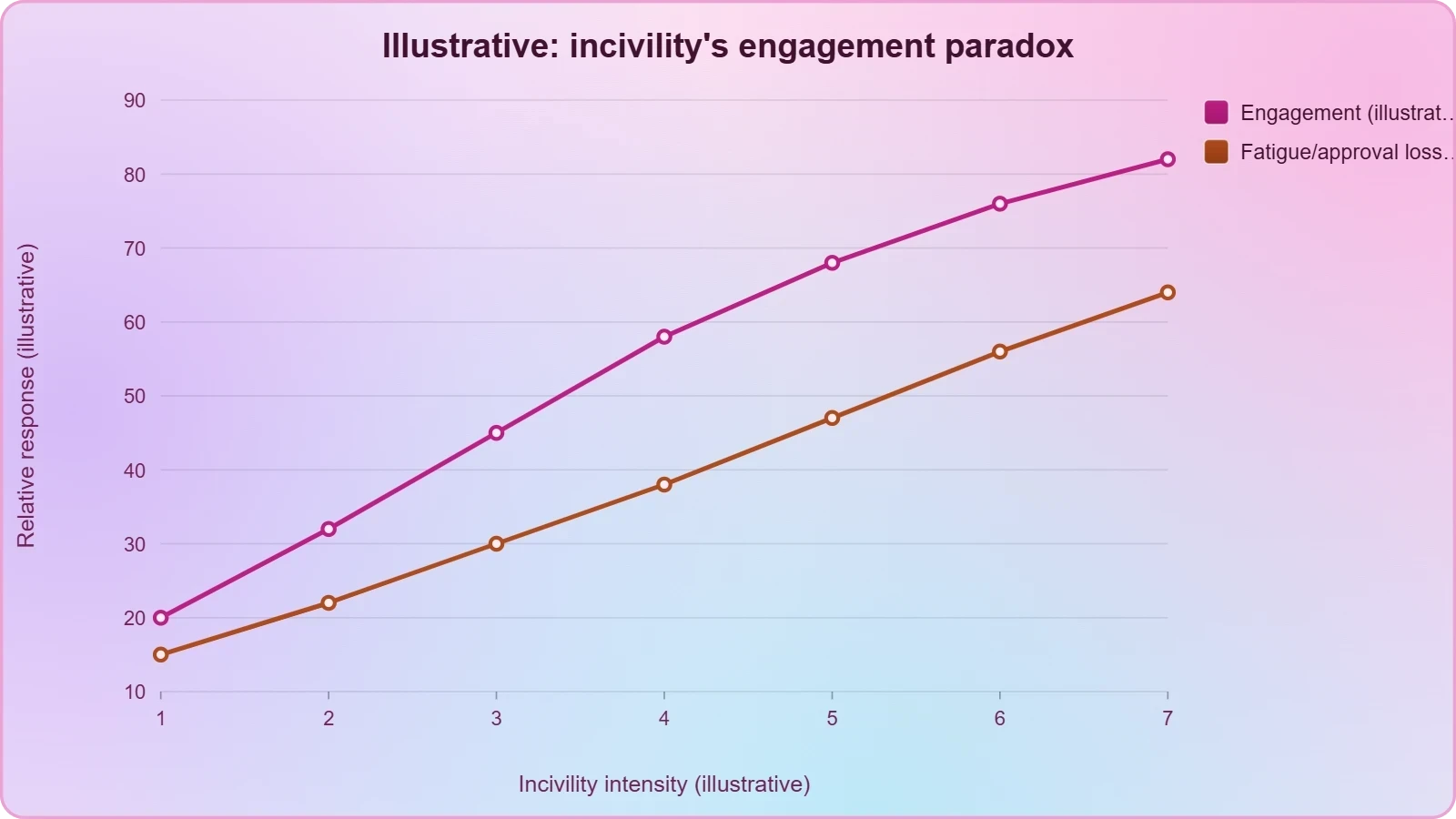
The paradox has distributional implications. If incivility mobilizes some voters while demobilizing others, its net effect depends on the relative size and intensity of these groups. In closely divided electorates, small differentials can be decisive, rendering the strategic calculus highly sensitive to context.
Jolly's strategy implicitly bets that the demobilized segment outweighs the mobilized segment in Florida's electorate. This bet is empirically testable but not yet tested. The appropriate analytical conclusion is that the strategy is plausible but unproven, and that its success depends on conditions not observable in the source material.
Behavioral contradictions also manifest in media consumption patterns. Outrage-driven content attracts engagement, which algorithms amplify, creating feedback loops that reward provocation. This structural feature of the information environment complicates efforts to reduce incivility through elite restraint alone.
Comparative Evidence from Other Democracies
International scholarship on negative campaigning offers mixed findings regarding electoral consequences. Some studies report backlash effects against attackers, while others find no significant penalty or even benefits under certain conditions. The divergence reflects differences in institutional context, media systems, and voter expectations.
Comparative analysis suggests that backlash effects are stronger when attacks violate established norms of appropriate conduct. In environments where incivility has become normalized, the marginal cost of additional aggression declines. This normalization dynamic may explain variation in voter tolerance across countries and time periods.
Applying comparative findings to the Florida case requires attention to scope conditions. The United States exhibits relatively high tolerance for confrontational rhetoric compared with many parliamentary democracies, which may attenuate backlash effects. Jolly's strategy therefore faces a higher evidentiary bar than comparative intuition might suggest.
Nonetheless, the comparative literature supports the general proposition that sustained incivility can erode electoral coalitions over time. The temporal dimension is critical: backlash may accumulate gradually rather than manifest immediately. Jolly's framing may therefore yield benefits that are difficult to detect in short-term polling.
- 01
- 02
- 03
- 04
Implications for Campaign Strategy
If voter fatigue is electorally consequential, campaigns should invest in substantive messaging and temperament appeals. Jolly's approach exemplifies this logic, positioning his candidacy as a departure from confrontational norms. Whether such positioning differentiates him sufficiently in a crowded field remains uncertain.
Strategic differentiation through temperament carries risks. Voters may perceive anti-insult messaging as evasive or as lacking substantive content. Effective execution requires pairing temperament appeals with concrete policy commitments that demonstrate governance competence. The source material does not indicate whether Jolly has made such commitments.
The strategic environment also constrains unilateral restraint. If opponents continue to employ aggressive rhetoric, a restrained candidate may cede attention and energy to adversaries. This collective action problem explains why incivility persists despite widespread disapproval, and it limits the viability of unilateral de-escalation strategies.
Jolly's reframing attempts to resolve this dilemma by converting opponents' aggression into evidence for his own message. This maneuver is rhetorically elegant but depends on audience receptivity and media amplification. Its success is therefore contingent rather than assured, and should be evaluated as a strategic hypothesis.
Party Realignment, Candidate Identity, and the Jolly Candidacy
David Jolly's political trajectory—from Republican member of Congress to Democratic gubernatorial candidate—exemplifies the fluidity of contemporary partisan alignment in certain segments of the electorate. His candidacy raises questions about the durability of partisan identity, the conditions under which realignment occurs, and the rhetorical resources available to candidates who cross party lines.
The Politics of Party Switching
Party switching by elected officials has occurred throughout American history, though its frequency and reception have varied. Switchers typically face suspicion from their new partisan allies and hostility from former colleagues. Successful transitions require careful narrative construction that frames the switch as principled rather than opportunistic.
Jolly's framing emphasizes voter priorities over partisan loyalty, positioning his switch as responsive to constituent concerns rather than personal advantage. This narrative aligns with broader patterns observed among switchers who emphasize policy disagreement over personal ambition. Its credibility depends on consistency between stated reasons and subsequent behavior.
Research on party switching suggests that electoral consequences depend heavily on the switcher's prior relationship with constituents and the perceived authenticity of the stated rationale. Switchers who maintain local credibility often survive; those perceived as opportunistic frequently do not. Jolly's emphasis on voter fatigue may serve to establish authenticity.
The president's remark that Jolly "was thrown out of the party like a dog" constitutes an attempt to impose an alternative narrative of involuntary expulsion. This framing contests Jolly's agency and frames the switch as rejection rather than choice. The contest between these narratives is central to the campaign's rhetorical dynamics.
Realignment Theory and Its Limits
Realignment theory posits that partisan coalitions undergo periodic, durable transformations in response to critical elections and social change. Contemporary evidence suggests that realignment may be occurring in a more gradual, uneven manner than classical theory anticipated. Jolly's trajectory can be read as a micro-level manifestation of these macro-level processes.
However, realignment theory has faced substantial criticism for its determinism and its difficulty accommodating recent volatility. The concept of dealignment—weakening partisan attachment—offers an alternative framework that may better explain individual-level switching. Both frameworks inform interpretation of the Jolly case, though neither provides definitive guidance.
The educational composition of the electorate has shifted in ways that complicate traditional partisan mappings, with college-educated suburban voters moving toward Democrats and non-college voters toward Republicans. Jolly's profile as a former Republican appealing to Democratic-leaning voters fits this realignment pattern, though individual cases cannot confirm structural trends.
Analysts should therefore treat the Jolly candidacy as illustrative rather than probative. It exemplifies dynamics that scholars have documented, but it does not by itself demonstrate the direction or magnitude of realignment. The appropriate inference is suggestive and conditional.
Authenticity and Credibility in Cross-Party Candidacies
Cross-party candidates face heightened authenticity scrutiny, as voters may question whether their conversion is genuine. Establishing credibility requires consistent messaging, transparent explanation of the switch, and demonstrated commitment to new partisan priorities. Jolly's emphasis on voter fatigue provides a coherent narrative that may satisfy these requirements.
Authenticity is also performative, involving signals that audiences interpret as evidence of sincerity. Such signals include willingness to criticize former allies, engagement with new constituencies, and consistency across time. The source material does not provide sufficient detail to assess Jolly's performance on these dimensions.
The credibility challenge is compounded by the polarized information environment, in which partisan media may frame switchers in sharply divergent terms. Jolly must navigate these divergent framings while maintaining a coherent public identity. His reframing strategy attempts to transcend partisan media narratives by appealing to cross-cutting fatigue.
Whether such transcendence is achievable remains uncertain. Research on selective exposure suggests that audiences gravitate toward congenial information, limiting the reach of cross-cutting appeals. Jolly's message may therefore reach primarily those already predisposed to accept it, constraining its persuasive potential.
Coalition-Building Challenges
Building a winning coalition as a party-switching candidate requires assembling disparate groups with potentially conflicting expectations. Former Republicans may expect moderation, while Democratic activists may demand progressive commitments. Managing these expectations requires rhetorical flexibility and policy positioning that satisfies multiple audiences simultaneously.
Jolly's anti-insult framing offers a unifying theme that avoids direct engagement with contentious policy disputes. This strategy may reduce friction in the short term while deferring difficult choices. Whether deferral is sustainable through a primary and general election remains an open question.
Coalition-building also requires resource mobilization, including fundraising and endorsements. Party-switching candidates often face initial skepticism from donors and activists, requiring demonstrated viability to attract support. The president's attack may paradoxically assist Jolly by raising his profile and signaling his competitiveness to potential supporters.
This paradoxical dynamic—where opposition attacks enhance a candidate's standing—is well documented in political science. It occurs when attacks come from figures disliked by the candidate's target audience, transforming criticism into a credential. Jolly's response implicitly leverages this dynamic by treating the president's remark as evidence of his own relevance.
Media Framing, Source Reliability, and Analytical Caveats
The evidentiary foundation for this analysis rests on a single broadcast interview reported by CNN, which introduces constraints that must be acknowledged explicitly. Broadcast interviews condense complex positions into brief segments, and reporting selects among many possible quotations. These selection processes shape the available evidence in ways that limit inferential confidence.
The Epistemics of Broadcast Sourcing
Television interviews operate under severe time constraints, compressing nuanced arguments into quotable fragments. The resulting record captures selected statements rather than complete positions, and analysts should treat such fragments as indicative rather than definitive. This constraint applies to both Jolly's remarks and the president's rally statement.
Reporting introduces an additional layer of selection, as journalists choose which quotations to emphasize and how to frame the exchange. CNN's framing emphasizes the insult and Jolly's response, which may or may not reflect the full range of relevant statements. Analysts should therefore seek corroborating sources where possible.
The source material does not include the full transcript of either the rally or the interview, limiting the precision of textual analysis. Claims about rhetorical strategy must therefore be advanced as interpretations of available fragments rather than as definitive readings of complete texts. This caveat qualifies all conclusions drawn here.
Verification of specific factual claims—such as the characterization of Jolly's party status—would require additional documentation beyond the broadcast segment. The available source is consistent with Jolly's public trajectory but does not independently establish every detail. Appropriate epistemic humility is therefore warranted.
Framing Theory and Interpretive Frameworks
Framing theory provides a useful lens for understanding how the exchange was presented to audiences. Frames select certain aspects of reality and make them salient, thereby guiding interpretation. The framing of the exchange as a contest between insult and substance constitutes one such interpretive structure, with implications for audience response.
Competing frames are available. The exchange could be framed as evidence of partisan dysfunction, as a strategic maneuver by both parties, or as a substantive debate about political conduct. Each frame highlights different features and supports different conclusions. Analysts should acknowledge the frame-dependence of their interpretations.
Media framing interacts with audience predispositions, as individuals interpret messages through prior beliefs and identities. The same broadcast segment may be received differently by different viewers, complicating any claim about its effects. This interaction effect is well documented and counsels against assuming uniform audience response.
The analytical framework adopted here—emphasizing strategic, institutional, and evidentiary dimensions—constitutes one of several possible approaches. Alternative frameworks, including psychological or cultural analysis, might yield different insights. Methodological pluralism is therefore appropriate when interpreting complex political exchanges.
Limits of Inference from Single Cases
Single-case analysis cannot establish general patterns, and the Jolly–Trump exchange should not be treated as representative of broader trends without additional evidence. Case studies illuminate mechanisms and generate hypotheses, but they do not confirm causal relationships. This limitation is fundamental and should be stated explicitly.
The case is nonetheless analytically valuable because it exhibits features of broader phenomena, including elite incivility, party switching, and voter fatigue discourse. These features connect the case to established research programs, enabling theoretically informed interpretation. The value lies in illustration rather than proof.
Comparative case selection could strengthen inference by identifying similar exchanges across contexts and assessing whether patterns recur. Such an approach exceeds the scope of the present analysis but represents a natural extension. Future research might pursue this comparative strategy systematically.
Within the constraints of single-case analysis, the most defensible conclusions concern mechanisms rather than magnitudes. The exchange illustrates how reframing can convert attacks into evidence, how presidential intervention signals competitiveness, and how party switching requires narrative management. These mechanisms are plausible and consistent with existing research.
Methodological Recommendations
Strengthening inference would require multiple data sources, including polling, fundraising records, and full transcripts. Triangulation across sources reduces reliance on any single report and enables more robust conclusions. The present analysis should therefore be read as a preliminary assessment rather than a definitive account.
Longitudinal tracking of the campaign would enable assessment of whether Jolly's reframing strategy yields measurable effects over time. Such tracking could examine message uptake, polling movement, and media coverage patterns. These indicators would provide stronger evidence than the single exchange analyzed here.
Experimental methods could test the persuasive effects of anti-insult messaging directly, isolating causal mechanisms from confounding factors. Such experiments would complement observational analysis and inform strategic assessment. The combination of methods would yield more reliable knowledge than either alone.
Finally, analysts should remain attentive to the distinction between strategic claims and empirical findings. Jolly's assertion that voters are tired of insults is a strategic claim that may or may not be accurate. Treating it as data rather than as a hypothesis would constitute a methodological error with substantive consequences.
From our network :
- The Hidden Cost of AI Convenience: Why Over-Permissioned Agents Are a Security Time BombDiscover why AI agents with excessive permissions create dangerous single points of failure, and learn how implementing least privilege principles can protect your organization from exploitation.
- The Final Descent: How ESA Retired the Legendary Cluster Constellation After 24 Years of Space Weather ScienceAfter 24 years mapping Earth’s magnetosphere, ESA’s Cluster mission concluded with a precisely controlled reentry over the South Pacific. This analysis explores the scientific legacy, engineering decisions, and debris mitigation principles behind one of space exploration’s most responsible retirements.
- Mobile Learning and VR in English: What Global Evidence Reveals About Effective Language TechnologyA systematic review across 14 countries reveals which language-learning technologies genuinely work. Mobile learning, AI, and VR show measurable benefits when pedagogically integrated. This evidence-based guide helps educators and learners select technology that delivers real return on investment.
- Committed Mediterranean Precipitation Decline: Why Emissions Cuts Alone Cannot Restore Winter RainsNew NOAA research reveals that Mediterranean winter rains may decline irreversibly even with emissions cuts. Explore the science of committed climate change and regional impacts.
- Forbidden Matrix Patterns and Visible Lattice Points: A Geometric DictionaryExplore how multidimensional 0–1 matrices encode geometric truths, linking forbidden patterns to visible lattice points and hypergraph theory, with applications in combinatorics and computational geometry.
- CISA’s Ten-Advisory Wave: Why Generic Patching Fails in OT and How to Build Product-Specific PlaybooksCISA released ten ICS advisories in one week, exposing critical infrastructure risks. Generic patching fails in OT. Learn to build product-specific remediation playbooks.
- How AI Agents Will Change the Way We Manage Personal FinancesExplore how AI agents are transforming personal finance through automated budgeting, bill payment, and investment management, while examining the critical security protocols and governance frameworks required for safe deployment.
- University Language Proficiency Exams: Why Institutional Tests Demand Different Preparation Than IELTS and TOEFLDiscover why university-specific language proficiency examinations differ fundamentally from IELTS and TOEFL, and learn strategic preparation approaches for institutional assessment success.
- Live Online English Classes for Kids: Do They Actually Reduce Anxiety?A ten-week study reveals that synchronous online English classes can significantly reduce child language anxiety while improving listening and reading skills. Discover what makes these programs effective and how parents can select the right one.
RESOURCES
- Florida Primary election results 2026: Alaska, Wyoming winnersms.nowAug 19, 2026 ... And in the state's gubernatorial race, GOP Rep. Byron Donalds, endorsed by President Donald Trump, will face Democrat David Jolly…
- DeSantis fatigue grows among Florida Republicans as 2024 ...theguardian.comJul 31, 2023 ... Governor trails Trump for his party's presidential nomination but there are signs that support is tailing off in his home…
- 2026 Theme Panels - APSA Connectconnect.apsanet.orgThe proposed roundtable brings together major theorists of civil disobedience, political protest, and resistance to discuss the specific challenges posed by ...
- Latest Breaking News Videos - Fox Newsfoxnews.comPolitics · Fox News Power Rankings shift as Trump, Vance make final midterm push · Trump rallies midterm voters in Texas ahead of Election…
- “Former congresswoman Stephanie Murphy leads the field with ...facebook.comJul 5, 2026 ... Florida governor 2026 election candidates. Florida Governor Race ... “The leading Democratic candidates for Florida governor, David Jolly ...
- house of representatives - Texas Legislature Onlinecapitol.texas.govJul 28, 2025 ... Redistricting should not be used as a tool to manipulate political outcomes or disenfranchise voters. Fair representation is a cornerstone…
- Florida FL News, Florida politics, Florida political news/newspapers ...sayfiereview.comVoted the Top Florida Political News site by Washington Post online readers; What Florida's Most Influential People Read Daily.
- - H. RES. 755, IMPEACHING DONALD JOHN TRUMP, PRESIDENT ...congress.gov... exhausted by the President's behavior. Another former Republican colleague of ours, David Jolly said, we have witnessed, quote, ``an impeachable moment.
- Florida Senate and Governor Races: Moody, Donalds Leadfacebook.comAug 10, 2026 ... The candidates running for Governor of Florida include Byron Donalds, Jay Collins, Paul Renner, David Jolly, Jerry Demings, Bobby Williams,…
- Meeting Public Comments - Iowa Legislaturelegis.iowa.govPlease vote no on vouchers. Support public school systems and give the funding they need to provide high quality education. Our tax money should…
- Sitemap - August 2026 - CNNcnn.comAug 31, 2026 ... 2026-10-22 Trump has stacked up 'emergency' wins at the Supreme Court; 2026-10-18 The Detour with David Chang; 2026-10-17 A Black…
- Florida Phoenixfloridaphoenix.com... Democratic gubernatorial candidate David Jolly speaking at the Tampa Tiger ... campaign for Florida governor. It comes less than two full weeks before…
- Oct. 22 – Death Penalty News and Updates - People.SMUpeople.smu.edu5 days ago ... The jury recommended death for Susan's murder by a vote of 9-3 and for Michael's murder by a vote of…
- Mike Lindell Calls Out Trump for Seemingly Low Energy - Mediaitemediaite.com7 days ago ... The longtime election denialist took questions during the call, which was shared online by Minnesota native and viral clipper Aaron…
- Sitemap - July 2026 - CNNcnn.comJul 31, 2026 ... CNN Site Map · Years 2026July. Date Title. 2026-10-21 Fail Better With David Duchovny ...
- 01
- 02
- 03
- 04
- 05
- 06
- 07
- 08
0 Comments