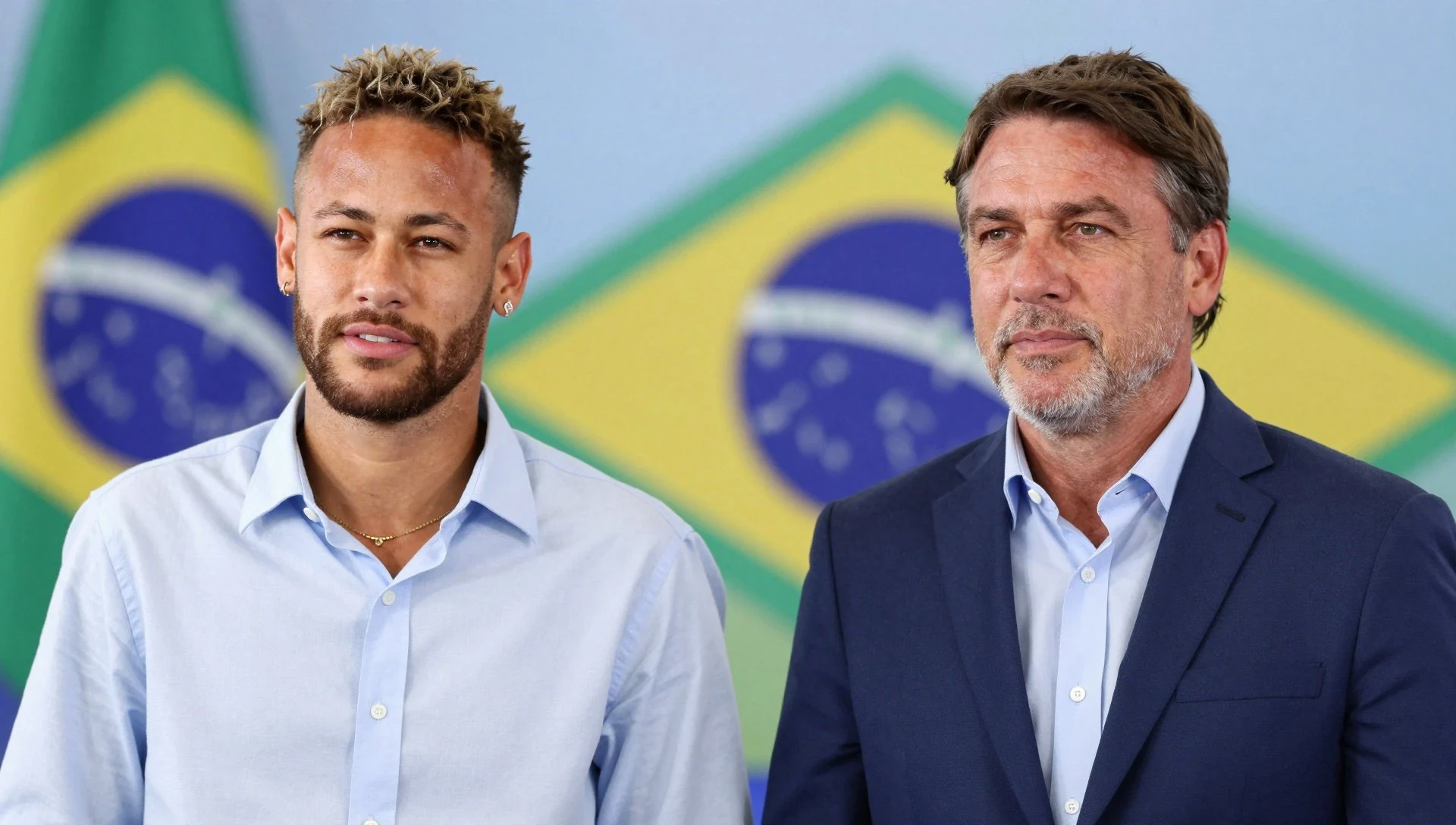
The endorsement of a political candidate by a sporting celebrity constitutes a distinct communicative act within contemporary electoral competition, one in which symbolic capital is converted into partisan signalling through deliberately ambiguous rhetorical devices.
In the Brazilian case examined here, the footballer Neymar publicly aligned himself with Senator Flávio Bolsonaro on the eve of a closely contested presidential runoff against the incumbent, Luiz Inácio Lula da Silva.
The intervention was not framed as a conventional policy endorsement; rather, it was encoded within a football-themed exchange that permitted plausible deniability while transmitting an unmistakable electoral cue to a mass audience.
On This Page
- The Political Context of the Brazilian Runoff
- The Semiotics of the Football-Themed Endorsement
- Empirical Questions: Do Celebrity Endorsements Move Votes?
- Ethical and Regulatory Dimensions of Celebrity Political Speech
- Comparative Perspectives and Analytical Synthesis
- Implications for Democratic Communication and Future Research
This analysis situates the episode within the broader literature on celebrity political endorsement, examining the mechanisms through which high-visibility figures influence voter perception in polarised democracies. Particular attention is devoted to the semiotic structure of the endorsement itself, the strategic function of deniability, and the empirical uncertainty surrounding the measurable electoral effect of such interventions.
The Brazilian case is instructive precisely because it compresses several recurring features of mediated political communication into a single, widely circulated artefact.
Evidence drawn from comparative electoral research suggests that celebrity endorsements rarely operate through direct persuasion of undecided voters; instead, they function as identity cues that activate existing partisan attachments and increase the salience of electoral participation among aligned constituencies.
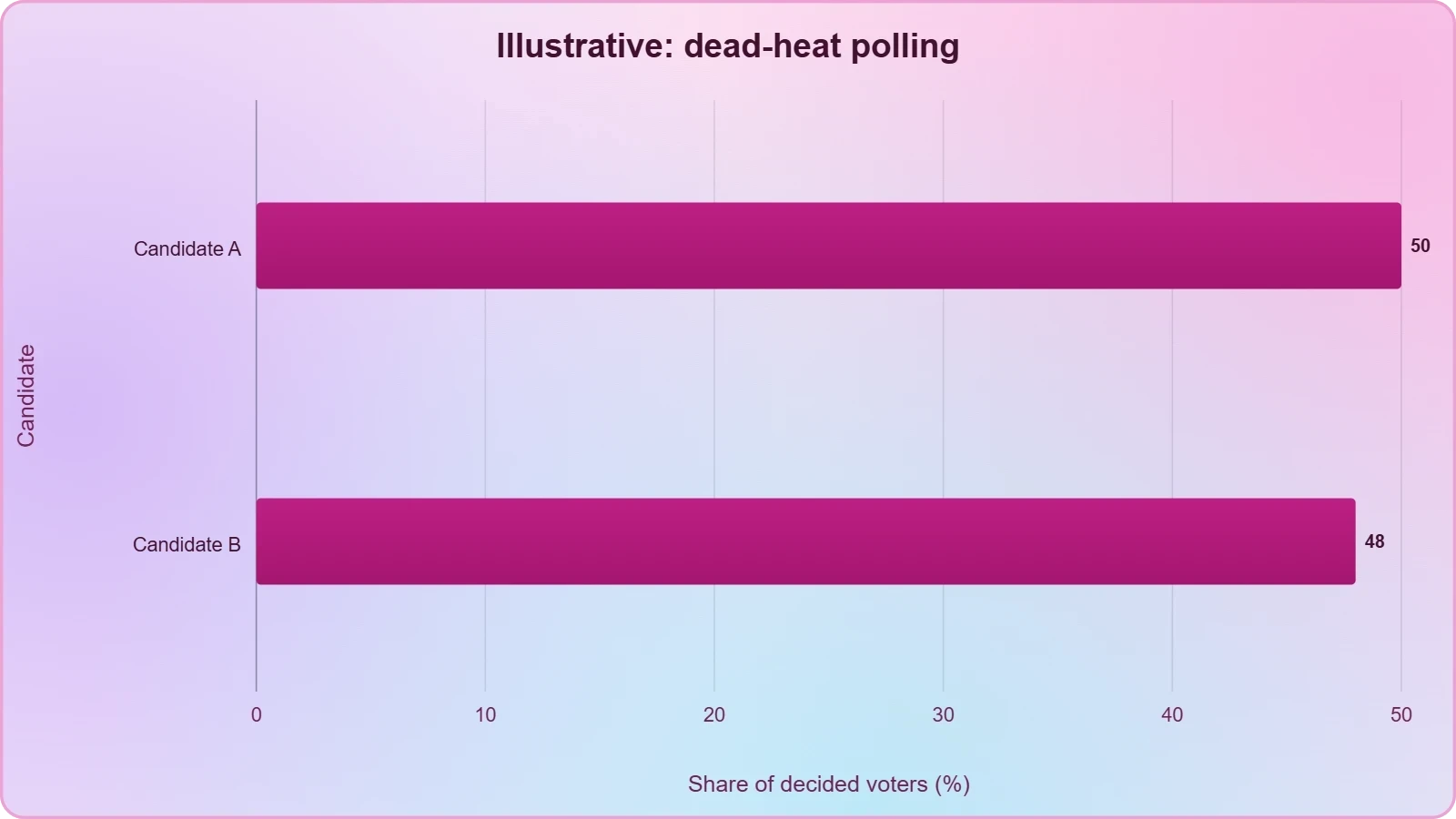
The Neymar intervention appears consistent with this model, given that polls indicated a statistical dead heat between the two candidates before the vote. The following sections examine the episode's context, its communicative architecture, and its implications for democratic contestation.
TL;DR Neymar's public alignment with Flávio Bolsonaro before Brazil's presidential runoff illustrates how celebrity endorsement operates as an identity cue rather than a persuasive argument. The endorsement was delivered through a football-themed exchange that supplied plausible deniability while transmitting an unambiguous ballot signal. Polls indicated a statistical dead heat, heightening the salience of any intervention capable of mobilising aligned constituencies. The episode raises substantive questions about the measurement of endorsement effects, the ethics of deniability, and the structural conditions under which symbolic capital converts into electoral influence in polarised democracies.
The Political Context of the Brazilian Runoff
The Brazilian presidential runoff of October 2026 represented a contest of exceptional polarisation, pitting the incumbent leftist president against a right-wing senator whose political lineage is inseparable from the preceding administration.
Polling aggregates indicated a statistical dead heat, a condition that magnifies the perceived value of any late intervention capable of shifting marginal constituencies. In such environments, the marginal utility of a single high-salience endorsement increases substantially, even where the underlying persuasive effect remains empirically uncertain.
Electoral Polarisation and the Structure of the Contest
Brazilian electoral competition has exhibited pronounced affective polarisation over successive cycles, with partisan identities increasingly aligned with regional, generational, and religious cleavages. This configuration reduces the proportion of genuinely persuadable voters and elevates the strategic importance of turnout differentials among committed supporters.
Consequently, interventions that raise the salience of the contest among aligned but disengaged constituencies may exert greater aggregate effect than attempts to convert opponents.
The runoff format itself concentrates attention on a binary choice, compressing the multi-candidate field of the first round into a single adversarial pairing. This structural feature tends to intensify negative partisanship, whereby voters are mobilised principally by opposition to the alternative rather than by affirmative attachment to their preferred candidate.
The resulting dynamics reward communicative acts that reinforce in-group identity and signal tribal alignment with minimal substantive content.
Comparative scholarship on runoff elections indicates that late-breaking interventions can prove decisive where the margin of victory falls within the sampling error of pre-election polls. The Brazilian contest, characterised by a dead heat in the final polling wave, therefore constituted precisely the type of environment in which a salient celebrity cue might plausibly alter participation rates. Whether such an alteration occurred remains, however, a matter of inference rather than direct measurement.
The institutional context further conditions the reception of celebrity interventions. Brazil's highly mediated public sphere, characterised by pervasive social media penetration and a fragmented but intensely engaged political audience, provides favourable conditions for rapid dissemination of symbolic cues.
The Instagram video format, in particular, enables direct transmission to mass audiences without journalistic mediation, thereby circumventing the interpretive filters of the traditional press.
The Bolsonaro Political Dynasty and Dynastic Endorsement
The Bolsonaro political project has functioned as a dynastic enterprise, in which familial succession operates as a mechanism for consolidating and transmitting partisan loyalty across electoral cycles. Flávio Bolsonaro's candidacy therefore carried an implicit association with his father's prior presidency, an association that structured both elite coalition behaviour and mass voter perception.
Celebrity endorsements directed at the family thus acquire a cumulative, lineage-based character rather than a purely individual one.
Neymar's earlier endorsement of the former president established a documented prior alignment, which lends the current intervention a quality of continuity rather than novelty. This temporal dimension matters analytically, because repeated endorsements by the same figure generate expectations of consistency that constrain subsequent behaviour and amplify the informational content of any new signal. The endorsement thereby functions as confirmation of an established alignment rather than as a fresh revelation.
Dynastic political brands exhibit distinctive vulnerabilities as well as strengths. They benefit from name recognition and inherited networks, yet they remain exposed to reputational contagion from the prior generation's controversies.
In this configuration, celebrity endorsements may serve a compensatory function, importing cultural prestige from outside the political field to offset reputational liabilities inherited within it.
The comparative literature on political dynasties suggests that familial succession tends to depress internal party competition while simultaneously raising the stakes of general-election contests. Where a dynasty's brand is strongly polarising, as in the Brazilian case, endorsements from culturally prominent figures operate less as persuasion than as mobilisation signals directed at already-aligned constituencies. The strategic logic is therefore one of activation rather than conversion.
Timing, Salience, and the Late-Intervention Calculus
The timing of the intervention, occurring on the Friday preceding a Sunday vote, conforms to a recognisable pattern in electoral communication whereby late messages exploit the reduced availability of counter-argument.
Within this window, the capacity of opponents and media to rebut or contextualise a message is structurally constrained, and the message's salience relative to competing information is correspondingly elevated.
Behavioural research on recency effects indicates that information encountered shortly before a decision exerts disproportionate influence on judgement, particularly where the decision is low-information or identity-driven. The late endorsement therefore exploits a well-documented cognitive asymmetry, though the magnitude of its aggregate electoral consequence remains difficult to isolate from concurrent campaign activity.
Salience, moreover, is not merely a function of timing but of the density of competing messages within the information environment. In a saturated media landscape, a message that is novel, visually distinctive, or emotionally resonant may achieve disproportionate reach.
The football-themed format of the endorsement satisfied each of these criteria, enhancing its diffusion potential relative to conventional political advertising.
The strategic calculus of late intervention also involves risk management. An endorsement issued close to the vote limits the window during which the endorser's own reputation may be damaged by association, while still capturing the recency premium.
This asymmetry of exposure and benefit renders late endorsement an attractive option for celebrities whose commercial interests depend on maintaining broad public appeal.
We Also Published
The Semiotics of the Football-Themed Endorsement
The endorsement's communicative architecture merits close examination, because its meaning was conveyed through an indirect, game-like exchange rather than through explicit political statement. In the circulated video, a right-wing legislator posed a sequence of football-related questions whose numerical answers converged on the candidate's ballot number.
This structure constitutes a form of enthymematic communication, in which the audience supplies the concluding inference that the speaker declines to state explicitly.
Numerical Encoding and the Ballot Number
The exchange proceeded by eliciting the endorser's former jersey number, eleven, and then requesting its doubling, yielding twenty-two, which corresponded to the candidate's electoral number. The numerical progression functions as a cipher, transforming an apolitical football reference into a precise electoral instruction. Such encoding exploits the audience's familiarity with both football numerology and the ballot numbering system.
Electoral numbering systems, where they exist, provide a ready-made vocabulary for covert political communication, since numbers are simultaneously banal and electorally meaningful. The doubling operation adds a layer of playful indirection that renders the message deniable while preserving its denotative clarity for the intended audience. The device is therefore both transparent and opaque, depending on the interpretive frame applied.
Semiotic analysis distinguishes between denotation, the literal content of a sign, and connotation, its associated meanings. Here the denotation is arithmetical and sporting, whereas the connotation is explicitly electoral.
The endorsement's efficacy depends on the audience's capacity and willingness to perform the connotative inference, a capacity that is unevenly distributed across the electorate and concentrated among politically attentive viewers.
The numerical device also generates a memorable, shareable artefact, enhancing the message's viral potential within social media ecosystems. Memorability is a precondition of diffusion, and the puzzle-like structure of the exchange invites commentary, replication, and contestation, each of which extends the message's reach. The form of the endorsement is thus integral to its function.
Plausible Deniability as Strategic Communication
The accompanying claim that the exchange concerned football rather than politics constitutes a strategic invocation of plausible deniability, a communicative manoeuvre that preserves the sender's capacity to disavow partisan intent. Such deniability is valuable where explicit political endorsement risks alienating segments of a commercially valuable audience. The device thus reconciles partisan signalling with reputational protection.
Deniability operates through the maintenance of an interpretive gap between the literal content of a message and its intended meaning, allowing the sender to occupy whichever interpretation proves advantageous. In mediated environments characterised by audience fragmentation, this flexibility permits simultaneous communication to different constituencies without incurring the costs of explicit contradiction. The technique is well documented in studies of dog-whistle politics.
Critically, deniability is not equivalent to ambiguity of effect; audiences frequently decode intended meanings with considerable accuracy, particularly where shared cultural knowledge supplies the interpretive key. The efficacy of the manoeuvre therefore depends less on genuine uncertainty than on the social costs of challenging the stated framing. Where contestation is costly, deniability functions as a shield irrespective of its plausibility.
The strategic value of deniability is heightened in jurisdictions with regulated political advertising, where explicit endorsements may trigger disclosure or spending obligations. Indirect communication may circumvent such requirements, raising questions of regulatory adequacy. The Brazilian case thus intersects with broader debates concerning the governance of informal political communication in digital environments.
Celebrity Capital and the Conversion of Sporting Prestige
Neymar's status as Brazil's all-time leading international goalscorer confers a form of symbolic capital rooted in demonstrated excellence and national representation. This capital is convertible, within limits, into political influence, because audiences transfer affective attachment from the sporting domain to associated political objects. The conversion is neither automatic nor complete, but it constitutes a recognised mechanism of celebrity politics.
The sociological literature on celebrity draws a distinction between achieved and ascribed status, with sporting celebrities exemplifying the former through verifiable performance. Achieved status may confer greater credibility in domains perceived as meritocratic, though it does not necessarily transfer to complex policy questions. The endorsement's force therefore derives from identity affinity rather than from epistemic authority.
Commercial considerations condition the deployment of celebrity capital, since athletes' endorsement value depends on maintaining broad, cross-partisan appeal. Overt political alignment risks alienating segments of the consumer base, which may explain the preference for indirect signalling. The deniable format thus represents a rational accommodation between political preference and commercial interest.
The retirement of the endorser from international competition in July 2026, following a World Cup defeat, altered the temporal horizon of his public visibility. Continued domestic club participation sustains national prominence while reducing exposure to the reputational volatility associated with international tournaments.
This configuration may render political intervention less costly than it would be at the peak of an international career.
Empirical Questions: Do Celebrity Endorsements Move Votes?
The central empirical question concerns the causal effect of celebrity endorsement on electoral outcomes, a question that the comparative literature addresses with considerable methodological caution. Observational studies frequently report associations between endorsements and shifts in candidate preference, yet such associations are vulnerable to confounding by unobserved factors correlated with both endorsement decisions and electoral dynamics. Rigorous identification therefore requires quasi-experimental designs.
Evidence from Comparative Electoral Research
Natural experiments exploiting the staggered timing of celebrity endorsements have produced mixed findings, with estimated effects ranging from negligible to modestly positive depending on context and outcome measure. Effects appear more pronounced for turnout among aligned constituencies than for preference switching among undecided voters. This pattern is consistent with the identity-cue model of endorsement effects.
Meta-analytic syntheses of endorsement research indicate substantial heterogeneity across studies, attributable to variation in celebrity type, electoral context, and measurement strategy. The evidence base remains thinner for emerging democracies with high social media penetration, where the mechanisms of influence may differ from those documented in established democracies. Generalisation from the existing literature to the Brazilian case therefore requires qualification.
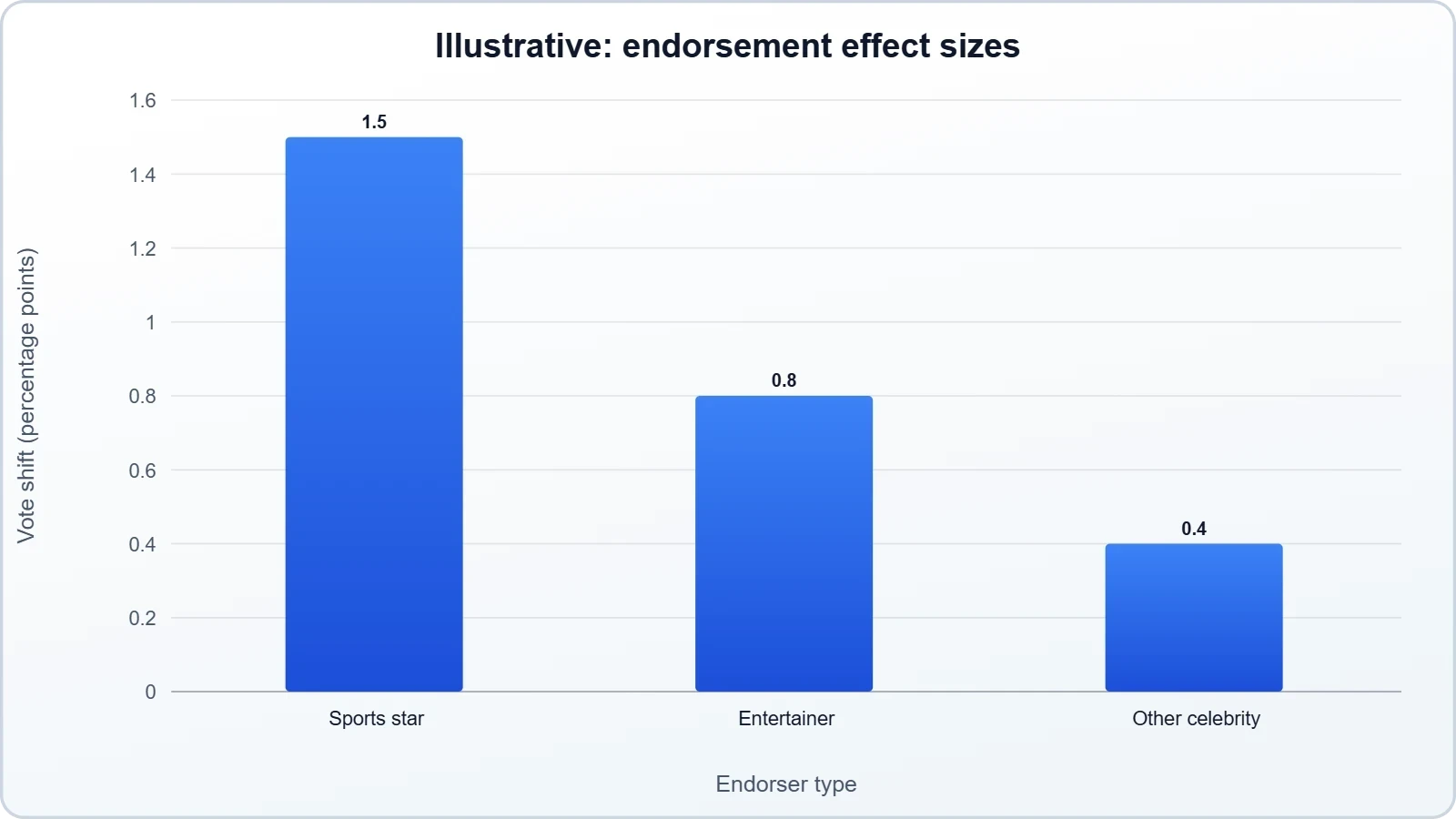
Measurement challenges compound the inferential difficulties, since endorsement effects are typically small relative to sampling error in pre-election polls. Detecting such effects requires large samples and precise outcome measurement, conditions rarely satisfied in the fast-moving environment of a late campaign. Consequently, claims of decisive endorsement effects should be treated with appropriate scepticism.
Where effects are detected, they appear conditional on the endorser's credibility with the target audience and the salience of the endorsed candidate's identity. Endorsements that reinforce existing predispositions are more reliably effective than those that attempt to alter them.
The Neymar intervention, directed at an already-aligned constituency, therefore falls within the category of interventions most likely to register measurable effects on participation.
Methodological Constraints and Causal Inference
Causal inference in this domain confronts the fundamental problem that endorsement decisions are endogenous to electoral dynamics, being more likely where the endorser expects the endorsed candidate to prevail. This selection effect biases naive estimates upward, inflating the apparent influence of endorsements. Credible identification therefore requires instruments or natural experiments that isolate exogenous variation in endorsement timing or occurrence.
Survey experiments offer an alternative identification strategy, randomly assigning exposure to endorsement messages and measuring subsequent attitudes. Such designs possess strong internal validity but limited external validity, since laboratory exposure differs substantially from the noisy, contested information environments of actual campaigns. Triangulation across designs is therefore necessary for robust inference.
Aggregate-level analyses exploiting variation in media markets or social media penetration provide a third approach, though they remain vulnerable to unobserved heterogeneity across units. The combination of methods, each with distinct weaknesses, permits cautious convergence on conclusions where findings align. In the present case, the available evidence does not permit confident estimation of the endorsement's specific effect.
Digital trace data, including engagement metrics and sharing patterns, offer novel measurement opportunities but capture attention rather than persuasion. High engagement may indicate resonance with already-committed audiences rather than conversion of the uncommitted. The interpretation of such metrics therefore requires theoretical caution and corroboration from complementary sources.
Interpreting the Dead Heat
The statistical dead heat reported before the vote establishes the context within which any endorsement effect must be assessed, since small shifts in participation may prove decisive where margins are narrow. Under such conditions, even modest turnout effects among aligned constituencies could plausibly alter the outcome. The structural sensitivity of the contest thus amplifies the potential significance of marginal interventions.
However, the inference from potential to actual effect requires evidence that the endorsement in fact mobilised the relevant constituencies, which the available data do not establish. The dead heat is equally consistent with no endorsement effect whatsoever, given the multiplicity of concurrent campaign influences. Analytical restraint is therefore warranted in attributing causal significance to the intervention.
Polling aggregation itself carries uncertainty, with house effects, likely-voter modelling, and sampling variability each contributing to the reported margin of error. A dead heat in the aggregate may conceal substantial heterogeneity across subpopulations, including variation in the intensity of celebrity influence. Disaggregated analysis would be required to detect such heterogeneity.
The interpretation of close contests also involves psychological mechanisms, whereby perceptions of competitiveness may themselves mobilise participation irrespective of specific endorsements. The dead heat thus functions simultaneously as context and as cause, complicating the isolation of any single intervention's contribution. This reflexivity is characteristic of electoral environments and resists straightforward causal decomposition.
- 01
- 02
- 03
- 04
Ethical and Regulatory Dimensions of Celebrity Political Speech
The episode raises normative questions concerning the transparency of political communication and the adequacy of regulatory frameworks designed for an era of explicit, attributable advertising. Where endorsements are conveyed through deniable, entertainment-framed formats, existing disclosure requirements may fail to capture them. The resulting regulatory gap has attracted scholarly attention across comparative media law.
Transparency, Disclosure, and the Regulatory Gap
Electoral transparency regimes typically require the attribution of political advertising to identifiable sponsors, enabling voters to assess the source and motivation of persuasive messages. Indirect endorsements conveyed through entertainment formats may evade such attribution, depriving audiences of information relevant to evaluating the message. This evasion is not necessarily intentional but is structurally facilitated by the format.
Regulatory responses have varied across jurisdictions, with some authorities extending disclosure obligations to social media influencers and celebrity endorsers where content is deemed political. The effectiveness of such extensions depends on enforcement capacity and the clarity of threshold definitions. Ambiguous standards risk either over-inclusion of apolitical content or under-inclusion of disguised political speech.
The Brazilian case illustrates the difficulty of drawing boundaries between entertainment and political communication in a media environment where the two are increasingly fused. Football, as a domain of intense national affect, provides particularly fertile ground for such fusion. Regulatory frameworks must therefore grapple with the semiotic complexity of contemporary political messaging.
Scholars of platform governance have proposed algorithmic transparency and labelling requirements as partial remedies, though these address distribution rather than content. The fundamental challenge remains the identification of political intent in communicative acts whose meaning is deliberately indeterminate. Legal systems accustomed to explicit speech may struggle with such indeterminacy.
Democratic Legitimacy and the Role of Cultural Elites
Normative democratic theory offers divergent assessments of celebrity political engagement, with some accounts emphasising its potential to enhance participation and others warning of undue influence by unelected cultural elites. The tension reflects deeper disagreements about the appropriate boundaries between cultural and political authority in democratic societies. Neither position commands consensus in the literature.
Arguments in favour of celebrity engagement emphasise its capacity to reduce information costs and stimulate political interest among disengaged citizens, particularly younger cohorts. Against this, critics contend that celebrity influence privileges affective affinity over reasoned deliberation, potentially distorting collective decision-making. The empirical evidence bearing on these competing claims remains limited and context-dependent.
The Brazilian case adds a further dimension, given the historical association between football and national identity, which renders sporting figures uniquely positioned as symbols of collective belonging. Endorsements from such figures may carry weight that transcends ordinary celebrity, blurring the distinction between cultural and political representation. This blurring raises questions about the sources of democratic authority.
Ultimately, the legitimacy of celebrity political speech depends on the transparency of its conditions and the capacity of audiences to evaluate it critically. Where communication is deliberately opaque, the conditions for informed judgement are compromised.
The normative concern is therefore less with celebrity participation as such than with the communicative practices through which it is conducted.
Platform Dynamics and the Amplification of Symbolic Cues
Social media platforms constitute the primary infrastructure through which contemporary celebrity endorsements circulate, shaping both their reach and their interpretive framing. Algorithmic curation privileges content that generates engagement, and emotionally resonant, identity-affirming messages possess structural advantages within such systems. The endorsement's format was therefore well adapted to platform incentives.
The absence of journalistic mediation in direct-to-audience video distribution alters the conditions of reception, removing contextualising commentary that might otherwise frame the message critically. Audiences encounter the endorsement as an unmediated communication from a trusted figure, a condition that may enhance its persuasive force. This disintermediation is a defining feature of contemporary political communication.
Platform governance responses to political content have been inconsistent, with policies varying across jurisdictions and evolving over time. Where political advertising is restricted or labelled, indirect endorsements may escape classification, creating asymmetries in treatment. The resulting regulatory landscape is fragmented and poorly adapted to the semiotic complexity of contemporary messaging.
Computational amplification, including coordinated sharing and algorithmic promotion, may extend the reach of endorsements beyond organic diffusion. Distinguishing organic from coordinated amplification requires platform data that are rarely accessible to independent researchers. This opacity constrains the empirical study of contemporary endorsement dynamics.
Comparative Perspectives and Analytical Synthesis
Placing the Brazilian episode within a comparative frame reveals both its distinctive features and its participation in broader patterns of celebrity political engagement across democracies. Similar interventions have been documented in the United States, India, and various European states, though the institutional and cultural contexts differ substantially. Comparative analysis permits the identification of mechanisms that transcend particular cases.
Cross-National Patterns of Celebrity Endorsement
Cross-national research indicates that celebrity endorsements are most consequential in contexts characterised by high media fragmentation, low political knowledge, and strong affective polarisation. These conditions jointly increase reliance on heuristic cues and heighten the salience of identity-affirming signals. Brazil exhibits each of these features to a substantial degree.
The type of celebrity also conditions effects, with sports figures enjoying particular advantages in contexts where national sporting achievement is closely tied to collective identity. This association is especially pronounced in Brazil, where football functions as a domain of shared national meaning. The choice of a football-themed format therefore exploited a culturally specific resource.
Institutional variation in electoral systems shapes the strategic logic of endorsement, with majoritarian and runoff systems concentrating attention on candidate-level contests where individual endorsements are more legible. Proportional systems, by contrast, diffuse attention across party lists, potentially reducing the salience of individual endorsements. Brazil's runoff format thus heightened the legibility of the intervention.
Comparative evidence also suggests that the effectiveness of endorsements depends on the perceived authenticity of the endorser's commitment, with cynical or transactional endorsements proving less persuasive. The Neymar intervention's continuity with prior alignment may have enhanced its perceived authenticity among receptive audiences. This temporal consistency is a recurring feature of effective endorsements.
Synthesis: Symbolic Capital, Deniability, and Electoral Uncertainty
The analytical synthesis suggests that the endorsement operated through the conversion of sporting symbolic capital into an identity cue, delivered through a deniable format calibrated to platform dynamics and timed to exploit recency effects.
Each element of this configuration is individually documented in the literature; their combination in a single artefact is what renders the case instructive. The episode thus exemplifies the convergence of contemporary communicative practices.
The empirical uncertainty surrounding the endorsement's electoral effect should not be mistaken for evidence of inconsequence, since small effects may prove decisive in close contests. Conversely, the plausibility of effect should not be mistaken for its demonstration.
Analytical integrity requires maintaining the distinction between potential and actual influence, a distinction that the available evidence does not resolve.
The normative implications concern the transparency conditions under which democratic persuasion occurs, and the adequacy of regulatory frameworks designed for an earlier communicative era. Where endorsements are deliberately opaque, the informational basis for electoral judgement is attenuated. Addressing this attenuation requires regulatory innovation attentive to the semiotics of contemporary political communication.
Finally, the case illustrates the broader transformation of political communication in which the boundaries between entertainment, sport, and electoral contestation are increasingly porous. This porosity is neither inherently benign nor inherently corrosive; its consequences depend on the institutional and civic conditions within which it operates. The Brazilian episode invites sustained empirical attention to those conditions.
Implications for Democratic Communication and Future Research
The episode carries implications that extend beyond the immediate electoral contest, bearing on the conditions under which democratic persuasion occurs in digitally mediated environments. As the boundaries between entertainment and political communication continue to erode, the analytical tools developed for an earlier media era require substantial revision. The Brazilian case offers a productive site for such revision.
Agenda for Empirical Investigation
Future research should prioritise the development of identification strategies capable of isolating endorsement effects from concurrent campaign influences, including the exploitation of natural experiments and the design of field experiments embedded within actual campaigns. Such designs would substantially strengthen the evidence base. The methodological challenges are considerable but not insurmountable.
Disaggregated analysis of audience reception, attending to variation by age, region, and political attentiveness, would illuminate the heterogeneity of endorsement effects that aggregate studies obscure. The mechanisms of influence are unlikely to operate uniformly across the electorate. Precision in measurement requires corresponding precision in the specification of target populations.
Longitudinal studies tracking the persistence of endorsement effects beyond the immediate electoral window would clarify whether such interventions produce durable shifts in political attitudes or merely transient perturbations. The distinction is consequential for assessing the normative significance of celebrity engagement. Current evidence permits little inference regarding persistence.
Comparative research across electoral contexts would permit the identification of institutional and cultural moderators of endorsement effects, moving beyond single-case description toward generalisable theory. The Brazilian case, with its distinctive configuration of sporting salience and polarisation, offers a valuable comparative reference point. Systematic comparison remains an underdeveloped enterprise.
Concluding Assessment
The endorsement of Flávio Bolsonaro by Neymar constitutes a significant case study in the semiotics and strategy of contemporary political communication, illustrating how symbolic capital may be converted into electoral cues through deniable, culturally resonant formats.
Its analytical value lies in the clarity with which it exhibits mechanisms that operate more diffusely elsewhere. The case thus functions as a diagnostic exemplar.
Claims regarding the endorsement's decisive electoral influence remain unsubstantiated by the available evidence, notwithstanding the plausibility of modest mobilisation effects in a closely contested race. Analytical integrity requires that the distinction between potential and demonstrated influence be maintained. The case invites further empirical attention rather than premature conclusion.
The normative questions raised concern the transparency conditions of democratic persuasion and the adequacy of regulatory frameworks adapted to indirect, entertainment-framed political communication. Addressing these questions requires interdisciplinary collaboration among communication scholars, legal analysts, and political scientists. The stakes concern the informational foundations of collective self-governance.
Ultimately, the episode exemplifies the porosity of boundaries between sport, entertainment, and electoral contestation in contemporary democracies, a porosity whose consequences depend on the civic and institutional conditions within which it operates. Sustained scholarly attention to those conditions is warranted. The Brazilian case provides both a vivid illustration and a productive point of departure.
| Analytical Dimension | Key Observation | Evidential Status |
|---|---|---|
| Communicative format | Football-themed numerical cipher | Documented |
| Deniability claim | Framed as non-political by interlocutor | Documented |
| Electoral context | Statistical dead heat before runoff | Reported polling |
| Turnout effect | Plausible mobilisation of aligned voters | Inferred, unverified |
| Preference switching | Unlikely given polarisation | Inferred, unverified |
From our network :
- University Language Proficiency Exams: Why Institutional Tests Demand Different Preparation Than IELTS and TOEFLDiscover why university-specific language proficiency examinations differ fundamentally from IELTS and TOEFL, and learn strategic preparation approaches for institutional assessment success.
- Forbidden Matrix Patterns and Visible Lattice Points: A Geometric DictionaryExplore how multidimensional 0–1 matrices encode geometric truths, linking forbidden patterns to visible lattice points and hypergraph theory, with applications in combinatorics and computational geometry.
- Committed Mediterranean Precipitation Decline: Why Emissions Cuts Alone Cannot Restore Winter RainsNew NOAA research reveals that Mediterranean winter rains may decline irreversibly even with emissions cuts. Explore the science of committed climate change and regional impacts.
- Live Online English Classes for Kids: Do They Actually Reduce Anxiety?A ten-week study reveals that synchronous online English classes can significantly reduce child language anxiety while improving listening and reading skills. Discover what makes these programs effective and how parents can select the right one.
- Mobile Learning and VR in English: What Global Evidence Reveals About Effective Language TechnologyA systematic review across 14 countries reveals which language-learning technologies genuinely work. Mobile learning, AI, and VR show measurable benefits when pedagogically integrated. This evidence-based guide helps educators and learners select technology that delivers real return on investment.
- The Hidden Cost of AI Convenience: Why Over-Permissioned Agents Are a Security Time BombDiscover why AI agents with excessive permissions create dangerous single points of failure, and learn how implementing least privilege principles can protect your organization from exploitation.
- How AI Agents Will Change the Way We Manage Personal FinancesExplore how AI agents are transforming personal finance through automated budgeting, bill payment, and investment management, while examining the critical security protocols and governance frameworks required for safe deployment.
- CISA’s Ten-Advisory Wave: Why Generic Patching Fails in OT and How to Build Product-Specific PlaybooksCISA released ten ICS advisories in one week, exposing critical infrastructure risks. Generic patching fails in OT. Learn to build product-specific remediation playbooks.
- The Final Descent: How ESA Retired the Legendary Cluster Constellation After 24 Years of Space Weather ScienceAfter 24 years mapping Earth’s magnetosphere, ESA’s Cluster mission concluded with a precisely controlled reentry over the South Pacific. This analysis explores the scientific legacy, engineering decisions, and debris mitigation principles behind one of space exploration’s most responsible retirements.
RESOURCES
- Neymar backs Flavio Bolsonaro in Brazil election - Facebookfacebook.com4 days ago ... ... Flavio Bolsonaro ahead of a tight runoff election against Luiz ... Brazilian soccer star Neymar Junior endorsed President Jair…
- Bolsonaro endorses son Flavio for 2026 presidential race from ...aa.com.trDec 26, 2025 ... ISTANBUL. Brazil's former President Jair Bolsonaro endorsed his son, Senator Flavio Bolsonaro, on Thursday as a pre-candidate for the 2026 ...
- Brazilian football star Neymar on Friday threw his support behind ...facebook.com3 days ago ... ... Flavio Bolsonaro ahead of a tight runoff election against leftist ... Neymar backs Flavio Bolsonaro in Brazil election. 1d.…
- Why does it seem most Brazilian footballers (soccer) and MMA ...reddit.comJun 17, 2022 ... r/Brazil - Flávio Bolsonaro and Lula about even ahead of Brazil runoff, Datafolha ... endorses Jair Bolsonaro for the Brazilian…
- Brazil's top footballers lean toward Bolsonaro in polarized racereuters.comOct 23, 2022 ... "Neymar, we are on the same side again," Cesar said. Lula has also gathered a handful of soccer endorsements, but…
- Lula alleges Neymar supports Bolsonaro over debt woesbatimes.com.arOct 19, 2022 ... Last month, Neymar endorsed hardline conservative Bolsonaro as he fights to win reelection in his October 30 run-off battle against…
- Brazil football star Neymar backs far-right Bolsonaro days before ...theguardian.comSep 30, 2022 ... If neither candidate wins a first-round majority then a run-off will be held on 30 October. ... His endorsement is…
- The Influencer Election - Eleven Named Peopleelevennamedpeople.substack.com5 days ago ... ... Bolsonaro camp ahead of the second-round runoff. Against this backdrop ... While Neymar has not explicitly endorsed Flavio, he…
- Brazil election: Jair Bolsonaro launches campaign - BBCbbc.comJul 25, 2022 ... Mr Bolsonaro's candidacy was officially endorsed by his ... What to know about Brazil's election as Lula and Flávio Bolsonaro…
- Jair Bolsonaro 2022 presidential campaign - Wikipediaen.wikipedia.org... Neymar announced his support for Jair Bolsonaro in the 2022 Brazilian general election. ... ↑ "Bolsonaro, Lula fight for endorsements before Brazil runoff".…
- Footballer Neymar backs Brazilian president Jair Bolsonaro in ...news.sky.comSep 30, 2022 ... Footballer Neymar has endorsed Brazilian ... More on Brazil. Flavio Bolsonaro challenges Brazil runoff defeat to Lula, claiming election ...
- Flávio Bolsonaro 2026 presidential campaign - Wikipediaen.wikipedia.orgOn December 5, 2025, he publicly announced his pre-candidacy for the presidency in the 2026 election, stating that he had received the endorsement of…
- Brazil Leads Latin America Election Supercycle as Lula and Flávio ...riotimesonline.comSep 5, 2026 ... Brazil votes in the first round on 4 October 2026, with polls pointing to a 25 October runoff between Lula…
- Brazilian President Luiz Inácio Lula da Silva joked about Neymar's ...instagram.comJun 20, 2026 ... Brazilian football star Neymar has publicly backed right-wing senator Flávio Bolsonaro ahead of Sunday's closely contested presidential run-off ...
- Neymar Jr. - Biography Flash | Listen to the Podcast on Spotifyopen.spotify.com... Brazilian lawmaker Nikolas Ferreira and signaled support for Flavio Bolsonaro in Brazil's presidential runoff. The message was delivered through a football ...
- 01
- 02
- 03
- 04
- 05
- 06
- 07
- 08
0 Comments