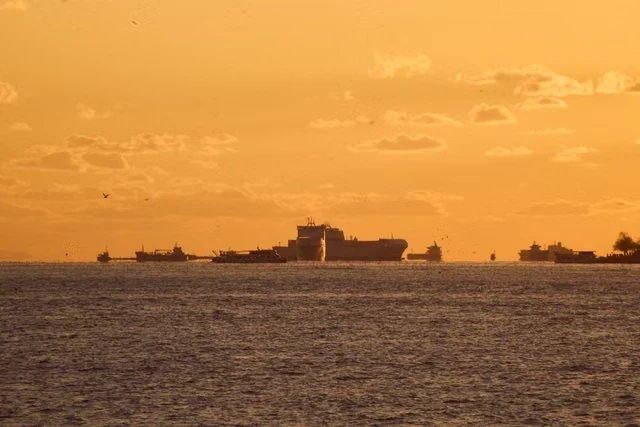
The Strait of Hormuz carries roughly one-fifth of global petroleum consumption, yet its strategic significance far exceeds the crude volume that transits its narrow waters. When President Trump declared on August 18 that the waterway remained open, he spoke a legal truth that masked a far more complicated operational reality.
Associated Press reporting the same day painted a starkly different picture: traffic had thinned dramatically, and a vessel exiting the strait had been struck, underscoring the chasm between political assurance and maritime fact.
This divergence between declaration and reality is not merely a matter of diplomatic optics. For global shipping lines, energy traders, and military planners, the distinction between a waterway being legally open, physically navigable, and commercially insurable determines whether tankers sail, reroute, or anchor in place.
On This Page
- The Legal Status Versus the Operational Reality of Hormuz
- Why Thin Traffic Persists Despite Official Reassurances
- Historical Precedents and Future Scenarios for Hormuz
- Lessons from the Tanker War and Reflagging Operations
- Potential Escalation Scenarios and Their Consequences
- Pathways Toward De-escalation and Normalized Traffic
- Hormuz Transit Risk Assessment Matrix
- Hormuz Traffic Impact Indicators
- Historical Hormuz Disruption Events
- Global Energy Dependence on Hormuz
- Insurance Response to Hormuz Risk
- De-escalation Pathways for Hormuz
Understanding these three layers of passage is essential for anyone tracking oil prices, regional escalation, or the quiet calculus of maritime risk in the Persian Gulf.
The following analysis dissects the Strait of Hormuz situation through the lens of legal availability, physical navigability, and insurability, drawing on current reporting and historical precedent to explain why thin traffic persists despite official assurances.
TL;DR The Strait of Hormuz remains legally open, but physical threats and commercial insurance dynamics have suppressed traffic to a fraction of normal levels. A vessel was struck while exiting the waterway, confirming that navigational risk persists despite political statements. The gap between legal status, operational safety, and insurability explains why shipping remains thin and why energy markets remain on edge.
The Legal Status Versus the Operational Reality of Hormuz
International law grants vessels transit passage through straits used for international navigation, and Hormuz qualifies under the United Nations Convention on the Law of the Sea. No state has formally closed the waterway, and Iran has not issued a blockade declaration. Legally, the strait remains open, and any assertion otherwise would constitute a significant escalation under international norms.
Yet legal availability does not equate to safe passage. The August 18 incident, in which a ship was struck while exiting the strait, demonstrates that operational hazards persist regardless of formal status. Shipping companies assess risk based on real-world threats, not treaty language, and their behavior reflects that calculation.
The result is a paradox: a waterway that is legally open but operationally dangerous, with traffic volumes that betray the official narrative. This gap carries profound implications for global energy security and regional stability.
Transit Passage Rights Under International Law
UNCLOS Article 38 guarantees transit passage through straits connecting high seas or exclusive economic zones, and Hormuz clearly meets this definition. Coastal states may not suspend transit passage, making any formal closure a violation of treaty obligations. Iran has historically respected this framework while leveraging its position for political advantage.
The legal regime, however, assumes a baseline of safety that current conditions undermine. When vessels face active threats, the right of passage becomes theoretical rather than practical. Shipping operators cannot invoke international law to protect against missiles or naval harassment.
Legal scholars note that transit passage rights do not obligate commercial operators to assume unreasonable risk. The law facilitates passage; it does not compel it. This distinction explains why legal openness and commercial behavior can diverge so dramatically.
Political statements declaring the strait open therefore carry legal weight but limited operational significance. They reassure markets momentarily, yet shipping decisions respond to threat assessments, insurance terms, and crew safety considerations that no presidential statement can override.
Physical Navigability and Active Threat Assessment
Physical navigability encompasses more than whether the water is deep enough or the channel wide enough for tanker traffic. It includes the practical question of whether a vessel can transit without facing attack, detention, or harassment. Current conditions in Hormuz fail this test for many operators.
The August 18 strike on a vessel exiting the strait confirms that threats remain active. While the extent of damage and the identity of the attacker remained unclear, the incident itself signals that navigation carries tangible risk. Military analysts track such events as indicators of escalation probability.
Naval presence in the region has increased, with US and allied forces conducting patrols and escort operations. Yet these measures cannot guarantee safety for every vessel, particularly those without naval escort or those transiting during periods of heightened tension.
Physical navigability also depends on the behavior of regional actors. Iran's history of seizing vessels, conducting harassment operations, and threatening to close the strait creates a risk environment that transcends any single incident. Shipping companies factor this history into every routing decision.
Commercial Insurability as the Decisive Factor
Maritime insurance functions as the practical gatekeeper for shipping through hazardous waters. War risk premiums for Hormuz transit have fluctuated dramatically based on threat assessments, and insurers adjust coverage terms based on real-world conditions. When premiums become prohibitive, traffic thins regardless of legal status.
The London insurance market, which dominates marine war risk coverage, has expanded the listed high-risk area for the Persian Gulf region. This designation triggers additional premiums and stricter underwriting requirements, making transit more expensive and less attractive for commercial operators.
Insurers assess risk based on incident data, intelligence reports, and geopolitical analysis. Their assessments often diverge from political statements, creating tension between official narratives and commercial reality. When insurers price risk higher, shipping responds accordingly.
The insurability question ultimately determines whether a voyage proceeds. A vessel can legally transit and physically navigate, but without adequate insurance coverage, the commercial risk becomes unacceptable. This mechanism explains why traffic remains thin despite official assurances that the strait is open.
We Also Published
Why Thin Traffic Persists Despite Official Reassurances
The gap between political declarations and on-water reality stems from the divergent incentives of governments and commercial operators. Governments seek to project stability and deter escalation, while shipping companies prioritize crew safety, cargo protection, and financial viability. These priorities frequently conflict in high-risk environments.
Traffic data from the region confirms the divergence. While the strait has not been formally closed, vessel movements have declined measurably, with some operators rerouting around the Arabian Peninsula or delaying transits. This behavior reflects rational risk management, not political messaging.
Energy markets have absorbed this reality, with oil prices incorporating a risk premium that persists despite official statements. Traders understand that the gap between legal status and operational safety can close suddenly, and they price that uncertainty accordingly.
Shipping Industry Response to Regional Tensions
Major shipping lines have adjusted operations in response to Hormuz tensions, with some suspending new bookings for the region and others requiring additional risk assessments before accepting cargo. These decisions reflect internal safety protocols that prioritize crew welfare over commercial expediency.
Crew availability has emerged as a secondary constraint, with seafarers increasingly reluctant to transit high-risk waters. Unions have raised concerns about crew safety, and some members have exercised refusal rights under employment contracts. This human dimension compounds the commercial challenges.
Vessel tracking data shows that some tankers have opted for extended anchorage rather than immediate transit, waiting for conditions to improve or for naval escort availability. This waiting behavior reduces throughput even when the strait remains nominally open.
The cumulative effect is a self-reinforcing cycle: reduced traffic signals higher risk, which further suppresses traffic. Breaking this cycle requires either a demonstrable improvement in security conditions or a sustained period without incidents, neither of which appears imminent.
Energy Market Implications of Reduced Hormuz Traffic
Oil prices have incorporated a Hormuz risk premium that fluctuates with regional headlines. Even modest reductions in traffic through the strait can tighten global supply balances, particularly when combined with production cuts or demand shifts. The market remains sensitive to any Hormuz-related news.
Asian economies, which depend heavily on Gulf crude, face the most direct exposure to Hormuz disruption. Japan, South Korea, India, and China all rely on the strait for substantial portions of their energy imports, making them particularly vulnerable to traffic reductions or escalation.
Strategic petroleum reserves provide a buffer against short-term disruptions, but prolonged traffic reductions would eventually strain these inventories. The International Energy Agency coordinates reserve releases among member states, yet the scale of a Hormuz closure would test the limits of this coordination.
Natural gas markets face similar exposure, with Qatar's LNG exports transiting the strait. Any sustained disruption would affect global gas prices, with particular impact on Asian buyers who rely on Qatari supply. The interconnections between oil and gas markets amplify the overall energy security concern.
Military Risk Assessment and Escalation Dynamics
Military planners assess Hormuz risk through the lens of escalation probability, considering both the likelihood of incidents and the potential for broader conflict. The August 18 strike, while limited in scope, contributes to an environment where miscalculation becomes more likely.
US naval forces maintain a significant presence in the region, with carrier strike groups and escort vessels providing a deterrent against Iranian harassment. However, this presence also creates the potential for direct US-Iranian confrontation, a scenario that both sides have historically sought to avoid.
Iran's asymmetric capabilities, including mines, anti-ship missiles, and fast attack craft, pose a credible threat to commercial shipping despite US naval superiority. The threat of mining operations, in particular, would create a complex clearance challenge that could close the strait for extended periods.
Regional actors, including Gulf states, have increased their own naval capabilities and participated in multinational maritime security initiatives. These efforts aim to supplement US presence and provide additional layers of protection for commercial traffic, yet they cannot eliminate the underlying risk.
Historical Precedents and Future Scenarios for Hormuz
The Strait of Hormuz has faced periodic threats throughout its modern history, with the Iran-Iraq War's Tanker War of the 1980s providing the most direct precedent for current conditions. During that conflict, both sides attacked commercial shipping, prompting international naval intervention and reflagging operations.
The Tanker War demonstrated that sustained attacks on shipping can occur without triggering a broader regional war, but also that such attacks impose significant economic costs. The international community eventually organized convoy operations and escort missions to protect commercial traffic, a model that could be revived under current conditions.
More recent incidents, including the 2019 attacks on tankers near the strait and the 2023 seizures of commercial vessels, have reinforced the perception of Hormuz as a high-risk environment. Each incident contributes to the insurance calculus that shapes shipping behavior.
Lessons from the Tanker War and Reflagging Operations
The 1980s Tanker War saw Kuwaiti tankers reflagged under US protection, a precedent that demonstrated the willingness of major powers to intervene in defense of shipping. This model, however, carries significant political and military costs that limit its applicability in the current environment.
International naval coalitions, including the current Combined Maritime Forces, provide a framework for coordinated escort operations. These forces conduct patrols, respond to distress calls, and deter hostile actions, yet they cannot guarantee safety for every vessel in the vast expanse of the Gulf.
The Tanker War also demonstrated the resilience of global shipping, which adapted through rerouting, convoy operations, and enhanced insurance arrangements. This adaptability suggests that even sustained disruption would not permanently halt trade, though it would impose significant costs.
Historical experience indicates that Hormuz disruptions tend to be temporary rather than permanent, with diplomatic and military pressure eventually restoring normal traffic patterns. However, each episode carries the risk of escalation that could transform a limited disruption into a broader conflict.
Potential Escalation Scenarios and Their Consequences
A full closure of the Strait of Hormuz, while unlikely, would represent a seismic event for global energy markets. Approximately 20 million barrels per day of oil and petroleum products transit the strait, and their absence would require massive rerouting and supply adjustments.
Alternative pipeline routes, including the Saudi East-West pipeline and the UAE's Habshan-Fujairah pipeline, provide limited redundancy but cannot fully compensate for a Hormuz closure. These pipelines have spare capacity, yet their throughput remains far below the volume that transits the strait.
Strategic reserves could cover a portion of the shortfall for a limited period, but sustained closure would eventually deplete these inventories. The resulting price spike would have global economic consequences, potentially triggering recession in energy-importing economies.
Military planners consider the possibility of Iranian mining operations, which would require extensive clearance efforts before traffic could resume. Mine clearance is a slow, dangerous process that could take weeks or months, extending the duration of any disruption.
Pathways Toward De-escalation and Normalized Traffic
De-escalation in the Strait of Hormuz requires addressing the underlying political tensions that drive the threat environment. Diplomatic engagement between the United States and Iran, however limited, provides a channel for communicating red lines and reducing the risk of miscalculation.
Regional security frameworks, including the Gulf Cooperation Council and broader multilateral initiatives, offer platforms for confidence-building measures. These efforts could include maritime deconfliction mechanisms, incident communication channels, and joint patrol arrangements.
Insurance markets respond to demonstrated improvements in security conditions, and a sustained period without incidents would gradually reduce war risk premiums. This reduction would, in turn, encourage shipping companies to resume normal transit patterns.
The path to normalized traffic ultimately runs through demonstrated security, not political declarations. Until the threat environment improves measurably, the gap between legal openness and commercial reality will persist, keeping Hormuz traffic thin and global energy markets on edge.
From our network :
- Forbidden Matrix Patterns and Visible Lattice Points: A Geometric DictionaryExplore how multidimensional 0–1 matrices encode geometric truths, linking forbidden patterns to visible lattice points and hypergraph theory, with applications in combinatorics and computational geometry.
- Former Soap Stars Embark on Ambitious Writing Projects and Theatrical StagesDiscover how former soap opera actors are transitioning into independent scriptwriting and high-profile theatrical stage productions.
- Analyzing Hoya Corporation’s Midday Volume Shifts and Financial FundamentalsExamine Hoya Corporation’s midday trading volume contraction, technical moving averages, robust solvency ratios, and stellar quarterly earnings performance.
- Committed Mediterranean Precipitation Decline: Why Emissions Cuts Alone Cannot Restore Winter RainsNew NOAA research reveals that Mediterranean winter rains may decline irreversibly even with emissions cuts. Explore the science of committed climate change and regional impacts.
- How AI Agents Will Change the Way We Manage Personal FinancesExplore how AI agents are transforming personal finance through automated budgeting, bill payment, and investment management, while examining the critical security protocols and governance frameworks required for safe deployment.
- CISA’s Ten-Advisory Wave: Why Generic Patching Fails in OT and How to Build Product-Specific PlaybooksCISA released ten ICS advisories in one week, exposing critical infrastructure risks. Generic patching fails in OT. Learn to build product-specific remediation playbooks.
- The Final Descent: How ESA Retired the Legendary Cluster Constellation After 24 Years of Space Weather ScienceAfter 24 years mapping Earth’s magnetosphere, ESA’s Cluster mission concluded with a precisely controlled reentry over the South Pacific. This analysis explores the scientific legacy, engineering decisions, and debris mitigation principles behind one of space exploration’s most responsible retirements.
- Norbert’s Uncertain Path: Why Hawaii’s Storm Watch Demands Patience Over PanicTropical Storm Norbert strengthens in the Eastern Pacific with winds near 50 mph, forecast to reach Category 1 hurricane status by Friday. Long-range models disagree sharply on whether Hawaii faces any threat around September 19–23, making official guidance essential.
- The Hidden Cost of AI Convenience: Why Over-Permissioned Agents Are a Security Time BombDiscover why AI agents with excessive permissions create dangerous single points of failure, and learn how implementing least privilege principles can protect your organization from exploitation.
RESOURCES
- Letter Satellite radar and AIS reveal a 97% decline in shipping traffic ...sciencedirect.comJun 1, 2026 ... Satellite radar and AIS reveal a 97% decline in shipping traffic through the Strait of Hormuz ... This escalation increased…
- U.S.-Iran battle over Strait of Hormuz raises risk for world's trade routesnpr.orgJul 17, 2026 ... Ship traffic around the Strait of Hormuz stalled again. Although no ... Now Iran controls the strait, threatening freedom of…
- 48 Hours Into the Iran War: The Maritime Impact - Windwardwindward.aiMar 1, 2026 ... ... Hormuz amid tanker rerouting, LNG deviations, GPS jamming, and rising risk ... vessel traffic continues to move through the…
- Maritime security update: Gulf Region / Strait of Hormuz and Red Seaskuld.comMar 2, 2026 ... Navigation hazards also remain a concern, including continued GNSS interference, AIS anomalies and the risk posed by drifting or uncharted…
- Shipping firms are being whipsawed by changing stances and risks ...pbs.orgMay 7, 2026 ... ... traffic and navigation through the strait," he added. ... U.S. says 2 merchant ships have crossed the Strait of…
- The United States deal with Iran could put freedom of navigation at ...sipri.orgJul 2, 2026 ... ... navigation and the regulation of maritime traffic, as well as the protection of the marine environment in the Strait…
- Oil tankers face 'worst case scenario' in Hormuz, maritime risk CEO ...cnbc.comJul 17, 2026 ... Hormuz traffic at a trickle. President Donald Trump said Tuesday ... Ships crossing the Strait of Hormuz by vessel type.…
- Convert Merchants into Unmanned Ships to Manage Risk in the ...cimsec.orgJul 2, 2026 ... The United Nations warned that given that the Strait of Hormuz is used for the transport of a fifth of…
- Iran: Oil supertanker rates soar as insurers drop war risk protectioncnbc.comMar 3, 2026 ... Commercial ships anchor off the coast of the United Arab Emirates due to navigation disruptions in the Strait of Hormuz,…
- 2026-004-Persian Gulf, Strait of Hormuz, and Gulf of Oman-Iranian ...maritime.dot.govMar 13, 2026 ... ... Risks of Iranian attacks against commercial shipping remain ... vessel's navigation plan for operating in the Persian Gulf, etc.)…
- Escalating conflict in Middle East threatens Gulf shipping - Gardgard.noFeb 28, 2026 ... There is an EXTREME risk of sustained GNSS/GPS/GLONASS interference across the Strait of Hormuz, Gulf of Oman and southern Arabian…
- Iran Conflict Maritime Update: Drone Strike Expands Conflict ...hstoday.us... risk environment across the Strait of Hormuz, Red Sea, Gulf of ... vessel operating without AIS transmission on the western side of the…
- GNSS Interference Complicates Navigation as Hormuz Shipping ...insidegnss.comMar 2, 2026 ... Dryad Global notes “heightened risk of GPS jamming and AIS spoofing” in the Gulf of Oman and Strait of Hormuz,…
- U.S. Central Command (@CENTCOM) on Xx.comJan 30, 2026 ... ... risk to freedom of navigation for international maritime traffic. The Strait of Hormuz is an international sea passage and…
- MARINO PH | Shipping Risk Remains Critical in Strait of Hormuz as ...facebook.comMar 10, 2026 ... In addition to physical attacks, ships are also facing serious navigation problems due to widespread GPS and AIS signal interference.…
- 01
- 02
- 03
- 04
- 05
- 06
- 07
- 08
0 Comments