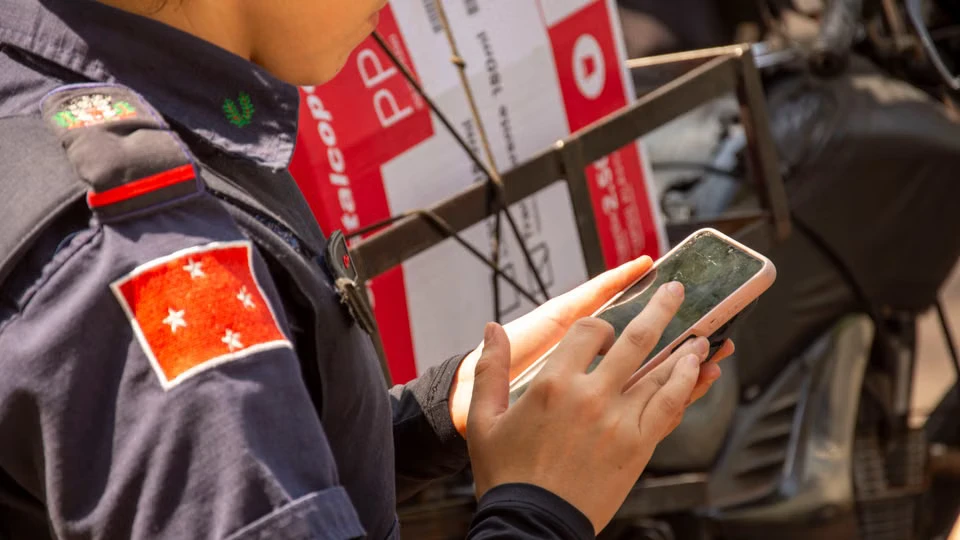
When the Metropolitan Police quietly reassigned two female officers to walk the streets of north London, they were not launching a publicity stunt but dismantling a decades-old enforcement doctrine that treated vulnerable women as offenders first and human beings second.
This experiment, born from a bruising internal review, signals a profound philosophical pivot: the recognition that coercion, addiction, and poverty drive most street-based sex work, and that handcuffs solve none of those root causes.
The force is betting that trust, cultivated patiently by a small dedicated team, will yield better intelligence, fewer violent crimes, and genuine pathways out for women trapped in cycles of exploitation.
On This Page
The story matters far beyond a single borough because it tests whether modern policing can shed its punitive reflexes and embrace a harm-reduction ethos already proven in public health.
Across Britain, similar reviews have exposed how criminal records, fines, and aggressive raids push sex workers deeper underground, away from health services and toward dangerous clients. London's two-officer pilot is therefore a live laboratory for a larger question: can institutions designed to enforce law also learn to protect the people the law has historically abandoned? The answer will shape policy debates from Manchester to Melbourne.
What follows is a rigorous examination of the review's findings, the operational mechanics of the new team, the ethical tensions it exposes, and the measurable outcomes that will determine whether this compassionate experiment survives contact with political reality.
We will trace the intellectual lineage of harm reduction, weigh the objections from residents and critics, and assess what genuine reform would require in funding, training, and legislative courage.
This is not merely a policing story; it is a story about whether societies can choose dignity over punishment when the cameras are off.
TL;DR London's Metropolitan Police has deployed a two-officer female team in north London to engage street sex workers through trust-building rather than arrest, following an internal review that condemned the force's historical treatment of these women as criminals. The pilot embodies a harm-reduction philosophy already validated in public health, aiming to reduce violence, improve access to services, and gather better intelligence. Its success hinges on sustained funding, cultural change within the force, and political will to decriminalize where evidence demands it. The experiment is small in scale but enormous in symbolic consequence, testing whether modern policing can protect the vulnerable without punishing their vulnerability.
The Review That Exposed a Broken Enforcement Model
Before any officer knocked on a single door in north London, an internal review had already concluded that the Metropolitan Police's approach to street sex work was not merely ineffective but actively harmful.
The review documented a pattern of arrests that disrupted fragile lives, fines that impoverished women further, and a culture that conflated victimhood with criminality. Officers interviewed for the review admitted that enforcement targets were often met by sweeping up the most visible and vulnerable, not the most dangerous.
The findings echoed decades of academic research showing that criminalization drives sex workers away from health services, increases exposure to violent clients, and destroys the trust needed to report rape or trafficking. When a woman fears arrest for carrying condoms as evidence, she stops carrying them.
When she believes police will charge her rather than her attacker, she stops calling for help. The review's authors recognized that the force was inadvertently manufacturing the very harms it claimed to prevent.
The Human Cost of Arrest-First Policing
Consider the arithmetic of a single arrest. A woman working the streets of Camden or Islington is detained, charged, and fined. She loses her earnings for the night, misses a housing appointment, and acquires a criminal record that forecloses legitimate employment for years.
The state has spent thousands of pounds to make her life measurably worse, and the underlying drivers of her situation remain untouched.
Multiply that arithmetic across thousands of interactions and you begin to understand why the review's authors used language unusually blunt for a government document. They described a system that recycled trauma, that punished addiction, and that treated the symptoms of structural failure as individual moral defects. The two-officer team is the force's admission that this arithmetic was always cruel and never smart.
Critically, the review did not recommend decriminalization outright, a step that would require Westminster legislation. Instead, it recommended a operational ceasefire: stop arresting street sex workers for soliciting, redirect resources toward exploitation and violence, and build relationships that make women safer. That ceasefire is what the north London pilot now tests in real time.
Why Female Officers, Why Two, Why North London
The decision to assign two female officers is neither cosmetic nor accidental. Research consistently shows that women in street sex work, many of whom have survived male violence, are more likely to disclose harm to female officers.
A two-officer team ensures continuity, safety, and the ability to split attention between immediate crisis and longer-term casework without abandoning either.
North London was chosen because its street-based sex work is concentrated, visible, and historically over-policed. The boroughs involved have existing relationships with health charities and outreach groups, providing the infrastructure a trust-building pilot requires.
The team can therefore plug into services rather than reinvent them, referring women to addiction treatment, housing, and legal aid within hours rather than months.
Equally important, the team's mandate explicitly forbids using the relationships it builds for enforcement purposes. If women believe that talking to the officers will lead to arrest, the entire experiment collapses. The force has therefore drawn a bright line: this team gathers intelligence on violent predators, not on the women themselves. That distinction is the pilot's load-bearing wall.
The Intellectual Architecture of Harm Reduction
The north London pilot did not emerge from a vacuum. It inherits a mature intellectual tradition that began in public health responses to HIV/AIDS and drug addiction, where the evidence was unambiguous: punishing people for their vulnerabilities spreads disease and death.
Needle exchanges, supervised consumption sites, and decriminalized possession all reduced harm without increasing use. Policing is now being asked to absorb the same lesson.
Harm reduction does not require approving of sex work or pretending that street prostitution is a desirable career. It requires acknowledging that the women involved are human beings whose safety matters more than the symbolic satisfaction of punishment.
That acknowledgment is radical only because policing culture has for so long equated compassion with weakness and enforcement with strength.
The philosophical shift is profound. Traditional policing assumes that lawbreaking is a choice freely made and that punishment corrects it. Harm reduction assumes that most street sex work is a survival strategy shaped by trauma, addiction, homelessness, and coercion. If the second assumption is true, then punishment is not justice but cruelty dressed in procedure.
Evidence From Cities That Tried It First
Glasgow, Liverpool, and parts of Manchester have experimented with similar diversion schemes, and the results deserve scrutiny. Where police stopped arresting women for soliciting and instead referred them to support services, reported violent incidents declined, and more women disclosed rape and trafficking. The mechanism is straightforward: trust converts silence into intelligence.
International comparisons reinforce the pattern. New Zealand's full decriminalization in 2003 produced measurable improvements in worker safety and health outcomes without the feared explosion of street prostitution. Portugal's decriminalization of personal drug possession, paired with treatment expansion, reduced overdose deaths dramatically. London's pilot is a modest, cautious cousin of these bolder reforms.
Skeptics rightly note that pilots are not policies. A two-officer team can build trust with dozens of women, but it cannot transform a force of tens of thousands. The evidence from elsewhere suggests that isolated pilots often wither when leadership changes or budgets tighten. The question is whether London can institutionalize what it is currently merely testing.
The Tension Between Compassion and Accountability
Not everyone welcomes the pilot. Some residents argue that visible street sex work degrades neighborhoods and that police should enforce the law as written. Their frustration is real, and dismissing it as bigotry is both inaccurate and politically self-defeating. The pilot must demonstrate that reduced enforcement does not mean abandoned public spaces.
Others raise a subtler objection: that focusing on street workers ignores the far larger indoor sector, where exploitation may be more hidden and more severe. This critique has merit. A compassionate strategy that reaches only the most visible women risks creating a two-tier system where the hidden suffer without witness.
Then there is the accountability question. If police stop arresting women, who holds the violent clients and traffickers accountable? The pilot's answer is that resources shift toward predators, but shifting resources requires political courage and sustained funding. Without both, the pilot becomes a gesture rather than a strategy.
We Also Published
Operational Mechanics of the Two-Officer Team
Understanding what the north London team actually does requires moving past abstractions. The officers work evening and late-night shifts when street sex work is most visible and most dangerous. They patrol on foot, in plain clothes where appropriate, and they introduce themselves by name. Their first task is not interrogation but recognition: learning faces, stories, and immediate needs.
Each interaction is logged not as an intelligence report but as a welfare contact, a distinction that matters legally and culturally. If a woman discloses that a client assaulted her, the officers pursue the assailant with the full weight of the law.
If she discloses addiction or homelessness, they connect her with services. The woman herself is never the target.
The team also coordinates with charities already embedded in these communities, organizations that have spent years building the trust the police are only now seeking. This coordination prevents duplication and ensures that women encounter a coherent support network rather than a fragmented maze of agencies. Continuity of personnel is treated as sacred; rotating officers would destroy the relationships the pilot depends upon.
Measuring Success Beyond Arrest Statistics
Traditional policing measures success in arrests, convictions, and clearance rates. Those metrics are useless here because the pilot's goal is to reduce arrests while increasing safety. The team must therefore adopt indicators that capture trust: the number of women who voluntarily engage, the frequency of disclosures about violence, and the rate at which women accept referrals to housing or treatment.
Longer-term indicators include reductions in reported assaults against street workers, decreases in the number of women sleeping rough, and increases in the number who exit street work entirely. These outcomes take months or years to materialize, which creates a political problem: pilots are usually judged within budget cycles that reward quick, visible results.
The force has also committed to tracking unintended consequences. If reduced enforcement displaces sex work into residential areas, or if traffickers exploit the perception that police have withdrawn, the pilot must adapt. Honest measurement requires willingness to publish findings that embarrass the experiment's architects, a rare institutional virtue.
Training, Culture, and the Resistance Within
No pilot survives on good intentions alone. The officers selected for this team receive training in trauma-informed practice, addiction science, and the legal boundaries of their new role. They learn to recognize signs of coercion and trafficking, to conduct interviews that do not re-traumatize, and to document evidence in ways that withstand courtroom scrutiny.
Yet training cannot fully neutralize the culture of a large police force. Colleagues may view the team as soft, as enabling crime, or as wasting resources. Promotion structures still reward enforcement, not compassion.
Without explicit career incentives for this kind of work, the pilot risks becoming a career dead end that ambitious officers avoid.
Leadership commitment is therefore decisive. If senior commanders publicly defend the team, protect its budget, and celebrate its outcomes, the culture shifts. If they treat it as a temporary experiment to be quietly shelved, officers will read the signal and revert to familiar habits. Institutional change is always a contest between stated values and revealed priorities.
- 01
- 02
- 03
- 04
Political, Legal, and Ethical Fault Lines
The pilot operates in a legal gray zone that no operational cleverness can fully resolve. Soliciting remains a criminal offence under the Sexual Offences Act 2003, and the team's decision not to arrest is a matter of discretion, not law. A change of commissioner or a hostile home secretary could end the experiment overnight without parliamentary debate.
This fragility is the pilot's deepest vulnerability. Discretion-based reform is reversible; statutory reform is durable. Campaigners argue that only decriminalization can guarantee the safety gains the pilot seeks, because only decriminalization removes the fear of arrest that keeps women silent. The pilot, in this reading, is a bridge that must lead somewhere permanent.
Ethically, the pilot forces uncomfortable questions. If police acknowledge that arresting street sex workers causes harm, what justifies continuing to arrest them elsewhere in the country? Consistency demands either national adoption or an honest admission that the pilot is a localized exception driven by local politics rather than universal principle.
Residents, Neighborhoods, and the Politics of Visibility
Street sex work is visible in ways that indoor work is not, and visibility generates complaints. Residents in affected neighborhoods describe discarded condoms, late-night noise, and a sense of insecurity. These complaints are legitimate and cannot be dismissed, but they also reveal a deeper question about whose discomfort counts.
The pilot's implicit wager is that stabilizing women's lives will reduce the visible disorder residents dislike. Women with housing, treatment, and alternatives to street work do not stand on corners at 2 a.m.
The strategy therefore aligns resident interests with worker welfare, but only if support services are adequately funded and quickly accessible.
Where funding is absent, the wager fails. Women remain on the streets, residents remain frustrated, and the pilot becomes evidence for those who claim compassion does not work. The lesson is that harm reduction is not cheap; it requires investment that enforcement budgets never demanded because arrest is superficially inexpensive.
What Genuine Reform Would Require
Scaling the pilot nationally would demand legislative courage that no recent government has shown. It would require amending soliciting laws, funding health and housing at scale, retraining thousands of officers, and rewriting performance metrics that currently reward arrests. Each element is politically costly, and together they constitute a generational project.
It would also require confronting the demand side. If buyers face no consequences, the market persists regardless of how well police treat sellers. Some jurisdictions criminalize buyers while decriminalizing sellers, a model with mixed evidence. London's pilot does not yet address this asymmetry, leaving a structural gap in its logic.
Finally, genuine reform requires listening to sex workers themselves, not merely to police, politicians, and residents. Organizations led by current and former sex workers possess knowledge no review can replicate. Their exclusion from policy design has repeatedly produced reforms that look compassionate on paper and fail in practice.
Toward a Durable Model of Protective Policing
The north London pilot is best understood not as a finished reform but as a proof of concept whose value lies in what it teaches. It demonstrates that a small, well-trained, female-led team can open channels that decades of enforcement had sealed. It shows that women will disclose violence when they believe disclosure will not destroy them.
It also exposes the limits of discretion. Without statutory change, the pilot remains hostage to personalities and politics. Without funding for housing and treatment, referrals lead nowhere. Without reformed metrics, officers who do this work remain invisible in promotion decisions. Compassion, in other words, requires infrastructure as much as conviction.
The broader lesson extends beyond sex work to homelessness, drug use, and mental health crises, where police are routinely asked to solve problems that punishment cannot touch. If London can learn to protect rather than prosecute the most marginalized women on its streets, it establishes a template for a fundamentally different kind of policing.
Lessons for Other Forces and Other Nations
Forces considering similar pilots should note three conditions for success. First, leadership must publicly protect the team from internal and political attack. Second, the team must be embedded in existing service networks rather than isolated. Third, success metrics must be designed before launch, not retrofitted to justify whatever happens.
Nations with different legal frameworks can adapt the underlying principle even without decriminalization. The principle is simple: distinguish between the person and the harm, target the harm, and protect the person. That principle is compatible with many legal regimes, though it flourishes best where the law stops treating survival as a crime.
International bodies increasingly recognize this. United Nations agencies have recommended decriminalization as a public health measure, citing evidence that criminalization fuels HIV transmission and violence. London's pilot, however modest, aligns with a global consensus that is slowly reshaping how states treat the most vulnerable among us.
The Measure of a Civilisation
Ultimately, the pilot asks a question older than policing itself: how should a society treat people it has failed? The women on north London's streets are disproportionately survivors of abuse, care leavers, and people failed by mental health systems. Arresting them punishes the consequences of institutional neglect.
Choosing trust over handcuffs is not softness; it is a rigorous, evidence-based strategy that produces better outcomes for everyone. It reduces violence, improves health, and frees police to pursue genuine predators. The only thing it sacrifices is the illusion that punishment equals protection.
Whether London sustains this experiment will reveal what its leaders truly value. A pilot can be quietly buried, or it can become the foundation of a national shift. The women whose safety depends on that decision will not have the luxury of waiting for perfect evidence. They need protection now.
Conclusion: Trust as the Ultimate Public Safety Tool
London's two-officer experiment is tiny in scale and vast in implication. It asserts that the women most abandoned by institutions are precisely the women whose safety depends on those institutions learning to listen. It replaces the theater of enforcement with the patient, unglamorous work of relationship-building.
The evidence from public health, from other cities, and from the review itself all points the same direction. Punishment has failed these women for decades. Trust, properly resourced and honestly measured, offers something better. Whether London has the courage to follow that evidence remains the open question.
What is already clear is that the old model cannot be defended on either moral or practical grounds. It harmed the vulnerable, wasted public money, and protected no one. The pilot's quiet revolution deserves to succeed, and the women on those streets deserve a city that finally chooses to protect them.
From our network :
- Forbidden Matrix Patterns and Visible Lattice Points: A Geometric DictionaryExplore how multidimensional 0–1 matrices encode geometric truths, linking forbidden patterns to visible lattice points and hypergraph theory, with applications in combinatorics and computational geometry.
- Committed Mediterranean Precipitation Decline: Why Emissions Cuts Alone Cannot Restore Winter RainsNew NOAA research reveals that Mediterranean winter rains may decline irreversibly even with emissions cuts. Explore the science of committed climate change and regional impacts.
- Live Online English Classes for Kids: Do They Actually Reduce Anxiety?A ten-week study reveals that synchronous online English classes can significantly reduce child language anxiety while improving listening and reading skills. Discover what makes these programs effective and how parents can select the right one.
- The Final Descent: How ESA Retired the Legendary Cluster Constellation After 24 Years of Space Weather ScienceAfter 24 years mapping Earth’s magnetosphere, ESA’s Cluster mission concluded with a precisely controlled reentry over the South Pacific. This analysis explores the scientific legacy, engineering decisions, and debris mitigation principles behind one of space exploration’s most responsible retirements.
- How AI Agents Will Change the Way We Manage Personal FinancesExplore how AI agents are transforming personal finance through automated budgeting, bill payment, and investment management, while examining the critical security protocols and governance frameworks required for safe deployment.
- University Language Proficiency Exams: Why Institutional Tests Demand Different Preparation Than IELTS and TOEFLDiscover why university-specific language proficiency examinations differ fundamentally from IELTS and TOEFL, and learn strategic preparation approaches for institutional assessment success.
- CISA’s Ten-Advisory Wave: Why Generic Patching Fails in OT and How to Build Product-Specific PlaybooksCISA released ten ICS advisories in one week, exposing critical infrastructure risks. Generic patching fails in OT. Learn to build product-specific remediation playbooks.
- Mobile Learning and VR in English: What Global Evidence Reveals About Effective Language TechnologyA systematic review across 14 countries reveals which language-learning technologies genuinely work. Mobile learning, AI, and VR show measurable benefits when pedagogically integrated. This evidence-based guide helps educators and learners select technology that delivers real return on investment.
- The Hidden Cost of AI Convenience: Why Over-Permissioned Agents Are a Security Time BombDiscover why AI agents with excessive permissions create dangerous single points of failure, and learn how implementing least privilege principles can protect your organization from exploitation.
RESOURCES
- Developing a coordinated response to chemsex across health ...pmc.ncbi.nlm.nih.govLondon Metropolitan Police Service (MPS). His Majesty's Prison and Probation ... 'Chemsex' and harm reduction need among gay men in south London. Int J ...
- Access to health and harm reduction services during drug ...link.springer.comMar 26, 2026 ... Police-related barriers to harm reduction linked to non-fatal overdose amongst sex workers who use drugs: Results of a community-based ...
- Law enforcement and public health programs in Latin Americajournalcswb.caCitizen participation has three main objectives: (i) restor- ing citizens' trust in police by strengthening police–citizen relations, allowing joint work and ...
- Police and Crime Plan 2025-2029 - Greater London Authoritylondon.gov.ukTrust and confidence in the Metropolitan Police Service (MPS) has been severely ... Central to this effort is the MPS-led London Retail Harm Reduction ...
- 14th International Conference on Health and Hepatitis in Substance ...inhsu.orginvisible: peer-led harm reduction for sex workers who use drugs. Hepatitis C ... Medicine, Royal Free London Nhs Foundation Trust,. United Kingdom. 1230 ...
- Louisville Metro Crisis Call Diversion Program Pilot Final Evaluation ...louisvilleky.govJun 30, 2022 ... community trust in police and equality. The timeframe allocated for ... for police's time reduction is 88.5%. In other words,…
- A Safer London for Everyone - Greater London Authoritylondon.gov.ukMar 28, 2025 ... Central to this effort is the MPS-led London Retail Harm Reduction ... MOPAC will continue to work with police and…
- Practice bank | College of Policingcollege.police.uk... City of London Police. Smarter. Begging resources guidance – Surrey Police ... Lincoln City Centre Policing Team work with partners to reduce the…
- Using Bayesian Evidence Synthesis to estimate the number of sex ...medrxiv.orgMay 26, 2026 ... ... sex workers in London, as well as an estimate from the Metropolitan Police of the number of on-street sex…
- Interventions to improve health and the determinants of ... - The Lancetthelancet.comNov 2, 2022 ... Three specifically targeted sex worker populations—a drug treatment clinic for street-based female sex workers, a one-off harm reduction ...
- East London Project: a participatory mixed-method evaluation on ...ncbi.nlm.nih.govSex workers' risk of violence and ill-health is shaped by their work environments, community and structural factors, including criminalisation.
- International Conference on the Reduction of Drug Related Harmhri.globalMay 4, 2010 ... Police Service (MPS) in London against the backdrop of government drug policy and ... building a sex worker harm reduction…
- Policing and nonfatal overdose in a community-based cohort of sex ...sciencedirect.comPolice-related barriers to safer sex work transactions and harm reduction ... sex workers in Metro Vancouver, Canada: A qualitative study [Internet]. 2022 ...
- Enabling student health and success - Universities UKuniversitiesuk.ac.uk• recognise the need to work closely with the police to tackle harm from supply. • acknowledge that drug use is a complex health…
- Decriminalization or police mission creep? Critical appraisal of law ...sciencedirect.comPolice-related barriers to harm reduction linked to non-fatal overdose amongst sex workers who use drugs: Results of a community-based cohort in Metro ...
- 01
- 02
- 03
- 04
- 05
- 06
- 07
- 08
0 Comments