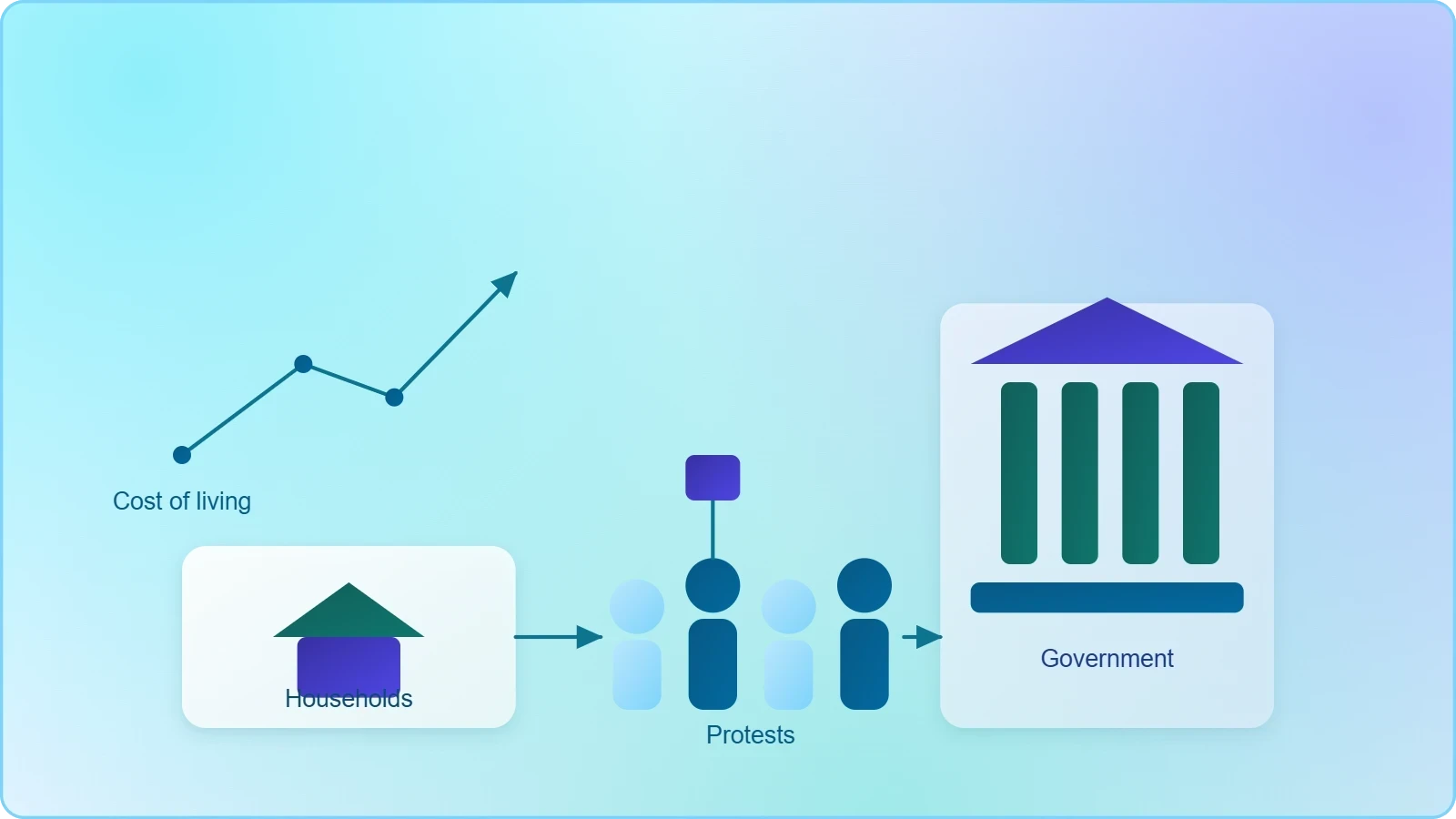
France entered the autumn of 2026 locked in a volatile standoff between a governing elite determined to restore order and a restless population convinced that the social contract had quietly expired.
The nationwide demonstrations of Saturday, October 24, became the defining test of that standoff, staged exactly one week after earlier marches degenerated into looting, arson, and the ransacking of public buildings.
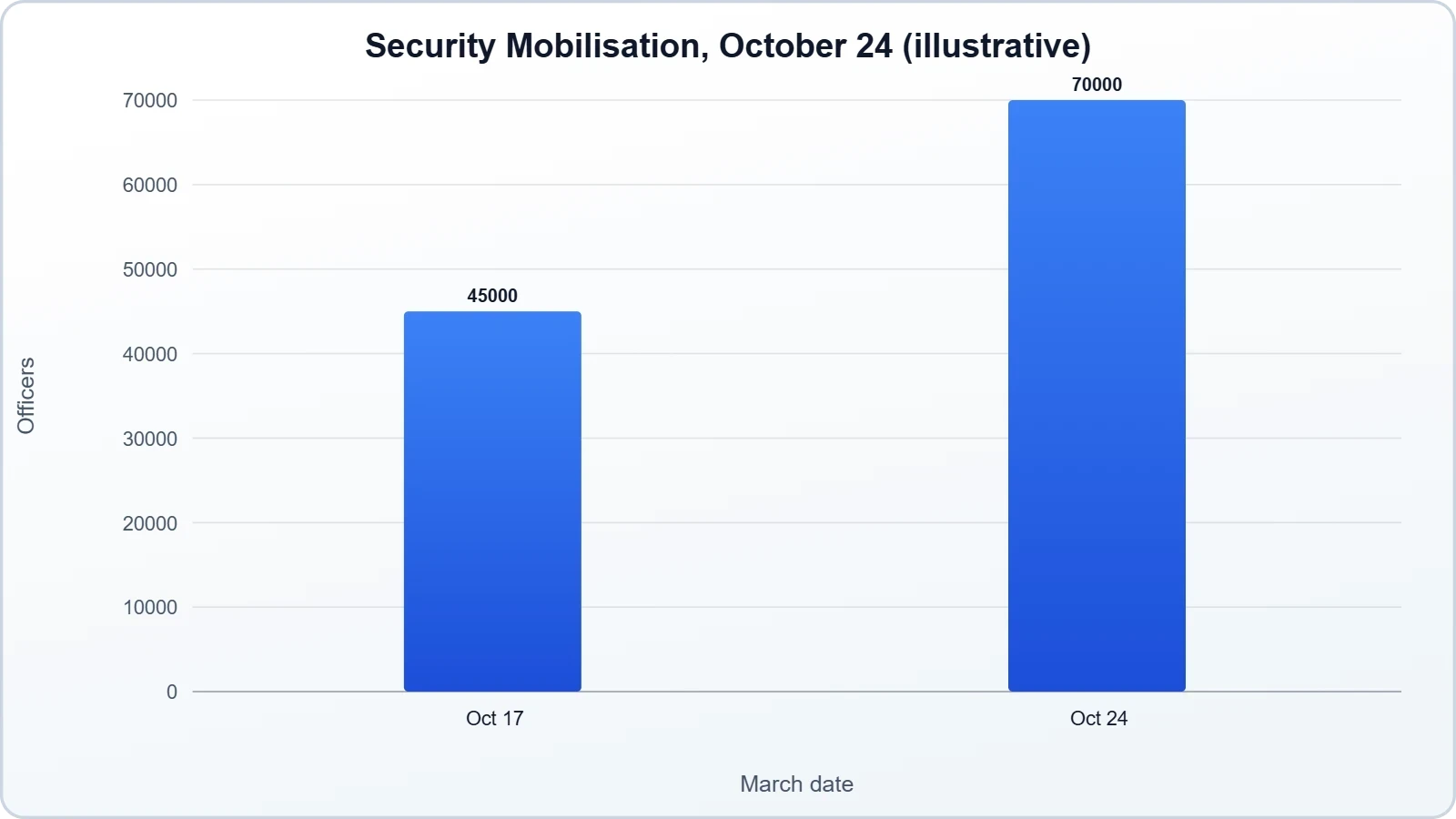
What the government framed as a successful exercise in containment was, in reality, a fragile truce purchased with seventy thousand deployed officers, nearly a thousand arrests, and the partial suspension of the right to assemble.
On This Page
The immediate grievance was economic: the rising cost of living and what marchers described as chronic underfunding of schools and essential public services. Yet beneath the price of bread and the state of classrooms lay a deeper confrontation over legitimacy, voice, and the boundaries of dissent in a democracy six months away from a presidential election.
President Emmanuel Macron had already branded non-union demonstrations illegitimate and ordered them banned, a decision that converted a cost-of-living protest into a constitutional argument about who may speak in the public square.
This analysis dissects the official narrative of a march that "went well," weighing the government's security arithmetic against the testimony of tear gas, broken police lines, and a demonstrator in Toulouse who reportedly lost fingers.
It examines the machinery of prefectural bans, the geography of boarded-up boutiques and shuttered museums, and the political calculus of an outgoing president whose ten-year tenure is approaching its final verdict at the ballot box.
TL;DR France's government declared the October 24, 2026 nationwide protests a success because faster policing, pre-emptive checks, and 70,000 deployed officers prevented a repeat of the previous week's looting. Nearly 1,000 arrests, two serious injuries, and two hours of clashes in Paris nonetheless exposed a country divided over the cost of living, the banning of demonstrations, and the legitimacy of dissent. With a presidential election six months away, the episode reframes street protest as a referendum on Macron's governing legacy.
The Official Narrative of a March That "Went Well"
Interior Minister Laurent Nuñez stood before the press with a carefully calibrated message: the republic had held. His framing rested on comparative performance rather than absolute calm, measuring Saturday against the previous week's chaos of damaged public buildings, hundreds of looted shops, and 2,700 arrests.
By that yardstick, the government could credibly claim improvement, even as tear gas drifted through Paris and Nantes.
The Security Arithmetic Behind the Claim
Authorities deployed 70,000 security forces across the country, a scale of mobilization that signals how seriously the interior ministry anticipated disorder. The operational doctrine shifted toward prevention: more police on the streets, faster intervention, more checks before demonstrations, and better protection for businesses.
Each measure was designed to keep crowds away from commercial centers where the previous week's looting had inflicted the most visible damage.
Partial curfews in some urban areas and the last-minute relocation of the main Paris march to the southeast edge of the capital completed the containment strategy. The government's logic was spatial as much as numerical: control the geography of protest, and you control its political meaning. Whether that constitutes success or suppression depends entirely on which side of the barricade one stands.
What "Success" Conceals
The word success, deployed by a government under pressure, performs a specific political function: it reframes disorder as management. Nearly 1,000 arrests in a single day is not a trivial statistic, and two serious injuries, including a man in Toulouse who reportedly lost fingers, complicate any triumphalist reading. Tear gas in Paris and other cities tells its own story.
Nuñez attributed the worst violence to black-clad far-left extremists, a familiar framing that isolates radical actors from the broader grievance. Yet the confrontations lasted two hours and involved roughly 500 rioters, suggesting organized resistance rather than spontaneous scuffles.
The government's narrative depends on separating the legitimate marcher from the illegitimate agitator, a distinction that grows harder to sustain as bans multiply.
The Crowd, the Grievance, and the Cost of Living
Hundreds of thousands of people marched not against a single policy but against a cumulative sense of abandonment. Rising prices erode household budgets while schools and essential services absorb cuts that citizens experience as the state withdrawing from ordinary life.
This is the combustible material of French protest: a conviction that the republic's promises are being honored elsewhere, for someone else.
Turnout and the Politics of Counting
Estimates of Saturday's turnout diverged sharply, as they always do in France, where crowd counts are themselves political weapons. Authorities placed participation between 410,000 and 800,000 nationwide, while the CGT union offered a higher figure. In Paris, the interior ministry reported 110,000 marchers against organizers' claims of 250,000.
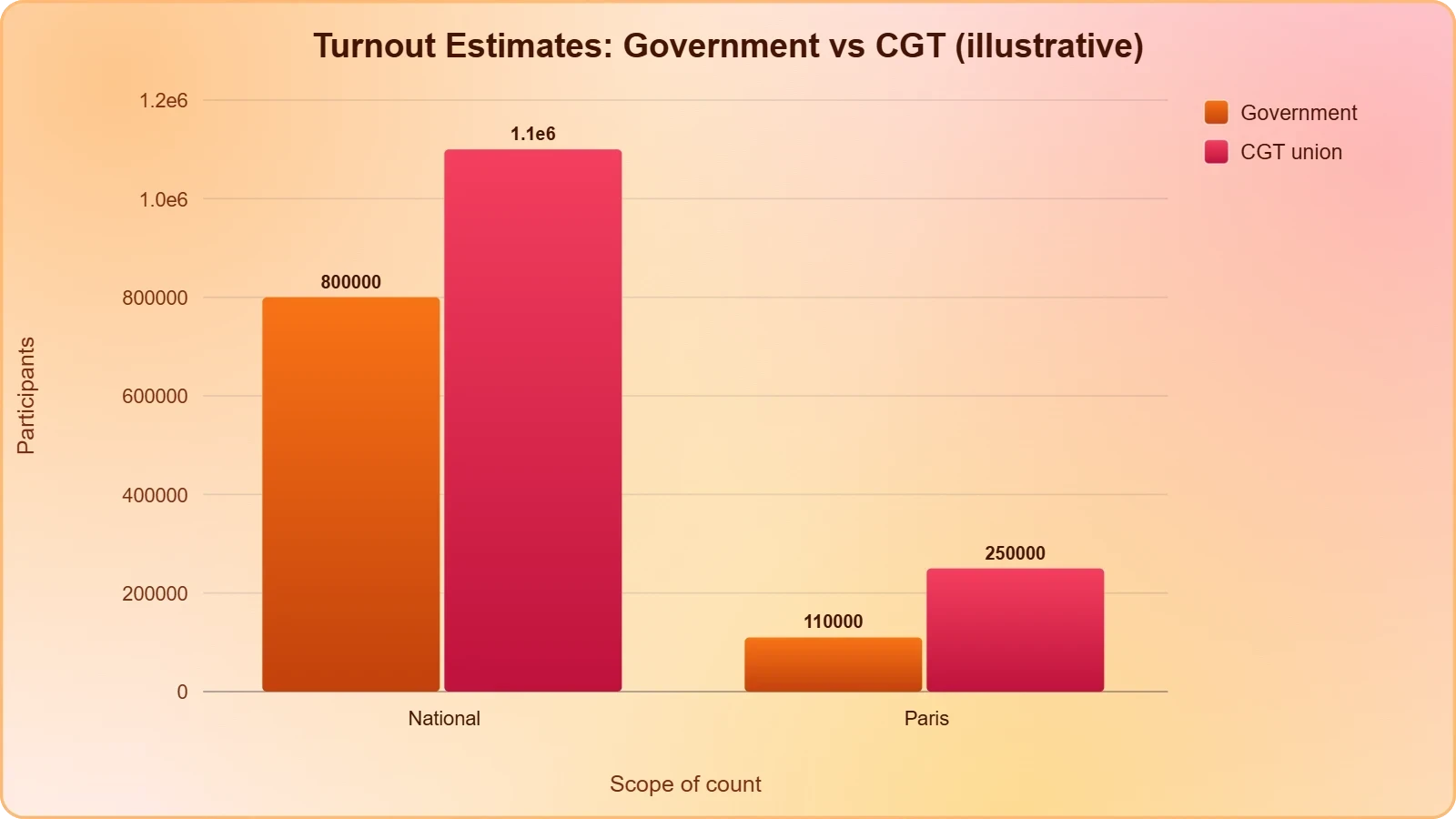
This arithmetic matters because legitimacy in French street politics is partly numerical. A government that can portray demonstrations as marginal gains room to dismiss them; unions that can demonstrate mass participation claim a mandate to negotiate.
The gap between 110,000 and 250,000 is not a statistical error but a contest over who speaks for the nation.
Schools, Services, and the Moral Economy of Protest
Marchers framed their demands around schools and essential services, invoking a moral economy in which taxation purchases collective wellbeing. When that bargain appears broken, protest becomes a form of civic auditing.
The anger is less about any single budget line than about the perception that public institutions are being starved while other priorities flourish.
This moral framing explains why the movement attracted students alongside workers and why bans on demonstrations provoked such fury. Some demonstrators voiced anger at what they described as repression of student protests, converting a dispute over resources into a confrontation over the right to object. Once the state restricts assembly, the grievance expands beyond prices to principle.
We Also Published
Bans, Curfews, and the Boundaries of Dissent
The government's decision to order police to stop protesters from reaching city centers, where shops are concentrated, imposed a geography of exclusion on public dissent. Partial curfews in some urban areas extended that logic into the night.
President Macron's declaration that non-union demonstrations were illegitimate, followed by an order to ban them, marked an extraordinary escalation in the management of protest.
Prefectural Power and Pre-Emptive Policing
French administrative law grants prefects broad authority to prohibit gatherings deemed a threat to public order, a power now deployed at scale. More checks before demonstrations and faster intervention reflect a doctrine of pre-emption: disrupt assembly before it coheres.
The strategy succeeded in protecting boutiques, yet it also relocated the confrontation from the marketplace to the courtroom of public opinion.
In Nantes, thousands of protesters broke through police lines to reach the city center, demonstrating the limits of pre-emptive control. When crowds circumvent containment, the state faces a choice between escalation and accommodation, and each option carries political cost. The Nantes breach suggests that spatial strategy cannot indefinitely substitute for addressing the underlying grievance.
Boarded Windows and Closed Museums
The physical face of Paris on October 24 was a city bracing for itself. Many shops boarded up windows, and the Louvre and Musée d'Orsay closed for the day, surrendering the capital's cultural identity to security logic.
When the world's most visited museum shuts its doors because citizens are marching, the cost of instability becomes cultural as well as commercial.
These closures also carry symbolic weight, signaling that the state anticipates damage from its own people. Boarded windows function as a visual confession of distrust, and their proliferation in the commercial heart of Paris undermines the government's insistence that the day went well. Order restored by plywood is order of a particular, defensive kind.
Clashes, Injuries, and the Question of Violence
The main Paris demonstration began peacefully, a detail the government emphasized and organizers rightly claim. It ended with a heavy security response as the crowd dispersed, when roughly 500 rioters engaged officers in confrontations lasting two hours.
Police fired tear gas in Paris and other French cities, and two people were seriously injured, including a man in Toulouse who reportedly lost fingers.
Attributing Blame: Extremists and Escalation
Nuñez pointed to black-clad far-left extremists as the primary source of violence, a diagnosis that serves multiple purposes. It protects the legitimacy of ordinary marchers, justifies aggressive policing, and narrows culpability to a recognizable fringe.
Yet the diagnosis also raises questions about intelligence and preparation, since the government had a week to anticipate organized disruption.
If 500 rioters could sustain two hours of confrontation despite 70,000 deployed officers, the security model's limits become visible. Violence attribution is never neutral: it determines who is protected, who is prosecuted, and whose grievance is heard.
The far-left framing risks obscuring the broader anger that filled the streets long before any black-clad contingent arrived.
- 01
- 02
- 03
- 04
The Human Cost Behind the Statistics
Behind every aggregate lies a body, and the Toulouse injury is the most visceral reminder that protest control is not an abstraction. A man reportedly losing fingers transforms a policy debate into a question of proportionality.
When the state's response to economic grievance produces permanent harm, the legitimacy of that response becomes impossible to assume.
Arrest counts of nearly 1,000 nationwide also carry downstream consequences: legal proceedings, detention, and the radicalization that often follows punitive contact with the state. Each arrest is a citizen whose relationship with the republic has been altered. The government's success metric counts detentions; the long-term political ledger may count grievances instead.
Six Months to the Election: Macron's Legacy on Trial
The protests arrive six months before France holds a presidential election to choose a successor to Macron after ten years in office. That timing transforms every tear gas canister into a campaign artifact.
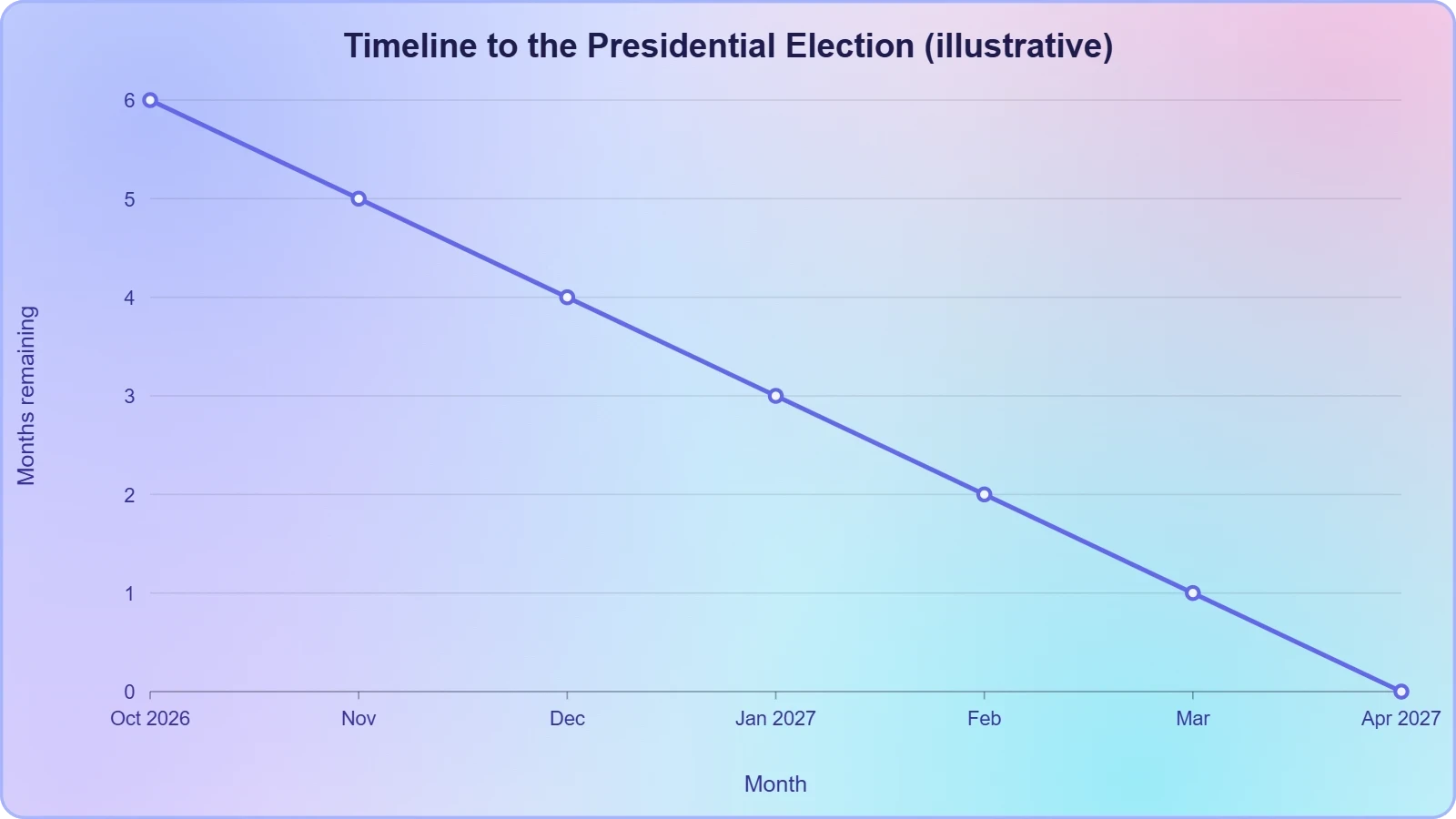
An outgoing president who once promised to transcend the old divisions now governs through bans and curfews, and the electorate will render its verdict on that record.
An Outgoing President and the Street
Macron's characterization of non-union demonstrations as illegitimate represents a striking narrowing of acceptable dissent. By elevating organized unions above spontaneous citizens, the presidency draws a line between authorized grievance and unauthorized anger. That line may protect institutions in the short term while corroding the broader legitimacy on which institutions ultimately rest.
Ten years in office have produced a governing style that treats the street as a problem to be managed rather than a signal to be read. The Yellow Vest precedent hovers over this moment, a reminder that fuel taxes and distant elites can ignite a nation. Whether the successor inherits a governable country or a tinderbox depends on how this autumn ends.
What the Next Government Inherits
Whoever wins the presidency inherits a population that has learned to distrust official reassurances. A government that declares success while museums close and fingers are lost teaches citizens to discount its words. Rebuilding that credibility will require more than security deployments; it demands visible investment in the schools and services protesters invoked.
The deeper inheritance is procedural: a precedent that non-union demonstrations can be banned and that curfews can be imposed to protect commerce. Norms of assembly, once stretched, rarely snap back to their original shape.
France's next leader will govern within a political landscape reshaped by this autumn's confrontations, whether or not they acknowledge it.
Reading the French Autumn: Lessons Beyond Paris
The October 24 demonstrations distill a pattern visible across advanced economies: inflation and service erosion generating anger that institutions struggle to absorb. France's particular intensity reflects a political culture that treats the street as a legitimate arena of contestation. Yet the underlying dynamic, of citizens demanding that the state honor its promises, is not uniquely French.
Protest as a Diagnostic Instrument
Demonstrations function as diagnostic instruments, revealing where the social contract has frayed before formal politics registers the damage. The cost-of-living grievance and the school funding complaint are data points about distributional failure. A government that reads them as mere security problems forfeits the information that could guide correction.
The French case also demonstrates how quickly a resource dispute becomes a rights dispute. Once assembly is restricted, the question shifts from budgets to liberty, and the coalition of the aggrieved widens. This escalation pattern is reproducible elsewhere, which is why the events in Paris and Nantes merit attention far beyond Europe.
Toward a More Durable Social Contract
Durable governance requires treating protest as information rather than insurgency. The French government's emphasis on protecting businesses and relocating marches addresses symptoms while leaving the cost-of-living and school-funding grievances untouched. A serious response would pair public order with visible, measurable investment in the services citizens named.
France's next president will face the same arithmetic: a population that expects the state to deliver, and a fiscal environment that constrains delivery. Bridging that gap demands negotiation rather than prohibition, and transparency rather than triumphalism. The October 24 marches did not resolve that challenge; they merely made it impossible to ignore.
From our network :
- Forbidden Matrix Patterns and Visible Lattice Points: A Geometric DictionaryExplore how multidimensional 0–1 matrices encode geometric truths, linking forbidden patterns to visible lattice points and hypergraph theory, with applications in combinatorics and computational geometry.
- University Language Proficiency Exams: Why Institutional Tests Demand Different Preparation Than IELTS and TOEFLDiscover why university-specific language proficiency examinations differ fundamentally from IELTS and TOEFL, and learn strategic preparation approaches for institutional assessment success.
- Mobile Learning and VR in English: What Global Evidence Reveals About Effective Language TechnologyA systematic review across 14 countries reveals which language-learning technologies genuinely work. Mobile learning, AI, and VR show measurable benefits when pedagogically integrated. This evidence-based guide helps educators and learners select technology that delivers real return on investment.
- How AI Agents Will Change the Way We Manage Personal FinancesExplore how AI agents are transforming personal finance through automated budgeting, bill payment, and investment management, while examining the critical security protocols and governance frameworks required for safe deployment.
- The Hidden Cost of AI Convenience: Why Over-Permissioned Agents Are a Security Time BombDiscover why AI agents with excessive permissions create dangerous single points of failure, and learn how implementing least privilege principles can protect your organization from exploitation.
- The Final Descent: How ESA Retired the Legendary Cluster Constellation After 24 Years of Space Weather ScienceAfter 24 years mapping Earth’s magnetosphere, ESA’s Cluster mission concluded with a precisely controlled reentry over the South Pacific. This analysis explores the scientific legacy, engineering decisions, and debris mitigation principles behind one of space exploration’s most responsible retirements.
- Committed Mediterranean Precipitation Decline: Why Emissions Cuts Alone Cannot Restore Winter RainsNew NOAA research reveals that Mediterranean winter rains may decline irreversibly even with emissions cuts. Explore the science of committed climate change and regional impacts.
- Live Online English Classes for Kids: Do They Actually Reduce Anxiety?A ten-week study reveals that synchronous online English classes can significantly reduce child language anxiety while improving listening and reading skills. Discover what makes these programs effective and how parents can select the right one.
- CISA’s Ten-Advisory Wave: Why Generic Patching Fails in OT and How to Build Product-Specific PlaybooksCISA released ten ICS advisories in one week, exposing critical infrastructure risks. Generic patching fails in OT. Learn to build product-specific remediation playbooks.
RESOURCES
- Macron urges calm as France counts cost of worst unrest in yearsreuters.com5 days ago ... ... cost of living and rising fuel prices in Paris, October 18. ... Second nationwide day of protests against the…
- France protests updates: Curfews imposed in parts of Paris, other ...aljazeera.com5 days ago ... ... demonstrations against the cost of living and rising fuel prices, in Lyon, France, October 19, 2026. The graffiti on…
- Mass protests in France spiral into worst riots in years - Reutersreuters.comOct 17, 2026 ... PARIS, Oct 17 (Reuters) - Rioting erupted in cities across France on Saturday as demonstrations against rising living costs and…
- Macron condemns those who 'sought to bring down the Republic ...pbs.org7 days ago ... Macron addresses nation after clashes at cost-of-living protests in France. French President Emmanuel Macron appears on screen as he makes…
- Macron denounces 'unbridled' violence as France hit by new clashesafp.com7 days ago ... French President Emmanuel Macron on Sunday slammed the "unbridled" violence that erupted in cost-of-living demonstrations across the country ...
- 'No place for violence,' Macron says, as protesters clash with ... - BBCbbc.com'No place for violence,' Macron says, as protesters clash with police in cities across France. 17 October 2026. Three people stand on the banks…
- France's Macron vows to hold accountable those who 'sought ... - CNNcnn.comOct 17, 2026 ... ... cost of living, and perceived government inaction. The ... demonstration in Marseille, southern France, on Saturday, October 17, 2026.
- France protests: Violent clashes, looting and buildings ablaze ... - BBCbbc.com7 days ago ... Violence broke out across France on Saturday during the latest day of demonstrations against hardship in schools and the cost…
- Cost-of-living demonstrations to grip pre-election France - AFP.comafp.comPublished on October 16, 2026 at 20:40. Share. X; LinkedIn; Facebook ... The country's Yellow Vest movement, which eight years ago staged street protests…
- Why are people protesting across Europe? - The Guardiantheguardian.com7 days ago ... ... Mon 19 Oct 2026 12.36 EDT First ... Protest · France · Europe · Spain · Portugal · Albania…
- Macron calls for 'calm and respect' in advance of cost-of-living ...lemonde.frOct 16, 2026 ... Macron calls for 'calm and respect' in advance of cost-of-living demonstrations across France on Saturday ... France, October 16, 2026.…
- France protests in pictures: More than 500,000 take to the streetscnbc.com6 days ago ... ... protesters amid a nationwide mobilisation over rising living costs, fuel prices and education funding in Paris, France, on October…
- Hundreds of thousands protest across France over schools, cost of ...abc45.comOct 17, 2026 ... France's school and cost-of-living protests became a nationwide challenge to President Emmanuel Macron on Saturday, ending in tear gas, ...
- France PM says around 1,200 arrested, 150 police officers injured ...cbc.caOct 17, 2026 ... October 17. October 17 · 5:46 PM EDT. Violence in cities across France as hundreds of thousands take to streets…
- French police arrest 1800 after violent clashes mar protests - NPRnpr.orgOct 17, 2026 ... France's Macron vows to hold accountable those who 'sought to bring down the Republic'. Updated October 18, 20262:47 PM ET ...
- 01
- 02
- 03
- 04
- 05
- 06
- 07
- 08
0 Comments