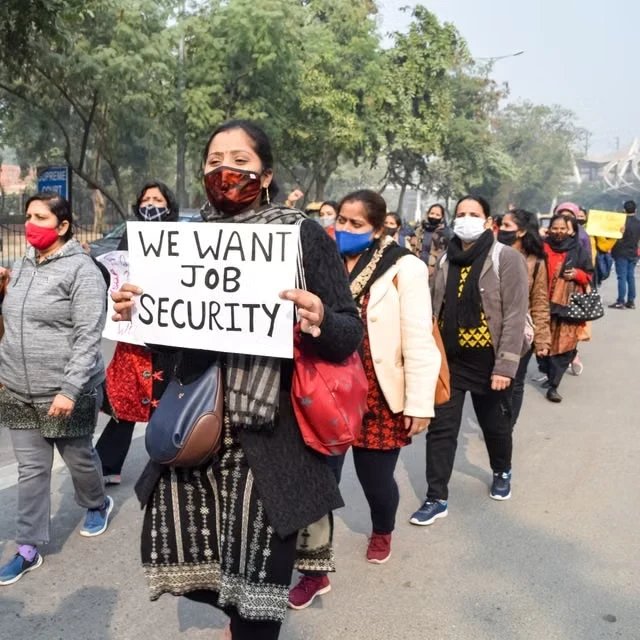
Across the vast and restless landscape of contemporary India, a singular figure has emerged from the crowded theatre of dissent to command global attention. Neha Bora, a young woman whose formative years were spent mastering the disciplined craft of stage performance, has unexpectedly become the defining visage of a swelling Gen Z movement that is reshaping the nation's political vocabulary.
Her trajectory from the rehearsal room to the barricades is not merely a personal narrative of radicalization; it is a profound symbol of how artistic sensibility, when confronted with systemic frustration, transforms into potent civic action.
The Reuters dispatch that brought her story to the world's attention captures a pivotal moment in India's modern history, where the raw energy of youth collides with entrenched institutional power.
On This Page
- The Theatrical Roots of Political Awakening
- Economic Anxieties Fueling a Generation's Anger
- Digital Networks and the Architecture of Gen Z Activism
- State Response and the Contest Over Public Space
- Historical Parallels and the Arc of Indian Dissent
- Implications for India's Democratic Future
- Conclusion: A Generation's Voice, A Nation's Crossroads
The demonstrations she now leads represent far more than a spontaneous eruption of anger over any single grievance. They are the visible crest of a deep, structural wave of discontent that has been building silently within India's enormous young population for years.
With a median age hovering around twenty-eight and millions entering the workforce annually, India possesses a demographic dividend that increasingly feels like a demographic time bomb. Neha Bora's prominence illuminates this paradox with startling clarity: a generation armed with education, digital fluency, and global awareness finds itself confronting limited economic mobility, eroding civil liberties, and a political establishment that often appears deaf to its aspirations. Her theatrical background lends the protests a narrative coherence and emotional resonance that purely political movements frequently lack.
Understanding the full significance of this moment requires examining the multiple forces converging upon it. The intersection of artistic expression and political resistance, the specific mechanisms of Gen Z mobilization in a digitally saturated society, the economic anxieties fueling youth anger, and the state's response to dissent all form essential components of this unfolding drama.
What follows is a comprehensive analysis of how a theatre artist became the emblem of a generation's awakening, and what her ascent reveals about the fault lines running through the world's most populous nation.
TL;DR Neha Bora, a young Indian theatre artist, has become the recognizable face of a growing Gen Z protest movement challenging entrenched political and economic structures in India. Her transition from stage performance to street activism symbolizes a broader awakening among young Indians frustrated by limited opportunities, eroding democratic norms, and systemic indifference. The protests reflect deep demographic pressures in a nation where millions of educated youth confront a stagnant job market and diminishing civil liberties. Bora's theatrical skills have infused the movement with compelling narrative power, while digital networks amplify its reach. This analysis examines the economic, political, and cultural forces driving India's youth unrest, the unique characteristics of Gen Z activism, and the profound implications for the world's largest democracy as it navigates an increasingly uncertain future.
The Theatrical Roots of Political Awakening
The journey from stage performance to street protest is not as improbable as it might initially appear. Theatre, at its most fundamental level, is an art form dedicated to exposing truth, embodying conflict, and demanding an audience's attention.
Neha Bora's training in this discipline equipped her with precisely the tools that effective political resistance requires: the ability to command a crowd, to articulate grievance with clarity and emotion, and to transform abstract injustice into visceral, human narrative. Her background distinguishes her from traditional political organizers and lends her a unique credibility among young Indians who distrust conventional institutions.
The Discipline of Performance as Protest Strategy
Theatre demands rigorous preparation, precise timing, and an intuitive understanding of how collective emotion moves through a gathered audience. These competencies translate directly into the choreography of mass demonstration, where the difference between a scattered crowd and a coherent movement often rests on symbolic gestures and compelling visual narratives.
Bora's theatrical instincts allow her to craft protest moments that resonate far beyond the immediate physical space, generating images and stories that circulate endlessly through digital networks. Her performances on the street carry the same intentionality as those on stage.
This fusion of artistic practice with political action represents a distinctive feature of contemporary youth movements globally. From Hong Kong's protest theatre to climate activism's theatrical interventions, young people increasingly recognize that politics is fundamentally performative. Bora's emergence in India signals that this understanding has taken root in South Asia's largest democracy.
Her ability to embody collective frustration transforms her from an individual protester into a vessel for millions of unheard voices, amplifying their demands through the power of representation.
Symbolism and the Construction of a Movement's Face
Every significant social movement requires recognizable human symbols through which abstract demands become emotionally legible. Neha Bora's youth, gender, and artistic background make her an exceptionally potent emblem for a generation demanding change. She represents the educated, creative, and globally connected young Indian who refuses to accept the limitations imposed by an older political order.
Her visibility challenges stereotypes about who protests and why, complicating narratives that seek to dismiss youth unrest as mere hooliganism or foreign instigation.
The construction of a movement's face is never entirely organic; media attention, digital sharing, and strategic communication all play roles in elevating certain figures above others. Bora's ascent reflects both her personal qualities and the broader media ecosystem's hunger for compelling characters. International outlets like Reuters recognize that personal stories humanize complex political phenomena for global audiences.
Her face becomes a gateway through which the world encounters India's generational conflict, making her both a participant in and a symbol of the unrest.
Economic Anxieties Fueling a Generation's Anger
Beneath the visible drama of street protests lies a bedrock of economic frustration that has been accumulating for years. India's celebrated economic growth has failed to generate sufficient employment for its millions of educated young people, creating a crisis of aspiration that cuts across caste, region, and gender lines.
Neha Bora's generation entered adulthood expecting opportunities commensurate with their qualifications, only to encounter a labor market characterized by precarious work, stagnant wages, and persistent underemployment. This gap between expectation and reality constitutes the combustible material that protest movements ignite.
The Demographic Dividend Turned Liability
India adds approximately twelve million new workers to its labor force every year, yet formal sector job creation consistently falls short of this figure. The result is a vast informal economy where young people cycle through temporary positions without security or advancement. Government statistics showing declining unemployment often mask the reality of underemployment and withdrawal from the labor force entirely.
For educated youth, the situation is particularly galling: years of investment in degrees yield positions that require no such qualifications, breeding resentment toward a system that promised mobility but delivered stagnation.
The COVID-19 pandemic exacerbated these structural weaknesses, destroying millions of jobs and pushing countless families into poverty. Young workers bore the brunt of these losses, entering a post-pandemic economy with diminished prospects and accumulated debt. The psychological toll of this economic precarity manifests in rising anxiety, depression, and anger among Indian youth.
When conventional channels for expressing this distress prove ineffective, street protest becomes an increasingly attractive option for those who feel their futures have been foreclosed by forces beyond their control.
Inequality and the Broken Promise of Mobility
India's economic growth has been remarkably unequal, concentrating wealth among a small elite while the majority struggles with rising costs and stagnant incomes. Young people perceive this inequality acutely, particularly in urban areas where the contrast between luxury and deprivation is impossible to ignore.
The promise that education and hard work guarantee advancement rings hollow when structural barriers systematically exclude those without connections or inherited advantage. This perception of rigged outcomes fuels the moral outrage that animates protest movements.
The specific grievances vary across regions and communities, but a common thread runs through them: a sense that the social contract has been broken. Young Indians were promised that participation in education and the formal economy would yield security and respectability. Instead, they confront a reality where even advanced degrees offer no protection against exploitation and uncertainty. Neha Bora's prominence reflects this shared disillusionment, transforming individual frustration into collective political consciousness that demands systemic change rather than individual accommodation.
Digital Networks and the Architecture of Gen Z Activism
The protests that elevated Neha Bora to prominence could not have achieved their scale or visibility without the digital infrastructure that defines contemporary youth culture. Gen Z activism operates through a fundamentally different architecture than the mass movements of previous generations, leveraging social media platforms, encrypted messaging applications, and decentralized coordination tools to organize rapidly and evade traditional suppression tactics. Understanding this digital dimension is essential to comprehending both the movement's strengths and its vulnerabilities.
From Hashtags to Street Presence
Digital platforms serve multiple functions in modern protest movements, from initial consciousness-raising through logistical coordination to global amplification of local grievances. A hashtag can transform an isolated incident into a national conversation within hours, while encrypted group chats allow organizers to plan actions without surveillance.
The speed and fluidity of digital organizing present significant challenges to authorities accustomed to disrupting movements through targeted arrests of identifiable leaders. Decentralization makes suppression more difficult but also complicates the maintenance of coherent demands.
Neha Bora's rise illustrates how digital visibility can elevate individual activists to symbolic status rapidly. Her image, shared across platforms, becomes a rallying point that transcends specific organizational affiliations. This personalization of protest carries risks, however, as the movement's fortunes become entangled with a single figure's safety and reputation.
The same digital tools that amplify her message also expose her to coordinated harassment and surveillance, creating a precarious existence for those who become the face of dissent.
Global Solidarity and Local Realities
Digital networks connect India's youth protests to global movements, facilitating the exchange of tactics, narratives, and solidarity across borders. Young activists in India draw inspiration from climate strikes, racial justice movements, and democratic uprisings elsewhere, while their struggles resonate with international audiences attuned to generational conflict. This global dimension complicates government responses, as heavy-handed suppression risks international condemnation and reputational damage. The interconnectedness of digital activism creates both opportunities for solidarity and vulnerabilities to external manipulation.
Yet the global framing of local struggles can also obscure the specific conditions that generate protest in particular contexts. India's youth unrest emerges from distinct economic, political, and cultural circumstances that cannot be reduced to a generic generational conflict. Neha Bora's effectiveness as a symbol derives partly from her rootedness in Indian realities even as her image circulates globally. The challenge for the movement is to maintain this local authenticity while leveraging international attention and support.
We Also Published
State Response and the Contest Over Public Space
The Indian state's response to youth protests reveals much about the character of contemporary governance and the narrowing space for legitimate dissent. Authorities have deployed a familiar repertoire of tactics: police crackdowns, preventive detention, internet shutdowns, and legal harassment of organizers.
These measures aim to raise the costs of participation and disrupt movement infrastructure, but they also generate backlash that can intensify grievances and attract new supporters. The contest over public space has become a defining feature of India's political landscape.
Policing Protest in the World's Largest Democracy
India's police forces operate under legal frameworks inherited from the colonial era, granting broad powers to restrict assembly and detain individuals without robust judicial oversight. These powers are increasingly deployed against youth protesters, with thousands arrested and many facing lengthy pretrial detention. The use of sedition and anti-terror statutes against activists sends a chilling message about the consequences of dissent. International human rights organizations have documented systematic abuses, yet domestic accountability mechanisms remain weak and politicized.
The state's approach reflects a broader authoritarian turn in Indian politics, where democratic institutions are increasingly subordinated to executive power. Courts that once served as checks on government overreach now often defer to security justifications. Media outlets face pressure to moderate coverage of protests, while social media platforms comply with takedown requests. This institutional environment makes street protest both more necessary and more dangerous, as conventional channels for redressing grievances close one by one.
The Symbolic Battle Over Neha Bora's Image
Neha Bora's emergence as a protest symbol has made her a target of state attention and a focal point in the broader contest over narrative control. Authorities seek to discredit her through legal action and media campaigns, while supporters elevate her as a martyr for democratic freedoms. This symbolic battle matters because public perception shapes the political costs of repression.
If Bora is successfully criminalized, the movement loses a powerful emblem; if she withstands state pressure, she becomes an enduring inspiration for resistance.
The personal toll of this symbolic role is immense, as Bora navigates constant surveillance, legal jeopardy, and the psychological weight of representing millions. Her theatrical training may provide resources for managing this pressure, allowing her to perform resilience even under duress. Yet the human costs of leadership in repressive conditions should not be romanticized.
The movement's sustainability depends on distributing the burdens of visibility and creating collective structures that can survive the loss of any individual figure.
- 01
- 02
- 03
- 04
Historical Parallels and the Arc of Indian Dissent
India possesses a rich history of protest and resistance that provides essential context for understanding contemporary youth unrest. From the anti-colonial movement through post-independence labor struggles to more recent farmer protests and student mobilizations, dissent has been a constant feature of Indian political life. Neha Bora's emergence connects to this lineage even as it breaks new ground in its digital character and generational specificity. Recognizing these historical continuities helps illuminate both the possibilities and limitations of current movements.
From Gandhi to Gen Z: Continuity and Rupture
The Indian independence movement established powerful templates for protest that continue to shape contemporary activism. Gandhi's techniques of nonviolent civil disobedience, mass mobilization, and symbolic action remain influential, though their effectiveness in a transformed political landscape is contested. Contemporary youth movements draw selectively from this repertoire, adopting elements that resonate while discarding approaches that seem outdated or ineffective. The result is a hybrid practice that honors tradition while embracing innovation.
Yet significant ruptures distinguish Gen Z activism from earlier forms of Indian dissent. The digital environment, the fragmentation of traditional political organizations, and the global interconnectedness of youth culture create conditions that earlier movements did not face. Neha Bora's theatrical approach represents a distinctly contemporary synthesis, drawing on performance traditions while deploying them through digital platforms that amplify reach exponentially. Understanding these continuities and ruptures is essential for assessing the movement's prospects.
Lessons from Previous Youth Uprisings
India has witnessed numerous youth-led movements over the decades, from the student protests of the 1970s to the anti-corruption movement of the 2010s. These precedents offer valuable lessons about the dynamics of youth mobilization, including the challenges of sustaining momentum, the risks of co-optation, and the difficulty of translating protest energy into lasting political change. Neha Bora's movement will be shaped by these historical patterns even as it seeks to transcend them.
The anti-corruption movement led by Anna Hazare in 2011 demonstrated the potential for youth mobilization to capture national attention and force policy responses. Yet it also revealed the fragility of movements built around charismatic figures and single issues. The movement's fragmentation and eventual absorption into electoral politics disappointed many young participants, breeding cynicism about the possibilities of change through protest. Bora's generation inherits this skepticism even as it attempts to chart a different course.
Implications for India's Democratic Future
The emergence of Neha Bora as a symbol of Gen Z unrest carries profound implications for India's democratic trajectory. The world's largest democracy stands at an inflection point, where an increasingly assertive young generation confronts an entrenched political establishment resistant to meaningful reform. How this confrontation unfolds will shape not only India's domestic politics but also its role in global affairs.
The stakes could hardly be higher, encompassing questions of economic justice, democratic accountability, and the very meaning of citizenship in a rapidly changing society.
The Generational Reckoning
India's political leadership skews significantly older than its population, creating a representational gap that fuels youth alienation. The average age of parliamentarians exceeds fifty-five, while the median Indian is under thirty. This disconnect means that those making decisions about education, employment, and technology often lack direct experience of the conditions young people face.
The resulting policies frequently miss the mark, addressing outdated problems while ignoring emerging challenges. Youth protest represents an attempt to force attention to this representational deficit.
The generational dimension of India's unrest connects to global patterns where young people increasingly reject political systems dominated by their elders. From climate activism to housing protests, youth movements worldwide demand that decision-makers account for long-term consequences they will inherit. India's Gen Z shares this orientation, insisting that current policies be evaluated against their impact on future generations. This temporal dimension of justice adds moral weight to their demands and complicates dismissals of youth protest as mere impatience.
Scenarios for the Coming Decade
The trajectory of India's youth unrest will depend on multiple factors, including economic conditions, state responses, and the movement's internal dynamics. In one scenario, sustained pressure forces meaningful reforms that address core grievances, channeling youth energy into constructive political participation. In another, repression succeeds in demobilizing the movement, at the cost of deepening alienation and potentially radicalizing future activism. A third possibility involves the movement's fragmentation and absorption into existing political structures, diluting its transformative potential.
Neha Bora's personal trajectory will serve as a barometer for these broader dynamics. If she can sustain her activism while avoiding imprisonment or co-optation, she may become a lasting figure in Indian political life. If she is crushed by state pressure, she may become a martyr whose memory inspires future movements.
If she is absorbed into conventional politics, she may disappoint those who saw her as a symbol of genuine change. Her choices, and the choices of those who support her, will shape India's democratic future in ways that cannot yet be fully anticipated.
Conclusion: A Generation's Voice, A Nation's Crossroads
Neha Bora's ascent from theatre stages to the frontlines of India's youth unrest encapsulates a pivotal moment in the world's largest democracy. Her story is not merely that of an individual activist but of an entire generation demanding to be heard by a political system that has grown accustomed to ignoring them.
The protests she symbolizes represent the accumulated frustration of young Indians who have done everything expected of them—pursued education, embraced technology, engaged with global culture—only to find the doors of opportunity closing and the channels of democratic expression narrowing.
The outcome of this confrontation remains uncertain, but its significance cannot be overstated. India's demographic weight means that the aspirations and grievances of its youth will shape not only the nation's future but also the trajectory of global politics in the coming decades.
Whether the movement succeeds in forcing meaningful change or is suppressed through state violence, its emergence signals that the social contract between India's rulers and its ruled is under profound strain. Neha Bora's face, whether it becomes an icon of triumph or tragedy, will be remembered as the moment a generation found its voice.
From our network :
- How AI Agents Will Change the Way We Manage Personal FinancesExplore how AI agents are transforming personal finance through automated budgeting, bill payment, and investment management, while examining the critical security protocols and governance frameworks required for safe deployment.
- Live Online English Classes for Kids: Do They Actually Reduce Anxiety?A ten-week study reveals that synchronous online English classes can significantly reduce child language anxiety while improving listening and reading skills. Discover what makes these programs effective and how parents can select the right one.
- The Hidden Cost of AI Convenience: Why Over-Permissioned Agents Are a Security Time BombDiscover why AI agents with excessive permissions create dangerous single points of failure, and learn how implementing least privilege principles can protect your organization from exploitation.
- CISA’s Ten-Advisory Wave: Why Generic Patching Fails in OT and How to Build Product-Specific PlaybooksCISA released ten ICS advisories in one week, exposing critical infrastructure risks. Generic patching fails in OT. Learn to build product-specific remediation playbooks.
- University Language Proficiency Exams: Why Institutional Tests Demand Different Preparation Than IELTS and TOEFLDiscover why university-specific language proficiency examinations differ fundamentally from IELTS and TOEFL, and learn strategic preparation approaches for institutional assessment success.
- Mobile Learning and VR in English: What Global Evidence Reveals About Effective Language TechnologyA systematic review across 14 countries reveals which language-learning technologies genuinely work. Mobile learning, AI, and VR show measurable benefits when pedagogically integrated. This evidence-based guide helps educators and learners select technology that delivers real return on investment.
- Forbidden Matrix Patterns and Visible Lattice Points: A Geometric DictionaryExplore how multidimensional 0–1 matrices encode geometric truths, linking forbidden patterns to visible lattice points and hypergraph theory, with applications in combinatorics and computational geometry.
- The Final Descent: How ESA Retired the Legendary Cluster Constellation After 24 Years of Space Weather ScienceAfter 24 years mapping Earth’s magnetosphere, ESA’s Cluster mission concluded with a precisely controlled reentry over the South Pacific. This analysis explores the scientific legacy, engineering decisions, and debris mitigation principles behind one of space exploration’s most responsible retirements.
- Committed Mediterranean Precipitation Decline: Why Emissions Cuts Alone Cannot Restore Winter RainsNew NOAA research reveals that Mediterranean winter rains may decline irreversibly even with emissions cuts. Explore the science of committed climate change and regional impacts.
RESOURCES
- From theatre to streets, Gen Z protester Neha Bora a new face of ...reuters.com1 day ago ... From theatre to streets, Gen Z protester Neha Bora a new face of India's youth unrest · Student activist Neha…
- From theatre to streets, Gen Z protester Neha Bora a new face offacebook.com22 hours ago ... From theatre to streets, Gen Z protester Neha Bora a new face of India's youth unrest Click the link in…
- India's Young Put Their Bodies on the Line to Be Heardnytimes.com3 days ago ... India Protests. The Latest · What to Know · Video: India's Crackdown · Gen Z's ... protest site in India's…
- From theatre to streets, Gen Z protester Neha Bora a new face of ...facebook.com7 hours ago ... If indian citizens declares india is a monarch then, protesting will be illegal from then! But till now we know…
- Why India's youth anger has become Modi's biggest challenge - BBCbbc.comAug 3, 2026 ... Dharmendra Pradhan was forced to resign as India's education minister last month after angry Gen-Z protesters took to the streets…
- India's youth-led 'cockroach' protests expose cracks in Modi's ... - PBSpbs.orgJul 27, 2026 ... India's Gen Z are blaming him for the police violence and criticizing his divisive politics. Narendra Modi, Indian Prime Minister:…
- From theatre to streets, Gen Z protester Neha Bora a new face of ...thestar.com.my1 day ago ... From theatre to streets, Gen Z protester Neha Bora a new face of India's youth unrest ... The Cockroach Janta…
- From theatre to streets, Gen Z protester Neha Bora a new ... - LinkedInlinkedin.com1 day ago ... ... India's youth unrest - Student activist Neha Bora leads protests against vote-rigging. - Bora and other prominent activists were…
- Gen Z protester Neha Bora a new face of India's youth unrestnst.com.my6 hours ago ... A little-known doctoral student has emerged as one of the most visible faces of a protest movement in India that…
- From theatre to streets, Gen Z protester Neha Bora a new face of ...tbsnews.netFrom theatre to streets, Gen Z protester Neha Bora a new face of India's youth unrest ... Student activist Neha Bora rises with youth…
- Gen Z Protester Neha Bora: The New Face of India's Youth Unrestglobalbankingandfinance.com1 day ago ... Neha Bora, a doctoral student and activist, has become a key leader in India's Gen Z youth protests challenging the…
- India | From theatre to streets, Gen Z protester Neha Bora a new face ...threads.com1 day ago ... #India | From theatre to streets, Gen Z protester Neha Bora a new face of India's youth unrest · -…
- From theatre to streets, Gen Z protester Neha Bora a new ... - AsiaOneasiaone.com14 hours ago ... From theatre to streets, Gen Z protester Neha Bora a new face of India's youth unrest · Bora urges protesters…
- From theatre to streets, Gen Z protester Neha Bora a new face of ...en.bonikbarta.com10 hours ago ... ... Gen Z protester Neha Bora a new face of India's youth unrest. Reuters ... Youth protesters, many of them…
- Neha Bora: The 29-Year-Old Activist Shaping India's Youth Protest ...gulfnews.com7 hours ago ... Meet the 29-year-old Gen Z activist and theatre actress rattling India's political establishment. From theatre to protests: How Neha Bora…
- 01
- 02
- 03
- 04
- 05
- 06
- 07
- 08
0 Comments