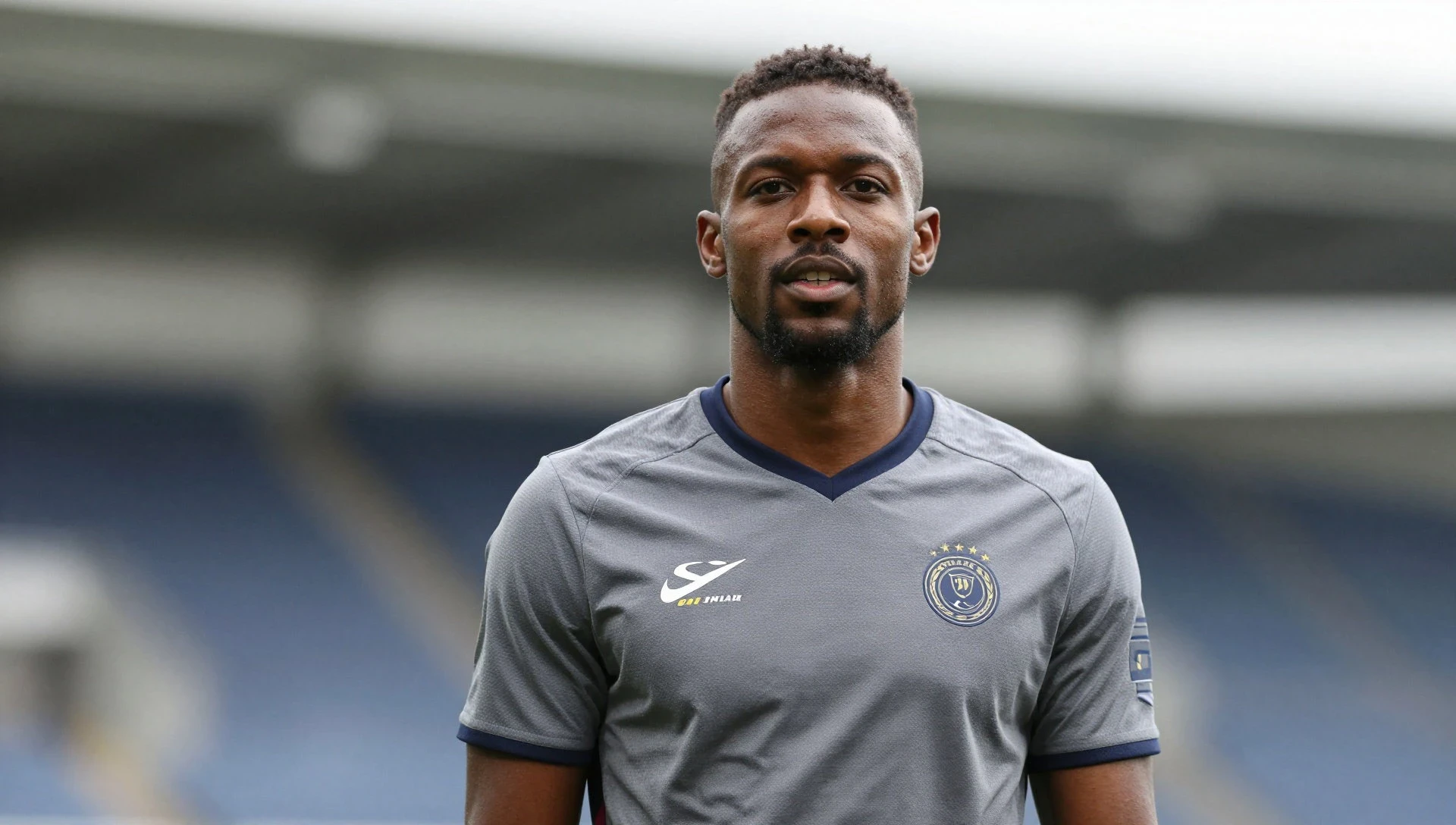
Bursaspor president Enes Çelik has framed the future of Nigerian striker Kelechi Iheanacho around a single, unambiguous condition: the Turkish club will retain its leading scorer unless an offer arrives that is genuinely exceptional by market standards.
The statement, reported by Punch Newspapers, is a textbook exercise in transfer-window positioning, balancing public affection for a productive forward against the fiduciary duty owed to a club operating outside Europe's wealthiest tier. Çelik did not attach a figure to his threshold, and that omission is itself informative.
The underlying numbers explain why the debate exists at all. Iheanacho has scored 16 goals and supplied three assists across 12 league appearances in the 2026/27 campaign, a return that places him among the most efficient forwards in Turkish football.
On This Page
Add his strike for Nigeria in a friendly against Russia and the tally reaches 17 goals in 13 outings for club and country. That is elite output, and elite output attracts buyers.
Fenerbahçe is reportedly monitoring the forward, which converts an abstract valuation question into a concrete domestic rivalry. This analysis examines the economics of the president's stance, the mechanics of how "exceptional" offers are actually priced, and what the episode reveals about player trading at clubs of Bursaspor's scale. The core message is simple: sentiment sets the floor, but arithmetic sets the ceiling.
TL;DR Bursaspor president Enes Çelik says the club wants to keep Kelechi Iheanacho but would weigh an extraordinary bid on financial grounds, acknowledging that most supporters would oppose any sale. Iheanacho's 16 goals and three assists in 12 league games, plus a Nigeria strike, have drawn reported Fenerbahçe interest. The episode illustrates how mid-tier clubs price productive assets: emotional attachment governs the default position, while a clearly defined valuation threshold governs the exit.
The Economics of an "Exceptional Offer"
Çelik's phrasing deserves close reading because it separates two distinct decisions that fans often conflate. The first is whether the club wishes to keep the player, which he answers affirmatively and emphatically.
The second is whether the club would accept a price that exceeds the player's expected contribution, which he leaves deliberately open. Professional clubs routinely hold both positions simultaneously.
Why Presidents Avoid Naming a Price
Publishing a valuation would hand negotiating leverage to every interested buyer, including domestic rivals with superior resources. By declining to specify a figure, Çelik preserves optionality and forces suitors to reveal their hand first.
This is standard practice in transfer negotiations, not evasion, and it protects the club from anchoring its own expectations too low.
The word "substantial" also functions as a signal to the market rather than a description. It tells Fenerbahçe and any other observer that a routine bid will be rejected without discussion.
In effect, the president has set a qualitative reserve price, a minimum threshold below which no conversation begins, while leaving the quantitative figure to be discovered through bidding.
There is a governance dimension as well. Çelik explicitly notes that management must weigh the situation logically as well as emotionally, a formulation that pre-empts supporter criticism. If a sale eventually occurs, the club has already established the framework: the decision was financial, deliberate, and taken in the institution's interest rather than the player's or the crowd's.
The Supporters' Stake and the Club's Duty
Çelik concedes that most supporters would oppose a sale, and that concession is politically significant. A president who acknowledges the popular view before overriding it, if he ever does, has prepared the ground for a defensible decision. Football governance at this level is as much about managing expectations as managing assets.
Yet the president also states that he personally wants Iheanacho to stay more than anyone, which reframes any future sale as a reluctant institutional choice rather than a personal preference.
That rhetorical structure is common among club executives facing asset-disposal decisions, and it tends to precede a sale more often than it prevents one.
Reading the Numbers as a Valuation Signal
A goal every 1.33 league matches is the kind of ratio that compresses negotiation timelines. For context, a forward averaging roughly 1.58 goal involvements per appearance is not merely contributing; he is the primary engine of his team's attacking output. Buyers pay premiums for scarcity, and consistent scorers are scarce.
The arithmetic also cuts the other way. Bursaspor must weigh the goals it would lose against the capital a sale would release, and that trade-off depends on replacement cost. If a comparable striker costs more than the fee received, selling is value-destructive regardless of how large the offer appears in isolation.
There is a timing variable too. Iheanacho's contract length, which the source does not specify, determines how much leverage Bursaspor retains. A long contract supports a high reserve price; a short one invites lowball bids and forces a decision before the asset depreciates toward free agency.
We Also Published
Fenerbahçe, Domestic Rivalry and Market Dynamics
Reported interest from Fenerbahçe changes the character of the negotiation because it introduces a domestic buyer with greater financial capacity. A sale within Turkey carries sporting as well as financial consequences: the goals Iheanacho scores would then count against Bursaspor rather than for it. That asymmetry justifies a premium above any neutral-market valuation.
The Premium for Selling to a Rival
Clubs routinely demand more from domestic competitors than from foreign buyers, and the logic is straightforward. A foreign sale removes the player from the league entirely; a domestic sale strengthens a direct opponent. The effective cost of the transaction therefore includes competitive harm, which must be priced into the fee.
For Fenerbahçe, the calculation is equally rational. Acquiring the league's leading scorer weakens a competitor and upgrades its own attack in a single move. That dual benefit explains why such transfers command inflated fees and why Çelik's insistence on an exceptional offer is not posturing but pricing.
How Mid-Tier Clubs Actually Monetise Talent
For clubs outside the continental elite, player trading is not a side activity but a core revenue line. Buying low, developing, and selling at a multiple funds squad investment and infrastructure. Refusing every offer, however flattering, would starve that model of the capital it requires to function.
The discipline lies in the threshold. A club that sells too readily loses sporting competitiveness; a club that never sells accumulates ageing assets and wage obligations. Çelik's formulation, an exceptional offer or nothing, is an attempt to occupy the defensible middle ground between those two failure modes.
Comparable transactions across Turkish football support the pattern. Domestic transfers of proven scorers to the largest clubs typically command fees well above international market equivalents, precisely because the buyer is purchasing competitive advantage as well as playing ability. Bursaspor's president is pricing against that benchmark.
What the Episode Reveals About Modern Football Governance
The Iheanacho case is small in scale but structurally representative. A productive player, a rival's interest, a president balancing affection against arithmetic, and a supporter base whose preferences constrain but do not determine the outcome. These elements recur at every level of the professional game, from modest clubs to continental giants.
Emotion, Logic and the Decision Framework
Çelik's explicit separation of emotional and logical considerations is more than rhetoric; it describes an actual decision framework. Supporters evaluate a sale by its immediate sporting cost, while management must also weigh balance-sheet effects, wage structures, and reinvestment opportunities. Both perspectives are legitimate, and they frequently conflict.
The president's statement that any decision would serve the club's best interests functions as a pre-commitment device. It establishes the criterion in advance, so that a future sale can be defended on institutional grounds rather than explained as a surrender to a wealthier buyer. That framing matters for maintaining credibility with the fanbase.
The Player's Position in the Equation
Notably absent from the source is any public statement from Iheanacho himself. A player's ambition to compete at a higher level, or to remain where he is scoring freely, materially affects whether a sale proceeds smoothly or becomes contested. His silence leaves that variable unresolved.
His international form adds another layer. Scoring for Nigeria raises his visibility and his market value, and national team coaches generally prefer players competing at the highest available level. That dynamic creates quiet pressure toward a move, even when the selling club would rather retain him.
For Bursaspor, the optimal outcome is narrow but achievable: keep the goals through the current campaign, then reassess in a summer window when more buyers compete. Whether that outcome materialises depends on how exceptional the next offer proves to be.
- 01
- 02
- 03
- 04
Precedents and the Wider Market
Turkish football has a well-documented history of domestic transfers between its largest clubs and ambitious provincial sides, and those deals consistently price in the competitive dimension. The pattern suggests Bursaspor's threshold will be judged against local precedent rather than European benchmarks.
Across the wider market, clubs of comparable stature increasingly treat player trading as a portfolio discipline, setting explicit valuation bands and declining bids below them. Çelik's refusal to name a figure is consistent with that approach, even if it frustrates observers seeking a headline number.
Conclusion: A Threshold, Not a Refusal
The essential meaning of Çelik's statement is that Bursaspor has not closed the door on a sale; it has defined the terms on which the door would open. That distinction separates a negotiating position from a rejection, and it is the most consequential element of the entire report.
Iheanacho's 16 league goals in 12 appearances give the club genuine leverage, and reported Fenerbahçe interest gives that leverage a buyer. Whether the threshold is met depends on figures no party has disclosed, but the framework is now public: keep him if possible, sell only if the arithmetic demands it.
From our network :
- How AI Agents Will Change the Way We Manage Personal FinancesExplore how AI agents are transforming personal finance through automated budgeting, bill payment, and investment management, while examining the critical security protocols and governance frameworks required for safe deployment.
- The Hidden Cost of AI Convenience: Why Over-Permissioned Agents Are a Security Time BombDiscover why AI agents with excessive permissions create dangerous single points of failure, and learn how implementing least privilege principles can protect your organization from exploitation.
- CISA’s Ten-Advisory Wave: Why Generic Patching Fails in OT and How to Build Product-Specific PlaybooksCISA released ten ICS advisories in one week, exposing critical infrastructure risks. Generic patching fails in OT. Learn to build product-specific remediation playbooks.
- University Language Proficiency Exams: Why Institutional Tests Demand Different Preparation Than IELTS and TOEFLDiscover why university-specific language proficiency examinations differ fundamentally from IELTS and TOEFL, and learn strategic preparation approaches for institutional assessment success.
- Mobile Learning and VR in English: What Global Evidence Reveals About Effective Language TechnologyA systematic review across 14 countries reveals which language-learning technologies genuinely work. Mobile learning, AI, and VR show measurable benefits when pedagogically integrated. This evidence-based guide helps educators and learners select technology that delivers real return on investment.
- Committed Mediterranean Precipitation Decline: Why Emissions Cuts Alone Cannot Restore Winter RainsNew NOAA research reveals that Mediterranean winter rains may decline irreversibly even with emissions cuts. Explore the science of committed climate change and regional impacts.
- The Final Descent: How ESA Retired the Legendary Cluster Constellation After 24 Years of Space Weather ScienceAfter 24 years mapping Earth’s magnetosphere, ESA’s Cluster mission concluded with a precisely controlled reentry over the South Pacific. This analysis explores the scientific legacy, engineering decisions, and debris mitigation principles behind one of space exploration’s most responsible retirements.
- Live Online English Classes for Kids: Do They Actually Reduce Anxiety?A ten-week study reveals that synchronous online English classes can significantly reduce child language anxiety while improving listening and reading skills. Discover what makes these programs effective and how parents can select the right one.
- Forbidden Matrix Patterns and Visible Lattice Points: A Geometric DictionaryExplore how multidimensional 0–1 matrices encode geometric truths, linking forbidden patterns to visible lattice points and hypergraph theory, with applications in combinatorics and computational geometry.
RESOURCES
- Bursaspor name price for Kelechi Iheanacho amid Fenerbahce ...facebook.com2 days ago ... Although Çelik refused to disclose a specific transfer valuation, he ... Kelechi Iheanacho's move to Turkish club Bursaspor was ...
- Senior Man! Kelechi Iheanacho has completed a transfer move to ...instagram.comJul 17, 2026 ... Kelechi Iheanacho has completed a transfer move to Turkish 2nd Tier Lig side Bursaspor ... valued. He contributed massively with…
- Kelechi Iheanacho has a new club! The Nigerian striker joins ...facebook.comJul 20, 2026 ... Kelechi Iheanacho has signed for Bursaspor on a free transfer on a three-year deal. The 29-year-old Super Eagles striker joined…
- Kelechi Iheanacho (Bursaspor) Stats - Flashscore.comflashscore.com... transfer value, contract length, transfer history including transfer fees, injury updates or unique player ratings from previous matches. Follow player ...
- Bursaspor set condition for Iheanacho sale - Punch Newspaperspunchng.com1 day ago ... ... Kelechi Iheanacho if they receive an extraordinary transfer of. ... Although Çelik declined to disclose the striker's valuation, he ...
- Kelechi Iheanacho Prioritising Celtic Stay : r/CelticFC - Redditreddit.comJun 30, 2026 ... We should be looking for younger, fitter players with a higher transfer value ceiling. ... [Bursaspor] announce the signing of…
- Kelechi Iheanacho - Transfer history - Transfermarkttransfermarkt.usKelechi Iheanacho, 30, from Nigeria ➤ Bursaspor, since 2026 ➤ Centre-Forward ➤ Market value: €2.80m ➤ * Oct 3, 1996 in Imo, Nigeria.
- Kelechi Iheanacho reveals reason for choosing Bursaspor over Celticbbc.comJul 23, 2026 ... In his first interview with his new club, he expressed his happiness and excitement at his move and said: "To…
- Kelechi Iheanacho explains summer move after controversial Celtic ...sports.yahoo.comOct 6, 2026 ... Kelechi Iheanacho has opened up on his decision to join Bursaspor ... value the most. It takes just a few…
- Iheanacho rejects new Celtic deal as Saracchi gives up on returnbbc.comJul 18, 2026 ... Nigeria striker Kelechi Iheanacho turns down a new contract with Celtic and joins Bursaspor ... transfer window closed. He missed…
- Kelechi Iheanacho - Player profile 26/27 | Transfermarkttransfermarkt.comJun 10, 2026 ... Kelechi Iheanacho, 30, from Nigeria ➤ Bursaspor, since 2026 ➤ Centre-Forward ➤ Market value: €2.8M ➤ * 03/10/1996 in Imo,…
- Kelechi Iheanacho stats and transfer history - AiScorem.aiscore.comAiScore player value for Kelechi Iheanacho is 2.8M. He has a contract with Bursaspor until 1877443200. Kelechi Iheanacho's jersey number is 14. Kelechi ...
- Kelechi Iheanacho Transfer from Bursaspor to Fenerbahçetransferfeed.com2 days ago ... Kelechi Iheanacho could move from Bursaspor to Fenerbahçe in January in a high-value transfer. The Nigerian international has scored 16 ...
- Kelechi Iheanacho: transfer news, market value (ETV) and statsfootballtransfers.comBursaspor got Kelechi Iheanacho for free. Kelechi Iheanacho latest transfers and transfer rumours, season statistics and career statistics are available on ...
- Kelechi Iheanacho - Market value over time | Transfermarkttransfermarkt.co.ukThis is the market value site of Bursaspor player Kelechi Iheanacho which shows the market value development of the player in his career.
- 01
- 02
- 03
- 04
- 05
- 06
- 07
- 08
0 Comments