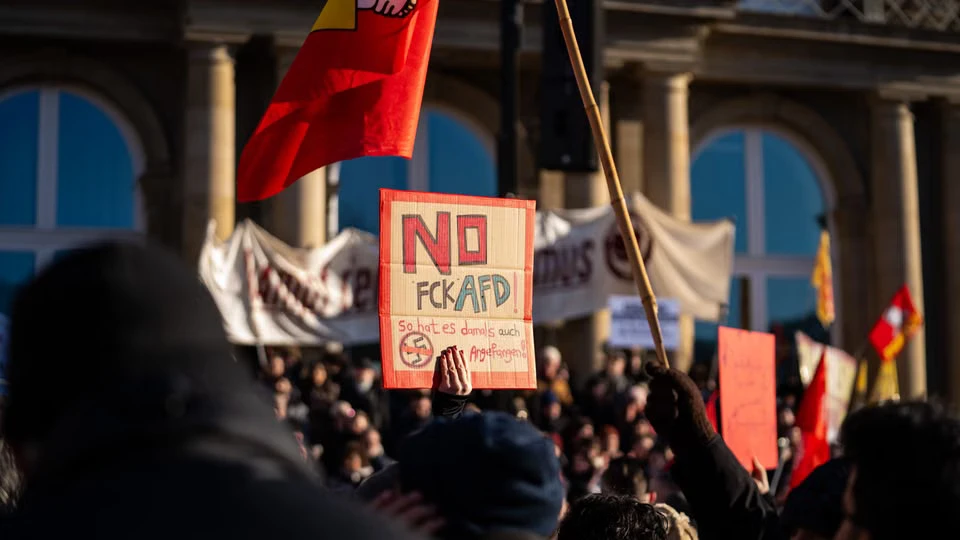
On 31 October 2026, protesters in several European cities marked Halloween by directing public anger at the cost of housing rather than at seasonal folklore. Sky News footage documented demonstrations framed around a single proposition: that house prices have become a source of genuine fear for ordinary households. The timing was deliberate, converting a cultural ritual of manufactured fright into a platform for material grievance.
The underlying economics are not mysterious. European housing markets have absorbed more than a decade of ultra-low interest rates, constrained construction, and population concentration in a handful of metropolitan labour markets.
The result is a structural mismatch between what households earn and what shelter costs, and that mismatch has now acquired enough political weight to fill streets on a public holiday.
On This Page
What follows examines the protest wave as an economic signal rather than a curiosity. It traces the affordability arithmetic behind the demonstrations, compares national housing burdens across the continent, and assesses whether street pressure can translate into durable policy change. The evidence suggests a market correction is unlikely to arrive on its own.
TL;DR Halloween protests across Europe converted a cultural holiday into a vehicle for housing grievance, reflecting sustained anxiety over affordability rather than a single price shock. The demonstrations point to a structural gap between household incomes and shelter costs, amplified by constrained supply and concentrated demand in major cities. Street pressure of this kind rarely produces immediate policy, but it reliably signals where electoral risk is accumulating. The analysis below quantifies that burden, compares national responses, and weighs the probability that protest translates into durable housing reform.
The Affordability Arithmetic Behind the Protests
Housing grievance becomes politically combustible when the numbers cross a threshold that ordinary households can feel monthly. Across the euro area, house prices rose far faster than disposable incomes through the 2015–2022 cycle, and although transaction volumes have since cooled, prices have proved sticky downward. The gap between the two series is the arithmetic that put people on the streets.
Price-to-Income Ratios as the Core Metric
The price-to-income ratio remains the cleanest single indicator of housing stress. It divides median house price by median gross annual household income, producing a multiple that households must finance over decades. Ratios above eight typically signal severe affordability strain; several European capitals now sit well beyond that line.
Cross-country dispersion matters as much as the headline level. Northern and western European markets generally cluster between five and nine times income, while a handful of capital cities exceed twelve. That spread explains why protests concentrated in specific urban centres rather than spreading uniformly across the continent.
Interest rates complicate the picture. A ratio of eight financed at 1.5 percent produces a very different monthly burden than the same ratio financed at 4 percent. The 2022–2024 tightening cycle therefore hit recent buyers hardest, and their visible distress gave the protests their emotional core.
Rental markets transmit the same pressure more immediately. Where purchase prices are prohibitive, demand spills into renting, pushing rents up and displacing households that never intended to rent long-term. Protest slogans about house prices frequently mask rent arrears, eviction risk, and commuting distance as the lived reality.
Supply Constraints and Construction Shortfalls
Affordability pressure has a supply side that policy has repeatedly failed to address. European construction completions fell sharply after 2008 and never fully recovered, leaving a persistent shortfall in dwelling stock relative to household formation. The deficit compounds annually, and each year of underbuilding tightens the market further.
Planning regimes bear much of the blame. Zoning restrictions, lengthy permitting processes, and local opposition to density all raise the cost and delay the delivery of new units. Where these constraints bind hardest, prices detach from construction costs and reflect scarcity rents instead.
Labour and material costs have added a second layer since 2021. Construction input prices rose faster than general inflation, squeezing developer margins and discouraging speculative building. The effect is procyclical: supply weakens precisely when demand pressure is strongest, amplifying price movements.
Vacancy and underoccupancy distort the picture further. Some markets hold substantial empty stock, often in investor hands or tied up in short-term rental platforms. Converting that stock to long-term residential use is politically attractive but administratively slow and legally contested.
Interest Rates and the Financing Squeeze
The rate cycle of 2022–2024 transformed affordability for buyers dependent on mortgages. Monthly repayments on equivalent loan principals roughly doubled in several markets, and stress-testing rules priced many first-time buyers out entirely. The protests drew heavily on this cohort's frustration.
Fixed-rate structures cushioned some households and exposed others. Countries with long fixed-rate traditions saw slower transmission of tightening, while variable-rate markets felt the shock within months. That divergence shaped which national protest movements gathered momentum fastest.
Central banks now face an uncomfortable trade-off. Easing rates to relieve mortgage stress risks re-inflating prices in supply-constrained markets, while holding rates high prolongs household distress. Neither path resolves the underlying shortage, which is why the protests have no easy policy answer.
We Also Published
Protest as Political Signal: Reading the Street
Halloween protests are a communication strategy as much as an economic event. By attaching housing grievance to a date saturated with imagery of fear, organisers secured media coverage that a routine demonstration would not attract. The framing worked: coverage emphasised the message that house prices terrify ordinary people.
Why Housing Has Become an Electoral Fault Line
Housing costs now rank among the top concerns in European voter surveys, particularly among renters and younger cohorts. That salience translates into electoral risk for incumbent governments, because affordability deterioration is visible, attributable, and difficult to reverse within a single parliamentary term.
The demographic composition of the protests matters. Participants skew younger and urban, precisely the groups whose turnout has historically been volatile. If housing grievance consolidates that cohort into a reliable voting bloc, the political consequences could outlast the demonstrations themselves.
Populist movements across the spectrum have recognised the opportunity. Both left-leaning rent-control advocates and right-leaning restrictionist parties compete to own the housing issue, which fragments the policy debate and complicates coalition-building after elections.
Tenure structure shapes the politics. Countries with large owner-occupier majorities tend to resist policies that depress prices, because existing owners form a powerful constituency. Renter-heavy markets generate stronger pressure for intervention, producing divergent national trajectories.
Policy Responses and Their Limits
Governments have reached for familiar instruments: rent caps, subsidised construction, first-time buyer schemes, and restrictions on short-term rentals. Each addresses a symptom, and several carry unintended consequences that worsen supply over time. Rent control is the clearest example of a well-intentioned measure with documented supply effects.
Subsidised demand-side schemes are equally problematic. Help-to-buy style programmes raise purchasing power without adding dwellings, and in supply-constrained markets the subsidy is capitalised into prices. The buyer gains a mortgage; the seller captures the subsidy.
Supply-side reform is the economically coherent answer but the politically slowest. Zoning liberalisation, permitting acceleration, and density mandates deliver units years after announcement, well beyond electoral horizons. Politicians therefore prefer visible demand-side gestures to invisible supply reforms.
Public housing investment offers a middle path where fiscal space exists. Direct construction adds to stock without inflating prices, though it requires sustained capital budgets and land assembly powers that many municipalities lack. Where it has been tried at scale, waiting lists have shortened.
Media Framing and Public Perception
The Sky News report chose a pointed frame: house prices terrify protesters. That construction links an economic variable to an emotional state, and the linkage is analytically useful because fear drives political behaviour more reliably than statistics. Perception becomes a policy input.
Media coverage of housing has shifted measurably over the past decade, moving from property-market reporting aimed at investors toward affordability reporting aimed at renters. That editorial migration reflects and reinforces changing audience composition, and it amplifies pressure on governments.
Protest imagery travels well on social platforms, which favours visually striking actions over detailed policy demands. The Halloween motif guaranteed shareability, but it also risks reducing a structural problem to a seasonal spectacle that fades once the holiday passes.
Sustained attention requires organisational infrastructure beyond a single demonstration. Tenant unions, housing charities, and advocacy groups provide that continuity, and their capacity will determine whether the October protests mark a beginning or a one-off expression of frustration.
- 01
- 02
- 03
- 04
What the Protest Wave Signals for Markets and Policy
For investors and policymakers alike, the protests function as a leading indicator of political risk in European housing. Markets that combine high price-to-income multiples with weak supply response and renter-heavy electorates are the most exposed to intervention. That combination is not evenly distributed.
Investment Implications of Housing Politics
Residential property investment now carries regulatory risk that was not priced a decade ago. Rent caps, short-term rental restrictions, and higher transaction taxes all reduce expected returns, and their probability rises with street pressure. Portfolio allocations should reflect that political discount.
Listed residential landlords have already absorbed valuation markdowns in several markets where regulation tightened. The pattern suggests that political risk is priced quickly once legislation is credible, but slowly while proposals remain rhetorical. The gap between announcement and enactment is where returns are made or lost.
Construction and materials firms face a different calculus. Supply-side reform would expand their addressable market, while demand-side subsidies mainly inflate land values. Investors seeking exposure to genuine housing supply growth should watch permitting reform rather than buyer incentive schemes.
Mortgage lenders sit at the centre of the transmission mechanism. Their credit quality depends on household debt service capacity, which housing costs directly erode. Rising arrears in variable-rate markets would signal that affordability stress is migrating from protest slogans into balance sheets.
Comparing European Responses
National responses diverge sharply, reflecting different tenure structures and political coalitions. France has leaned on rental regulation, Germany on tenant protections and public lending, and the Netherlands on accelerated construction targets. No single model has resolved affordability, and each carries distinct costs.
Southern European markets present a contrasting profile. Spain and Portugal combine lower absolute prices with weaker incomes and significant foreign investment demand, producing affordability stress that is less visible in headline multiples but acute for local residents.
Central and eastern European capitals have experienced the fastest relative price growth, driven by convergence dynamics and investor inflows. These markets entered the affordability crisis later, and their policy frameworks are correspondingly less developed, leaving greater room for abrupt intervention.
Cross-border comparison reveals a common thread: wherever supply fails to respond to demand, prices rise until political pressure forces a response. The specific instrument varies by country, but the underlying mechanism is consistent across the continent.
Where the Pressure Leads Next
The most probable near-term outcome is incremental intervention rather than structural reform. Governments will extend rent support, tighten short-term rental rules, and announce construction targets that exceed deliverable capacity. These measures will ease visible distress without resolving the shortage.
A sharper correction becomes more likely if interest rates remain elevated and household arrears rise. Forced sales would add supply and cool prices, but through a mechanism that inflicts concentrated harm on recent buyers. That path is economically effective and politically toxic.
The constructive scenario requires supply reform sustained across electoral cycles, which European political systems rarely deliver. Absent that, the affordability gap will persist, and the protest calendar will acquire new dates beyond Halloween. Housing grievance has become a permanent feature of European politics.
For observers, the analytical takeaway is straightforward. When house prices become frightening enough to mobilise streets on a holiday, the market has already failed on affordability, and the political response is no longer a question of whether but of what form it takes.
From our network :
- Mobile Learning and VR in English: What Global Evidence Reveals About Effective Language TechnologyA systematic review across 14 countries reveals which language-learning technologies genuinely work. Mobile learning, AI, and VR show measurable benefits when pedagogically integrated. This evidence-based guide helps educators and learners select technology that delivers real return on investment.
- Committed Mediterranean Precipitation Decline: Why Emissions Cuts Alone Cannot Restore Winter RainsNew NOAA research reveals that Mediterranean winter rains may decline irreversibly even with emissions cuts. Explore the science of committed climate change and regional impacts.
- University Language Proficiency Exams: Why Institutional Tests Demand Different Preparation Than IELTS and TOEFLDiscover why university-specific language proficiency examinations differ fundamentally from IELTS and TOEFL, and learn strategic preparation approaches for institutional assessment success.
- CISA’s Ten-Advisory Wave: Why Generic Patching Fails in OT and How to Build Product-Specific PlaybooksCISA released ten ICS advisories in one week, exposing critical infrastructure risks. Generic patching fails in OT. Learn to build product-specific remediation playbooks.
- The Final Descent: How ESA Retired the Legendary Cluster Constellation After 24 Years of Space Weather ScienceAfter 24 years mapping Earth’s magnetosphere, ESA’s Cluster mission concluded with a precisely controlled reentry over the South Pacific. This analysis explores the scientific legacy, engineering decisions, and debris mitigation principles behind one of space exploration’s most responsible retirements.
- Live Online English Classes for Kids: Do They Actually Reduce Anxiety?A ten-week study reveals that synchronous online English classes can significantly reduce child language anxiety while improving listening and reading skills. Discover what makes these programs effective and how parents can select the right one.
- Forbidden Matrix Patterns and Visible Lattice Points: A Geometric DictionaryExplore how multidimensional 0–1 matrices encode geometric truths, linking forbidden patterns to visible lattice points and hypergraph theory, with applications in combinatorics and computational geometry.
- How AI Agents Will Change the Way We Manage Personal FinancesExplore how AI agents are transforming personal finance through automated budgeting, bill payment, and investment management, while examining the critical security protocols and governance frameworks required for safe deployment.
- The Hidden Cost of AI Convenience: Why Over-Permissioned Agents Are a Security Time BombDiscover why AI agents with excessive permissions create dangerous single points of failure, and learn how implementing least privilege principles can protect your organization from exploitation.
RESOURCES
- How Europe's housing crisis is fuelling a new movement | World newstheguardian.comSep 30, 2026 ... As soaring rents and house prices across Europe feed into the political discourse, campaigners believe they have a rare opportunity…
- Housing, Corruption, Debt: Why Europe Took to the Streetsnews.northeastern.eduOct 21, 2026 ... ... demonstrations against the country's housing crisis. María del Carmen Abascal, who had lived in the apartment for 71 years,…
- tens of thousands protest against housing crisis in Spaintheguardian.comOct 3, 2026 ... Reuters and AFP contributed to this report. Explore more on these topics. Spain · Europe · Renting property · Housing…
- Watch List: Europeans Protest Over Affordability Ahead of Electionssteptoe.comOct 23, 2026 ... Thomas Goldstein, Europe analyst: Spain's protests are focused on housing costs but sparked elections that could lead to government change.
- Protests spread across Europe: Cost-of-living pressures behind the ...euronews.comOct 19, 2026 ... Thousands of people took to the streets across Europe over the weekend to protest against rising living costs, unaffordable housing,…
- People across Europe are taking to the streets. Their concerns ...facebook.comOct 19, 2026 ... Europe is not experiencing one single, coordinated protest movement. The demonstrations have different local causes, but housing affordability ...
- From France to Albania, how social unrest is fueling protests ... - PBSpbs.orgOct 19, 2026 ... ... housing crisis have created perfectly stormy weather for an autumn of protests in Europe. Crowds have taken to the…
- Six questions on the protests erupting across France and Spainsfs.georgetown.eduOct 19, 2026 ... Spain has also experienced mass protests over the housing crisis. ... protest and challenging established power structures in Europe? A ...
- Housing affordability is reshaping Europe's social fabric - CEPRcepr.orgJul 7, 2026 ... Surveys, press reports, and protests across the EU suggest that housing is increasingly seen not only as an economic concern,…
- Portugal housing protests continue after police clear camps - DW.comdw.comOct 21, 2026 ... Portugal housing protest takes place amid demos around Europe ... The demonstrations come amid growing anger over housing affordability and…
- AEGEE-Europe's Statement on the European Housing Crisisaegee.orgOct 18, 2026 ... These protests are not an isolated reaction to a single case. They reflect years of rising rents, insufficient affordable housing,…
- Renters versus rentiers: A new class divide in Europe?epc.euSep 28, 2026 ... The second is whether these protests will spread across Europe, as the Indignados' protests did. Housing affordability elsewhere in Europe ...
- Thousands rally outside Portugal's parliament over housing crisis ...reuters.com5 days ago ... Police gave no crowd estimate. The Portuguese protests echo recent demonstrations in Spain and elsewhere across Europe over housing shortages…
- Eviction of 87-year-old sparks protests in Madrid over housing crisishoustonpublicmedia.orgSep 28, 2026 ... Tens of thousands marched through Madrid on Saturday to protest Spain's housing crisis and the eviction of an 87-year-old woman, ...
- Proposed EU rules would curb Airbnb, short-term rental homes, draft ...reuters.comSep 4, 2026 ... Protest to denounce the housing crisis in Barcelona. A demonstrator holds a house-shaped sign that reads "from touristic flat to…
- 01
- 02
- 03
- 04
- 05
- 06
- 07
- 08
0 Comments