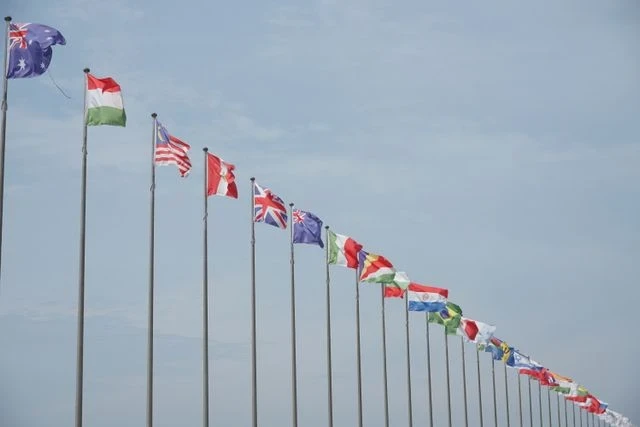
Navigating the intricate architecture of contemporary global diplomacy demands an unyielding comprehension of structural shifts away from historical unipolar dominance. The twilight of hegemonic stability has catalyzed a profound transformation across international frontiers, forcing nation-states to abandon rigid bloc alignments in favor of fluid, transactional multilateralism. Regional powers no longer operate as passive satellites within traditional imperial orbits; instead, they aggressively assert sovereign autonomy through independent economic initiatives and strategic calculus. This fragmentation of global authority creates an unprecedented environment where diplomatic agility replaces ideological compliance as the primary currency of statecraft.
Understanding this dynamic evolution requires dissecting how middle powers leverage economic weight and technological independence to counter traditional superpower overreach. The decay of unipolarity does not signify pure chaos; rather, it introduces a polycentric balance of power defined by overlapping spheres of influence and pragmatic cooperation. Analysts must recognize that modern geopolitical friction stems directly from competing visions of international order, where multilateral institutions face severe tests of relevance against rising regional hegemonies and bilateral pacts.
On This Page
TL;DR International relations have definitively entered a complex multipolar era characterized by the erosion of traditional hegemonic stability. Regional powers are bypassing historical superpowers to forge independent, transactional diplomatic networks and economic pacts. This analysis explores the structural mechanics driving this monumental geopolitical shift, evaluating how modern states navigate polycentric global governance and shifting security alliances.
The Anatomy of Polycentric Geopolitics
The contemporary global stage operates under rules vastly different from the post-Cold War consensus. Hegemonic stability theory, which posited that a single dominant superpower is essential to maintain international order and open trade, has collapsed under the weight of empirical reality. Today, rising regional actors demand greater equity in multilateral governance, fundamentally altering the calculus of interstate competition.
Diplomacy has evolved from ideological crusades into a highly sophisticated marketplace of transactional agreements. States engage in variable-geometry partnerships, cooperating on specific economic or technological domains while opposing one another in regional security frameworks. This transactional shift diminishes the binding power of traditional alliances, replacing permanent loyalty with conditional, interest-driven cooperation that fluctuates according to immediate domestic and geopolitical imperatives.
The Resurgence of Regional Heavyweights
Regional powers are systematically filling power vacuums left by exhausted or distracted superpowers across multiple continents. Nations once considered peripheral to great power competition now dictate terms of engagement within their immediate neighborhoods. This assertiveness stems from robust economic growth, localized military modernization, and a deep desire to insulate domestic governance from external interference.
The institutionalization of alternative economic corridors further accelerates this decentralization of power. By diversifying trade routes and financial payment systems, middle powers insulate themselves against secondary sanctions and financial coercion. Consequently, global influence is increasingly distributed across multiple nodes rather than concentrated in traditional Western or Eastern capitals, creating a resilient, decentralized diplomatic grid.
Strategic autonomy has become the guiding doctrine for capitals pursuing balanced relationships with competing superpowers. Rather than committing to exclusive security umbrellas, leaders expertly hedge their bets by participating in overlapping multilateral organizations. This calculated ambiguity allows developing economies to extract maximum concessions from rival major powers while retaining absolute sovereignty over national policy decisions.
Economic Statecraft and Financial Decoupling
Economic leverage has permanently eclipsed raw military might as the primary instrument of statecraft in a multipolar environment. Weaponized interdependence, encompassing supply chain choke points, semiconductor monopolies, and reserve currency controls, defines modern geopolitical friction. States routinely employ trade restrictions and targeted tariffs not merely for economic protectionism, but to secure absolute strategic advantage.
Financial fragmentation mirrors this diplomatic reality through the proliferation of bilateral currency swaps and alternative payment architectures. Central banks across the Global South actively seek to reduce exposure to traditional Western financial infrastructure to mitigate the impact of extraterritorial sanctions. This deliberate diversification creates parallel financial tracks that undermine the traditional coercive power previously wielded by dominant global currencies.
Resource nationalism similarly drives modern diplomatic alignments, particularly regarding critical minerals essential for energy transition technologies. Governments impose stringent export controls on rare earth elements, lithium, and polysilicon to compel foreign direct investment and domestic processing. In this hyper-competitive landscape, access to raw materials dictates industrial survival, turning commodity supply chains into intense arenas of diplomatic maneuvering.
Diplomatic Realignments and Transactional Multilateralism
International organizations designed in the wake of the Second World War face an acute crisis of legitimacy as emerging economies demand structural representation reflecting contemporary demographic and economic weight. The persistent paralysis of traditional security councils encourages the formation of agile, mini-lateral coalitions that bypass bureaucratic stalemates entirely. These nimble groupings prioritize immediate operational outcomes over cumbersome consensus-building.
Diplomatic realignments are thus characterized by remarkable fluidity, where traditional adversaries occasionally collaborate on shared technological or environmental challenges while remaining bitter rivals elsewhere. This compartmentalization of foreign policy requires unprecedented analytical sophistication from state departments and foreign ministries. Leaders must master the delicate art of cooperating on existential matters while aggressively contesting regional spheres of influence.
The Erosion of Institutional Multilateralism
Global governance architectures established during the mid-twentieth century are buckling under the intense strain of multipolar friction. International bodies like the United Nations Security Council and the World Trade Organization frequently suffer from acute institutional paralysis caused by irreconcilable vetoes and protectionist impulses. This governance deficit compels nations to establish parallel rulemaking bodies that reflect contemporary economic realities more accurately.
The proliferation of regional security arrangements directly undermines centralized peacekeeping frameworks, substituting universal norms with localized spheres of interest. When major powers flout international law with impunity, smaller nations rapidly conclude that conventional diplomatic safeguards offer insufficient protection against aggression. Consequently, defense spending surges globally as states prioritize self-reliance over collective security guarantees.
Reform initiatives within legacy institutions face relentless obstruction from entrenched beneficiaries unwilling to relinquish historical privileges. As a result, the center of gravity in global norm-setting is shifting toward informal G-groupings and regional economic summits where compromise remains achievable. This institutional fragmentation increases the potential for miscalculation, as no single authority possesses the legitimacy required to arbitrate complex transnational disputes effectively.
Mini-Laterals and Flexible Coalitions
The emergence of mini-lateral diplomacy represents a pragmatic adaptation to the constraints of traditional international organizations. These compact coalitions bring together a select group of states with convergent interests on specific strategic issues, such as maritime security, supply chain resilience, or artificial intelligence regulation. By excluding disinterested parties, mini-laterals achieve rapid consensus and implementable policy outcomes.
Such arrangements offer participating nations the distinct advantage of high operational velocity without the bureaucratic friction characteristic of universal bodies. However, critics correctly point out that this fractured approach undermines global inclusivity and marginalizes the voices of smaller developing nations lacking strategic leverage. The resulting diplomatic architecture resembles a complex web of overlapping interest groups rather than a cohesive international community.
Navigating this fragmented landscape requires foreign policy establishments to cultivate deep expertise in specialized domains rather than relying solely on traditional regional desks. As mini-laterals multiply, the ability to orchestrate disparate coalitions across multiple issue areas becomes the definitive hallmark of modern diplomatic excellence. States failing to adapt to this networked reality risk finding themselves excluded from critical decision-making fora.
We Also Published
Security Dilemmas in a Fragmented Global Order
The security architecture of the twenty-first century is increasingly defined by gray-zone conflicts, cyber warfare, and proxy engagements that defy traditional deterrence theories. Without a dominant hegemon to enforce boundaries, regional conflicts frequently metastasize into prolonged proxy struggles involving multiple outside powers. This decentralized threat environment complicates crisis management and heightens the risk of accidental escalation among nuclear-armed states.
Deterrence itself has evolved far beyond the classic nuclear paradigms of the Cold War, encompassing cognitive warfare, economic strangulation, and critical infrastructure sabotage. Modern adversaries achieve strategic objectives below the threshold of conventional military retaliation, rendering traditional defense doctrines dangerously obsolete. National security planners must therefore construct comprehensive resilience frameworks that integrate cyber defense, economic redundancy, and robust intelligence sharing.
- 01
- 02
- 03
- 04
Gray-Zone Warfare and Asymmetric Escalation
Gray-zone tactics occupy the ambiguous space between routine state competition and open armed conflict, allowing aggressive powers to revise the territorial status quo incrementally. Cyber attacks, disinformation campaigns, economic coercion, and maritime militia operations enable revisionist states to accumulate strategic gains without triggering formal mutual defense treaties. This salami-slicing strategy systematically erodes international norms while frustrating collective security responses.
Countering gray-zone aggression requires a doctrinal shift from reactive military defense to proactive resilience and rapid attribution capabilities. Governments must invest heavily in cognitive defense mechanisms to protect democratic processes from sophisticated foreign interference. Furthermore, establishing clear red lines regarding critical infrastructure protection remains vital to deterring adversaries from escalating below the conventional warfare threshold.
The diffusion of advanced military technologies, including armed unmanned aerial systems and hypersonic delivery platforms, further democratizes destruction in a multipolar world. Non-state actors and secondary regional powers now possess precision strike capabilities once reserved exclusively for superpowers. This technological proliferation dramatically increases the volatility of regional flashpoints, making diplomatic crisis communication more essential than ever.
Nuclear Proliferation Dynamics in Polycentric Systems
The breakdown of hegemonic stability places immense pressure on the global non-proliferation regime, as regional powers calculate that nuclear arsenals provide the ultimate insurance against external intervention. Without a dominant superpower guaranteeing regional security umbrellas, vulnerable states increasingly view indigenous nuclear deterrence as an absolute necessity for regime survival. This psychological shift threatens to ignite localized arms races across unstable geographic corridors.
Managing nuclear risk in a multipolar paradigm is exponentially more complex than during the bilateral Cold War rivalry. Instead of bilateral arms control treaties between two predictable superpowers, modern stability requires multilateral frameworks accommodating diverse strategic cultures and asymmetric arsenals. The lack of robust communication channels between emerging nuclear-armed states amplifies the probability of catastrophic miscalculation during regional crises.
Revitalizing arms control architecture necessitates inclusive diplomatic formats that recognize the legitimate security concerns of rising powers without legitimizing proliferation. International diplomacy must address the root causes of regional insecurity rather than merely treating the symptoms of nuclear ambition. Failure to adapt non-proliferation strategies to the multipolar reality risks sleepwalking into a highly unstable nuclear future.
Strategic Imperatives for Future Statecraft
Navigating the complexities of a multipolar world order requires national security establishments to cultivate extraordinary strategic foresight and organizational flexibility. Ideological rigidity and dogmatic adherence to historical alliances are liabilities in an environment where diplomatic survival depends on agility and pragmatic calculus. Statecraft must become more entrepreneurial, identifying emerging opportunities for cooperation across traditional geopolitical divides.
Ultimately, the decline of hegemonic stability does not herald perpetual anarchy, but rather a demanding transition toward polycentric governance. Nations that master the nuances of transactional multilateralism, economic resilience, and cognitive defense will thrive in this competitive ecosystem. Success in twenty-first-century statecraft demands a clear-eyed recognition of changing global power distributions and an unwavering commitment to pragmatic national interest.
Cultivating Strategic Agility
Diplomatic institutions must undergo continuous structural modernization to process the sheer volume and velocity of information characterizing modern international affairs. Bureaucratic inertia prevents timely responses to fast-moving geopolitical crises, making decentralized decision-making structures imperative. Empowering regional specialists and integrating artificial intelligence into predictive intelligence pipelines allows foreign ministries to anticipate shifts before they materialize into open conflicts.
Fostering a culture of innovative thinking within diplomatic corps ensures that statecraft remains responsive to non-traditional challenges such as climate security and digital sovereignty. Traditional career paths that reward caution and consensus must evolve to value calculated risk-taking and creative coalition-building. Only through institutional adaptability can nations maintain influence across overlapping, shifting multilateral frameworks.
From our network :
- Committed Mediterranean Precipitation Decline: Why Emissions Cuts Alone Cannot Restore Winter RainsNew NOAA research reveals that Mediterranean winter rains may decline irreversibly even with emissions cuts. Explore the science of committed climate change and regional impacts.
- How AI Agents Will Change the Way We Manage Personal FinancesExplore how AI agents are transforming personal finance through automated budgeting, bill payment, and investment management, while examining the critical security protocols and governance frameworks required for safe deployment.
- CISA’s Ten-Advisory Wave: Why Generic Patching Fails in OT and How to Build Product-Specific PlaybooksCISA released ten ICS advisories in one week, exposing critical infrastructure risks. Generic patching fails in OT. Learn to build product-specific remediation playbooks.
- Norbert’s Uncertain Path: Why Hawaii’s Storm Watch Demands Patience Over PanicTropical Storm Norbert strengthens in the Eastern Pacific with winds near 50 mph, forecast to reach Category 1 hurricane status by Friday. Long-range models disagree sharply on whether Hawaii faces any threat around September 19–23, making official guidance essential.
- Forbidden Matrix Patterns and Visible Lattice Points: A Geometric DictionaryExplore how multidimensional 0–1 matrices encode geometric truths, linking forbidden patterns to visible lattice points and hypergraph theory, with applications in combinatorics and computational geometry.
- The Hidden Cost of AI Convenience: Why Over-Permissioned Agents Are a Security Time BombDiscover why AI agents with excessive permissions create dangerous single points of failure, and learn how implementing least privilege principles can protect your organization from exploitation.
- Former Soap Stars Embark on Ambitious Writing Projects and Theatrical StagesDiscover how former soap opera actors are transitioning into independent scriptwriting and high-profile theatrical stage productions.
- The Final Descent: How ESA Retired the Legendary Cluster Constellation After 24 Years of Space Weather ScienceAfter 24 years mapping Earth’s magnetosphere, ESA’s Cluster mission concluded with a precisely controlled reentry over the South Pacific. This analysis explores the scientific legacy, engineering decisions, and debris mitigation principles behind one of space exploration’s most responsible retirements.
- Analyzing Hoya Corporation’s Midday Volume Shifts and Financial FundamentalsExamine Hoya Corporation’s midday trading volume contraction, technical moving averages, robust solvency ratios, and stellar quarterly earnings performance.
RESOURCES
- BRICS Expansion and the Future of World Ordercarnegieendowment.orgMar 31, 2025 ... As a major oil and gas producer, Iran also sees BRICS membership as an opportunity to diversify its economic and…
- Is Trump reshaping the world order? - Brookings Institutionbrookings.eduFeb 2, 2026 ... Brookings scholars examine how President Trump's recent foreign policy moves mean for the United States and the international order.
- Minilateralism: A Concept That Is Changing the World Orderwashingtoninstitute.orgApr 14, 2023 ... During much of the 20th century, global diplomacy was largely shaped by a bipolar international system, in which the superpowers…
- Alliances in a Shifting Global Order: Rethinking Transatlantic ...gmfus.orgMay 2, 2023 ... The idea of “global swing states” is not new to the field of international relations and geopolitics. ... Although India…
- Why geopolitics matters more than ever in a multipolar worldweforum.orgMay 10, 2024 ... Instability and conflict are surging because the global order is undergoing a wrenching transition. Put simply, international affairs are ...
- Between Diplomacy and Contestation 24 Feb – Fourth anniversary ...instagram.comJan 22, 2026 ... ... Global Politics in Trump's Second Term 2 Feb – International Sport in a Multipolar World: Between Diplomacy and Contestation…
- Reshaping the Indo-Pacific Construct through Strategic Geopolitical ...airuniversity.af.eduJan 20, 2022 ... ... global power and influence in a world order witnessing shifts in international alliances and the evolving use of the…
- For decades, the U.S. and its allies set the rules of the global order ...instagram.comDec 2, 2025 ... ... affairs: What role will Middle Powers play in shaping a more multipolar world? ... #InternationalRelations #Diplomacy #Geopolitics ...
- American Hegemony And The Emergence Of Global Ordersforeignanalysis.comMar 18, 2024 ... ... multipolar world order. TAGS: Multipolarity, International Relations, Global Cooperation, Shared Leadership, Diplomatic Harmony, Global ...
- How China is pursuing a new world order among the geopolitical ruinsclingendael.orgFeb 27, 2024 ... What does a prospective multipolar world order mean for the West? It is a fact that the global power relations…
- 01
- 02
- 03
- 04
- 05
- 06
- 07
- 08
0 Comments