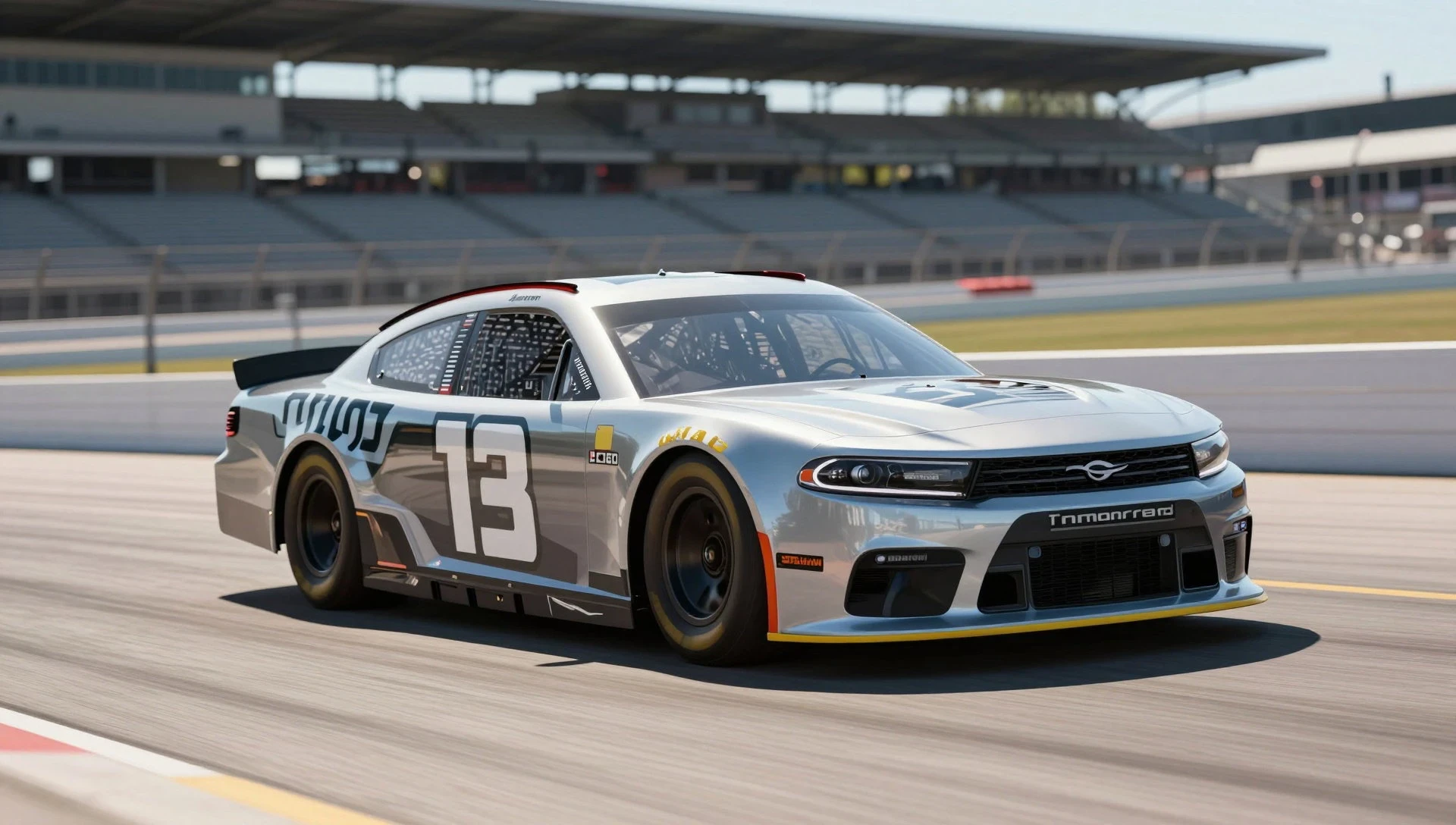
Dodge's confirmation that it will field cars in NASCAR's Cup Series beginning in 2027 represents far more than a routine corporate press release. It signals a calculated re-entry into America's most-watched motorsport property by a brand that has spent more than four decades on the sidelines, and it arrives at a moment when the series itself is actively courting new manufacturers.
The New York Times first reported the decision, though the announcement deliberately withheld the operational specifics that enthusiasts and analysts now crave.
What makes this development genuinely consequential is the timing. NASCAR has been reshaping its competitive and commercial architecture, moving toward hybrid powertrain exploration and a broader manufacturer footprint, while Dodge's parent company Stellantis navigates a turbulent North American market.
On This Page
A factory-backed return requires engineering commitments, team partnerships, and marketing budgets that stretch across multiple seasons, so the bare confirmation carries weight precisely because it precedes those details.
This analysis examines what the return means for the sport's competitive balance, for Dodge's brand strategy, and for the teams positioning themselves to field the marque. It also weighs the unanswered questions, from which model will carry the badge to how quickly a new entrant can become race-ready in a series defined by ruthless parity.
TL;DR Dodge has confirmed it will return to NASCAR's Cup Series in 2027, ending a factory absence that dates back to 2012. The New York Times reported the decision, but team affiliations, the competition model, and technical details remain undisclosed. The move adds a fourth manufacturer to the series and reshapes the sport's commercial and competitive landscape heading into a new era of vehicle regulation.
The Strategic Logic Behind Dodge's NASCAR Re-Entry
Manufacturer participation in NASCAR has always been a marketing calculation dressed in sheet metal. Dodge's decision to return reflects a belief that the Cup Series delivers measurable brand exposure, dealer traffic, and cultural relevance that outweigh the substantial costs of engine development and team support. The calculus becomes more attractive when the series stabilizes its rulebook.
Reading the Commercial Signals
NASCAR's audience remains enormous even as fragmentation erodes traditional television numbers. For a performance-oriented brand like Dodge, the series offers weekly visibility across thirty-plus weekends, a demographic skewed toward truck buyers, and an emotional connection that advertising alone cannot purchase. Factory teams function as rolling showrooms.
The timing also aligns with Stellantis's broader North American reset. The corporation has faced inventory pressure, dealer frustration, and shifting consumer preferences, and a motorsport program provides a narrative of engineering ambition. Dodge's heritage includes legendary NASCAR nameplates, giving the return an authenticity that newer entrants must manufacture from scratch.
What the Silence Reveals
The absence of team and model details is not accidental. Negotiations with existing organizations, engine-supplier arrangements, and homologation timelines typically remain confidential until contracts are executed. Announcing the intent first secures headlines and signals seriousness to potential partners without locking the manufacturer into premature commitments.
Industry observers note that a 2027 timeline gives Dodge roughly one full season of development runway under current regulations. That window is tight but feasible for a manufacturer with existing engine architecture and access to proven chassis suppliers. The silence likely masks active conversations rather than uncertainty.
Competitive Balance and the Manufacturer Landscape
NASCAR's competitive ecosystem depends on manufacturer rivalry, and the current grid has operated with a narrow field of factory participants. Adding Dodge restores a nameplate with deep historical resonance and introduces fresh engineering perspectives into a series that prizes parity above all else.
The Parity Question
NASCAR's rulebook deliberately equalizes aerodynamic and engine performance across manufacturers, meaning a returning Dodge cannot simply outspend rivals into contention. Success will hinge on simulation work, supplier relationships, and the quality of the teams chosen to campaign the cars. Parity cuts both ways.
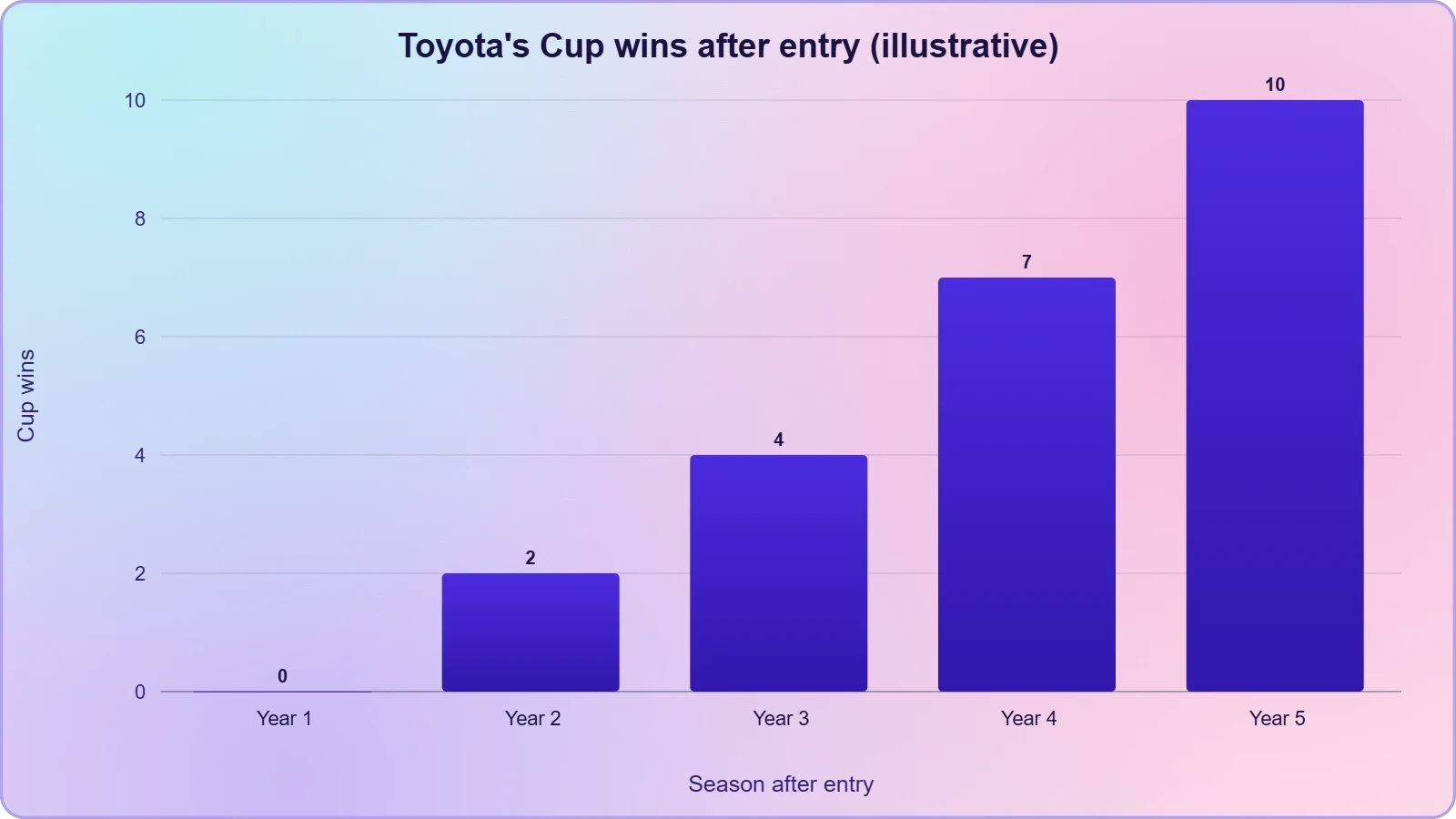
Historically, new or returning manufacturers require several seasons to reach consistent victory lane form. Toyota's entry in 2007 illustrates the learning curve, while Dodge's own 2001 return produced early flashes before championship contention arrived. Expectations should be calibrated accordingly.
Team Alignment Scenarios
Which organizations field Dodge machinery will determine the program's trajectory. Established teams bring engineering depth and race-day execution, while smaller outfits offer flexibility and lower costs. The manufacturer's choice reveals whether it prioritizes immediate results or long-term infrastructure building.
Speculation will intensify until contracts surface, and the eventual announcement will reshape silly season dynamics across the paddock. A marquee team switching allegiance would trigger cascading moves, while a startup partnership would signal a patient, build-from-scratch philosophy.
Brand Heritage and the Model Question
Dodge's NASCAR identity is inseparable from the nameplates that carried its colors, and the choice of competition model will shape both marketing narrative and technical homologation. The manufacturer must balance nostalgia against the realities of modern aerodynamic and safety regulations.
Heritage as Marketing Capital
The Charger and Intrepid eras produced memorable victories and a devoted fanbase, and reviving that lineage offers immediate emotional traction. Modern NASCAR vehicles share a common chassis with manufacturer-specific bodywork, so the chosen silhouette functions primarily as a branding statement rather than a mechanical differentiator.
Dodge's current product lineup emphasizes muscular design and performance trims, values that translate naturally to stock car racing. A competition model aligned with showroom offerings strengthens the "win on Sunday, sell on Monday" proposition that underpins factory programs across the industry.
Technical Homologation Realities
Under the current generation of race car, manufacturers submit body shapes for approval and supply engines built to shared specifications. The engineering burden is lower than in previous eras, which lowers barriers to entry and makes a 2027 timeline realistic for a well-resourced organization.
Engine supply remains the critical variable. Dodge must either develop a compliant powerplant or partner with an existing supplier, and each path carries cost, timeline, and performance implications. The chosen route will quietly determine how competitive the cars are from the first green flag.
Financial and Commercial Implications
A factory NASCAR program represents a nine-figure commitment across a multi-year cycle when engineering, team support, hospitality, and activation costs are aggregated. Dodge's return therefore functions as a public statement of financial confidence from Stellantis at a moment of market scrutiny.
Cost Structures and Returns
Manufacturers fund aerodynamic development, engine programs, and technical support, while teams absorb operational costs partially offset by sponsorship. The return on investment is measured in brand lift, dealer engagement, and customer loyalty rather than direct revenue, making the program a long-horizon marketing asset.
For NASCAR itself, an additional manufacturer strengthens negotiating leverage with broadcasters and sponsors. A four-brand grid broadens storytelling possibilities, intensifies on-track rivalry, and reinforces the series' claim to be a premier platform for automotive marketing investment.
Market Reaction and Dealer Networks
Dealer networks respond enthusiastically to motorsport programs because they generate showroom traffic and local marketing opportunities. Dodge's return gives franchisees a competitive narrative to deploy against rivals, particularly in performance segments where brand passion directly influences purchase decisions.
Investor reaction will be more measured, focusing on whether the program signals broader strategic clarity at Stellantis. A well-executed motorsport return can bolster brand equity, but analysts will watch for cost discipline and measurable commercial outcomes over the coming seasons.
- 01
- 02
- 03
- 04
Fan Response and Cultural Resonance
NASCAR fandom carries strong brand loyalties, and Dodge's departure in 2012 left a vocal constituency without a factory standard-bearer. The return announcement has already generated enthusiasm across social platforms, forums, and talk radio, where nostalgia for Charger-era battles remains potent.
The Nostalgia Dividend
Legacy manufacturers enjoy a reservoir of goodwill that new entrants cannot replicate. Dodge's history includes iconic liveries, memorable rivalries, and championship moments that older fans recall vividly, giving the return an emotional foundation that marketing departments can amplify across campaigns.
Younger audiences, meanwhile, encounter the brand through contemporary performance vehicles and digital channels. The challenge lies in translating heritage into relevance for fans who never witnessed the original era, requiring storytelling that connects past glory to present-day product identity.
Media and Merchandise Dynamics
Broadcast partners benefit from fresh storylines, and merchandise vendors anticipate demand for retro-inspired apparel and die-cast collectibles. The commercial ecosystem around NASCAR thrives on novelty, and a returning manufacturer supplies exactly the narrative refresh the sport periodically requires.
Social media amplifies every development, from spy shots of test cars to cryptic teasers from team accounts. This continuous engagement cycle keeps the return in public conversation for months, effectively extending the marketing runway well beyond the initial announcement window.
What Comes Next: Roadmap to the 2027 Grid
The path from confirmation to competitive debut involves a sequence of decisions that will unfold over the coming months. Team contracts, engine strategy, and homologation submissions must all be resolved before a Dodge car turns a competitive lap in anger.
Milestones to Watch
Expect team partnership announcements first, followed by model unveiling and testing programs. Each disclosure will refine expectations and either validate or challenge the assumption that Dodge can contend within its first season back in the series.
Regulatory approval of bodywork and engine compliance represents a quieter but equally critical milestone. Delays in either area could compress testing time and compromise early-season performance, making project management discipline as important as engineering prowess.
Assessing Realistic Expectations
History suggests a returning manufacturer should target steady improvement rather than immediate dominance. Wins within the first two seasons would represent strong execution, while championship contention typically requires deeper organizational maturity and several cycles of aerodynamic refinement.
The broader significance, however, extends beyond results. Dodge's return reaffirms NASCAR's ability to attract factory investment in an era of technological transition, and it gives the sport a compelling storyline as it navigates electrification debates and evolving fan expectations.
From our network :
- Mobile Learning and VR in English: What Global Evidence Reveals About Effective Language TechnologyA systematic review across 14 countries reveals which language-learning technologies genuinely work. Mobile learning, AI, and VR show measurable benefits when pedagogically integrated. This evidence-based guide helps educators and learners select technology that delivers real return on investment.
- University Language Proficiency Exams: Why Institutional Tests Demand Different Preparation Than IELTS and TOEFLDiscover why university-specific language proficiency examinations differ fundamentally from IELTS and TOEFL, and learn strategic preparation approaches for institutional assessment success.
- How AI Agents Will Change the Way We Manage Personal FinancesExplore how AI agents are transforming personal finance through automated budgeting, bill payment, and investment management, while examining the critical security protocols and governance frameworks required for safe deployment.
- Forbidden Matrix Patterns and Visible Lattice Points: A Geometric DictionaryExplore how multidimensional 0–1 matrices encode geometric truths, linking forbidden patterns to visible lattice points and hypergraph theory, with applications in combinatorics and computational geometry.
- Live Online English Classes for Kids: Do They Actually Reduce Anxiety?A ten-week study reveals that synchronous online English classes can significantly reduce child language anxiety while improving listening and reading skills. Discover what makes these programs effective and how parents can select the right one.
- Committed Mediterranean Precipitation Decline: Why Emissions Cuts Alone Cannot Restore Winter RainsNew NOAA research reveals that Mediterranean winter rains may decline irreversibly even with emissions cuts. Explore the science of committed climate change and regional impacts.
- The Final Descent: How ESA Retired the Legendary Cluster Constellation After 24 Years of Space Weather ScienceAfter 24 years mapping Earth’s magnetosphere, ESA’s Cluster mission concluded with a precisely controlled reentry over the South Pacific. This analysis explores the scientific legacy, engineering decisions, and debris mitigation principles behind one of space exploration’s most responsible retirements.
- The Hidden Cost of AI Convenience: Why Over-Permissioned Agents Are a Security Time BombDiscover why AI agents with excessive permissions create dangerous single points of failure, and learn how implementing least privilege principles can protect your organization from exploitation.
- CISA’s Ten-Advisory Wave: Why Generic Patching Fails in OT and How to Build Product-Specific PlaybooksCISA released ten ICS advisories in one week, exposing critical infrastructure risks. Generic patching fails in OT. Learn to build product-specific remediation playbooks.
RESOURCES
- Dodge returns to NASCAR Cup Series in 2027 with Kaulig Racingnascar.com17 hours ago ... Dodge will return to the NASCAR Cup Series in 2027 with Kaulig Racing, the manufacturer announced Monday at the 2026…
- Dodge returning to NASCAR Cup Series in 2027 with Kaulig Racing ...jayski.com18 hours ago ... ORIGINAL POST: Dodge will return to the NASCAR Cup Series in 2027, a year earlier than originally anticipated. The announcement…
- Dodge can finally build upon its NASCAR historynascar.com18 hours ago ... Dodge, readying to return to NASCAR Cup Series racing in the 2027 season, can boast a long list of some…
- Dodge officially, finally, announces its long-awaited return to the ...facebook.com10 hours ago ... Dodge officially, finally, announces its long-awaited return to the NASCAR Cup Series beginning in 2027. May be an image of…
- Dodge announces return to NASCAR Cup Series in 2027motorsport.com15 hours ago ... Dodge is returning to the NASCAR Cup Series in 2027, becoming the fourth manufacturer on the grid alongside Chevrolet, Toyota,…
- Dodge confirms return to NASCAR's Cup Series in 2027, capping a ...nytimes.com18 hours ago ... Dodge announced Monday that it's rapid return to the Cup Series in 2027 is a go. They'll pair with existing…
- Dodge in Cup 2027 discussion : r/NASCAR - Redditreddit.comSep 9, 2026 ... Dodge eying return to the NASCAR Truck Series in 2026, with the possibility of being back in the Cup Series…
- Dodge announces return to NASCAR Cup Series in 2027 - ESPNespn.com18 hours ago ... Dodge is returning to the NASCAR Cup Series in 2027, giving the Cup Series four manufacturers once again.
- "Dodge is returning to the NASCAR Cup Series in 2027, a year ...reddit.com18 hours ago ... "Dodge is returning to the NASCAR Cup Series in 2027, a year earlier than initially expected. The Stellantis-owned Dodge brand…
- Dodge Nears Blockbuster NASCAR Cup Series Return in 2027 After ...sports.yahoo.comOct 13, 2026 ... Dodge could return to the NASCAR Cup Series in 2027 after a 14-year absence. A reported partnership with Richard Childress…
- Dodge Returns To NASCAR Cup Series With Kaulig In 2027foxsports.com4 hours ago ... In a "significant milestone for the sport," Dodge will return to the NASCAR Cup Series in 2027 after a 15-year…
- Kaulig Racing Serves as Dodge Flagship Organization for 2027 ...catchfence.com16 hours ago ... Kaulig Racing can no longer Dodge the question. Dodge, the car maker, will return to NASCAR Cup Series Racing in…
- NASCAR Dodge returns to Cup Series at 2027 Daytona 500 with a ...news-journalonline.com4 hours ago ... Dodge won the 2012 Cup Series championship with Brad Keselowski, then left the big-league circuit. The brand will return in…
- Dodge Returns To The NASCAR Cup Series With Kaulig Racing In ...forbes.com18 hours ago ... Additionally, Kaulig Racing will announce its 2027 driver lineup during NASCAR Championship Weekend at Homestead-Miami Speedway. Dodge will also ...
- Dodge finally makes 2027 Cup Series return official - RACERracer.com17 hours ago ... Dodge made it official Monday night that it will return to the NASCAR Cup Series in 2027 with Kaulig Racing…
- 01
- 02
- 03
- 04
- 05
- 06
- 07
- 08
0 Comments