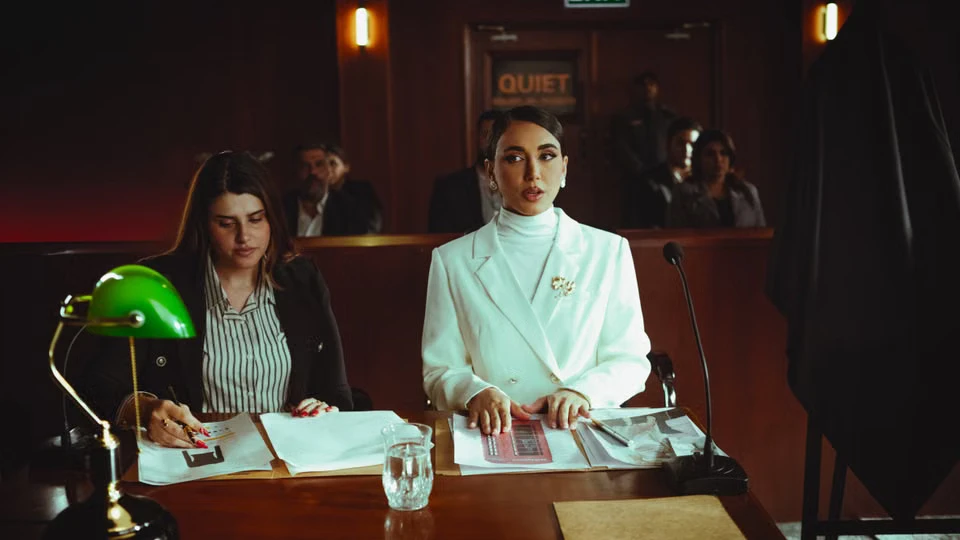
When armed personnel extracted a sitting head of state from his own residence in Caracas and transported him to American soil, the architecture of international justice shifted beneath everyone's feet.
Nicolas Maduro, the former Venezuelan president, now sits in a New York detention facility, eight months removed from the extraordinary operation that ended his presidency and delivered him into the custody of the United States government.
His arrival in federal court on Thursday marked a collision between two worlds that rarely meet: the sovereign immunity that traditionally shields national leaders and the universal jurisdiction that pursues them for atrocities.
On This Page
- The Extraordinary Capture That Redefined Presidential Accountability
- The Torture Allegations That Form the Prosecution's Core
- Universal Jurisdiction and the Boundaries of Sovereign Immunity
- The Geopolitical Earthquake and Its Global Implications
- The Road to Trial and the Weight of Evidence
- The Human Rights Legacy and the Future of Accountability
The charges he now confronts extend far beyond the narcotics trafficking allegations that first brought him into American legal crosshairs. Federal prosecutors have layered torture charges atop the existing indictment, accusing Maduro and his wife, Cilia Flores, of orchestrating a systematic campaign of state-sponsored repression that brutalized countless victims across more than a decade of authoritarian rule.
The couple entered not guilty pleas through Judge Alvin K. Hellerstein, with Maduro himself proving combative and dismissive, calling the proceedings "false accusations" while Flores declared her complete innocence through a Spanish interpreter.
This moment carries weight that transcends any single courtroom. For the first time, a former Latin American head of state faces American prosecution for torture committed against his own people, a precedent that reverberates through every authoritarian capital and every human rights organization that has spent years documenting Venezuelan abuses.
The case raises profound questions about the reach of American law, the limits of sovereign immunity, and whether justice for victims of state terror can ever be delivered across international borders.
TL;DR Nicolas Maduro, the former Venezuelan president seized by US military forces from Caracas, has pleaded not guilty in a New York federal court to new torture charges added to existing drug-trafficking allegations. Prosecutors accuse Maduro and his wife, Cilia Flores, of directing a state-sponsored repression campaign that employed electric shocks, beatings, and asphyxiation against prisoners, including three Americans. The trial is scheduled for June 14, 2027, and represents the first time a former Latin American head of state faces US prosecution for torture, a landmark moment in international human rights law that tests the boundaries of universal jurisdiction and sovereign immunity.
The Extraordinary Capture That Redefined Presidential Accountability
The operation that delivered Maduro into American custody stands as one of the most audacious exercises of extraterritorial enforcement in modern history. Eight months before his courtroom appearance, US military personnel descended upon his Caracas residence and extracted him alongside his wife, a maneuver that stunned international observers and triggered immediate debate about its legality under international norms.
No sitting head of state had been seized by foreign forces and transported to another nation's courts since the aftermath of World War II, when defeated Axis leaders faced tribunals in Nuremberg and Tokyo.
The capture fundamentally altered the calculus for every authoritarian leader who assumed that sovereign immunity provided an impenetrable shield against foreign prosecution. Maduro had governed Venezuela since 2013, consolidating power through contested elections, suppressing opposition through security forces, and weathering years of international sanctions that failed to dislodge him from office.
His removal by American military action, rather than internal uprising or diplomatic negotiation, established a precedent that will be studied by legal scholars and feared by strongmen for generations.
The Legal Architecture Behind the Prosecution
Universal jurisdiction provides the theoretical foundation for prosecuting torture regardless of where the crime occurred or the nationality of the victims. Under customary international law, certain offenses are considered so grave that any nation may exercise criminal jurisdiction over perpetrators, a principle enshrined in the Convention Against Torture and other human rights treaties.
The United States has incorporated this principle into federal law, allowing prosecution of torture committed abroad under specific circumstances.
American prosecutions of foreign officials remain extraordinarily rare, however, reflecting the political sensitivities and diplomatic complications that accompany such cases. Recent examples include the conviction of Charles Taylor's son for torture committed in Liberia, prosecutions of Russians for war crimes in Ukraine, and cases against former Syrian prison officials.
Each of these cases required meticulous evidence gathering, victim testimony, and legal creativity to overcome jurisdictional hurdles that typically protect foreign government officials from American courts.
The Maduro indictment represents a significant expansion of this practice, targeting not a mid-level functionary but the architect of an entire repressive system. Prosecutors must demonstrate that Maduro personally directed torture, received updates on specific victims, and employed psychological terror against prisoners' families.
The allegation that he threatened to kill one prisoner's child illustrates the intimate involvement that transforms a political leader from a distant authorizer of violence into a direct participant in cruelty.
Cilia Flores and the Machinery of Repression
Flores faces accusations that extend beyond mere complicity in her husband's crimes. Prosecutors allege she helped construct the repressive apparatus that enabled systematic torture and personally ordered the torture of specific individuals.
Her role illustrates how authoritarian regimes distribute responsibility across family networks, embedding brutality within the innermost circles of power and creating layers of deniability that complicate accountability efforts.
The couple's joint prosecution signals that American authorities intend to pursue not just figureheads but the broader networks that sustain state terror. Flores, who served as First Lady and held significant political influence throughout Maduro's presidency, represents the informal power structures through which authoritarian governance operates.
Her indictment suggests prosecutors have developed evidence tracing specific torture orders to her direct authority, a level of detail that required extensive investigation and likely insider testimony.
We Also Published
The Torture Allegations That Form the Prosecution's Core
Prosecutors have constructed a detailed narrative of systematic cruelty that extends far beyond isolated incidents of prisoner abuse. The indictment describes a state-sponsored repression campaign operating with explicit authorization from the highest levels of Venezuelan government, employing methods designed to inflict maximum suffering while maintaining plausible deniability.
Security forces allegedly tortured prisoners using electric shocks, beatings, and asphyxiation, techniques that leave few visible marks but produce lasting psychological trauma.
The inclusion of three American victims in the indictment provides the jurisdictional hook that enables prosecution under US law, though universal jurisdiction principles would apply regardless of victim nationality.
These American citizens, whose identities remain protected in court filings, allegedly endured torture at the hands of Venezuelan security forces operating under Maduro's direction. Their presence in the case transforms what might be characterized as internal Venezuelan matters into a direct affront against American citizens, elevating the political stakes and public interest.
Methods of State Terror Documented by Investigators
Human rights organizations have spent years documenting the techniques employed by Venezuelan security services against political prisoners and perceived opponents. Electric shocks applied to sensitive body areas, prolonged beatings designed to cause internal injuries without leaving obvious external evidence, and simulated drowning through asphyxiation represent a repertoire of cruelty refined through practice. These methods aim to break prisoners psychologically while minimizing documentation that might later support accountability efforts.
The allegation that Maduro personally suggested torture methods elevates him from a political leader who tolerated abuse to an active participant in designing cruelty. Prosecutors claim he received updates on specific victims, monitoring their suffering with detailed attention that demonstrates personal investment in the torture campaign.
This level of involvement, if proven, distinguishes his case from those of leaders who merely authorized harsh interrogation policies without engaging with individual prisoners' fates.
The threat to kill one prisoner's child represents a particularly insidious form of psychological torture, targeting the deepest vulnerabilities of detained individuals. Such threats exploit parental instinct and love, weaponizing family bonds to extract information or simply to inflict additional suffering.
Prosecutors cite this specific allegation to demonstrate that Maduro understood torture as a comprehensive system encompassing physical pain, psychological terror, and the destruction of prisoners' will to resist.
Building the Evidentiary Foundation for Conviction
Securing convictions in torture cases requires evidence that transcends victim testimony, which defendants routinely dismiss as politically motivated fabrication. Prosecutors must assemble documentary evidence, witness accounts from former security personnel, and forensic analysis that corroborates patterns of abuse.
The eight months between Maduro's capture and his arraignment likely involved intensive evidence gathering, including interviews with defectors and analysis of seized government records.
International human rights organizations have compiled extensive documentation of Venezuelan torture practices over many years, creating a foundation that American prosecutors can leverage. Reports from Amnesty International, Human Rights Watch, and United Nations investigators provide context and corroboration for individual victim accounts.
This accumulated evidence transforms what might appear as isolated allegations into a documented pattern of systematic abuse that defendants cannot easily dismiss as fabrication.
Universal Jurisdiction and the Boundaries of Sovereign Immunity
The legal theory enabling Maduro's prosecution rests on principles developed over centuries of international law, yet rarely applied to heads of state from powerful nations. Universal jurisdiction holds that certain crimes, including torture, genocide, and crimes against humanity, are so universally condemned that any nation may prosecute perpetrators regardless of where the crimes occurred.
This principle emerged from the Nuremberg trials and has been codified in numerous international treaties and customary law.
Sovereign immunity traditionally protects sitting heads of state from foreign prosecution, a doctrine rooted in the practical necessity of maintaining diplomatic relations and preventing chaos in international affairs. However, this immunity does not extend to former officials, particularly when they are accused of crimes that violate jus cogens norms, peremptory principles of international law from which no derogation is permitted.
Maduro's removal from office, however irregular, eliminated the immunity that might have shielded him while serving as president.
Precedents That Shaped the Legal Landscape
The prosecution of Charles Taylor's son for torture committed in Liberia established that even family members of heads of state could face American justice for atrocities committed abroad. Taylor Jr.'s conviction demonstrated that the United States would exercise universal jurisdiction when evidence supported allegations of systematic abuse, creating a template that prosecutors have since applied to other cases involving foreign officials.
Cases against Russians responsible for war crimes in Ukraine have further expanded the reach of American prosecutions, particularly after the 2022 invasion generated extensive documentation of atrocities. These prosecutions signal that the United States will pursue accountability for human rights violations even when the perpetrators serve governments that maintain diplomatic relations with Washington.
The Maduro case extends this practice to Latin America, a region where American influence has historically complicated rather than advanced human rights accountability.
The former Syrian prison warden case demonstrates that even officials from governments with no diplomatic relations with the United States can face prosecution when evidence of torture emerges. This precedent suggests that the absence of formal diplomatic channels does not preclude American courts from exercising jurisdiction over foreign officials accused of atrocities.
Maduro's case builds upon these foundations, applying established legal principles to a defendant whose capture was as extraordinary as the charges he now faces.
The International Criminal Court's Parallel Investigation
The International Criminal Court has conducted its own investigation into Maduro's alleged crimes against humanity, focusing on the crackdown against political opponents that intensified throughout his presidency. Despite years of investigation, the ICC has not issued an arrest warrant, reflecting the political complexities that constrain international tribunals and the difficulty of building cases against sitting heads of state who control the evidence within their territories.
The ICC's inability to act contrasts sharply with the American prosecution, which proceeded once Maduro was physically present in US custody. This divergence highlights the different constraints under which international and domestic courts operate, with the ICC dependent on state cooperation for arrests while domestic courts can act unilaterally when defendants are within their jurisdiction.
The American case may ultimately achieve what the ICC could not, delivering accountability through a mechanism that bypasses the diplomatic obstacles that stymie international tribunals.
The Geopolitical Earthquake and Its Global Implications
Maduro's prosecution sends shockwaves through every authoritarian government that has relied on sovereign immunity to shield its leaders from accountability. The message is unmistakable: leaders who authorize torture may eventually face justice, even if they currently control their nations' security forces and courts.
This precedent will influence how dictators calculate risks, potentially constraining their behavior or, conversely, driving them to more extreme measures to prevent capture and prosecution.
The case also raises uncomfortable questions about American selectivity in pursuing human rights accountability. The United States has historically been reluctant to prosecute allies accused of torture, creating perceptions of hypocrisy that undermine the moral authority of American human rights advocacy.
Maduro's prosecution, while legally justified, will be scrutinized for consistency with how the United States treats other governments accused of similar abuses, including those that receive American military assistance.
Venezuela's Future Without Maduro
Venezuela now confronts a future without the leader who dominated its politics for more than a decade, a transition fraught with uncertainty and potential for both democratic opening and renewed authoritarianism.
The power vacuum created by Maduro's removal has already triggered jockeying among regime insiders, military factions, and opposition groups that spent years resisting his rule. How this transition unfolds will determine whether Venezuela's people finally experience the freedom that Maduro's prosecution ostensibly serves.
The torture allegations at the heart of the American case document the human cost of authoritarian rule, providing a record that Venezuelans can use to demand accountability regardless of what happens in American courts.
Victims who endured electric shocks, beatings, and psychological terror now have an international platform to tell their stories, transforming private suffering into public testimony that may catalyze broader reckoning with the crimes of the Maduro era.
- 01
- 02
- 03
- 04
The Road to Trial and the Weight of Evidence
The seventeen months between arraignment and the scheduled June 2027 trial will witness intense legal maneuvering as both sides prepare for what promises to be a historic proceeding. Defense attorneys will challenge the legality of Maduro's capture, the applicability of universal jurisdiction, and the sufficiency of evidence linking him to specific acts of torture.
Prosecutors must anticipate these challenges while assembling a case that can withstand appellate scrutiny and establish precedents that will govern future prosecutions.
Victim testimony will form the emotional core of the prosecution's case, humanizing the suffering that statistics and legal documents can only partially convey. Survivors of torture will take the witness stand to describe their experiences, confronting the man they accuse of authorizing their suffering.
These confrontations carry enormous weight, transforming abstract legal principles into visceral human drama that judges and juries cannot easily dismiss.
Challenges Prosecutors Must Overcome
Defense attorneys will likely argue that Maduro's capture violated international law, tainting the entire prosecution and requiring dismissal of charges. They may contend that the operation constituted an act of war or an illegal abduction, invoking the doctrine of male captus bene detentus, which holds that improper capture does not necessarily invalidate subsequent prosecution.
Courts have generally rejected this defense, but the extraordinary circumstances of Maduro's seizure may invite more sympathetic consideration.
Establishing the chain of command linking Maduro to specific torture incidents presents evidentiary challenges that prosecutors must address through documentary evidence and insider testimony. Authoritarian leaders typically avoid written orders authorizing torture, relying instead on implicit understandings and deniable instructions.
Prosecutors must reconstruct the command structure through circumstantial evidence, witness accounts, and patterns of abuse that demonstrate systematic direction from the highest levels.
The political dimensions of the case cannot be ignored, as defense attorneys will characterize the prosecution as victor's justice imposed by a foreign power that illegally seized their client. This narrative may resonate with international observers skeptical of American motives, particularly given the history of US intervention in Latin America.
Prosecutors must present evidence so compelling that it transcends political objections and establishes Maduro's guilt beyond reasonable doubt.
What Conviction Would Mean for International Justice
A conviction would establish the most significant precedent for holding former heads of state accountable for torture, creating a template that other nations could follow in pursuing their own cases.
It would demonstrate that even the most powerful authoritarians cannot escape justice indefinitely, providing hope to victims of state terror worldwide who have watched their persecutors enjoy impunity. The ripple effects would extend far beyond Venezuela, influencing how international law develops and how governments calculate the risks of authorizing abuse.
Acquittal or dismissal would represent a devastating setback for human rights accountability, reinforcing the perception that powerful officials can escape consequences for atrocities. It would embolden authoritarians who currently rely on sovereignty as a shield, signaling that even extraordinary enforcement efforts cannot overcome the legal and political obstacles that protect perpetrators.
The stakes of this trial extend far beyond Maduro's personal fate, encompassing the future of international justice itself.
The Human Rights Legacy and the Future of Accountability
The Maduro prosecution represents both culmination and beginning, the product of decades of human rights advocacy and the foundation for future accountability efforts. Organizations that documented Venezuelan abuses for years now see their work validated in a court of law, their meticulous evidence gathering providing the foundation for criminal charges.
This validation carries profound significance for human rights workers worldwide, demonstrating that persistent documentation can eventually enable justice even against the most powerful perpetrators.
The case also exposes the limitations of international justice mechanisms that depend on state cooperation and political will. The ICC's inability to arrest Maduro despite years of investigation highlights the gap between legal authority and enforcement capacity, a gap that domestic prosecutions can sometimes bridge when circumstances permit.
The American case succeeded where international tribunals stalled, suggesting that creative use of domestic courts may offer pathways to accountability when international mechanisms fail.
Lessons for Future Prosecutions of Authoritarian Leaders
The Maduro case offers a template for pursuing accountability against leaders who commit atrocities while in power, demonstrating that capture and prosecution are possible even for those who control their nations' security apparatus. The key elements include meticulous evidence gathering, international cooperation, and the political will to act decisively when opportunities arise.
Future prosecutions will study this case to understand what worked, what challenges emerged, and how to replicate success while avoiding pitfalls.
The extraordinary nature of Maduro's capture raises questions about whether similar operations could or should be replicated against other authoritarian leaders accused of torture. The precedent cuts both ways, potentially encouraging more aggressive enforcement while also raising concerns about sovereignty violations and the precedent of military action against foreign governments. How the international community responds to this case will shape the boundaries of acceptable enforcement for generations.
Victims of torture worldwide will watch these proceedings with hope tempered by realism, understanding that justice remains rare and contingent on political circumstances beyond their control. The Maduro case offers no guarantee that their own persecutors will face accountability, but it demonstrates that impunity is not absolute. This knowledge, however limited, provides a measure of solace and a foundation for continued advocacy.
The Unfinished Work of Venezuelan Accountability
Maduro's prosecution addresses only a fraction of the abuses committed during his presidency, leaving countless victims without recourse and countless perpetrators unpunished. The security forces that carried out torture remain largely intact, their members continuing to serve in Venezuela's military and police institutions.
Comprehensive accountability would require prosecuting these individuals, dismantling the repressive apparatus they built, and creating mechanisms for truth-telling that allow Venezuelan society to confront its recent past.
The international community's attention will inevitably shift once the trial concludes, leaving Venezuelans to navigate the difficult work of rebuilding their society and addressing the wounds inflicted by years of authoritarian rule.
The American prosecution may catalyze this process or may prove a distraction, focusing international attention on one man while the system he built continues to operate. How Venezuela addresses this challenge will determine whether Maduro's prosecution represents genuine accountability or merely symbolic justice.
The Maduro prosecution will be remembered as a watershed moment in international justice, the first time a former Latin American head of state faced American prosecution for torture. Its significance extends beyond the courtroom, influencing how authoritarians calculate risks, how human rights advocates pursue accountability, and how the international community understands the boundaries of sovereignty.
Whatever the verdict, the case has already changed the landscape of accountability, demonstrating that even the most powerful perpetrators may eventually face justice.
For the victims who endured electric shocks, beatings, and psychological terror at the hands of Maduro's security forces, the prosecution offers a measure of recognition that their suffering mattered. Their testimony will echo through the courtroom, transforming private trauma into public record that no verdict can erase.
In this sense, the trial has already achieved something profound, creating a space where the silenced can speak and the powerful must answer.
From our network :
- Forbidden Matrix Patterns and Visible Lattice Points: A Geometric DictionaryExplore how multidimensional 0–1 matrices encode geometric truths, linking forbidden patterns to visible lattice points and hypergraph theory, with applications in combinatorics and computational geometry.
- CISA’s Ten-Advisory Wave: Why Generic Patching Fails in OT and How to Build Product-Specific PlaybooksCISA released ten ICS advisories in one week, exposing critical infrastructure risks. Generic patching fails in OT. Learn to build product-specific remediation playbooks.
- Mobile Learning and VR in English: What Global Evidence Reveals About Effective Language TechnologyA systematic review across 14 countries reveals which language-learning technologies genuinely work. Mobile learning, AI, and VR show measurable benefits when pedagogically integrated. This evidence-based guide helps educators and learners select technology that delivers real return on investment.
- Committed Mediterranean Precipitation Decline: Why Emissions Cuts Alone Cannot Restore Winter RainsNew NOAA research reveals that Mediterranean winter rains may decline irreversibly even with emissions cuts. Explore the science of committed climate change and regional impacts.
- University Language Proficiency Exams: Why Institutional Tests Demand Different Preparation Than IELTS and TOEFLDiscover why university-specific language proficiency examinations differ fundamentally from IELTS and TOEFL, and learn strategic preparation approaches for institutional assessment success.
- The Hidden Cost of AI Convenience: Why Over-Permissioned Agents Are a Security Time BombDiscover why AI agents with excessive permissions create dangerous single points of failure, and learn how implementing least privilege principles can protect your organization from exploitation.
- The Final Descent: How ESA Retired the Legendary Cluster Constellation After 24 Years of Space Weather ScienceAfter 24 years mapping Earth’s magnetosphere, ESA’s Cluster mission concluded with a precisely controlled reentry over the South Pacific. This analysis explores the scientific legacy, engineering decisions, and debris mitigation principles behind one of space exploration’s most responsible retirements.
- How AI Agents Will Change the Way We Manage Personal FinancesExplore how AI agents are transforming personal finance through automated budgeting, bill payment, and investment management, while examining the critical security protocols and governance frameworks required for safe deployment.
- Live Online English Classes for Kids: Do They Actually Reduce Anxiety?A ten-week study reveals that synchronous online English classes can significantly reduce child language anxiety while improving listening and reading skills. Discover what makes these programs effective and how parents can select the right one.
RESOURCES
- US prosecutors add new torture charge against Maduro - DW.comdw.comOct 8, 2026 ... US prosecutors have added a new charge to their case against deposed Venezuelan leader Nicolas Maduro and his wife, Cilia…
- New U.S. indictment charges former Venezuelan President Nicolás ...pbs.orgOct 8, 2026 ... Maduro denies the charges and "looks forward to his day in court," lawyer Barry Pollack said. Flores' attorney said he…
- Nicolás Maduro Moros And Cilia Adela Flores De Maduro Charged ...justice.govOct 8, 2026 ... “As alleged in the indictment, the Maduro regime subjected American citizens to torture while held in custody of the Venezuelan…
- Venezuela's Maduro charged in US with ordering torture of ... - Reutersreuters.comOct 8, 2026 ... US prosecutors on Thursday charged ousted Venezuelan President Nicolas Maduro ... federal court on Thursday added the torture count to…
- Nicolás Maduro and his wife hit with fresh torture charge - Axiosaxios.comOct 8, 2026 ... Former American detainees have accused Maduro of weaponizing hostages as negotiating tools.
- Venezuela's Maduro charged with torture in new U.S. indictment - NPRnpr.orgOct 8, 2026 ... "It's incredible to see a dictator in court," Heath said Thursday upon learning of the new charges. "The Maduro prosecution…
- Maduro pleads not guilty to additional charges in New York - BBCbbc.com18 hours ago ... ... Maduro said in court, responding to newly added torture-related charges ... The US also accused Maduro of authorising the…
- Former Venezuelan President Nicolas Maduro, wife face new ...abcnews.comOct 8, 2026 ... ... torture" and his wife, Cilia Flores ... Former Venezuelan leader Nicolas Maduro facing new chargesFederal prosecutors unsealed new charges ...
- U.S. Prosecutors Bring Torture Charge Against Nicolás Maduro - WSJwsj.comOct 8, 2026 ... ... U.S.. Both have pleaded not guilty. Maduro said during a court appearance earlier this year that he was innocent…
- Maduro rips 'false accusations,' pleads not guilty to new torture chargecourthousenews.com18 hours ago ... Making his first court appearance since July, the former Venezuelan president wholly rejected federal prosecutors' latest accusations ...
- Maduro expected to face new charges alleging torture of Americans ...cbsnews.comOct 7, 2026 ... Federal prosecutors are expected to bring new charges against former Venezuelan President Nicolas Maduro ... Flores is due in federal…
- Maduro pleads not guilty on torture charge - POLITICOpolitico.com18 hours ago ... His trial was delayed by two weeks. The Daniel Patrick Moynihan United States ...
- Maduro, wife to appear in New York Court on new torture chargesnbcnewyork.com1 day ago ... Read the full torture indictment below. Among the alleged victims are several U.S. citizens. Prosecutors say one American was subjected…
- US files new torture charges against Venezuela's Nicolas Maduro ...france24.com7 days ago ... The United States on Thursday charged ousted Venezuelan president Nicolas Maduro and his wife Cilia Flores with conspiracy to commit…
- Federal prosecutors in New York unsealed new charges against ...facebook.comOct 8, 2026 ... ... Maduro, wife face new charges over alleged torture. Federal ... #FPReels | US: Venezuela's Maduro Pleads Not Guilty in…
- 01
- 02
- 03
- 04
- 05
- 06
- 07
- 08
0 Comments