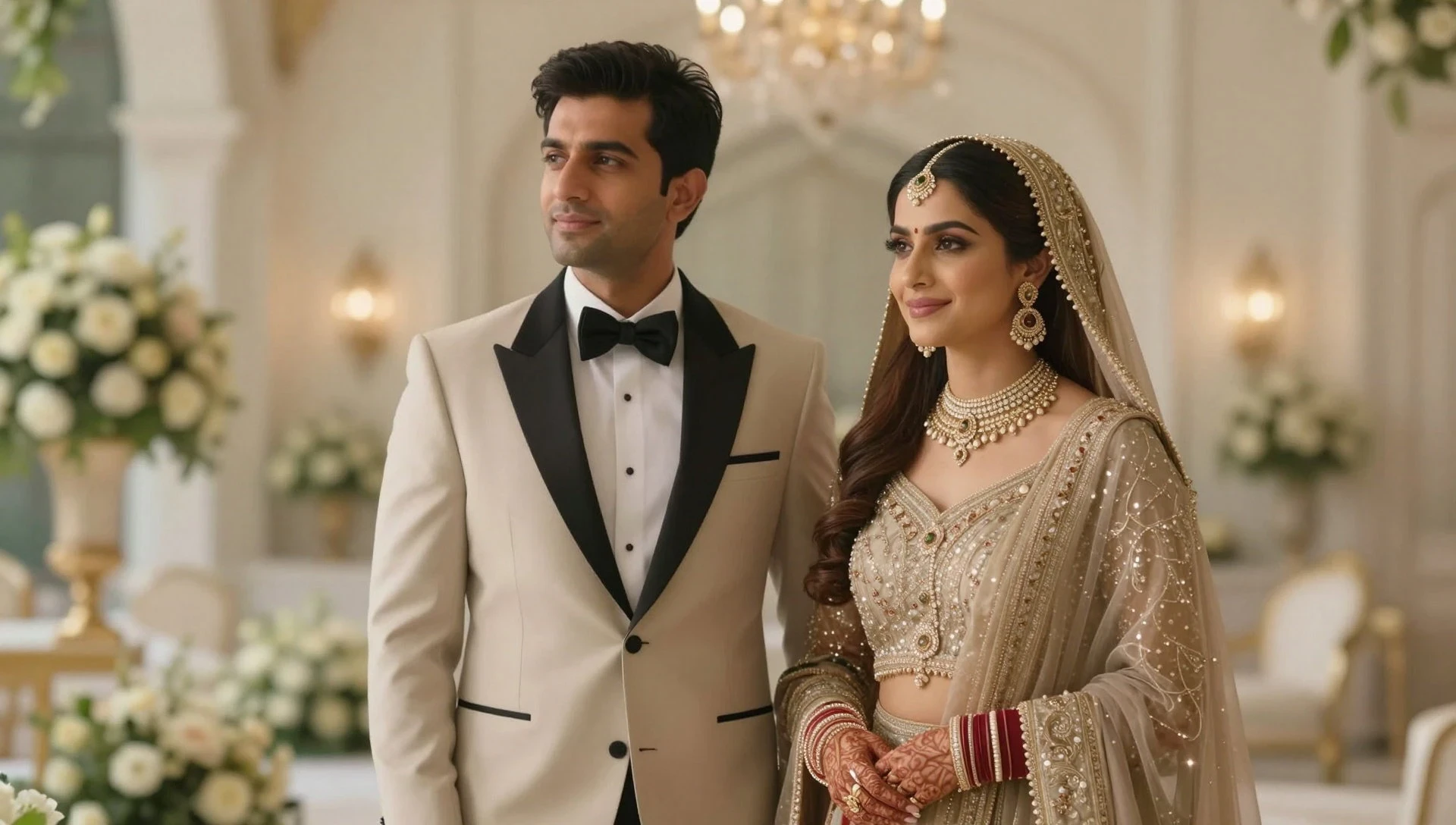
Omar Abdullah, the 56-year-old Chief Minister of Jammu and Kashmir, confirmed on Saturday that he has married journalist Nidhi Razdan, concluding a courtship that had become an open secret across Srinagar's political circles and New Delhi's newsrooms.
The ceremony was conducted quietly in the national capital a day before the public announcement, and the marriage was registered on October 30, 2026. Abdullah disclosed the news through photographs posted on X, accompanied by the line "A new journey began yesterday," while Razdan published her own images with the terse message "It's done bro."
The announcement carries weight beyond its personal dimension because it lands barely three months after a protracted legal battle over Abdullah's divorce reached a mutual consent settlement in the Supreme Court of India on July 31, 2026.
On This Page
That sequence matters: the timing of the registration, the prior family function in Srinagar, and the deliberately low-key Delhi ceremony all suggest a carefully staged disclosure rather than an impulsive one.
For a sitting chief minister in a union territory governed directly from the centre, private life and public perception are never fully separable.
This analysis examines the announcement through three lenses: the biographical and political record of the principal figures, the legal and procedural architecture surrounding the marriage, and the wider public and media reception that followed.
Each strand is documented with verifiable detail, comparative context, and structured data so that readers can assess the event on evidence rather than sentiment.
TL;DR Jammu and Kashmir Chief Minister Omar Abdullah, 56, married journalist Nidhi Razdan in a quiet New Delhi ceremony registered on October 30, 2026, announced publicly the following day via social media. The union follows a Supreme Court mutual consent divorce settlement concluded on July 31, 2026, ending a long dispute over his first marriage to Payal Nath, whom he wed in 1994 and separated from in 2011. A family function in Srinagar preceded the formal Delhi announcement. The event blends personal milestone with political signalling in a region where the chief minister's private life is scrutinised as closely as his administration.
The Public Figures Behind the Announcement
Understanding the significance of the marriage requires attention to the two individuals involved, their professional trajectories, and the institutional positions they occupy. Abdullah is not a private citizen making a private choice; he is the elected head of a union territory whose governance arrangements remain contested.
Razdan, similarly, is a journalist of national standing whose career has placed her in proximity to the very political class her profession is expected to scrutinise.
Omar Abdullah's Political Lineage and Career
Omar Abdullah belongs to one of South Asia's most established political dynasties, being the grandson of Sheikh Abdullah and the son of Farooq Abdullah, both former chief ministers of Jammu and Kashmir.
He entered electoral politics in 1998, four years after his first marriage, and has since served multiple terms in the Lok Sabha before assuming the chief ministership. His political identity is therefore inseparable from a family brand that has dominated Kashmiri politics for generations.
His career has included periods of detention, coalition partnerships, and a stint in the Union cabinet, giving him a profile that spans regional and national politics. That breadth explains why a personal announcement generates coverage far beyond Srinagar.
Observers read such moments for signals about stability, alliances, and the chief minister's standing within the National Conference and the broader political landscape.
The timing of the announcement, arriving during his current tenure, invites comparison with earlier phases of his public life. In 2011 he announced separation from his first wife, a disclosure that itself became a news event.
The pattern suggests a politician who manages personal disclosures with the same deliberateness applied to policy communication, releasing information on his own terms rather than allowing it to leak.
Nidhi Razdan's Professional Standing
Nidhi Razdan is a television journalist whose career spans more than two decades of prime-time reporting and anchoring, principally with NDTV before later independent ventures. Her beat has centred on foreign affairs, politics, and national security, placing her routinely in contact with senior policymakers and legislators. That professional proximity makes her marriage to a sitting chief minister a subject of legitimate media interest.
Her public profile includes authorship and commentary, and she has been a recognisable face in Indian broadcast journalism during a period of significant disruption in the industry. The couple had frequently been seen together in Jammu and Kashmir, including at official events, according to reporting, which meant the relationship was already visible to those who followed regional affairs closely.
Marriage to a chief minister inevitably alters the professional optics of a journalist's career, raising questions about conflict of interest that both institutions, media and government, will need to manage. How Razdan navigates that boundary will be watched as closely as any policy decision emanating from the chief minister's office.
The National Conference and Family Context
The National Conference, the party Abdullah leads, responded through spokesman Imran Nabi Dar, who offered his best wishes to the couple. That institutional endorsement matters in a party where family and organisation are tightly interwoven.
Congratulations also arrived from friends and party workers, indicating that the announcement was received without evident internal friction.
Family sources indicated that the two families held a function in Srinagar earlier in the month, before the formal announcement in New Delhi. This sequencing, a regional family gathering followed by a capital registration and disclosure, reflects the dual geography of Abdullah's life. Srinagar supplies political legitimacy; New Delhi supplies legal and administrative convenience.
The Abdullah family's history in Kashmiri politics means that any addition to its inner circle attracts attention from constituents and rivals alike. A journalist entering that circle introduces a new set of relationships, and the political class will assess what, if anything, it signals about the chief minister's media posture.
We Also Published
Legal Sequence and Procedural Detail
The marriage cannot be read in isolation from the legal proceedings that preceded it. Abdullah's first marriage, to Payal Nath, the daughter of Major General Ram Nath, took place in 1994, four years before he entered politics.
He announced their separation in 2011, but the formal dissolution required years of litigation that concluded only in 2026.
From Separation to Supreme Court Settlement
The gap between the 2011 separation announcement and the July 31, 2026 settlement in the Supreme Court spans roughly fifteen years, a duration that illustrates how slowly contested matrimonial matters can move through Indian courts.
The resolution came by mutual consent, meaning both parties agreed to terms rather than receiving a contested judicial verdict.
Mutual consent settlements typically compress proceedings once agreement is reached, but the preceding years of dispute had already imposed their own costs. The Supreme Court's role as the concluding forum underscores the matter's persistence through lower tiers. Only after that settlement could a fresh marriage be registered without legal ambiguity.
The interval between the July 31 settlement and the October 30 registration is approximately three months, a period short enough to be notable but long enough to satisfy procedural requirements. That compression suggests the wedding arrangements were substantially prepared in advance, contingent on the legal outcome.
Registration and Ceremony Logistics
The marriage was registered on October 30, 2026, with the ceremony held quietly in New Delhi a day earlier. Registration is the legally operative act; the ceremony is the social one. By separating the two and keeping both understated, the couple minimised the window for speculation before the formal announcement.
Holding the ceremony in New Delhi rather than Srinagar carries practical advantages: privacy, administrative access, and distance from the intense local scrutiny that a Srinagar wedding would have attracted. The earlier Srinagar family function satisfied regional expectations without exposing the couple to a full public spectacle.
The announcement strategy itself followed a recognisable pattern. Photographs on X, brief captions, and no formal press conference allowed the couple to control the narrative's first twenty-four hours. By the time commentary accumulated, the essential facts were already fixed in the public record.
Comparative View of the Two Marriages
Placing the two marriages side by side reveals how Abdullah's public position has changed. The 1994 union occurred before he held office, when his identity was primarily dynastic rather than executive. The 2026 union occurs with him as chief minister, making every procedural step a matter of public record and commentary.
The first marriage produced a separation announcement in 2011 that was itself a media event, unusual for its directness. The second marriage was announced through social media photographs, a channel that bypasses traditional press gatekeeping. The shift in disclosure method tracks the broader transformation of political communication over three decades.
Both marriages involved women with independent professional or family standing: Payal Nath as the daughter of a major general, Nidhi Razdan as an established journalist. That consistency suggests a pattern of partnership with individuals who possess their own public identities rather than anonymous private lives.
Public Reception, Media Dynamics, and Political Reading
The announcement generated congratulatory messages from friends, party workers, and the National Conference's official spokesman, indicating a broadly positive reception within Abdullah's immediate political ecosystem. Beyond that circle, the response divided along predictable lines: personal goodwill on one side, and analytical scrutiny of timing and optics on the other.
Social Media as the Disclosure Channel
Abdullah's use of X to announce the marriage, with photographs and a brief caption, placed the news directly before the public without intermediary editing. Razdan's "It's done bro" added an informal register that softened the formality of a chief ministerial announcement. The phrasing signalled a personal, unguarded moment rather than a political statement.
This direct-to-platform approach has become standard for public figures seeking to control first impressions. It also creates a durable record: the posts remain accessible, quotable, and timestamped. For researchers and journalists, that permanence is valuable; for the couple, it means the announcement cannot be retroactively reshaped.
The volume of congratulatory replies, including from party workers, functioned as a soft endorsement of the marriage within the National Conference's grassroots network. Such visible warmth reduces the risk of the announcement being framed as controversial, redirecting attention toward the personal rather than the political.
Political Optics in a Union Territory
Jammu and Kashmir's status as a union territory means its chief minister operates within a structure where the central government retains substantial authority. In that configuration, personal stability and public composure carry political value. A settled private life can be presented as evidence of focus and continuity.
Conversely, the fifteen-year divorce dispute had lingered as a background fact, occasionally resurfacing in commentary. Its resolution in July 2026 removed an open legal question from Abdullah's record. The marriage three months later closes that chapter publicly and replaces it with a forward-looking narrative.
Razdan's profession introduces a separate optic. A chief minister married to a journalist invites questions about access and influence, particularly in a region where press freedom is a sensitive subject. How the couple and their institutions handle that boundary will shape coverage more than the wedding itself.
What the Timing Signals
The three-month interval between the Supreme Court settlement and the marriage registration is the most analytically interesting figure in the sequence. It is short enough to suggest prior planning, yet long enough to avoid any appearance of indecent haste. That calibration indicates deliberate management of legal and public timelines.
Announcing on a Saturday, with the ceremony already completed the previous day, gave the couple a full news cycle before weekday political coverage resumed. Weekend announcements are a standard device for controlling narrative flow, and this one followed the playbook precisely. The result was extensive but largely benign coverage.
For Abdullah's constituents, the marriage is unlikely to alter material conditions in Jammu and Kashmir. Its significance lies in the symbolic register: a chief minister presenting a settled, forward-looking personal life while his administration navigates the complexities of union territory governance. Perception, in politics, is rarely separable from substance.
Assessing the Broader Significance
Beyond the personal milestone, the marriage invites reflection on how public figures in India manage the intersection of private life and political office. Abdullah's case is instructive because every stage, from separation to settlement to remarriage, occurred in public view, with each disclosure calibrated to its moment.
Privacy, Publicity, and Political Legitimacy
Indian politicians have historically varied widely in how much of their private lives they expose. Some maintain strict separation; others, like Abdullah, disclose selectively through social media. The selective approach preserves control while satisfying public curiosity, but it also invites continued scrutiny of whatever remains undisclosed.
The marriage to a journalist sharpens this dynamic. Razdan's professional obligations and Abdullah's official responsibilities create overlapping spheres that cannot be neatly separated. Transparency about how those spheres are managed would serve both institutions better than silence, though neither party has an obligation to disclose more than the law requires.
Political legitimacy in a democracy rests on accountability for public actions, not on the details of private relationships. Yet voters consistently factor personal character into their assessments. Abdullah's decision to announce openly, rather than conceal, aligns with a modern expectation that leaders acknowledge significant life events.
Regional and Institutional Implications
In Jammu and Kashmir, where political attention is intense and media access uneven, the chief minister's household arrangements carry symbolic weight. A stable, publicly acknowledged partnership may be read as a sign of continuity in an administration navigating complex governance questions. The National Conference's endorsement reinforces that reading.
The journalist-politician marriage also raises structural questions for the regional press. Access to the chief minister's office is a professional asset; proximity through marriage could complicate the boundaries of fair reporting. How newsrooms handle that reality will test their stated commitments to independence and disclosure.
None of this diminishes the personal significance of the event. Two established professionals, each with independent careers and public profiles, have chosen to formalise a partnership. The analytical lens simply acknowledges that in public life, private decisions are always accompanied by public consequences.
Conclusion: A Personal Milestone in a Public Frame
The marriage of Omar Abdullah and Nidhi Razdan is, at its core, a personal event between two accomplished professionals. Its public dimension derives from the offices they hold and the region they inhabit, not from any inherent political content.
The evidence supports a straightforward reading: a legally settled past, a quietly executed present, and a controlled public disclosure.
What remains to be observed is how the couple and their institutions manage the professional overlap that the marriage creates. That question will be answered over months and years, through editorial decisions and official conduct, rather than through any single statement. For now, the record shows a milestone announced with precision and received with general goodwill.
From our network :
- University Language Proficiency Exams: Why Institutional Tests Demand Different Preparation Than IELTS and TOEFLDiscover why university-specific language proficiency examinations differ fundamentally from IELTS and TOEFL, and learn strategic preparation approaches for institutional assessment success.
- Live Online English Classes for Kids: Do They Actually Reduce Anxiety?A ten-week study reveals that synchronous online English classes can significantly reduce child language anxiety while improving listening and reading skills. Discover what makes these programs effective and how parents can select the right one.
- Mobile Learning and VR in English: What Global Evidence Reveals About Effective Language TechnologyA systematic review across 14 countries reveals which language-learning technologies genuinely work. Mobile learning, AI, and VR show measurable benefits when pedagogically integrated. This evidence-based guide helps educators and learners select technology that delivers real return on investment.
- How AI Agents Will Change the Way We Manage Personal FinancesExplore how AI agents are transforming personal finance through automated budgeting, bill payment, and investment management, while examining the critical security protocols and governance frameworks required for safe deployment.
- CISA’s Ten-Advisory Wave: Why Generic Patching Fails in OT and How to Build Product-Specific PlaybooksCISA released ten ICS advisories in one week, exposing critical infrastructure risks. Generic patching fails in OT. Learn to build product-specific remediation playbooks.
- The Hidden Cost of AI Convenience: Why Over-Permissioned Agents Are a Security Time BombDiscover why AI agents with excessive permissions create dangerous single points of failure, and learn how implementing least privilege principles can protect your organization from exploitation.
- The Final Descent: How ESA Retired the Legendary Cluster Constellation After 24 Years of Space Weather ScienceAfter 24 years mapping Earth’s magnetosphere, ESA’s Cluster mission concluded with a precisely controlled reentry over the South Pacific. This analysis explores the scientific legacy, engineering decisions, and debris mitigation principles behind one of space exploration’s most responsible retirements.
- Forbidden Matrix Patterns and Visible Lattice Points: A Geometric DictionaryExplore how multidimensional 0–1 matrices encode geometric truths, linking forbidden patterns to visible lattice points and hypergraph theory, with applications in combinatorics and computational geometry.
- Committed Mediterranean Precipitation Decline: Why Emissions Cuts Alone Cannot Restore Winter RainsNew NOAA research reveals that Mediterranean winter rains may decline irreversibly even with emissions cuts. Explore the science of committed climate change and regional impacts.
RESOURCES
- Nidhi Razdan and Omar Abdullah's interfaith marriage as a symbol ...facebook.com2 days ago ... A beautiful and creative description of love courage and marriage….. may they enjoy rest of their life as we pray…
- J&K Chief Minister Omar Abdullah marries journalist Nidhi Razdanreddit.com2 days ago ... 781 votes, 149 comments. Jammu and Kashmir Chief Minister Omar Abdullah has announced his marriage to journalist Nidhi Razdan sharing…
- Jammu & Kashmir CM Omar Abdullah marries journalist Nidhi Razdangulftoday.ae22 hours ago ... Jammu & Kashmir CM Omar Abdullah marries journalist Nidhi Razdan ... Omar Abdullah posted on X, saying, "A new journey…
- "Jammu and Kashmir Chief Minister Omar Abdullah has married ...instagram.com2 days ago ... Jammu and Kashmir Chief Minister Omar Abdullah has married journalist Nidhi Razdan in New Delhi. “A new journey began yesterday.
- J&K Chief Minister Omar Abdullah marries journalist Nidhi Razdanthehindu.com2 days ago ... Jammu and Kashmir Chief Minister Omar Abdullah, 56, on Saturday announced his marriage with journalist Nidhi Razan, a day after…
- Jammu and Kashmir Chief Minister Omar Abdullah has married ...instagram.com2 days ago ... Jammu and Kashmir Chief Minister Omar Abdullah has married journalist and former NDTV anchor Nidhi Razdan, with the couple sharing ...
- Omar Abdullah marries journalist Nidhi Razdan - Hindustan Timeshindustantimes.com1 day ago ... Jammu and Kashmir chief minister Omar Abdullah has married television journalist Nidhi Razdan. J&K CM Omar Abdullah and journalist Nidhi…
- Jammu and Kashmir CM Omar Abdullah marries journalist Nidhi ...deccanherald.com2 days ago ... Jammu and Kashmir CM wedding: Omar Abdullah marries journalist Nidhi Razdan in a private ceremony after finalising his divorce settlement.
- J-K CM Omar Abdullah marries scribe Nidhi Razdan at private ...rediff.com2 days ago ... Jammu and Kashmir Chief Minister Omar Abdullah married journalist Nidhi Razdan at a private ceremony on Friday. The CM shared…
- J&K CM Omar Abdullah marries journalist Nidhi Razdandeccanherald.com2 days ago ... Srinagar: Jammu and Kashmir Chief Minister Omar Abdullah married journalist Nidhi Razdan, with the couple announcing their wedding through ...
- 'It's done bro': Omar Abdullah marries journalist Nidhi Razdanindianexpress.com2 days ago ... Jammu and Kashmir Chief Minister Omar Abdullah has married senior journalist Nidhi Razdan, with the couple sharing photographs on social ...
- J&K Chief Minister Omar Abdullah marries journalist Nidhi Razdanindiatoday.in2 days ago ... Jammu and Kashmir Chief Minister Omar Abdullah has announced his marriage to journalist Nidhi Razdan, sharing the news on social…
- Daily Excelsior on X: "Chief Minister Omar Abdullah Marries ...x.com1 day ago ... Daily Excelsior on X: "Chief Minister Omar Abdullah Marries Journalist Nidhi Razdan". @DailyExcelsior1. Daily Excelsior · @DailyExcelsior1.
- Who is Nidhi Razdan? Meet journalist, married to Jammu and ... - Mintlivemint.com2 days ago ... One of the photographs showed Omar Abdullah standing alongside his wife, Nidhi, on an ornate wooden staircase decorated with floral ...
- Ankit Jain on X: "Nidhi Razdan is now attending official meetings of ...x.comJan 18, 2026 ... Nidhi Razdan is now attending official meetings of Jammu and Kashmir CM, she is not married to Omar abdullah neither…
- 01
- 02
- 03
- 04
- 05
- 06
- 07
- 08
0 Comments