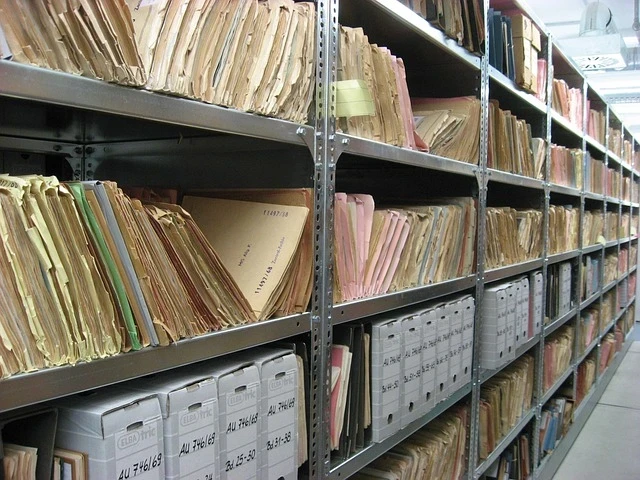
Poland's state news agency PAP and the National Digital Archive have signed a landmark agreement to publish the vast photographic legacy of the Central Photographic Agency online, opening a window onto four decades of communist-era life. The collection, spanning 1951 to 1991, represents one of the most comprehensive visual records of the Polish People's Republic ever assembled. Twelve million negative frames, thousands of official prints, and 180,000 pages of editing lists now stand poised for public access.
This initiative transforms how historians, journalists, and ordinary citizens will encounter the past. Rather than relying solely on written descriptions, researchers can now search by viewing the actual contact sheets, a method that promises to surface previously unknown material. The archive captures official life, state ceremonies, industrial achievements, and the mundane rhythms of a society behind the Iron Curtain.
The agreement between PAP and NAC culminates three decades of painstaking preservation work, including the scanning of more than half a million contact sheet sides. Copyright remains with PAP, which retains commercial rights, while the National Digital Archive manages public accessibility through its online platform. This balance between commercial interest and public heritage offers a replicable model for other post-communist states wrestling with similar archival legacies.
TL;DR Poland's PAP and the National Digital Archive have agreed to publish the Central Photographic Agency's archive online, encompassing 12 million negative frames, nearly 270,000 contact sheets, and 180,000 pages of editing lists from 1951 to 1991. The collection documents official life in the Polish People's Republic, with over half a million scans already prepared. Searching by image rather than description promises to unearth previously unknown historical material, serving historians, enthusiasts, and the broader public while PAP retains commercial copyright.
On This Page
The Central Photographic Agency and Its Enduring Visual Legacy
The Central Photographic Agency, known by its Polish acronym CAF, functioned as the primary visual chronicler of the Polish People's Republic from 1951 until its dissolution in 1991. Its photographers captured state ceremonies, industrial triumphs, cultural events, and the everyday textures of socialist life. The archive they left behind constitutes an unparalleled visual census of a nation navigating the ideological currents of the Cold War.
Understanding CAF's role requires appreciating the peculiar position of photography within communist media systems. Images were not neutral records but carefully curated instruments of propaganda, designed to project unity, progress, and the benevolence of the state. Yet beneath this official veneer, the negatives preserve accidental details, unguarded moments, and the stubborn persistence of ordinary human experience.
The physical archive itself is staggering in scale and complexity. Twelve million negative frames rest alongside thousands of official agency prints, press notes, and 180,000 pages of editing lists that describe photo services in meticulous detail. Card indexes, film registers, and censorship notebooks complete this documentary ecosystem, offering researchers multiple pathways into the collection.
Most items date from the 1960s through the late 1980s, a period when CAF's output reached its zenith. From the early 1960s onward, materials were gradually transferred to the state archive then known as the Archive of Mechanical Documentation, which is now the National Digital Archive. This long migration ensured survival, though accessibility remained limited to those with physical proximity and institutional credentials.
From Negatives to Contact Sheets: The Anatomy of an Archive
Contact sheets represent the crucial intermediary between raw negatives and published photographs. Created by placing negatives directly onto light-sensitive paper, they produce positive images that allow editors and archivists to survey an entire roll at a glance. The CAF archive contains nearly 270,000 individual contact sheets, which, because they are double-sided, amount to almost half a million distinct sides.
These contact sheets function as visual indexes, compressing dozens of frames into a single comprehensible page. For researchers, they offer the ability to scan rapidly through a photographer's entire session, spotting patterns, sequences, and outliers that written descriptions might obscure. The National Digital Archive has already prepared more than half a million scans, with plans to digitize the remainder.
The scanning process itself demands considerable technical precision. Negatives from the mid-twentieth century vary in condition, chemical stability, and physical dimensions, requiring customized handling for each batch. Archivists must balance resolution fidelity against storage constraints, ensuring that the digital surrogates remain useful for both scholarly examination and public browsing.
The Long Road from State Archive to Digital Commons
The journey from physical storage to digital accessibility has unfolded across more than six decades. From the early 1960s, CAF materials were gradually transferred to the Archive of Mechanical Documentation, an institution designed to manage the state's burgeoning technical and visual documentation. This archive eventually evolved into the National Digital Archive, inheriting both the collection and the responsibility for its preservation.
For much of this period, access remained restricted to official researchers, journalists, and state-approved historians. The contact sheets and negatives served as working tools for propaganda production, not as public heritage. The fall of communism in 1989 opened new possibilities, but the sheer scale of the collection and the absence of digital infrastructure delayed meaningful public access for years.
The partnership between PAP and NAC represents the culmination of sustained institutional collaboration. PAP owns the copyright to the photographs and retains commercial rights, a crucial arrangement that funds ongoing preservation while permitting public access through NAC's platform. This dual structure acknowledges both the commercial value of the archive and its status as national heritage.
PAP director general Marek Błoński emphasized that the new agreement follows three decades of work, including NAC's scanning of the contact sheets. He described the archive as an important record of Polish history, a characterization that underscores its significance beyond mere institutional assets. The collaboration demonstrates how state agencies can reconcile proprietary interests with public good.
Searching by Image: A Methodological Revolution
Perhaps the most transformative aspect of the agreement is the shift from description-based searching to image-based discovery. Previously, researchers could only locate materials by reading catalog descriptions, which inevitably reflected the priorities and biases of the original catalogers. Now, users can browse the contact sheets directly, spotting visual patterns and subjects that textual descriptions might have overlooked.
This methodological shift has profound implications for historical research. Written descriptions from the communist era often emphasized official narratives, categorizing photographs according to state priorities. Visual browsing bypasses these filters, allowing researchers to encounter images on their own terms and to identify previously unknown material that escaped official attention.
NAC director Piotr Zawilski noted that the agreement creates a model for publishing contact sheets online, suggesting that other institutions might adopt similar approaches. The technical infrastructure required for such image-based searching involves sophisticated metadata tagging, high-resolution scanning, and user-friendly interfaces that accommodate both casual browsers and serious scholars.
The release will help historians and enthusiasts alike, officials said, and may bring previously unknown material to light. This potential for discovery extends beyond academic circles, offering ordinary citizens the chance to encounter their own family histories, local communities, and shared national experiences through the visual record.
Copyright, Commercial Rights, and the Public Interest
The agreement between PAP and NAC navigates a delicate balance between commercial interests and public accessibility. PAP owns the copyright to the photographs and retains commercial rights, meaning that while the contact sheets will be freely viewable online, commercial exploitation remains under PAP's control. This arrangement ensures that the state news agency can continue to fund preservation and digitization efforts.
Critics might argue that public access should be unconditional, particularly for materials documenting a period of state socialism. Yet the commercial rights provide a practical mechanism for sustaining the archive's long-term viability. Without revenue streams, digitization projects often stall, leaving collections inaccessible and vulnerable to physical deterioration.
The model established here could inform similar initiatives across Central and Eastern Europe. Many post-communist states possess comparable archives of official photography, often held by successor agencies with unclear mandates and limited resources. The PAP-NAC agreement offers a template for reconciling proprietary claims with the public's legitimate interest in historical documentation.
Transparency remains essential to this balance. Officials have not disclosed the specific terms of the commercial arrangement, leaving questions about pricing, licensing, and revenue distribution unanswered. For the agreement to serve as a genuine model, greater clarity about these financial dimensions would strengthen public confidence and institutional accountability.
Comparative Perspectives on Post-Communist Archives
Poland's approach to its communist-era photographic archive invites comparison with other former Eastern Bloc nations. Each country has confronted similar challenges: decaying physical materials, contested ownership, limited funding, and the political sensitivities surrounding state socialist documentation. The solutions adopted vary considerably, reflecting different legal frameworks and institutional capacities.
In some countries, archives have been fully nationalized and placed under cultural ministry control, with unrestricted public access. In others, successor agencies retain commercial rights, creating hybrid models similar to the PAP-NAC arrangement. The Polish case stands out for its emphasis on image-based searching and its explicit goal of surfacing previously unknown material.
The German case, involving the integration of East German photographic archives into federal institutions, demonstrates how reunification can accelerate access. Yet even there, commercial licensing and copyright complexities persist, particularly for images created by state agencies with unclear successor ownership. Poland's agreement thus participates in a broader regional conversation about memory, property, and public heritage.
Technical Infrastructure and User Experience
Publishing nearly half a million contact sheet sides online demands robust technical infrastructure. The National Digital Archive's platform, szukajwarchiwach.gov.pl, must accommodate high-resolution images, responsive browsing, and search functionality that leverages visual content rather than relying solely on text. These requirements push against the limits of conventional archival systems.
High-resolution scanning of contact sheets presents particular challenges. Each sheet contains multiple frames, and users need sufficient resolution to examine individual images without losing the contextual overview that contact sheets provide. Balancing file size against image quality requires careful calibration, especially for users with limited bandwidth or older devices.
The user interface must serve diverse audiences, from professional historians conducting detailed research to casual browsers exploring family or local history. Effective design would include zoom capabilities, metadata overlays, and pathways for users to contribute corrections or additional information. Such participatory features could enrich the archive while distributing curatorial labor.
Long-term preservation of digital surrogates introduces another layer of complexity. File formats, storage media, and software platforms evolve rapidly, threatening the accessibility of digital archives over decades. NAC must implement migration strategies and redundancy systems to ensure that today's scans remain usable for future generations.
We Also Published
Historical Significance and Scholarly Implications
The CAF archive's historical significance extends far beyond its sheer volume. It documents the Polish People's Republic during a period of intense ideological contestation, capturing both the state's self-presentation and the unintended details that betray its limitations. For historians, this dual character makes the collection invaluable.
Official photographs from the communist era typically depicted idealized scenes: happy workers, bountiful harvests, harmonious communities. Yet the negatives often contain alternative frames, rejected shots, and peripheral details that complicate these narratives. Access to the full contact sheets allows researchers to see what was selected and what was discarded, revealing the editorial processes behind propaganda.
The archive also documents the material culture of everyday life under socialism. Clothing, architecture, consumer goods, and public spaces appear throughout the images, offering evidence for social and economic historians. These visual records complement written sources, providing texture and specificity that text alone cannot convey.
For scholars of media and propaganda, the CAF collection offers a laboratory for understanding how visual messaging operated within state socialist systems. The editing lists, censorship notebooks, and card indexes reveal the bureaucratic machinery behind image production, distribution, and control. These documents illuminate the constraints under which photographers and editors worked.
Uncovering Hidden Histories
Officials emphasized that the online release may bring previously unknown material to light. This potential for discovery stems from the shift to image-based searching, which allows users to encounter photographs that textual descriptions failed to capture. Subjects marginalized in official narratives, from religious practices to unofficial cultural expressions, may surface through visual browsing.
The archive's coverage of the 1960s through the 1980s coincides with significant social and political upheavals in Poland. Student protests, workers' strikes, the rise of Solidarity, and the imposition of martial law all occurred during this period. While official photographs may not document these events directly, peripheral images and unintended details can provide indirect evidence.
Local historians and community researchers stand to benefit enormously from improved access. Individuals researching their family histories, hometowns, or regional traditions can now search visual records that were previously inaccessible. This democratization of archival access challenges the monopoly that professional historians once held over the interpretation of the past.
The archive also holds potential for comparative research across the Soviet bloc. Similar photographic agencies operated throughout Eastern Europe, and scholars can now begin systematic comparisons of how different states visualized socialism. Such comparisons could reveal shared conventions, national variations, and the transnational circulation of visual tropes.
- 01
- 02
- 03
- 04
Preservation, Access, and the Future of Digital Heritage
The PAP-NAC agreement represents more than a single archival project; it embodies a philosophy of digital heritage that balances preservation, access, and sustainability. By retaining commercial rights while enabling public viewing, the arrangement creates a funding mechanism for ongoing digitization. This pragmatic approach acknowledges that cultural heritage requires material support.
The agreement also demonstrates the value of long-term institutional collaboration. PAP and NAC have worked together for years on making images available to clients, building trust and technical capacity. This accumulated experience positions them to manage the complexities of large-scale digitization and public access.
Future developments may include expanded metadata, user-generated tagging, and integration with educational platforms. As the archive grows more accessible, opportunities for scholarly collaboration, citizen history projects, and public programming will multiply. The contact sheets could become the foundation for exhibitions, documentaries, and digital humanities research.
The broader lesson for other nations is that archival access need not be an all-or-nothing proposition. Hybrid models can reconcile commercial interests with public goods, provided that transparency and accountability accompany the arrangement. Poland's experience offers both inspiration and cautionary lessons for countries confronting their own documentary legacies.
Challenges Ahead for the Digital Archive
Despite the agreement's promise, significant challenges remain. Completing the scanning of all contact sheets and supplementary materials will require sustained funding and technical capacity. The remaining materials include fragile negatives, deteriorating prints, and handwritten documents that resist automated digitization.
Metadata creation poses another hurdle. Effective searching depends on accurate, consistent descriptions, yet the original card indexes and editing lists reflect the priorities and vocabularies of the communist era. Translating these into contemporary search interfaces requires interpretive labor and scholarly judgment.
Copyright clearance for ancillary materials may complicate the project. While PAP owns the photographs, the editing lists, censorship notebooks, and film registers may involve other rights holders or fall under different legal regimes. Clarifying these dimensions will be essential for comprehensive access.
User expectations also present challenges. Contemporary digital users expect seamless interfaces, rapid loading, and sophisticated search features. Meeting these expectations within archival constraints requires ongoing investment and iterative design. The agreement marks a beginning, not an endpoint.
The Broader Significance for Memory and History
Poland's decision to publish the CAF archive online carries significance beyond the technical and institutional dimensions. It represents a statement about the value of confronting difficult history, of making the visual record of state socialism available for scrutiny and interpretation. Such openness serves democratic memory by enabling citizens to engage with their past on their own terms.
The archive's availability may also stimulate artistic and literary responses. Photographers, filmmakers, and writers can draw on these images to create new works that reinterpret the communist era for contemporary audiences. The contact sheets offer raw material for creative engagement with history, not merely scholarly analysis.
For international audiences, the archive provides insight into a period and place often reduced to Cold War clichés. The photographs reveal the complexity of life under socialism, the persistence of ordinary human concerns, and the gap between official representation and lived experience. Such nuance enriches global understanding of twentieth-century history.
Ultimately, the PAP-NAC agreement demonstrates that digital heritage is not merely a technical project but a cultural and political one. Decisions about what to preserve, how to describe it, and who can access it reflect values and priorities. Poland's choices will be watched closely by other nations confronting similar legacies.
Conclusion: A Model for Confronting Visual Pasts
Poland's publication of the Central Photographic Agency archive online stands as a significant achievement in digital heritage and historical memory. The agreement between PAP and NAC demonstrates that commercial interests and public access can coexist through thoughtful institutional design. The archive's scale, spanning twelve million negatives and nearly half a million contact sheet sides, ensures its importance for generations of researchers.
The shift to image-based searching represents a methodological advance with implications beyond Poland. By enabling users to encounter photographs directly, the platform bypasses the filters of earlier cataloging systems and opens possibilities for discovering marginalized or overlooked material. This approach could inspire similar initiatives across the former Eastern Bloc and beyond.
Challenges remain, from completing digitization to creating effective metadata and clarifying copyright dimensions. Yet the agreement establishes a foundation for addressing these issues through sustained collaboration and investment. The archive's future depends on continued institutional commitment and public engagement.
Ultimately, the CAF archive offers more than historical documentation; it provides a mirror for examining how societies represent themselves and how those representations can be interrogated. Poland's decision to make this visual record accessible affirms the value of confronting complex pasts with openness and rigor. Other nations would do well to observe and learn from this model.
From our network :
- How AI Agents Will Change the Way We Manage Personal FinancesExplore how AI agents are transforming personal finance through automated budgeting, bill payment, and investment management, while examining the critical security protocols and governance frameworks required for safe deployment.
- Mobile Learning and VR in English: What Global Evidence Reveals About Effective Language TechnologyA systematic review across 14 countries reveals which language-learning technologies genuinely work. Mobile learning, AI, and VR show measurable benefits when pedagogically integrated. This evidence-based guide helps educators and learners select technology that delivers real return on investment.
- Committed Mediterranean Precipitation Decline: Why Emissions Cuts Alone Cannot Restore Winter RainsNew NOAA research reveals that Mediterranean winter rains may decline irreversibly even with emissions cuts. Explore the science of committed climate change and regional impacts.
- The Final Descent: How ESA Retired the Legendary Cluster Constellation After 24 Years of Space Weather ScienceAfter 24 years mapping Earth’s magnetosphere, ESA’s Cluster mission concluded with a precisely controlled reentry over the South Pacific. This analysis explores the scientific legacy, engineering decisions, and debris mitigation principles behind one of space exploration’s most responsible retirements.
- CISA’s Ten-Advisory Wave: Why Generic Patching Fails in OT and How to Build Product-Specific PlaybooksCISA released ten ICS advisories in one week, exposing critical infrastructure risks. Generic patching fails in OT. Learn to build product-specific remediation playbooks.
- Live Online English Classes for Kids: Do They Actually Reduce Anxiety?A ten-week study reveals that synchronous online English classes can significantly reduce child language anxiety while improving listening and reading skills. Discover what makes these programs effective and how parents can select the right one.
- The Hidden Cost of AI Convenience: Why Over-Permissioned Agents Are a Security Time BombDiscover why AI agents with excessive permissions create dangerous single points of failure, and learn how implementing least privilege principles can protect your organization from exploitation.
- University Language Proficiency Exams: Why Institutional Tests Demand Different Preparation Than IELTS and TOEFLDiscover why university-specific language proficiency examinations differ fundamentally from IELTS and TOEFL, and learn strategic preparation approaches for institutional assessment success.
- Forbidden Matrix Patterns and Visible Lattice Points: A Geometric DictionaryExplore how multidimensional 0–1 matrices encode geometric truths, linking forbidden patterns to visible lattice points and hypergraph theory, with applications in combinatorics and computational geometry.
RESOURCES
- The emigration of displaced persons | Arolsen Archivesarolsen-archives.orgJan 22, 2024 ... Or they were imprisoned and put to work as forced laborers all over again, this time in the Soviet Union.…
- a revolutionary friendship, captured in rare photos from 1955-1989 ...new-east-archive.orgThe legacy of Polish relations with Africa now lives on in photos from the Polish Press Agency's archive. ... archive photos from the period…
- 2008 Rafal Milach AES1-BI - World Press Photoworldpressphoto.orgDuring the communist era, circus was one of the most popular forms of entertainment in Poland. Polish performers worked with the most prestigious outfits…
- World War II Photos | National Archivesarchives.govThe National Archives Identifier number is linked to the online catalog where a digitized file of the photograph will be available for download. The…
- NATO Expansion: What Gorbachev Heard - National Security Archivensarchive.gwu.eduDec 12, 2017 ... Michail Gorbachev discussing German unification with Hans-Dietrich Genscher and Helmut Kohl in Russia, July 15, 1990. Photo: Bundesbildstelle / ...
- Joy, history weave 'intense' trip to Poland | W&M News Archivewm.eduNov 21, 2011 ... The Catholic University in Lublin had been the only university with any autonomy during the Soviet era. Karol Wojtyla, who…
- Everyday life in 1980's communist Poland. Photographs from the ...facebook.comNov 22, 2022 ... Meat line in background and line for other groceries. I think Swidnica 1976. Mother's trip to Poland. Take time to…
- Remembering the daring Polish martyrs of communismoursundayvisitor.comOct 31, 2024 ... ... archive in Warsaw to document the fate of other communist-era victims. ... photo. (OSV News photo/courtesy Jesuit Archives in…
- Polish Immigration to Minnesota | MNopediamnhs.orgNov 3, 2020 ... Immigration History Research Center Archives Photograph Collection ... At the end of World War II, the Soviet Union placed a…
- Who in NATO Is Ready for War? - Army University Pressarmyupress.army.milJul 1, 2024 ... ... Poland's remaining Soviet-era inventory.38. The 11th Armored Cavalry ... Online Exclusive Article Archive · Plagiarism Policy · FWWP ...
- Polish History Told Through Posters - Contemporary Lynx Magazinecontemporarylynx.co.ukJun 2, 2026 ... Polish Poster. The Collection ... From Young Poland's symbolism to some of the most influential images of the communist era ...
- Deep Maneuver - Army University Pressarmyupress.army.milResidents of Lodz, Poland, greet Soviet tank crews in 1945 as they enter the city. (Photo courtesy of the State Archive of the Russian…
- Pictures of Resistance Gallery | Jewish Partisan Educational ...jewishpartisans.orgLocated on the Polish side of the Sluch River that divided Poland ... This photograph captures the first time the partisans of Faye's detachment…
- Ash Wednesday collection 'gives hope' to reborn Church in Central ...osvnews.comFeb 16, 2026 ... ... communist rule — is showing signs of resurrection. (OSV News photo/Ints Kalnins, Reuters). Grants support a range of initiatives,…
- Jakub Berman's Papers Received at the Hoover Institution Archiveshoover.orgBerman's name is associated with the Sovietization of Poland following World War II and repressions against the opponents of the communist regime. Berman ...
- 01
- 02
- 03
- 04
- 05
- 06
- 07
- 08
0 Comments