Deep inside the flooded forests of the Amazon basin, a silver-scaled giant glides beneath the surface, rising every few minutes to gulp air from above the waterline. The tambaqui, a freshwater fish that can weigh up to thirty kilograms and reach nearly a metre in length, has fed river communities for generations. Yet this familiar food fish is quietly becoming something far more consequential: a living instrument for measuring how climate upheaval is reshaping the world's largest tropical rainforest. Its behaviour, its physiology, and its very survival are transmitting signals that satellites and sensors struggle to capture.
The scientist decoding those signals is Adalberto Luis Val, an ecophysiologist who has spent more than four decades studying how fish endure water that is low in oxygen and saturated with carbon dioxide. Now seventy years old, Val began his scientific life in rural São Paulo and has called Manaus home since the early 1980s, working from the National Institute for Amazonian Studies, known as INPA. His central insight is deceptively simple: tropical fish are exquisitely sensitive to shifts in temperature, humidity, and water chemistry, and the tambaqui's habit of surfacing to breathe makes those sensitivities visible long before they become catastrophic.
Val's research carries weight precisely because of where it happens. Most climate science has been produced in North America and northern Europe, regions with temperate ecosystems and comparatively modest population growth. The equator tells a different story, one of dense and expanding human settlement, fragile river systems, and accelerating environmental pressure. In July, Val received the Le Cren medal from the Fisheries Society of the British Isles at the University of Southampton, the first time the honour has gone to a scholar working in the tropics. This post examines what his work reveals about the Amazon, why a single fish species matters, and what the broader implications are for climate monitoring worldwide.
On This Page
TL;DR Adalberto Luis Val, a Brazilian ecophysiologist at INPA in Manaus, has spent decades studying how the tambaqui, a large air-breathing Amazonian fish, responds to low oxygen and high carbon dioxide in tropical waters. His research positions the species as an early-warning indicator of environmental stress in the Amazon, a region where climate change, deforestation, wildcat mining, and pollution converge. Val's work earned the Le Cren medal in July, the first awarded to a tropical scholar, alongside Brazil's Grand Cross of the National Order of Scientific Merit and the American Fisheries Society Award of Excellence. The core message is that equatorial ecosystems demand far more scientific attention than they currently receive.
The Tambaqui as a Biological Early-Warning System
Not every organism makes a good environmental sensor. Effective bioindicators need to be abundant, well understood physiologically, and responsive to subtle changes in their surroundings. The tambaqui satisfies all three conditions with unusual precision. It is a large, long-lived species with a specialised air-breathing adaptation that allows it to supplement gill respiration by gulping atmospheric oxygen at the surface. That adaptation becomes a visible behavioural signal: when dissolved oxygen falls and carbon dioxide climbs, the fish surfaces more frequently, turning an invisible chemical shift into an observable event that researchers and river dwellers alike can register.
Val's decades of physiological work have established exactly how sensitive tropical fish are to environmental variation. Temperature fluctuations, humidity changes, and chemical contamination all register in the animals' metabolism and behaviour well before they produce mass mortality. This matters enormously for monitoring strategy. Dead fish tell you that a system has already failed; a fish surfacing more often tells you that stress is accumulating while there is still time to respond. The tambaqui thus functions as what ecologists call a sentinel species, converting gradual environmental degradation into readable, measurable signals.
Physiology That Turns Stress Into Signal
The tambaqui's air-breathing capability is an evolutionary response to the Amazon's naturally fluctuating oxygen levels. Seasonal floods and droughts routinely create hypoxic conditions in slow-moving water, and the fish evolved a supplementary breathing mechanism to cope. That same mechanism, however, makes the species a precise instrument for detecting anthropogenic change. When human activity pushes oxygen levels below natural baselines or raises carbon dioxide concentrations, the fish's surfacing behaviour shifts measurably, providing a physiological readout of environmental quality that no instrument network currently replicates at comparable scale or cost.
Val's research programme has systematically mapped these responses across temperature, humidity, and chemical gradients. Tropical fish, his work shows, operate closer to their physiological limits than temperate species, leaving less margin for error when conditions deteriorate. A temperature rise that a northern species might absorb becomes a metabolic crisis for an equatorial one. This narrow tolerance window explains why the tropics function as an amplifier for climate effects, and why a single well-chosen species can reveal stresses that would otherwise remain invisible until ecosystems collapse.
Reading the River Through Behaviour
Behavioural monitoring has practical advantages that laboratory instrumentation cannot match. A fish surfacing to breathe is observable by anyone on the riverbank, from trained researchers to subsistence fishers who have watched the tambaqui for generations. This creates an opportunity for citizen observation that complements formal scientific measurement. Val's work implicitly argues for integrating local ecological knowledge with physiological research, since river communities possess observational records stretching back decades that formal monitoring programmes rarely capture or value.
The tambaqui's dual role as both food source and indicator species adds a dimension of urgency. Its decline or behavioural disruption directly threatens food security for Amazonian communities while simultaneously signalling ecosystem stress. This convergence of human welfare and ecological warning in a single species makes it an unusually powerful focal point for research and policy. Protecting the tambaqui is not merely conservation; it is safeguarding both a food system and a monitoring network that operates continuously, without funding cycles or equipment failures.
Four Decades of Research in the Heart of the Amazon
Scientific careers are shaped by geography as much as by curiosity. Val's decision to build his life's work in Manaus, roughly two thousand kilometres upriver from the Atlantic, placed him at the centre of the largest freshwater system on Earth. Since the early 1980s he has worked at INPA, an institution dedicated to understanding Amazonian ecosystems from within rather than from a distance. That positioning matters: field research conducted by resident scientists accumulates local knowledge, long-term datasets, and community relationships that visiting researchers cannot easily replicate.
His research agenda has consistently focused on the physiological limits of tropical aquatic life. How do fish survive in water that is naturally low in oxygen? What happens when carbon dioxide concentrations rise? Which chemical contaminants disrupt which metabolic pathways? These questions, pursued patiently across decades, have produced a body of evidence that now underpins broader claims about climate vulnerability in the tropics. The work is unglamorous in its methods but consequential in its implications, building the kind of longitudinal record that climate science desperately needs at the equator.
From Rural São Paulo to the Rio Negro
Val's origins in rural São Paulo province gave him an early familiarity with the natural world that shaped his later scientific interests. His move to Manaus in the early 1980s coincided with a period of growing international attention to tropical ecology, when researchers began recognising that equatorial ecosystems held biodiversity and carbon stocks of global significance. Settling permanently in the region rather than treating it as a research destination was a deliberate choice with professional costs and scientific benefits, trading metropolitan visibility for the deep local knowledge that only long residence can produce.
The institutional context of INPA provided essential support for this approach. As Brazil's leading Amazonian research institute, it offered laboratory facilities, field access, and a community of scholars focused on the same questions. Val's career trajectory illustrates how scientific capacity in the Global South can produce world-class research when institutions are adequately supported. His recognition by international bodies reflects not only individual achievement but the accumulated capability of a research community that has built expertise in place over several generations.
Recognition That Crosses Hemispheres
The Le Cren medal, awarded on 30 July at the University of Southampton by the Fisheries Society of the British Isles, marked a symbolic shift in the geography of scientific recognition. That the award went to a tropical scholar for the first time signals a broadening of the field's centre of gravity. Val's other honours, including Brazil's Grand Cross of the National Order of Scientific Merit and the American Fisheries Society Award of Excellence, reinforce the point: research conducted at the equator now commands attention from institutions historically focused on temperate systems.
Chris Wood, a biologist at the University of British Columbia and a longtime collaborator, has articulated why this recognition matters beyond the individual. Much climate research, he notes, has concentrated on North America and northern Europe, regions where populations are relatively stable. The tropics, by contrast, combine rapid population growth with acute environmental vulnerability. Val's work addresses precisely that gap, measuring effects that are often felt by local communities but rarely assessed with scientific rigour. Recognition of his research is, in effect, recognition that the field must look south.
We Also Published
What the Amazon's Climate History Reveals
For millions of years, the Amazon's climate remained remarkably stable. Val's research emphasises this deep-time perspective because it reframes current change as an anomaly rather than a continuation. Tropical rainforests evolved under conditions of consistent temperature and predictable rainfall, and the species within them adapted to those conditions with extraordinary precision. That precision is now a liability. Organisms tuned to narrow environmental bands have limited capacity to absorb rapid shifts, and the speed of post-industrial change far exceeds anything in the region's geological record.
The Industrial Revolution marks the inflection point in Val's account. Before it, atmospheric composition and regional climate varied within bounds that Amazonian ecosystems had experienced before. After it, the pace of change accelerated beyond evolutionary timescales. This temporal mismatch is the crux of the problem: species can adapt to gradual change over millennia, but not to transformations compressed into a few generations. The tambaqui's sensitivity, which served it well in a stable world, now makes it a casualty of instability.
A Stable Past and a Disrupted Present
The contrast between geological stability and contemporary disruption structures much of Val's argument. Amazonian species evolved without exposure to the rapid temperature swings, chemical loads, and hydrological changes now occurring. Their physiological systems lack the buffering capacity that temperate species, accustomed to seasonal extremes, often possess. This asymmetry explains why tropical ecosystems may respond to climate change more sharply than their northern counterparts, despite experiencing smaller absolute temperature increases. The margin for error, not the magnitude of change, determines vulnerability.
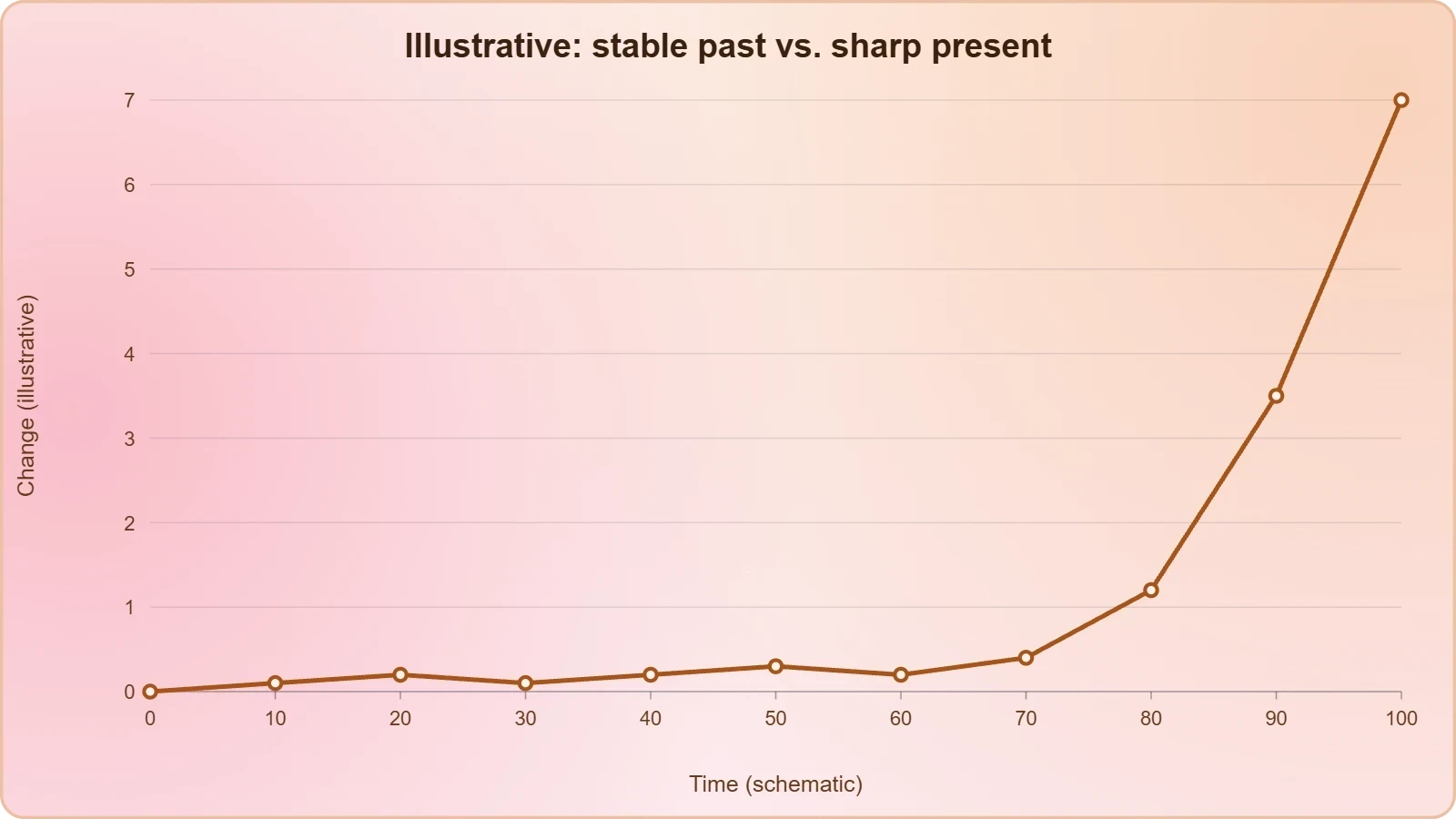
Val's framing also challenges a common assumption in climate discourse: that effects will be gradual and evenly distributed. The Amazon's history suggests instead that stability can mask fragility, and that systems adapted to constancy may fail abruptly when constancy ends. The tambaqui surfacing for air is a small, visible manifestation of a much larger transition, one in which millions of years of climatic equilibrium give way to decades of disruption. Understanding that transition requires precisely the kind of long-term, place-based research Val has conducted.
Human Pressure on a Fragile System
Climate change is not the Amazon's only stressor, and Val's work situates it within a cluster of interacting pressures. Slash-and-burn farming clears forest and alters local hydrology. Wildcat mining introduces mercury and other contaminants into river systems, with effects that accumulate through food chains. Chemical runoff from agriculture adds further loads. Each pressure compounds the others, and their combined effect on aquatic species exceeds what any single factor would produce in isolation. The tambaqui, living at the intersection of these pressures, registers the cumulative burden.
This multi-stressor reality complicates both diagnosis and response. A fish surfacing more frequently might be responding to low oxygen, high carbon dioxide, chemical contamination, or temperature stress, and disentangling these causes requires the detailed physiological understanding that Val's career has built. Policy responses face a parallel challenge: addressing deforestation without addressing mining, or regulating chemicals without managing land use, leaves the overall pressure largely intact. The Amazon's crisis is systemic, and so must be the analysis.
- 01
- 02
- 03
- 04
Why Equatorial Science Deserves Global Attention
The geography of climate research contains a persistent bias. Temperate regions of North America and Europe host the majority of long-term ecological monitoring sites, the most cited climate datasets, and the institutions that train most of the world's environmental scientists. This concentration is historical rather than scientific. It reflects patterns of research funding, institutional development, and colonial-era academic networks rather than the distribution of climate risk. The consequence is a knowledge base that is thick where populations are stable and thin where they are growing fastest.
Chris Wood's observation captures the problem precisely. Climate change, pollution, deforestation, and migration to the tropics are converging in regions that have received comparatively little research attention. The tropics hold most of the world's biodiversity, most of its forest carbon, and a growing share of its population, yet the scientific infrastructure to monitor what is happening there remains underdeveloped. Val's career demonstrates what becomes possible when that gap is addressed, and his international recognition suggests the field is beginning to acknowledge the imbalance.
The Temperate Bias in Climate Monitoring
Long-term ecological research networks in Europe and North America benefit from decades of continuous funding, stable institutions, and dense networks of trained personnel. Equivalent infrastructure in the tropics is patchier, often dependent on individual researchers or short-term grants. This asymmetry means that global climate models are calibrated disproportionately on temperate data, potentially underestimating tropical responses. When Val documents the tambaqui's sensitivity, he is filling a data gap that has consequences for how the entire world understands climate dynamics.
The bias also affects which effects are considered important. Temperate monitoring tends to emphasise variables relevant to northern ecosystems, such as frost timing or growing-season length. Tropical systems demand attention to different parameters: dissolved oxygen, humidity regimes, and the chemical composition of river water. Building monitoring capacity in the tropics therefore requires not just more funding but different methodological priorities, shaped by the physiological realities of equatorial species rather than imported from temperate traditions.
Populations, Migration, and Compounding Risk
Demographic trends sharpen the stakes. The tropics are home to most of the world's young people and account for nearly all projected population growth this century. Migration toward tropical regions, whether internal or international, increases the number of people exposed to climate risks that remain poorly characterised. Wood's warning about converging pressures is fundamentally a warning about human welfare: the regions least studied are also the regions where the most people will experience climate change directly, often with limited institutional capacity to adapt.
Val's research responds to this convergence by measuring effects that communities feel but cannot always articulate scientifically. When river dwellers notice that fish behave differently, they are observing real phenomena that formal monitoring may not capture. Translating those observations into rigorous physiological data creates evidence that can inform policy, guide adaptation, and validate local knowledge. The tambaqui becomes a bridge between lived experience and scientific measurement, connecting the riverbank to the research institute and, increasingly, to international bodies that shape climate policy.
From Physiological Data to Policy and Protection
Scientific measurement acquires meaning when it informs decisions. Val's research programme aims explicitly at measuring and understanding effects that are often felt but not always well assessed, a formulation that bridges the gap between laboratory physiology and public policy. Physiological data on fish stress can support water quality standards, guide mining regulation, inform deforestation policy, and shape climate adaptation planning. Without such data, policymakers operate on intuition and anecdote; with it, they can set thresholds grounded in the actual tolerance limits of living organisms.
The tambaqui's role as a food species strengthens the policy case. Protecting the fish is not an abstract conservation goal but a matter of food security for communities across the Amazon basin. When regulators consider mining permits or agricultural runoff standards, the physiological vulnerability of a staple food fish provides a concrete, locally meaningful justification for caution. Val's work thus converts ecological research into a form of advocacy that speaks in the language of livelihoods rather than abstractions, making environmental protection legible to audiences that might otherwise dismiss it.
Translating Stress Signals Into Standards
Environmental standards work best when they reflect the actual sensitivities of local species. A dissolved oxygen threshold derived from temperate fish may be far too permissive for tropical species operating near their physiological limits. Val's data on tambaqui responses to hypoxia and hypercapnia provides a basis for setting standards calibrated to Amazonian conditions. This is a concrete pathway from research to regulation: measure the organism's tolerance, identify the threshold at which stress begins, and write that threshold into law.
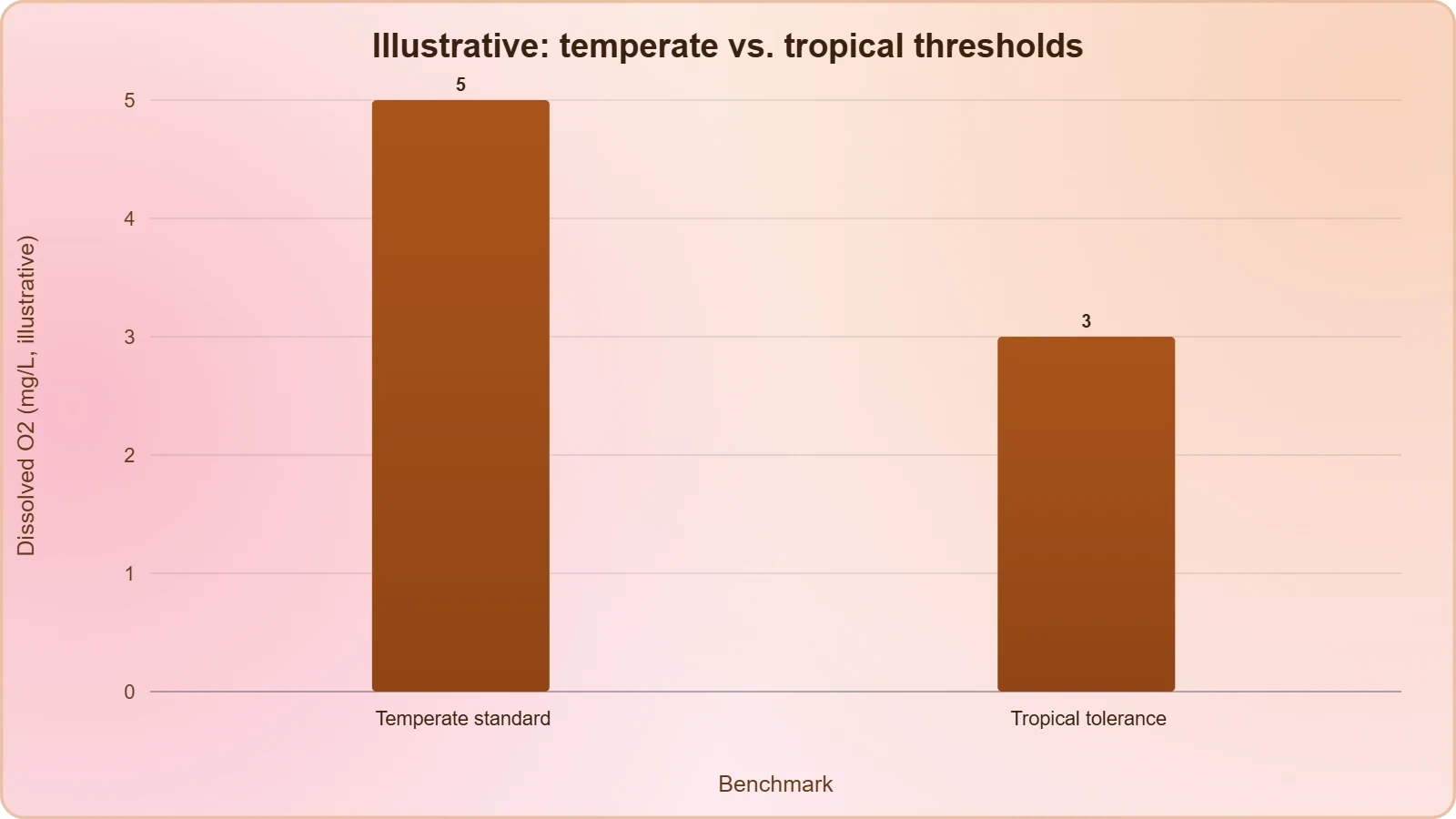
The same logic applies to contaminants. Wildcat mining releases mercury into river systems, and the effects accumulate through food chains that culminate in fish consumed by humans. Physiological research can establish dose-response relationships, identify vulnerable life stages, and quantify the sublethal effects that precede visible harm. Each of these findings translates into a regulatory parameter. The gap between scientific knowledge and policy action remains wide, but Val's work supplies the evidentiary foundation that any credible regulatory framework requires.
Local Knowledge and Scientific Measurement
River communities have observed the tambaqui for generations and possess detailed practical knowledge of its behaviour, seasonal patterns, and responses to environmental change. Val's research creates a framework for validating and integrating that knowledge rather than displacing it. When fishers report that fish surface more often than they used to, physiological measurement can confirm and quantify the observation. This collaboration strengthens both science and community resilience, producing monitoring systems that operate continuously and cost-effectively across vast river networks.
Such integration also addresses a persistent equity problem in climate research. Communities at the frontline of environmental change are often studied rather than engaged, their observations treated as anecdote rather than data. Val's approach, grounded in decades of residence and collaboration in the region, suggests an alternative model in which local knowledge and formal science reinforce each other. The tambaqui becomes a shared object of attention, connecting the fisher's eye to the physiologist's instrument and both to the policymaker's desk.
The Wider Meaning of a Single Species
It is tempting to treat the tambaqui as a curiosity, an interesting fish in a distant river. That reading misses the point. The species matters because it concentrates, in one observable organism, the convergence of forces that define the Anthropocene in the tropics: warming water, changing chemistry, deforestation, mining contamination, and the displacement of communities. When a tambaqui surfaces more often to breathe, it is registering all of these at once. Its behaviour is a composite index of environmental quality, produced continuously and at no cost, in a region where formal monitoring is scarce.
Val's career demonstrates what sustained attention to such an organism can produce. Four decades of physiological research, conducted from a base in Manaus rather than a laboratory in the global north, have generated knowledge that international bodies now recognise as essential. The Le Cren medal, awarded for the first time to a tropical scholar, is a marker of institutional change as much as individual achievement. It suggests that the field of fisheries science is beginning to accept what Val's work has long implied: that the most important questions are not always asked where the most resources are concentrated.
An Indicator for a Changing Planet
The tambaqui's significance extends beyond the Amazon because it illustrates a general principle about environmental monitoring. Complex systems often reveal their condition through specific, observable indicators rather than through comprehensive measurement. A fish surfacing for air is such an indicator, compressing information about oxygen, temperature, and chemistry into a single behaviour. Learning to read such indicators, and building the physiological knowledge required to interpret them, is a strategy that could be applied across ecosystems facing similar pressures.
Val's emphasis on measuring effects that are felt but not well assessed captures a broader challenge in climate science. Many consequences of environmental change are experienced by communities long before they are quantified by researchers. The lag between experience and measurement has real costs: policies are delayed, adaptations are improvised, and suffering goes undocumented. Closing that lag requires research capacity in the places where effects occur, sustained over decades, and connected to the communities that live with the consequences. The tambaqui study is a model of how that might be done.
Lessons for Global Climate Strategy
The most consequential lesson concerns where climate strategy should concentrate its attention. If the tropics hold most of the world's biodiversity, most of its forest carbon, and most of its future population, then research and monitoring capacity there should be commensurately strong. It currently is not. Val's work, and the recognition it has received, points toward a rebalancing in which equatorial science is treated as central rather than peripheral. Such a shift would require funding, institutional development, and a willingness to learn from researchers who have built their careers far from the traditional centres of the field.
A second lesson concerns integration. Climate change does not act alone, and neither should the science that studies it. Val's research connects physiology, ecology, chemistry, and human welfare in a single framework, refusing the fragmentation that often separates disciplines. The tambaqui is simultaneously a subject of physiological study, a component of food systems, and an indicator of ecosystem health. Understanding it requires all of these perspectives at once. That integrative approach, more than any single finding, may be Val's most durable contribution to how the world understands environmental change.
From our network :
- CISA’s Ten-Advisory Wave: Why Generic Patching Fails in OT and How to Build Product-Specific PlaybooksCISA released ten ICS advisories in one week, exposing critical infrastructure risks. Generic patching fails in OT. Learn to build product-specific remediation playbooks.
- Forbidden Matrix Patterns and Visible Lattice Points: A Geometric DictionaryExplore how multidimensional 0–1 matrices encode geometric truths, linking forbidden patterns to visible lattice points and hypergraph theory, with applications in combinatorics and computational geometry.
- Committed Mediterranean Precipitation Decline: Why Emissions Cuts Alone Cannot Restore Winter RainsNew NOAA research reveals that Mediterranean winter rains may decline irreversibly even with emissions cuts. Explore the science of committed climate change and regional impacts.
- How AI Agents Will Change the Way We Manage Personal FinancesExplore how AI agents are transforming personal finance through automated budgeting, bill payment, and investment management, while examining the critical security protocols and governance frameworks required for safe deployment.
- The Hidden Cost of AI Convenience: Why Over-Permissioned Agents Are a Security Time BombDiscover why AI agents with excessive permissions create dangerous single points of failure, and learn how implementing least privilege principles can protect your organization from exploitation.
- The Final Descent: How ESA Retired the Legendary Cluster Constellation After 24 Years of Space Weather ScienceAfter 24 years mapping Earth’s magnetosphere, ESA’s Cluster mission concluded with a precisely controlled reentry over the South Pacific. This analysis explores the scientific legacy, engineering decisions, and debris mitigation principles behind one of space exploration’s most responsible retirements.
- University Language Proficiency Exams: Why Institutional Tests Demand Different Preparation Than IELTS and TOEFLDiscover why university-specific language proficiency examinations differ fundamentally from IELTS and TOEFL, and learn strategic preparation approaches for institutional assessment success.
- Mobile Learning and VR in English: What Global Evidence Reveals About Effective Language TechnologyA systematic review across 14 countries reveals which language-learning technologies genuinely work. Mobile learning, AI, and VR show measurable benefits when pedagogically integrated. This evidence-based guide helps educators and learners select technology that delivers real return on investment.
- Live Online English Classes for Kids: Do They Actually Reduce Anxiety?A ten-week study reveals that synchronous online English classes can significantly reduce child language anxiety while improving listening and reading skills. Discover what makes these programs effective and how parents can select the right one.
RESOURCES
- Resources will be updated soon.
- 01
- 02
- 03
- 04
- 05
- 06
- 07
- 08
0 Comments