
The public articulation of a threat by a senior intelligence official constitutes a distinct instrument of statecraft, and the warning issued by the United States Director of National Intelligence regarding Iranian targeting of American citizens in the Middle East warrants examination as precisely such an instrument.
Reported by Arab News on 24 October 2026, the disclosure asserts that Iran poses a direct threat to Americans resident or operating within the region, yet it conspicuously omits the operational particulars that would ordinarily accompany a specific, actionable alert.
No locations, no named individuals, no identified targeting modalities, and no announced retaliatory or protective measures accompany the warning. This asymmetry between the gravity of the claim and the sparseness of its substantiation is itself analytically significant, because strategic communication frequently operates through calculated ambiguity rather than through exhaustive disclosure.
On This Page
- The Architecture of Strategic Warning: Intelligence Disclosure as Statecraft
- Audience Matrix for Strategic Threat Disclosure
- The Epistemology of Unspecified Threat Claims
- Iran's Regional Strategy and the Logic of Asymmetric Pressure
- Iranian Asymmetric Instruments and Associated Risk Profiles
- Vigilance Advisories and the Transfer of Risk
- Escalation Dynamics and the Absence of Announced Response
- Escalation Ladder: Observable and Unobservable Rungs
- Information Asymmetry and the Limits of Open-Source Assessment
- Historical Precedent and the Continuity of Coercive Signalling
- Synthesis: Reading the Warning Within Its Strategic Context
The warning emerges within a protracted structural rivalry between Washington and Tehran, a rivalry characterised by proxy competition, sanctions architecture, maritime insecurity in the Persian Gulf, and reciprocal intelligence penetration.
Intelligence assessments of this kind rarely exist in isolation; they are embedded within a broader signalling ecosystem in which public attribution serves multiple simultaneous functions. These functions include deterrence messaging directed at the adversary, reassurance signalling to domestic audiences and allied governments, and the shaping of threat perception among civilian populations whose vigilance is explicitly solicited.
The advisory that Americans remain vigilant therefore performs a dual role, functioning both as a protective instruction and as a rhetorical device that transfers a measure of responsibility for risk mitigation onto the exposed population itself.
An evidence-led reading must also acknowledge the epistemic limits of the source material. The reporting provides no corroborating technical detail, no indication of the intelligence community's confidence level, and no specification of whether the targeting in question refers to physical violence, kidnapping, cyber operations, or legal harassment through third-party jurisdictions.
Each of these modalities carries distinct evidentiary signatures and demands distinct policy responses. Consequently, the warning should be interpreted less as a discrete factual revelation than as a calibrated disclosure whose meaning resides in its timing, its authorship at the highest level of the intelligence apparatus, and its deliberate restraint regarding operational specifics.
TL;DR The United States Director of National Intelligence has publicly warned that Iran is targeting Americans in the Middle East, according to reporting by Arab News dated 24 October 2026. The warning identifies a regional threat to American personnel and citizens but supplies no operational specifics regarding locations, individuals, or targeting methods, and the US government has announced no new responsive measures. The disclosure is best understood as a strategic communication act situated within the enduring US–Iran rivalry, serving deterrence, reassurance, and threat-shaping functions simultaneously. Americans in the region are advised to maintain vigilance while the intelligence community continues monitoring. Analytical caution is warranted given the absence of corroborating detail and stated confidence levels.
The Architecture of Strategic Warning: Intelligence Disclosure as Statecraft
Strategic warning occupies a distinctive position within the grammar of international politics, functioning simultaneously as an informational artefact and as a coercive signal. When the Director of National Intelligence elects to publicise an assessment that Iran is targeting Americans, the act transcends mere reporting and enters the domain of deliberate communication.
Scholarly literature on signalling distinguishes between costly signals, which credibly convey resolve because they entail reputational or material exposure, and cheap talk, which carries little binding force. A public threat attribution by the most senior intelligence official in the United States sits closer to the costly end of this continuum, because erroneous or exaggerated claims would incur substantial credibility costs should subsequent events fail to validate them.
The disclosure nonetheless exhibits characteristics of calibrated ambiguity, a communicative strategy in which partial information is released to achieve effects that full disclosure might undermine. By declining to specify which Americans are targeted or what form the targeting assumes, the warning preserves operational flexibility for the intelligence community while maximising the perceptual impact of the announcement.
This technique is well documented in crisis signalling research, where ambiguity can enhance deterrence by leaving the adversary uncertain about the threshold of response, and can simultaneously sustain domestic attention without provoking panic or demanding immediate policy commitments that might prove premature.
The timing of the warning, situated within an ongoing period of heightened tension, invites consideration of the domestic political economy of threat disclosure. Governments frequently deploy threat narratives to build public support for prospective policies, to justify existing force postures, or to preempt criticism of inaction.
The absence of any announced new measures in response is therefore instructive: the warning prepares the perceptual ground without yet committing the administration to a specific course of action.
This sequencing suggests a deliberate escalation ladder in which public attribution constitutes an early rung, preserving subsequent options for sanctions, force posture adjustments, or diplomatic demarches.
Allied governments and regional partners are the third audience for such disclosures. Gulf states hosting American military personnel and civilian contractors possess acute sensitivity to Iranian retaliation risk, and a public warning from Washington functions as both a courtesy notification and a subtle pressure mechanism.
It signals that the United States perceives elevated threat levels, thereby encouraging host nations to enhance protective arrangements and to align their own intelligence assessments with the American perspective.
The warning thus operates as a coordination device within a coalition framework, harmonising threat perceptions across partners whose risk tolerances may otherwise diverge considerably.
Finally, the warning must be situated within the institutional sociology of the intelligence community itself. Directors of national intelligence operate at the intersection of analytical judgement and political accountability, and their public statements inevitably reflect both evidentiary foundations and institutional interests.
A public warning can galvanise resource allocation, strengthen congressional support for intelligence budgets, and insulate the agency against retrospective criticism should attacks subsequently materialise. These institutional dynamics do not invalidate the warning's substance, but they counsel interpretive humility regarding the relationship between disclosure and underlying evidence.
The Epistemology of Unspecified Threat Claims
Threat claims lacking operational specificity present distinctive epistemological challenges for analysts and policymakers alike. The assertion that Iran is targeting Americans establishes a propositional claim without furnishing the evidentiary scaffolding that would permit independent evaluation.
In intelligence analysis, judgements are conventionally accompanied by confidence levels and sourcing caveats, yet public disclosures routinely strip away such qualifiers in the interest of communicative clarity. The resulting statement is simultaneously authoritative in tone and indeterminate in content, a combination that resists both verification and falsification.
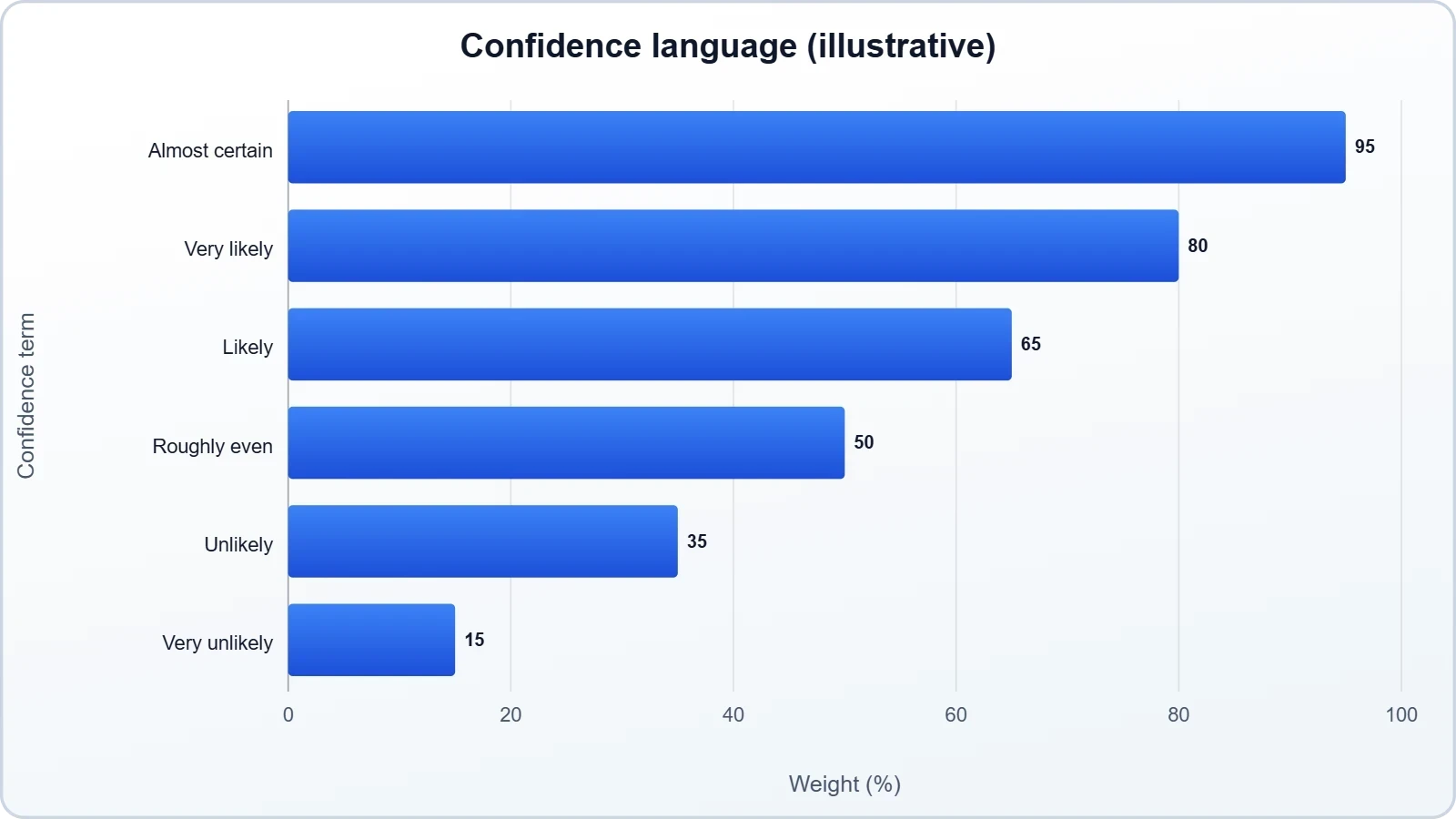
This indeterminacy carries practical consequences for the populations addressed. An advisory to remain vigilant, absent specification of the threat vector, offers limited actionable guidance while potentially generating diffuse anxiety. Security studies scholarship has documented how vague warnings can produce either desensitisation through repeated exposure or disproportionate behavioural responses among particular communities.
The absence of detail regarding which Americans are targeted further complicates the picture, since the exposed population might encompass diplomats, military personnel, journalists, business executives, dual nationals, or humanitarian workers, each facing distinct risk profiles.
Comparative analysis of prior threat advisories suggests that specificity typically correlates with the maturity of intelligence collection. Highly specific warnings, identifying venues, dates, or methods, generally reflect signals intelligence or human source reporting of considerable granularity.
Conversely, warnings framed at the level of general regional threat may derive from pattern analysis, adversary capability assessments, or intercepted communications of ambiguous intent. The present warning's generality therefore hints at an assessment grounded in capability and intent indicators rather than in operational specifics, though this inference remains provisional given the limited public record.
The reporting's silence on confidence levels is particularly consequential. Intelligence communities routinely distinguish between low, moderate, and high confidence judgements, and this gradation materially affects the appropriate policy response. A high-confidence assessment of imminent targeting would ordinarily trigger visible protective measures, travel restrictions, or military posture adjustments.
The absence of any announced new measures in response may indicate either that confidence remains below the threshold for such action or that protective adjustments are occurring outside public view, a distinction the available evidence cannot resolve.
Media transmission introduces a further layer of epistemic distortion. The warning reached public attention through a single regional outlet, Arab News, and the reporting itself acknowledges the absence of further details.
News values favour dramatic framing, and headlines emphasising that a senior official warns of targeting necessarily amplify threat perception relative to the underlying assessment. Consumers of such reporting must therefore distinguish between the substance of the intelligence judgement and the rhetorical force of its journalistic representation, a distinction that responsible analysis cannot afford to collapse.
Iran's Regional Strategy and the Logic of Asymmetric Pressure
Iranian regional strategy has long relied upon asymmetric instruments that exploit the vulnerabilities of conventionally superior adversaries. The network of aligned militias and proxy forces spanning Lebanon, Iraq, Syria, and Yemen provides Tehran with deniable reach and graduated escalation options.
Targeting Americans, whether through direct action or through affiliated actors, fits within this strategic grammar as a means of imposing costs without inviting full-scale conventional confrontation. The warning's plausibility therefore rests upon well-documented structural capabilities rather than upon novel or implausible assertions.
Historical precedents inform the assessment of current risk. The 1983 Beirut barracks bombing, the 1996 Khobar Towers attack, and numerous documented plots against American personnel in Iraq during the 2000s establish a pattern of Iranian or Iranian-aligned violence against US interests.
More recently, the 2020 killing of Qasem Soleimani and the subsequent Iranian missile strikes on bases housing American troops demonstrated both Tehran's willingness to escalate and its careful calibration of violence to avoid triggering overwhelming retaliation. This history suggests that any current targeting campaign would likely operate within similar parameters of calculated proportionality.
The concept of strategic patience illuminates Iranian behaviour under pressure. Facing comprehensive sanctions, diplomatic isolation, and periodic military threats, Tehran has consistently favoured protracted attrition over decisive confrontation. Targeting Americans may serve multiple purposes within this framework: demonstrating resolve to domestic constituencies, testing American red lines, extracting concessions in negotiations, and signalling to regional partners that alignment with Washington carries costs.
The warning thus reflects an adversary employing violence as a communicative medium rather than as an end in itself.
Domestic political dynamics within Iran also shape the calculus. Factional competition between pragmatist and hardline elements influences the tempo and visibility of hostile operations, with hardliners sometimes favouring conspicuous action to foreclose diplomatic openings.
A public American warning may inadvertently strengthen hardline narratives that depict confrontation as inevitable, thereby complicating the prospects for de-escalation. This reflexive dynamic, in which warnings can become self-fulfilling through their effect on adversary politics, represents a recognised hazard in crisis management literature.
Regional instability multiplies the pathways through which targeting could occur. Weak state capacity in Iraq, Syria, and Yemen creates permissive environments for irregular operations, while maritime chokepoints such as the Strait of Hormuz present opportunities for interdiction and harassment.
The warning's regional framing, rather than pinpointing a single country, acknowledges this diffusion of risk across multiple theatres. Analysts must therefore consider the entire spectrum of Iranian asymmetric capability, from cyber intrusion and kidnapping to maritime aggression and proxy attack, when evaluating the practical meaning of the disclosure.
Vigilance Advisories and the Transfer of Risk
The instruction that Americans in the Middle East remain vigilant exemplifies a broader genre of security communication that assigns responsibility for harm avoidance to the potential victim. Criminological and security studies literature has extensively critiqued this tendency, noting that vigilance advisories can obscure the structural sources of risk while imposing behavioural burdens on populations lacking the information necessary for effective self-protection.
When the threat vector remains unspecified, the advisory's practical utility diminishes considerably, functioning more as a liability management device than as genuine protective guidance.
Corporate and institutional responses to such advisories follow predictable patterns. Multinational firms operating in the region typically review travel authorisation protocols, enhance physical security at facilities, and brief personnel on reporting suspicious activity. Diplomatic missions may adjust movement restrictions and review evacuation contingencies.
These organisational adaptations occur largely beyond public visibility, meaning that the absence of announced government measures does not imply the absence of protective activity. The warning may thus catalyse substantial private-sector and institutional responses that remain undocumented in public reporting.
The psychological dimension of vigilance advisories merits attention. Sustained threat awareness imposes cognitive costs, and populations subjected to prolonged warnings may experience fatigue that erodes the very vigilance the advisory seeks to cultivate. Security professionals recognise this desensitisation risk and typically calibrate warning frequency accordingly.
A warning issued at the highest official level, however, carries sufficient weight to override routine calibration, potentially producing either heightened anxiety or cynical dismissal depending on prior experience with similar alerts.
Legal and diplomatic frameworks shape how vigilance obligations interact with state responsibility. Host governments bear primary responsibility for protecting foreign nationals within their territory under international law, yet capacity limitations in conflict-affected states frequently render this obligation nominal.
The American warning implicitly acknowledges this gap by directing vigilance toward the exposed population itself. This transfer of responsibility raises questions about the adequacy of protective arrangements and the extent to which sending states can or should assume direct responsibility for citizens in high-risk environments.
Comparative practice among allied governments offers instructive context. Several European states maintain standing travel advisories for Middle Eastern jurisdictions that specify threat types and geographic concentrations with greater granularity than the present warning.
The disparity may reflect differing intelligence holdings, differing communication doctrines, or differing assessments of the trade-offs between specificity and operational security. Whatever the explanation, the comparison highlights that the level of detail in threat communication is a policy choice rather than an epistemic necessity.
Escalation Dynamics and the Absence of Announced Response
The observation that no new American measures have been announced invites scrutiny of escalation management theory. Crisis bargaining models predict that public threat attribution typically precedes or accompanies tangible responses, since warnings unaccompanied by action risk eroding credibility.
The present case appears to deviate from this pattern, though the deviation may be more apparent than real. Protective military adjustments, intelligence sharing arrangements, and diplomatic demarches frequently proceed without public announcement, particularly when disclosure might compromise sources or provoke premature adversary action.
Alternatively, the absence of announced measures may reflect deliberate restraint designed to preserve diplomatic space. Iranian nuclear negotiations and regional de-escalation dialogues have periodically created incentives for Washington to avoid rhetorical or military escalation.
A warning that names the threat without prescribing retaliation leaves room for the adversary to adjust behaviour without loss of face, a dynamic consistent with deterrence theory's emphasis on offering adversaries off-ramps.
The warning may therefore constitute an attempt to influence Iranian behaviour through the mere fact of detection rather than through threatened punishment.
Escalation dominance considerations also inform the analysis. The United States possesses overwhelming conventional military superiority in the region, but this superiority is partially offset by Iran's asymmetric capabilities and geographic advantages.
Any American response must therefore be calibrated to avoid triggering escalation in domains where the United States is relatively disadvantaged, such as proxy warfare or maritime harassment. The measured tone of the warning, which asserts the threat without promising specific consequences, may reflect this strategic asymmetry and a corresponding preference for ambiguity over commitment.
The possibility of intra-governmental disagreement cannot be excluded. Intelligence assessments and policy responses are produced by distinct institutional actors whose perspectives may diverge. The Director of National Intelligence's warning may represent the intelligence community's judgement, while the absence of announced measures may reflect policy deliberations that have not yet concluded or interagency disagreements about the appropriate response.
Such divergence is a routine feature of national security governance, though it complicates public interpretation of official communications.
Finally, the warning's regional scope rather than country-specific focus suggests a hedging strategy. By framing the threat as spanning the Middle East rather than identifying particular jurisdictions, the disclosure avoids committing to specific protective measures in any single location while preserving the option to escalate attention as circumstances evolve.
This geographic indeterminacy mirrors the temporal indeterminacy of the warning itself, producing a communication that is simultaneously urgent in tone and flexible in application.
Information Asymmetry and the Limits of Open-Source Assessment
Open-source analysis of intelligence disclosures operates under structural constraints that must be explicitly acknowledged. The analyst observes the public statement but not the underlying reporting, the collection methods, the dissenting views within the intelligence community, or the policy deliberations that shaped the disclosure's timing and framing.
This asymmetry between the visible communicative act and the invisible evidentiary foundation imposes fundamental limits on what can be inferred. Responsible assessment therefore confines itself to analysing the statement's form, context, and plausible functions rather than asserting conclusions about the underlying threat's reality or magnitude.
The single-source nature of the reporting compounds these constraints. Arab News provides the sole public conduit for the warning, and the report itself acknowledges the absence of further details. Independent corroboration through other outlets, official statements, or diplomatic communications is not evidenced in the available material.
In intelligence studies, single-source reporting is conventionally treated with caution, and the same caution applies to single-source reporting about intelligence. The warning's authenticity is not in question, but its completeness as a representation of the underlying assessment remains uncertain.
Verification pathways exist but remain largely inaccessible to open-source analysts. Congressional oversight committees receive classified briefings that would illuminate the warning's evidentiary basis. Allied intelligence services share assessments through confidential channels. Military commanders in the region possess operational threat pictures that inform their force protection decisions.
None of these pathways is transparent to public scrutiny, meaning that external observers must rely on indirect indicators such as subsequent policy adjustments, force movements, or diplomatic activity to gauge the warning's practical weight.
The distinction between threat and risk deserves emphasis in this context. Intelligence warnings typically address threats, defined as credible indications of adversary intent and capability to cause harm. Risk, by contrast, encompasses probabilistic exposure irrespective of specific intent.
The present warning asserts a threat, but the absence of operational detail makes it difficult to distinguish between a specific, imminent plot and a general elevation of risk stemming from regional tensions. This ambiguity has material implications for the proportionality of any response.
Finally, the iterative nature of intelligence-policy interaction means that public warnings can reshape the very phenomena they describe. Adversaries adjust operations in response to disclosed warnings, potentially accelerating, delaying, or altering targeting plans. Defensive measures prompted by warnings may reduce vulnerability while simultaneously signalling that the warning was warranted.
This reflexivity renders any simple verification framework inadequate, since the warning's effects become entangled with the threat it purports to describe.
Media Framing and the Construction of Threat Perception
News organisations mediate intelligence disclosures through framing choices that shape audience interpretation. The headline asserting that a senior official warns of targeting emphasises official authority and threat salience while compressing the qualifications and uncertainties that presumably attended the original assessment.
Communication research demonstrates that such framing reliably elevates perceived risk among audiences, particularly when official sources are cited. The resulting public understanding may diverge substantially from the intelligence community's own characterisation of confidence and specificity.
The selection of a regional outlet for the disclosure's transmission is itself noteworthy. Arab News serves audiences across the Middle East, including populations in states hosting American personnel. Publication through this channel ensures that the warning reaches both the exposed American population and the regional publics whose perceptions matter to the strategic environment.
The choice of outlet thus forms part of the communication strategy, targeting a geographically specific audience with a message whose relevance is regionally bounded.
Competing news values shape how the warning is contextualised. Outlets emphasising geopolitical tension may situate the warning within narratives of escalating confrontation, while outlets favouring diplomatic framing may emphasise the absence of announced responses as evidence of restraint.
Neither framing is necessarily inaccurate, but each selects among the available facts to construct a coherent narrative. Consumers encountering the warning through a single outlet receive a partial construction rather than a comprehensive account, a limitation inherent to all news consumption.
The absence of follow-up reporting in the available material is analytically significant. Sustained coverage would ordinarily include official clarifications, expert commentary, or regional reactions, none of which is evidenced here. This may reflect the warning's preliminary character, the rapid news cycle's movement to other stories, or deliberate official reticence.
Whatever the cause, the thinness of the public record means that the warning currently exists as an isolated communicative event rather than as part of a documented policy sequence.
Social media amplification introduces further distortion. Intelligence warnings circulate through platforms where decontextualised headlines and selective quotations proliferate, often stripped of the qualifications present in original reporting. The resulting information environment may exaggerate threat perception beyond what any official intended.
Analysts assessing the warning's significance must therefore account for this amplification dynamic, distinguishing between the official communication and its mediated afterlives across digital platforms.
Regional Allies and Coalition Threat Management
American personnel in the Middle East operate within a dense network of host-nation relationships, basing agreements, and security cooperation arrangements. A warning of Iranian targeting necessarily implicates these relationships, since host governments bear responsibility for protecting foreign personnel on their territory.
Gulf states in particular maintain complex relationships with both Washington and Tehran, seeking security guarantees from the former while managing geographic proximity to the latter. The warning may therefore function as a subtle reminder of these states' obligations and of the costs of insufficient vigilance.
Israel's position within this coalition framework adds further complexity. Israeli-Iranian hostilities constitute a distinct conflict dynamic that intersects with American-Iranian tensions without being identical to them. Iranian targeting of Americans may be calibrated to signal resolve in the broader confrontation with Israel and its supporters, making American personnel collateral targets in a conflict whose primary axis lies elsewhere.
The warning's regional framing accommodates this complexity without resolving it, leaving open the question of whether the targeting threat is primarily bilateral or embedded within a wider confrontation.
Coalition threat management requires harmonised assessments across partners whose intelligence capabilities and risk tolerances vary considerably. The public warning may serve to align these assessments, establishing a shared baseline that facilitates coordinated protective measures.
Alternatively, it may reflect American frustration with partner vigilance levels, using public disclosure as a means of generating pressure for enhanced cooperation. Both interpretations are consistent with the available evidence, and distinguishing between them would require access to diplomatic communications not available in open sources.
The maritime dimension of regional security deserves particular attention. The Strait of Hormuz and adjacent waters carry a substantial proportion of global petroleum trade, and Iranian maritime harassment has periodically disrupted shipping. American naval assets operating in these waters face asymmetric threats from small craft, mines, and shore-based missiles.
A warning of Iranian targeting plausibly encompasses these maritime exposures, though the reporting does not specify. Naval force protection postures would presumably reflect such assessments regardless of public disclosure.
Longer-term alliance management considerations also inform the warning's significance. American credibility as a security guarantor depends upon demonstrated capacity and willingness to protect partners and personnel. Public warnings that are followed by effective protective measures reinforce this credibility, while warnings unaccompanied by visible action may erode it.
The warning thus carries reputational stakes for the United States, creating incentives for subsequent action that may not yet be evident in public reporting.
We Also Published
Historical Precedent and the Continuity of Coercive Signalling
The present warning resonates with a substantial historical record of Iranian-American coercive interaction, and situating it within this lineage illuminates its probable significance. The 1979 hostage crisis established the foundational template in which American personnel became instruments of Iranian political communication.
Subsequent decades witnessed repeated episodes in which Tehran or its proxies targeted American interests, each episode contributing to an accumulated reservoir of mutual suspicion. The current warning draws upon this history, and its credibility derives substantially from the documented pattern rather than from any single piece of disclosed evidence.
The Soleimani episode of January 2020 represents the most recent inflection point in this lineage. The targeted killing of Iran's most prominent military commander prompted Iranian missile strikes on Iraqi bases housing American forces, demonstrating both Tehran's capacity for direct action and its careful calibration to avoid mass casualties that would compel full retaliation.
This episode established a template of reciprocal but bounded violence that may inform current Iranian calculations. Any targeting campaign against Americans would likely operate within similar bounds, seeking political effect without triggering existential escalation.
Nuclear negotiations have periodically modulated the intensity of Iranian coercive behaviour. Periods of diplomatic engagement have generally witnessed reduced targeting activity, while periods of diplomatic rupture have correlated with heightened hostility.
The current warning's emergence within a period of tension may therefore reflect the absence of a functioning diplomatic channel rather than a fundamental shift in Iranian intentions. This interpretation suggests that the warning's significance lies as much in what it reveals about the state of diplomacy as in what it reveals about Iranian operational planning.
Proxy warfare constitutes the dominant modality through which Iran has historically confronted American interests. Lebanese Hezbollah, Iraqi militias, and Yemeni Houthi forces have all conducted operations against American or allied targets with varying degrees of Iranian direction.
The attribution challenge inherent in proxy warfare means that warnings of Iranian targeting may refer to proxy activity rather than to direct Iranian action, a distinction with significant implications for response options. Direct Iranian action invites direct retaliation, whereas proxy action invites retaliation against proxies, a more graduated and manageable response.
Cyber operations have emerged as an increasingly prominent domain of Iranian coercive activity. Iranian actors have conducted destructive cyberattacks against American financial institutions, breached water utility systems, and targeted government networks.
These operations offer deniability, reversibility, and asymmetric advantage, making them attractive instruments for a state seeking to impose costs without risking conventional confrontation. The present warning's silence on modality leaves open the possibility that cyber targeting constitutes a significant component of the threat, though this remains speculative.
Comparative Frameworks: How Other States Communicate Threat
Comparative analysis of threat communication practices across states reveals considerable variation in specificity, frequency, and institutional authorship. The United Kingdom's Foreign, Commonwealth and Development Office routinely issues travel advisories specifying threat types and geographic concentrations, while the United States maintains a tiered advisory system that distinguishes among levels of risk.
These systems differ in their granularity and in the balance they strike between informing and alarming their publics. The present warning's generality is notable relative to these established practices.
Authoritarian states frequently employ threat communication as a domestic legitimation device, framing external dangers to justify internal controls. Democratic states face different constraints, since public warnings must withstand scrutiny from independent media and opposition politicians.
The American warning operates within this democratic accountability framework, meaning that its claims are subject to journalistic investigation and congressional oversight. This accountability structure provides some assurance against fabricated threats, though it does not guarantee the accuracy of assessments that may rest on incomplete intelligence.
International organisations contribute to threat communication through their own advisory mechanisms. The United Nations maintains security phases for different regions, and humanitarian organisations issue their own risk assessments. These parallel systems sometimes diverge from national assessments, reflecting different methodologies and different institutional interests.
The present warning's relationship to these parallel systems is not evidenced in the available material, though coordination among them would ordinarily be expected in a well-functioning international security architecture.
The private sector has become an increasingly significant producer of threat intelligence. Corporate security firms, risk consultancies, and insurance underwriters generate assessments that inform corporate decision-making about personnel deployment and facility protection. These private assessments may be more specific than public warnings, since they serve clients who require actionable guidance.
The present warning may thus represent the public tip of a larger informational iceberg whose private components remain inaccessible to open-source analysis.
Comparative historical analysis suggests that threat communication practices evolve in response to institutional learning. States that have experienced surprise attacks tend to develop more elaborate warning systems, while states that have suffered from false alarms tend to impose stricter evidentiary thresholds.
The American intelligence community's practices reflect both tendencies, balancing the imperative of warning against the risk of crying wolf. The present warning's generality may reflect this balance, representing a judgement that the threat warrants public attention without yet meeting the threshold for specific operational guidance.
Implications for Policy and Analytical Practice
For policymakers, the warning presents a familiar dilemma: how to respond proportionately to a threat whose dimensions remain unspecified. Excessive response risks escalation and the squandering of credibility on a threat that may not materialise as feared. Insufficient response risks vulnerability and the erosion of deterrence should attacks occur.
The resolution of this dilemma typically involves a graduated approach in which visible measures are calibrated to the assessed severity while invisible measures proceed regardless. The absence of announced measures may therefore indicate a preference for the invisible register.
For analysts, the warning underscores the importance of distinguishing between the communicative act and the underlying reality it purports to describe. The act is observable and analysable; the reality is not directly accessible.
Analytical practice should therefore focus on the act's functions, its context, and its probable effects, while maintaining explicit humility about the underlying threat's character. This approach does not dismiss the warning's substance but situates it within an interpretive framework that acknowledges the limits of open-source knowledge.
For the exposed population, the warning's practical implications depend heavily on individual circumstances. Personnel affiliated with official American institutions likely receive more specific guidance through internal channels, while private citizens must interpret the public warning without such supplementation.
The instruction to remain vigilant, however vague, represents the minimum actionable content available to the general public. Individuals in the region would be prudent to monitor official channels for updates and to maintain awareness of their surroundings without allowing the warning to produce paralysing anxiety.
For scholars of international relations, the episode offers a case study in the communicative functions of intelligence disclosure. The warning illustrates how states use public attribution to pursue multiple objectives simultaneously, from deterrence to reassurance to bureaucratic positioning.
It also illustrates the interpretive challenges that such disclosures pose for external observers, who must reconstruct intentions and assessments from fragmentary public traces. The case thus contributes to the broader literature on signalling, crisis communication, and the public-private interface in national security affairs.
For the longer term, the warning's significance will be determined by subsequent developments that remain unknowable at present. If attacks on Americans materialise, the warning will be vindicated as prescient.
If no attacks occur, the warning may be interpreted as either successful deterrence or unnecessary alarm, interpretations that cannot be distinguished without access to classified information. This indeterminacy is inherent to threat communication, and it counsels against premature judgements about the warning's wisdom or folly. The appropriate stance is continued observation and analysis as events unfold.
Synthesis: Reading the Warning Within Its Strategic Context
The warning issued by the Director of National Intelligence constitutes a significant communicative event whose meaning extends well beyond its literal content. It signals that the American intelligence community assesses Iranian hostility toward American personnel as sufficiently serious to warrant public disclosure at the highest level.
It simultaneously preserves ambiguity regarding the threat's operational dimensions, thereby maintaining flexibility for both protective measures and diplomatic management. These twin characteristics, gravity of tone and indeterminacy of content, define the warning's strategic character and should guide its interpretation.
The warning's placement within the longer history of American-Iranian confrontation lends it credibility while also suggesting that its significance may be incremental rather than transformative. Iran has targeted American interests before, and the structural drivers of that behaviour remain intact.
The warning may therefore represent a recalibration of attention to a persistent threat rather than the emergence of a novel danger. This interpretation counsels against both complacency and alarmism, recommending instead sustained attention to the evolving situation.
The absence of announced American responses should not be read as passivity. Protective measures, intelligence sharing, and diplomatic engagement frequently proceed without public disclosure, and the warning itself may constitute the visible component of a broader response whose other elements remain concealed.
Analysts should monitor for indirect indicators of heightened activity, including force posture changes, diplomatic movements, and shifts in regional partners' security arrangements, as these may reveal the response's contours more reliably than official statements.
For the exposed population, the warning's practical meaning is necessarily mediated by institutional affiliation and individual circumstance. Those connected to official American institutions likely receive more granular guidance through internal channels, while private citizens must navigate the public warning's ambiguities without such support.
The instruction to remain vigilant, though general, represents the minimum actionable content available, and its faithful observance constitutes a reasonable response to the disclosed threat environment.
Ultimately, the warning exemplifies the inherent tension in democratic threat communication between the imperative to inform and the imperative to avoid unnecessary alarm. The American system resolves this tension through graduated disclosure, public accountability, and institutional checks, none of which eliminates the fundamental uncertainty that attends intelligence assessments.
The present warning, with its authoritative tone and unspecified content, embodies this tension rather than resolving it. Its full significance will emerge only through subsequent events and the gradual accumulation of contextual information that time alone can supply.
From our network :
- The Final Descent: How ESA Retired the Legendary Cluster Constellation After 24 Years of Space Weather ScienceAfter 24 years mapping Earth’s magnetosphere, ESA’s Cluster mission concluded with a precisely controlled reentry over the South Pacific. This analysis explores the scientific legacy, engineering decisions, and debris mitigation principles behind one of space exploration’s most responsible retirements.
- CISA’s Ten-Advisory Wave: Why Generic Patching Fails in OT and How to Build Product-Specific PlaybooksCISA released ten ICS advisories in one week, exposing critical infrastructure risks. Generic patching fails in OT. Learn to build product-specific remediation playbooks.
- Forbidden Matrix Patterns and Visible Lattice Points: A Geometric DictionaryExplore how multidimensional 0–1 matrices encode geometric truths, linking forbidden patterns to visible lattice points and hypergraph theory, with applications in combinatorics and computational geometry.
- How AI Agents Will Change the Way We Manage Personal FinancesExplore how AI agents are transforming personal finance through automated budgeting, bill payment, and investment management, while examining the critical security protocols and governance frameworks required for safe deployment.
- University Language Proficiency Exams: Why Institutional Tests Demand Different Preparation Than IELTS and TOEFLDiscover why university-specific language proficiency examinations differ fundamentally from IELTS and TOEFL, and learn strategic preparation approaches for institutional assessment success.
- Live Online English Classes for Kids: Do They Actually Reduce Anxiety?A ten-week study reveals that synchronous online English classes can significantly reduce child language anxiety while improving listening and reading skills. Discover what makes these programs effective and how parents can select the right one.
- Mobile Learning and VR in English: What Global Evidence Reveals About Effective Language TechnologyA systematic review across 14 countries reveals which language-learning technologies genuinely work. Mobile learning, AI, and VR show measurable benefits when pedagogically integrated. This evidence-based guide helps educators and learners select technology that delivers real return on investment.
- Committed Mediterranean Precipitation Decline: Why Emissions Cuts Alone Cannot Restore Winter RainsNew NOAA research reveals that Mediterranean winter rains may decline irreversibly even with emissions cuts. Explore the science of committed climate change and regional impacts.
- The Hidden Cost of AI Convenience: Why Over-Permissioned Agents Are a Security Time BombDiscover why AI agents with excessive permissions create dangerous single points of failure, and learn how implementing least privilege principles can protect your organization from exploitation.
RESOURCES
- US intelligence chief warns Iran targeting Americans in Middle Eastarabnews.com4 days ago ... US national intelligence chief Jay Clayton has warned that Iran has intensified efforts to target Americans in the Middle East.
- US intelligence chief warns Iran targeting Americans in Middle Eastarabnews.jp3 days ago ... Iran has increased efforts to target US personnel in the Middle East · The warning highlights increased tensions between the…
- Iran has "increased efforts to target U.S. personnel," intel chief warnscbsnews.com4 days ago ... Director of National Intelligence Jay Clayton warned Friday that Iran ... Americans reaching "advanced stages" in the Middle East and…
- Is Iran planning attacks on Americans; why is the US on alert?aljazeera.com3 days ago ... US intelligence memo warns that Iranian plots against US citizens in the Middle East 'have reached advanced stages'.
- Iran has ramped up efforts to target US personnel ... - Reutersreuters.com2 days ago ... ... Middle East and certain other countries," he added. CIA Director John Ratcliffe was also copied in on the unclassified…
- Iran trying harder to target US personnel in Middle East ... - BBCbbc.com3 days ago ... The warning comes as the US State Department makes adjustments to staffing at diplomatic posts in the region.
- Iran in 'Advanced Stages' of Planning Attacks Against Americans ...nytimes.com4 days ago ... ... intelligence that Iran has substantially increased efforts to ... U.S. agencies assess that the threat against Americans in the…
- Iranian plots to kill U.S. officials in Middle East have ... - NBC Newsnbcnews.com3 days ago ... Iran has increased efforts to target U.S. personnel in the Middle East and other countries, according to a memo sent…
- U.S. Intelligence Warns Iranian Plots to Kill American Officials ...hstoday.us1 day ago ... U.S. intelligence officials have warned that Iran has significantly increased efforts to target American ... Middle East. The intelligence ...
- Iran Update Evening Special Report, March 6, 2026 | ISWunderstandingwar.orgMar 6, 2026 ... Russia is reportedly sharing intelligence with Iran to support Iranian attacks against US forces in the Middle East, which highlights…
- Iran has “substantially increased” its efforts to target Americans in ...facebook.com3 days ago ... If the United States sought to dominate Latin America, what interests would it pursue in the Middle East?
- US intelligence community ramps up warnings of possible retaliatory ...cnn.comMar 10, 2026 ... In another recent notice to US defense contractors, the FBI and National Security Agency warned that “Iranian-affiliated cyber actors may…
- US intelligence found that Iran has sharply stepped up efforts to ...facebook.com4 days ago ... US intelligence found that Iran has sharply stepped up efforts to target American officials in the Middle East and other…
- Intel warning says Iranian plots against Americans have reached ...newsnationnow.com3 days ago ... A newly declassified intelligence memo warns that Iranian efforts to target ... Iranian plots to target and kill U.S. officials…
- 01
- 02
- 03
- 04
- 05
- 06
- 07
- 08
0 Comments