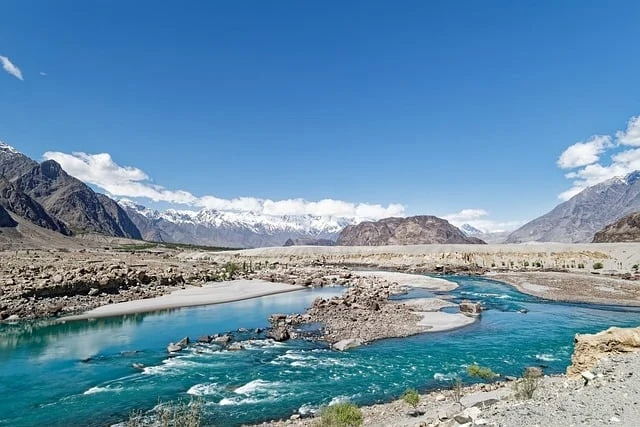
The Indus Waters Treaty stands as one of the most enduring diplomatic instruments in South Asian geopolitics, a Cold War-era accord that has survived wars, diplomatic ruptures, and decades of mutual suspicion between two nuclear-armed neighbors. Signed in 1960 under World Bank auspices, this agreement allocated the eastern rivers—Sutlej, Beas, and Ravi—to India while granting Pakistan control over the western rivers—Indus, Jhelum, and Chenab.
For sixty-five years, this framework has governed one of the most consequential resource-sharing arrangements on the planet, touching the lives of hundreds of millions who depend on these waters for agriculture, energy, and daily survival.
The recent tribunal ruling that India cannot unilaterally withdraw from this treaty represents a watershed legal moment, one that crystallizes the binding nature of international commitments even when political winds shift. The decision, rendered through the treaty's own dispute resolution mechanism, affirms that the 1960 accord contains no exit clause—no provision permitting either signatory to walk away at will.
On This Page
This interpretation carries profound implications not merely for India and Pakistan, but for the broader architecture of international water law and the precedents it sets for transboundary resource governance worldwide.
What makes this ruling particularly significant is its timing. In recent years, voices within India's policy establishment have periodically floated the idea of revisiting or even abrogating the treaty, particularly during periods of heightened cross-border tension. The tribunal's definitive answer to this question now removes ambiguity, establishing that treaty obligations persist regardless of bilateral friction.
This analysis examines the ruling's legal foundations, its geopolitical ramifications, and what it portends for the future of water diplomacy in one of the world's most water-stressed regions.
TL;DR An international tribunal has ruled that India cannot unilaterally withdraw from the Indus Waters Treaty with Pakistan, determining that the 1960 accord contains no provision for exit. The binding decision, issued through the treaty's dispute resolution mechanism, confirms that India remains obligated to honor all terms of the agreement. This ruling reinforces the principle that international treaties are legally binding instruments, settles a question that has lingered in diplomatic circles for years, and establishes a significant precedent for how transboundary water agreements are interpreted and enforced.
The Legal Architecture of the Indus Waters Treaty
The Indus Waters Treaty emerged from a period of intense diplomatic negotiation following the partition of British India in 1947. The partition had cleaved the Indus river system, leaving its headwaters in India while its agricultural heartland lay in Pakistan. This geographical reality created an immediate and existential vulnerability for Pakistan, whose agricultural economy depended overwhelmingly on waters flowing from Indian territory. The World Bank, under the leadership of Eugene Black, brokered a settlement that would transform potential conflict into structured cooperation.
The treaty's genius lay in its separation of the river system rather than attempting joint management of shared waters. By allocating the three eastern rivers exclusively to India and the three western rivers to Pakistan, with transitional provisions for ongoing construction projects, the architects created a clear, enforceable framework.
This division eliminated most day-to-day disputes by establishing unambiguous ownership, while the treaty's dispute resolution mechanisms provided structured pathways for addressing the differences that would inevitably arise.
The treaty established a Permanent Indus Commission, comprising one commissioner from each nation, tasked with implementing the accord and resolving questions through bilateral consultation. When the commission reaches an impasse, the treaty escalates disputes through a graduated process: first to a neutral expert for technical questions, then to a Court of Arbitration for broader legal disagreements. This recent ruling emerged from this arbitration pathway, representing the treaty's most formal and binding dispute resolution stage.
What the tribunal has now clarified is that this comprehensive framework contains no withdrawal provision. Unlike many modern international agreements that include explicit termination clauses, the Indus Waters Treaty was designed as a permanent arrangement. The absence of an exit mechanism was not an oversight but a deliberate choice by the original negotiators, who understood that water disputes between these two nations could not be resolved through abandonment but only through sustained engagement.
The Tribunal's Interpretive Framework
The tribunal's decision rests on established principles of international treaty law, particularly the Vienna Convention on the Law of Treaties. Under this convention, a treaty remains binding unless it contains provisions for termination, withdrawal, or suspension. The Indus Waters Treaty contains none of these provisions, and the tribunal correctly determined that it cannot read into the text what the signatories deliberately omitted. This interpretive approach respects the original intent of the 1960 negotiators.
International law has long recognized that treaties are not casual arrangements but solemn commitments that create binding obligations. The principle of pacta sunt servanda—agreements must be kept—forms the bedrock of international relations. The tribunal's ruling reinforces this doctrine, confirming that India's obligations under the treaty persist regardless of changing political circumstances or bilateral tensions. This principle protects the stability of international agreements against unilateral action.
The ruling also addresses the question of whether changed circumstances might justify termination. International law recognizes a doctrine known as rebus sic stantibus, which permits treaty termination when fundamental circumstances have changed. However, this doctrine applies narrowly and requires that the changed circumstances were unforeseen at the time of signing. The tribunal evidently found that no such fundamental change has occurred that would justify India's withdrawal from the treaty.
Significantly, the tribunal's decision is an interpretation of the existing treaty rather than a new agreement. It does not create new obligations for either party but rather confirms and clarifies the obligations that have existed since 1960. This distinction matters because it means the ruling does not require renegotiation or amendment of the treaty—it simply affirms what the treaty already requires. The legal status quo remains intact, now with explicit judicial confirmation.
Historical Context and Precedents
The Indus Waters Treaty has demonstrated remarkable resilience throughout its six-decade history. It survived the 1965 and 1971 wars between India and Pakistan, periods when diplomatic relations collapsed entirely and the two nations engaged in armed conflict. During these crises, the treaty's mechanisms remained dormant but intact, and both nations returned to the framework once hostilities ceased. This resilience suggests that even the most adversarial relationships can maintain functional agreements when mutual interests are served.
The treaty has also weathered numerous technical disputes over the years. India's construction of hydroelectric projects on western rivers has repeatedly raised Pakistani concerns about water diversion and storage. These disputes have been addressed through the treaty's structured mechanisms, including the appointment of neutral experts and arbitration courts. The treaty's dispute resolution architecture has proven adaptable enough to handle evolving technical questions while maintaining the overall framework's integrity.
International water law has evolved considerably since 1960, with the 1997 United Nations Convention on the Law of Non-Navigational Uses of International Watercourses establishing general principles for transboundary water management. However, the Indus Waters Treaty operates as a lex specialis—a specialized agreement that takes precedence over general international law for its specific subject matter. The tribunal's ruling confirms that this specialized framework remains the operative legal regime for India-Pakistan water relations.
The precedent set by this ruling extends beyond South Asia. Transboundary river basins worldwide face similar challenges of allocation, cooperation, and dispute resolution. The tribunal's affirmation that water treaties cannot be unilaterally abandoned strengthens the position of downstream nations everywhere who depend on upstream neighbors' compliance with international agreements. This ruling may well be cited in future disputes involving the Nile, the Mekong, or the Tigris-Euphrates systems.
Implications for India-Pakistan Relations
The ruling arrives at a delicate moment in India-Pakistan relations, which have been strained by cross-border terrorism, territorial disputes, and political antagonism. Some Indian analysts had suggested that water could serve as a strategic lever against Pakistan, with threats of diversion or withdrawal used as pressure tactics. The tribunal's ruling forecloses this option, at least insofar as unilateral treaty withdrawal is concerned, potentially reshaping strategic calculations in New Delhi.
For Pakistan, the ruling provides a measure of security and predictability regarding its water supply. Pakistan's agricultural sector depends on Indus waters for approximately ninety percent of its food production, making the treaty a matter of existential importance. The ruling reassures Islamabad that the legal framework protecting this vital resource remains intact, regardless of political tensions between the two nations. This certainty may reduce Pakistani anxieties about water security.
However, the ruling does not resolve underlying disputes about specific projects or water flows. India retains rights under the treaty to construct run-of-river hydroelectric projects on western rivers, subject to design constraints that prevent significant water storage or diversion. Disputes over individual projects will likely continue, and the treaty's mechanisms will remain busy addressing these technical questions. The ruling addresses the framework's survival, not every disagreement within it.
Both governments have yet to issue official responses to the ruling, suggesting careful consideration of its implications. India may seek to frame the ruling as consistent with its longstanding position that it has always honored treaty obligations, while Pakistan may emphasize the ruling as validation of its commitment to international law. The diplomatic framing of this decision will shape how it influences the broader bilateral relationship.
Geopolitical Ramifications and Regional Water Security
The Indus basin ranks among the most water-stressed regions on Earth, with population growth, agricultural intensification, and climate change placing unprecedented demands on finite water resources. Both India and Pakistan face mounting water challenges, and the treaty's continued operation becomes more critical with each passing year. The tribunal's ruling ensures that the legal framework for managing this shared resource remains intact during a period of intensifying scarcity.
Climate projections for the Indus basin suggest significant changes in precipitation patterns, glacier melt dynamics, and monsoon variability. These environmental shifts will test the treaty's adaptive capacity, requiring both nations to cooperate in managing increasingly variable water supplies. The ruling's affirmation of the treaty's permanence provides a stable foundation for addressing these emerging challenges, even as the specific mechanisms for cooperation may need to evolve.
The ruling also carries implications for regional geopolitics beyond the immediate India-Pakistan dyad. China, as an upstream riparian state controlling the Indus headwaters in Tibet, maintains its own water infrastructure projects that affect downstream flows. While China is not a party to the Indus Waters Treaty, its actions in the upper basin influence the water available to both India and Pakistan. The treaty's continued viability matters for the entire regional water security architecture.
International financial institutions and development partners have long supported the treaty as a model of transboundary water cooperation. The World Bank, which brokered the original agreement, maintains a continuing interest in its successful operation. The tribunal's ruling reinforces the international community's confidence in the treaty framework, potentially facilitating continued investment in water infrastructure projects that depend on predictable transboundary arrangements.
Strategic Calculations and National Interests
For India, the ruling constrains one potential instrument of strategic leverage over Pakistan. Indian policymakers have occasionally suggested that water could be used as a pressure point in bilateral disputes, and the treaty's abrogation was periodically floated as a policy option. The tribunal's ruling forecloses this approach, requiring India to pursue its interests within the treaty's framework rather than through unilateral action. This constraint may reshape Indian strategic thinking about the water dimension of bilateral relations.
Pakistan's strategic position is strengthened by the ruling, which confirms the legal protections for its water supply. However, Pakistan also faces internal challenges in managing its water resources efficiently, including aging infrastructure, inefficient irrigation practices, and growing urban demand. The treaty protects Pakistan's legal entitlement to western river waters, but the nation must still address domestic water management challenges to fully benefit from this protection.
The ruling may also influence how both nations approach future negotiations on water-related issues. With the withdrawal option removed, India and Pakistan must engage constructively within the treaty's mechanisms to address their differences. This necessity may paradoxically strengthen the treaty's dispute resolution processes, as both nations recognize that the framework is their only viable pathway for managing water disagreements.
Neither government has yet articulated its official position on the ruling, suggesting careful internal deliberation about how to respond. India may emphasize its consistent compliance with treaty obligations while noting that the ruling does not affect its rights under the agreement. Pakistan may highlight the ruling as validation of its commitment to international law and the treaty framework. The official responses will shape the ruling's political significance.
Climate Change and Future Water Availability
The Indus system depends heavily on glacier melt from the Hindu Kush-Karakoram-Himalaya region, which provides water during dry seasons when monsoon rainfall is insufficient. Climate change is altering these glacier dynamics, with some glaciers retreating while others remain stable or even advance. These changes introduce uncertainty into water availability projections, complicating long-term planning for both nations and testing the treaty's adaptive capacity.
Population growth in both India and Pakistan will continue to increase water demand, particularly for agriculture, which consumes the vast majority of water in both countries. As urbanization accelerates, municipal and industrial water demands will also grow, creating competition for finite supplies.
The treaty's allocation framework provides a stable basis for managing this growing demand, but both nations must invest in water efficiency to avoid shortages.
Climate variability is expected to increase the frequency and intensity of extreme weather events, including both floods and droughts. These events will test the treaty's provisions for emergency cooperation and information sharing. The Permanent Indus Commission's role in exchanging hydrological data becomes more critical as climate variability increases, enabling both nations to anticipate and respond to extreme events more effectively.
The tribunal's ruling provides legal certainty that the treaty will remain in force as these environmental challenges intensify. This certainty enables long-term planning by both governments, water infrastructure investors, and agricultural stakeholders who depend on predictable water availability. Without this certainty, the region would face heightened water insecurity and increased potential for conflict over increasingly scarce resources.
- 01
- 02
- 03
- 04
We Also Published
International Law and the Future of Transboundary Water Governance
The tribunal's ruling reinforces fundamental principles of international law that extend far beyond the Indus basin. The decision affirms that treaties create binding obligations that cannot be discarded when they become inconvenient. This principle is essential for maintaining a functional international order, where nations must be able to rely on their agreements with other states. The ruling strengthens this foundation at a time when some nations have shown increasing willingness to disregard international commitments.
Transboundary water agreements face particular challenges because water is essential for survival, making disputes over allocation inherently high-stakes. The Indus Waters Treaty's longevity demonstrates that even deeply adversarial nations can maintain functional water agreements when the alternatives are unacceptable. The tribunal's ruling reinforces this lesson, providing a model for other regions facing similar challenges in managing shared water resources.
The ruling also highlights the importance of effective dispute resolution mechanisms in international agreements. The treaty's graduated approach—from bilateral consultation to neutral experts to arbitration—provides multiple opportunities for resolving differences before they escalate. This structure has proven effective over six decades, and the tribunal's ruling demonstrates that the arbitration mechanism can address fundamental questions about the treaty's interpretation and application.
Looking forward, the ruling may influence how other nations draft water treaties, with negotiators paying greater attention to whether agreements include withdrawal provisions. Some may follow the Indus model of permanent, binding commitments, while others may prefer explicit termination clauses that provide flexibility. The choice reflects fundamental judgments about the nature of water cooperation and the importance of long-term commitments in managing shared resources.
Precedents for Other River Basins
The Indus Waters Treaty's dispute resolution mechanisms have been studied by water resource managers worldwide as a model for managing transboundary river systems. The treaty's success in maintaining cooperation between adversarial nations has made it a reference point for other regions, including the Nile basin, the Mekong basin, and Central Asian river systems. The tribunal's ruling adds a new dimension to this legacy, clarifying the treaty's permanence and binding nature.
The Nile basin faces similar challenges to the Indus system, with upstream nations seeking greater water access while downstream nations depend on existing allocations. The Indus ruling may strengthen the position of downstream nations like Egypt, which rely on international agreements to protect their water supplies. However, the Nile basin lacks a comprehensive treaty comparable to the Indus Waters Treaty, making the precedent less directly applicable.
The Mekong River Commission provides another comparison, with its framework for cooperation among Cambodia, Laos, Thailand, and Vietnam. While the Mekong framework is less formalized than the Indus Waters Treaty, it faces similar challenges of balancing upstream development with downstream needs. The Indus ruling's affirmation of treaty permanence may encourage Mekong nations to strengthen their own cooperative framework and dispute resolution mechanisms.
Central Asian water management, particularly regarding the Amu Darya and Syr Darya rivers, faces challenges from the legacy of Soviet-era agreements and post-Soviet political fragmentation. The Indus ruling's emphasis on treaty permanence may inform discussions about how to stabilize water cooperation in this region, where competing national interests and environmental degradation create significant tensions over shared water resources.
Challenges and Opportunities Ahead
Despite the tribunal's ruling, significant challenges remain in India-Pakistan water relations. Disputes over specific hydroelectric projects, data sharing, and infrastructure maintenance will continue to arise, requiring ongoing engagement through the treaty's mechanisms. The ruling provides a stable legal foundation, but it does not eliminate the need for sustained diplomatic effort to manage the treaty's day-to-day implementation.
Climate change presents perhaps the greatest challenge to the treaty's future viability. As glacier melt patterns shift and precipitation becomes more variable, the treaty's allocation framework may face strains that its architects did not anticipate. Both nations will need to cooperate in adapting the treaty's implementation to changing hydrological conditions, potentially requiring new protocols or agreements that supplement the original framework.
The ruling also creates opportunities for enhanced cooperation. With the withdrawal question settled, both nations can focus their diplomatic energy on improving the treaty's implementation rather than debating its survival. This may facilitate progress on technical cooperation, data sharing, and joint infrastructure projects that benefit both nations. The certainty provided by the ruling could unlock new possibilities for collaborative water management.
International support for the treaty's implementation may also increase following the ruling. Development partners and international financial institutions may be more willing to invest in water infrastructure projects in both countries, knowing that the legal framework governing transboundary water management is secure. This could facilitate much-needed investment in water efficiency, storage, and distribution infrastructure in both India and Pakistan.
Conclusion: A Binding Framework for a Shared Future
The tribunal's ruling that India cannot unilaterally withdraw from the Indus Waters Treaty represents a significant legal and diplomatic development with implications extending far beyond the immediate parties. By confirming that the 1960 treaty contains no withdrawal provision, the ruling reinforces the binding nature of international commitments and provides certainty about the legal framework governing one of the world's most consequential transboundary water arrangements.
For India and Pakistan, the ruling means that the treaty remains the operative framework for managing their shared water resources, regardless of political tensions between the two nations. Both countries must now work within this framework to address their water-related differences, a necessity that may paradoxically strengthen cooperation by removing the possibility of unilateral exit as a policy option.
The ruling also carries broader significance for international water law and transboundary resource governance. It affirms that water treaties are binding commitments that cannot be abandoned when they become politically inconvenient, providing a precedent that may influence other regions facing similar challenges.
The Indus Waters Treaty's continued operation, now with explicit judicial confirmation of its permanence, offers a model for managing shared water resources in an increasingly water-stressed world.
As climate change intensifies water scarcity across South Asia, the treaty's importance will only grow. The ruling provides the legal certainty necessary for long-term planning and investment in water infrastructure, while the treaty's dispute resolution mechanisms offer structured pathways for managing the inevitable disagreements that will arise. The Indus Waters Treaty, now confirmed as a permanent framework, remains essential for regional stability and water security.
From our network :
- The Final Descent: How ESA Retired the Legendary Cluster Constellation After 24 Years of Space Weather ScienceAfter 24 years mapping Earth’s magnetosphere, ESA’s Cluster mission concluded with a precisely controlled reentry over the South Pacific. This analysis explores the scientific legacy, engineering decisions, and debris mitigation principles behind one of space exploration’s most responsible retirements.
- Former Soap Stars Embark on Ambitious Writing Projects and Theatrical StagesDiscover how former soap opera actors are transitioning into independent scriptwriting and high-profile theatrical stage productions.
- Analyzing Hoya Corporation’s Midday Volume Shifts and Financial FundamentalsExamine Hoya Corporation’s midday trading volume contraction, technical moving averages, robust solvency ratios, and stellar quarterly earnings performance.
- Norbert’s Uncertain Path: Why Hawaii’s Storm Watch Demands Patience Over PanicTropical Storm Norbert strengthens in the Eastern Pacific with winds near 50 mph, forecast to reach Category 1 hurricane status by Friday. Long-range models disagree sharply on whether Hawaii faces any threat around September 19–23, making official guidance essential.
- CISA’s Ten-Advisory Wave: Why Generic Patching Fails in OT and How to Build Product-Specific PlaybooksCISA released ten ICS advisories in one week, exposing critical infrastructure risks. Generic patching fails in OT. Learn to build product-specific remediation playbooks.
- How AI Agents Will Change the Way We Manage Personal FinancesExplore how AI agents are transforming personal finance through automated budgeting, bill payment, and investment management, while examining the critical security protocols and governance frameworks required for safe deployment.
- Forbidden Matrix Patterns and Visible Lattice Points: A Geometric DictionaryExplore how multidimensional 0–1 matrices encode geometric truths, linking forbidden patterns to visible lattice points and hypergraph theory, with applications in combinatorics and computational geometry.
- Committed Mediterranean Precipitation Decline: Why Emissions Cuts Alone Cannot Restore Winter RainsNew NOAA research reveals that Mediterranean winter rains may decline irreversibly even with emissions cuts. Explore the science of committed climate change and regional impacts.
- The Hidden Cost of AI Convenience: Why Over-Permissioned Agents Are a Security Time BombDiscover why AI agents with excessive permissions create dangerous single points of failure, and learn how implementing least privilege principles can protect your organization from exploitation.
RESOURCES
- Tribunal says India cannot withdraw from water treaty with Pakistanfrance24.com22 hours ago ... "India's decision to hold the Indus Waters Treaty in abeyance remains in force." Pakistan welcomed the tribunal's decision, as well…
- Tribunal says India cannot withdraw from water treaty with Pakistanrfi.fr22 hours ago ... An international tribunal ordered India on Monday to "observe its obligations" under a treaty with Pakistan on the sharing of…
- Tribunal says India cannot withdraw from water treaty with Pakistanmacaubusiness.com14 hours ago ... ... Court of Arbitration's ruling that it had no grounds to withdraw ... “Accordingly, the Indus Waters Treaty remains fully…
- In a unanimous decision, The Permanent Court of Arbitration has ...facebook.com1 day ago ... International court rules India cannot suspend Indus Waters Treaty ... Pakistan continues Indus Waters Treaty dispute despite India's withdrawal.
- Tribunal says India cannot withdraw from water treaty with Pakistannst.com.my21 hours ago ... ... Court of Arbitration's ruling that it had no grounds to withdraw ... "Accordingly, the Indus Waters Treaty remains fully…
- The Court of Arbitration in The Hague has unanimously ruled that ...facebook.com10 hours ago ... The Court of Arbitration in The Hague has unanimously ruled that India cannot unilaterally place the Indus Waters Treaty (IWT)…
- Hague court rejects India's claim on Indus Waters Treatymuslimnetwork.tvMay 19, 2026 ... ... treaty, ruling India cannot unilaterally suspend agreement; Pakistan welcomes decision. ... withdraw from the treaty without Pakistan's ...
- The Indus Treaty verdict: When water outlasts war - Lowy Institutelowyinstitute.orgJul 4, 2025 ... A Hague ruling against India's treaty “abeyance” might stop a precedent that could spread from China to Bangladesh.
- India has rejected a ruling by a World Bank-constituted court on the ...instagram.com1 day ago ... Tribunal Rules India Cannot Withdraw From Indus Waters Treaty With Pakistan A Hague tribunal has ruled that the Indus Waters…
- Indus Waters Treaty - Wikipediaen.wikipedia.orgThe Indus Waters Treaty (IWT) is a water-distribution treaty between India and Pakistan to use the water available in the Indus River system in…
- Fact Sheet: The Indus Waters Treaty 1960 and the Role of the World ...worldbank.orgJun 11, 2018 ... The Indus Waters Treaty was signed in 1960 after nine years of negotiations between India and Pakistan with the help…
- Tribunal says India cannot withdraw from IWT - Business Recorderbrecorder.com13 hours ago ... ISLAMABAD: The Court of Arbitration in The Hague has unanimously ruled that India cannot unilaterally place the Indus Waters Treaty…
- The Indian government has categorically rejected an arbitration ...threads.com2 hours ago ... Tribunal says India cannot withdraw from water treaty ... Court Ruling Rejecting India's Indus Waters Treaty 'Abeyance' WENEWSENGLISH.COM.
- 01
- 02
- 03
- 04
- 05
- 06
- 07
- 08
0 Comments