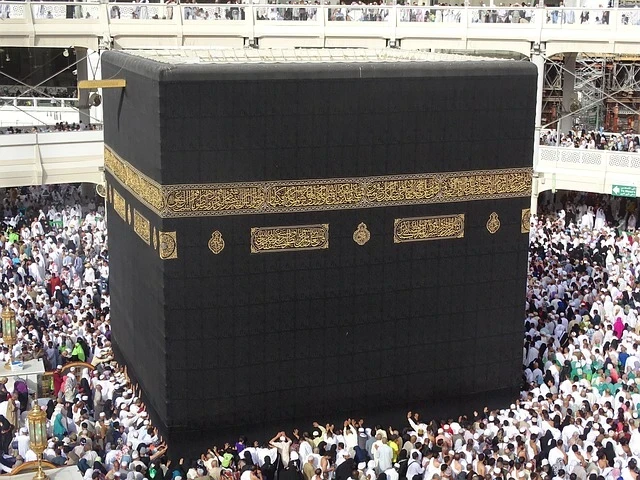
Pilgrimage has always carried a sacred paradox: the journey toward the divine passes through terrain that belongs entirely to mortal powers. When an Indian family departed for Umrah, they carried the quiet hopes of every believer who boards a flight toward Mecca — forgiveness sought, vows renewed, a lifetime ambition finally fulfilled.
That ordinary devotion collided with geopolitics in the most brutal manner imaginable, transforming a spiritual milestone into a headline about a Houthi attack.
The story, first reported by Arab News, is deceptively brief in its public telling. A family on pilgrimage, a strike attributed to the Houthi movement, and a tragedy that turned a sacred trip into mourning.
On This Page
- The Sacred Journey That Became a Casualty of War
- Geopolitics of the Yemen Conflict and Its Spillover
- The Human Cost: Families, Faith, and Fractured Lives
- Security Architecture Protecting Pilgrimage Routes
- Media Narratives and the Politics of Reporting Tragedy
- Toward a Future Where Pilgrims Travel Without Fear
Yet within that brevity lies an entire architecture of modern conflict: proxy wars that ignore borders, militant groups whose reach extends far beyond their own territory, and civilians who become statistics in struggles they never chose to join.
What follows is not merely a retelling of one family's misfortune. It is an examination of how the Yemen conflict has metastasized into a regional threat, why pilgrims have repeatedly found themselves inside the blast radius of Middle Eastern rivalries, and what this single incident reveals about the fragile safety of the faithful in an age of drone warfare and ballistic missiles.
TL;DR An Indian family's Umrah pilgrimage to Mecca was shattered by a Houthi attack, converting a sacred journey into a tragedy reported by Arab News. The incident underscores how Yemen's civil war has evolved into a regional security crisis that routinely endangers civilians, including religious travelers. It exposes the vulnerability of pilgrimage routes to militant strikes, the geopolitical paralysis that allows such attacks to recur, and the human cost borne by ordinary families caught between state rivalries. Understanding this tragedy requires examining Houthi capabilities, Saudi defensive posture, and the unspoken risks that pilgrims now inherit simply by traveling to the holiest sites in Islam.
The Sacred Journey That Became a Casualty of War
Umrah is often called the lesser pilgrimage, but for the millions who undertake it annually, the journey carries no lesser weight. It is a voluntary act of worship that draws believers to Mecca outside the mandatory Hajj season, offering spiritual renewal to those who can afford the passage. For an Indian family, such a trip typically represents years of saving and planning.
That context makes the reported tragedy especially piercing. The family had done nothing more provocative than answer a call of faith. They entered a conflict zone not as combatants or even as political actors, but as worshippers whose only weapon was prayer. When a Houthi attack intersected with their path, the distinction between battlefield and sanctuary collapsed entirely.
Arab News framed the event as a transformation — a trip "turned into tragedy." That phrasing captures something essential about modern warfare: violence no longer respects the boundaries that once separated the sacred from the strategic.
Pilgrims, tourists, and expatriate workers now share the same exposure as soldiers, because the weapons of regional powers travel farther than any front line.
Why Pilgrims Have Become Collateral in Regional Conflicts
The Arabian Peninsula hosts two of Islam's holiest cities, and that concentration of spiritual gravity has always carried strategic implications. Mecca and Medina sit within Saudi territory, which places them inside the defensive perimeter that Riyadh guards against Houthi missiles and drones launched from Yemen. Pilgrimage infrastructure is therefore inseparable from military geography.
Houthi forces have repeatedly targeted Saudi territory since 2015, when a Saudi-led coalition intervened in Yemen's civil war. Their arsenal has matured from crude rockets to precision drones and ballistic missiles capable of striking deep inside the kingdom.
Each escalation raises the statistical probability that a civilian target — including a pilgrim convoy or lodging — absorbs the impact.
Indian pilgrims are particularly numerous among Umrah travelers, reflecting the large Muslim population of the subcontinent and its deep devotional ties to the Hijaz. When violence reaches them, it resonates across India's public sphere, transforming a foreign conflict into a domestic grievance with diplomatic consequences for New Delhi.
The family at the center of this report thus represents something larger than themselves. They embody the exposure of an entire class of travelers who move through a region where the distinction between pilgrimage and peril has quietly dissolved.
The Houthi Movement and Its Expanding Reach
The Houthis emerged from Yemen's northern highlands as a Zaidi revivalist movement before evolving into a formidable military actor. Their capture of Sanaa in 2014 triggered the Saudi intervention, and since then they have functioned as a de facto state within a failed state, taxing, governing, and waging war simultaneously.
Their weapons program, widely assessed to benefit from Iranian technical assistance, has produced drones and missiles that can reach Riyadh, Jeddah, and beyond. This capability transforms Yemen from a peripheral civil war into a launchpad threatening the entire peninsula, including the corridors that pilgrims traverse.
Attacks attributed to the Houthis have struck airports, oil facilities, and civilian infrastructure, each time testing Saudi air defenses and international patience. The group's leadership frames such strikes as retaliation for coalition airstrikes and blockade measures that have devastated Yemeni civilians over nearly a decade of war.
Whatever the stated justification, the practical result is a persistent hazard zone around Islam's holiest sites. Pilgrims become unwitting participants in a conflict whose origins lie in Yemeni politics but whose consequences radiate across the Muslim world.
Geopolitics of the Yemen Conflict and Its Spillover
Yemen's war is frequently described as a proxy conflict, and that label, while reductive, captures an uncomfortable truth. Saudi Arabia and Iran have poured resources into opposing sides, turning a domestic power struggle into a theater for regional supremacy. The Houthis serve as Iran's most effective lever against Riyadh.
For Saudi Arabia, the stakes extend beyond territory. The kingdom's legitimacy rests partly on its role as custodian of the two holy mosques, a title that imposes a sacred duty of protection.
Every Houthi strike that penetrates Saudi airspace is therefore not merely a military event but a symbolic wound to that custodianship.
India, meanwhile, finds itself in an awkward position. It maintains diplomatic ties with both Saudi Arabia and Iran, hosts a vast Muslim population with deep ties to the Hijaz, and depends on Gulf energy and remittances. An attack on Indian pilgrims forces New Delhi to balance condemnation with strategic caution.
The international community's response has been muted, as it often is when Yemen is concerned. Years of failed peace initiatives have normalized the conflict's persistence, and each new civilian tragedy struggles to generate the diplomatic urgency that a single attack on a Western capital would command.
Diplomatic Fallout and the Silence That Follows
When pilgrims are harmed, governments face pressure to respond forcefully, yet the options are narrow. Saudi Arabia cannot easily retaliate without escalating further, and India cannot afford to alienate Gulf partners whose remittances sustain millions of households. The result is often condemnation without consequence.
Arab News reported the tragedy without detailing the family's condition, a reticence that reflects both the fog of war and the sensitivity of the subject. Information about attacks near holy sites is often tightly managed, because disclosure can inflame sectarian sentiment or embarrass host governments.
This informational vacuum leaves the public with fragments: a family, a pilgrimage, an attack, a tragedy. The absence of detail becomes its own political statement, signaling that some stories are too volatile to tell fully while the conflict continues.
Over time, such silences accumulate into a broader desensitization. Each unreported or underreported incident lowers the threshold of outrage, until attacks on pilgrims become background noise in a region accustomed to perpetual crisis.
How Regional Powers Calculate Risk Around Holy Sites
Holy sites impose constraints that ordinary military targets do not. Striking near Mecca or Medina risks provoking outrage across the entire Muslim world, including among populations otherwise sympathetic to the attacker's cause. Houthi strategists understand this calculus intimately.
That is why attacks are often framed as targeting military or economic infrastructure rather than religious sites, even when the practical effect endangers pilgrims. The rhetorical distinction allows the group to claim restraint while its weapons do not discriminate.
Saudi Arabia, for its part, invests heavily in missile defense and airspace monitoring, but no system is perfect. Interception rates, while impressive on paper, leave residual risk that grows with the volume of launches. Pilgrims absorb that residual risk by simple proximity.
The net effect is a perverse equilibrium: all parties profess reverence for the holy cities, yet none can fully guarantee the safety of those who travel to them. Pilgrims navigate this contradiction with faith, trusting that divine protection outweighs human failure.
The Human Cost: Families, Faith, and Fractured Lives
Behind every geopolitical abstraction lies a family whose life has been permanently altered. The Indian pilgrims at the center of this report likely included elders fulfilling a lifelong vow, parents shepherding children through rituals, and young adults experiencing the Kaaba for the first time. That entire arc of devotion now carries the weight of violence.
Grief in such cases is compounded by distance. Families in India must navigate foreign hospitals, unfamiliar legal systems, and the logistical nightmare of repatriation while processing trauma. The pilgrimage that promised spiritual elevation instead delivers bureaucratic ordeal and inconsolable loss.
Communities across India's Muslim-majority neighborhoods feel these tragedies collectively. Umrah is a shared aspiration, funded sometimes by extended family contributions, celebrated upon return with feasts and photographs. When it ends in death, the mourning extends far beyond the immediate household.
This collective dimension explains why attacks on pilgrims generate disproportionate emotional resonance. They strike not just individuals but an entire network of kinship, memory, and religious identity that binds the subcontinent to the Arabian Peninsula.
Pilgrimage as an Act of Courage in a Dangerous World
It is worth pausing to recognize what pilgrims actually do when they travel to Mecca in an era of missile strikes. They accept risk knowingly, not out of recklessness but out of conviction that certain obligations transcend personal safety. This is courage in its quietest, most profound form.
Religious traditions have always honored such journeys, from the medieval caravans that crossed deserts at enormous peril to the modern charter flights that compress the voyage into hours. The dangers have changed shape, but the underlying faith remains constant across centuries.
What has changed is the scale of the threat. A medieval pilgrim feared bandits and disease; a contemporary pilgrim must also consider ballistic missiles, drone swarms, and the geopolitical calculations of actors who view the peninsula as a chessboard. The sacred journey now requires navigating modern warfare.
Honoring the victims therefore means more than mourning. It means demanding that the systems designed to protect civilians — international law, diplomatic pressure, humanitarian norms — actually function when pilgrims are the ones at risk.
What Justice Looks Like When the Perpetrator Is a Non-State Actor
Accountability in cases like this is notoriously elusive. The Houthis are not a recognized state, which complicates legal avenues that depend on sovereign responsibility. International courts can indict individuals, but enforcement against entrenched militant leadership is nearly impossible.
Victims' families may pursue compensation through their own governments or through Saudi authorities, but such claims rarely yield meaningful redress. The asymmetry between harm suffered and remedy available is one of the cruelest features of modern asymmetric conflict.
Some argue that the only meaningful justice is prevention — stronger air defenses, better intelligence sharing, and diplomatic pressure that raises the cost of targeting civilian areas. Others insist that without accountability, deterrence erodes and attacks recur with impunity.
The debate reflects a deeper truth: the international system was built for wars between states, not for conflicts where non-state actors wield state-level weapons. Until that gap closes, families like this one will continue to pay the price.
Security Architecture Protecting Pilgrimage Routes
Saudi Arabia has invested billions in layered air defense, combining Patriot batteries, THAAD systems, and short-range interceptors to shield population centers and oil infrastructure. Pilgrimage zones receive additional protection given their symbolic and economic importance to the kingdom's global standing.
Yet defense is a probabilistic enterprise, not an absolute guarantee. Every interception has a failure rate, and saturation attacks — launching many projectiles simultaneously — are designed precisely to overwhelm such systems. A single leak can produce the kind of tragedy reported here.
India has also expanded consular and emergency services for pilgrims, establishing helplines, coordination cells, and rapid response protocols. These measures help families navigate crises after the fact, but they cannot prevent a missile from finding its target.
The gap between prevention and response defines the current reality. Governments can manage consequences more efficiently than they can eliminate causes, leaving pilgrims to bear residual risk that no amount of diplomacy has yet removed.
Technology, Drones, and the New Battlefield Above Holy Cities
The proliferation of drone technology has fundamentally altered the threat landscape. Unlike ballistic missiles, drones fly low and slow, evading radar designed for higher-altitude threats. They are cheap, expendable, and capable of precision strikes at ranges that once required aircraft.
Houthi drone attacks on Saudi Arabia have demonstrated this vulnerability repeatedly, striking airports and oil facilities despite layered defenses. Extending that capability toward pilgrimage corridors is a logical, if horrifying, escalation that defenders must now anticipate.
Counter-drone systems — electronic jamming, directed energy weapons, and interceptor drones — are being deployed, but their coverage is finite. Protecting every possible approach to Mecca and Medina is a mathematical impossibility, which means risk management rather than risk elimination.
For pilgrims, this technological arms race is invisible. They board flights, don ihram, and circle the Kaaba unaware of the electronic warfare happening overhead. That innocence is both beautiful and unbearably fragile.
Lessons for Other Pilgrimage Traditions Worldwide
The vulnerability exposed here is not unique to Islam. Hindu pilgrims traveling to Amarnath or Kedarnath face avalanche and militant threats; Christian pilgrims in the Holy Land navigate regional instability; Buddhist circuits in South Asia contend with political unrest. Sacred travel everywhere intersects with worldly danger.
What distinguishes the Arabian Peninsula is the concentration of advanced weaponry in proximity to mass gatherings. Few other pilgrimage sites sit within range of ballistic missiles launched by non-state actors, making Mecca and its surroundings uniquely exposed in the contemporary security environment.
Comparative study of pilgrimage security could yield valuable lessons. Israel's protection of Jerusalem's holy sites, India's management of Amarnath Yatra, and Saudi Arabia's Umrah logistics each offer models — and warnings — about how faith and safety can be reconciled.
The common thread is that pilgrimage security requires sustained investment, international cooperation, and a willingness to treat worshippers as protected persons under law rather than incidental bystanders in someone else's war.
We Also Published
Media Narratives and the Politics of Reporting Tragedy
Arab News, a Saudi-owned English-language outlet, reported this incident with characteristic restraint. The framing emphasized the transformation of a pilgrimage into tragedy without dwelling on the mechanics of the attack or the identity of the victims beyond their nationality. Such editorial choices are never neutral.
Media coverage of Houthi attacks operates within a charged information environment. Saudi-aligned outlets emphasize the group's aggression and Iranian backing; Iranian-aligned outlets frame strikes as legitimate resistance against coalition aggression. The same event acquires entirely different moral colorings depending on the storyteller.
Indian media, meanwhile, tends to focus on the human dimension — the family, the loss, the community's grief — while treading carefully around geopolitical attribution. This reflects India's diplomatic balancing act as much as journalistic instinct.
For readers, the lesson is that no single report captures the full truth. Understanding an event like this requires triangulating across sources, recognizing each outlet's institutional interests, and holding space for the possibility that the most important details remain unreported.
Why Some Victims Receive More Attention Than Others
Not all tragedies generate equal coverage. A strike that kills Western tourists would dominate global headlines for weeks; a strike that kills pilgrims from the Global South often receives a fraction of that attention. This disparity reflects deeper hierarchies in how human life is valued in international media.
The Indian family's story appeared in Arab News, a regional outlet, rather than dominating Western front pages. That placement itself communicates something about whose suffering is deemed newsworthy and whose is treated as background context in a distant conflict.
Scholars of media ethics call this "hierarchy of death," a phenomenon in which geographic, racial, and economic factors determine the volume of coverage a tragedy receives. Recognizing it is the first step toward demanding more equitable reporting.
For the families involved, however, no amount of coverage restores what was lost. Media attention is a proxy for justice, not justice itself, and its uneven distribution compounds the original injury with a second, subtler form of erasure.
The Role of Social Media in Amplifying or Distorting Events
Social platforms have democratized the dissemination of such stories, allowing diaspora communities to share news that mainstream outlets might overlook. Hashtags and viral posts can generate pressure that traditional diplomacy ignores, giving victims' families a voice they might otherwise lack.
Yet amplification cuts both ways. Misinformation spreads as quickly as truth, and unverified claims about attack details can inflame sectarian tensions or misdirect blame. The same tools that empower the grieving can also exploit them.
Responsible sharing requires verification, context, and humility about what remains unknown. In the immediate aftermath of an attack, information is scarce and rumors abundant, making restraint a form of respect for the victims.
Ultimately, social media is a mirror of the societies that use it. If those societies value pilgrim lives equally regardless of nationality, their online behavior will reflect that commitment — or expose its absence.
Toward a Future Where Pilgrims Travel Without Fear
If there is a constructive path forward, it begins with recognizing pilgrimage as a protected activity under international humanitarian law. Worshippers are civilians, and attacks that endanger them — whether intentional or indiscriminate — violate the principles that govern armed conflict.
Enforcement remains the challenge, but normative clarity matters. When the international community consistently names attacks on pilgrims as unlawful, it raises the reputational cost for perpetrators and creates a foundation for future accountability mechanisms.
Saudi Arabia and India can deepen cooperation on pilgrim safety, sharing intelligence, coordinating emergency responses, and jointly advocating for stronger protections. Such collaboration would serve both nations' interests while honoring the families who have suffered.
Technology can help, from improved early-warning systems to real-time tracking of pilgrim groups. But technology is a tool, not a solution. The deeper work involves reducing the regional tensions that generate the threats in the first place.
Diplomatic Horizons: Can Peace in Yemen Protect Pilgrims?
Every credible analysis of pilgrim safety eventually arrives at the same conclusion: the surest protection is peace in Yemen. As long as the war continues, Houthi strikes will persist, and civilians — including pilgrims — will remain exposed to their consequences.
Diplomatic efforts have sputtered for years, but recent regional realignments offer cautious hope. Saudi-Iranian rapprochement, mediated by China, has reduced some tensions, and back-channel talks continue despite periodic escalations. Progress is slow, but not impossible.
A durable settlement would require addressing Yemen's internal divisions, securing Houthi disarmament or integration, and providing reconstruction funding. Each element is daunting, yet the alternative — perpetual war — guarantees more tragedies like this one.
For pilgrims, peace in Yemen would mean more than geopolitical stability. It would restore the simple confidence that a journey undertaken for God need not risk death at the hands of man.
The Enduring Faith That Outlasts Violence
Despite everything, pilgrims will continue to travel. They will board flights, cross deserts, and circle the Kaaba with the same devotion that has animated believers for fourteen centuries. Violence cannot extinguish a practice that predates the weapons aimed at it.
This resilience is not naivety. It is a conscious affirmation that some values transcend physical safety, that faith is worth risk, and that the sacred cannot be permanently besieged by the profane. Pilgrims embody a courage that no missile can destroy.
The family whose journey ended in tragedy joins a long lineage of believers who suffered on the road to the holy. Their story, painful as it is, becomes part of a collective memory that sustains the tradition through every generation of danger.
Honoring them means working toward a world where such sacrifices are no longer demanded — where pilgrimage is once again simply a journey of the soul, unshadowed by the machinery of war.
From our network :
- University Language Proficiency Exams: Why Institutional Tests Demand Different Preparation Than IELTS and TOEFLDiscover why university-specific language proficiency examinations differ fundamentally from IELTS and TOEFL, and learn strategic preparation approaches for institutional assessment success.
- How AI Agents Will Change the Way We Manage Personal FinancesExplore how AI agents are transforming personal finance through automated budgeting, bill payment, and investment management, while examining the critical security protocols and governance frameworks required for safe deployment.
- Mobile Learning and VR in English: What Global Evidence Reveals About Effective Language TechnologyA systematic review across 14 countries reveals which language-learning technologies genuinely work. Mobile learning, AI, and VR show measurable benefits when pedagogically integrated. This evidence-based guide helps educators and learners select technology that delivers real return on investment.
- The Hidden Cost of AI Convenience: Why Over-Permissioned Agents Are a Security Time BombDiscover why AI agents with excessive permissions create dangerous single points of failure, and learn how implementing least privilege principles can protect your organization from exploitation.
- Forbidden Matrix Patterns and Visible Lattice Points: A Geometric DictionaryExplore how multidimensional 0–1 matrices encode geometric truths, linking forbidden patterns to visible lattice points and hypergraph theory, with applications in combinatorics and computational geometry.
- Live Online English Classes for Kids: Do They Actually Reduce Anxiety?A ten-week study reveals that synchronous online English classes can significantly reduce child language anxiety while improving listening and reading skills. Discover what makes these programs effective and how parents can select the right one.
- Committed Mediterranean Precipitation Decline: Why Emissions Cuts Alone Cannot Restore Winter RainsNew NOAA research reveals that Mediterranean winter rains may decline irreversibly even with emissions cuts. Explore the science of committed climate change and regional impacts.
- The Final Descent: How ESA Retired the Legendary Cluster Constellation After 24 Years of Space Weather ScienceAfter 24 years mapping Earth’s magnetosphere, ESA’s Cluster mission concluded with a precisely controlled reentry over the South Pacific. This analysis explores the scientific legacy, engineering decisions, and debris mitigation principles behind one of space exploration’s most responsible retirements.
- CISA’s Ten-Advisory Wave: Why Generic Patching Fails in OT and How to Build Product-Specific PlaybooksCISA released ten ICS advisories in one week, exposing critical infrastructure risks. Generic patching fails in OT. Learn to build product-specific remediation playbooks.
RESOURCES
- Resources will be updated soon.
- 01
- 02
- 03
- 04
- 05
- 06
- 07
- 08
0 Comments